Psychology
Your Brain at Work 豆瓣 Goodreads
作者: David Rock 出版社: Collins Business 2009 - 10
Meet Emily and Paul, the parents of two young children. Emily is a newly promoted executive in a large corporation, while Paul has his own business as a consultant. Their lives, like all of ours, are filled with a bewildering blizzard of emails, phone calls, yet more emails, meetings, projects, proposals, and plans. For them, just staying ahead of the storm has become a seemingly insurmountable task. In this book, we travel inside the brains of Emily and Paul as they attempt to sort the vast quantities of information they're presented with and figure out how to prioritize, organize, and act on it. Fortunately for Emily and Paul—and for readers of Your Brain at Work —they're in good hands: David Rock knows how the brain works—and more specifically, how it works in a work setting. Your Brain at Work explores: Why your brains feels so taxed, and how to take full advantage of your mental resources Why it's so hard to focus, and how to better manage distractions How to maximize your chance of finding insights that can solve seemingly insurmountable problems How to keep your cool in any situation, so that you can make the best decisions possible How to collaborate with others more effectively Why providing feedback is so difficult, and how to make it easier How to effectively change other people's behavior Rock shows how it's possible not only to survive in today's overwhelming work environment but to succeed in it—and still feel energized at the end of the day, with a sense of accomplishment.
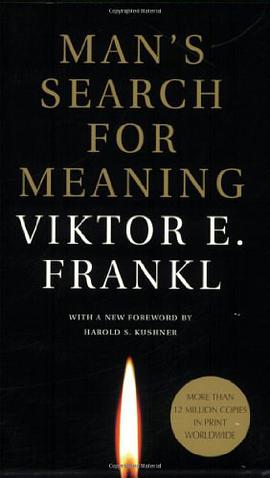
Man's Search for Meaning 豆瓣 Goodreads Goodreads
Trotzdem ja zum Leben sagen: Ein Psychologe erlebt das Konzentrationslager
8.7 (21 个评分) 作者: Viktor E. Frankl 译者: Isle Lasch 出版社: Beacon Press 2006 - 6
Book Description
Frankl's timeless memoir and meditation on finding meaning in the midst of suffering With a new Foreword by Harold S. Kushner and a new Biographical Afterword by William J. Winslade Psychiatrist Viktor Frankl's memoir has riveted generations of readers with its descriptions of life in Nazi death camps and its lessons for spiritual survival. Between 1942 and 1945 Frankl labored in four different camps, including Auschwitz, while his parents, brother, and pregnant wife perished. Based on his own experience and the experiences of others he treated later in his practice, Frankl argues that we cannot avoid suffering but we can choose how to cope with it, find meaning in it, and move forward with renewed purpose. Frankl's theory-known as logotherapy, from the Greek word logos ("meaning")-holds that our primary drive in life is not pleasure, as Freud maintained, but the discovery and pursuit of what we personally find meaningful. At the time of Frankl's death in 1997, Man's Search for Meaning had sold more than 10 million copies in twenty-four languages. A 1991 reader survey for the Library of Congress that asked readers to name a "book that made a difference in your life" found Man's Search for Meaning among the ten most influential books in America. Beacon Press, the original English-language publisher of Man's Search for Meaning, is issuing this new paperback edition with a new Foreword, biographical Afterword, jacket, price, and classroom materials to reach new generations of readers.
Book Dimension
length: (cm)17.6                 width:(cm)10.6
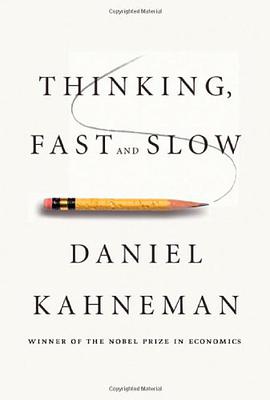
Thinking, Fast and Slow 豆瓣 Goodreads
Thinking, Fast and Slow
8.3 (36 个评分) 作者: Daniel Kahneman 出版社: Farrar, Straus and Giroux 2011 - 10
Major New York Times bestseller
Winner of the National Academy of Sciences Best Book Award in 2012
Selected by the New York Times Book Review as one of the best books of 2011
A Globe and Mail Best Books of the Year 2011 Title
One of The Economist’s 2011 Books of the Year
One of The Wall Street Journal's Best Nonfiction Books of the Year 2011
In the international bestseller, Thinking, Fast and Slow, Daniel Kahneman, the renowned psychologist and winner of the Nobel Prize in Economics, takes us on a groundbreaking tour of the mind and explains the two systems that drive the way we think. System 1 is fast, intuitive, and emotional; System 2 is slower, more deliberative, and more logical. The impact of overconfidence on corporate strategies, the difficulties of predicting what will make us happy in the future, the profound effect of cognitive biases on everything from playing the stock market to planning our next vacation—each of these can be understood only by knowing how the two systems shape our judgments and decisions.
Engaging the reader in a lively conversation about how we think, Kahneman reveals where we can and cannot trust our intuitions and how we can tap into the benefits of slow thinking. He offers practical and enlightening insights into how choices are made in both our business and our personal lives—and how we can use different techniques to guard against the mental glitches that often get us into trouble. Winner of the National Academy of Sciences Best Book Award and the Los Angeles Times Book Prize and selected by The New York Times Book Review as one of the ten best books of 2011, Thinking, Fast and Slow is destined to be a classic.
One of the New York Times Book Review's Top 10 Books of 2011
Editorial Reviews
Amazon.com Review
Amazon Best Books of the Month, November 2011: Drawing on decades of research in psychology that resulted in a Nobel Prize in Economic Sciences, Daniel Kahneman takes readers on an exploration of what influences thought example by example, sometimes with unlikely word pairs like "vomit and banana." System 1 and System 2, the fast and slow types of thinking, become characters that illustrate the psychology behind things we think we understand but really don't, such as intuition. Kahneman's transparent and careful treatment of his subject has the potential to change how we think, not just about thinking, but about how we live our lives. Thinking, Fast and Slow gives deep--and sometimes frightening--insight about what goes on inside our heads: the psychological basis for reactions, judgments, recognition, choices, conclusions, and much more. --JoVon Sotak
Review
“A tour de force. . . Kahneman’s book is a must read for anyone interested in either human behavior or investing. He clearly shows that while we like to think of ourselves as rational in our decision making, the truth is we are subject to many biases. At least being aware of them will give you a better chance of avoiding them, or at least making fewer of them.”—Larry Swedroe, CBS News
“Daniel Kahneman demonstrates forcefully in his new book, Thinking, Fast and Slow, how easy it is for humans to swerve away from rationality.”—Christopher Shea, The Washington Post
“An outstanding book, distinguished by beauty and clarity of detail, precision of presentation and gentleness of manner. Its truths are open to all those whose System 2 is not completely defunct. I have hardly touched on its richness.”— Galen Strawson, The Guardian
“Brilliant . . . It is impossible to exaggerate the importance of Daniel Kahneman’s contribution to the understanding of the way we think and choose. He stands among the giants, a weaver of the threads of Charles Darwin, Adam Smith and Sigmund Freud. Arguably the most important psychologist in history, Kahneman has reshaped cognitive psychology, the analysis of rationality and reason, the understanding of risk and the study of happiness and well-being . . . A magisterial work, stunning in its ambition, infused with knowledge, laced with wisdom, informed by modesty and deeply humane. If you can read only one book this year, read this one.”— Janice Gross Stein, The Globe and Mail
“A sweeping, compelling tale of just how easily our brains are bamboozled, bringing in both his own research and that of numerous psychologists, economists, and other experts...Kahneman has a remarkable ability to take decades worth of research and distill from it what would be important and interesting for a lay audience...Thinking, Fast and Slow is an immensely important book. Many science books are uneven, with a useful or interesting chapter too often followed by a dull one. Not so here. With rare exceptions, the entire span of this weighty book is fascinating and applicable to day-to-day life. Everyone should read Thinking, Fast and Slow.” —Jesse Singal, Boston Globe
“We must be grateful to Kahneman for giving us in this book a joyful understanding of the practical side of our personalities.” —Freeman Dyson, The New York Review of Books
“Brilliant . . . It is impossible to exaggerate the importance of Daniel Kahneman’s contribution to the understanding of the way we think and choose. He stands among the giants, a weaver of the threads of Charles Darwin, Adam Smith and Sigmund Freud. Arguably the most important psychologist in history, Kahneman has reshaped cognitive psychology, the analysis of rationality and reason, the understanding of risk and the study of happiness and well-being . . . A magisterial work, stunning in its ambition, infused with knowledge, laced with wisdom, informed by modesty and deeply humane. If you can read only one book this year, read this one.” — Janice Gross Stein, The Globe and Mail
“It is an astonishingly rich book: lucid, profound, full of intellectual surprises and self-help value. It is consistently entertaining and frequently touching, especially when Kahneman is recounting his collaboration with Tversky . . . So impressive is its vision of flawed human reason that the New York Times columnist David Brooks recently declared that Kahneman and Tversky’s work ‘will be remembered hundreds of years from now,’ and that it is ‘a crucial pivot point in the way we see ourselves.’ They are, Brooks said, ‘like the Lewis and Clark of the mind’ . . . By the time I got to the end of Thinking, Fast and Slow, my skeptical frown had long since given way to a grin of intellectual satisfaction. Appraising the book by the peak-end rule, I overconfidently urge everyone to buy and read it. But for those who are merely interested in Kahenman’s takeaway on the Malcolm Gladwell question it is this: If you've had 10,000 hours of training in a predictable, rapid-feedback environment—chess, firefighting, anesthesiology—then blink. In all other cases, think.”—The New York Times Book Review
“Ask around and you hear pretty much the same thing. 'Kahneman is the most influential psychologist since Sigmund Freud,' says Christopher Chabris, a professor of psychology at Union College, in New York. 'No one else has had such a broad impact on so many fields' . . . It now seems inevitable that Kahneman, who made his reputation by ignoring or defying conventional wisdom, is about to be anointed the intellectual guru of our economically irrational times.”— Evan R. Goldstein, The Chronicle of Higher Education
“There have been many good books on human rationality and irrationality, but only one masterpiece. That masterpiece is Daniel Kahneman’s Thinking, Fast and Slow . . . This is one of the greatest and most engaging collections of insights into the human mind I have read.”—William Easterly, Financial Times
“[Thinking, Fast and Slow] is wonderful, of course. To anyone with the slightest interest in the workings of his own mind, it is so rich and fascinating that any summary would seem absurd.”— Michael Lewis, Vanity Fair
“Absorbingly articulate and infinitely intelligent . . . What's most enjoyable and compelling about Thinking, Fast and Slow is that it's so utterly, refreshingly anti-Gladwellian. There is nothing pop about Kahneman's psychology, no formulaic story arc, no beating you over the head with an artificial, buzzword-encrusted Big Idea. It's just the wisdom that comes from five decades of honest, rigorous scientific work, delivered humbly yet brilliantly, in a way that will forever change the way you think about thinking.”—Maria Popova, The Atlantic
“I will never think about thinking quite the same. [Thinking, Fast and Slow] is a monumental achievement.”—Roger Lowenstein, Bloomberg/Businessweek
“Profound . . . As Copernicus removed the Earth from the centre of the universe and Darwin knocked humans off their biological perch, Mr. Kahneman has shown that we are not the paragons of reason we assume ourselves to be.” —The Economist
“[Kahneman’s] disarmingly simple experiments have profoundly changed the way that we think about thinking . . . We like to see ourselves as a Promethean species, uniquely endowed with the gift of reason. But Mr. Kahneman’s simple experiments reveal a very different mind, stuffed full of habits that, in most situations, lead us astray.” —Jonah Lehrer, The Wall Street Journal
“[A] tour de force of psychological insight, research explication and compelling narrative that brings together in one volume the high points of Mr. Kahneman's notable contributions, over five decades, to the study of human judgment, decision-making and choice . . . Thanks to the elegance and force of his ideas, and the robustness of the evidence he offers for them, he has helped us to a new understanding of our divided minds—and our whole selves.” —Christoper F. Chabris, The Wall Street Journal
“The ramifications of Kahenman’s work are wide, extending into education, business, marketing, politics . . . and even happiness research. Call his field “psychonomics,” the hidden reasoning behind our choices. Thinking, Fast and Slow is essential reading for anyone with a mind.” —Kyle Smith, The New York Post
“A major intellectual event . . . The work of Kahneman and Tversky was a crucial pivot point in the way we see ourselves.” —David Brooks, The New York Times
“Kahneman provides a detailed, yet accessible, description of the psychological mechanisms involved in making decisions.” —Jacek Debiec, Nature
“With Kahneman’s expert help, readers may understand this mix of psychology and economics better than most accountants, therapists, or elected representatives. VERDICT A stellar accomplishment, a book for everyone who likes to think and wants to do it better.” —Library Journal
“The mind is a hilariously muddled compromise between incompatible modes of thought in this fascinating treatise by a giant in the field of decision research. Nobel-winning psychologist Kahneman (Attention and Effort) posits a brain governed by two clashing decision-making processes. The largely unconscious System 1, he contends, makes intuitive snap judgments based on emotion, memory, and hard-wired rules of thumb; the painfully conscious System 2 laboriously checks the facts and does the math, but is so "lazy" and distractible that it usually defers to System 1. Kahneman uses this scheme to frame a scintillating discussion of his findings in cognitive psychology and behavioral economics, and of the ingenious experiments that tease out the irrational, self-contradictory logics that underlie our choices. We learn why we mistake statistical noise for cohere...
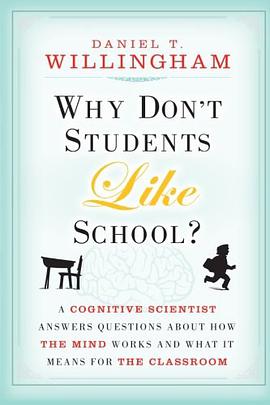
Why Don't Students Like School? 豆瓣
7.6 (5 个评分) 作者: Daniel T. Willingham 出版社: Jossey-Bass 2010 - 3
Easy-to-apply, scientifically-based approaches for engaging students in the classroom Cognitive scientist Dan Willingham focuses his acclaimed research on the biological and cognitive basis of learning. His book will help teachers improve their practice by explaining how they and their students think and learn. It reveals-the importance of story, emotion, memory, context, and routine in building knowledge and creating lasting learning experiences. Nine, easy-to-understand principles with clear applications for the classroom Includes surprising findings, such as that intelligence is malleable, and that you cannot develop "thinking skills" without facts How an understanding of the brain's workings can help teachers hone their teaching skills "Mr. Willingham's answers apply just as well outside the classroom. Corporate trainers, marketers and, not least, parents -anyone who cares about how we learn-should find his book valuable reading."
—Wall Street Journal
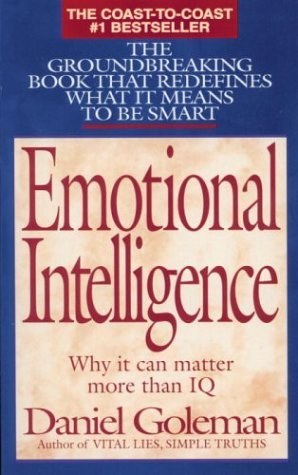
Emotional Intelligence 豆瓣
作者: Daniel Goleman 出版社: Bantam 1997 - 6
Everyone knows that high IQ is no guarantee of success, happiness, or virtue, but until Emotional Intelligence, we could only guess why. Daniel Goleman's brilliant report from the frontiers of psychology and neuroscience offers startling new insight into our "two minds"--the rational and the emotional--and how they together shape our destiny.
Through vivid examples, Goleman delineates the five crucial skills of emotional intelligence, and shows how they determine our success in relationships, work, and even our physical well-being. What emerges is an entirely new way to talk about being smart.
The best news is that "emotional literacy" is not fixed early in life. Every parent, every teacher, every business leader, and everyone interested in a more civil society, has a stake in this compelling vision of human possibility.
亲密关系(第5版) 豆瓣 Goodreads
Intimate Relationship
8.8 (73 个评分) 作者: [美] 罗兰·米勒 / [美] 丹尼尔·珀尔曼 译者: 王伟平 出版社: 人民邮电出版社 2011 - 1
爱情是人类情感中最美妙的一种体验,古今中外关于爱情的伟大文学作品有许多,但从心理学角度对两性关系进行科学而系统总结的专著尚为数不多。
《亲密关系》从一出版,就立即获得了读者的普遍喜爱,不仅得到了专业人士的首肯,更是得到普通读者的高度评价。作者综合了心理学多个分支的研究理论和成果,用饶有趣味的论述,总结出人们在交往与沟通、爱情与承诺、婚姻与性爱、嫉妒与背叛等方面的行为特点和规律。
本书内容丰富、语言优美;既注重专业性,有强调可读性。研究亲密关系的专业人士可以从中得到学习和参考;而对于社会大众来说,只要他(她)想获得一份满意的亲密关系,都可以从中得到启发。
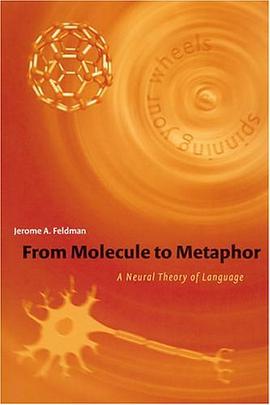
From Molecule to Metaphor 豆瓣
作者: Jerome A. Feldman 出版社: The MIT Press 2006 - 6
In From Molecule to Metaphor, Jerome Feldman proposes a theory of language and thought that treats language not as an abstract symbol system but as a human biological ability that can be studied as a function of the brain, as vision and motor control are studied. This theory, he writes, is a "bridging theory" that works from extensive knowledge at two ends of a causal chain to explicate the links between. Although the cognitive sciences are revealing much about how our brains produce language and thought, we do not yet know exactly how words are understood or have any methodology for finding out. Feldman develops his theory in computer simulations--formal models that suggest ways that language and thought may be realized in the brain. Combining key findings and theories from biology, computer science, linguistics, and psychology, Feldman synthesizes a theory by exhibiting programs that demonstrate the required behavior while remaining consistent with the findings from all disciplines. <br /> <br /> After presenting the essential results on language, learning, neural computation, the biology of neurons and neural circuits, and the mind/brain, Feldman introduces specific demonstrations and formal models of such topics as how children learn their first words, words for abstract and metaphorical concepts, understanding stories, and grammar (including "hot-button" issues surrounding the innateness of human grammar). With this accessible, comprehensive book Feldman offers readers who want to understand how our brains create thought and language a theory of language that is intuitively plausible and also consistent with existing scientific data at all levels.
谣言心理学 豆瓣
作者: 奥尔波特 译者: 刘水平 / 梁元元 出版社: 辽宁教育出版社 2003 - 3
大部分日常社交谈话总包含着谣传。日常生活中我们与朋友聊天时,也充斥着各种有根据或无根据的小道消息。
这种社交谈话只是向我们的对话者表达一种含糊的友好感觉,避免沉默的尴尬,它们只是谣言传播的一种形式。
谣言的散布一直是重大的社会和心理问题,在危机时刻更是如此,每当社会局势紧张,不实的报道便恶毒地增长。
在大多数事情上,我们都是非专业的,谣言就因此而产生。我们没有时间,也没有耐心去检验我们所听到的是否背离证据的外在标准,即使有时这些标准存在,也能得到。所以我们抵御谣言惟一可靠的方法就是对所有道听途说的描述持普遍怀疑的态度。希望读者通过对本书的阅读能形成谨慎的怀疑态度。
认知心理学(第三版)(万千心理) 豆瓣
Cognitive Psychology
作者: E. Bruce Goldstein 译者: 张明 等 出版社: 中国轻工业出版社 2015 - 2
还没有人能像E. Bruce Goldstein博士这样,将认知心理学的研究与现实生活联系得如此紧密。本书从认知心理学和脑科学基础知识入手,详细介绍了知觉、注意、记忆、知识、表象、语言、问题解决以及逻辑和决策过程等领域的认知心理学研究,将各种经典实验范式和最前沿的研究成果结合在一起,全面呈现了认知心理学这一充满魅力的学科。
本书尤其强调将所学与现实生活及切身体验联系起来,精心设计了诸多环节:
● 以日常生活中的实例开启各章的论述。
● 40多个简单易行的“演示实验”,让读者在亲身体验中学习。
● 27个“研究方法”专栏,强调认知心理学研究采用的精巧方法。
● 在“思考”部分介绍与各章相关的前沿研究或者存在争议的研究。
● 更有“测一测”与“想一想”的问题,帮助读者回顾并进一步思考所学内容。
● 在“知识扩展”部分介绍更多有趣的研究课题。
书中丰富精彩的实例、插图以及神经心理学案例将大大调动读者的好奇心,让认知研究回归日常生活,让读者从此爱上认知心理学。
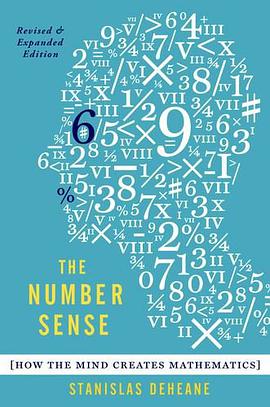
The Number Sense 豆瓣
作者: Stanislas Dehaene 出版社: OUP USA 2011 - 6
Our understanding of how the human brain performs mathematical calculations is far from complete, but in recent years there have been many exciting breakthroughs by scientists all over the world. Now, in The Number Sense, Stanislas Dehaene offers a fascinating look at this recent research, in an enlightening exploration of the mathematical mind. Dehaene begins with the eye-opening discovery that animals--including rats, pigeons, raccoons, and chimpanzees--can perform simple mathematical calculations, and that human infants also have a rudimentary number sense. Dehaene suggests that this rudimentary number sense is as basic to the way the brain understands the world as our perception of color or of objects in space, and, like these other abilities, our number sense is wired into the brain. These are but a few of the wealth of fascinating observations contained here. We also discover, for example, that because Chinese names for numbers are so short, Chinese people can remember up to nine or ten digits at a time--English-speaking people can only remember seven. The book also explores the unique abilities of idiot savants and mathematical geniuses, and we meet people whose minute brain lesions render their mathematical ability useless. This new and completely updated edition includes all of the most recent scientific data on how numbers are encoded by single neurons, and which brain areas activate when we perform calculations. Perhaps most important, The Number Sense reaches many provocative conclusions that will intrigue anyone interested in learning, mathematics, or the mind. "A delight." --Ian Stewart, New Scientist "Read The Number Sense for its rich insights into matters as varying as the cuneiform depiction of numbers, why Jean Piaget's theory of stages in infant learning is wrong, and to discover the brain regions involved in the number sense." --The New York Times Book Review "Dehaene weaves the latest technical research into a remarkably lucid and engrossing investigation. Even readers normally indifferent to mathematics will find themselves marveling at the wonder of minds making numbers." --Booklist
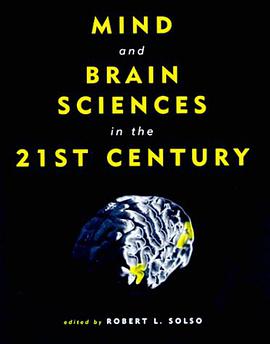
Mind and Brain Sciences in the 21st Century (Bradford Books) 豆瓣
作者: Solso, Robert L. 编 出版社: The MIT Press 1999 - 2
The approach of the new millennium encourages people to stop and think about where we have been and where we are going. In these essays, all but one written for this book, many of those who have helped to shape the fields of neurocognition, cognitive science, and psychology give their thoughts on the past and future of the science of mind. Ernest R. Hilgard's foreword presents "A Personal View of 20th Century Psychology: With an Eye to the 21st Century." Some of the essays offer specific ideas about what the future may hold, while others prefer the grand overview. Some touch on the philosophical, social, and scientific implications of the science of the mind; a few border on whimsy or science fiction. All are written to be understood by the informed layperson, as well as professionals and students.The authors of the essays describe their visions of what might be, not what is determined to be. A major goal of the volume is to encourage scientists and scholars to consider alternative worlds--to help us to avoid many of the problems of the past and to create a healthier and more humane future.A Bradford Book
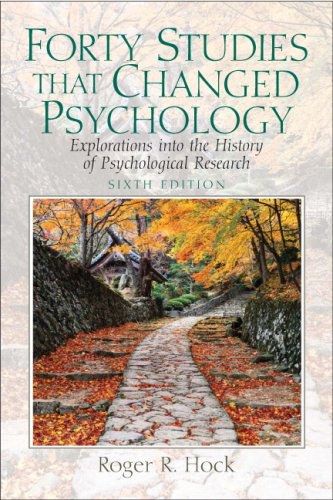
Forty Studies that Changed Psychology 豆瓣
作者: Roger R·Hock 出版社: Prentice Hall 2008 - 4
This unique book closes the gap between psychology textbooks and the research that made them possible by offering a first hand glimpse into 40 of the most famous studies in the history of the field, and subsequent studies that expanded upon each study's influence. Readers are able to grasp the process and excitement of scientific discovery as they experience an insider's look at the studies that continue today to be cited most frequently, stirred up the most controversy when they were first published, sparked the most subsequent related research, opened new fields of psychological exploration, and changed most dramatically our knowledge of human behavior.
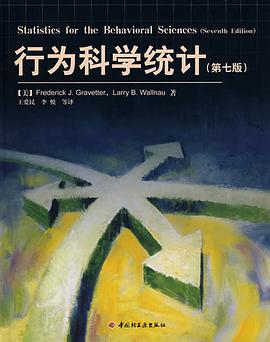
行为科学统计 豆瓣 Goodreads
Statistics for the behavioral sciences
作者: [美] F. J. Gravetter / [美] L. B. Wallnau 译者: 王爱民 / 李悦 出版社: 中国轻工业出版社 2008 - 7
无论中外,统计学一直是各相关专业学生的梦魇。Frederick J.Gravetter和Larry B.Wallnau两位教授正是考虑到这一点,从而以深入浅出、通俗易懂的方式,将统计知识清晰地整合到实际的行为科学研究中,以直接、易学、详尽的方法向学生讲授统计学的应用。
本书自出版以来一直是美国心理学、社会学等专业领域中使用最广的统计学教材,是一本非常适用于数学基础薄弱学生的统计入门书。
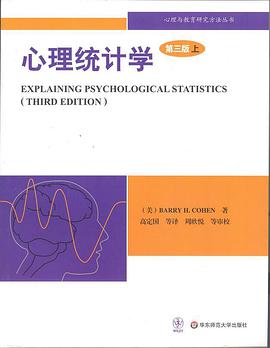
心理统计学(第3版) 豆瓣
Explaining Psychological Statistics
作者: B.H.科恩 译者: 高定国 / 周欣悦 出版社: 华东师范大学出版社 2011 - 2
Barry Cohen教授所著《心理统计学》(第三版)是一本广受欢迎的心理统计学教材。它是一本非常全面的心理统计学教材,既包括入门性的统计学知识(如零假设检验的基本概念和局限性),也包括心理统计的高级内容(如复杂设计方差分析和多元回归分析)。 虽然是一本统计教材,但作者无时不考虑结合研究设计来解释有关概念,因此该书的重点是讲授各个统计公式或手段的适用条件以及如何解释统计结果的意义。作者实验心理学博士出身,在纽约大学教授心理学统计学超过30年,通过阅读本书,你会深刻体会“将实验设计与数据处理相结合”的妙处。 这本书的另一个优点是,它既适合于那些对统计不甚了解的人,也适合于专业研究人员(包括硕士生和博士生)。它每章基本上包括ABC三个部分,每个部分是相对独立的,初学者可以只看A和B部分的内容;而在C部分(虽不能只说更高级),作者介绍了很多最近才出现的分析手段,也反映了数据处理的一些发展趋势,对心理学研究者非常有帮助。
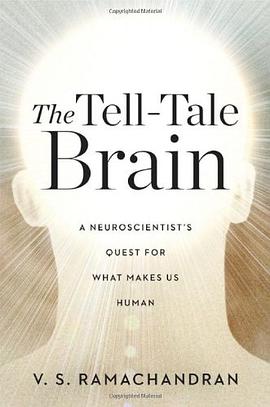
The Tell-Tale Brain 豆瓣 Goodreads
作者: V. S. Ramachandran 出版社: W. W. Norton & Co. 2011 - 1
Drawing on strange and thought-provoking case studies, an eminent neurologist offers unprecedented insight into the evolution of the uniquely human brain.V. S. Ramachandran is at the forefront of his field-so much so that Richard Dawkins dubbed him the "Marco Polo of neuroscience." Now, in a major new work, Ramachandran sets his sights on the mystery of human uniqueness. Taking us to the frontiers of neurology, he reveals what baffling and extreme case studies can teach us about normal brain function and how it evolved. Synesthesia becomes a window into the brain mechanisms that make some of us more creative than others. And autism—for which Ramachandran opens a new direction for treatment—gives us a glimpse of the aspect of being human that we understand least: self-awareness. Ramachandran tackles the most exciting and controversial topics in neurology with a storyteller's eye for compelling case studies and a researcher's flair for new approaches to age-old questions. Tracing the strange links between neurology and behavior, this book unveils a wealth of clues into the deepest mysteries of the human brain. 15 black-and-white illustrations
Neuroscience 豆瓣
作者: Mark F. Bear / Barry W. Connors 出版社: Lippincott Williams and Wilkins 2006 - 2
Widely praised for its student-friendly style and exceptional artwork and pedagogy, Neuroscience: Exploring the Brain is a leading undergraduate textbook on the biology of the brain and the systems that underlie behavior. This edition provides increased coverage of taste and smell, circadian rhythms, brain development, and developmental disorders and includes new information on molecular mechanisms and functional brain imaging. Path of Discovery boxes, written by leading researchers, highlight major current discoveries. In addition, readers will be able to assess their knowledge of neuroanatomy with the Illustrated Guide to Human Neuroanatomy, which includes a perforated self-testing workbook. This edition's robust ancillary package includes a bound-in student CD-ROM, an Instructor's Resource CD-ROM, a Connection Website, and LiveAdvise: Neuroscience online student tutoring.
The Cambridge Handbook of Expertise and Expert Performance 豆瓣
作者: Ericsson, K. Anders (EDT)/ Charness, Neil (EDT)/ Hoffman, Robert R. (EDT)/ Feltovich, Paul J. 出版社: Cambridge University Press 2006 - 6
This 2006 book was the first handbook where the world's foremost 'experts on expertise' reviewed our scientific knowledge on expertise and expert performance and how experts may differ from non-experts in terms of their development, training, reasoning, knowledge, social support, and innate talent. Methods are described for the study of experts' knowledge and their performance of representative tasks from their domain of expertise. The development of expertise is also studied by retrospective interviews and the daily lives of experts are studied with diaries. In 15 major domains of expertise, the leading researchers summarize our knowledge on the structure and acquisition of expert skill and knowledge and discuss future prospects. General issues that cut across most domains are reviewed in chapters on various aspects of expertise such as general and practical intelligence, differences in brain activity, self-regulated learning, deliberate practice, aging, knowledge management, and creativity.