SouthAsia
The Origins of the British Empire in Asia, 1600-1750 豆瓣
作者: David Veevers 出版社: Cambridge University Press 2020 - 6
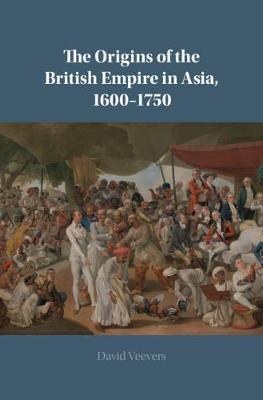
This is an important, revisionist account of the origins of the British Empire in Asia in the early modern period. David Veevers uncovers a hidden world of transcultural interactions between servants of the English East India Company and the Asian communities and states they came into contact with, revealing how it was this integration of Europeans into non-European economies, states and societies which was central to British imperial and commercial success rather than national or mercantilist enterprise. As their servants skilfully adapted to this rich and complex environment, the East India Company became enfranchised by the eighteenth century with a breadth of privileges and rights - from governing sprawling metropolises to trading customs-free. In emphasising the Asian genesis of the British Empire, this book sheds new light on the foreign frameworks of power which fuelled the expansion of Global Britain in the early modern world.
Tea War 豆瓣 谷歌图书 Goodreads
作者: Andrew B. Liu 出版社: Yale University Press 2020 - 6
A history of capitalism in nineteenth- and twentieth-century China and India exploring the competition between their tea industries
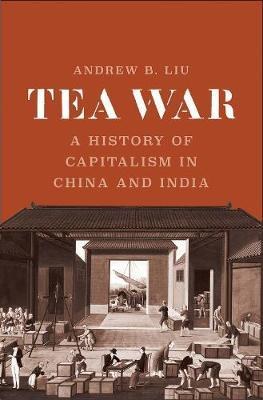
Tea remains the world's most popular commercial drink today, and at the turn of the twentieth century, it represented the largest export industry of both China and colonial India. In analyzing the global competition between Chinese and Indian tea, Andrew B. Liu challenges past economic histories premised on the technical "divergence" between the West and the Rest, arguing instead that seemingly traditional technologies and practices were central to modern capital accumulation across Asia. He shows how competitive pressures compelled Chinese merchants to adopt abstract, industrial conceptions of time, while colonial planters in India pushed for labor indenture laws to support factory-style tea plantations. Further, characterizations of China and India as premodern backwaters, he explains, were themselves the historical result of new notions of political economy adopted by Chinese and Indian nationalists, who discovered that these abstract ideas corresponded to concrete social changes in their local surroundings. Together, these stories point toward a more flexible and globally oriented conceptualization of the history of capitalism in China and India.
Europe’s India 豆瓣
作者: Sanjay Subrahmanyam 出版社: Harvard University Press 2017 - 3
When Portuguese explorers first rounded the Cape of Good Hope and arrived in the subcontinent in the late fifteenth century, Europeans had little direct knowledge of India. The maritime passage opened new opportunities for exchange of goods as well as ideas. Traders were joined by ambassadors, missionaries, soldiers, and scholars from Portugal, England, Holland, France, Italy, and Germany, all hoping to learn about India for reasons as varied as their particular nationalities and professions. In the following centuries they produced a body of knowledge about India that significantly shaped European thought.
Europe’s India tracks Europeans’ changing ideas of India over the entire early modern period. Sanjay Subrahmanyam brings his expertise and erudition to bear in exploring the connection between European representations of India and the fascination with collecting Indian texts and objects that took root in the sixteenth century. European notions of India’s history, geography, politics, and religion were strongly shaped by the manuscripts, paintings, and artifacts—both precious and prosaic—that found their way into Western hands.
Subrahmanyam rejects the opposition between “true” knowledge of India and the self-serving fantasies of European Orientalists. Instead, he shows how knowledge must always be understood in relation to the concrete circumstances of its production. Europe’s India is as much about how the East came to be understood by the West as it is about how India shaped Europe’s ideas concerning art, language, religion, and commerce.
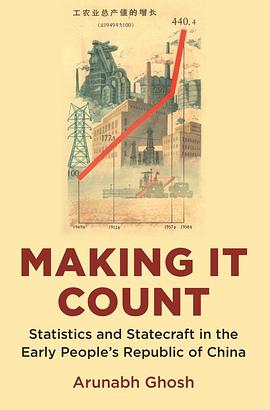
Making It Count 豆瓣
作者: Arunabh Ghosh 出版社: Princeton University Press 2020 - 3
In 1949, at the end of a long period of wars, one of the biggest challenges facing leaders of the new People’s Republic of China was how much they did not know. The government of one of the world’s largest nations was committed to fundamentally reengineering its society and economy via socialist planning while having almost no reliable statistical data about their own country. Making It Count is the history of efforts to resolve this “crisis in counting.” Drawing on a wealth of sources culled from China, India, and the United States, Arunabh Ghosh explores the choices made by political leaders, statisticians, academics, statistical workers, and even literary figures in attempts to know the nation through numbers.
Ghosh shows that early reliance on Soviet-inspired methods of exhaustive enumeration became increasingly untenable in China by the mid-1950s. Unprecedented and unexpected exchanges with Indian statisticians followed, as the Chinese sought to learn about the then-exciting new technology of random sampling. These developments were overtaken by the tumult of the Great Leap Forward (1958–61), when probabilistic and exhaustive methods were rejected and statistics was refashioned into an ethnographic enterprise. By acknowledging Soviet and Indian influences, Ghosh not only revises existing models of Cold War science but also globalizes wider developments in the history of statistics and data.
Anchored in debates about statistics and its relationship to state building, Making It Count offers fresh perspectives on China’s transition to socialism.
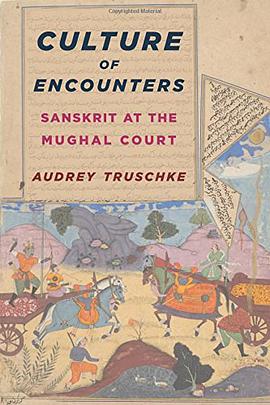
Culture of Encounters 豆瓣
作者: Audrey Truschke 出版社: Columbia University Press 2016 - 3
Culture of Encounters documents the fascinating exchange between the Persian-speaking Islamic elite of the Mughal Empire and traditional Sanskrit scholars, which engendered a dynamic idea of Mughal rule essential to the empire's survival. This history begins with the invitation of Brahman and Jain intellectuals to King Akbar's court in the 1560s, then details the numerous Mughal-backed texts they and their Mughal interlocutors produced under emperors Akbar, Jahangir (1605–1627), and Shah Jahan (1628–1658). Many works, including Sanskrit epics and historical texts, were translated into Persian, elevating the political position of Brahmans and Jains and cultivating a voracious appetite for Indian writings throughout the Mughal world.
The first book to read these Sanskrit and Persian works in tandem, Culture of Encounters recasts the Mughal Empire as a polyglot polity that collaborated with its Indian subjects to envision its sovereignty. The work also reframes the development of Brahman and Jain communities under Mughal rule, which coalesced around carefully selected, politically salient memories of imperial interaction. Along with its groundbreaking findings, Culture of Encounters certifies the critical role of the sociology of empire in building the Mughal polity, which came to irrevocably shape the literary and ruling cultures of early modern India.
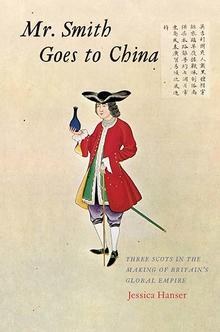
Mr. Smith Goes to China 豆瓣
作者: Jessica Hanser 出版社: Yale University Press 2019 - 7
An illuminating account of global commerce in the eighteenth-century Indian Ocean world as seen through the lives of three Scottish traders
This book delves into the lives of three Scottish private traders-George Smith of Bombay, George Smith of Canton, and George Smith of Madras-and uses them as lenses through which to explore the inner workings of Britain's imperial expansion and global network of trade, revealing how an unstable credit system and a financial crisis ultimately led to greater British intervention in India and China.
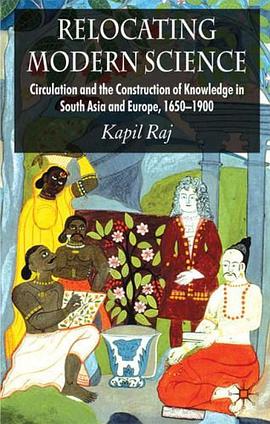
Relocating Modern Science 豆瓣
作者: Kapil Raj 出版社: Palgrave Macmillan 2010 - 3
Drawing on recent scholarship in the history and sociology of science, as well as in imperial and colonial history, Relocating Modern Science challenges both the belief that modern science was created uniquely in the West and the assumption that it was subsequently diffused, or imposed, elsewhere. Through six chronologically ordered case studies of knowledge construction in botany, cartography, terrestrial surveying, linguistics, scientific education, and colonial administration at key moments in their history, this book demonstrates the crucial importance of intercultural encounter - here between South Asians and Europeans - for the emergence of these sciences. It also revisits questions at the heart of research in the social studies of science - interpersonal trust, replicability, calibration, translation, and the relationship between instruments and embodied skills - showing the complex nature of their resolution in multicultural, and colonial, contexts. By following practitioners, skills, instruments, and ideas as they moved between continents and communities, this book stresses the crucial role of circulation in the construction and reconfiguration of scientific notions and practices. In addition to engaging with questions central to imperial, colonial, and South Asian history, Relocating Modern Science presents a heuristic model for specialists of other contact zones, periods, and fields of knowledge, as also for transnational and global studies.