VSI

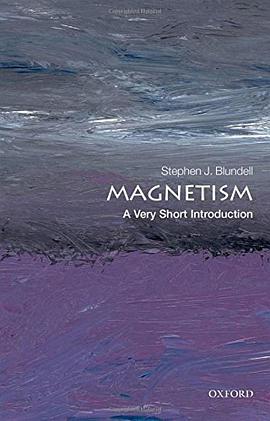
Magnetism 豆瓣
作者:
Stephen J. Blundell
出版社:
Oxford University Press
2012
- 7
Explains a fundamental scientific topic and its importance in an accessible way
Considers early theories of magnetism including the discovery that the Earth itself is a magnet
Explores the work of Michael Faraday and James Clerk Maxwell in unifying magnetism and electricity
Looks at the quantum mechanical aspects of magnetism
Considers its importance in modern technology, including magnetic storage in computers and the magnetic fields of planets and stars
Part of the bestselling Very Short Introductions series - over five million copies sold worldwide
Magnetism is a strange force, mysteriously attracting one object to another apparently through empty space. It has been claimed as a great healer, with magnetic therapies being proposed over the centuries and still popular today. Why are its mysterious important to solve?
In this Very Short Introduction, Stephen J. Blundell explains why. For centuries magnetism has been used for various exploits; through compasses it gave us navigation and through motors, generators, and turbines it has given us power. Blundell explores our understanding of electricity and magnetism, from the work of Galvani, Ampere, Faraday, and Tesla, and goes on to explore how Maxwell and Faraday's work led to the unification of electricity and magnetism, thought of as one of the most imaginative developments in theoretical physics.
With a discussion of the relationship between magnetism and relativity, quantum magnetism, and its impact on computers and information storage, Blundell shows how magnetism has changed our fundamental understanding of the Universe.
Readership: Students of the physical sciences and engineering as well as to general readers interested in this topic.
Recently Viewed
Considers early theories of magnetism including the discovery that the Earth itself is a magnet
Explores the work of Michael Faraday and James Clerk Maxwell in unifying magnetism and electricity
Looks at the quantum mechanical aspects of magnetism
Considers its importance in modern technology, including magnetic storage in computers and the magnetic fields of planets and stars
Part of the bestselling Very Short Introductions series - over five million copies sold worldwide
Magnetism is a strange force, mysteriously attracting one object to another apparently through empty space. It has been claimed as a great healer, with magnetic therapies being proposed over the centuries and still popular today. Why are its mysterious important to solve?
In this Very Short Introduction, Stephen J. Blundell explains why. For centuries magnetism has been used for various exploits; through compasses it gave us navigation and through motors, generators, and turbines it has given us power. Blundell explores our understanding of electricity and magnetism, from the work of Galvani, Ampere, Faraday, and Tesla, and goes on to explore how Maxwell and Faraday's work led to the unification of electricity and magnetism, thought of as one of the most imaginative developments in theoretical physics.
With a discussion of the relationship between magnetism and relativity, quantum magnetism, and its impact on computers and information storage, Blundell shows how magnetism has changed our fundamental understanding of the Universe.
Readership: Students of the physical sciences and engineering as well as to general readers interested in this topic.
Recently Viewed
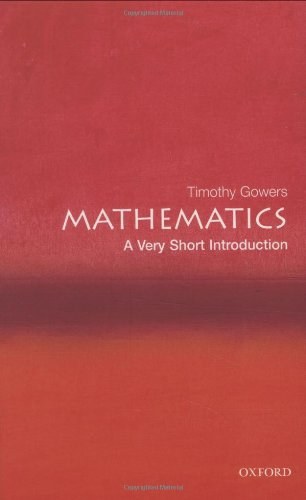
Mathematics 豆瓣 Goodreads
作者:
Timothy Gowers
出版社:
Oxford University Press, USA
2002
- 10
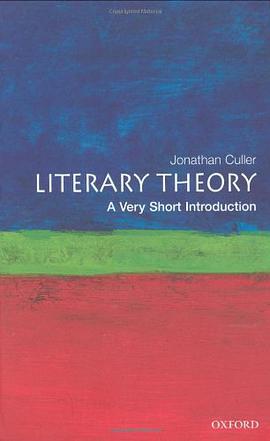
Literary Theory 豆瓣
作者:
Jonathan Culler
出版社:
Oxford Paperbacks
2000
- 2
What is Literary Theory? Is there a relationship between literature and culture? In fact, what is Literature, and does it matter? These are the sorts of questions addressed by Jonathan Culler in a book which steers a clear path through a subject which is often perceived to be impenetrable. It offers insights into theories about the nature of language and meaning, whether literature is a form of self-expression or a method of appeal to an audience, and outlines the ideas behind a number of different schools: deconstruction, semiotics, postcolonial theory, and structuralism amongst them.