Zizek
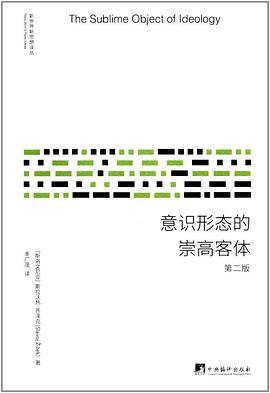
意识形态的崇高客体 豆瓣
8.5 (17 个评分) 作者: [斯洛文尼亚] 斯拉沃热·齐泽克 译者: 季广茂 出版社: 中央编译出版社 2017 - 7
《意识形态的崇高客体(第二版)》介绍从泰坦尼克号的沉没到希区柯克的影片,从瓦格纳的歌剧到海因莱因的科幻,从拉康到福柯,从黑格尔到马克思,从重大政治事件到犹太人的笑谈,从狗智主义到排犹主义,从排泄问题到神学思辨……齐泽克娓娓道来,令人尽享阅读的快感。在这部极具原创性和挑衅性的著作中,齐泽克概括了欲望的原理,把握了无意识的特质,解剖了意识形态的崇高客体,洞悉了“后现代”社会和主体的秘密。《意识形态的崇高客体(第二版)》是斯拉沃热·齐泽克的开山之作、种子之作和奠基之作,是了解其全部思想的门户和索引。他后来的思想皆源于此,均为《意识形态的崇高客体(第二版)》的扩展和注释。
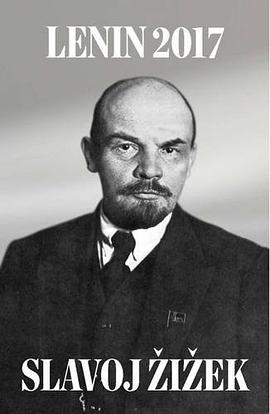
Lenin 2017 豆瓣
作者: Slavoj Zizek 出版社: Verso 2017 - 7
One hundred years after the Russian Revolution, Žižek shows why Lenin’s thought is still important today
Lenin’s originality and importance as a revolutionary leader is most often associated with the seizure of power in 1917. But, Žižek argues in this new study and collection of original texts, Lenin’s true greatness can be better grasped in the very last couple of years of his political life. Russia had survived foreign invasion, embargo and a terrifying civil war, as well as internal revolts such as at Kronstadt in 1921. But the new state was exhausted, isolated and disorientated in the face of the world revolution that seemed to be receding. New paths had to be sought, almost from scratch, for the Soviet state to survive and imagine some alternative route to the future. With his characteristic brio and provocative insight, Žižek suggests that Lenin’s courage as a thinker can be found in his willingness to face this reality of retreat lucidly and frontally.
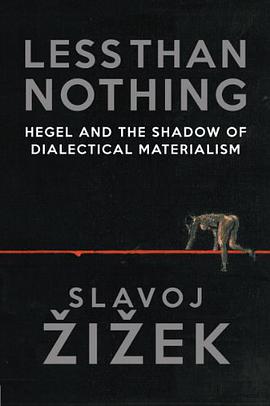
Less Than Nothing 豆瓣
作者: Slavoj Zizek 出版社: Verso 2012 - 5
For the last two centuries, Western philosophy has developed in the shadow of Hegel, whose influence each new thinker tries in vain to escape: whether in the name of the pre-rational Will, the social process of production, or the contingency of individual existence. Hegel's absolute idealism has become the bogeyman of philosophy, obscuring the fact that he is the dominant philosopher of the epochal historical transition to modernity; a period with which our own time shares startling similarities. Today, as global capitalism comes apart at the seams, we are entering a new transition. In "Less Than Nothing", the pinnacle publication of a distinguished career, Slavoj Zizek argues that it is imperative that we not simply return to Hegel but that we repeat and exceed his triumphs, overcoming his limitations by being even more Hegelian than the master himself. Such an approach not only enables Zizek to diagnose our present condition, but also to engage in a critical dialogue with the key strands of contemporary thought - Heidegger, Badiou, speculative realism, quantum physics and cognitive sciences. Modernity will begin and end with Hegel.