architecture
建构建筑手册 Douban
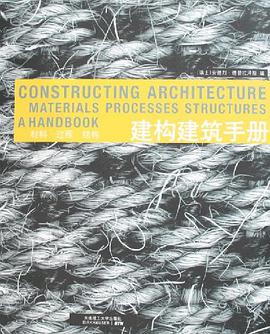
Constructing Architecture - Materials Processes Structures A Handbook
author:
[瑞士] 德普拉译斯(Deplazes,A
publishing house:
大连理工大学出版社
2007
- 1
《建构建筑手册》这本书将向学生与专业人员们介绍这些基本原则,它所阐述的综合方法,将专业的技术知识与所举建筑诗歌般的美感及其文化与历史背景知识结合在一起。建筑不只是技术与工程的展示,还是人类意志力的艺术和创造性的行为的载体。如果能够掌握构造技术的原理,就可以更有效地将这种意志力物化为实体。
介绍
前言
如何使用本书
实体结构和杆系结构
第一部分 材料-模块
模块
砖石
混凝土
木材
钢材
保温材料
第二部分 建筑要素
基础-墙基
墙体
洞口
楼板
屋顶
楼梯,电梯
第三部分 结构
构造形式
建筑性能、能源
第四部分 建筑
工程实录
第五部分 建筑组成部分
图纸
基础-墙体
墙体-楼板
洞口
楼板
屋顶-女儿墙
附录
介绍
前言
如何使用本书
实体结构和杆系结构
第一部分 材料-模块
模块
砖石
混凝土
木材
钢材
保温材料
第二部分 建筑要素
基础-墙基
墙体
洞口
楼板
屋顶
楼梯,电梯
第三部分 结构
构造形式
建筑性能、能源
第四部分 建筑
工程实录
第五部分 建筑组成部分
图纸
基础-墙体
墙体-楼板
洞口
楼板
屋顶-女儿墙
附录
Architecture of Modern China Douban
author:
Jianfei Zhu
publishing house:
Routledge
2008
- 11
Envisioning Information Douban Goodreads
Envisioning Information
author:
Edward R. Tufte
publishing house:
Graphics Pr
1990
- 12
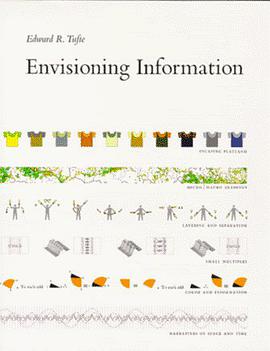
The celebrated design professor here tackles the question of how best to communicate real-life experience in a two-degree format, whether on the printed page or the computer screen. The Whole Earth Review called
a "passionate, elegant revelation."
a "passionate, elegant revelation."
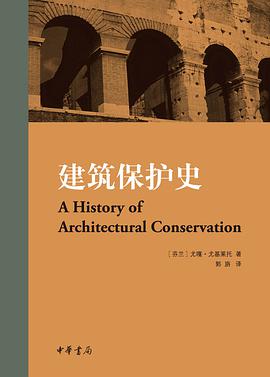
建筑保护史 Douban
author:
尤卡•尤基莱托(Jukka Jukilehto)
publishing house:
中华书局
2011
- 9
尤卡·尤基莱托所著的《建筑保护史》是当之无愧的关于建筑保护发展历史的经典著作。作者尤卡·尤基莱托教授是当今世界最著名的文化遗产保护史学家和哲学家之一,他很早就投身建筑规划和保护行业,因通晓多种语言,如英语、法语、德语、意大利语、瑞典语、芬兰语等,故而在建筑保护领域具有难 以比拟的优势。《建筑保护史》是他二十多年的经验与思索的总结,对世界主要是西方建筑保护的发展历程做出了全面介绍,并指出这种发展如何影响了国际文化遗产保护活动。书中包含大量的保护案例和系统丰富的史料,这些资料即便是专业人士都很难积累获得,遑论一般读者,因此可作为所有希望更好地了解建筑历史的人士的必读著作。
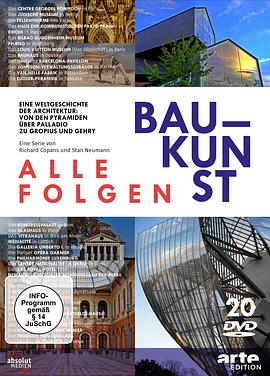
Baukunst (2001) Douban
Baukunst
director:
Julien Donada
23 episode documentary, each focusing on one distinguished building and its architect, from the 19th and 20th centuries.
Season 1
--------------------------------------------------------------------------------
Season 1, Episode 1: Das Bauhaus in Dessau
Original Air Date: 2001
Who: Walter Gropius What: Staatliches Bauhaus, architecture school Where: Dessau, Germany.
Season 1, Episode 2: Die Architekurfakultät Porto
Original Air Date: 2001
Who: Álvaro Siza What: Porto's Faculty of Architecture Where: Porto, Portugal
Season 1, Episode 3: Das Familistère von Guise
Original Air Date: 2001
Who: Jean-Baptiste Godin What: The Familistère, a community settlement Where: Guise, France
Season 1, Episode 4: Nemausus 1 - Sozialer Wohnungsbau der 80er Jahre
Original Air Date: 2001
Who: Jean Nouvel What: Social housing complex Where: Nîmes, France
Season 1, Episode 5: Das Centre Georges Pompidou
Original Air Date: 2001
Who: Renzo Piano, Richard Rogers and Gianfranco Franchini What: Centre Georges Pompidou, cultural complex Where: Paris, France
Season 1, Episode 6: Die Postsparkasse Wien
Original Air Date: 2001
Who: Otto Wagner What: Post Office Savings Bank Where: Vienna, Austria
--------------------------------------------------------------------------------
Season 2
--------------------------------------------------------------------------------
Season 2, Episode 1: Das Villa Dall'Ava
Original Air Date: 2001
Who: Rem Koolhaas; What: Villa Dall'Ava, a single-family house; Where: Paris, France
Season 2, Episode 2: Das Johnson-Verwaltungsgebäude
Original Air Date: 2001
Who: Frank Lloyd Wright; What: Johnson Wax's headquarters; Where: Racine, Wisconsin, USA
Season 2, Episode 3: Die Galleria Umberto I
Original Air Date: 2001
Who: Emanuele Rocco; What: A commercial gallery; Where: Naples, Italy
Season 2, Episode 4: Satolas TGV - Der Bahnhof auf dem Land
Original Air Date: 2001
Who: Santiago Calatrava; What: TGV station; Where: Lyon, France
Season 2, Episode 5: Die Felsentherme von Vals
Original Air Date: 2001
Who: Peter Zumthor; What: Thermal baths; Where: Vals, Switzerland
Season 2, Episode 6: Die Pariser Kunsthochschule
Original Air Date: 2001
Who: Auguste Perret; What: Fine Art School; Where: Paris, France
--------------------------------------------------------------------------------
Season 3
--------------------------------------------------------------------------------
Season 3, Episode 1: Das jüdische Museum in Berlin
Original Air Date: 2003
Who: Daniel Libeskind; What: Jewish history Museum; Where: Berlin, Germany
Season 3, Episode 2: Die Pariser Opéra Garnier
Original Air Date: 2003
Who: Charles Garnier; What: Opera House; Where: Paris, France
Season 3, Episode 3: Das Kloster La Tourette
Original Air Date: 2003
Who: Le Corbusier; What: Dominican priory; Where: Lyon, France
Season 3, Episode 4: Die Casa Mila
Original Air Date: 2003
Who: Antoni Gaudí; What: Residential/touristic building; Where: Barcelona, Spain
Season 3, Episode 5: Auditorium Building
Original Air Date: 2003
Who: Dankmar Adler and Louis Sullivan; What: Home of the Roosevelt University; Where: Chicago, Illinois, USA
Season 3, Episode 6: Das Gemeindezentrum von Säynätsalo
Original Air Date: 2003
Who: Alvar Aalto; What: Municipal Center / Town Hall; Where: Säynätsalo, Finland
--------------------------------------------------------------------------------
Season 4
--------------------------------------------------------------------------------
Season 4, Episode 1: Die Saline von Arc-et-Senans
Original Air Date: 2005
Who: Claude-Nicolas Ledoux; What: Saltworks' buildings; Where: Besançon, France
Season 4, Episode 2: Das Glashaus
Original Air Date: 2005
Who: Phillip Johnson; What: Private House; Where: New Canaan, Connecticut, USA
Season 4, Episode 3: Bilbao Guggenheim Museum
Original Air Date: 2005
Who: Frank Gehry; What: Modern and contemporary art museum; Where: Bilbao, Spain
Season 4, Episode 4: Das Haus von Jean Prouvé
Original Air Date: 2005
Who: Jean Prouvé; What: Prefab house; Where: Presles, France
Season 4, Episode 5: Die Sendaï-Mediathek
Original Air Date: 2005
Who: Toyo Ito; What: Mediatheque; Where: Sendaï, Japan
Season 4, Episode 6: Die Abtei Sainte Foy de Conques
Original Air Date: 2005
Who: Prosper Merimée; What: Church; Where: Conques, France
Season 1
--------------------------------------------------------------------------------
Season 1, Episode 1: Das Bauhaus in Dessau
Original Air Date: 2001
Who: Walter Gropius What: Staatliches Bauhaus, architecture school Where: Dessau, Germany.
Season 1, Episode 2: Die Architekurfakultät Porto
Original Air Date: 2001
Who: Álvaro Siza What: Porto's Faculty of Architecture Where: Porto, Portugal
Season 1, Episode 3: Das Familistère von Guise
Original Air Date: 2001
Who: Jean-Baptiste Godin What: The Familistère, a community settlement Where: Guise, France
Season 1, Episode 4: Nemausus 1 - Sozialer Wohnungsbau der 80er Jahre
Original Air Date: 2001
Who: Jean Nouvel What: Social housing complex Where: Nîmes, France
Season 1, Episode 5: Das Centre Georges Pompidou
Original Air Date: 2001
Who: Renzo Piano, Richard Rogers and Gianfranco Franchini What: Centre Georges Pompidou, cultural complex Where: Paris, France
Season 1, Episode 6: Die Postsparkasse Wien
Original Air Date: 2001
Who: Otto Wagner What: Post Office Savings Bank Where: Vienna, Austria
--------------------------------------------------------------------------------
Season 2
--------------------------------------------------------------------------------
Season 2, Episode 1: Das Villa Dall'Ava
Original Air Date: 2001
Who: Rem Koolhaas; What: Villa Dall'Ava, a single-family house; Where: Paris, France
Season 2, Episode 2: Das Johnson-Verwaltungsgebäude
Original Air Date: 2001
Who: Frank Lloyd Wright; What: Johnson Wax's headquarters; Where: Racine, Wisconsin, USA
Season 2, Episode 3: Die Galleria Umberto I
Original Air Date: 2001
Who: Emanuele Rocco; What: A commercial gallery; Where: Naples, Italy
Season 2, Episode 4: Satolas TGV - Der Bahnhof auf dem Land
Original Air Date: 2001
Who: Santiago Calatrava; What: TGV station; Where: Lyon, France
Season 2, Episode 5: Die Felsentherme von Vals
Original Air Date: 2001
Who: Peter Zumthor; What: Thermal baths; Where: Vals, Switzerland
Season 2, Episode 6: Die Pariser Kunsthochschule
Original Air Date: 2001
Who: Auguste Perret; What: Fine Art School; Where: Paris, France
--------------------------------------------------------------------------------
Season 3
--------------------------------------------------------------------------------
Season 3, Episode 1: Das jüdische Museum in Berlin
Original Air Date: 2003
Who: Daniel Libeskind; What: Jewish history Museum; Where: Berlin, Germany
Season 3, Episode 2: Die Pariser Opéra Garnier
Original Air Date: 2003
Who: Charles Garnier; What: Opera House; Where: Paris, France
Season 3, Episode 3: Das Kloster La Tourette
Original Air Date: 2003
Who: Le Corbusier; What: Dominican priory; Where: Lyon, France
Season 3, Episode 4: Die Casa Mila
Original Air Date: 2003
Who: Antoni Gaudí; What: Residential/touristic building; Where: Barcelona, Spain
Season 3, Episode 5: Auditorium Building
Original Air Date: 2003
Who: Dankmar Adler and Louis Sullivan; What: Home of the Roosevelt University; Where: Chicago, Illinois, USA
Season 3, Episode 6: Das Gemeindezentrum von Säynätsalo
Original Air Date: 2003
Who: Alvar Aalto; What: Municipal Center / Town Hall; Where: Säynätsalo, Finland
--------------------------------------------------------------------------------
Season 4
--------------------------------------------------------------------------------
Season 4, Episode 1: Die Saline von Arc-et-Senans
Original Air Date: 2005
Who: Claude-Nicolas Ledoux; What: Saltworks' buildings; Where: Besançon, France
Season 4, Episode 2: Das Glashaus
Original Air Date: 2005
Who: Phillip Johnson; What: Private House; Where: New Canaan, Connecticut, USA
Season 4, Episode 3: Bilbao Guggenheim Museum
Original Air Date: 2005
Who: Frank Gehry; What: Modern and contemporary art museum; Where: Bilbao, Spain
Season 4, Episode 4: Das Haus von Jean Prouvé
Original Air Date: 2005
Who: Jean Prouvé; What: Prefab house; Where: Presles, France
Season 4, Episode 5: Die Sendaï-Mediathek
Original Air Date: 2005
Who: Toyo Ito; What: Mediatheque; Where: Sendaï, Japan
Season 4, Episode 6: Die Abtei Sainte Foy de Conques
Original Air Date: 2005
Who: Prosper Merimée; What: Church; Where: Conques, France

物象與心境-中國的園林 Douban
author:
漢寶德
publishing house:
幼師文化
1990
- 1
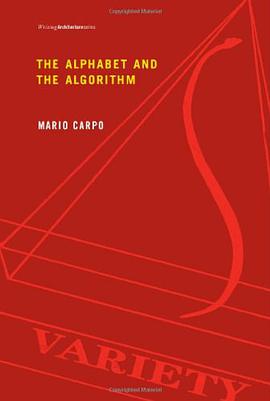
The Alphabet and the Algorithm Douban
author:
Mario Carpo
publishing house:
The MIT Press
2011
- 2
Digital technologies have changed architecture--the way it is taught, practiced, managed, and regulated. But if the digital has created a "paradigm shift" for architecture, which paradigm is shifting? In The Alphabet and the Algorithm, Mario Carpo points to one key practice of modernity: the making of identical copies. Carpo highlights two examples of identicality crucial to the shaping of architectural modernity: in the fifteenth century, Leon Battista Alberti's invention of architectural design, according to which a building is an identical copy of the architect's design; and, in the nineteenth and twentieth centuries, the mass production of identical copies from mechanical master models, matrixes, imprints, or molds. The modern power of the identical, Carpo argues, came to an end with the rise of digital technologies. Everything digital is variable. In architecture, this means the end of notational limitations, of mechanical standardization, and of the Albertian, authorial way of building by design. Charting the rise and fall of the paradigm of identicality, Carpo compares new forms of postindustrial digital craftsmanship to hand-making and the cultures and technologies of variations that existed before the coming of machine-made, identical copies. Carpo reviews the unfolding of digitally based design and construction from the early 1990s to the present, and suggests a new agenda for architecture in an age of variable objects and of generic and participatory authorship.
The City in History Douban
author:
Lewis Mumford
publishing house:
Harcourt
1968
- 10
Lewis Mumford's massive historical study brings together a wide array of evidence--from the earliest group habitats to medieval towns to the modern centers of commerce (as well as dozens of black-and-white illustrations)--to show how the urban form has changed throughout human civilization. His tone is ultimately somewhat pessimistic: Mumford was deeply concerned with what he viewed as the dehumanizing aspects of the metropolitan trend, which he deemed "a world of professional illusionists and their credulous victims." (In another typically unrestrained criticism, he dubbed the Pentagon a Bronze Age monument to humanity's basest impulses, as well as an "effete and worthless baroque conceit.") Mumford hoped for a rediscovery of urban principles that emphasized humanity's organic relationship to its environment. The City in History remains a powerfully influential work, one that has shaped the agendas of urban planners, sociologists, and social critics since its publication in the 1960s.
20世纪世界建筑史 Douban
Modern Architecture Since 1900
author:
威廉J•R•柯蒂斯
publishing house:
中国建筑工业出版社
2011
《20世纪世界建筑史》作者采用一种整体的方式,融合了实践、美学和社会等多个维度——但是其重点仍然是在艺术的形式与象征层面。《20世纪世界建筑史》处理的是如何以建筑学的方式来对理念进行表达。在这一新版本中(《20世纪世界建筑史》1982年第1版,本版为第3版,1996),作者对文字做了大幅的修订和扩展,纳入了许多关于现代建筑的范围与复杂性的新知识与新评断。本版共增加了7章,其中第4篇的3章论述了近几十年来世界范围内的最新发展。这就避免了那种时髦的修辞学论述方式,而是将当代建筑置入更为广袤的历史和文化视野中。本版还新增了许多彩色和黑白的插图、大量的平面以及其他图纸。参考文献和注释也进行了扩展与更新。正如哈佛大学的詹姆斯·阿克曼教授所言,作为“目前研究这一领域的最佳著作”,这本书具有长远的历史眼光,将现代建筑与各种更早的传统相联系起来,展示了那些不朽的原则如何被持续演绎。它已经当之无愧地被称为一部“经典”著作。
从绘图到建筑物的翻译及其他文章 Douban
Translation from Drawing to Building and Other Essays
《从绘图到建筑物的翻译及其他文章》是建筑历史与理论家罗宾·埃文斯的文集,收录了作者自1970年到1990年间颇具影响力的文章。绘图是建筑知识和建筑实践中一个不可或缺的工具和媒介,埃文斯将图视为一个自为的媒介,探讨了不同图示表达与建筑物之间的关系。此外,本书还收入了作者对建筑师与建筑颇具批判性和启示性的分析和解读,以及对建筑与日常生活和社会需求之间具有洞察力的解释。
Boundaries Douban
Walking through this park-like area, the memorial appears as a rift in the earth -- a long, polished black stone wall, emerging from and receding into the earth. Approaching the memorial, the ground slopes gently downward, and the low walls emerging on either side, growing out of the earth, extend and converge at a point below and ahead. Walking into the grassy site contained by the walls of this memorial, we can barely make out the carved names upon the memorial's walls. These names, seemingly infinite in number, convey the sense of overwhelming numbers, while unifying these individuals into a whole...
So begins the competition entry submitted in 1981 by a Yale undergraduate for the design of the Vietnam Veterans Memorial in Washington, D.C. -- subsequently called "as moving and awesome and popular a piece of memorial architecture as exists anywhere in the world." Its creator, Maya Lin, has been nothing less than world famous ever since. From the explicitly political to the unashamedly literary to the completely abstract, her simple and powerful sculpture -- the Rockefeller Foundation sculpture, the Southern Poverty Law Center Civil Rights Memorial, the Yale Women's Table, Wave Field -- her architechture, including The Museum for African Art and the Norton residence, and her protean design talents have defined her as one of the most gifted creative geniuses of the age.
Boundaries is her first book; an eloquent visual/verbal sketchbook produced with the same inspiration and attention to detail as any of her other artworks. Like her environmental sculptures, it is a site, but one which exists at a remove so that it may comment on the personal and artistic elements that make up those works. In it, sketches, photographs, workbook entries, and original design are held together by a deeply personal text. Boundaries is a powerful literary and visual statement by "a leading public artist." (Holland Carter). It is itself a unique work of art.
So begins the competition entry submitted in 1981 by a Yale undergraduate for the design of the Vietnam Veterans Memorial in Washington, D.C. -- subsequently called "as moving and awesome and popular a piece of memorial architecture as exists anywhere in the world." Its creator, Maya Lin, has been nothing less than world famous ever since. From the explicitly political to the unashamedly literary to the completely abstract, her simple and powerful sculpture -- the Rockefeller Foundation sculpture, the Southern Poverty Law Center Civil Rights Memorial, the Yale Women's Table, Wave Field -- her architechture, including The Museum for African Art and the Norton residence, and her protean design talents have defined her as one of the most gifted creative geniuses of the age.
Boundaries is her first book; an eloquent visual/verbal sketchbook produced with the same inspiration and attention to detail as any of her other artworks. Like her environmental sculptures, it is a site, but one which exists at a remove so that it may comment on the personal and artistic elements that make up those works. In it, sketches, photographs, workbook entries, and original design are held together by a deeply personal text. Boundaries is a powerful literary and visual statement by "a leading public artist." (Holland Carter). It is itself a unique work of art.
中国近代建筑史研究 Douban
author:
赖德霖
publishing house:
清华大学出版社
2007
- 1
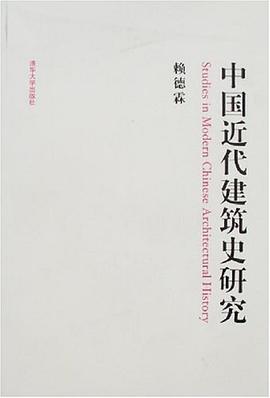
本文集汇集了作者十余年来在中国近代建筑史研究方面的代表性成果。内容涉及到中国建筑现代转型的诸多重要问题和个案,其中包括近代建筑制度的建立,晚清新政时期最重要的建筑物陆军部衙署及其设计者沈琪、中国近代第一部建筑学著作《建筑新法》及其作者张锳绪、中国近代建筑人才的出现和学科确立的过程及建筑教育的发展、中国近代建筑美学思想的发展、民国时期最重要的纪念性建筑——南京中山陵的设计、中国近代杰出的建筑师杨廷宝的建筑特色、杰出的建筑家梁思成和其妻子林徽因的中国建筑史写作、他的历史研究与现代中国风格建筑的理想在他于1949年以前参与设计的惟一“大屋顶”建筑——南京中央博物院——中的反映、以及近代国民党人经营时间最长的城市——广州——在1910至1930年代的发展。
在研究中作者从政治史、社会史、文化史和艺术史多学科角度提出问题,并综合运用历史方法,进行史实考证、数据统计、文本解读、形式分析,乃至跨文化比较,使得其建筑史研究不仅见物,而且也见背景;不仅见人,而且也见思想;不仅回答“是什么”,而且也回答“如何是”,“为何是”。
本书对于了解和研究中国的建筑史、建筑史学史、设计史、城市史、视觉文化史都具有参考价值和借鉴意义。
在研究中作者从政治史、社会史、文化史和艺术史多学科角度提出问题,并综合运用历史方法,进行史实考证、数据统计、文本解读、形式分析,乃至跨文化比较,使得其建筑史研究不仅见物,而且也见背景;不仅见人,而且也见思想;不仅回答“是什么”,而且也回答“如何是”,“为何是”。
本书对于了解和研究中国的建筑史、建筑史学史、设计史、城市史、视觉文化史都具有参考价值和借鉴意义。
Notes on the Synthesis of Form Douban Goodreads
author:
Christopher Alexander
publishing house:
Harvard University Press
1964
- 10
"These notes are about the process of design: the process of inventing things which display new physical order, organization, form, in response to function." This book, opening with these words, presents an entirely new theory of the process of design. In the first part of the book, Mr. Alexander discusses the process by which a form is adapted to the context of human needs and demands that has called it into being. He shows that such an adaptive process will be successful only if it proceeds piecemeal instead of all at once. It is for this reason that forms from traditional unselfconscious cultures, molded not by designers but by the slow pattern of changes within tradition, are so beautifully organized and adapted. When the designer, in our own self-conscious culture, is called on to create a form that is adapted to its context he is unsuccessful, because the preconceived categories out of which he builds his picture of the problem do not correspond to the inherent components of the problem, and therefore lead only to the arbitrariness, willfulness, and lack of understanding which plague the design of modern buildings and modern cities. In the second part, Mr. Alexander presents a method by which the designer may bring his full creative imagination into play, and yet avoid the traps of irrelevant preconception. He shows that, whenever a problem is stated, it is possible to ignore existing concepts and to create new concepts, out of the structure of the problem itself, which do correspond correctly to what he calls the subsystems of the adaptive process. By treating each of these subsystems as a separate subproblem, the designer can translate the new concepts into form. The form, because of the process, will be well-adapted to its context, non-arbitrary, and correct. The mathematics underlying this method, based mainly on set theory, is fully developed in a long appendix. Another appendix demonstrates the application of the method to the design of an Indian village.
建筑与都市037(A+U中文版) Douban
A+U Feature: Swiss Sounds: Architecture in Switzerland
author:
建筑与都市中文版编辑部
translator:
陈霜
/
肖靖
publishing house:
华中科技大学出版社
2011
- 7
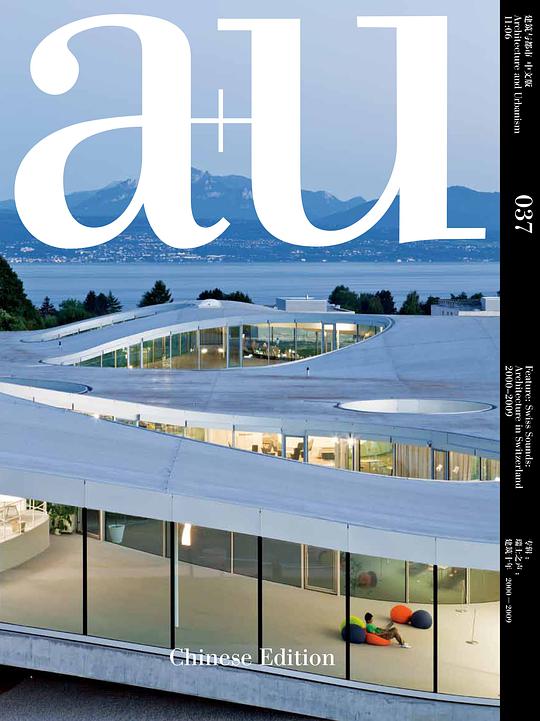
瑞士建筑素有美誉,尤于20 世纪90 年代异峰突起,一众建筑师们以彼得·卒姆托、赫尔佐格与德·梅隆、彼德·马克利、吉贡/ 古耶等为代表人物,凭借其设计作品的非凡表现力蜚声国际建筑界。
2000 至2009 年间,瑞士建筑秉承优良传统,孜孜求索,前行不驻。本期专辑选录了该十年间建成的一批瑞士建筑项目,旨在呈现和探究其发展演进动态。本期以三大主题版块重点介绍了瑞士建筑的三项显著特质。“地气文脉”版块突显了建筑与瑞士特有的自然环境(阿尔卑斯山地)或城市景观之间的密切契合。“改造更新”版块所收录的项目着眼于如何采取恰当的现代技术措施对瑞士本土建筑进行修复和改建,焕发其生机活力。“构造细部”版块则重在发掘建筑构造上的巧思创意,展示了一批在建材、结构和施工工艺方面独具匠心、精工细作的项目。此外,“新兴设计事务所、建筑教学及生态化设计”版块面向未来,推介了若干深具潜力的新兴建筑事务所,探讨了可持续建筑的设计发展,并通过一组论文,深层透视瑞士的建筑教学体系。
本期刊载主题论文两篇,分别由哈伯特斯·亚当、汉尼斯·迈耶和文·维瑞撰写。作为对具体设计项目的理论补充,两篇论文提纲契领,回顾总结了瑞士建筑过去十年来的主体走势、发展轨迹和实践经验。
2000 至2009 年间,瑞士建筑秉承优良传统,孜孜求索,前行不驻。本期专辑选录了该十年间建成的一批瑞士建筑项目,旨在呈现和探究其发展演进动态。本期以三大主题版块重点介绍了瑞士建筑的三项显著特质。“地气文脉”版块突显了建筑与瑞士特有的自然环境(阿尔卑斯山地)或城市景观之间的密切契合。“改造更新”版块所收录的项目着眼于如何采取恰当的现代技术措施对瑞士本土建筑进行修复和改建,焕发其生机活力。“构造细部”版块则重在发掘建筑构造上的巧思创意,展示了一批在建材、结构和施工工艺方面独具匠心、精工细作的项目。此外,“新兴设计事务所、建筑教学及生态化设计”版块面向未来,推介了若干深具潜力的新兴建筑事务所,探讨了可持续建筑的设计发展,并通过一组论文,深层透视瑞士的建筑教学体系。
本期刊载主题论文两篇,分别由哈伯特斯·亚当、汉尼斯·迈耶和文·维瑞撰写。作为对具体设计项目的理论补充,两篇论文提纲契领,回顾总结了瑞士建筑过去十年来的主体走势、发展轨迹和实践经验。
日本结构技术典型实例100选 Douban
author:
日本建筑构造技术者协会
publishing house:
中国建筑工业出版社
2005
- 9
本书由正文及资料篇两大部分组成。正文中,叙述结构技术精选100例的内容,其中,关于年代则划分为战后一1959年、1960年代、1970年代、1980年代、1990年~1994年、1995年~现在等共六个时期,并按竣工时间的早晚进行了排序,详细介绍建筑物的结构概要,特别是对建筑物的特点和独具特色的结构技术和历史背景都有详细阐述。此外,在选载的每个作品的开头,除介绍反映该作品的具有代表性的词语之外,还一并列出了反映作品特点的关键词。参考文献则刊载在每项作品的最后。
资料篇由五大部分组成:其一,是利用曲线图描述了日本的经济发展与建筑结构演进的关系;其二,用图解的方式反映了个别技术及建筑物的规模;其三,编制了以反映结构技术和规范标准等的变迁为中心的年表;其四,列出了在规划本书的过程中所征集的作品和结构技术的一览表。最后,在书末则是为方便读者而刊登的参考文献和索引。本书不仅可供从事结构设计工作的工程技术人员阅读,也可供建筑设计师、学校教师和研究人员等各方面人士的阅读和利用。
本书不仅可供从事结构设计工作的工程技术人员阅读,也可供建筑设计师、学校教师和研究人员等各方面人士的阅读和利用。
资料篇由五大部分组成:其一,是利用曲线图描述了日本的经济发展与建筑结构演进的关系;其二,用图解的方式反映了个别技术及建筑物的规模;其三,编制了以反映结构技术和规范标准等的变迁为中心的年表;其四,列出了在规划本书的过程中所征集的作品和结构技术的一览表。最后,在书末则是为方便读者而刊登的参考文献和索引。本书不仅可供从事结构设计工作的工程技术人员阅读,也可供建筑设计师、学校教师和研究人员等各方面人士的阅读和利用。
本书不仅可供从事结构设计工作的工程技术人员阅读,也可供建筑设计师、学校教师和研究人员等各方面人士的阅读和利用。
Architecture Theory since 1968 Douban
author:
K.Michael Hays
publishing house:
The MIT Press
2000
- 2
In the discussion of architecture, there is a prevailing sentiment that, since 1968, cultural production in its traditional sense can no longer be understood to rise spontaneously, as a matter of social course, but must now be constructed through ever more self-conscious theoretical procedures. The development of interpretive modes of various stripes--post-structuralist, Marxian, phenomenological, psychoanalytic, as well as others dissenting or eccentric--has given scholars a range of tools for rethinking architecture in relation to other fields and for reasserting architectures general importance in intellectual discourse.This anthology presents forty-seven of the primary texts of architecture theory, introducing each with an explication of the concepts and categories necessary for its understanding and evaluation. It also presents twelve documents of projects or events that had major theoretical repercussions for the period. Several of the essays appear here in English for the first time.Contributors : Diana Agrest, Stanford Anderson, Archizoom, George Baird, Jennifer Bloomer, Massimo Cacciari, Jean-Louis Cohen, Beatriz Colomina, Alan Colquhoun, Maurice Culot, Jacques Derrida, Ignasi de Sola-Morales, Peter Eisenman, Robin Evans, Michel Foucault, Kenneth Frampton, Mario Gandelsonas, Frank Gehry, Jurgen Habermas, John Hejduk, Denis Hollier, Bernard Huet, Catherine Ingraham, Fredric Jameson, Charles A. Jencks, Jeffrey Kipnis, Fred Koetter, Rem Koolhaas, Leon Krier, Sanford Kwinter, Henri Lefebvre, Daniel Libeskind, Mary McLeod, Alberto Perez-Gomez, Jose Quetglas, Aldo Rossi, Colin Rowe, Massimo Scolari, Denise Scott Brown, Robert Segrest, Jorge Silvetti, Robert Somol, Martin Steinmann, Robert A. M. Stern, James Stirling, Manfredo Tafuri, Georges Teyssot, Bernard Tschumi, Anthony Vidler, Paul Virilio, Mark Wigley.
The Urban Revolution Douban Goodreads
La Révolution Urbaine
author:
Henri Lefebvre
translator:
Robert Bononno
publishing house:
Univ Of Minnesota Press
2003
- 2
Originally published in 1970, The Urban Revolution marked Henri Lefebvre's first sustained critique of urban society, a work in which he pioneered the use of semiotic, structuralist, and poststructuralist methodologies in analyzing the development of the urban environment. Although it is widely considered a foundational book in contemporary thinking about the city, The Urban Revolution has never been translated into English-until now. This first English edition, deftly translated by Robert Bononno, makes available to a broad audience Lefebvre's sophisticated insights into the urban dimensions of ???.
The Projective Cast Douban
Winner of the 1997 Alice Davis Hitchcock MedallionAnyone reviewing the history of architectural theory, Robin Evans observes, would have to conclude that architects do not produce geometry, but rather consume it. In this long-awaited book, completed shortly before its author's death, Evans recasts the idea of the relationship between geometry and architecture, drawing on mathematics, engineering, art history, and aesthetics to uncover processes in the imagining and realizing of architectural form. He shows that geometry does not always play a stolid and dormant role but, in fact, may be an active agent in the links between thinking and imagination, imagination and drawing, drawing and building. He suggests a theory of architecture that is based on the many transactions between architecture and geometry as evidenced in individual buildings, largely in Europe, from the fifteenth to the twentieth century.From the Henry VII chapel at Westminster Abbey to Le Corbusier's Ronchamp, from Raphael's S. Eligio and the work of Piero della Francesca and Philibert Delorme to Guarino Guarini and the painters of cubism, Evans explores the geometries involved, asking whether they are in fact the stable underpinnings of the creative, intuitive, or rhetorical aspects of architecture. In particular he concentrates on the history of architectural projection, the geometry of vision that has become an internalized and pervasive pictorial method of construction and that, until now, has played only a small part in the development of architectural theory.Evans describes the ambivalent role that pictures play in architecture and urges resistance to the idea that pictures provide all that architects need, suggesting that there is much more within the scope of the architect's vision of a project than what can be drawn. He defines the different fields of projective transmission that concern architecture, and investigates the ambiguities of projection and the interaction of imagination with projection and its metaphors.