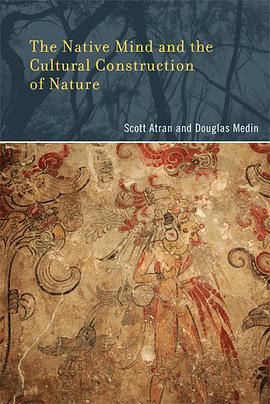
The Native Mind and the Cultural Construction of Nature (Life and Mind Douban
author:
Scott Atran
/
Douglas Medin
publishing house:
The MIT Press
2010
- 3
Surveys show that our growing concern over protecting the environment is accompanied by a diminishing sense of human contact with nature. Many people have little commonsense knowledge about nature—are unable, for example, to identify local plants and trees or describe how these plants and animals interact. Researchers report dwindling knowledge of nature even in smaller, nonindustrialized societies. In The Native Mind and the Cultural Construction of Nature, Scott Atran and Douglas Medin trace the cognitive consequences of this loss of knowledge. Drawing on nearly two decades of cross-cultural and developmental research, they examine the relationship between how people think about the natural world and how they act on it and how these two phenomena are affected by cultural differences.
These studies, which involve a series of targeted comparisons among cultural groups living in the same environment and engaged in the same activities, reveal critical universal aspects of mind as well as equally critical cultural differences. Atran and Medin find that, despite a base of universal processes, the cultural differences in understandings of nature are associated with significant differences in environmental decision making as well as intergroup conflict and stereotyping stemming from these differences. The book includes two intensive case studies, one focusing on agro-forestry among Maya Indians and Spanish speakers in Mexico and Guatemala and the other on resource conflict between Native-American and European-American fishermen in Wisconsin. The Native Mind and the Cultural Construction of Nature offers new perspectives on general theories of human categorization, reasoning, decision making, and cognitive development.
These studies, which involve a series of targeted comparisons among cultural groups living in the same environment and engaged in the same activities, reveal critical universal aspects of mind as well as equally critical cultural differences. Atran and Medin find that, despite a base of universal processes, the cultural differences in understandings of nature are associated with significant differences in environmental decision making as well as intergroup conflict and stereotyping stemming from these differences. The book includes two intensive case studies, one focusing on agro-forestry among Maya Indians and Spanish speakers in Mexico and Guatemala and the other on resource conflict between Native-American and European-American fishermen in Wisconsin. The Native Mind and the Cultural Construction of Nature offers new perspectives on general theories of human categorization, reasoning, decision making, and cognitive development.