Speech and Language Processing, 2nd Edition 豆瓣 Goodreads
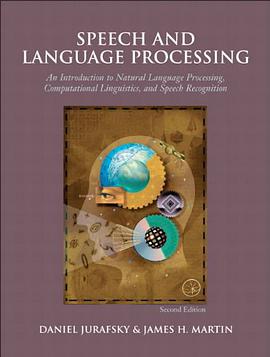
This is the 2nd edition of "Speech and Language Processing, 2000" (http://www.douban.com/subject/1810715/).
An explosion of Web-based language techniques, merging of distinct fields, availability of phone-based dialogue systems, and much more make this an exciting time in speech and language processing. The first of its kind to thoroughly cover language technology – at all levels and with all modern technologies – this book takes an empirical approach to the subject, based on applying statistical and other machine-learning algorithms to large corporations. Builds each chapter around one or more worked examples demonstrating the main idea of the chapter, usingthe examples to illustrate the relative strengths and weaknesses of various approaches. Adds coverage of statistical sequence labeling, information extraction, question answering and summarization, advanced topics in speech recognition, speech synthesis. Revises coverage of language modeling, formal grammars, statistical parsing, machine translation, and dialog processing. A useful reference for professionals in any of the areas of speech and language processing.
An explosion of Web-based language techniques, merging of distinct fields, availability of phone-based dialogue systems, and much more make this an exciting time in speech and language processing. The first of its kind to thoroughly cover language technology – at all levels and with all modern technologies – this book takes an empirical approach to the subject, based on applying statistical and other machine-learning algorithms to large corporations. Builds each chapter around one or more worked examples demonstrating the main idea of the chapter, usingthe examples to illustrate the relative strengths and weaknesses of various approaches. Adds coverage of statistical sequence labeling, information extraction, question answering and summarization, advanced topics in speech recognition, speech synthesis. Revises coverage of language modeling, formal grammars, statistical parsing, machine translation, and dialog processing. A useful reference for professionals in any of the areas of speech and language processing.