medieval
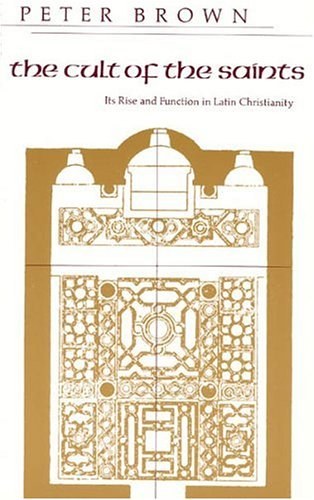
The Cult of the Saints 豆瓣
作者: Peter Brown 出版社: University Of Chicago Press 1982 - 2
Following the fall of the Roman Empire in the West, the cult of the saints was the dominant form of religion in Christian Europe. In this elegantly written work, Peter Brown explores the role of tombs, shrines, relics, and pilgrimages connected with the sacred bodies of the saints. He shows how men and women living in harsh and sometimes barbaric times relied upon the merciful intercession of the holy dead to obtain justice, forgiveness, and to find new ways to accept their fellows. Challenging the common treatment of the cult as an outbreak of superstition among the lower classes, Brown demonstrates how this form of religiousity engaged the finest minds of the Church and elicited from members of the educated upper classes some of their most splendid achievements in poetry, literature, and the patronage of the arts.
"Brown has an international reputation for his fine style, a style he here turns on to illuminate the cult of the saints. Christianity was born without such a cult; it took rise and that rise needs chronicling. Brown has a gift for the memorable phrase and sees what the passersby have often overlooked. An eye-opener on an important but neglected phase of Western development."--"The Christian Century "
"Brilliantly original and highly sophisticated . . . . ["The Cult of the Saints"] is based on great learning in several disciplines, and the story is told with an exceptional appreciation for the broad social context. Students of many aspects of medieval culture, especially popular religion, will want to consult this work."--Bennett D. Hill, "Library Journal "
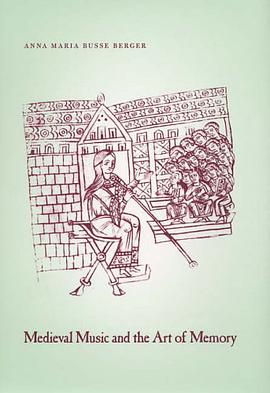
Medieval Music and the Art of Memory 豆瓣
作者: Anna Maria B Berger 出版社: University of California Press 2005 - 5
This bold challenge to conventional notions about medieval music disputes the assumption of pure literacy and replaces it with a more complex picture of a world in which literacy and orality interacted. Asking such fundamental questions as how singers managed to memorize such an enormous amount of music and how music composed in the mind rather than in writing affected musical style, Anna Maria Busse Berger explores the impact of the art of memory on the composition and transmission of medieval music. Her fresh, innovative study shows that although writing allowed composers to work out pieces in the mind, it did not make memorization redundant but allowed for new ways to commit material to memory. Since some of the polyphonic music from the twelfth century and later was written down, scholars have long assumed that it was all composed and transmitted in written form. Our understanding of medieval music has been profoundly shaped by German philologists from the beginning of the last century who approached medieval music as if it were no different from music of the nineteenth century. But Medieval Music and the Art of Memory deftly demonstrates that the fact that a piece was written down does not necessarily mean that it was conceived and transmitted in writing. Busse Berger's new model, one that emphasizes the interplay of literate and oral composition and transmission, deepens and enriches current understandings of medieval music and opens the field for fresh interpretations.