neuroscience
Memory, Attention, and Decision-Making 豆瓣
作者: Edmund Rolls 出版社: Oxford University Press 2007 - 8
Memory, attention, and decision-making are three major areas of psychology. They are frequently studied in isolation, and using a range of models to understand them. This book brings a unified approach to understanding these three processes. It shows how these fundamental functions for cognitive neuroscience can be understood in a common and unifying computational neuroscience framework. This framework links empirical research on brain function from neurophysiology, functional neuroimaging, and the effects of brain damage, to a description of how neural networks in the brain implement these functions using a set of common principles. The book describes the principles of operation of these networks, and how they could implement such important functions as memory, attention, and decision-making. The topics covered include The hippocampus and memory Reward and punishment related learning: emotion and motivation Visual object recognition learning Short term memory Attention, short term memory, and biased competition Probabilistic decision-making Action selection Decision-making Also included are tutorial appendices on Neural networks in the brain Neural encoding in the brain 'Memory, Attention and Decision-Making' will be valuable for those in the fields of neuroscience, psychology, and cognitive neuroscience from advanced undergraduate level upwards. It will also be of interest to those interested in neuroeconomics, animal behaviour, zoology, evolutionary biology, psychiatry, medicine, and philosophy. The book has been written with modular chapters and sections, making it possible to select particular Chapters for course work.
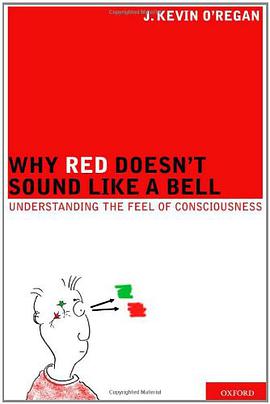
Why Red Doesn't Sound Like a Bell 豆瓣
作者: J. Kevin O'Regan 出版社: Oxford University Press 2011 - 6
This book proposes a novel view to explain how we as humans -- contrary to current robots -- can have the impression of consciously feeling things: for example the red of a sunset, the smell of a rose, the sound of a symphony, or a pain. The book starts off by looking at visual perception. Our ability to see turns out to be much more mysterious than one might think. The eye contains many defects which should seriously interfere with vision. Yet we have the impression of seeing the world in glorious panavision and technicolor. Explaining how this can be the case leads to a new idea about what seeing really is. Seeing is not passively receiving information in the brain, but rather a way of interacting with the world. The role of the brain is not to create visual sensation, but to enable the necessary interactions with the world. This new approach to seeing is extended in the second part of the book to encompass the other senses: hearing, touch, taste and smell. Taking sensory experiences to be modes of interacting with the world explains why these experiences are different in the way they are. It also explains why thoughts or automatic functions in the body, and indeed the vast majority brain functions, are not accompanied by any real feeling. The "sensorimotor" approach is not simply a philosophical argument: It leads to scientifically verifiable predictions and new research directions. Among these are the phenomena of change blindness, sensory substitution, "looked but failed to see", as well as results on color naming and color perception and the localisation of touch on the body. The approach is relevant to the question of what animals and babies can feel, and to understanding what will be necessary for robots to become conscious.
Principles of Computational Modelling in Neuroscience 豆瓣
作者: Andrew Gillies / Bruce Graham 出版社: Cambridge University Press 2011 - 8
"The nervous system is made up of a large number of interacting elements. To understand how such a complex system functions requires the construction and analysis of computational models at many different levels. This book provides a step-by-step account of how to model the neuron and neural circuitry to understand the nervous system at all levels, from ion channels to networks. Starting with a simple model of the neuron as an electrical circuit, gradually more details are added to include the effects of neuronal morphology, synapses, ion channels and intracellular signaling. The principle of abstraction is explained through chapters on simplifying models, and how simplified models can be used in networks. This theme is continued in a final chapter on modeling the development of the nervous system. Requiring an elementary background in neuroscience and some high school mathematics, this textbook is an ideal basis for a course on computational neuroscience." (Amazon)
"This is a wonderful, clear and compelling text on mathematically-minded computational modelling in neuroscience. It is beautifully aimed at those engaged in capturing quantitatively, and thus simulating, complex neural phenomena at multiple spatial and temporal scales, from intracellular calcium dynamics and stochastic ion channels, through compartmental modelling, all the way to aspects of development. It takes particular care to define the processes, potential outputs and even some pitfalls of modelling; and can be recommended for containing the key lessons and pointers for people seeking to build their own computational models. By eschewing issues of coding and information processing, it largely hews to concrete biological data, and it nicely avoids sacrificing depth for breadth. It is very suitably pitched as a Master's level text, and its two appendices, on mathematical methods and software resources, will rapidly become dog-eared."
Peter Dayan, University College London
Neurophilosophy: Toward a Unified Science of the Mind/Brain Goodreads 豆瓣
作者: Patricia Smith Churchland 出版社: MIT Press 1989 - 9 其它标题: Neurophilosophy
Five chapters in the book's first part, "Some Elementary Neuroscience," sketch the history of the science of nervous systems and provide a general introduction to neurophysiology, neuroanatomy, and neuropsychology. In the second part, "Recent Developments in the Philosophy of Science," chapters place the mind-body problem within the wider context of the philosophy of science. Drawing on recent research in this area, a general account of intertheoretic reduction is explained, arguments for a reductionist strategy are developed, and traditional objections from dualists and other anti reductionists are answered in novel ways. The third part, "A Neurophilosophical Perspective," concludes the book with a presentation and discussion of some of the most promising theoretical developments currently under exploration in functional neurobiology and in the connectionist models within artificial intelligence research.Patricia Churchland is Professor of Philosophy, University of California, San Diego. A Bradford Book.
Molecular Principles of Animal Development 豆瓣
作者: Alfonso Martinez Arias / Alison Stewart 出版社: Oxford University Press, USA 2002 - 4
An advanced undergraduate textbook focusing on the molecules and mechanisms which underlie the developmental process. In recent years, the genetic and molecular mechanisms underlying cellular behaviour have begun to be elucidated. Taking advantage of this new knowledge, Martinez Arias and Stewart here present developmental biology from a new standpoint: one in which the molecules and the genes that encode them, rather than the organisms, take centre stage. This is a compelling modern way of looking at developmental biology. Starting with the genetic programs that underlie development and working up allows a better understanding of the logic of development. TEACHING AIDS Online Resource Centre: www.oup.com/uk/best.textbooks/biochemistry/martinez/ Includes sample chapter, and all illustrations available free to download
Wednesday Is Indigo Blue: Discovering the Brain of Synesthes 豆瓣
作者: Richard E. Cytowic / David M. Eagleman 出版社: The MIT Press 2009 - 4
A person with synesthesia might feel the flavor of food on her fingertips, sense the letter J as shimmering magenta or the number 5 as emerald green, hear and taste her husband's voice as buttery golden brown. Synesthetes rarely talk about their peculiar sensory gift—believing either that everyone else senses the world exactly as they do, or that no one else does. Yet synesthesia occurs in one in twenty people, and is even more common among artists. One famous synesthete was novelist Vladimir Nabokov, who insisted as a toddler that the colors on his wooden alphabet blocks were "all wrong." His mother understood exactly what he meant because she, too, had synesthesia. Nabokov's son Dmitri, who recounts this tale in the afterword to this book, is also a synesthete—further illustrating how synesthesia runs in families.
In Wednesday Is Indigo Blue, pioneering researcher Richard Cytowic and distinguished neuroscientist David Eagleman explain the neuroscience and genetics behind synesthesia’s multisensory experiences. Because synesthesia contradicted existing theory, Cytowic spent twenty years persuading colleagues that it was a real—and important—brain phenomenon rather than a mere curiosity. Today scientists in fifteen countries are exploring synesthesia and how it is changing the traditional view of how the brain works.
Cytowic and Eagleman argue that perception is already multisensory, though for most of us its multiple dimensions exist beyond the reach of consciousness. Reality, they point out, is more subjective than most people realize. No mere curiosity, synesthesia is a window on the mind and brain, highlighting the amazing differences in the way people see the world.
Synesthesia 豆瓣
作者: Robertson, Lynn C. (EDT)/ Sagiv, Noam (EDT) 出版社: Oxford University Press 2004 - 10
Owing to its bizarre nature and its implications for understanding how brains work, synesthesia has recently received a lot of attention in the popular press and motivated a great deal of research and discussion among scientists. The questions generated by these two communities are intriguing: Does the synesthetic phenomenon require awareness and attention? How does a feature that is not present become bound to one that is? Does synesthesia develop or is it hard wired? Should it change our way of thinking about perceptual experience in general? What is its value in understanding perceptual systems as a whole? This volume brings together a distinguished group of investigators from diverse backgrounds-among them neuroscientists, novelists, and synesthetes themselves-who provide fascinating answers to these questions. Although each approaches synesthesia from a very different perspective, and each was curious about and investigated synesthesia for very different reasons, the similarities between their work cannot be ignored. The research presented in this volume demonstrates that it is no longer reasonable to ask whether or not synesthesia is real-we must now ask how we can account for it from cognitive, neurobiological, developmental, and evolutionary perspectives. This book will be important reading for any scientist interested in brain and mind, not to mention synesthetes themselves, and others who might be wondering what all the fuss is about.
The Embodied Mind 豆瓣
作者: Francisco J. Varela / Evan T. Thompson 出版社: The MIT Press 1992 - 11
The Embodied Mind provides a unique, sophisticated treatment of the spontaneous and reflective dimension of human experience. The authors - argue that only by having a sense of common ground between mind in Science and mind in experience can our understanding of cognition be more complete. Toward that end, they develop a dialogue between cognitive science and Buddhist meditative psychology and situate it in relation to other traditions such as phenomenology and psychoanalysis.Francisco Varela is Director of Research at the Centre National de Recherche Scientifique and Professor of Cognitive Science and Epistemology, CREA, at the Ecole Polytechnique in Paris. Evan Thompson is Assistant Professor of Philosophy at the University of Toronto. Eleanor Rosch is Professor of Psychology at the University of California, Berkeley.
The Visual Brain in Action 豆瓣
作者: David Milner / Mel Goodale 出版社: Oxford University Press, USA 2006
First published in 1995, The Visual Brain in Action remains a seminal publication in the cognitive sciences. It presents a model for understanding the visual processing underlying perception and action, proposing a broad distinction within the brain between two kinds of vision: conscious perception and unconscious 'online' vision. It argues that each kind of vision can occur quasi-independently of the other, and is separately handled by a quite different processing system. In the 11 years since publication, the book has provoked considerable interest and debate - throughout both cognitive neuroscience and philosophy, while the field has continued to flourish and develop. For this new edition, the text from the original edition has been left untouched, standing as a coherent statement of the authors' position. However, a very substantial epilogue has been added to the book in which Milner and Goodale review some of the key developments that support or challenge the views that were put forward in the first edition. The new chapter summarizes developments in various relevant areas of psychology, neuroscience and behaviour. It notably supplements the main text by updating the reader on the contributions that have emerged from the use of functional neuroimaging, which was in its infancy when the first edition was written. Neuroimaging, and functional MRI in particular, has revolutionized the field over the past 11 years by allowing investigators to plot in detail the patterns of activity within the visual brains of behaving and perceiving humans. The authors show how its use now allows scientists to test and confirm their proposals, based as they then were largely on evidence accrued from primate neuroscience in conjunction with studies of neurological patients.
Descartes' Error Goodreads 豆瓣
作者: Antonio R. Damasio 出版社: Penguin Books 2005 - 9
Since Descartes famously proclaimed, "I think, therefore I am," science has often overlooked emotions as the source of a person’s true being. Even modern neuroscience has tended, until recently, to concentrate on the cognitive aspects of brain function, disregarding emotions. This attitude began to change with the publication of Descartes’ Error in 1995. Antonio Damasio—"one of the world’s leading neurologists" ( The New York Times )—challenged traditional ideas about the connection between emotions and rationality. In this wondrously engaging book, Damasio takes the reader on a journey of scientific discovery through a series of case studies, demonstrating what many of us have long suspected: emotions are not a luxury, they are essential to rational thinking and to normal social behavior.
MATLAB for Neuroscientists 豆瓣
作者: Pascal Wallisch / Michael Lusignan 出版社: Academic Press 2008 - 11
Matlab is the accepted standard for scientific computing, used globally in virtually all Neuroscience and Cognitive Psychology laboratories. For instance, SPM, the most used software for the analysis and manipulation of fMRI images in research and clinical practice is fully programmed in matlab, and its use of the possibility to allow for sophisticated software modules to be freely added to the software has established it as the by far dominant software in the field. Many universities now offer, or are beginning to offer matlab introductory courses in their neuroscience and psychology programs. Nevertheless, so far there hasn't been a textbook specific to this market, and the use of the plethora of existing engineering focused Matlab textbooks is notoriously difficult for teaching the package in those environments.
This is the first comprehensive teaching resource and textbook for the teaching of Matlab in the Neurosciences and in Psychology. Matlab is unique in that it can be used to learn the entire empirical and experimental process, including stimulus generation, experimental control, data collection, data analysis and modeling. Thus a wide variety of computational problems can be addressed in a single programming environment. The idea is to empower advanced undergraduates and beginning graduate students by allowing them to design and implement their own analytical tools. As students advance in their research careers, they will have achieved the fluency required to understand and adapt more specialized tools as opposed to treating them as "black boxes".
Virtually all computational approaches in the book are covered by using genuine experimental data that are either collected as part of the lab project or were collected in the labs of the authors, providing the casual student with the look and feel of real data. In some rare cases, published data from classical papers are used to illustrate important concepts, giving students a computational understanding of critically important research.
The ability to effectively use computers in research is necessary in an academic environment that is increasingly focused on quantitative issues. Matlab represents an ideal language of scientific computing. It is based on powerful linear algebra structures which lend themselves to empirical problems on the one hand, while at the same time allowing the student to make rapid problem-oriented progress (particularly in terms of visualization of data points) without having to lose focus by worrying too much about memory allocation and other "plumbing" minutiae as would be required in other, more low-level programming languages such as C or C++.
Currently, there are several books that provide introductions to Matlab that are either too generic and fundamental or too irrelevant for neuroscientists and cognitive psychologists who typically face a very circumscribed range of problems in data collection, data analysis and signal processing. Some non-book tutorials and primers that are in use in the community are typically out of date. Matlab versions are usually not backwards compatible. Many commands and functions used in older tutorials and primers, such as "flops" won't work in current versions of Matlab, necessitating a book that is timely and up-to-date.
The complete lack of a relevant resource in this area, combined with a clearly felt need for such a text provided the primary and initial impetus for this project.
The authors provide such a dearly needed resource adapting and pooling materials that developed for and used in highly rated courses involving the use of Matlab in Neuroscience at the University of Chicago. Two co-authors (PW and NH) have presented their respective work on teaching Matlab at national meetings and two of the co-authors (PW and MB) were awarded the coveted University of Chicago's Booth Prize for excellence in teaching these courses. (http://chronicle.uchicago.edu/070524/boothprize.shtml ).
* The first comprehensive textbook on Matlab with a focus for its application in Neuroscience
* Problem based educational approach with many examples from neuroscience and cognitive psychology using real data
* Authors are award winning educators with strong teaching experience
* Instructor's Website with figurebank, additional problems and examples, solutions, etc

Social Neuroscience 豆瓣
作者: Todorov, Alexandre B.; Fiske, Susan T.; Prentice, Deborah A. 出版社: Oxford University Press, USA 2011 - 2
The field of social cognitive neuroscience has captured the attention of many researchers during the past ten years. Much of the impetus for this new field came from the development of functional neuroimaging methods that made it possible to unobtrusively measure brain activation over time. Using these methods over the last 30 years has allowed psychologists to move from simple validation questions -- would flashing stimuli activate the visual cortex -- to those about the functional specialization of brain regions-- are there regions in the inferior temporal cortex dedicated to face processing-- to questions that, just a decade ago, would have been considered to be intractable at such a level of analysis. These so-called "intractable" questions are the focus of the chapters in this book, which introduces social cognitive neuroscience research addressing questions of fundamental importance to social psychology: How do we understand and represent other people? How do we represent social groups? How do we regulate our emotions and socially undesirable responses? This book also presents innovative combinations of multiple methodologies, including behavioral experiments, computer modeling, functional Magnetic Resonance Imaging (fMRI) experiments, Event-Related Potential (ERP) experiments, and brain lesion studies. It is divided into four sections. The first three sections present the latest research on, respectively, understanding and representing other people, representing social groups, and the interplay of cognition and emotion in social regulation. In the fourth section, contributors step back and consider a range of novel topics that have emerged in the context of social neuroscience research: understanding social exclusion as pain, deconstructing our moral intuitions, understanding cooperative exchanges with other agents, and the effect of aging on brain function and its implications for well-being. Taken together, these chapters provide a rich introduction to an exciting, rapidly developing and expanding field that promises a richer and deeper understanding of the social mind.
The Quest for Consciousness 豆瓣 Goodreads 谷歌图书
作者: Christof Koch 出版社: Roberts & Company Publishers 2004 - 1
<b>About the Author</b><p>Born in 1956 in the American Midwest, Christof Koch grew up in Holland, Germany, Canada, and Morocco, where he graduated from the Lycée Descartes in 1974. He studied physics and philosophy at the University of Tübingen in Germany and was awarded his Ph.D. in biophysics in 1982. He is now the Lois and Victor Troendle Professor of Cognitive and Behavioral Biology at the California Institute of Technology. The author of several books, Dr. Koch studies the biophysics of computation, and the neuronal basis of visual perception, attention, and consciousness. Together with Francis Crick, his long-time collaborator, he has pioneered the scientific study of consciousness.</p>
How the Brain Evolved Language 豆瓣
作者: Donald Loritz 出版社: Oxford University Press, USA 2002 - 2
How can an infinite number of sentences be generated from one human mind? How did language evolve in apes? In this book Donald Loritz addresses these and other fundamental and vexing questions about language, cognition, and the human brain. He starts by tracing how evolution and natural adaptation selected certain features of the brain to perform communication functions, then shows how those features developed into designs for human language. The result - what Loritz calls an adaptive grammar - gives a unified explanation of language in the brain and contradicts directly (and controversially) the theory of innateness proposed by, among others, Chomsky and Pinker.
隐藏的自我 豆瓣
作者: 大卫·伊格曼 译者: 唐璐 出版社: 湖南科学技术出版社 2013 - 1
如果意识——你所认为的自己——只是冰山露出水面的一角,那水下的部分又是什么?在这本才华横溢而又极富争议的《隐藏的自我:大脑的秘密生活》中,著名神经学家大卫伊格曼通过深入探索潜意识大脑,揭示了许多惊人的谜题:为什么在你意识到前方有危险之前,你的脚已经踩上了刹车々为什么谎言重复千遍就会成为真理?酒后吐真言是否可信?为什么有些人更容易发生婚外恋?为什么我们无法保守秘密?存在真正的自我吗?尤利西斯和次贷危机有何关系。