历史
History in Three Keys 豆瓣
作者:
Paul A. Cohen
Columbia University Press
1998
- 4
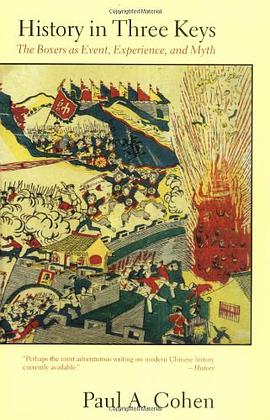
Examines the craft of historiography against the backdrop of the Chinese Boxer Rebellion of 1898-1900. The text juxtaposes the account of historians with those of the participants and witnesses and sets these perspectives against the range of popular myths about the Boxers.
The Origins of the Boxer Uprising 豆瓣 Goodreads
作者:
Joseph W. Esherick
University of California Press
1988
- 8
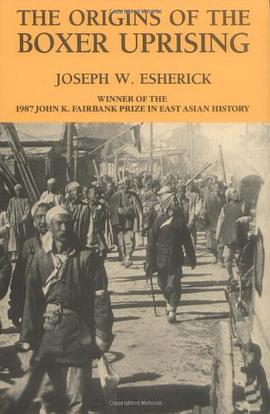
In the summer of 1900, bands of peasant youths from the villages of north China streamed into Beijing to besiege the foreign legations, attracting the attention of the entire world. Joseph Esherick reconstructs the early history of the Boxers, challenging the traditional view that they grew from earlier anti-dynastic sects, and stressing instead the impact of social ecology and popular culture.

Exhausting the Earth 豆瓣
作者:
Peter C. Perdue
Harvard University Asia Center
1987
- 9
Commerce in Culture 豆瓣
作者:
Cynthia J. Brokaw
Harvard University Asia Center
2007
- 4
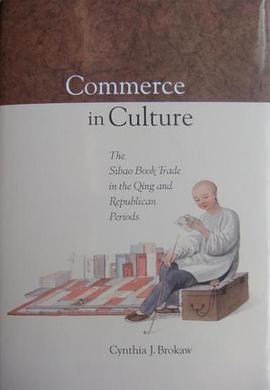
Sibao today is a cluster of impoverished villages in the mountains of western Fujian. Yet from the late seventeenth through the early twentieth century, it was home to a flourishing publishing industry. Through itinerant booksellers and branch bookshops managed by Sibao natives, this industry supplied much of south China with cheap educational texts, household guides, medical handbooks, and fortune-telling manuals.
It is precisely the ordinariness of Sibao imprints that make them valuable for the study of commercial publishing, the text-production process, and the geographical and social expansion of book culture in Chinese society. In a study with important implication for cultural and economic history, Cynthia Brokaw describes rural, lower-level publishing and bookselling operation at the end of the imperial period. Commerce in Culture traces how the poverty and isolation of Sibao necessitated a bare-bones approach to publishing and bookselling and how the Hakka identity of the Sibao publishers shaped the configuration of their distribution networks and even the nature of their publication.
Sibao's industry reveals two major trends in print culture: the geographical extension of commercial woodblock publishing to hinterlands previously untouched by commercial book culture and the related social penetration of texts to lower-status levels of the population.
It is precisely the ordinariness of Sibao imprints that make them valuable for the study of commercial publishing, the text-production process, and the geographical and social expansion of book culture in Chinese society. In a study with important implication for cultural and economic history, Cynthia Brokaw describes rural, lower-level publishing and bookselling operation at the end of the imperial period. Commerce in Culture traces how the poverty and isolation of Sibao necessitated a bare-bones approach to publishing and bookselling and how the Hakka identity of the Sibao publishers shaped the configuration of their distribution networks and even the nature of their publication.
Sibao's industry reveals two major trends in print culture: the geographical extension of commercial woodblock publishing to hinterlands previously untouched by commercial book culture and the related social penetration of texts to lower-status levels of the population.
Land and Lineage in China 豆瓣
作者:
Hilary J. Beattie
Cambridge University Press
2009
- 2
中国古代文化的特质 豆瓣
作者:
许倬云
新星出版社
2006
- 6
这本小书包含了两个部分:五篇对于中国文化与历史的观察,是1987年6月下旬在台湾清华大学历史研究所的讲演。另有四篇是1985年在清华大学的讲演,附属在沈君山兄所授的通识课程内,其内容则是讨论近代科学革命的背景及其未曾在中国发生的一些讨论。至于附录一篇,则是用突破与转化的观念,比较几个古代文明的发生,作为上述九篇的背景资料。
书中这几篇文字所论,大致反映我近两三年来对于中国历史的一番省思。既是个人的观点,自是解释多于叙述及分析,也自然不能与别人的看法完全一致。每个史学工作者,隔几年有番省思,至少有且于梳理自己的思路。再隔几年,我的观点必然会有改变,因此,这本小书也不这是一已心路历程的里程碑而已。称不上定论,理淡到成熟。只盼过几年之后,自己会有更为周全的诠释,代表另一阶段的了解。
书中这几篇文字所论,大致反映我近两三年来对于中国历史的一番省思。既是个人的观点,自是解释多于叙述及分析,也自然不能与别人的看法完全一致。每个史学工作者,隔几年有番省思,至少有且于梳理自己的思路。再隔几年,我的观点必然会有改变,因此,这本小书也不这是一已心路历程的里程碑而已。称不上定论,理淡到成熟。只盼过几年之后,自己会有更为周全的诠释,代表另一阶段的了解。
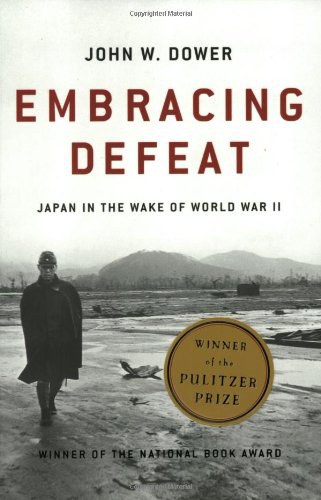
Embracing Defeat: Japan in the Wake of World War II Goodreads 豆瓣
作者:
John W. Dower
W. W. Norton & Company
2000
- 6
其它标题:
Embracing Defeat
Winner of the Pulitzer Prize, the 1999 National Book Award for Nonfiction, finalist for the Lionel Gelber Prize and the Kiriyama Pacific Rim Book Prize, Embracing Defeat is John W. Dower's brilliant examination of Japan in the immediate, shattering aftermath of World War II.
Drawing on a vast range of Japanese sources and illustrated with dozens of astonishing documentary photographs, Embracing Defeat is the fullest and most important history of the more than six years of American occupation, which affected every level of Japanese society, often in ways neither side could anticipate. Dower, whom Stephen E. Ambrose has called "America's foremost historian of the Second World War in the Pacific," gives us the rich and turbulent interplay between West and East, the victor and the vanquished, in a way never before attempted, from top-level manipulations concerning the fate of Emperor Hirohito to the hopes and fears of men and women in every walk of life. Already regarded as the benchmark in its field, Embracing Defeat is a work of colossal scholarship and history of the very first order.
Drawing on a vast range of Japanese sources and illustrated with dozens of astonishing documentary photographs, Embracing Defeat is the fullest and most important history of the more than six years of American occupation, which affected every level of Japanese society, often in ways neither side could anticipate. Dower, whom Stephen E. Ambrose has called "America's foremost historian of the Second World War in the Pacific," gives us the rich and turbulent interplay between West and East, the victor and the vanquished, in a way never before attempted, from top-level manipulations concerning the fate of Emperor Hirohito to the hopes and fears of men and women in every walk of life. Already regarded as the benchmark in its field, Embracing Defeat is a work of colossal scholarship and history of the very first order.
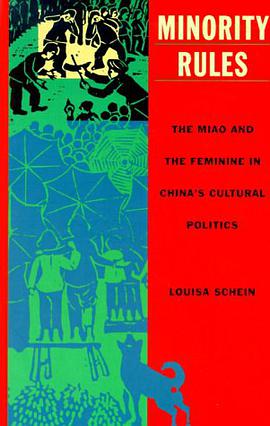
Minority Rules 豆瓣
作者:
Louisa Schein
Duke University Press Books
2000
- 2
Louisa Schein’s study of cultural production in post-Mao China begins and ends with the Miao, one of China's 56 officially designated minority nationalities. As she points out in her introduction, however, “this book is about China as much as it is about the Miao” (p. 2). Indeed, this book is very much about the complementary and indispensable relation that each bears to the other.
Schein's focus is on cultural production, and much of the text consists of a close examination of representation practices through which “Miao” has emerged as a historical and ethnic identity. The Miao live scattered across seven provinces in southwestern China and four southeast Asian nations, speak dozens of mutually unintelligible dialects and refer to themselves with a variety of names, although “Miao” is not among them. Nevertheless, Miao, originally a derogative imposed by outsiders, has become an official standard and an accepted self-description.
Schein begins by sketching the continuous but unequal relationship between Miao and Han from the late imperial period through the 1990s. Over this period, the Miao have been brought under increasingly tight political, economic, and cultural control by the Chinese state. This trajectory of political and cultural power is reflected in a series of discourses and practices through which the Miao have been constructed as Other. In the 19th century, the Miao were depicted as exotic, dangerous, and promiscuous in popular picture albums. During the Republican period, the Miao were pressured to assimilate, often enduring humiliation and physical coercion. After 1949, a sincere effort to account for ethnic diversity within the new nation-state was first interrupted by the Great Leap Forward and then effectively negated by the conformist pressures of the Cultural Revolution. In the post-Mao era, as markets have overtaken mass movements and top-down policy declarations, new opportunities as well as challenges to Miao cultural agency have emerged.
After the founding of the People's Republic in 1949, China's new leaders sought to realize the state as “a social order of national multiethnicity” (p. 73). Transforming newly fixed ethnic categories into functioning social and political units relied, in part, on the work of young minority men and women who were recruited into training schools called “Nationalities Institutes.” Some were groomed as political cadres and sent back to their communities; those with appropriate talents were trained as artists and performers. Schein's poignant profiles of aging members of this cohort provide valuable insight into the personal and collective struggle entailed in interpreting and accommodating unpredictable shifts in state policy and economic conditions. Once in great demand for their value in promulgating the message of ethnic unity and socialist development, these now-faded stars were highly skilled and well-trained performers. As state-sponsored cultural professionals, they developed highly stylized, sanitized repertoires that combined such elements of traditional Miao culture as courtship songs and shamanic dances with the techniques and aesthetics of ballet and other Western art forms.
With the advent of the post-Mao economic reforms, however, these stylized representations were rejected as artificial and inauthentic by both Chinese consumers and global markets. Although the most successful performers still enjoyed the prestige and privilege of an elite status in their adopted urban milieu, most found themselves eclipsed by rough-hewn rural troupes who were better able to satisfy the fantasies of urban Chinese consumers and foreign tourists.
The marketization of ethnic images entailed the emergence of new forms of exploitation as well as new opportunities for cultural agency. Schein's descriptions make it clear that neither trend dominates the current process. For instance, the commodification of authentic, ethnic, female Miao bodies certainly serves to reify ethnic and gender relationships, reproducing the asymmetries of power among Han and Miao, male and female. Many Miao women are distressed by the indignity of being subject to the yearning, idealizing, and sometimes sexualizing gaze of the consumer. Yet in the interactions between some Miao women and male Han tourists, officials, and other expectant consumers of exotic, Miao femininity, Schein discerns creative attempts to reclaim individual and collective agency. In one of the most insightful passages in the book, she describes how some young Miao women respond to these potentially exploitative situations. When recruited by Han photographers to appear in traditional festival garb, some opt out entirely, whereas others have become habituated to the point that they are able to manipulate the procedure and dictate the terms of remuneration (p. 211). In one case, young women made their own arrangement to sing privately for an amateur Han folklorist, defying (and ultimately drawing a reprimand from) their elders. Here, Schein shows that Miao women have been able to subvert both the expectations of their own communities and the “urban gaze” of Han tourists. By taking control of the commodification process, their actions transcend mere resistance to domination.
In Minority Rules, Louisa Schein skillfully combines theoretical debate with detailed and engaging description in a work that is as intellectually insightful as it is ethnographically informative. As a study of the Miao and of the dialectics of gender, power, and representation in the post-Mao era, Schein's book is an important addition to the ethnography of the minority peoples of southwestern China and should interest all anthropologists of contemporary China. Yet this work ultimately deserves a broader audience; this is a significant contribution to the theory of cultural production.
Schein's focus is on cultural production, and much of the text consists of a close examination of representation practices through which “Miao” has emerged as a historical and ethnic identity. The Miao live scattered across seven provinces in southwestern China and four southeast Asian nations, speak dozens of mutually unintelligible dialects and refer to themselves with a variety of names, although “Miao” is not among them. Nevertheless, Miao, originally a derogative imposed by outsiders, has become an official standard and an accepted self-description.
Schein begins by sketching the continuous but unequal relationship between Miao and Han from the late imperial period through the 1990s. Over this period, the Miao have been brought under increasingly tight political, economic, and cultural control by the Chinese state. This trajectory of political and cultural power is reflected in a series of discourses and practices through which the Miao have been constructed as Other. In the 19th century, the Miao were depicted as exotic, dangerous, and promiscuous in popular picture albums. During the Republican period, the Miao were pressured to assimilate, often enduring humiliation and physical coercion. After 1949, a sincere effort to account for ethnic diversity within the new nation-state was first interrupted by the Great Leap Forward and then effectively negated by the conformist pressures of the Cultural Revolution. In the post-Mao era, as markets have overtaken mass movements and top-down policy declarations, new opportunities as well as challenges to Miao cultural agency have emerged.
After the founding of the People's Republic in 1949, China's new leaders sought to realize the state as “a social order of national multiethnicity” (p. 73). Transforming newly fixed ethnic categories into functioning social and political units relied, in part, on the work of young minority men and women who were recruited into training schools called “Nationalities Institutes.” Some were groomed as political cadres and sent back to their communities; those with appropriate talents were trained as artists and performers. Schein's poignant profiles of aging members of this cohort provide valuable insight into the personal and collective struggle entailed in interpreting and accommodating unpredictable shifts in state policy and economic conditions. Once in great demand for their value in promulgating the message of ethnic unity and socialist development, these now-faded stars were highly skilled and well-trained performers. As state-sponsored cultural professionals, they developed highly stylized, sanitized repertoires that combined such elements of traditional Miao culture as courtship songs and shamanic dances with the techniques and aesthetics of ballet and other Western art forms.
With the advent of the post-Mao economic reforms, however, these stylized representations were rejected as artificial and inauthentic by both Chinese consumers and global markets. Although the most successful performers still enjoyed the prestige and privilege of an elite status in their adopted urban milieu, most found themselves eclipsed by rough-hewn rural troupes who were better able to satisfy the fantasies of urban Chinese consumers and foreign tourists.
The marketization of ethnic images entailed the emergence of new forms of exploitation as well as new opportunities for cultural agency. Schein's descriptions make it clear that neither trend dominates the current process. For instance, the commodification of authentic, ethnic, female Miao bodies certainly serves to reify ethnic and gender relationships, reproducing the asymmetries of power among Han and Miao, male and female. Many Miao women are distressed by the indignity of being subject to the yearning, idealizing, and sometimes sexualizing gaze of the consumer. Yet in the interactions between some Miao women and male Han tourists, officials, and other expectant consumers of exotic, Miao femininity, Schein discerns creative attempts to reclaim individual and collective agency. In one of the most insightful passages in the book, she describes how some young Miao women respond to these potentially exploitative situations. When recruited by Han photographers to appear in traditional festival garb, some opt out entirely, whereas others have become habituated to the point that they are able to manipulate the procedure and dictate the terms of remuneration (p. 211). In one case, young women made their own arrangement to sing privately for an amateur Han folklorist, defying (and ultimately drawing a reprimand from) their elders. Here, Schein shows that Miao women have been able to subvert both the expectations of their own communities and the “urban gaze” of Han tourists. By taking control of the commodification process, their actions transcend mere resistance to domination.
In Minority Rules, Louisa Schein skillfully combines theoretical debate with detailed and engaging description in a work that is as intellectually insightful as it is ethnographically informative. As a study of the Miao and of the dialectics of gender, power, and representation in the post-Mao era, Schein's book is an important addition to the ethnography of the minority peoples of southwestern China and should interest all anthropologists of contemporary China. Yet this work ultimately deserves a broader audience; this is a significant contribution to the theory of cultural production.
Coming to Terms with the Nation 豆瓣
8.8 (5 个评分)
作者:
Thomas Mullaney
University of California Press
2010
- 11
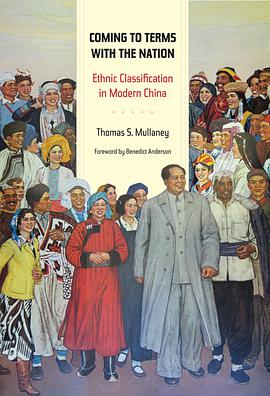
China is a vast nation comprised of hundreds of distinct ethnic communities, each with its own language, history, and culture. Today the government of China recognizes just 56 ethnic nationalities, or minzu, as groups entitled to representation. This controversial new book recounts the history of the most sweeping attempt to sort and categorize the nation's enormous population: the 1954 Ethnic Classification project (minzu shibie). Thomas S. Mullaney draws on recently declassified material and extensive oral histories to describe how the communist government, in power less than a decade, launched this process in ethnically diverse Yunnan. Mullaney shows how the government drew on Republican-era scholarship for conceptual and methodological inspiration as it developed a strategy for identifying minzu and how non-Party-member Chinese ethnologists produced a "scientific" survey that would become the basis for a policy on nationalities.
A History of East Asia 豆瓣
作者:
Charles Holcombe
Cambridge University Press
2010
- 11
Charles Holcombe begins this extraordinarily ambitious 2011 book by asking the question 'What is East Asia?' In the modern age, many of the features that made the region - now defined as including China, Japan, and Korea - distinct have been submerged by the effects of revolution, politics or globalization. Yet, as an ancient civilization, the region had both an historical and cultural coherence. It shared a Confucian heritage, some common approaches to Buddhism, a writing system that is deeply imbued with ideas and meaning, and many political and institutional traditions. This shared past and the interconnections among three distinct, yet related societies are at the heart of this book, which traces the story of East Asia from the dawn of history to the twenty-first century. Charles Holcombe is an experienced guide who encapsulates, in a fast-moving and colorful narrative, the vicissitudes and glories of one of the greatest civilizations on earth.
• An introduction to East Asia from the dawn of history to the present by a premier scholar in the field • Emphasizes connections between China, Japan and Korea, as well as wider Eurasian and global currents • Features illustrations, maps, a glossary, a pronunciation guide, a timeline and a bibliography
• An introduction to East Asia from the dawn of history to the present by a premier scholar in the field • Emphasizes connections between China, Japan and Korea, as well as wider Eurasian and global currents • Features illustrations, maps, a glossary, a pronunciation guide, a timeline and a bibliography
Japan's Total Empire 豆瓣
作者:
Louise Young
University of California Press
1999
- 9
In this first social and cultural history of Japan's construction of Manchuria, Louise Young offers an incisive examination of the nature of Japanese imperialism. Focusing on the domestic impact of Japan's activities in Northeast China between 1931 and 1945, Young considers "metropolitan effects" of empire building: how people at home imagined and experienced the empire they called Manchukuo. Contrary to the conventional assumption that a few army officers and bureaucrats were responsible for Japan's overseas expansion, Young finds that a variety of organizations helped to mobilize popular support for Manchukuo--the mass media, the academy, chambers of commerce, women's organizations, youth groups, and agricultural cooperatives--leading to broad-based support among diverse groups of Japanese. As the empire was being built in China, Young shows, an imagined Manchukuo was emerging at home, constructed of visions of a defensive lifeline, a developing economy, and a settler's paradise.
Japan's Colonization of Korea 豆瓣
作者:
Alexis Dudden
Univ of Hawaii Pr
2006
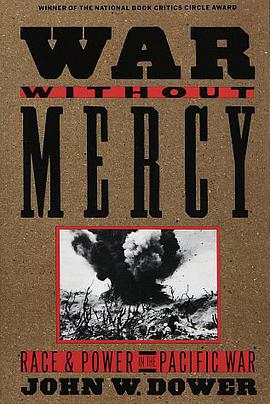
War Without Mercy 豆瓣
作者:
John W. Dower
Pantheon
1987
- 2
Now in paperback, War Without Mercy has been hailed by the New York Times as "one of the most original and important books to be written about the war between Japan and the United States." In this monumental history, Professor John Dower reveals a hidden, explosive dimension of the Pacific War -- race -- while writing what John Toland has called "a landmark book...a powerful, moving, and even-handed history that is sorely needed in both America and Japan." Drawing on American and Japanese songs, slogans, cartoons, propaganda films, secret reports, and a wealth of other documents of the time, Dower opens up a whole new way of looking at that bitter struggle of four and a half decades ago and its ramifications in our lives today. As Edwin O. Reischauer, former ambassador to Japan, has pointed out, this book offers "a lesson that the postwar generations need most...with eloquence, crushing detail, and power."
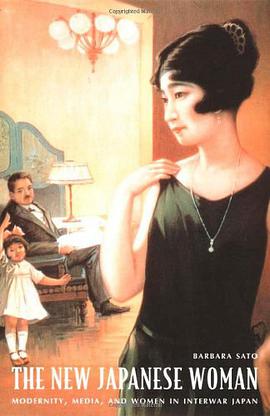
The New Japanese Woman 豆瓣
作者:
Barbara Sato
Duke University Press Books
2003
- 4
Presenting a vivid social history of 'the new woman' that emerged in Japanese culture between the world wars, "The New Japanese Woman" shows how images of modern women burst into Japanese life in the midst of the urbanization, growth of the middle class, and explosion of consumerism resulting from the postwar economic boom, particularly in the 1920s. Barbara Sato analyzes the icons that came to represent the new urban femininity - the 'modern girl', the housewife, and the professional working woman. She describes how these images portrayed in the media shaped and were shaped by women's desires. While the figures of the modern woman by no means represented all Japanese women, they did challenge the myth of a fixed definition of femininity - particularly the stereotype emphasizing gentleness and meekness, Sato explains, and they generated a new set of possibilities for middle-class women to act and imagine themselves within the context of consumer culture."The New Japanese Woman" is rich in descriptive detail and full of fascinating vignettes from Japan's interwar media and consumer industries-department stores, film, radio, popular music and the publishing industry. Sato pays particular attention to the enormously influential role of the women's magazines, which proliferated during this period. She describes the different kinds of magazines, their stories and readerships, and the new genres the emerged at the time, including confessional pieces, articles about family and popular trends, and advice columns. Examining reactions to the images of the modern girl, the housewife, and the professional woman, Sato shows that while these were not revolutionary figures, they caused anxiety among male intellectuals, government officials, and much of the public at large, and they contributed to the significant changes in gender relations in Japan following the Second World War.
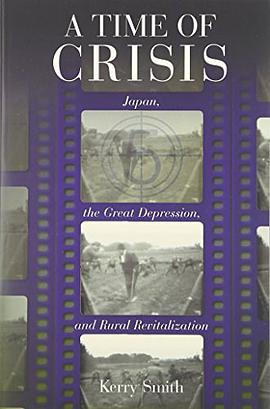
A Time of Crisis 豆瓣
作者:
Kerry Smith
Harvard University Asia Center
2003
- 9
The events of the early 1930s - a severe economic depression, political unrest and profound social change - were unprecendented in the history of modern Japan and deeply unsettling to those who lived through them. This study of Japan's transformation by the crises of the 1930s focuses on efforts by average citizens to overcome the effects of the Great Depression. The author draws on the experiences of the inhabitants of a small farming community in northeastern Japan to illustrate how these efforts, commonly known as "rural revitalization", affected farm families' economic standing, their relationships with the state, and their attempts to bridge the growing divide between city and country, farm and factory. By revealing the ways in which the state and communities dealt with the Great Depression, this study brings us closer to a comparative, grassroots perspective on how average men and women addressed some of modernity's fundamental questions.
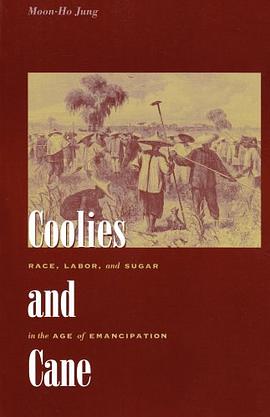
Coolies and Cane 豆瓣
作者:
Moon-Ho Jung
The Johns Hopkins University Press
2008
- 9
How did thousands of Chinese migrants end up working alongside African Americans in Louisiana after the Civil War? With the stories of these workers, Coolies and Cane advances an interpretation of emancipation that moves beyond U.S. borders and the black-white racial dynamic. Tracing American ideas of Asian labor to the sugar plantations of the Caribbean, Moon-Ho Jung argues that the racial formation of "coolies" in American culture and law played a pivotal role in reconstructing concepts of race, nation, and citizenship in the United States. Jung examines how coolies appeared in major U.S. political debates on race, labor, and immigration between the 1830s and 1880s. He finds that racial notions of coolies were articulated in many, often contradictory, ways. They could mark the progress of freedom; they could also symbolize the barbarism of slavery. Welcomed and rejected as neither black nor white, coolies emerged recurrently as both the salvation of the fracturing and reuniting nation and the scourge of American civilization. Based on extensive archival research, this study makes sense of these contradictions to reveal how American impulses to recruit and exclude coolies enabled and justified a series of historical transitions: from slave-trade laws to racially coded immigration laws, from a slaveholding nation to a "nation of immigrants," and from a continental empire of manifest destiny to a liberating empire across the seas. Combining political, cultural, and social history, Coolies and Cane is a compelling study of race, Reconstruction, and Asian American history.
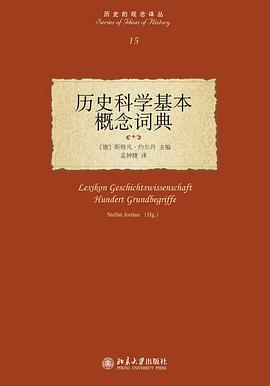
历史科学基本概念辞典 豆瓣
作者:
【德】斯特凡·约尔丹
译者:
孟钟捷
北京大学出版社
2012
- 2
《历史科学基本概念辞典》内容简介:历史学并没有像数学、物理学一样的一套专门的术语,历史学的语言首先是日常用语,以及来自于哲学等其他学科的术语,但在历史学中,这些术语又有其特殊的含义。《历史科学基本概念辞典》精选一百个基本术语,涉及历史研究及史学理论的关键概念和范畴,反映当前学术界的最新见解。辞条撰写者均为国际史学理论界的著名学者,除了吕特克、科塞勒克、阿斯曼夫妇、科卡、吕森等德国学者之外,还有海登•怀特等美、英、法等国学者。
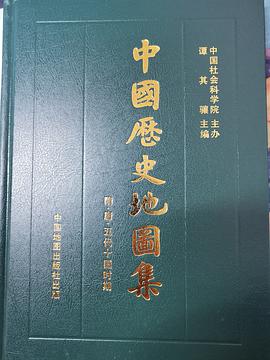
中国历史地图集(第五册):隋、唐、五代十国时期 豆瓣
作者:
谭其骧
中国地图
1900
- 1