博弈论
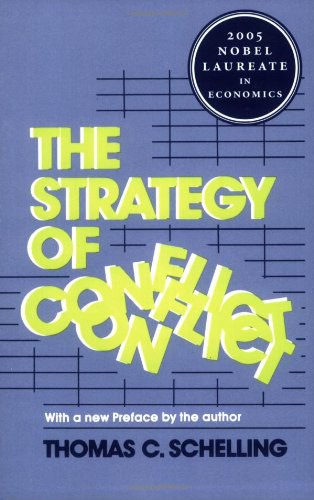
The Strategy of Conflict 豆瓣 Goodreads
作者: Thomas C. Schelling Harvard University Press 1981 - 5
A series of closely interrelated essays on game theory, this book deals with an area in which progress has been least satisfactory-the situations where there is a common interest as well as conflict between adversaries: negotiations, war and threats of war, criminal deterrence, extortion, tacit bargaining. It proposes enlightening similarities between, for instance, maneuvering in limited war and in a traffic jam; deterring the Russians and one's own children; the modern strategy of terror and the ancient institution of hostages.
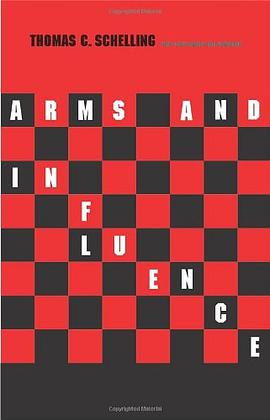
Arms and Influence 豆瓣
作者: Thomas C. Schelling Yale University Press 2008 - 11
Traditionally, Americans have viewed war as an alternative to diplomacy, and military strategy as the science of victory. Today, however, in our world of nuclear weapons, military power is not so much exercised as threatened. It is, Mr. Schelling says, bargaining power, and the exploitation of this power, for good or evil, to preserve peace or to threaten war, is diplomacy - the diplomacy of violence.The author concentrates in this book on the way in which military capabilities, real or imagined, are used, skillfully or clumsily, as bargaining power. He sees the steps taken by the U.S. during the Berlin and Cuban crises as not merely preparations for engagement, but as signals to an enemy, with reports from the adversary's own military intelligence as our most important diplomatic communications. Even the bombing of North Vietnam, Mr. Schelling points out, is as much coercive as tactical, aimed at decisions as much as bridges. He carries forward the analysis so brilliantly begun in his earlier "The Strategy of Conflict" (1960) and "Strategy and Arms Control" (with Morton Halperin, 1961), and makes a significant contribution to the growing literature on modern war and diplomacy.