思维
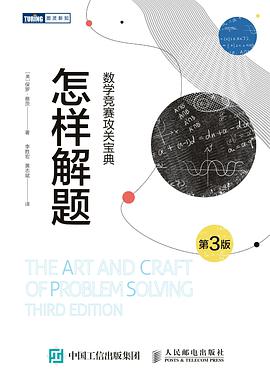
怎样解题(第3版) 豆瓣
The Art and Craft of Problem Solving (3/e)
作者: [美] 保罗·蔡茨 译者: 李胜宏 / 黄志斌 人民邮电出版社 2019 - 11
本书作者中学时代即亲身参加过国际奥林匹克数学竞赛,后来又长期负责培训数学竞技选手,具有丰富的解题经验。在书中,他总结了典型的解题方法,提供了系统而独到的观点。众多例题和习题选自各国数学竞赛真题,极具实战性,让你尽览不同风格的种类难题,尽享解题之美。
本书主要是为了帮助大家学习两个方面的内容:解决问题的方法和特定的数学思想。通过阅读这本书,你将会逐步学到更多的数学知识,也将会对解决问题越来越熟练。你在某一个领域所取得的进步将会激励你在更多的领域获得成功。
2020年11月25日 在读
Leetcode - 164. Maximum Gap 鸽笼定理。Leetcode 1654 - Minimum Jumps to Reach Home 贝祖数 MIT 6.006 递归思路模板 (SRT BOT)
1. Subproblem definition
2. Relate subproblem solutions recursively
3. Topological order on subproblems (⇒ subproblem DAG) 4. Base cases of relation
5. Original problem solution via subproblem(s)
6. Time analysis
2019 科普 数学 科学 思维
思考的整理学 豆瓣
思考の整理学
作者: [日] 外山滋比古 译者: 施敏霞 后浪丨九州出版社 2020 - 10
东京大学·京都大学学生必读书目第1名
7度荣获东京大学·京都大学“生活协作社”图书畅销榜第1名
2018—2019连续两年获得日本大学生协年度图书榜单第1名
◎ 编辑推荐
☆ 日本思考大师外山滋比古教授的思考整理法,畅销日本34年不衰,印刷124次,年均加印量7万册,销量超253万册!
☆ 收集了很多知识碎片,却不知怎样化为己用?
不会提炼头脑中的想法,表达起来总有障碍?
本书将帮助你打破应试教育的思维屏障,提升思考的质量,避免无效思考;
点燃灵感的火苗,拿出有见地的想法;随时随地汲取思考的精华,锻炼你的思维。
☆ 重新整理思考,激发大脑创造力
◆ 早餐前的思考更高效
◆ 睡一晚,时间的沉淀可以催生灵感
◆ 利用递进笔记本,给想法换个新环境
◆ 遗忘可以帮我们筛出更有价值的思考
◆ 将想法写下来,使思考的事情更明晰
◆ 酝酿新想法的秘诀:三上(马上、枕上、厕上)和三中(忘我中、散步中、洗浴中)
◎ 名人推荐
东京大学学生读后感:
我养成了做笔记、整理思考的习惯!
这本书教会我认可现在的自己,享受思考的乐趣。
与其他领域的接触、融合能够孕育新的思维方式,书中的这个想法非常新鲜。
在现在的时代,比起获取信息,更重要的是“舍弃”。
我之前的学习偏重于知识,如今才知道这样是不行的。
◎ 内容简介
如果大脑只是存储知识的杂乱仓库,就难以输出打动人心的思考观点。通过对思考的整理,我们得以将碎片化的信息转化为生动的想法,避免在重要时刻手忙脚乱,在随时随地的思考锻炼中使思考实现质的提升,让大脑成为拥有创造力的工厂。
在本书中,作者基于丰富深刻的思考体验,提出了独特又高效的思考整理法。比如当思考迟迟没有头绪时,将想法搁置一段时间反而更有效;利用卡片和笔记本分类收集知识碎片,根据自己的关注点、兴趣、价值观对知识进行过滤,有助于思考的整理;遗忘对思考的整理也有意想不到的效果。在作者的指引下,我们可以重新体会思考的乐趣,轻松又有技巧地整理散乱的思考,激发出更多创造力。
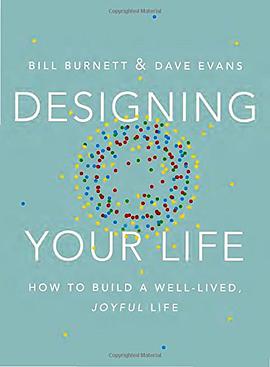
Designing Your Life 豆瓣
7.8 (14 个评分) 作者: Bill Burnett / Dave Evans Knopf 2016 - 9
Designers create worlds and solve problems using design thinking. Look around your office or home—at the tablet or smartphone you may be holding or the chair you are sitting in. Everything in our lives was designed by someone. And every design starts with a problem that a designer or team of designers seeks to solve.
In this book, Bill Burnett and Dave Evans show us how design thinking can help us create a life that is both meaningful and fulfilling, regardless of who or where we are, what we do or have done for a living, or how young or old we are. The same design thinking responsible for amazing technology, products, and spaces can be used to design and build your career and your life, a life of fulfillment and joy, constantly creative and productive, one that always holds the possibility of surprise.
智识的生产技术 豆瓣
知的生産の技術
6.9 (9 个评分) 作者: [日] 梅棹忠夫 译者: 樊秀丽 商务印书馆 2016 - 6
在日本的学校里,老师灌输过多,学生不懂积极主动学习;学校不教学生获取知识、研究问题的方法。研究者源于技术欠缺的研究能力低下,没有系统的整理资料的方法,研究者对于研究生活中的一些基础技术视而不见。这些话题和从事智识生产活动的人有很大的关系。本书旨在引起普遍性智识生产技术的研究。
学校虽然给学生灌输了不少知识,但并没有教给他们更多获取知识的方法。作者从自己长期摸索的经验和与同仁的共同讨论中确信,学生和研究者的研究能力低下,是因为在记笔记、卡片的利用、稿件的写作等基本技术方面所接受的训练不够。为了进行创造性的智识生产,作者尝试就其实践性技术提出方案。
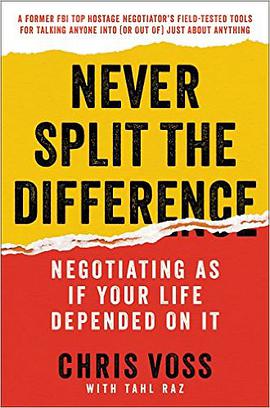
Never Split the Difference 豆瓣 Goodreads
8.2 (11 个评分) 作者: Chris Voss / Tahl Raz HarperBusiness 2016 - 5
A former international hostage negotiator for the FBI offers a new, field-tested approach to high-stakes negotiations—whether in the boardroom or at home.
After a stint policing the rough streets of Kansas City, Missouri, Chris Voss joined the FBI, where his career as a hostage negotiator brought him face-to-face with a range of criminals, including bank robbers and terrorists. Reaching the pinnacle of his profession, he became the FBI’s lead international kidnapping negotiator. Never Split the Difference takes you inside the world of high-stakes negotiations and into Voss’s head, revealing the skills that helped him and his colleagues succeed where it mattered most: saving lives. In this practical guide, he shares the nine effective principles—counterintuitive tactics and strategies—you too can use to become more persuasive in both your professional and personal life.
Life is a series of negotiations you should be prepared for: buying a car, negotiating a salary, buying a home, renegotiating rent, deliberating with your partner. Taking emotional intelligence and intuition to the next level, Never Split the Difference gives you the competitive edge in any discussion.
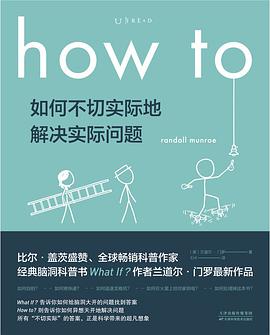
how to 豆瓣 Goodreads
how to
8.0 (22 个评分) 作者: [美]兰道尔·门罗 译者: Ent 天津科学技术出版社 2020 - 4
比尔·盖茨盛赞、全球畅销科普作家、What If?作者兰道尔·门罗新作。用超凡脑洞告诉你,再普通的任务都有一个荒诞却符合科学原理的解决方案。不切实际的答案,正是科学带来的非凡想象
如何自拍(用天文望远镜)?如何给手机充电(用机场的扶梯)?如何寄快递(从国际空间站)?如何判断你是不是90后(用碳-14年代测定法)?如何过河(把河水煮干)……
针对每个人都会在生活中遇到的普通问题,“科学怪咖”兰道尔·门罗用专业、严谨的多学科知识和大出天际的脑洞,一本正经地给出荒谬却有趣的回答,完全刷新你对这个世界的认识。
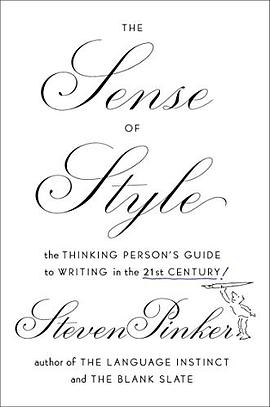
The Sense of Style 豆瓣
作者: Steven Pinker Viking Books 2014 - 9
Why is so much writing so bad, and how can we make it better? Is the English language being corrupted by texting and social media? Do the kids today even care about good writing? Why should any of us care?
In The Sense of Style, the bestselling linguist and cognitive scientist Steven Pinker answers these questions and more. Rethinking the usage guide for the twenty-first century, Pinker doesn’t carp about the decline of language or recycle pet peeves from the rulebooks of a century ago. Instead, he applies insights from the sciences of language and mind to the challenge of crafting clear, coherent, and stylish prose.
In this short, cheerful, and eminently practical book, Pinker shows how writing depends on imagination, empathy, coherence, grammatical knowhow, and an ability to savor and reverse engineer the good prose of others. He replaces dogma about usage with reason and evidence, allowing writers and editors to apply the guidelines judiciously, rather than robotically, being mindful of what they are designed to accomplish.
Filled with examples of great and gruesome prose, Pinker shows us how the art of writing can be a form of pleasurable mastery and a fascinating intellectual topic in its own right.
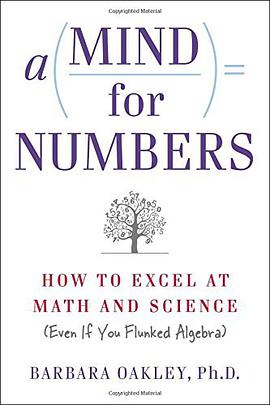
A Mind For Numbers 豆瓣
作者: Barbara Oakley Tarcher 2014 - 7
Whether you are a student struggling to fulfill a math or science requirement, or you are embarking on a career change that requires a higher level of math competency, A Mind for Numbers offers the tools you need to get a better grasp of that intimidating but inescapable field. Engineering professor Barbara Oakley knows firsthand how it feels to struggle with math. She flunked her way through high school math and science courses, before enlisting in the army immediately after graduation. When she saw how her lack of mathematical and technical savvy severely limited her options—both to rise in the military and to explore other careers—she returned to school with a newfound determination to re-tool her brain to master the very subjects that had given her so much trouble throughout her entire life.
In A Mind for Numbers, Dr. Oakley lets us in on the secrets to effectively learning math and science—secrets that even dedicated and successful students wish they’d known earlier. Contrary to popular belief, math requires creative, as well as analytical, thinking. Most people think that there’s only one way to do a problem, when in actuality, there are often a number of different solutions—you just need the creativity to see them. For example, there are more than three hundred different known proofs of the Pythagorean Theorem. In short, studying a problem in a laser-focused way until you reach a solution is not an effective way to learn math. Rather, it involves taking the time to step away from a problem and allow the more relaxed and creative part of the brain to take over. A Mind for Numbers shows us that we all have what it takes to excel in math, and learning it is not as painful as some might think!
如何学习 豆瓣
How We Learn: The Surprising Truth About When, Where, and Why It Happens
7.8 (29 个评分) 作者: [美] Benedict Carey 译者: 玉冰 浙江人民出版社 2017 - 7
从很小的时候开始,就有人灌输给了我们这样的观念:学习靠的是自律。我们必须把自己关在一个安静的地方学习,关掉音乐,严守一个规律的学习习惯,唯有这样我们才能考出好成绩、记住发言稿、在钢琴演奏会上不出纰漏。可是,新的科学研究成果告诉你,这些老一套的学习方法都不是好方法,那怎样才能让我们花更少的时间获得更好的学习效果呢?
在本书中,作者汇集了从神经科学和认知心理学数十年科研成果中筛选出的精品,让你看到大脑汲取知识的真正途径,让你了解这台奇妙学习机器的运作原理,以及学习科学领域前沿的科学学习方法,从大脑的学习机制讲起,一路探寻记忆的真相、环境的影响、灵感和顿悟的产生以及潜意识的奥秘,提炼出10种颠覆常识的学习方法,告诉你何时学、在哪学、怎么学,才能有效、轻松、不费力。
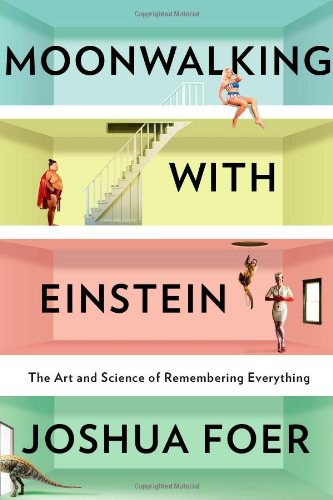
Moonwalking With Einstein 豆瓣 Goodreads
作者: Joshua Foer The Penguin Press 2011 - 3 其它标题: Moonwalking with Einstein: The Art and Science of Remembering Everything
Foer's unlikely journey from chronically forgetful science journalist to U.S. Memory Champion frames a revelatory exploration of the vast, hidden impact of memory on every aspect of our lives.
On average, people squander forty days annually compensating for things they've forgotten. Joshua Foer used to be one of those people. But after a year of memory training, he found himself in the finals of the U.S. Memory Championship. Even more important, Foer found a vital truth we too often forget: In every way that matters, we are the sum of our memories.
Moonwalking with Einstein draws on cutting-edge research, a surprising cultural history of memory, and venerable tricks of the mentalist's trade to transform our understanding of human remembering. Under the tutelage of top "mental athletes," he learns ancient techniques once employed by Cicero to memorize his speeches and by Medieval scholars to memorize entire books. Using methods that have been largely forgotten, Foer discovers that we can all dramatically improve our memories.
Immersing himself obsessively in a quirky subculture of competitive memorizers, Foer learns to apply techniques that call on imagination as much as determination-showing that memorization can be anything but rote. From the PAO system, which converts numbers into lurid images, to the memory palace, in which memories are stored in the rooms of imaginary structures, Foer's experience shows that the World Memory Championships are less a test of memory than of perseverance and creativity.
Foer takes his inquiry well beyond the arena of mental athletes-across the country and deep into his own mind. In San Diego, he meets an affable old man with one of the most severe case of amnesia on record, where he learns that memory is at once more elusive and more reliable than we might think. In Salt Lake City, he swaps secrets with a savant who claims to have memorized more than nine thousand books. At a high school in the South Bronx, he finds a history teacher using twenty- five-hundred-year-old memory techniques to give his students an edge in the state Regents exam.
At a time when electronic devices have all but rendered our individual memories obsolete, Foer's bid to resurrect the forgotten art of remembering becomes an urgent quest. Moonwalking with Einstein brings Joshua Foer to the apex of the U.S. Memory Championship and readers to a profound appreciation of a gift we all possess but that too often slips our minds.
游戏的本性 豆瓣
作者: 张未 上海三联书店 2018 - 1
本书是一次游戏学的历险,第一次用全新、全面的方法对游戏进行了彻底解剖。是一部直面游戏本身,用游戏学方法来研究“游戏的本性”及其核心结构的着作。
本书分为两大部分。第一部分针对游戏、电子游戏、艺术中的游戏等实际案例与问题,从人类原典型的三大游戏原典出发,对游戏的基本结构、游戏的逻辑、游戏的语法、游戏的媒介及其对玩家的影响进行了深入分析,并将这些问题联系到更大的人文社会学科进行了具体研究。
第二部分则对玩与游戏、玩家与自由,与游戏中的人所面临的理论问题、哲学问题进行了彻底地分析,并对长期以来艺术行业、游戏行业中出现的各种概念混乱与问题进行了剖析与澄清。
本书试图建立一套完整的游戏学方法论。通过游戏学的方法,游戏将可以提升到艺术层面进行研究,艺术则可以化约为游戏而得到阐释。以此,最终通过对游戏本性的研究,我们将面对人类最根本的创造力问题。
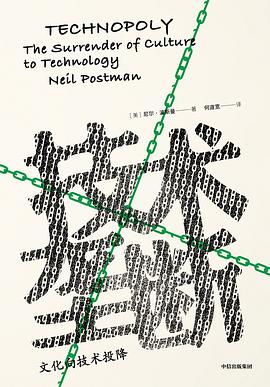
技术垄断 豆瓣
Technopoly: The Surrender of Culture to Technology
7.2 (15 个评分) 作者: [美]尼尔•波斯曼 译者: 何道宽 中信出版社 2019 - 4
本书与《童年的消逝》《娱乐至死》并称尼尔•波斯曼的“媒介批评三部曲”,其一以贯之的主题是检讨技术对人类社会生活、文化、制度的负面影响。
作者认为,技术和人的关系是亦敌亦友的关系,他之所以揭示技术的阴暗面,是为了避免技术对文化造成伤害。文化有三种形态:在 工具使用文化阶段,技术服务、从属于社会和文化;在技术统治文化阶段,技术向文化发起攻击,并试图取而代之,但难以撼动文化;在技术垄断文化阶段,技术使信息泛滥成灾,使传统世界观消失得无影无踪,技术垄断就是极权主义的技术统治。
本书揭示了技术垄断阶段各种“软”技术的欺骗作用,挞伐所谓社会“科学”,谴责唯科学主义;辨析自然科学、社会“科学”和文学之异同,并为传统符号的耗竭扼腕痛惜;号召人们以强烈的道德关怀和博爱之心抵抗技术垄断,坚决反对文化向技术投降。
创造力 豆瓣
米哈里•希斯赞特米哈伊
8.7 (6 个评分) 作者: Mihaly Csikszentmihalyi 译者: 黄珏苹 浙江人民出版社 2015 - 1
 本书是“心流之父”、积极心理学大师希斯赞特米哈伊历时30年潜心研究的经典之作。他访谈了包括14位诺贝尔奖得主在内的91名创新者,分析他们的人格特征,以及他们在创新过程中的“心流”体验,总结出创造力产生的运作方式,提出了令每个人的生活变得丰富而充盈的实用建议。
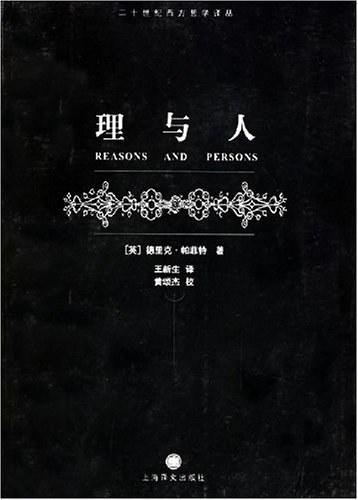
理与人 豆瓣
Reasons and Persons
作者: 德里克・帕菲特 译者: 王新生 上海译文出版社 2005 - 1
帕菲特是当代著名哲学和伦理学家,其代表作《理与人》一书被誉为自西季威克的《伦理学方法》问一个世纪以来最伟大的实证道德哲学著作。本书围绕着“理”与“人”这两个主题,深入细致地分了历史上人们在这两方面所秉持的一系列代表观点和理论,指出人们对自身本性和行动理由的把握其实在许多虚妄之处。作者借助大量的例子和缜密的推理,不仅比较和提示了人类行的内在基础,而且从理性,道德和人的本性诸层面对一些传统上信以为真的道德信念和观念提出了强有力的挑战。该书出版后对西方伦理学的发展向产生了公认的革命性影响,无论是在元伦理学方面还是在应用伦理学方面都占有无可替代的地位。本书还是著名的“哈佛教材”之一。
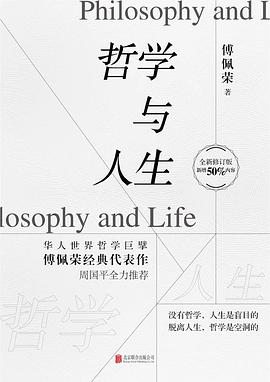
哲学与人生(全新修订版) 豆瓣
作者: 傅佩荣 2019 - 8
《哲学与人生》是傅佩荣教授的代表作,本书在旧版基础上新增50%内容,十余万字,并对全书进行了全新修订。全书以西方哲学为经,以东方哲学为纬,辅以宗教、艺术、教育与文化视野,拓展生命格局。
本书的前半部分探讨哲学的思考方法、人性的真相、神话与悲剧、苏格拉底、西方伦理学、存在主义的形成与发展,提供由人生省思走向哲学的途径。本书的后半部分则探索中国哲学的起源、深入浅出介绍各家学说、讨论善恶与正义、变化与永恒、安身与立命,强调人的生命要设法实现各种价值。
西方将哲学界定为“爱好智慧”,哲学的爱好智慧,不仅仅是理性的追求,更重要的是自我的修炼,慢慢摆脱本能的冲动和欲望的困扰。学习哲学,正可以帮助我们判断价值,明辨是非,指引人生方向,带领我们步入快乐的生活。
存在主义心理治疗 豆瓣 Goodreads
Existential Psychotherapy
9.2 (60 个评分) 作者: (美) 亚隆 译者: 黄峥 / 张怡玲 商务印书馆 2015 - 5
存在主义治疗是每一个心理治疗师在其临床工作和个人生活中都可能会采用到的一种精神取向,或者说是生活哲学。心理治疗的根本问题与人类存在的核心问题在这里相遇。
在本书中,亚隆教授从临床经验、实证性研究、哲学文献以及其他大量资料出发,围绕着四个“生命的终极关怀”——死亡、自由、存在的孤独和无意义——逐一进行深入的探讨,阐述每一个存在性关怀的意义,并论述治疗师应该如何通过对他们的理解来进行有效的临床工作。
本书不仅为那些存在主义取向的心理治疗师提供了一部经典的教科书,同时也为所有流派的治疗师以及所有思考过人生意义的人提供了一个对生命和存在进行反思的空间。
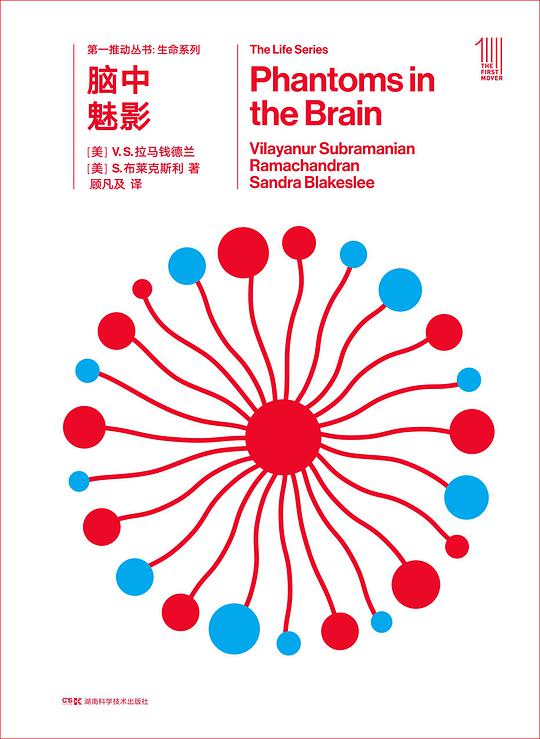
脑中魅影 豆瓣
Phantoms in the Brain
作者: [美] V. S. 拉马钱德兰 / [美] S.布莱克斯利 译者: 顾凡及 湖南科学技术出版社 2018 - 1
在《脑中魅影》中,一位杰出的神经科学“福尔摩斯”讲给读者听许多他所解决了的最令人瞠目结舌的病例,并由此使我们得以洞察人的本质和心智。包括为什么我们会发笑或是变得忧郁;我们如何决策、自我欺骗和做梦;为什么我们中的一些人会相信上帝等等,这是一些迄今为止没有什么科学家敢涉及的问题。本书是一次发人深思的医学探索,它进入到医学的最后前沿:人的心智。
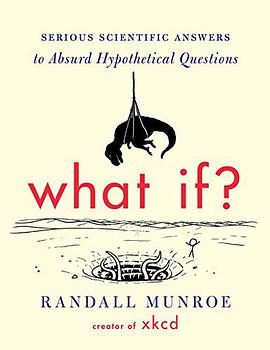
What If? 豆瓣 谷歌图书 Goodreads
What If? Serious Scientific Answers to Absurd Hypothetical Questions
8.5 (23 个评分) 作者: Randall Munroe Houghton Mifflin Harcourt 2014 - 9
From the creator of the wildly popular webcomic xkcd, hilarious and informative answers to important questions you probably never thought to ask.
Millions of people visit xkcd.com each week to read Randall Munroe’s iconic webcomic. His stick-figure drawings about science, technology, language, and love have a large and passionate following.
Fans of xkcd ask Munroe a lot of strange questions. What if you tried to hit a baseball pitched at 90 percent the speed of light? How fast can you hit a speed bump while driving and live? If there was a robot apocalypse, how long would humanity last?
In pursuit of answers, Munroe runs computer simulations, pores over stacks of declassified military research memos, solves differential equations, and consults with nuclear reactor operators. His responses are masterpieces of clarity and hilarity, complemented by signature xkcd comics. They often predict the complete annihilation of humankind, or at least a really big explosion.
The book features new and never-before-answered questions, along with updated and expanded versions of the most popular answers from the xkcd website. What If? will be required reading for xkcd fans and anyone who loves to ponder the hypothetical.
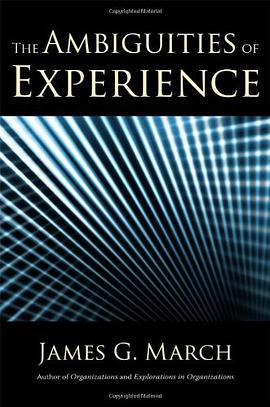
The Ambiguities of Experience 豆瓣
作者: James March Cornell University Press 2010 - 4
In The Ambiguities of Experience , James G. March asks a deceptively simple question: What is, or should be, the role of experience in creating intelligence, particularly in organizations? Folk wisdom both trumpets the significance of experience and warns of its inadequacies. On one hand, experience is described as the best teacher. On the other hand, experience is described as the teacher of fools, of those unable or unwilling to learn from accumulated knowledge or the teaching of experts. The disagreement between those folk aphorisms reflects profound questions about the human pursuit of intelligence through learning from experience that have long confronted philosophers and social scientists. This book considers the unexpected problems organizations (and the individuals in them) face when they rely on experience to adapt, improve, and survive.
While acknowledging the power of learning from experience and the extensive use of experience as a basis for adaptation and for constructing stories and models of history, this book examines the problems with such learning. March argues that although individuals and organizations are eager to derive intelligence from experience, the inferences stemming from that eagerness are often misguided. The problems lie partly in errors in how people think, but even more so in properties of experience that confound learning from it. 'Experience,' March concludes, 'may possibly be the best teacher, but it is not a particularly good teacher.'
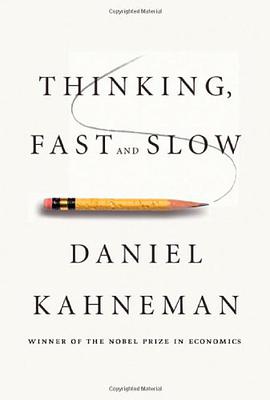
Thinking, Fast and Slow 豆瓣 Goodreads
Thinking, Fast and Slow
8.3 (35 个评分) 作者: Daniel Kahneman Farrar, Straus and Giroux 2011 - 10
Major New York Times bestseller
Winner of the National Academy of Sciences Best Book Award in 2012
Selected by the New York Times Book Review as one of the best books of 2011
A Globe and Mail Best Books of the Year 2011 Title
One of The Economist’s 2011 Books of the Year
One of The Wall Street Journal's Best Nonfiction Books of the Year 2011
In the international bestseller, Thinking, Fast and Slow, Daniel Kahneman, the renowned psychologist and winner of the Nobel Prize in Economics, takes us on a groundbreaking tour of the mind and explains the two systems that drive the way we think. System 1 is fast, intuitive, and emotional; System 2 is slower, more deliberative, and more logical. The impact of overconfidence on corporate strategies, the difficulties of predicting what will make us happy in the future, the profound effect of cognitive biases on everything from playing the stock market to planning our next vacation—each of these can be understood only by knowing how the two systems shape our judgments and decisions.
Engaging the reader in a lively conversation about how we think, Kahneman reveals where we can and cannot trust our intuitions and how we can tap into the benefits of slow thinking. He offers practical and enlightening insights into how choices are made in both our business and our personal lives—and how we can use different techniques to guard against the mental glitches that often get us into trouble. Winner of the National Academy of Sciences Best Book Award and the Los Angeles Times Book Prize and selected by The New York Times Book Review as one of the ten best books of 2011, Thinking, Fast and Slow is destined to be a classic.
One of the New York Times Book Review's Top 10 Books of 2011
Editorial Reviews
Amazon.com Review
Amazon Best Books of the Month, November 2011: Drawing on decades of research in psychology that resulted in a Nobel Prize in Economic Sciences, Daniel Kahneman takes readers on an exploration of what influences thought example by example, sometimes with unlikely word pairs like "vomit and banana." System 1 and System 2, the fast and slow types of thinking, become characters that illustrate the psychology behind things we think we understand but really don't, such as intuition. Kahneman's transparent and careful treatment of his subject has the potential to change how we think, not just about thinking, but about how we live our lives. Thinking, Fast and Slow gives deep--and sometimes frightening--insight about what goes on inside our heads: the psychological basis for reactions, judgments, recognition, choices, conclusions, and much more. --JoVon Sotak
Review
“A tour de force. . . Kahneman’s book is a must read for anyone interested in either human behavior or investing. He clearly shows that while we like to think of ourselves as rational in our decision making, the truth is we are subject to many biases. At least being aware of them will give you a better chance of avoiding them, or at least making fewer of them.”—Larry Swedroe, CBS News
“Daniel Kahneman demonstrates forcefully in his new book, Thinking, Fast and Slow, how easy it is for humans to swerve away from rationality.”—Christopher Shea, The Washington Post
“An outstanding book, distinguished by beauty and clarity of detail, precision of presentation and gentleness of manner. Its truths are open to all those whose System 2 is not completely defunct. I have hardly touched on its richness.”— Galen Strawson, The Guardian
“Brilliant . . . It is impossible to exaggerate the importance of Daniel Kahneman’s contribution to the understanding of the way we think and choose. He stands among the giants, a weaver of the threads of Charles Darwin, Adam Smith and Sigmund Freud. Arguably the most important psychologist in history, Kahneman has reshaped cognitive psychology, the analysis of rationality and reason, the understanding of risk and the study of happiness and well-being . . . A magisterial work, stunning in its ambition, infused with knowledge, laced with wisdom, informed by modesty and deeply humane. If you can read only one book this year, read this one.”— Janice Gross Stein, The Globe and Mail
“A sweeping, compelling tale of just how easily our brains are bamboozled, bringing in both his own research and that of numerous psychologists, economists, and other experts...Kahneman has a remarkable ability to take decades worth of research and distill from it what would be important and interesting for a lay audience...Thinking, Fast and Slow is an immensely important book. Many science books are uneven, with a useful or interesting chapter too often followed by a dull one. Not so here. With rare exceptions, the entire span of this weighty book is fascinating and applicable to day-to-day life. Everyone should read Thinking, Fast and Slow.” —Jesse Singal, Boston Globe
“We must be grateful to Kahneman for giving us in this book a joyful understanding of the practical side of our personalities.” —Freeman Dyson, The New York Review of Books
“Brilliant . . . It is impossible to exaggerate the importance of Daniel Kahneman’s contribution to the understanding of the way we think and choose. He stands among the giants, a weaver of the threads of Charles Darwin, Adam Smith and Sigmund Freud. Arguably the most important psychologist in history, Kahneman has reshaped cognitive psychology, the analysis of rationality and reason, the understanding of risk and the study of happiness and well-being . . . A magisterial work, stunning in its ambition, infused with knowledge, laced with wisdom, informed by modesty and deeply humane. If you can read only one book this year, read this one.” — Janice Gross Stein, The Globe and Mail
“It is an astonishingly rich book: lucid, profound, full of intellectual surprises and self-help value. It is consistently entertaining and frequently touching, especially when Kahneman is recounting his collaboration with Tversky . . . So impressive is its vision of flawed human reason that the New York Times columnist David Brooks recently declared that Kahneman and Tversky’s work ‘will be remembered hundreds of years from now,’ and that it is ‘a crucial pivot point in the way we see ourselves.’ They are, Brooks said, ‘like the Lewis and Clark of the mind’ . . . By the time I got to the end of Thinking, Fast and Slow, my skeptical frown had long since given way to a grin of intellectual satisfaction. Appraising the book by the peak-end rule, I overconfidently urge everyone to buy and read it. But for those who are merely interested in Kahenman’s takeaway on the Malcolm Gladwell question it is this: If you've had 10,000 hours of training in a predictable, rapid-feedback environment—chess, firefighting, anesthesiology—then blink. In all other cases, think.”—The New York Times Book Review
“Ask around and you hear pretty much the same thing. 'Kahneman is the most influential psychologist since Sigmund Freud,' says Christopher Chabris, a professor of psychology at Union College, in New York. 'No one else has had such a broad impact on so many fields' . . . It now seems inevitable that Kahneman, who made his reputation by ignoring or defying conventional wisdom, is about to be anointed the intellectual guru of our economically irrational times.”— Evan R. Goldstein, The Chronicle of Higher Education
“There have been many good books on human rationality and irrationality, but only one masterpiece. That masterpiece is Daniel Kahneman’s Thinking, Fast and Slow . . . This is one of the greatest and most engaging collections of insights into the human mind I have read.”—William Easterly, Financial Times
“[Thinking, Fast and Slow] is wonderful, of course. To anyone with the slightest interest in the workings of his own mind, it is so rich and fascinating that any summary would seem absurd.”— Michael Lewis, Vanity Fair
“Absorbingly articulate and infinitely intelligent . . . What's most enjoyable and compelling about Thinking, Fast and Slow is that it's so utterly, refreshingly anti-Gladwellian. There is nothing pop about Kahneman's psychology, no formulaic story arc, no beating you over the head with an artificial, buzzword-encrusted Big Idea. It's just the wisdom that comes from five decades of honest, rigorous scientific work, delivered humbly yet brilliantly, in a way that will forever change the way you think about thinking.”—Maria Popova, The Atlantic
“I will never think about thinking quite the same. [Thinking, Fast and Slow] is a monumental achievement.”—Roger Lowenstein, Bloomberg/Businessweek
“Profound . . . As Copernicus removed the Earth from the centre of the universe and Darwin knocked humans off their biological perch, Mr. Kahneman has shown that we are not the paragons of reason we assume ourselves to be.” —The Economist
“[Kahneman’s] disarmingly simple experiments have profoundly changed the way that we think about thinking . . . We like to see ourselves as a Promethean species, uniquely endowed with the gift of reason. But Mr. Kahneman’s simple experiments reveal a very different mind, stuffed full of habits that, in most situations, lead us astray.” —Jonah Lehrer, The Wall Street Journal
“[A] tour de force of psychological insight, research explication and compelling narrative that brings together in one volume the high points of Mr. Kahneman's notable contributions, over five decades, to the study of human judgment, decision-making and choice . . . Thanks to the elegance and force of his ideas, and the robustness of the evidence he offers for them, he has helped us to a new understanding of our divided minds—and our whole selves.” —Christoper F. Chabris, The Wall Street Journal
“The ramifications of Kahenman’s work are wide, extending into education, business, marketing, politics . . . and even happiness research. Call his field “psychonomics,” the hidden reasoning behind our choices. Thinking, Fast and Slow is essential reading for anyone with a mind.” —Kyle Smith, The New York Post
“A major intellectual event . . . The work of Kahneman and Tversky was a crucial pivot point in the way we see ourselves.” —David Brooks, The New York Times
“Kahneman provides a detailed, yet accessible, description of the psychological mechanisms involved in making decisions.” —Jacek Debiec, Nature
“With Kahneman’s expert help, readers may understand this mix of psychology and economics better than most accountants, therapists, or elected representatives. VERDICT A stellar accomplishment, a book for everyone who likes to think and wants to do it better.” —Library Journal
“The mind is a hilariously muddled compromise between incompatible modes of thought in this fascinating treatise by a giant in the field of decision research. Nobel-winning psychologist Kahneman (Attention and Effort) posits a brain governed by two clashing decision-making processes. The largely unconscious System 1, he contends, makes intuitive snap judgments based on emotion, memory, and hard-wired rules of thumb; the painfully conscious System 2 laboriously checks the facts and does the math, but is so "lazy" and distractible that it usually defers to System 1. Kahneman uses this scheme to frame a scintillating discussion of his findings in cognitive psychology and behavioral economics, and of the ingenious experiments that tease out the irrational, self-contradictory logics that underlie our choices. We learn why we mistake statistical noise for cohere...