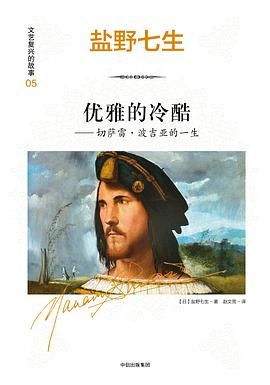
文艺复兴的故事05:优雅的冷酷:切萨雷·波吉亚的一生 豆瓣
2017年1月第1版 2017年6月2印本
作者:
[日]盐野七生
译者:
赵文莞
中信出版社
2017
- 2
【内容简介】
波吉亚家族是中世纪与美第奇家族齐名的名门望族,在这个家族中历代人才辈出,终于在切萨雷·波吉亚这一代达到顶峰。这位集智慧、武力、财富、谋略甚至残忍于一身的天之骄子,在其父教皇亚历山大六世的协同下踏上了统一意大利的霸主之路。
可惜天不随人愿,上天对切萨雷的垂青在其如日中天之时戛然而止,不可一世的王者沦为阶下之囚,侥幸逃脱后又逢绝境,虽已不复当年,但仍然矫健的身姿在重重包围中倚剑而立。切萨雷宝剑的剑光在敌人密不透风的包围中有如划破夜空的一颗流星,光芒四射随即逐渐消逝。
倒下的切萨雷,宣告了波吉亚家族鼎盛时代的终结。
----------
盐野七生系列作品:
一、《罗马人的故事》(15册)
二、“文艺复兴的故事”系列
01《文艺复兴是什么》
02《我的朋友马基雅维利:佛罗伦萨的兴亡》
03《海都物语:威尼斯一千年》(上下册)
04《文艺复兴的女人们》
05《优雅的冷酷:切萨雷·波吉亚的一生》
06《神的代理人》
三、“中世纪的故事”系列
01《罗马灭亡后的地中海世界》(上下册)
02《十字军的故事》(4册)
03《皇帝腓特烈二世》
----------
【编辑推荐】
一、文艺复兴时代的另一部“恺撒传奇”
切萨雷·波吉亚的名字“切萨雷”即是“恺撒”在意大利语中的转写。切萨雷一生向恺撒看齐,在政治和军事上展现出奇才。
二、深入浅出,既是历史著作,也是通俗读物。
俞敏洪曾说,盐野七生的历史作品不带有意识形态性,让故事与评价结合,所有的年代、人物都经过论证考察,因此不具备虚构性,但是还保留了可读性。阅读此书将是一种令人非常满足的体验。
三、波吉亚家族的兴亡。
与美第奇家族齐名的波吉亚家族在切萨雷这一代的权势达到了顶峰。权力和浮华之下充满了阴谋和痛苦。本书以切萨雷为切人点,为读者提供了波吉亚家族兴亡的图景。
----------
【相关推荐】
日本只有历史研究和历史小说。但盐野七生却走了两者中间的一条路。
——日本历史小说巨匠 司马辽太郎
盐野七生写得时候特别有意思,她越往后走越自如,像聊天一样。
——原央视《经济半小时》主持人 曲向东
一个女性在写《罗马人的故事》的时候,写出了男人写不出的气魄和壮烈来。
——新东方教育集团董事长 俞敏洪
这是一本历史,也是一本游记,还是一本政论,更是一本优美的散文集。日本女作家盐野七生就这样让我铭记在心。
——中国金融博物馆理事长 王巍
波吉亚家族是中世纪与美第奇家族齐名的名门望族,在这个家族中历代人才辈出,终于在切萨雷·波吉亚这一代达到顶峰。这位集智慧、武力、财富、谋略甚至残忍于一身的天之骄子,在其父教皇亚历山大六世的协同下踏上了统一意大利的霸主之路。
可惜天不随人愿,上天对切萨雷的垂青在其如日中天之时戛然而止,不可一世的王者沦为阶下之囚,侥幸逃脱后又逢绝境,虽已不复当年,但仍然矫健的身姿在重重包围中倚剑而立。切萨雷宝剑的剑光在敌人密不透风的包围中有如划破夜空的一颗流星,光芒四射随即逐渐消逝。
倒下的切萨雷,宣告了波吉亚家族鼎盛时代的终结。
----------
盐野七生系列作品:
一、《罗马人的故事》(15册)
二、“文艺复兴的故事”系列
01《文艺复兴是什么》
02《我的朋友马基雅维利:佛罗伦萨的兴亡》
03《海都物语:威尼斯一千年》(上下册)
04《文艺复兴的女人们》
05《优雅的冷酷:切萨雷·波吉亚的一生》
06《神的代理人》
三、“中世纪的故事”系列
01《罗马灭亡后的地中海世界》(上下册)
02《十字军的故事》(4册)
03《皇帝腓特烈二世》
----------
【编辑推荐】
一、文艺复兴时代的另一部“恺撒传奇”
切萨雷·波吉亚的名字“切萨雷”即是“恺撒”在意大利语中的转写。切萨雷一生向恺撒看齐,在政治和军事上展现出奇才。
二、深入浅出,既是历史著作,也是通俗读物。
俞敏洪曾说,盐野七生的历史作品不带有意识形态性,让故事与评价结合,所有的年代、人物都经过论证考察,因此不具备虚构性,但是还保留了可读性。阅读此书将是一种令人非常满足的体验。
三、波吉亚家族的兴亡。
与美第奇家族齐名的波吉亚家族在切萨雷这一代的权势达到了顶峰。权力和浮华之下充满了阴谋和痛苦。本书以切萨雷为切人点,为读者提供了波吉亚家族兴亡的图景。
----------
【相关推荐】
日本只有历史研究和历史小说。但盐野七生却走了两者中间的一条路。
——日本历史小说巨匠 司马辽太郎
盐野七生写得时候特别有意思,她越往后走越自如,像聊天一样。
——原央视《经济半小时》主持人 曲向东
一个女性在写《罗马人的故事》的时候,写出了男人写不出的气魄和壮烈来。
——新东方教育集团董事长 俞敏洪
这是一本历史,也是一本游记,还是一本政论,更是一本优美的散文集。日本女作家盐野七生就这样让我铭记在心。
——中国金融博物馆理事长 王巍