编程语言
Haskell Programming from first principles 豆瓣
作者: Christopher Allen / Julie Moronuki 2015
I am writing this book because I had a hard time learning Haskell.
It doesn't have to be that way. I've spent the last couple years actively teaching Haskell online and in person. Along the way, I started keeping notes on exercises and methods of teaching specific concepts and techniques in Haskell that eventually turned into my guide for learning haskell. That experience led me to work on this book.
If you are new to programming entirely, Haskell is a great first language. You may have noticed the trend of "Functional Programming in [Imperative Language]" books and tutorials and learning Haskell gets right to the heart of what functional programming is. Languages such as Java are gradually adopting functional concepts, but most such languages were not designed to be functional languages, after all. We would not encourage you to learn Haskell as an only language, but because Haskell is a pure functional language, it is a fertile environment for mastering functional programming techniques. That way of thinking and problem solving is useful, no matter what other languages you might know or learn.
Haskell is not a difficult language to use. Quite the opposite. I'm now able to tackle problems that I couldn't have tackled when I was primarily a Clojure, Common Lisp, or Python user. Haskell is difficult to teach effectively.
Compiler Design 豆瓣
作者: Reinhard Wilhelm / Helmut Seidl Springer 2010
While compilers for high-level programming languages are large complex software systems, they have particular characteristics that differentiate them from other software systems. Their functionality is almost completely well-defined – ideally there exist complete precise descriptions of the source and target languages, while additional descriptions of the interfaces to the operating system, programming system and programming environment, and to other compilers and libraries are often available. The implementation of application systems directly in machine language is both difficult and error-prone, leading to programs that become obsolete as quickly as the computers for which they were developed. With the development of higher-level machine-independent programming languages came the need to offer compilers that were able to translate programs into machine language. Given this basic challenge, the different subtasks of compilation have been the subject of intensive research since the 1950s.
This book is not intended to be a cookbook for compilers, instead the authors' presentation reflects the special characteristics of compiler design, especially the existence of precise specifications of the subtasks. They invest effort to understand these precisely and to provide adequate concepts for their systematic treatment. This is the first book in a multivolume set, and here the authors describe what a compiler does, i.e., what correspondence it establishes between a source and a target program. To achieve this the authors specify a suitable virtual machine (abstract machine) and exactly describe the compilation of programs of each source language into the language of the associated virtual machine for an imperative, functional, logic and object-oriented programming language.
This book is intended for students of computer science. Knowledge of at least one imperative programming language is assumed, while for the chapters on the translation of functional and logic programming languages it would be helpful to know a modern functional language and Prolog. The book is supported throughout with examples, exercises and program fragments.
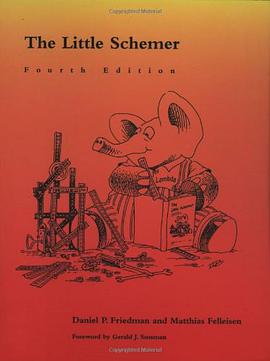
The Little Schemer - 4th Edition 豆瓣 Goodreads
9.7 (6 个评分) 作者: Daniel P. Friedman / Matthias Felleisen The MIT Press 1995
This delightful book leads you through the basic elements of programming in Scheme (a Lisp dialect) via a series of dialogues with well-chosen questions and exercises. Besides teaching Scheme, The Little Schemer teaches the reader how to think about computation. The authors focus on ten essential concepts of thinking about how to compute and demonstrate how to apply these concepts in inventive ways. The Little Schemer is an excellent book both for the beginner and for the seasoned programmer.
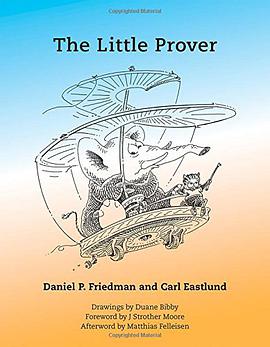
The Little Prover 豆瓣
作者: Daniel P. Friedman / Carl Eastlund The MIT Press 2015 - 7
[FROM www.amazon.com]:
The Little Prover introduces inductive proofs as a way to determine facts about computer programs. It is written in an approachable, engaging style of question-and-answer, with the characteristic humor of The Little Schemer (fourth edition, MIT Press). Sometimes the best way to learn something is to sit down and do it; the book takes readers through step-by-step examples showing how to write inductive proofs. The Little Prover assumes only knowledge of recursive programs and lists (as presented in the first three chapters of The Little Schemer) and uses only a few terms beyond what novice programmers already know. The book comes with a simple proof assistant to help readers work through the book and complete solutions to every example.
松本行弘:编程语言的设计与实现 豆瓣
まつもとゆきひろの 言語のしくみ
作者: [日]松本行弘 译者: 郑明智 2019 - 8
本书由Ruby 之父松本行弘在《日经Linux》杂志上的连载整合而成,主要介绍了新语言Streem 的设计与实现过程。作者从设计Streem 这门新语言的动机开始讲起,由浅入深,详细介绍了新语言开发中的各个环节,以及语言设计上的纠结与取舍,其中也不乏对其他编程语言的调查与思考,向读者展示了创建编程语言的乐趣。
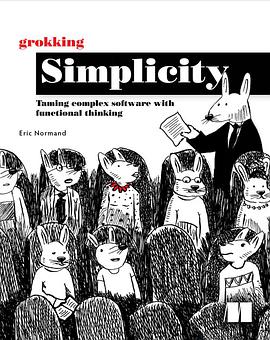
Grokking Simplicity Goodreads 豆瓣
作者: Eric Normand Manning Publications 2020 - 3
In Grokking Simplicity, you’ll learn techniques and, more importantly, a mindset that will help you tackle common problems that arise when software gets complex. Veteran functional programmer Eric Normand guides you to a crystal-clear understanding of why certain features of modern software are so prone to complexity and introduces you to the functional techniques you can use to simplify these systems so that they’re easier to read, test, and debug. Through hands-on examples, exercises, and numerous self-assessments, you’ll learn to organize your code for maximum reusability and internalize methods to keep unwanted complexity out of your codebase. Regardless of the language you’re using, the ways of thinking in this book will help recognize problematic code and tame even the most complex software.
what's inside
Apply functional programming principles to reduce codebase complexity
Work with data transformation pipelines for code that’s easier to test and reuse
Tools for modeling time to simplify asynchrony
60 exercises and 100 questions to test your knowledge
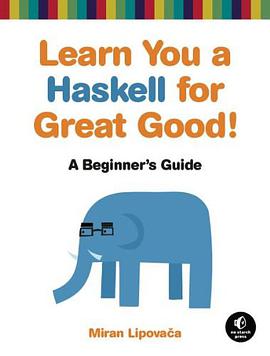
Learn You a Haskell for Great Good! 豆瓣 谷歌图书
9.2 (10 个评分) 作者: Miran Lipovaca No Starch Press 2010 - 04
Learn You a Haskell for Great Good! is a fun, illustrated guide to learning Haskell, a functional programming language that's growing in popularity. Learn You a Haskell for Great Good! introduces programmers familiar with imperative languages (such as C++, Java, or Python) to the unique aspects of functional programming. Packed with jokes, pop culture references, and the author's own hilarious artwork, Learn You a Haskell for Great Good! eases the learning curve of this complex language, and is a perfect starting point for any programmer looking to expand his or her horizons. The well-known web tutorial on which this book is based is widely regarded as the best way for beginners to learn Haskell, and receives over 30,000 unique visitors monthly.
About the Author
Miran Lipovaca is a computer science student in Ljubljana, Slovenia. His online tutorial, "Learn You a Haskell for Great Good!," is widely regarded as the best way to learn Haskell.
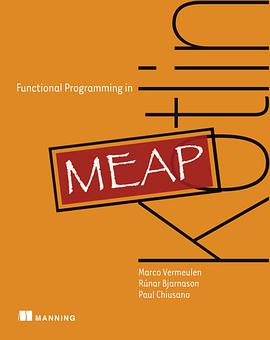
Functional Programming in Kotlin 豆瓣 Goodreads
作者: Marco Vermeulen / Rúnar Bjarnason Manning Publications 2020 - 6
Functional Programming in Kotlin is a serious tutorial for programmers looking to learn FP and apply it to the everyday business of coding. Based on the bestselling Functional Programming in Scala, this book guides intermediate Java and Kotlin programmers from basic techniques to advanced topics in a logical, concise, and clear progression. In it, you'll find concrete examples and exercises that open up the world of functional programming. The book will deliver practical mastery of FP using Kotlin and a valuable perspective on program design that you can apply to other languages.
what's inside
Functional programming techniques for real-world applications
Write combinator libraries
Identify common structures and idioms in functional design
Code for simplicity, modularity, and fewer bugs
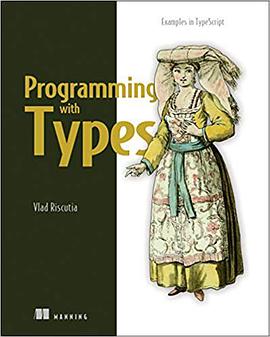
Programming with Types 豆瓣
作者: Vlad Riscutia Manning Publications 2019 - 9
Programming with Types teaches you to design safe, resilient, correct software that’s easy to maintain and understand by taking advantage of the power of strong type systems. Designed to provide practical, instantly-useful techniques for working developers, this clearly-written tutorial introduces you to using type systems to support everyday programming tasks. In it, you’ll explore the impact types have on functions, inheritance, and composition, and you’ll take a close look at generics, which enable greater abstraction. You’ll also discover folding data structures and applying functions to containers with higher kinded types. Along the way, you’ll explore real-world use cases and practical examples in TypeScript as you build your skills from primitive types up to more advanced concepts like functors and monads.
what's inside
An introduction to type systems and their benefits
Designing functions that don’t return values
Encoding text
Building data structures with arrays and references
Type composition
Function types
Type safety
Asynchronous functions
Subtyping
Object-oriented programming with types
Generic data structures and algorithms
Get Programming with Clojure 豆瓣
作者: Yehonathan Sharvit Manning Publications 2019 - 9
Get Programming with Clojure guides you through exercises, examples, and projects that teach you to build fast, robust, applications with Clojure. Under Yehonathan Sharvit’s expert instruction, you’ll begin by getting comfortable with Clojure’s Lisp-y syntax. Then, you’ll start writing short programs that introduce functional programming principles like immutability, data-orientation, and first-class functions. After two or three small projects, you’ll be ready to drill down to more advanced concepts including logic operations, vectors and maps, lazy sequences, pure and high-order functions, and state management.
Throughout this hands-on book, you’ll work with the custom interactive Klipse Clojure REPL environment—developed by the author himself!—where you’ll quickly appreciate the productivity benefits of evaluating and modifying expressions from the command line. Capstone projects at the end of each set of short, focused lessons seal in all you’ve learned. You’ll grow your skills step-by-step as you explore building and deploying a Clojure program that handles real-life challenges like the management of a bank account. By the end of the book, you’ll be well-prepared to move on to developing ecommerce web servers, writing front-end apps, publishing your own Clojure libraries, and more!
what's inside
Mastering Clojure syntax
Working with immutable data collections
Functions as first-class objects
Evaluating expressions in the Clojure REPL environment
Composing a pipeline for manipulating data
Capstone projects ranging from a bank account manager to a string composer
Parallel and Concurrent Programming in Haskell 豆瓣
作者: Simon Marlow O'Reilly Media 2013 - 8
This book covers the breadth of Haskell's diverse selection of programming APIs for concurrent and parallel programming. It is split into two parts. The first part, on parallel programming, covers the techniques for using multiple processors to speed up CPU-intensive computations, including methods for using parallelism in both idiomatic Haskell and numerical array-based algorithms, and for running computations on a GPU. The second part, on concurrent programming, covers techniques for using multiple threads, including overlapping multiple I/O operations, building concurrent network servers, and distributed programming across multiple machines.
The Erlang Run-Time System 豆瓣
作者: Erik Stenman O'Reilly Media 2017 - 3
Erlang's process-oriented approach has given it a very different runtime environment. As Erlang and tools built on Erlang, like CouchDB, Riak, and EjabberD spread, understanding those underpinnings becomes much more important for people building and maintaining applications. This book will explore Erlang's unique approach to building a virtual machine, demonstrating how to take advantage of its power and tune it to fit your needs.
An Invitation to Applied Category Theory 豆瓣
作者: Brendan Fong / David I. Spivak Cambridge University Press 2019 - 8
Category theory is unmatched in its ability to organize and layer abstractions and to find commonalities between structures of all sorts. No longer the exclusive preserve of pure mathematicians, it is now proving itself to be a powerful tool in science, informatics, and industry. By facilitating communication between communities and building rigorous bridges between disparate worlds, applied category theory has the potential to be a major organizing force. This book offers a self-contained tour of applied category theory. Each chapter follows a single thread motivated by a real-world application and discussed with category-theoretic tools. We see data migration as an adjoint functor, electrical circuits in terms of monoidal categories and operads, and collaborative design via enriched profunctors. All the relevant category theory, from simple to sophisticated, is introduced in an accessible way with many examples and exercises, making this an ideal guide even for those without experience of university-level mathematics.
Language Implementation Patterns 豆瓣
作者: Terence Parr Pragmatic Bookshelf 2010 - 1
Knowing how to create domain-specific languages (DSLs) can give you a huge productivity boost. Instead of writing code in a general-purpose programming language, you can first build a custom language tailored to make you efficient in a particular domain. The key is understanding the common patterns found across language implementations. "Language Design Patterns" identifies and condenses the most common design patterns, providing sample implementations of each. The pattern implementations use Java, but the patterns themselves are completely general. Some of the implementations use the well-known ANTLR parser generator, so readers will find this book an excellent source of ANTLR examples as well. But this book will benefit anyone interested in implementing languages, regardless of their tool of choice. Other language implementation books focus on compilers, which you rarely need in your daily life. Instead, "Language Design Patterns" shows you patterns you can use for all kinds of language applications. You'll learn to create configuration file readers, data readers, model-driven code generators, source-to-source translators, source analyzers, and interpreters. Each chapter groups related design patterns and, in each pattern, you'll get hands-on experience by building a complete sample implementation. By the time you finish the book, you'll know how to solve most common language implementation problems.
Get Programming with Go Goodreads 豆瓣
作者: Nathan Youngman Manning Publications 2018 - 9
Hobbyists, newcomers, and professionals alike can benefit from a fast, modern language; all you need is the right resource! Get Programming with Go provides a hands-on introduction to Go language fundamentals, serving as a solid foundation for your future programming projects. You'll master Go syntax, work with types and functions, and explore bigger ideas like state and concurrency, with plenty of exercises to lock in what you learn.
The Go Programming Language 豆瓣 Goodreads
9.6 (10 个评分) 作者: Brian W. Kernighan / Alan Donovan Addison-Wesley Professional 2015 - 11
Go is an open-source programming language that makes it easy to build clean, reliable, and efficient software. It has been winning converts from dynamic language enthusiasts as well as users of traditional compiled languages. The former appreciate the robustness and efficiency that Go's lightweight type system brings to their code; the latter find Go's simplicity and fast tools a refreshing change. Thanks to its well-designed standard libraries and its excellent support for concurrent programming, Go is fast becoming the language of choice for distributed systems.<br /> <br /><strong>The Go Programming Language</strong> is the definitive book on Go for the working programmer. It assumes no prior knowledge of Go, nor any other specific programming language, so you'll find it an accessible guide whether you come from JavaScript, Ruby, Python, Java, or C++.<br /> <br />The book will quickly get you started using Go effectively from the beginning, and by the end, you will know how to use it well to write clear, idiomatic and efficient programs to solve real-world problems. You'll understand not just how to use its standard libraries, but how they work, and how to apply the same design techniques to your own projects.<br /> <br />The earlier chapters will introduce you to the basic concepts of Go programming---numbers, strings, functions---while at the same time presenting important computer science concepts like recursion, and useful examples of graphics, UTF-8, and error handling. The chapters on methods and interfaces will show you a new way to think about object-oriented programming; the chapter on concurrency explains why concurrency is so important in modern programming, and how Go helps you handle it well. You'll also learn about Go's pragmatic but effective approach to testing; how to build, test, and manage projects using the go tool, and the art of metaprogramming using reflection.<br /> <br />The book contains hundreds of interesting and practical examples that cover the whole language and a wide range of applications. The code samples from the book are available for download from gopl.io.