计算机科学
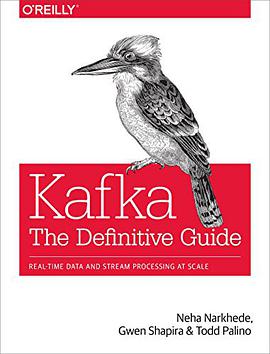
Kafka 豆瓣
作者: Neha Narkhede / Gwen Shapira O'Reilly Media 2017 - 10
Learn how to take full advantage of Apache Kafka, the distributed, publish-subscribe queue for handling real-time data feeds. With this comprehensive book, you'll understand how Kafka works and how it's designed. Authors Neha Narkhede, Gwen Shapira, and Todd Palino show you how to deploy production Kafka clusters; secure, tune, and monitor them; write rock-solid applications that use Kafka; and build scalable stream-processing applications.
Get Programming with Go Goodreads 豆瓣
作者: Nathan Youngman Manning Publications 2018 - 9
Hobbyists, newcomers, and professionals alike can benefit from a fast, modern language; all you need is the right resource! Get Programming with Go provides a hands-on introduction to Go language fundamentals, serving as a solid foundation for your future programming projects. You'll master Go syntax, work with types and functions, and explore bigger ideas like state and concurrency, with plenty of exercises to lock in what you learn.
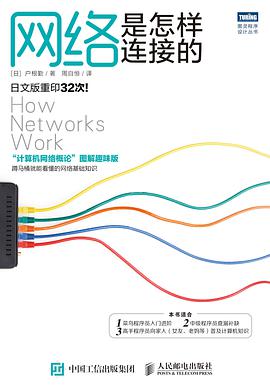
网络是怎样连接的 豆瓣
ネットワークはなぜつながるのか 第2版
8.6 (32 个评分) 作者: [日] 户根勤 译者: 周自恒 人民邮电出版社 2017 - 1
本书以探索之旅的形式,从在浏览器中输入网址开始,一路追踪了到显示出网页内容为止的整个过程,以图配文,讲解了网络的全貌,并重点介绍了实际的网络设备和软件是如何工作的。目的是帮助读者理解网络的本质意义,理解实际的设备和软件,进而熟练运用网络技术。同时,专设了“网络术语其实很简单”专栏,以对话的形式介绍了一些网络术语的词源,颇为生动有趣。
本书图文并茂,通俗易懂,非常适合计算机、网络爱好者及相关从业人员阅读。
2018年11月12日 在读
感觉学过network 有感觉没有 但还是得理解 搭分布式总是会卡在network上 overlay,ip over ib,rdma,rtt。
计算机科学 网络
Hadoop: The Definitive Guide 豆瓣
作者: Tom White O'Reilly Media 2015 - 4
Get ready to unlock the power of your data. With the fourth edition of this comprehensive guide, you’ll learn how to build and maintain reliable, scalable, distributed systems with Apache Hadoop. This book is ideal for programmers looking to analyze datasets of any size, and for administrators who want to set up and run Hadoop clusters.
Using Hadoop 2 exclusively, author Tom White presents new chapters on YARN and several Hadoop-related projects such as Parquet, Flume, Crunch, and Spark. You’ll learn about recent changes to Hadoop, and explore new case studies on Hadoop’s role in healthcare systems and genomics data processing.
Learn fundamental components such as MapReduce, HDFS, and YARN
Explore MapReduce in depth, including steps for developing applications with it
Set up and maintain a Hadoop cluster running HDFS and MapReduce on YARN
Learn two data formats: Avro for data serialization and Parquet for nested data
Use data ingestion tools such as Flume (for streaming data) and Sqoop (for bulk data transfer)
Understand how high-level data processing tools like Pig, Hive, Crunch, and Spark work with Hadoop
Learn the HBase distributed database and the ZooKeeper distributed configuration service
C++ Concurrency in Action 豆瓣
作者: Mr Anthony Williams Manning Publications 2017
C++ 11 delivered strong support for multithreaded applications, and the subsequent C++14 and 17 updates have built on this baseline. C++ has better options for concurrency than ever before, which means it's an incredibly powerful option for multicore and parallel applications.
Kubernetes in Action 豆瓣 Goodreads
9.6 (5 个评分) 作者: Marko Luksa Manning Publications 2017 - 8
Kubernetes in Action teaches you to use Kubernetes to deploy container-based distributed applications. You'll start with an overview of Docker and Kubernetes before building your first Kubernetes cluster. You'll gradually expand your initial application, adding features and deepening your knowledge of Kubernetes architecture and operation. As you navigate this comprehensive guide, you'll explore high-value topics like monitoring, tuning, and scaling.
Kubernetes is Greek for "helmsman," your guide through unknown waters. The Kubernetes container orchestration system safely manages the structure and flow of a distributed application, organizing containers and services for maximum efficiency. Kubernetes serves as an operating system for your clusters, eliminating the need to factor the underlying network and server infrastructure into your designs.
Using OpenMP 豆瓣
作者: Barbara Chapman / Gabriele Jost The MIT Press 2007 - 10
OpenMP, a portable programming interface for shared memory parallel computers, was adopted as an informal standard in 1997 by computer scientists who wanted a unified model on which to base programs for shared memory systems. OpenMP is now used by many software developers; it offers significant advantages over both hand-threading and MPI. Using OpenMP offers a comprehensive introduction to parallel programming concepts and a detailed overview of OpenMP. Using OpenMP discusses hardware developments, describes where OpenMP is applicable, and compares OpenMP to other programming interfaces for shared and distributed memory parallel architectures. It introduces the individual features of OpenMP, provides many source code examples that demonstrate the use and functionality of the language constructs, and offers tips on writing an efficient OpenMP program. It describes how to use OpenMP in full-scale applications to achieve high performance on large-scale architectures, discussing several case studies in detail, and offers in-depth troubleshooting advice. It explains how OpenMP is translated into explicitly multithreaded code, providing a valuable behind-the-scenes account of OpenMP program performance. Finally, Using OpenMP considers trends likely to influence OpenMP development, offering a glimpse of the possibilities of a future OpenMP 3.0 from the vantage point of the current OpenMP 2.5. With multicore computer use increasing, the need for a comprehensive introduction and overview of the standard interface is clear. Using OpenMP provides an essential reference not only for students at both undergraduate and graduate levels but also for professionals who intend to parallelize existing codes or develop new parallel programs for shared memory computer architectures. Barbara Chapman is Professor of Computer Science at the University of Houston. Gabriele Jost is Principal Member of Technical Staff, Application Server Performance Engineering, at Oracle, Inc. Ruud van der Pas is Senior Staff Engineer at Sun Microsystems, Menlo Park.
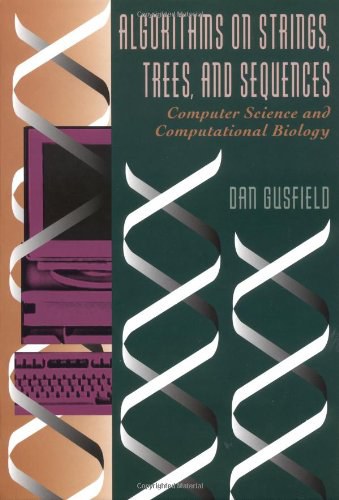
Algorithms on Strings, Trees and Sequences 豆瓣
作者: Dan Gusfield Cambridge University Press 1997 - 5
String algorithms are a traditional area of study in computer science. In recent years their importance has grown dramatically with the huge increase of electronically stored text and of molecular sequence data (DNA or protein sequences) produced by various genome projects. This 1997 book is a general text on computer algorithms for string processing. In addition to pure computer science, the book contains extensive discussions on biological problems that are cast as string problems, and on methods developed to solve them. It emphasises the fundamental ideas and techniques central to today's applications. New approaches to this complex material simplify methods that up to now have been for the specialist alone. With over 400 exercises to reinforce the material and develop additional topics, the book is suitable as a text for graduate or advanced undergraduate students in computer science, computational biology, or bio-informatics. Its discussion of current algorithms and techniques also makes it a reference for professionals.
图解密码技术 豆瓣
暗号技術入門 秘密の国のアリス
9.0 (6 个评分) 作者: [日] 结城浩 译者: 周自恒 人民邮电出版社 2014
本书以图配文的形式,详细讲解了6种最重要的密码技术:对称密码、公钥密码、单向散列函数、消息认证码、数字签名和伪随机数生成器。
第一部分讲述了密码技术的历史沿革、对称密码、分组密码模式(包括ECB、CBC、CFB、OFB、CTR)、公钥、混合密码系统。第二部分重点介绍了认证方面的内容,涉及单向散列函数、消息认证码、数字签名、证书等。第三部分讲述了密钥、随机数、PGP、SSL/TLS 以及密码技术在现实生活中的应用。
The Little Typer Goodreads 豆瓣
作者: Daniel P. Friedman / David Thrane Christiansen MIT Press 2018 - 10
An introduction to dependent types, demonstrating the most beautiful aspects, one step at a time. A program's type describes its behavior. Dependent types are a first-class part of a language, and are much more powerful than other kinds of types; using just one language for types and programs allows program descriptions to be as powerful as the programs they describe. The Little Typer explains dependent types, beginning with a very small language that looks very much like Scheme and extending it to cover both programming with dependent types and using dependent types for mathematical reasoning. Readers should be familiar with the basics of a Lisp-like programming language, as presented in the first four chapters of The Little Schemer. The first five chapters of The Little Typer provide the needed tools to understand dependent types; the remaining chapters use these tools to build a bridge between mathematics and programming. Readers will learn that tools they know from programming-pairs, lists, functions, and recursions-can also capture patterns of reasoning. The Little Typer does not attempt to teach either practical programming skills or a fully rigorous approach to type. Instead, it demonstrates the most beautiful aspects as simply as possible, one step at a time.
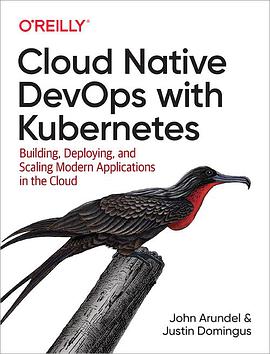
Cloud Native DevOps with Kubernetes 豆瓣
作者: John Arundel / Justin Domingus O'Reilly Media 2019 - 3
Kubernetes is the operating system of the cloud-native world, providing a reliable and scalable platform for running containerized workloads. This book shows developers and operations staff how to apply industry-standard DevOps practices to Kubernetes in a cloud-native context. You’ll learn all about the Kubernetes ecosystem and discover battle-tested solutions to everyday problems.
In this friendly, pragmatic book, cloud experts John Arundel and Justin Domingus show you what Kubernetes can do—and what you can do with it. You’ll build, step by step, an example cloud-native application and its supporting infrastructure, along with a development environment and continuous deployment pipeline that you can use for your own applications.
•Understand containers and Kubernetes from first principles—no experience necessary
•Run your own clusters or choose a managed Kubernetes service from Amazon, Google, and others
•Design your own cloud-native services and infrastructure
•Use Kubernetes to manage resource usage and the container lifecycle
•Optimize clusters for cost, performance, resilience, capacity, and scalability
•Learn the best tools for developing, testing, and deploying your applications
•Apply the latest industry practices for observability and monitoring
•Secure your containers and clusters in production
•Adopt DevOps principles to help make your development teams lean, fast, and effective
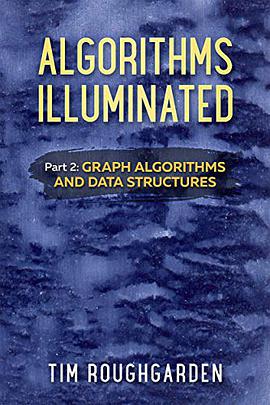
Algorithms Illuminated (Part 2) 豆瓣
作者: Tim Roughgarden Soundlikeyourself Publishing, LLC 2018 - 8
Algorithms are the heart and soul of computer science. Their applications range from network routing and computational genomics to public-key cryptography and machine learning. Studying algorithms can make you a better programmer, a clearer thinker, and a master of technical interviews. Algorithms Illuminated is an accessible introduction to the subject for anyone with at least a little programming experience. The exposition emphasizes the big picture and conceptual understanding over low-level implementation and mathematical details---like a transcript of what an expert algorithms tutor would say over a series of one-on-one lessons. The book includes solutions to all quizzes and selected problems, and a series of YouTube videos by the author accompanies the book. Part 2 of this book series covers graph search and its applications, shortest-path algorithms, and the applications and implementation of several data structures: heaps, search trees, hash tables, and bloom filters.
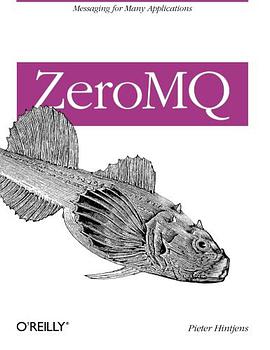
ZeroMQ 豆瓣
作者: Pieter Hintjens O'Reilly Media 2013 - 3
Dive into ØMQ (aka ZeroMQ), the smart socket library that gives you fast, easy, message-based concurrency for your applications. With this quick-paced guide, you’ll learn hands-on how to use this scalable, lightweight, and highly flexible networking tool for exchanging messages among clusters, the cloud, and other multi-system environments.
ØMQ maintainer Pieter Hintjens takes you on a tour of real-world applications, using extended examples in C to help you work with ØMQ’s API, sockets, and patterns. Learn how to use specific ØMQ programming techniques, build multithreaded applications, and create your own messaging architectures. You’ll discover how ØMQ works with several programming languages and most operating systems—with little or no cost.
Learn ØMQ’s main patterns: request-reply, publish-subscribe, and pipeline
Work with ØMQ sockets and patterns by building several small applications
Explore advanced uses of ØMQ’s request-reply pattern through working examples
Build reliable request-reply patterns that keep working when code or hardware fails
Extend ØMQ’s core pub-sub patterns for performance, reliability, state distribution, and monitoring
Learn techniques for building a distributed architecture with ØMQ
Discover what’s required to build a general-purpose framework for distributed applications
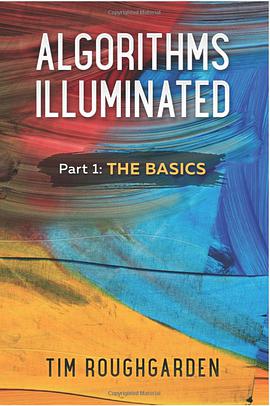
Algorithms Illuminated 豆瓣
作者: Tim Roughgarden Soundlikeyourself Publishing 2017 - 9
Algorithms are the heart and soul of computer science. Their applications range from network routing and computational genomics to public-key cryptography and machine learning. Studying algorithms can make you a better programmer, a clearer thinker, and a master of technical interviews. Algorithms Illuminated is an accessible introduction to the subject for anyone with at least a little programming experience. The exposition emphasizes the big picture and conceptual understanding over low-level implementation and mathematical details---like a transcript of what an expert algorithms tutor would say over a series of one-on-one lessons. Part 1 covers asymptotic analysis and big-O notation, divide-and-conquer algorithms and the master method, randomized algorithms, and several famous algorithms for sorting and selection.