AI
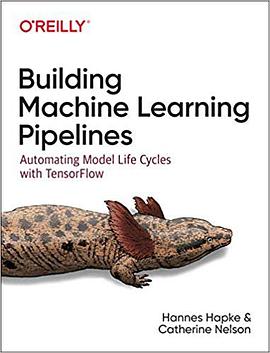
Building Machine Learning Pipelines 豆瓣
作者: Catherine Nelson / Hannes Hapke O'Reilly Media, Inc. 2020 - 9
Companies are spending billions on machine learning projects, but it’s money wasted if the models can’t be deployed effectively. In this practical guide, Hannes Hapke and Catherine Nelson walk you through the steps of automating a machine learning pipeline using the TensorFlow ecosystem. You’ll learn the techniques and tools that will cut deployment time from days to minutes, so that you can focus on developing new models rather than maintaining legacy systems.
Data scientists, machine learning engineers, and DevOps engineers will discover how to go beyond model development to successfully productize their data science projects, while managers will better understand the role they play in helping to accelerate these projects. The book also explores new approaches for integrating data privacy into machine learning pipelines.
Understand the machine learning management lifecycle
Implement data pipelines with Apache Airflow and Kubeflow Pipelines
Work with data using TensorFlow tools like ML Metadata, TensorFlow Data Validation, and TensorFlow Transform
Analyze models with TensorFlow Model Analysis and ship them with the TFX Model Pusher Component after the ModelValidator TFX Component confirmed that the analysis results are an improvement
Deploy models in a variety of environments with TensorFlow Serving, TensorFlow Lite, and TensorFlow.js
Learn methods for adding privacy, including differential privacy with TensorFlow Privacy and federated learning with TensorFlow Federated
Design model feedback loops to increase your data sets and learn when to update your machine learning models

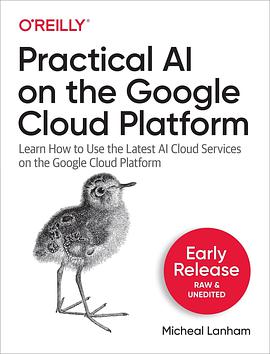
Practical AI on the Google Cloud Platform 豆瓣
作者: Micheal Lanham O'Reilly Media, Inc. 2020
AI is complicated, but cloud providers have stepped in to make it easier, offering free (or affordable) state-of-the-art models and training tools to get you started. In this book, AI novices will learn how to use Google’s AI-powered cloud services to do everything from analyzing text, images, and video to creating a chatbot.
Author Micheal Lanham takes you step-by-step through building models, training them, and then expanding on them to accomplish increasingly complex tasks. If you have a good grasp of math and the Python language, this book will get you up and running with Google Cloud Platform, whether you’re looking to build a simple business AI application or an AI assistant.
Learn key concepts for data science, machine learning, and deep learning
Explore tools like Video AI, AutoML Tables, the Cloud Inference API, the Recommendations AI API, and BigQuery ML
Perform image recognition using CNNs, transfer learning, and GANs
Build a simple language processor using embeddings, RNNs, and Bidirectional Encoder
Representations from Transformers (BERT)
Use Dialogflow to build a chatbot
Analyze video with automatic video indexing, face detection, and TF Hub
Practical AI on the Google Cloud Platform 豆瓣
作者: Micheal Lanham O'Reilly Media, Inc. 2020
AI is complicated, but cloud providers have stepped in to make it easier, offering free (or affordable) state-of-the-art models and training tools to get you started. In this book, AI novices will learn how to use Google’s AI-powered cloud services to do everything from analyzing text, images, and video to creating a chatbot.
Author Micheal Lanham takes you step-by-step through building models, training them, and then expanding on them to accomplish increasingly complex tasks. If you have a good grasp of math and the Python language, this book will get you up and running with Google Cloud Platform, whether you’re looking to build a simple business AI application or an AI assistant.
Learn key concepts for data science, machine learning, and deep learning
Explore tools like Video AI, AutoML Tables, the Cloud Inference API, the Recommendations AI API, and BigQuery ML
Perform image recognition using CNNs, transfer learning, and GANs
Build a simple language processor using embeddings, RNNs, and Bidirectional Encoder
Representations from Transformers (BERT)
Use Dialogflow to build a chatbot
Analyze video with automatic video indexing, face detection, and TF Hub
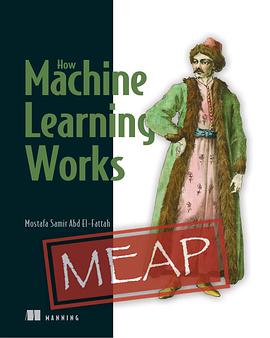
How Machine Learning Works 豆瓣
作者: Mostafa Samir Abd El-Fattah Manning Publications 2020 - 6
How Machine Learning Works gives you an in-depth look at the mathematical and theoretical foundations of machine learning. Seasoned practitioner Mostafa Samir Abd El-Fattah takes you step by step through a real-world ML projects. In it, you’ll learn the components that make up a machine learning problem and explore supervised and unsupervised learning. Blending theoretical foundations with practical ML skills, you’ll learn to read existing datasets using pandas, a fast and powerful Python library for data analysis and manipulation. Then, you’ll move on to choosing and implementing ML models with scikit-learn, a popular Python framework that provides a diverse range of ML models and algorithms.
Along the way, you’ll be practicing important math skills, including working with probability, random variables, mean, variance, vectors, matrices, linear algebra, and statistics. You’ll also discover similarity-based methods like K-nearest neighbor and K-means clustering; decision tree-based methods like classification and regression trees; and linear methods like regularization and logical regression. Instead of simply applying black-box methods and techniques to ML problems, you’ll grok their underlying structure and apply a robust mathematical understanding alongside your practical skills. By the end of this comprehensive guide, you’ll be able to comfortably explore and understand the latest ML research as well as identify and tackle novel ML problems!
what's inside
Understanding machine learning problems
A review of probability and statistics
Similarity-based, tree-based, and linear ML methods
Working with neural networks
An introduction to deep learning
Probabilistic models
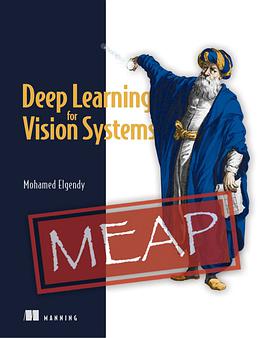
Deep Learning for Vision Systems 豆瓣
作者: Mohamed Elgendy Manning Publications 2020 - 3
Deep Learning for Vision Systems teaches you to apply deep learning techniques to solve real-world computer vision problems. In his straightforward and accessible style, DL and CV expert Mohamed Elgendy introduces you to the concept of visual intuition—how a machine learns to understand what it sees. Then you’ll explore the DL algorithms used in different CV applications. You’ll drill down into the different parts of the CV interpreting system, or pipeline. Using Python, OpenCV, Keras, Tensorflow, and Amazon’s MxNet, you’ll discover advanced DL techniques for solving CV problems.
Applications of focus include image classification, segmentation, captioning, and generation as well as face recognition and analysis. You’ll also cover the most important deep learning architectures including artificial neural networks (ANNs), convolutional networks (CNNs), and recurrent networks (RNNs), knowledge that you can apply to related deep learning disciplines like natural language processing and voice user interface. Real-life, scalable projects from Amazon, Google, and Facebook drive it all home. With this invaluable book, you’ll gain the essential skills for building amazing end-to-end CV projects that solve real-world problems.
What's inside
Introduction to computer vision
Deep learning and neural networks
Transfer learning and advanced CNN architectures
Image classification and captioning
Object detection with YOLO, SSD and R-CNN
Style transfer
AI ethics
Real-world projects
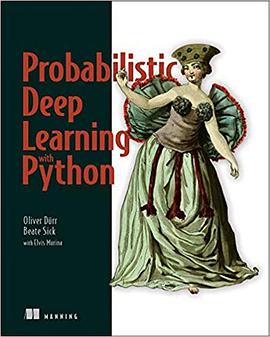
Probabilistic Deep Learning 豆瓣
Manning Publications 2020 - 4
Probabilistic Deep Learning with Python shows how probabilistic deep learning models gives readers the tools to identify and account for uncertainty and potential errors in their results.
Starting by applying the underlying maximum likelihood principle of curve fitting to deep learning, readers will move on to using the Python-based Tensorflow Probability framework, and set up Bayesian neural networks that can state their uncertainties.
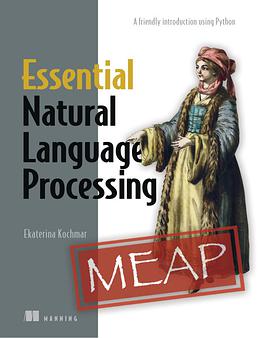
Getting Started with Natural Language Processing 豆瓣
作者: Ekaterina Kochmar Manning Publications 2021 - 3
Essential Natural Language Processing is a hands-on guide to NLP with practical techniques you can put into action right away. By following the numerous Python-based examples and real-world case studies, you’ll apply NLP to search applications, extracting meaning from text, sentiment analysis, user profiling, and more. When you’re done, you’ll have a solid grounding in NLP that will serve as a foundation for further learning.
what's inside
Extracting information from raw text
Named entity recognition
Automating summarization of key facts
Topic labeling
2020年1月2日 想读
NLP AI
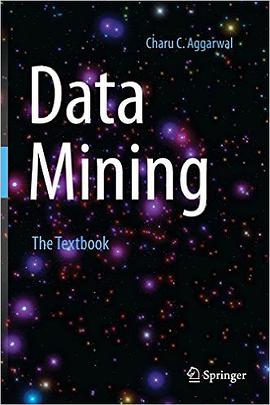
Data Mining 豆瓣
作者: Charu C. Aggarwal Springer 2015 - 4
This textbook explores the different aspects of data mining from the fundamentals to the complex data types and their applications, capturing the wide diversity of problem domains for data mining issues. It goes beyond the traditional focus on data mining problems to introduce advanced data types such as text, time series, discrete sequences, spatial data, graph data, and social networks. Until now, no single book has addressed all these topics in a comprehensive and integrated way. The chapters of this book fall into one of three categories:
Fundamental chapters: Data mining has four main problems, which correspond to clustering, classification, association pattern mining, and outlier analysis. These chapters comprehensively discuss a wide variety of methods for these problems.
Domain chapters: These chapters discuss the specific methods used for different domains of data such as text data, time-series data, sequence data, graph data, and spatial data.
Application chapters: These chapters study important applications such as stream mining, Web mining, ranking, recommendations, social networks, and privacy preservation. The domain chapters also have an applied flavor.
Appropriate for both introductory and advanced data mining courses, Data Mining: The Textbook balances mathematical details and intuition. It contains the necessary mathematical details for professors and researchers, but it is presented in a simple and intuitive style to improve accessibility for students and industrial practitioners (including those with a limited mathematical background). Numerous illustrations, examples, and exercises are included, with an emphasis on semantically interpretable examples.
Praise for Data Mining: The Textbook -
“As I read through this book, I have already decided to use it in my classes. This is a book written by an outstanding researcher who has made fundamental contributions to data mining, in a way that is both accessible and up to date. The book is complete with theory and practical use cases. It’s a must-have for students and professors alike!" -- Qiang Yang, Chair of Computer Science and Engineering at Hong Kong University of Science and Technology
"This is the most amazing and comprehensive text book on data mining. It covers not only the fundamental problems, such as clustering, classification, outliers and frequent patterns, and different data types, including text, time series, sequences, spatial data and graphs, but also various applications, such as recommenders, Web, social network and privacy. It is a great book for graduate students and researchers as well as practitioners." -- Philip S. Yu, UIC Distinguished Professor and Wexler Chair in Information Technology at University of Illinois at Chicago
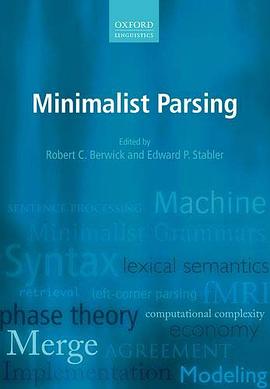
Minimalist Parsing 豆瓣
作者: Robert C. Berwick / Edward P. Stabler Oxford University Press 2019 - 11
This book is the first dedicated to linguistic parsing - the processing of natural language according to the rules of a formal grammar - in the Minimalist Program. While Minimalism has been at the forefront of generative grammar for several decades, it often remains inaccessible to computer scientists and others in adjacent fields. This volume makes connections with standard computational architectures, provides efficient implementations of some fundamental minimalist accounts of syntax, explores implementations of recent theoretical proposals, and explores correlations between posited structures and measures of neural activity during human language comprehension. These studies will appeal to graduate students and researchers in formal syntax, computational linguistics, psycholinguistics, and computer science.
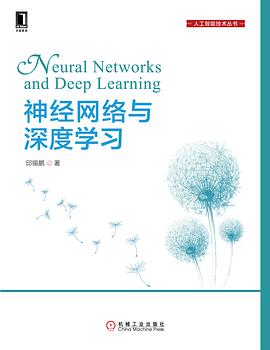
神经网络与深度学习 豆瓣 豆瓣
8.8 (5 个评分) 作者: 邱锡鹏 机械工业出版社 2020 - 4
本书主要介绍神经网络与深度学习中的基础知识、主要模型(卷积神经网络、递归神经网络等)以及在计算机视觉、自然语言处理等领域的应用。
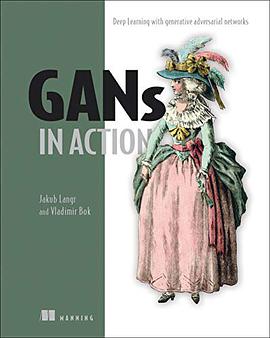
Gans in Action 豆瓣
作者: Jakub Langr / Vladimir Bok Manning Publications 2019 - 10
Summary
GANs in Action teaches you how to build and train your own Generative Adversarial Networks, one of the most important innovations in deep learning. In this book, you'll learn how to start building your own simple adversarial system as you explore the foundation of GAN architecture: the generator and discriminator networks.
Purchase of the print book includes a free eBook in PDF, Kindle, and ePub formats from Manning Publications.
About the Technology
Generative Adversarial Networks, GANs, are an incredible AI technology capable of creating images, sound, and videos that are indistinguishable from the "real thing." By pitting two neural networks against each other—one to generate fakes and one to spot them—GANs rapidly learn to produce photo-realistic faces and other media objects. With the potential to produce stunningly realistic animations or shocking deepfakes, GANs are a huge step forward in deep learning systems.
About the Book
GANs in Action teaches you to build and train your own Generative Adversarial Networks. You'll start by creating simple generator and discriminator networks that are the foundation of GAN architecture. Then, following numerous hands-on examples, you'll train GANs to generate high-resolution images, image-to-image translation, and targeted data generation. Along the way, you'll find pro tips for making your system smart, effective, and fast.
What's inside
Building your first GAN
Handling the progressive growing of GANs
Practical applications of GANs
Troubleshooting your system
About the Reader
For data professionals with intermediate Python skills, and the basics of deep learning-based image processing.
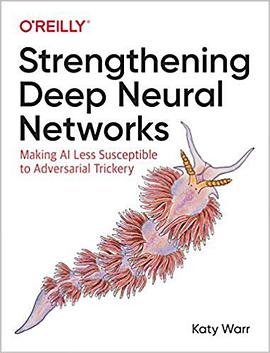
Strengthening Deep Neural Networks 豆瓣
作者: Katy Warr O'Reilly 2019 - 8
As deep neural networks (DNNs) become increasingly common in real-world applications, the potential to deliberately "fool" them with data that wouldn’t trick a human presents a new attack vector. This practical book examines real-world scenarios where DNNs—the algorithms intrinsic to much of AI—are used daily to process image, audio, and video data.
Author Katy Warr considers attack motivations, the risks posed by this adversarial input, and methods for increasing AI robustness to these attacks. If you’re a data scientist developing DNN algorithms, a security architect interested in how to make AI systems more resilient to attack, or someone fascinated by the differences between artificial and biological perception, this book is for you.
Delve into DNNs and discover how they could be tricked by adversarial input
Investigate methods used to generate adversarial input capable of fooling DNNs
Explore real-world scenarios and model the adversarial threat
Evaluate neural network robustness; learn methods to increase resilience of AI systems to adversarial data
Examine some ways in which AI might become better at mimicking human perception in years to come
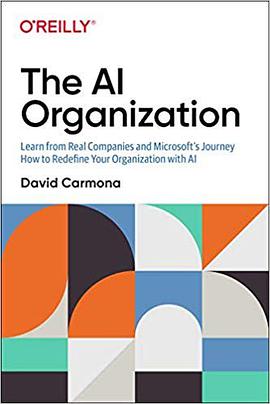
The AI Organization 豆瓣
作者: David Carmona O'Reilly Media 2019 - 11
Much in the same way that software transformed business in the past two decades, AI is set to redefine organizations and entire industries. Just as every company is a software company today, every company will soon be an AI company.
This practical guide explains how business and technical leaders can embrace this new breed of organization. Based on real customer experience, Microsoft’s David Carmona covers the journey necessary to become an AI Organization—from applying AI in your business today to the deep transformation that can empower your organization to redefine the industry.
You'll learn the core concepts of AI as they are applied to real business, explore and prioritize the most appropriate use cases for AI in your company, and drive the organizational and cultural change needed to transform your business with AI.
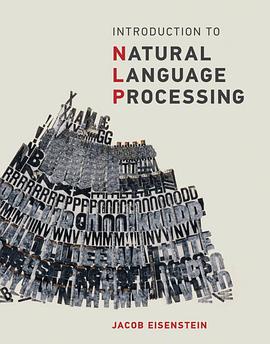
Introduction to Natural Language Processing 豆瓣
作者: Jacob Eisenstein The MIT Press 2019 - 10
A survey of computational methods for understanding, generating, and manipulating human language, which offers a synthesis of classical representations and algorithms with contemporary machine learning techniques.
This textbook provides a technical perspective on natural language processing―methods for building computer software that understands, generates, and manipulates human language. It emphasizes contemporary data-driven approaches, focusing on techniques from supervised and unsupervised machine learning. The first section establishes a foundation in machine learning by building a set of tools that will be used throughout the book and applying them to word-based textual analysis. The second section introduces structured representations of language, including sequences, trees, and graphs. The third section explores different approaches to the representation and analysis of linguistic meaning, ranging from formal logic to neural word embeddings. The final section offers chapter-length treatments of three transformative applications of natural language processing: information extraction, machine translation, and text generation. End-of-chapter exercises include both paper-and-pencil analysis and software implementation.
The text synthesizes and distills a broad and diverse research literature, linking contemporary machine learning techniques with the field's linguistic and computational foundations. It is suitable for use in advanced undergraduate and graduate-level courses and as a reference for software engineers and data scientists. Readers should have a background in computer programming and college-level mathematics. After mastering the material presented, students will have the technical skill to build and analyze novel natural language processing systems and to understand the latest research in the field.
Deep Learning from Scratch 豆瓣 Goodreads
作者: Seth Weidman O'REILLY Media 2019 - 10 其它标题: Deep Learning from Scratch: Building with Python from First Principles
This book will provide a solid foundation in how Deep Learning works so that no concept you learn or project you do in the field will seem daunting after this. We will walk the reader through how to implement multi-layer neural networks, implementing convolutional neural networks and recurrent neural networks from scratch. Using these as building blocks, readers will learn to to implement advanced architectures such as image captioning and Neural Turing Machines
2019年5月3日 在读
早读早享受。好书就该这样,first principal出发,通过逻辑推演整体与细节,这样才能搞通。
AI 计算机科学
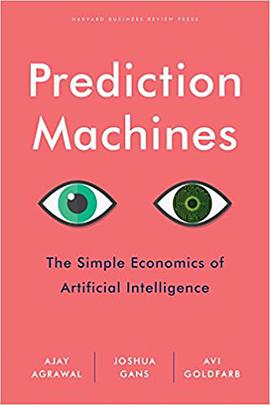
Prediction Machines 豆瓣
作者: Ajay Agrawal / Joshua Gans Harvard Business Review Press 2018 - 4
"What does AI mean for your business? Read this book to find out." -- Hal Varian, Chief Economist, Google
Artificial intelligence does the seemingly impossible, magically bringing machines to life--driving cars, trading stocks, and teaching children. But facing the sea change that AI will bring can be paralyzing. How should companies set strategies, governments design policies, and people plan their lives for a world so different from what we know? In the face of such uncertainty, many analysts either cower in fear or predict an impossibly sunny future.
But in Prediction Machines, three eminent economists recast the rise of AI as a drop in the cost of prediction. With this single, masterful stroke, they lift the curtain on the AI-is-magic hype and show how basic tools from economics provide clarity about the AI revolution and a basis for action by CEOs, managers, policy makers, investors, and entrepreneurs.
When AI is framed as cheap prediction, its extraordinary potential becomes clear:
- Prediction is at the heart of making decisions under uncertainty. Our businesses and personal lives are riddled with such decisions.
- Prediction tools increase productivity--operating machines, handling documents, communicating with customers.
- Uncertainty constrains strategy. Better prediction creates opportunities for new business structures and strategies to compete.
Penetrating, fun, and always insightful and practical, Prediction Machines follows its inescapable logic to explain how to navigate the changes on the horizon. The impact of AI will be profound, but the economic framework for understanding it is surprisingly simple.
机器学习 豆瓣
8.5 (40 个评分) 作者: 周志华 清华大学出版社 2016 - 1
机器学习是计算机科学与人工智能的重要分支领域. 本书作为该领域的入门教材,在内容上尽可能涵盖机器学习基础知识的各方面。 为了使尽可能多的读者通过本书对机器学习有所了解, 作者试图尽可能少地使用数学知识. 然而, 少量的概率、统计、代数、优化、逻辑知识似乎不可避免. 因此, 本书更适合大学三年级以上的理工科本科生和研究生, 以及具有类似背景的对机器学 习感兴趣的人士. 为方便读者, 本书附录给出了一些相关数学基础知识简介.
全书共16 章,大致分为3 个部分:第1 部分(第1~3 章)介绍机器学习的基础知识;第2 部分(第4~10 章)讨论一些经典而常用的机器学习方法(决策树、神经网络、支持向量机、贝叶斯分类器、集成学习、聚类、降维与度量学习);第3 部分(第11~16 章)为进阶知识,内容涉及特征选择与稀疏学习、计算学习理论、半监督学习、概率图模型、规则学习以及强化学习等.前3章之外的后续各章均相对独立, 读者可根据自己的兴趣和时间情况选择使用. 根据课时情况, 一个学期的本科生课程可考虑讲授前9章或前10章; 研究生课程则不妨使用全书.
书中除第1章外, 每章都给出了十道习题. 有的习题是帮助读者巩固本章学习, 有的是为了引导读者扩展相关知识. 一学期的一般课程可使用这些习题, 再辅以两到三个针对具体数据集的大作业. 带星号的习题则有相当难度, 有些并无现成答案, 谨供富有进取心的读者启发思考.
本书可作为高等院校计算机、自动化及相关专业的本科生或研究生教材,也可供对机器学习感兴趣的研究人员和工程技术人员阅读参考。