PL
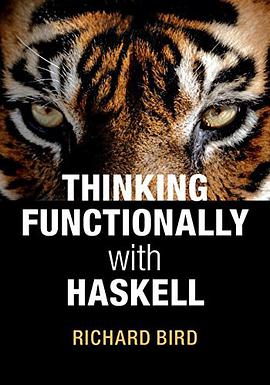
Thinking Functionally with Haskell 豆瓣
作者: Richard Bird Cambridge University Press 2014
Richard Bird is famed for the clarity and rigour of his writing. His new textbook, which introduces functional programming to students, emphasises fundamental techniques for reasoning mathematically about functional programs. By studying the underlying equational laws, the book enables students to apply calculational reasoning to their programs, both to understand their properties and to make them more efficient. The book has been designed to fit a first- or second-year undergraduate course and is a thorough overhaul and replacement of his earlier textbooks. It features case studies in Sudoku and pretty-printing, and over 100 carefully selected exercises with solutions. This engaging text will be welcomed by students and teachers alike.
2020年7月1日 在读
1. Why functional programming matters
• programs are values, not commands
• supports good old-fashioned equational reasoning
• . . . with program texts, without needing a distinct language
• calculate efficient implementations from clear specifications
• using Haskell
• a plea for simplicity : no GADTs, no Monads, no Traversables. . .
计算机科学 Haskell 软件工程 PL
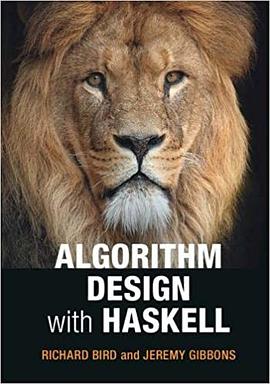
Algorithm Design with Haskell 豆瓣
作者: Richard Bird / Jeremy Gibbons Cambridge University Press 2020 - 7
This book is devoted to five main principles of algorithm design: divide and conquer, greedy algorithms, thinning, dynamic programming, and exhaustive search. These principles are presented using Haskell, a purely functional language, leading to simpler explanations and shorter programs than would be obtained with imperative languages. Carefully selected examples, both new and standard, reveal the commonalities and highlight the differences between algorithms. The algorithm developments use equational reasoning where applicable, clarifying the applicability conditions and correctness arguments. Every chapter concludes with exercises (nearly 300 in total), each with complete answers, allowing the reader to consolidate their understanding and apply the techniques to a range of problems. The book serves students (both undergraduate and postgraduate), researchers, teachers, and professionals who want to know more about what goes into a good algorithm and how such algorithms can be expressed in purely functional terms.