金融
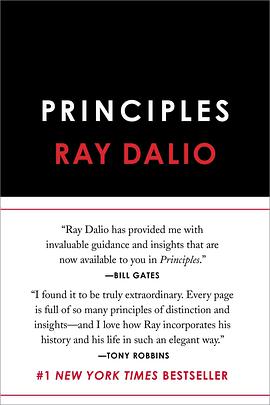
Principles 豆瓣
Principles: Life and Work
7.7 (19 个评分) 作者: Ray Dalio Bridgewater 2017 - 9
#1 New York Times Bestseller
“Significant...The book is both instructive and surprisingly moving.” —The New York Times
Ray Dalio, one of the world’s most successful investors and entrepreneurs, shares the unconventional principles that he’s developed, refined, and used over the past forty years to create unique results in both life and business—and which any person or organization can adopt to help achieve their goals.
In 1975, Ray Dalio founded an investment firm, Bridgewater Associates, out of his two-bedroom apartment in New York City. Forty years later, Bridgewater has made more money for its clients than any other hedge fund in history and grown into the fifth most important private company in the United States, according to Fortune magazine. Dalio himself has been named to Time magazine’s list of the 100 most influential people in the world. Along the way, Dalio discovered a set of unique principles that have led to Bridgewater’s exceptionally effective culture, which he describes as “an idea meritocracy that strives to achieve meaningful work and meaningful relationships through radical transparency.” It is these principles, and not anything special about Dalio—who grew up an ordinary kid in a middle-class Long Island neighborhood—that he believes are the reason behind his success.
In Principles, Dalio shares what he’s learned over the course of his remarkable career. He argues that life, management, economics, and investing can all be systemized into rules and understood like machines. The book’s hundreds of practical lessons, which are built around his cornerstones of “radical truth” and “radical transparency,” include Dalio laying out the most effective ways for individuals and organizations to make decisions, approach challenges, and build strong teams. He also describes the innovative tools the firm uses to bring an idea meritocracy to life, such as creating “baseball cards” for all employees that distill their strengths and weaknesses, and employing computerized decision-making systems to make believability-weighted decisions. While the book brims with novel ideas for organizations and institutions, Principles also offers a clear, straightforward approach to decision-making that Dalio believes anyone can apply, no matter what they’re seeking to achieve.
Here, from a man who has been called both “the Steve Jobs of investing” and “the philosopher king of the financial universe” (CIO magazine), is a rare opportunity to gain proven advice unlike anything you’ll find in the conventional business press.

2025年4月12日 已读
白男哔哔哔的输出,听了两小时决定不再浪费时间了。唯一的感想是觉得研究天气预测模型说不定还挺有前途的,不管是commodity trading还是climate risk insurance都很适用。
非虚构 金融
管好四笔钱 财富滚雪球 豆瓣
作者: 且慢基金投资研究所 中信出版社 2023
一本安全又安心的理财方法书。
想理财,但只想稳赚不亏,不知从何开始?已跟风入手的股票或基金,如何走出“市场赚钱,我不赚钱”的窘境?保险上了很多,关键时刻保额到底够不够?
专业个人理财投顾团队手把手教你梳理个人财务情况,使用“四笔钱”理财框架,合理规划自己的每一笔资金,把适合的钱投资到适合的地方,资金的分配将决定最终收益的高低。
四笔钱,包括活钱管理、稳健理财、长期投资、保险保障。
· 活钱管理的钱,是指对流动性要求较大,需要随存随取的钱。
· 稳健理财的钱,是指6个月~3年有具体用途但无须随时动用的钱。
· 长期投资的钱,是指留给未来的钱,通常为3年以上不需要使用的钱。
· 保险保障的钱,是指在不确定的未来,为生活托底的钱。
根据自身的资金使用时限需求,将四笔钱分散投资于现金产品、债券、基金、股票、保险等不同资产类别中。不仅解决了短钱长投、长钱短投的“拿不住”问题,还为每一笔新增收入都找到了明确的“买什么”方向。
这本书将助你建立起对理财的全面认知,使你的工资、奖金、自由职业收入等每一笔钱都为你的财富升值而工作,在波动中安享收益,在时间的加持下迈向富有。
2024年2月10日 已读
理财的书读了两本以后觉得其实takeaway都是一样的,做好资产配置,留够安全边际,积累本金,尽早开始投资享受时间复利,比起挑选股票不如投资宽基指数。道理简单,落到实操上还是觉得有距离。
投资 理财 非虚构 金融
麦道夫:华尔街之魔 (麦道夫:华尔街吸金恶霸) (2023) 豆瓣 TMDB
Madoff: The Monster of Wall Street Season 1 所属 电视剧集: 麦道夫:华尔街之魔
8.1 (10 个评分) 导演: Joe Berlinger 演员: Melony Feliciano / Cris Colicchio
《麦道夫:华尔街吸金恶霸》揭示了伯纳德·麦道夫臭名昭著的 640 亿美元全球庞氏骗局背后的真相,这是历史上最大的庞氏骗局,摧毁了无数个人投资者的生活,他们曾经无比信任这位受人尊敬的华尔街政治家。这部四集纪录片包含对举报人、雇员、调查人员和受害者的独家访问,并收录了麦道夫本人从未公之于众的视频证词,追溯了出身卑微的麦道夫如何成长为华尔街最有影响力的权力掮客之一。通过创新的视觉手法和令人兴奋的金融惊悚基调,高产电影制作人乔·伯灵格(《对话杀人魔》《犯罪现场》《兄弟的监护人》)揭示了麦道夫欺诈性投资咨询业务的起源,并首次揭示了其运作机制。许多人一开始并不相信这场欺诈仅仅只是一个邪恶天才的创意,这部影片也将对这一观点进行验证。《麦道夫:华尔街吸金恶霸》揭露了一群同谋者以及对麦道夫的可疑行为睁一只眼闭一只眼的金融体系,这无疑引发了一个令人困扰的问题:这样明目张胆、破坏性极强的欺诈行为会再次发生吗?
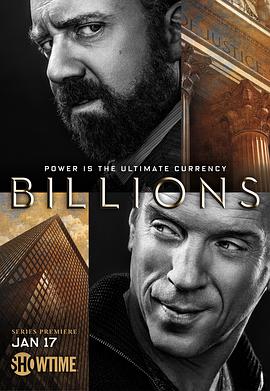
亿万 第一季 (2016) 豆瓣
Billions Season 1 所属 电视剧集: 亿万
8.5 (184 个评分) 导演: 尼尔·博格 / 詹姆斯·弗雷 演员: 玛姬·丝弗 / 戴米恩·路易斯
纽约市政治与经济领域,一场关于金钱与法律的的较量,保罗·吉亚玛提与戴米恩·路易斯,分别饰演美国联邦检察官查克·罗兹与亿万富翁鲍比·艾克斯罗德。
对冲基金高手亿万富豪艾克斯罗德被怀疑存在欺诈交易行为,在政界的拥有野心与道德心的罗兹,与艾克斯罗德之间形成了激烈的碰撞与摩擦,二 人针尖对麦芒,以复杂的叙事手法讲述了一场捕猎者与挣扎违抗的猎物之间的斗争,艾克斯和查克都反复经历各自阵营成员在不同的事件中轮转扮演多头和空头。
The Laws of Trading: A Trader's Guide to Better Decision-Making for Everyone 豆瓣 Goodreads
作者: Agustin Lebron Wiley 2019 - 6
Every decision is a trade. Learn to think about the ones you should do — and the ones you shouldn’t.
Trading books generally break down into two categories: the ones which claim to teach you how to make money trading, and the memoir-style books recounting scandals and bad behavior. But the former don't have profitable trades to teach; if they did they'd keep those trades to themselves. And the latter are frequently entertaining, but they don't leave you with much you can apply in your own life. The Laws of Trading is different.
All of our relationships and decisions involve trading at some level. This is a book about decision-making through the lens of a professional prop trader. For years, behavioral and cognitive scientists have shown us how human decision-making is flawed and biased. But how do you learn to avoid these problems in day-to-day decisions where you have to react in real-time? What are the important things to think about and to act on? The world needs a book by a prop trader who has lived, breathed and taught trading for a living, drawing upon years of insights on the trading floor in real markets, good and bad, whether going sideways, crashing, or bubbling over. If you can master the decision-making skills needed to profitably trade in modern markets, you can master decision-making in all walks of life. This book will teach you exactly those skills.
Introduces, develops, and applies one law per chapter, making it easy not only to remember useful concepts, but also to have them at the ready in any situation.
Shows you how to find and think about the “special edge” of your organization, and yourself.
Teaches you how to handle the interaction of people with artificially intelligent (AI) machines that make decisions, a skill that is rapidly becoming essential in the AI-driven economy of the future.
Includes a "bonus" digital ancillary, an Excel spreadsheet with various worked examples that expand on the scenarios described in the book.
Do you need to make rational decisions in a competitive environment? Almost everyone does. This book will teach you the tools that let you do your job better.
Statistical Consequences of Fat Tails 豆瓣
作者: Nassim Nicholas Taleb STEM Academic Press 2020 - 6
The book investigates the misapplication of conventional statistical techniques to fat tailed distributions and looks for remedies, when possible.
Switching from thin tailed to fat tailed distributions requires more than “changing the color of the dress.” Traditional asymptotics deal mainly with either n=1 or n=∞, and the real world is in between, under the “laws of the medium numbers”–which vary widely across specific distributions. Both the law of large numbers and the generalized central limit mechanisms operate in highly idiosyncratic ways outside the standard Gaussian or Levy-Stable basins of convergence.
A few examples:
- The sample mean is rarely in line with the population mean, with effect on “naïve empiricism,” but can be sometimes be estimated via parametric methods.
- The “empirical distribution” is rarely empirical.
- Parameter uncertainty has compounding effects on statistical metrics.
- Dimension reduction (principal components) fails.
- Inequality estimators (Gini or quantile contributions) are not additive and produce wrong results.
- Many “biases” found in psychology become entirely rational under more sophisticated probability distributions.
- Most of the failures of financial economics, econometrics, and behavioral economics can be attributed to using the wrong distributions.
This book, the first volume of the Technical Incerto, weaves a narrative around published journal articles.
When Genius Failed 豆瓣
作者: Roger Lowenstein Fourth Estate 2002 - 1
Picking up where Liar's Poker left off (literally, in the bond dealer's desks of Salomon Brothers) the story of Long-Term Capital Management is of a group of elite investors who believed they could beat the market and, like alchemists, create limitless wealth for themselves and their partners. Founded by John Meriweather, a notoriously confident bond dealer, along with two Nobel prize winners and a floor of Wall Street's brightest and best, Long-Term Captial Management was from the beginning hailed as a new gold standard in investing. It was to be the hedge fund to end all other hedge funds: a discreet private investment club limited to those rich enough to pony up millions. It became the banks' own favourite fund and from its inception achieved a run of dizzyingly spectacular returns. New investors barged each other aside to get their investment money into LTCM's hands. But as competitors began to mimic Meriweather's fund, he altered strategy to maintain the fund's performance, leveraging capital with credit on a scale not fully understood and never seen before. When the markets in Indonesia, South America and Russia crashed in 1998 LCTM's investments crashed with them and mountainous debts accumulated. The fund was in melt-down, and threatening to bring down into its trillion-dollar black hole a host of financial instiutions from New York to Switzerland. It's a tale of vivid characters, overwheening ambition, and perilous drama told, in Roger Lowenstein's hands, with brilliant style and panache.
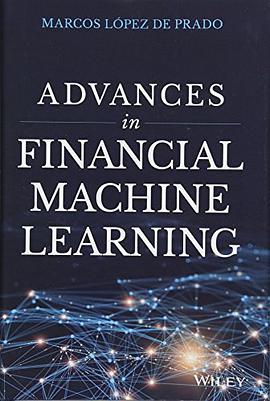
Advances in Financial Machine Learning 豆瓣
作者: Marcos Lopez de Prado John Wiley & Sons 2018 - 2
Machine learning (ML) is changing virtually every aspect of our lives. Today ML algorithms accomplish tasks that until recently only expert humans could perform. As it relates to finance, this is the most exciting time to adopt a disruptive technology that will transform how everyone invests for generations. Readers will learn how to structure Big data in a way that is amenable to ML algorithms; how to conduct research with ML algorithms on that data; how to use supercomputing methods; how to backtest your discoveries while avoiding false positives. The book addresses real-life problems faced by practitioners on a daily basis, and explains scientifically sound solutions using math, supported by code and examples. Readers become active users who can test the proposed solutions in their particular setting. Written by a recognized expert and portfolio manager, this book will equip investment professionals with the groundbreaking tools needed to succeed in modern finance.