Speculative Everything Douban Google Books Goodreads
How to use design as a tool to create not only things but ideas, to speculate about possible futures.
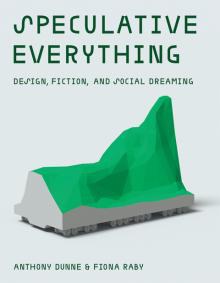
Today designers often focus on making technology easy to use, sexy, and consumable. In Speculative Everything, Anthony Dunne and Fiona Raby propose a kind of design that is used as a tool to create not only things but ideas. For them, design is a means of speculating about how things could be—to imagine possible futures. This is not the usual sort of predicting or forecasting, spotting trends and extrapolating; these kinds of predictions have been proven wrong, again and again. Instead, Dunne and Raby pose “what if” questions that are intended to open debate and discussion about the kind of future people want (and do not want).
Speculative Everything offers a tour through an emerging cultural landscape of design ideas, ideals, and approaches. Dunne and Raby cite examples from their own design and teaching and from other projects from fine art, design, architecture, cinema, and photography. They also draw on futurology, political theory, the philosophy of technology, and literary fiction. They show us, for example, ideas for a solar kitchen restaurant; a flypaper robotic clock; a menstruation machine; a cloud-seeding truck; a phantom-limb sensation recorder; and devices for food foraging that use the tools of synthetic biology. Dunne and Raby contend that if we speculate more—about everything—reality will become more malleable. The ideas freed by speculative design increase the odds of achieving desirable futures.
Today designers often focus on making technology easy to use, sexy, and consumable. In Speculative Everything, Anthony Dunne and Fiona Raby propose a kind of design that is used as a tool to create not only things but ideas. For them, design is a means of speculating about how things could be—to imagine possible futures. This is not the usual sort of predicting or forecasting, spotting trends and extrapolating; these kinds of predictions have been proven wrong, again and again. Instead, Dunne and Raby pose “what if” questions that are intended to open debate and discussion about the kind of future people want (and do not want).
Speculative Everything offers a tour through an emerging cultural landscape of design ideas, ideals, and approaches. Dunne and Raby cite examples from their own design and teaching and from other projects from fine art, design, architecture, cinema, and photography. They also draw on futurology, political theory, the philosophy of technology, and literary fiction. They show us, for example, ideas for a solar kitchen restaurant; a flypaper robotic clock; a menstruation machine; a cloud-seeding truck; a phantom-limb sensation recorder; and devices for food foraging that use the tools of synthetic biology. Dunne and Raby contend that if we speculate more—about everything—reality will become more malleable. The ideas freed by speculative design increase the odds of achieving desirable futures.