Jacques Lacan — 作者 (31)
My Teaching [图书] 豆瓣
拉康思想自述
作者: Jacques Lacan 译者: David Macey 出版社: Verso 2009 - 1
The father of psychoanalytic philosophy's invaluable introduction to his own thought, available in English for the first time.
Bringing together three previously unpublished lectures presented to the public by Lacan at the height of his career, My Teaching is a clear, concise introduction to the thought of the influential psychoanalyst. Drawing on examples from popular culture and common sense, this lively book explores a range of Lacan's most important ideas, including his debt to Freud, linguistic unconsciousness and sexuality in its relation to psychoanalytic truth. Engaging, witty and personal, My Teaching offers a rare opportunity to engage directly with Lacan's own general explanation of his teaching to a non-psychoanalytic audience.
The Seminar of Jacques Lacan [图书] 豆瓣
作者: Jacques Lacan / Russell Grigg 译者: Russell Grigg 出版社: W. W. Norton & Company 2007 - 2
Revolutionary and innovative, Jacques Lacan's work lies at the epicenter of modern thought about otherness, subjectivity, sexual difference, the law, and enjoyment.
This new translation of Lacan's yearlong deliberation on psychoanalysis and contemporary social order offers welcome, readable access to the brilliant author's seminal thinking on Freud, Marx, and Hegel; patterns of social and sexual behavior; and the nature and function of science and knowledge in the contemporary world.
Ecrits [图书] 豆瓣
作者: Jacques Lacan 译者: Bruce Fink 出版社: W. W. Norton 2005
The first complete English translation of Lacan's vital, enduring work.
Brilliant and innovative, Jacques Lacan's work lies at the epicenter of modern thought about otherness, subjectivity, sexual difference, the drives, the law, and enjoyment. This new translation of his complete works offers welcome, readable access to Lacan's seminal thinking on diverse subjects touched upon over the course of his inimitable intellectual career.
The Seminar of Jacques Lacan [图书] 豆瓣
作者: Jacques Lacan 译者: Alan Sheridan 出版社: W. W. Norton & Company 1998 - 4
This volume is based on a year's seminar in which Dr. Lacan addressed a larger, less specialized audience than ever before, among whom he could not assume familiarity with his work. For his listeners then, and for his readers now, he wanted to "introduce a certain coherence into the major concepts on which psycho-analysis is based," namely, the unconscious, repetition, the transference, and the drive. Along the way he argues for a structural affinity between psychoanalysis and language, discusses the relation of psychoanalysis to religion, and reveals his particular stance on topics ranging from sexuality and death to alienation and repression. This book constitutes the essence of Dr. Lacan's sensibility.
The Seminar of Jacques Lacan [图书] 豆瓣
作者: Jacques Lacan 译者: John Forrester 出版社: W. W. Norton & Company 1991 - 1
The French text was prepared by Jacques-Alain Miller in consultation with Jacques Lacan, from the transcriptions of the seminar.
The Ethics of Psychoanalysis 1959-1960 [图书] 豆瓣
作者: Jacques Lacan 译者: Porter, Dennis 出版社: W. W. Norton & Company 1997 - 7
One of the most influential French intellectuals of this century, Lacan is seen here at the height of his powers. Lacan dedicates this seventh year of his famous seminar to the problematic role of ethics in psychoanalysis. Delving into the psychoanalyst's inevitable involvement with ethical questions and "the attraction of transgression," Lacan illuminates Freud's psychoanalytic work and its continued influence. Lacan explores the problem of sublimation, the paradox of jouissance, the essence of tragedy (a reading of Sophocle's Antigone), and the tragic dimension of analytic experience. His exploration leads us to startling insights on "the consequence of man's relationship to desire" and the conflicting judgments of ethics and analysis.
Écrits [图书] 豆瓣
作者: Jacques Lacan 译者: Alan Sheridan 出版社: ROUTLEDGE 2001 - 7
在线阅读本书
Genius and charismatic leader of a psychoanalytic movement that in the 1950s and 1960s provided a focal point for the French intelligentsia, Jacques Lacan attracted a cult following. Ecrits is his most important work, bringing together twenty-seven articles and lectures originally published between 1936 and 1966. Following its first publication in 1966, the book gained Lacan international attention and exercised a powerful influence on contemporary intellectual life. To this day, Lacan's radical, brilliant and complex ideas continue to be highly influential in everything from film theory to art history and literary criticism. Ecrits is the essential source for anyone who seeks to understand this seminal thinker and his influence on contemporary thought and culture.
Ecrits [图书] 豆瓣 Goodreads
作者: Jacques Lacan 译者: Bruce Fink 出版社: W. W. Norton & Company 2007 - 1
Brilliant and innovative, Jacques Lacan's work lies at the epicentre of modern thought about otherness, subjectivity, sexual difference, the drives, the law and enjoyment. This new translation of his complete works offers welcome, readable access to Lacan's seminal thinking on diverse subjects touched upon over the course of his inimitable intellectual career.
Feminine Sexuality [图书] 豆瓣
作者: Jacques Lacan 出版社: W. W. Norton & Company 1985 - 3
Psychoanalysis is certainly one of the most contested areas of debate within feminism. This book presents articles on feminine sexuality by Lacan and members of the ecole freudienne, the school of psychoanalysis that Lacan directed in Paris from 1964 to 1980. The question of feminine sexuality has divided the psychoanalytic movement since the 1920s. Despite their opposition to each other, contemporary psychoanalysis and feminism both reject Freud's phallocentrism. This book forcefully reasserts the importance of the castration complex in Freud's work and of the phallus in the work of Lacan, offering them not as a reflection of a theory based on male supremacy and privilege but as the terms through which any such privilege is exposed as a fraud. Lacan's rereading of Freud is seen here to reveal, in a way that no other account has been able to do, the arbitrary and fictional nature of both male and female sexual identity and, specifically, the fantasy behind the category "woman" as the dominant fetish of our culture. These texts reveal that women constantly exceed the barriers of the definition to which they are confined.
Ecrits [图书] 豆瓣
作者: Jacques Lacan 译者: Bruce Fink 出版社: W. W. Norton & Company 2004 - 1
A major new translation of one of the most influential psychoanalytic works of modern times.
Brilliant and innovative, Jacques Lacan's work has had a tremendous influence on contemporary discourse. Lacan lies at the epicenter of contemporary discourses about otherness, subjectivity, sexual difference, the drives, the law and enjoyment. Yet his seemingly impenetrable writing style has kept many a reader from venturing beyond page one.
This new translation of selected writings from his most famous work offers welcome access to nine of his most significant contributions to psychoanalytic theory and technique. Ranging from "The Mirror Stage" to "The Subversion of the Subject and the Dialectic of Desire in the Freudian Unconscious," and including "The Function and Field of Speech and Language in Psychoanalysis" and other papers on various aspects of psychoanalytic theory and practice, this selection spans some thirty years of Lacan's inimitable intellectual career.
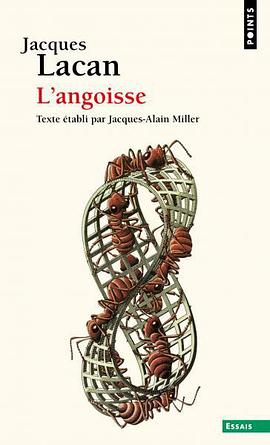
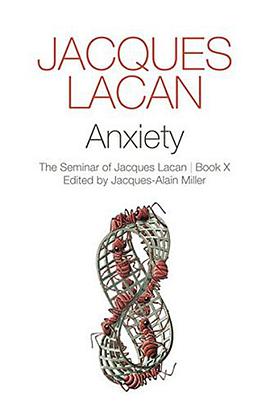
Anxiety [图书] 豆瓣
作者: Jacques Lacan 译者: A. R. Price 出版社: Polity Press 2014 - 4
Jacques Lacan is widely recognized as a key figure in the history of psychoanalysis and one of the most influential thinkers of the 20th Century. In Anxiety , now available for the first time in English, he explores the nature of anxiety, suggesting that it is not nostalgia for the object that causes anxiety but rather its imminence. In what was to be the last of his year–long seminars at Saint–Anne hospital, Lacan′s 1962–63 lessons form the keystone to this classic phase of his teaching. Here we meet for the first time the notorious a in its oral, anal, scopic and vociferated guises, alongside Lacan’s exploration of the question of the ′analyst′s desire′. Arriving at these concepts from a multitude of angles, Lacan leads his audience with great care through a range of recurring themes such as anxiety between jouissance and desire, counter–transference and interpretation, and the fantasy and its frame. This important volume, which forms Book X of The Seminar of Jacques Lacan , will be of great interest to students and practitioners of psychoanalysis and to students and scholars throughout the humanities and social sciences, from literature and critical theory to sociology, psychology and gender studies.
Écrits [图书]
Écrits
作者: Jacques Lacan 译者: Bruce Fink 出版社: W. W. Norton & Company 2007 - 1
Brilliant and innovative, Jacques Lacan's work lies at the epicenter of modern thought about otherness, subjectivity, sexual difference, the drives, the law, and enjoyment. This new translation of his complete works offers welcome, readable access to Lacan's seminal thinking on diverse subjects touched upon over the course of his inimitable intellectual career. .
Reading Seminar XI : Lacan's Four fundamental concepts of psychoanalysis [图书] 豆瓣
作者: Jacques Lacan 译者: Alan Sheridan 出版社: W.W. Norton & Company, Inc. 1978
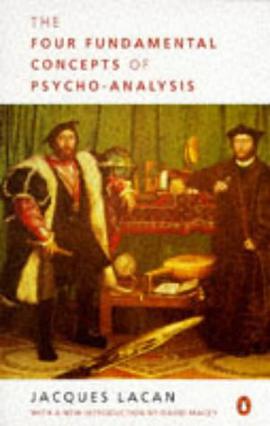
The Four Fundamental Concepts of Psychoanalysis (French: Les quatres concepts fondamentaux de la psychanalyse) is the English translation of one of the pivotal works of Jacques Lacan. The blurb describes the book as providing "illuminating insights into the mind of the most controversial psychoanalyst since Freud".
The 1994 edition contains an introduction by David Macey.
Le séminaire, Livre XI: Les quatre concepts fondamentaux de la psychanalyse.
French: (texte établi par Jacques-Alain Miller), Paris: Seuil, 1973.
English: Book XI: The Four Fundamental Concepts of Psychoanalysis (edited by Jacques-Alain Miller), New York: Norton, 1978.
January 15 1964, marks the opening session of the seminars at the École Nationale Supérieure where, in the presence of celebrities (Lévi-Strauss, Althusser, Fernand Braudel) and a new younger audience, Lacan talks about the censorship of his teachings and his excommunication from official psychoanalytical circles. He wants to train analysts and, at the same time, address the non-analyst by raising the following questions: Is psychoanalysis a science? If so, under what conditions? If it is - the "science of the unconscious" or a "conjectural science of the subject" - what can it teach us about science?
Praxis, which "places the subject in a position of dealing with the real through the symbolic," produces concepts; four are offered here: the unconscious, repetition, transference and the drive. The 1973 title has often been contested in favor of the 1964's: Les fondements de la psychanalyse, which implies neither that it is a matter of concepts, nor that there are only four of them. Lacan is suspicious of the rapport between psychoanalysis, religion and science. Did they not have a founding father and quasi-secret texts? Freud was "legitimately the subject presumed to know," at least as to the unconscious: "He was not only the subject who was presumed to know, he knew." "He gave us this knowledge in terms that may be said to be indestructible." "No progress has been made that has not deviated whenever one of the terms has been neglected around which Freud ordered the ways that he traced and the paths of the unconscious." This declaration of allegiance contrasts with the study of Freud's dream about the dead son screaming "Father, can't you see I'm burning?" The main problem remains that of transference: the Name-of-the-Father is a foundation, but the legacy of the Father is sin, and the original sin of psychoanalysis is Freud's desire that was not analyzed. In "The Freudian thing" (Écrits: A Selection), Lacan presents the Name-of-the-Father as a treasure to be found, provided it implies self-immolation as a sacrificial victim to truth.
Of the four concepts mentioned, three were developed between 1953 and 1963. As to drives, whose importance has increased since the study of objet a in L'angoisse, Lacan considers them as different from biological needs in that they can never be satisfied. The purpose of the drive is not to reach a goal (a final destination) but to follow its aim (the way itself), which is to circle round the object. The real source of jouissance is the repetitive movement of this closed circuit. Freud defined Trieb as a montage of four discontinuous elements: "Drive is not thrust (Drang); in Triebe und Triebschicksale (1915, S.E. XIV) Freud distinguishes four terms in the drive: Drang, thrust; Quelle, the source; Objekt, the object; Ziel, the aim. Such a list may seem quite natural; my purpose is to prove that the text was written to show that it is not as natural as that." The drive is a thoroughly cultural and symbolic construct. Lacan integrates the aforementioned elements into the drive's circuit, which originates in an erogenous zone, circles the object and returns to the erogenous zone. This circuit is structured by the three grammatical voices:
1. the active (to see)
2. the reflexive (to see oneself)
3. the passive (to make oneself be seen).
The first two are autoerotic; only in the passive voice a new subject appears, "this subject, the other, appears in so far as the drive has been able to show its circular course." The drive is always active, which is why he writes the third instance as "to make oneself be seen" instead of "to be seen."
Lacan rejects the notion that partial drives can attain any complete organization since the primacy of the genital zone is always precarious. The drives are partial, not in the sense that they are a part of a whole (a genital drive), but in that they only represent sexuality partially: they convey the dimension of jouissance. "The reality of the unconscious is sexual reality - an untenable truth," much as it cannot be separated from death. "Objet a is something from which the subject, in order to constitute itself, has separated itself off as organ. This serves as symbol of the lack, of the phallus, not as such, but in so far as it is lacking. It must be an object that is separable and that has some rapport to the lack. At the oral level, it is the nothing; at the anal level, it is the locus of the metaphor - one object for another, give the feces in place of the phallus - the anal drive is the domain of the gift; at the scopic level, we are no longer at the level of demand, but of desire, of the desire of the Other; it is the same at the level of the invocatory drive, which is the closest to the experience of the unconscious." The first two relate to demand, the second pair to desire. Under the form of objet a, Lacan groups all the partial drives linked to part objects: the breast, feces, the penis, and he adds the gaze and the voice. Here, he asserts the split between the eye and the gaze when he analyzes Holbein's The Ambassadors as a "trap for the gaze" (piège à regards), but also as a dompte-regard (the gaze is tamed by an object) and a trompe-l'oeil. In the foreground, a floating object, a phallic ghost object gives presence to the - </font>F of castration. This object is the heart of the organization of desire through the framework of the drives.
In "La Lettre volée" (Écrits) Lacan states that "the unconscious is the discourse of the Other," meaning that "one should see in the unconscious the effects of speech on the subject." The unconscious is the effect of the signifier on the subject - the signifier is what gets repressed and what returns in the formations of the unconscious. How then is it possible to reconcile desire linked to the signifier and to the Other with the libido, now an organ under the shape of the "lamella," the placenta, the part of the body from which the subject must separate in order to exist? A new conception of repetition comes into play, whose functionning stems from two forces: automatism on the side of the signifier and the missed yet desired encounter on the side of the drive, where objet a refers to the "impossible" Real (that as such cannot be assimilated). If transference is the enactment (la mise en acte) of the reality of the unconscious - what Lacan's deconstruction of the drive wants to bring to light - if desire is the nodal point where the motion of the unconscious, an untenable sexual reality, is also at work, what is to be done? The analyst's role is to allow the drive "to be made present in the reality of the unconscious": he must fall from the idealized position so as to become the upholder of objet a, the separating object.
On Feminine Sexuality the Limits of Love and Knowledge [图书] 豆瓣
作者: Jacques Lacan 出版社: W. W. Norton & Company 1998 - 2
Lacan takes us on a startling psycholinguistic exploration of the bounds of love and knowledge. Often controversial, always inspired, French intellectual Jacques Lacan begins the twentieth year of his famous Seminar by weighing theories of the relationship between the desire for love and the attainment of knowledge from such influential and diverse thinkers as Aristotle, Marx, and Freud. From here he leads us through mathematics, philosophy, religion, and, naturally, psychoanalysis into an entirely new and unexpected way of interpreting the two most fundamental human drives. Anticipated by English-speaking readers for more than twenty years, this annotated translation presents Lacan's most sophisticated work on love, desire, and jouissance.
Also available from Lacan's Seminar: Book I, Freud's Writings on Technique; Book II, The Theory of the Ego in Psychoanalytic Theory; Book III, The Psychoses; Book VII, The Ethics of Psychoanalysis; and Book XI, The Four Fundamental Concepts of Psychoanalysis (all from Norton).
On Feminine Sexuality, the Limits of Love and Knowledge [图书] 豆瓣
作者: Jacques Lacan / Jacques-Alain Miller 译者: Fink, Bruce 出版社: W. W. Norton & Company 1999 - 11
Often controversial, always inspired, Jacques Lacan here weighs theories of the relationship between the desire for love and the attainment of knowledge from such thinkers as Aristotle, Marx, and Freud. He leads us through mathematics, philosophy, religion, and, naturally, psychoanalysis into an entirely new way of interpreting the two most fundamental human drives. Long anticipated by English-speaking readers, this annotated translation presents Lacan's most sophisticated work on love and desire.