让-保罗·萨特 — 作者 (69)
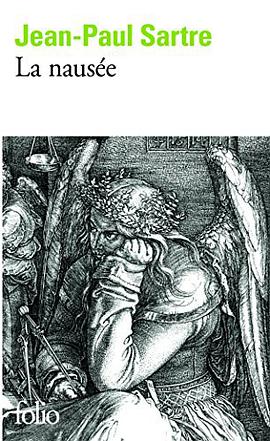
La nausée [图书] 豆瓣 Goodreads
作者: 让-保罗·萨特 publishing house: Editions Gallimard 1972 - 3
Donc j'étais tout à l'heure au Jardin public. La racine du marronnier s'enfonçait dans la terre, juste au-dessous de mon banc. Je ne me rappelais plus que c'était une racine. Les mots s'étaient évanouis et, avec eux, la signification des choses, leurs modes d'emploi, les faibles repères que les hommes ont tracés à leur surface. J'étais assis, un peu voûté, la tête basse, seul en face de cette masse noire et noueuse entièrement brute et qui me faisait peur. Et puis j'ai eu cette illumination. Ça m'a coupé le souffle. Jamais, avant ces derniers jours, je n'avais pressenti ce que voulait dire " exister ".
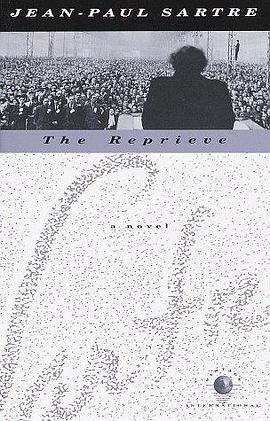
The Reprieve [图书] 豆瓣 Goodreads
作者: 让-保罗·萨特 译者: Sutton, Eric publishing house: Vintage 1992 - 7
An extraordinary picture of life in France during the critical eight days before the signing of the fateful Munich Pact and the subsequent takeover of Czechoslovakia in September 1938. Translated from the French by Eric Sutton.
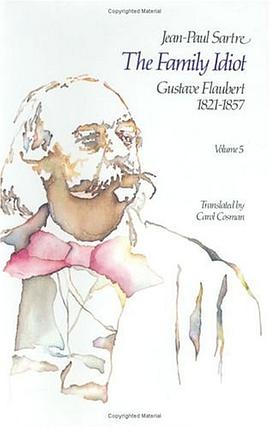
The family idiot : Gustave Flaubert, 1821-1857(5 Volume) [图书] 豆瓣
作者: 让-保罗·萨特 译者: Carol Cosman publishing house: University Of Chicago Press 1993
That Sartre's study of Flaubert, "The Family Idiot," is a towering achievement in intellectual history has never been disputed. Yet critics have argued about the precise nature of this novel, or biography, or "criticism-fiction" which is the summation of Sartre's philosophical, social, and literary thought. Sartre writes, simply, in the preface to the book: ""The Family Idiot" is the sequel to "The Question of Method." The subject: what, at this point in time, can we know about a man? It seemed to me that this question could only be answered by studying a specific case."
"A man is never an individual," Sartre writes, "it would be more fitting to call him a universal singular. Summed up and for this reason universalized by his epoch, he in turn resumes it by reproducing himself in it as singularity. Universal by the singular universality of human history, singular by the universalizing singularity of his projects, he requires simultaneous examination from both ends." This is the method by which Sartre examines Flaubert and the society in which he existed.
Now this masterpiece is being made available in an inspired English translation that captures all the variations of Sartre's style--from the jaunty to the ponderous--and all the nuances of even the most difficult ideas. Volume 1 consists of Part One of the original French work, La Constitution, and is primarily concerned with Flaubert's childhood and adolescence.
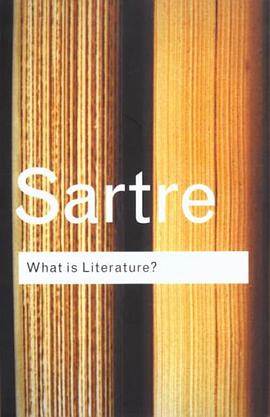
What is Literature? [图书] 豆瓣
作者: 让-保罗·萨特 publishing house: Routledge 2001 - 5
Jean-Paul Sartre was one of the most important philosophical and political thinkers of the twentieth century. His writings had a potency that was irresistible to the intellectual scene that swept post-war Europe, and have left a vital inheritance to contemporary thought. The central tenet of the Existentialist movement which he helped to found, whereby God is replaced by an ethical self, proved hugely attractive to a generation that had seen the horrors of Nazism, and provoked a revolution in post-war thought and literature. In What is Literature? Sartre the novelist and Sartre the philosopher combine to address the phenomenon of literature, exploring why we read, and why we write.
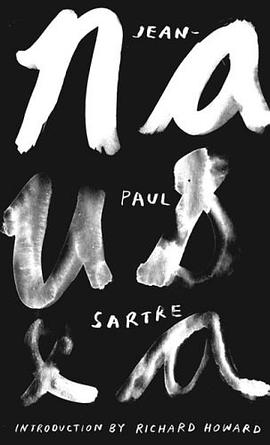
Nausea [图书] 豆瓣
作者: 让-保罗·萨特 译者: Lloyd Alexander publishing house: New Directions 2007 - 5
The classic Existentialist novel, with a newintroduction by renowned poet, translator, and critic Richard Howard.
Winner of the 1964 Nobel Prize for Literature, Jean-Paul Sartre, French philosopher, critic, novelist, and dramatist, holds a position of singular eminence in the world of letters. Among readers and critics familiar with the whole of Sartre's work, it is generally recognized that his earliest novel, La Nausée (first published in 1938), is his finest and most significant. It is unquestionably a key novel of the twentieth century and a landmark in Existentialist fiction.
Nausea is the story of Antoine Roquentin, a French writer who is horrified at his own existence. In impressionistic, diary form he ruthlessly catalogues his every feeling and sensation. His thoughts culminate in a pervasive, overpowering feeling of nausea which "spreads at the bottom of the viscous puddle, at the bottom of our time—the time of purple suspenders and broken chair seats; it is made of wide, soft instants, spreading at the edge, like an oil stain." Roquentin's efforts to come to terms with life, his philosophical and psychological struggles, give Sartre the opportunity to dramatize the tenets of his Existentialist creed.