让-保罗·萨特 — 作者 (69)
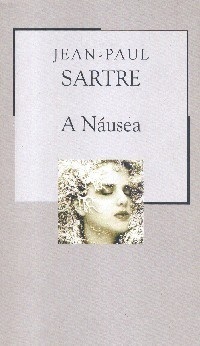
A Náusea [图书] 谷歌图书 Goodreads
作者: 让-保罗·萨特 / António Coimbra Martins publishing house: Público 2003 - 1 其它标题: Nausea
Nausea is the story of Antoine Roquentin, a French writer who is horrified at his own existence. In impressionistic, diary form he ruthlessly catalogues his every feeling and sensation about the world and people around him. His thoughts culminate in a pervasive, overpowering feeling of nausea which "spreads at the bottom of the viscous puddle, at the bottom of our time--the time of purple suspenders and broken chair seats; it is made of wide, soft instants, spreading at the edge, like an oil stain."
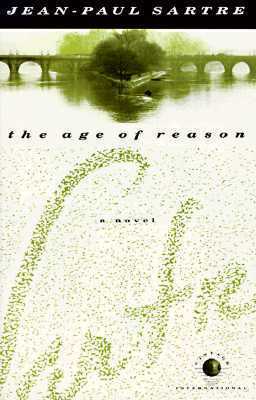
The Age of Reason [图书] Goodreads
作者: 让-保罗·萨特 publishing house: Vintage International 1992 - 7
The Age of Reason is set in 1938 and tells of Mathieu, a French professor of philosophy who is obsessed with the idea of freedom. As the shadows of the Second World War draw closer -- even as his personal life is complicated by his mistress's pregnancy -- his search for a way to remain free becomes more and more intense.
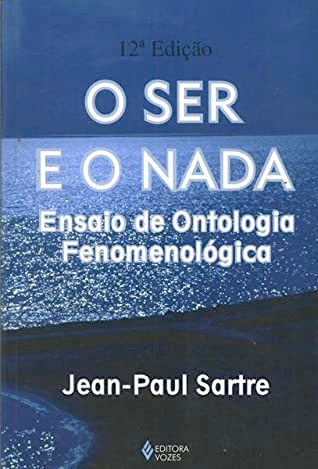
O Ser e o Nada [图书] Eggplant.place Goodreads
作者: 让-保罗·萨特 publishing house: Editora Vozes 2009 - 1
Publicado, em 1943, O Ser e o Nada dá continuidade a uma reflexão que já se iniciara no princípio do século com pensadores como Kierkegaard, Jaspers e Heidegger, exercendo uma incontornável influência sobre as cinco últimas décadas. Sartre desenvolveu um prodigioso e completo sistema de 'explicação total do mundo' através de um exame detalhado da realidade humana como ela se manifesta, estudando o abstrato concretamente. Ao ser publicado, O Ser e o Nada causou espanto, polêmica, protestos, admiração. Com sua originalidade transgressora e contestações às verdades eternas da tradição filosófica, constitui o apogeu da primeira fase da filosofia sartriana.
Conversations with Jean-Paul Sartre [图书] 豆瓣
作者: 让-保罗·萨特 / Simone de Beauvoir publishing house: Seagull Books 2006 - 4
Jean-Paul Sartre was undoubtedly one of the greatest and most popular philosophers of the 20th Century. Also a prominent novelist, playwright and biographer, Sartre was, above all, the embodiment of the engag intellectual, active in a variety of political causes, as well as an individual who attempted to live his life in accordance with the philosophy he professed. It was this that gave his lifelong preoccupation with freedom, choice and what he came to refer to as social conditioning, its cutting edge. Sartre's life was in many ways an illustration of his brand of existentialism in action. These three interviews, including one with Simone de Beauvoir, take Sartre on a wide-ranging tour of his philosophy and politics. Topics discussed include "freedom of choice," his uneasy relationship with Freudian concepts, his debates with Marx, and his acute observations on drama, the Cultural Revolution, Stalinism, women's rights, the May "Events" and of course, the Vietnam War. Their breadth remains a testimony to one man's attempt to make philosophical sense of the tumultuous world around him.

On Revolution [图书] 谷歌图书
作者: 让-保罗·萨特 publishing house: Seagull Books 2021
A two-part essay on the "myth" of revolution and the figure of the artist. Iconic French novelist, playwright, and essayist Jean-Paul Sartre is widely recognized as one of the most important philosophers of the twentieth century, and his work has remained relevant and thought-provoking through the decades. The Seagull Sartre Library now presents some of his most incisive philosophical, cultural, and literary critical essays in twelve newly designed and affordable editions. On Revolution consists of a long essay in two parts in which Sartre dwells upon the "myth" of revolution and goes on to analyze revolutionary ideas in fascism and, especially, Marxism. In the second essay, Sartre examines the figure of the artist and his conscience, especially in relation to communism.
On Camus [图书] 谷歌图书
作者: 让-保罗·萨特 publishing house: Seagull Books 2021
A window onto one of the most consequential friendships in philosophical history, that of Sartre and Camus--and on its end. Iconic French novelist, playwright, and essayist Jean-Paul Sartre is widely recognized as one of the most important philosophers of the twentieth century, and his work has remained relevant and thought-provoking through the decades. The Seagull Sartre Library now presents some of his most incisive philosophical, cultural, and literary critical essays in twelve newly designed and affordable editions. Sartre met Albert Camus in Occupied France in 1943, and from the start, they were an odd pair: one from the upper reaches of French society; the other, a pied-noir born into poverty in Algeria. The love of "freedom," however, quickly bound them in friendship, while their fight for justice united them politically. But in 1951 the two writers fell out spectacularly over their literary and political views, their split a media sensation in France. This volume holds up a remarkable mirror to that fraught relationship. It features an early review by Sartre of Camus's The Stranger; his famous 1952 letter to Camus that begins, "Our friendship was not easy, but I shall miss it"; and a moving homage written after Camus's sudden death in 1960.
The Transcendence of the Ego [图书] 豆瓣
作者: 让-保罗·萨特 译者: Andrew Brown publishing house: Routledge 2004 - 8
First published in France in 1936 as a journal article, The Transcendence of the Ego was one of Jean-Paul Sartre's earliest philosophical publications. When it appeared, Sartre was still largely unknown, working as a school teacher in provincial France and struggling to find a publisher for his most famous fictional work, Nausea .
The Transcendence of the Ego is the outcome of Sartre's intense engagement with the philosophy of Edmund Husserl, the founder of phenomenology. Here, as in many subsequent writings, Sartre embraces Husserl's vision of phenomenology as the proper method for philosophy. But he argues that Husserl's conception of the self as an inner entity, 'behind' conscious experience is mistaken and phenomenologically unfounded.
The Transcendence of the Ego offers a brilliant diagnosis of where Husserl went wrong, and a radical alternative account of the self as a product of consciousness, situated in the world.
This essay introduces many of the themes central to Sartre's major work, Being and Nothingness : the nature of consciousness, the problem of self-knowledge, other minds, anguish. It demonstrates their presence and importance in Sartre's thinking from the very outset of his career.
This fresh translation makes this classic work available again to students of Sartre, phenomenology, existentialism, and twentieth century philosophy. It includes a thorough and illuminating introduction by Sarah Richmond, placing Sartre's essay in its philosophical and historical context.
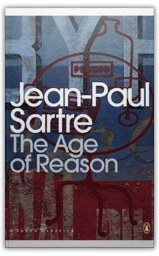
The Age of Reason [图书] 豆瓣
作者: 让-保罗·萨特 publishing house: Penguin Classic 2001 - 2
在线阅读本书
Set in the volatile Paris summer of 1938, The Age of Reason follows two days in the life of Mathieu Delarue, a philosophy teacher, and his circle in the cafés and bars of Montparnasse. Mathieu has so far managed to contain sex and personal freedom in conveniently separate compartments. But now he is in trouble, urgently trying to raise 4,000 francs to procure a safe abortion for his mistress, Marcelle. Beyond all this, filtering an uneasy light on his predicament, rises the distant threat of the coming of the Second World War.
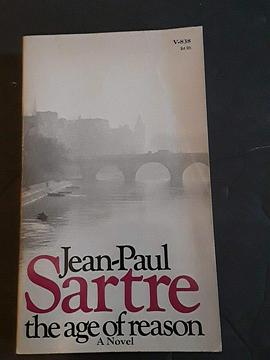
The Age of Reason [图书] 豆瓣
作者: 让-保罗·萨特 译者: Eric Sutton publishing house: Vintage 1973
The first novel of Sartre's monumental Roads to Freedom series, The Age of Reason is set in 1938 and tells of Mathieu, a French professor of philosophy who is obsessed with the idea of freedom. As the shadows of the Second World War draw closer -- even as his personal life is complicated by his mistress's pregnancy -- his search for a way to remain free becomes more and more intense.
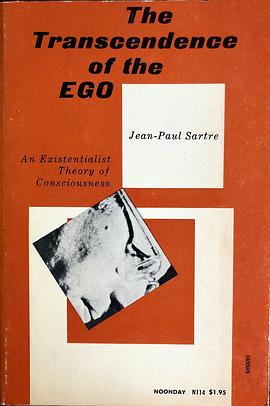
The Transcendence of the Ego [图书] 豆瓣
作者: 让-保罗·萨特 译者: Forrest Williams / Robert Kirkpatrick publishing house: Noonday Press 1957
Published in France in 1937, 'The Transcendence of the Ego' may be regarded as a turning-point in the philosophical development of Jean-Paul Sartre.