Leonard Bernstein — 艺术家 (239)
Mozart: The late Symphonies; Great Mass in C minor; Requiem [Box Set] [音乐] 豆瓣
发布日期 2007年9月4日 出版发行: Deutsche Grammophon
Disc 1
01 Symphony No.25 in G Minor, K. 173dB (K.183) USE KV183/y25 - Allegro con brio Wiener Philharmoniker
02 Symphony No.25 in G Minor, K. 173dB (K.183) USE KV183/y25 - Andante Wiener Philharmoniker
03 Symphony No.25 in G Minor, K. 173dB (K.183) USE KV183/y25 - Menuetto & Trio Wiener Philharmoniker
04 Symphony No.25 in G Minor, K. 173dB (K.183) USE KV183/y25 - Allegro Wiener Philharmoniker
05 Symphony No.29 in A Major K.186a (K. 201) - Allegro moderato Wiener Philharmoniker
06 Symphony No.29 in A Major K.186a (K. 201) - Andante Wiener Philharmoniker
07 Symphony No.29 in A Major K.186a (K. 201) - Menuet & Trio Wiener Philharmoniker
08 Symphony No.29 in A Major K.186a (K. 201) - Allegro con spirito Wiener Philharmoniker
09 Symphony No.38 in D, K.504 "Prague" - 1. Adagio - Allegro Wiener Philharmoniker
10 Symphony No.38 in D, K.504 "Prague" - 2. Andante Wiener Philharmoniker
11 Symphony No.38 in D, K.504 "Prague" - 3. Finale (Presto) Wiener Philharmoniker

Disc 2
01 Symphony No.35 in D, K.385 "Haffner" - 1. Allegro con spirito Wiener Philharmoniker
02 Symphony No.35 in D, K.385 "Haffner" - 2. Andante Wiener Philharmoniker
03 Symphony No.35 in D, K.385 "Haffner" - 3. Menuetto Wiener Philharmoniker
04 Symphony No.35 in D, K.385 "Haffner" - 4. Finale (Presto) Wiener Philharmoniker
05 Symphony No.36 in C, K.425 - "Linz" - 1. Adagio - Allegro spiritoso Wiener Philharmoniker
06 Symphony No.36 in C, K.425 - "Linz" - 2. Andante Wiener Philharmoniker
07 Symphony No.36 in C, K.425 - "Linz" - 3. Menuetto Wiener Philharmoniker
08 Symphony No.36 in C, K.425 - "Linz" - 4. Finale (Presto) Wiener Philharmoniker
09 Symphony No.40 in G minor, K.550 - 1. Molto allegro Wiener Philharmoniker
10 Symphony No.40 in G minor, K.550 - 2. Andante Wiener Philharmoniker
11 Symphony No.40 in G minor, K.550 - 3. Menuetto (Allegretto) - Trio Wiener Philharmoniker
12 Symphony No.40 in G minor, K.550 - 4. Finale (Allegro assai) Wiener Philharmoniker

Disc 3
01 Symphony No.39 in E flat, K.543 - 1. Adagio - Allegro Wiener Philharmoniker
02 Symphony No.39 in E flat, K.543 - 2. Andante con moto Wiener Philharmoniker
03 Symphony No.39 in E flat, K.543 - 3. Menuetto (Allegretto) Wiener Philharmoniker
04 Symphony No.39 in E flat, K.543 - 4. Finale (Allegro) Wiener Philharmoniker
05 Symphony No.41 in C, K.551 - "Jupiter" - 1. Allegro vivace Wiener Philharmoniker
06 Symphony No.41 in C, K.551 - "Jupiter" - 2. Andante cantabile Wiener Philharmoniker
07 Symphony No.41 in C, K.551 - "Jupiter" - 3. Menuetto (Allegretto) Wiener Philharmoniker
08 Symphony No.41 in C, K.551 - "Jupiter" - 4. Molto allegro Wiener Philharmoniker

Disc 4
01 Piano Concerto No.15 in B flat, K.450 - 1. Allegro Leonard Bernstein
02 Piano Concerto No.15 in B flat, K.450 - 2. (Andante) Leonard Bernstein
03 Piano Concerto No.15 in B flat, K.450 - 3. Allegro Leonard Bernstein
04 Clarinet Concerto in A, K.622 - 1. Allegro Peter Schmidl
05 Clarinet Concerto in A, K.622 - 2. Adagio Peter Schmidl
06 Clarinet Concerto in A, K.622 - 3. Rondo (Allegro) Peter Schmidl

Disc 5
01 Ave verum corpus, K.618 - Adagio Symphonieorchester des Bayerischen Rundfunks
02 Exsultate, jubilate, K.165 - Exsultate, jubilate - Fulget amica dies - Tu virginum corona - Alleluja Arleen Augér
03 Mass in C minor, K.427 "Grosse Messe" - Version by Franz Beyer - Kyrie Arleen Augér
04 Mass in C minor, K.427 "Grosse Messe" - Version by Franz Beyer - Gloria: Gloria in excelsis Deo Symphonieorchester des Bayerischen Rundfunks
05 Mass in C minor, K.427 "Grosse Messe" - Version by Franz Beyer - Gloria: Laudamus te Arleen Augér
06 Mass in C minor, K.427 "Grosse Messe" - Version by Franz Beyer - Gloria: Gratias agimus tibi Arleen Augér
07 Mass in C minor, K.427 "Grosse Messe" - Version by Franz Beyer - Gloria: Domine Deus Arleen Augér
08 Mass in C minor, K.427 "Grosse Messe" - Version by Franz Beyer - Gloria: Qui tollis peccata mundi Symphonieorchester des Bayerischen Rundfunks
09 Mass in C minor, K.427 "Grosse Messe" - Version by Franz Beyer - Gloria: Quoniam to solus Arleen Augér
10 Mass in C minor, K.427 "Grosse Messe" - Version by Franz Beyer - Gloria: Jesu Christe Arleen Augér
11 Mass in C minor, K.427 "Grosse Messe" - Version by Franz Beyer - Gloria: Cum Sanctu Spiritu Arleen Augér
12 Mass in C minor, K.427 "Grosse Messe" - Version by Franz Beyer - Credo: Credo in unum Deum Symphonieorchester des Bayerischen Rundfunks
13 Mass in C minor, K.427 "Grosse Messe" - Version by Franz Beyer - Credo: Et incarnatus est Arleen Augér
14 Mass in C minor, K.427 "Grosse Messe" - Version by Franz Beyer - Sanctus: Sanctus/Osanna Symphonieorchester des Bayerischen Rundfunks
15 Mass in C minor, K.427 "Grosse Messe" - Version by Franz Beyer - Benedictus Arleen Augér

Disc 6
01 Requiem in D minor, K.626 - Instr. Franz Beyer (Ed. Kunzelmann) - Requiem (Introitus) Marie McLaughlin
02 Requiem in D minor, K.626 - Instr. Franz Beyer (Ed. Kunzelmann) - Kyrie Symphonieorchester des Bayerischen Rundfunks
03 Requiem in D minor, K.626 - Instr. Franz Beyer (Ed. Kunzelmann) - Dies irae (Sequenz) Symphonieorchester des Bayerischen Rundfunks
04 Requiem in D minor, K.626 - Instr. Franz Beyer (Ed. Kunzelmann) - Tuba mirum (Sequenz) Marie McLaughlin
05 Requiem in D minor, K.626 - Instr. Franz Beyer (Ed. Kunzelmann) - Rex tremendae (Sequenz) Symphonieorchester des Bayerischen Rundfunks
06 Requiem in D minor, K.626 - Instr. Franz Beyer (Ed. Kunzelmann) - Recordare (Sequenz) Marie McLaughlin
07 Requiem in D minor, K.626 - Instr. Franz Beyer (Ed. Kunzelmann) - Confutatis (Sequenz) Symphonieorchester des Bayerischen Rundfunks
08 Requiem in D minor, K.626 - Instr. Franz Beyer (Ed. Kunzelmann) - Lacrimosa (Sequenz) Symphonieorchester des Bayerischen Rundfunks
09 Requiem in D minor, K.626 - Instr. Franz Beyer (Ed. Kunzelmann) - Domine Jesu (Offertorium) Marie McLaughlin
10 Requiem in D minor, K.626 - Instr. Franz Beyer (Ed. Kunzelmann) - Hostias (Offertorium) Symphonieorchester des Bayerischen Rundfunks
11 Requiem in D minor, K.626 - Instr. Franz Beyer (Ed. Kunzelmann) - Sanctus Symphonieorchester des Bayerischen Rundfunks
12 Requiem in D minor, K.626 - Instr. Franz Beyer (Ed. Kunzelmann) - Benedictus Marie McLaughlin
13 Requiem in D minor, K.626 - Instr. Franz Beyer (Ed. Kunzelmann) - Agnus Dei Symphonieorchester des Bayerischen Rundfunks
14 Requiem in D minor, K.626 - Instr. Franz Beyer (Ed. Kunzelmann) - Lux aeterna (Communio) Marie McLaughlin
伯恩斯坦:歌剧《安静的地方》 [音乐] 豆瓣
Leonard Bernstein / Beverly Morgan
出版发行: DG
Bernstein Conducts Bernstein: A Queit Place
Label: DG Catalog: 4479622 Format: CD
Here is the fulfilment of a long-cherished project. Its roots are in the 1952 one-acter, Trouble in Tahiti, in the mixed-genre Mass of 1971, in the 1977 Songfest (which the composer himself called "a study for an American opera"), in Weill, Blitzstein, Menotti and dozens of other composers who have contributed, positively or negatively, to Bernstein's vision of the Authentic American Opera. Most of all it grows out of his disappointment that American composers did not follow the lead of West Side Story. The other side to it is that both composer and librettist were preoccupied with recent bereavement, so that when Bernstein suggested a sequel to Trouble in Tahiti he and Stephen Wadsworth immediately found themselves on the same wavelength. Marrying those grandiose ambitions and intensely personal experiences into a coherent work of art proved to be an arduous process, in the course of which Trouble in Tahiti became incorporated into its own sequel as a series of flashbacks. Dinah, wife of successful businessman Sam, has died in a car crash, and the family is now gathered for her funeral. Their son Junior is "a crazy queer who skipped the draft" (one of several lines which amusingly defeat the translators of the libretto) and the most obvious victim of his parents' joyless marriage. He is given to psychotic states and longs for reconciliation with his father. Daughter Dede, who may have had an incestuous relationship with Junior, has married his lover, Francois; this sounds cosy. But all three are troubled, principally because of their unfinished emotional business with Sam.
The Quiet Place is a realm of remembered shared intimacy, the opposite of the restless emptiness Sam and Dinah inadvertently drifted into. It is now the goal of the rest of the family, who have to rediscover how to communicate. The relationship of father and son is the most sustained idea in the opera. In Act 1 Junior scandalizes the funeral gathering with a decadent stripping song. In the flashbacks of Act 2 something of the background to his present torment is sketched in; young Sam wins a handball trophy and young Dinah returns from a movie (Trouble in Tahiti), half scornful of its absurdity but half dependent on its glittering alternative to drab reality—both of them have avoided going to see Junior as the hero in his school play. In Act 3 Old Sam mellows, having read touching extracts from Dinah's diaries. For the first time he welcomes Francois into the family, and after an unexpected and vicious argument he finally takes Junior into his arms.
However you tell it, the story has the look of a Richard Strauss Intermezzo gone to New York and coated in self-indulgent breast-beating; and a parable of middle-class American alienation, however believable, may not be everyone's idea of a promising opera text. But I have to say that that final reconciliation is intensely moving, even though it seems in part too obvious (any devotee of American soap could see it coming) and in part too obscure (what is the "gun" which looms so frighteningly in Junior's earlier ravings, and which he now symbolically hands back to Sam?). Its power must have something to do with the extra-ordinary precision and commitment of the whole performance, and it is certainly heightened by the timing of final argument—after the apparent reconciliation. It also has to do with an underlying strength of the whole opera—the fact that the breakdown of communication is a ready-made metaphor for Bernstein's music, undercutting most of the reasons that might be advanced for resisting it. Which is to say that a stylistic mishmash, a sense of rootlessness, ennui, embarrassment, superficiality, vulgarity and so on can all be taken as part of the self-conscious role-playing which afflicts the characters—they represent the problem the family has in saying anything truly heartfelt. And if the ending hardly transcends all that the reconciliation on stage is, after all, only a beginning.
In any case this must surely be one of Bernstein's most impressive scores. Certainly the orchestration is as characterful as you could wish—punchy and seductive by turns—and the ideas are for the most part strong enough for their purposes. A pervasive descending motif recurs at pivotal moments — "an old certainty," Stephen Wadsworth calls it — perhaps slightly too close to the "Prize Song" for comfort, but no more so than some of the lump-in-throat bits of West Side Story are to the "Redemption" motif from The Ring. Indeed, anyone who knows West Side Story will also know whether they find an aftertaste of saccharine in Bernstein's would-be heartfelt music. My own resistance to the Bernstein of the Mass and Songfest is fairly high. But in A Quiet Place I have to confess particular admiration for the melancholy mindscapes of the postludes (even if they do owe something of their effectiveness to the example of Wozzeck) and his sleazy Broadway idiom is at its sharpest for the representation of Junior's outrageousness and Dinah's suburban blues.
That is not to say that this is an unblemished masterpiece. The First Act drags rather (as first acts so often do) and one spends a fair amount of emotional energy getting to know various of Dinah's associates only to discover that they play no further part in the opera. Sam and Dinah's Act 2 duet seems to me not to match the quality of the set-piece solos, some of the gnomic utterances of the Brecht/Weill chorus seem contrived, and the symbolism of the garden (= the Quiet Place = the formerly shared, now longed-for intimacy) is hardly subtle. Also I wonder quite how a stage production would cope with a scenario in which nothing actually happens and where the dialogue consists largely of comic-strip thought-bubbles.
But Bernstein considers this "emotionally the strongest thing I have ever written"; I think he's right. And whether or not the goal of the True American Opera is an attainable, or even desirable, one, I think A Quiet Place does take a definite step in that direction.
The performance is inspired. Long stretches of rhythmically displaced, dovetailed dialogue must be the devil's own job to co-ordinate, and the cast bring to it a confidence and razor-sharp precision astonishing for a life recording. Wendy White as the young Dinah recounts her visit to the movies with terrific panache, and Beverly Morgan is superb in the flighty virtuousity of Dede's lines. The male roles are not all sung with that degree of distinction, nor am I convinced that the writing for them is quite so memorable. Nevertheless, they are well enough done to engage a measure of sympathy for the characters. The Austrian Radio Symphony Orchestra play magnificently and Bernstein's conducting has a charisma without which one suspects the whole thing would make far less of an impression.
Incidentally, the two CDs last 74'57" and 74'09" — bravo to that. The sound is superb in terms of balance and realism — again a marvellous achievement for a live recording.
-- Gramophone [10/1987]
肖斯塔科维奇 第一、第七交响曲 [音乐] 豆瓣
Chicago Symphony Orchestra / Leonard Bernstein 类型: 古典
发布日期 1988年6月1日 出版发行: DG
萧斯塔科维奇《第七交响曲“列宁格勒”》
当纳粹军队对萧斯塔科维奇的家乡城市列宁格勒(Leningrad)进行长达900天的围困——导致将近一百万人由于轰炸、饥荒和严寒而死亡——时,平民的痛苦和军队的是一样的。萧斯塔科维奇(1906-1975)在这个时候当了志愿消防员,赶赴被轰炸的地方,帮助防止火势蔓延。在他的空闲时间里,他开始创作一部新的交响曲;而在他创作四个乐章中的最后一个乐章之前,他服从于政府的坚决命令,他必须撤往远方的城市库尔拜谢夫(Kuibyshev)。1942年3月5日,在那里的波尔塞伊剧院管弦乐团(Boishoi Theater Orchestra)在萨母苏德(Samuel Samosud)的领导下作了首演。其后,在莫斯科和在被破坏得面目全非的列宁格勒的临时召集的管弦乐团先后进行了演出。
在战争年代里,这部作品一直被理解为“向法西斯主义的抵抗”为其主动机,还有什么比它更好的作品可以出来代表被围困的列宁格勒呢?苏联报纸曾经以萧斯塔科维奇的名发表过对这交响曲的四个乐章进行解说,并有这些乐章的名字(但是其后撤消了):“战争”、“回忆”、“我们祖国广阔风景”和“胜利”。指挥家托斯卡尼尼(Arturo Toscanini),其反法西斯主义的立场是众所周知的,就在交响曲苏联首演后的几个星期内在美国进行了一次震惊人心的广播演出。在美国的“时代”杂志封面上刊登了萧斯塔科维奇戴着消防员安全帽子的照片。
想想,之后,在1979年福尔科夫(Solomon Volkov)所作的作为萧斯塔科维奇口授的“回忆录”《见证》引起了一宗丑闻,那是我们看到萧斯塔科维奇在其中说道:“实际上,我没有反对人们叫这部第七交响曲为‘列宁格勒’的,但是那不是关于列宁格勒城被围困,而是斯大林毁灭了列宁格勒城,而希特勒只是把这项工作完成了。”对于有些读者来说,这是萧斯塔科维奇在那本书中所有辛酸的、带有讽刺意味的论述中最使人感到惊讶的。可以肯定的是,这位列宁格勒的英雄是不会在反法西斯斗争的时期用如此愤世嫉俗的话来论述自己的最具启发性的、给予世界希望与勇气之光的作品的。
我们在没有尝试弄清楚对《见证》里的说话的真实性的争论之下我们应该注意到的是,苏联人民所表现出对抗纳粹德军围困列宁格勒的希望和勇气是很真实的,同样真实的是,萧斯塔科维奇所经历到的苏联政权的压迫感受、凡事皆要偷偷摸摸的干和误导。尽管在第一乐章的中间部分里进行曲-变奏曲里具有德国元素,那被称之为“入侵”主题。就算在这里,也有很多模棱两可之处,并且在这交响曲后来的乐章中很多的恐惧、沮丧和孤独感觉的片段,是跟个人对付压迫的国家有联系比起跟勇敢的苏联人对付野蛮的侵略者有联系的更有理由。
在第一乐章的开始几个小节里的音乐曾经被广泛地认为是现在苏联解体那样的好像果戈里(Gogol)式的对苏联政权的帝国意图的讽刺(至少,对于有些听众是如此感受)。在平庸的C大调上采用笨重的配器和粗犷地抑扬顿挫,使和声可以随意的在大调和小调之间来回。同样地,在宏大的第二主题里就开阔了祖国俄罗斯的广阔地平线景象——或者可以说有些怪的、平铺直叙和消沉。最后,音乐好像沉缅于雾般梦景的弦乐中,只有懒洋洋的短笛和小提琴的独奏使其有些生气。在这个在睡梦一般的世界里,出现了停不了的小鼓旋律和可以改变一切的进行曲调,纳粹德国国歌《德国高于一切》提示着,他们也逼近着。另一方面,(萧斯塔科维奇的朋友和支持者姆拉文斯基(Yevgeny Mravinsky)曾说的)如果苏联作曲家联会的一个委员会想尝试写拉威尔的波莱罗(Bolero)的话,这就是给予全世界的“愚蠢和非常没有品味形象的世界化”。
萧斯塔科维奇说过,交响曲的第二乐章是“带有忧郁色彩的”。但是那是比“带有”忧郁更为忧郁的是单、双簧管的独奏加上低沉的、叹息般的双音滑音伴奏。按有些音乐评论家的见解,萧斯塔科维奇的双音符形式是经常标志着斯大林的压迫效应。在中间部分,尖锐的木管乐,强度的三拍子和讽刺式的木琴,比起有形容斯大林的二音oom-pah低音时更为可怕,并且逼使旋律显得混乱。
慢板乐章是采用了更为直接的表达方式。由木管和弦引出的小提琴的富裕感情的旋律是带有些清爽的、斯特拉文斯基(Stravinsky)式的新古典主义风格。一个高雅的三拍子的田园舞曲开始,它是先由第二长笛,然后大提琴和小提琴。在过后沉重伴奏突出的音调的中间段落里带出使人振奋精神的、切分音符旋律;同时另一种令人着迷的双音符(这次是带点音符)形态驱策着音乐的前进。在柴可夫斯基式的高潮里,这个乐章的高贵的和弦由铜管乐奏出,与那令人着迷的切分音符旋律相辉映,好像先知一样喝求正义。
终乐章之前是没有间断的,重要的主动机以和缓的、风暴之前的气氛显露出来。风暴最后以C小调到达,并且威力稳定地加强。但是之后一个在其他弦乐器以响亮的、带有讽刺色彩的“弹拨”作为背景的小提琴的段落,作为一个改变情感的信号。速度慢下为中板的雄浑的、甚至是有些沉重的赞美歌。这音乐不是“胜利”的喜悦——应该较为像是一首沉重的悲歌。最后,甚至这个乐章开头的坚定的主题,以小提琴之后以中提琴,也加入了这个悲愤行列。从那里开始,音乐不可避免地发展到宏大的C大调结尾。但是一直到最后,降音音符,否定了大调形式的欢乐。交响曲在圣经式的预言力量和不可压倒的愤怒而结束。
***
萧斯塔科维奇《第一交响曲》
很少作曲家像萧斯塔科维奇那样以那么令人惊叹的方式开始自己的音乐生涯。萧斯塔科维奇的《第一交响曲》是他18岁时在列宁格勒音乐学院毕业所创作的作品。在1926年5月12日的首演是一个莫大的成功。其后在家乡苏联,在欧洲和美国的演出使他在国际上建立了声誉。这种成功是超越了个人本身的成功:因为,相对于俄罗斯帝国而言,他是首个完全在苏联政权的同代作曲家中的训练之下所诞生的“星”。
伯恩斯坦:乐队协奏曲“五十年节游戏”、芭蕾“迪布克:阴魂附体”组曲 [音乐] 豆瓣
Leonard Bernstein / Israel Philharmonic Orchestra
出版发行: DG
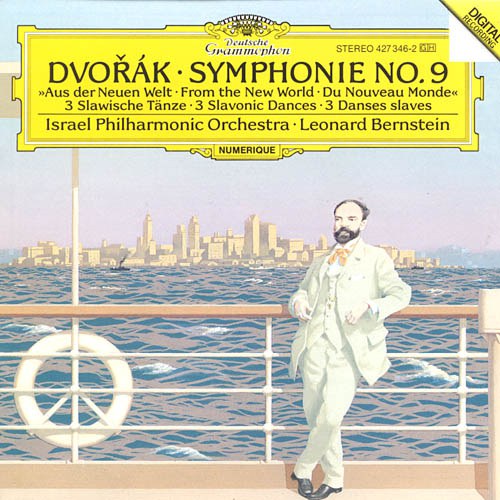
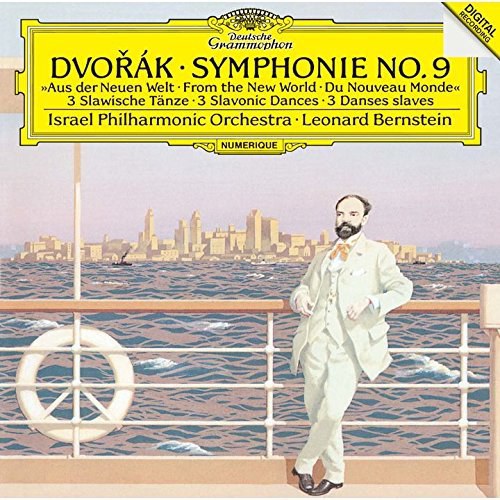
是Bernstein conducts Bernstein系列的单张。封面式样同
,还请有封面的乐友补充~
= = = = =
Dybbuk
From Wikipedia, the free encyclopedia
Jump to: navigation, search
In Kabbalah and European Jewish folklore, a dybbuk is a malicious possessing spirit, believed to be the dislocated soul of a dead person.[1] Dybbuks are said to have escaped from Gehenna, a Hebrew term very loosely translated as "hell," or to have been turned away from Gehenna for transgressions too serious for the soul to be allowed there, such as suicide. The word "dybbuk" is derived from the Hebrew דיבוק, meaning "attachment"; the dybbuk attaches itself to the body of a living person and inhabits it. According to belief, a soul that has not been able to fulfill its function in its lifetime is given another opportunity to do so in the form of a dybbuk. It will leave once it has accomplished its goal, sometimes after being helped.[2]
肖斯塔科维奇第6,9交响曲 [音乐] 豆瓣
Dmitri Shostakovich / Leonard Bernstein 类型: 古典
发布日期 1990年10月25日 出版发行: Deutsche
第六交响曲(b小调,作品54)
1939年11月5日在列宁格勒由列宁格勒爱乐乐队首次演出,E·A·姆拉文斯基指挥;总谱于1941年由国家音乐出版社第一次出版。
《第六交响曲》比前一个交响曲的篇幅要小,——各乐章的安排本身就是独特的,这就引起了某些批评家的困惑不解。通常在三个乐章的交响曲中慢乐章是处在两个快乐章之间,而这里在慢的第一乐章以后接着出现与它形成非常强烈的对比的两个快的乐章——谐谑曲和终曲——好像解脱开头的Largo的深刻悲观哲理。这样的结构可能使人想起古典的四个乐章的交响曲中的第二,第三和第四乐章(慢乐章,谐谑曲,终曲)的排列。就其实质说,开头的Largo把哲理的探索,悲壮的抒情,强烈表达的感情的特点溶于一炉,这些特点在前面的第五交响曲中是分布在第一和第三乐章之间(也就说在这里没有第五交响曲第一乐章的那种冲突——戏剧性的发展)。
第六交响曲又叫作“带有两个谐谑曲”的交响曲,因为在终曲轻巧和急速的运动中有谐谑曲的因素,但是为了把交响曲逻辑弄明白重要的还要看到第二和第三乐章的性质本质上的不同。第二乐章,是3拍子(3/8)的进行,有音色的对比,“运动的线条”。多主题的非常快速的,万花简般地“闪过”的特点等等;有的音乐带有离奇古怪的性质。这个乐章与其说接近世态风俗的生活的描绘,不如说更接近“浮想连遍”幻想谐谑曲,因此渲染了主观的情调。相反地,用二拍子写的终曲的音乐,比较客观,完全转向到“尘世的”因素,引起同海顿和莫扎特的乐观愉快的舞蹈性的终曲的联想,体现出明朗的,喜气洋洋的形象。同时,在这里(像肖斯塔科维奇的某些其它的作品一样)用新的特点使古典音乐的舞蹈性丰富起来:急速的运动的轻松愉快,各种的“绝招”大胆和机智,“跌岩”错落有致使人联想到技巧运动,平衡表演,完美的电影的特技的因素。
肖斯塔科维奇在创作自己的《第九交响曲》时,苏联当局据说曾施压与肖氏,要他创作一部等同贝多芬第九交响乐的巨著赞颂斯大林治下的苏联。但肖氏一反常态,将自己的第九交响乐谱写成十分轻快,略带讽刺意味的作品。肖氏在这部交响乐的第三乐章,引用了贝多芬和马勒的第九交响乐的部分乐章,并安排以巴松管奏出,讽刺意味浓厚。肖氏为自己的第九交响乐安排了一个恶作剧式的结尾。
第九交响曲(降E大调,作品70)
1945年11月3日在列宁格勒由列宁格勒爱乐乐队首次演出,E·A·穆拉汶斯基指挥;总谱于1945年由苏联音乐基金会出版社第一次出版,1946年由音乐出版社出版,A阿托弗缅改编此曲的两手和四手钢琴联弹谱是在1946年由苏联音乐基金会出版社出版。《第九交响曲》与前面的两部交响曲有着明显的不同:它为不大的乐队编制(双编制)写的,它的织体非常透明,如同室内乐,整曲演奏时间比第七或者第八交响曲的一个第一乐章的演奏时间还少得多。第九交响曲的特点是表达简洁,“情节”自身发展快速,在情节不同的表现中,运动起着很大的作用。
闪电猫与神秘牛 / 美国歌曲集 [音乐] 豆瓣
Patricia Petibon / Aaron Copland
发布日期 1999年11月16日 出版发行: Virgin Records Us
A whole world of delightful music and lovely poetry (Rilke, Whitman, Yeats...)on a single CD. Hilariously funny at times, it tells also of pathos, of everlasting love, of old age and youth, of hobos and Heaven's own angels. Some of the songs are familiar (Copland, Barber), others commissioned and lovingly composed for this particular recording. The freshness of the young voices, the painstaking polish of every detail of performance, the discreet skill and subtlety of the accompanying pianists are all part of the joy of this CD. And the delicate instrumental interludes a charming surprise.
This is ginseng for the soul!