Alain Badiou — Author (77)
Infinite Thought [Book] Douban
Influenced by Plato, Lucretius, Heidegger, Lacan and Deleuze, Badiou is a critic of both the analytical and the postmodern schools of thought. His work spans the range of philosophy, from ethics, to mathematics to science, psychoanalysis, politics and art. His writing is rigorous and startling and takes no prisoners. Infinite Thought brings together a representative selection, including a revealing interview, of the range of Alain Badiou's work, illustrating the power and diversity of his thought. The book is now regarded as The place to start to understand a philosopher who is doing no less than changing the way we think about the world. Edited and translated Oliver Feltham and Justin Clemens
Theoretical Writings [Book] Douban
Alain Badiou is arguable the most important and original philosopher working in France today. Swimming against the tide of postmodern orthodoxy, Badiou's work revitalizes philosophy's perennial attempt to provide a systematic theory of truth. This volume presents for the first time in English a comprehensive overview of Badiou's ambitious system. Beginning with Badiou's controversial assertion that ontology is mathematics, this volume sets out his theory of the emergence of truths from the singular relationship between a subject and an event. Also included is a substantial extract from Badiou's forthcoming work on the logics of appearance and the concept of world, presented here in advance of its French publication. Ranging from startling re-readings of canonical figures (Spinoza, Kant and Hegel) to decisive engagements with poetry, psychoanalysis and radical politics, "Theoretical Writings" is an indispensable introduction to one of the great thinkers of our time.
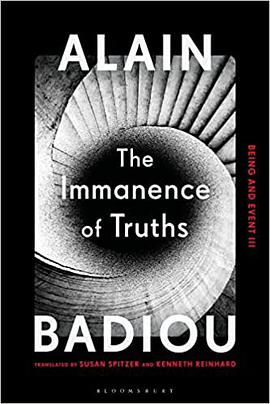
The Immanence of Truths [Book] Douban
L'immanence des vérités. L’être et l’événement, 3
author:
Alain Badiou
translator:
Kenneth Reinhard
/
Susan Spitzer
publishing house:
Bloomsbury Academic
2022
- 2
The Being and Event trilogy is the philosophical basis of Alain Badiou's entire oeuvre. It is formed of three major texts, which constitute a kind of metaphysical saga: Being and Event (1988). ), Logics of the Worlds (2006) and finally The Immanence of Truths, which he has been working on for 15 years.
The new volume reverses the perspective adopted in Logics of Worlds. Where in that book, Badiou saw fit to analyze how truths, qua events, appear from the perspective of particular worlds that by definition exclude them, in The Immanence of Truths Badiou asks instead how the irruption of truth transforms the worlds within which they by necessity must arise. An emphasis on regularity and continuity has given way to an attempt, one unquestionable in its philosophical power and implications, to formalize rupture and reconfiguration.
The Being and Event trilogy is a unique and ambitious work that reveals how truths can be at once context-specific and universal, situational and eternal.
The new volume reverses the perspective adopted in Logics of Worlds. Where in that book, Badiou saw fit to analyze how truths, qua events, appear from the perspective of particular worlds that by definition exclude them, in The Immanence of Truths Badiou asks instead how the irruption of truth transforms the worlds within which they by necessity must arise. An emphasis on regularity and continuity has given way to an attempt, one unquestionable in its philosophical power and implications, to formalize rupture and reconfiguration.
The Being and Event trilogy is a unique and ambitious work that reveals how truths can be at once context-specific and universal, situational and eternal.
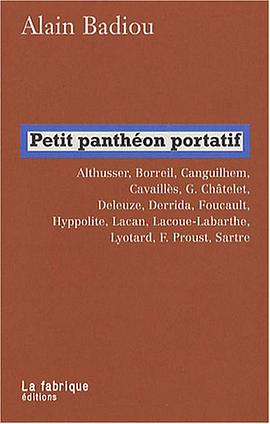
Petit panthéon portatif [Book] Douban
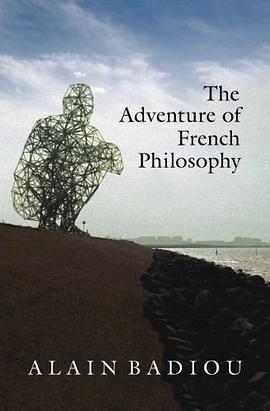
The Adventure of French Philosophy [Book] Douban
The Adventure of French Philosophy is essential reading for anyone interested in what Badiou calls the “French moment” in contemporary thought.
Badiou explores the exceptionally rich and varied world of French philosophy in a number of groundbreaking essays, published here for the first time in English or in a revised translation. Included are the often-quoted review of Louis Althusser’s canonical works For Marx and Reading Capital and the scathing critique of “potato fascism” in Gilles Deleuze and Félix Guattari’s A Thousand Plateaus. There are also talks on Michel Foucault and Jean-Luc Nancy, and reviews of the work of Jean-François Lyotard and Barbara Cassin, notable points of interest on an expansive tour of modern French thought.
Guided by a small set of fundamental questions concerning the nature of being, the event, the subject, and truth, Badiou pushes to an extreme the polemical force of his thinking. Against the formless continuum of life, he posits the need for radical discontinuity; against the false modesty of finitude, he pleads for the mathematical infinity of everyday situations; against the various returns to Kant, he argues for the persistence of the Hegelian dialectic; and against the lure of ultraleftism, his texts from the 1970s vindicate the role of Maoism as a driving force behind the communist Idea.
媒体推荐
“French philosophy still has a kick in it, and it can still turn heads. You have been warned.”—Jonathan Rée, Prospect
“One of the most important philosophers writing today.”—Joan Copjec
“A figure like Plato or Hegel walks here among us!”—Slavoj Žižek
“An heir to Jean-Paul Sartre and Louis Althusser.”—New Statesman
“Focused and illuminating, technical and deft.”—Shahidha Bari, Times Higher Education
“A series of snapshots of how Badiou participates in and understands what ... we might call the post-1960s moment in French philosophy.”—Notre Dame Philosophical Reviews
Badiou explores the exceptionally rich and varied world of French philosophy in a number of groundbreaking essays, published here for the first time in English or in a revised translation. Included are the often-quoted review of Louis Althusser’s canonical works For Marx and Reading Capital and the scathing critique of “potato fascism” in Gilles Deleuze and Félix Guattari’s A Thousand Plateaus. There are also talks on Michel Foucault and Jean-Luc Nancy, and reviews of the work of Jean-François Lyotard and Barbara Cassin, notable points of interest on an expansive tour of modern French thought.
Guided by a small set of fundamental questions concerning the nature of being, the event, the subject, and truth, Badiou pushes to an extreme the polemical force of his thinking. Against the formless continuum of life, he posits the need for radical discontinuity; against the false modesty of finitude, he pleads for the mathematical infinity of everyday situations; against the various returns to Kant, he argues for the persistence of the Hegelian dialectic; and against the lure of ultraleftism, his texts from the 1970s vindicate the role of Maoism as a driving force behind the communist Idea.
媒体推荐
“French philosophy still has a kick in it, and it can still turn heads. You have been warned.”—Jonathan Rée, Prospect
“One of the most important philosophers writing today.”—Joan Copjec
“A figure like Plato or Hegel walks here among us!”—Slavoj Žižek
“An heir to Jean-Paul Sartre and Louis Althusser.”—New Statesman
“Focused and illuminating, technical and deft.”—Shahidha Bari, Times Higher Education
“A series of snapshots of how Badiou participates in and understands what ... we might call the post-1960s moment in French philosophy.”—Notre Dame Philosophical Reviews
Le Séminaire - Heidegger [Book] Douban
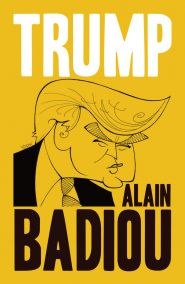
Trump [Book] Douban
The election of Donald Trump as President of the United States sent shockwaves across the globe. How was such an outcome even possible? And how can we move beyond the deep crisis of Western democracy that the election of Trump represents?
In two lectures given at American universities in the immediate aftermath of the election, the leading French philosopher Alain Badiou helps us to make sense of this extraordinary event. He argues that Trump’s victory was the symptom of a global crisis made up of four characteristics: the triumph of a brutal and violent form of global capitalism, the decomposition of the established political elite, the growing frustration and disorientation that many people feel today, and the absence of a compelling alternative vision. It was in this context that Trump could emerge as a new kind of political figure that was both inside and outside the political system, a member of the Republican Party who, at the same time, represents something outside the system – sexism, racism and a tendency toward violence and fascism. The progressive political challenge now is to create something new that offers people a real choice, a radical alternative based on principles of universality and equality.
This concise account of the meaning of Trump should be read by everyone who wants to understand what is happening in our world today.
Review
“What is our task today? Reading Trump as the symptom of global capitalism’s political crisis, Badiou compellingly argues that our task is to bring into existence a strategic choice between capitalism and communism. Anything less confines us to the present’s democratic fascism. This crucial intervention eschews fear and despair as it finds hope in the creation of a divisive, communist politics.”
Jodi Dean, author of Crowds and Party
In two lectures given at American universities in the immediate aftermath of the election, the leading French philosopher Alain Badiou helps us to make sense of this extraordinary event. He argues that Trump’s victory was the symptom of a global crisis made up of four characteristics: the triumph of a brutal and violent form of global capitalism, the decomposition of the established political elite, the growing frustration and disorientation that many people feel today, and the absence of a compelling alternative vision. It was in this context that Trump could emerge as a new kind of political figure that was both inside and outside the political system, a member of the Republican Party who, at the same time, represents something outside the system – sexism, racism and a tendency toward violence and fascism. The progressive political challenge now is to create something new that offers people a real choice, a radical alternative based on principles of universality and equality.
This concise account of the meaning of Trump should be read by everyone who wants to understand what is happening in our world today.
Review
“What is our task today? Reading Trump as the symptom of global capitalism’s political crisis, Badiou compellingly argues that our task is to bring into existence a strategic choice between capitalism and communism. Anything less confines us to the present’s democratic fascism. This crucial intervention eschews fear and despair as it finds hope in the creation of a divisive, communist politics.”
Jodi Dean, author of Crowds and Party
The True Life [Book] Douban
"I’m 79 years old. So why on earth should I concern myself with speaking about youth?" This is the question with which renowned French philosopher Alain Badiou begins his passionate plea to the young.
Today young people, at least in the West, are on the brink of a new world. With the decline of old traditions, they now face more choices than ever before. Yet powerful forces are pushing them in dangerous directions, into the vortex of consumerism or into reactive forms of traditionalism. This is a time when young people must be particularly attentive to the signs of the new and have the courage to venture forth and find out what they’re capable of, without being constrained by the old prejudices and hierarchical ideas of the past. And if the aim of philosophy is to corrupt youth, as Socrates was accused of doing, this can mean only one thing: to help young people see that they don’t have to go down the paths already mapped out for them, that they are not just condemned to obey social customs, that they can create something new and propose a different direction as regards the true life.
Today young people, at least in the West, are on the brink of a new world. With the decline of old traditions, they now face more choices than ever before. Yet powerful forces are pushing them in dangerous directions, into the vortex of consumerism or into reactive forms of traditionalism. This is a time when young people must be particularly attentive to the signs of the new and have the courage to venture forth and find out what they’re capable of, without being constrained by the old prejudices and hierarchical ideas of the past. And if the aim of philosophy is to corrupt youth, as Socrates was accused of doing, this can mean only one thing: to help young people see that they don’t have to go down the paths already mapped out for them, that they are not just condemned to obey social customs, that they can create something new and propose a different direction as regards the true life.
Ahmed the Philosopher [Book] Douban
Manifesto for Philosophy [Book] Goodreads Douban
Manifeste pour la philosophie
author:
Alain Badiou
translator:
Norman Madarasz
publishing house:
State University of New York Press
1999
- 6
Contrary to those proclaiming the end of philosophy, Badiou aims to restore philosophical thought to the complete space of the truths that condition it.
Our Wound is Not So Recent [Book] Douban
La tétralogie d'Ahmed [Book] Douban
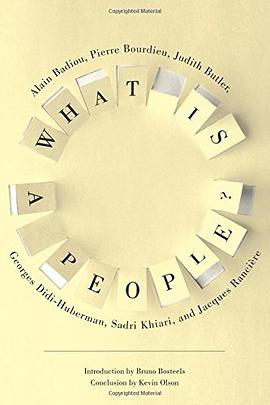
What Is a People? [Book] Douban
author:
Alain Badiou
/
Judith Butler
…
translator:
Jody Gladding
publishing house:
Columbia University Press
2016
- 5
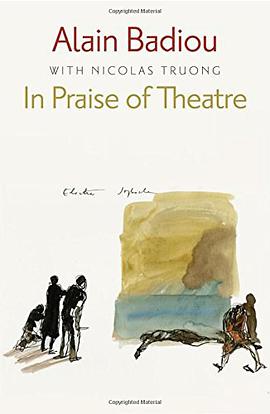
In Praise of Theatre [Book] Douban
In Praise of Theatre is Alain Badiou’s latest work on the ‘most complete of the arts,’ the theatrical stage. This book, certain to be of great interest to scholars and theatre practitioners alike, elaborates the theory of the theatre developed by Badiou in works such as Rhapsody for the Theatre and the ‘Theses on Theatre’ and enquires into the status of a theatre that would be adequate to our ‘contemporary, market-oriented chaos.’
In a departure from his usual emphasis upon canonical figures of the stage such as Bertolt Brecht and Samuel Beckett, Badiou devotes In Praise of Theatre largely to a consideration of contemporary practitioners, including Jan Fabre, Brigitte Jacques and Romeo Castellucci. In addition, the book features an incisive analysis of the precarious status of the theatre today, in which Badiou describes not only the current threats to the theatre from the right, but the far more insidious threat from the left.
In a departure from his usual emphasis upon canonical figures of the stage such as Bertolt Brecht and Samuel Beckett, Badiou devotes In Praise of Theatre largely to a consideration of contemporary practitioners, including Jan Fabre, Brigitte Jacques and Romeo Castellucci. In addition, the book features an incisive analysis of the precarious status of the theatre today, in which Badiou describes not only the current threats to the theatre from the right, but the far more insidious threat from the left.
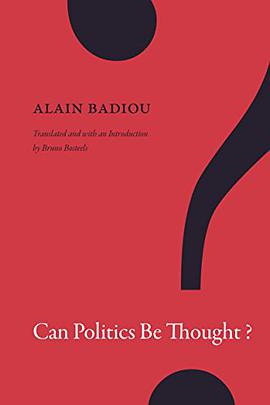
Can Politics Be Thought? [Book] Douban
In Can Politics Be Thought?—published in French in 1985 and appearing here in English for the first time—Alain Badiou offers his most forceful and systematic analysis of the crisis of Marxism. Distinguishing politics as an active mode of thinking from the political as a domain of the State, Badiou argues for the continuation of Marxist politics. In so doing, he shows why we need to recapture the emancipatory hypothesis of Marx's original gesture in order to actualize its radical potential. This volume also includes Badiou's “Of an Obscure Disaster: On the End of the Truth of the State,” in which he rebuts claims of Communism's death after the fall of the Soviet Union.
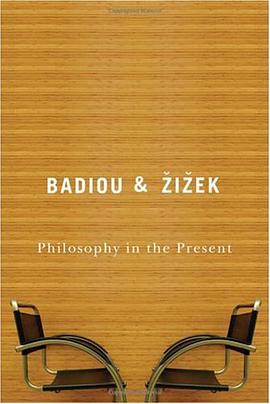
Philosophy in the Present [Book] Douban
Two controversial thinkers discuss a timeless but nonetheless urgent question: should philosophy interfere in the world? Nothing less than philosophy is at stake because, according to Badiou, philosophy is nothing but interference and commitment and will not be restrained by academic discipline. Philosophy is strange and new, and yet speaks in the name of all - as Badiou shows with his theory of universality. Similarly, Zizek believes that the philosopher must intervene, contrary to all expectations, in the key issues of the time. He can offer no direction, but this only shows that the question has been posed incorrectly: it is valid to change the terms of the debate and settle on philosophy as abnormality and excess. At once an invitation to philosophy and an introduction to the thinking of two of the most topical and controversial philosophers writing today, this concise volume will be of great interest to students and general readers alike.