李想 — 演员 (25)

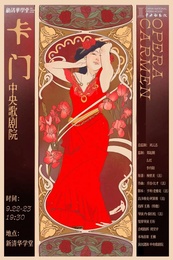
卡门 [演出] 豆瓣
Carmen
类型:
歌剧
编剧:
亨利·麦雅克(法)
/
吕多维克·阿莱维(法)
其它标题:
Carmen
剧团:
中央歌剧院歌剧团 中央歌剧院合唱团 中央歌剧院交响乐团 中央歌剧院舞台美术设计制作中心
剧院:
新清华学堂
导演:
勒内·泰拉松(法)
/
复排导演:王珩
演员:
牛莎莎 杨丽
/
李爽 徐森
/
王艺清
/
阮余群 蔡楠
/
金川
…
故事发生在1860年的西班牙塞维利亚。一个美丽而倔强的吉普赛姑娘、烟厂女工卡门在一次和其他女工的斗殴中遇到了骑兵队班长唐何塞。本将逮捕卡门的唐何塞被她野性的美貌和桀骜不驯的气质所吸引,不但放走了卡门,还从此坠入情网。在卡门的诱惑下,唐何塞加入了卡门所在的吉普赛走私贩行列,与卡门一起过上了漂泊的生活。但好景不长,卡门后来又爱上了意气风发的斗牛士艾斯卡密尤,唐何塞苦苦哀求她回心转意却被卡门拒绝。唐何塞试图阻挡卡门去找她的新欢。卡门忍无可忍,将原来唐何塞送给她的戒指从手上摘下,狠狠地丢在地上。唐何塞用藏在身上的匕首刺死了卡门,而后坦白了自己的罪行。
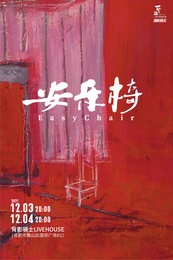
安乐椅 [演出] 豆瓣
类型:
theater
编剧:
约翰·洛根「美」
/
袁盛雄【改编】
…
导演:
袁盛雄
演员:
杨海川
/
李想
“你知道吗?这笔佣金,它就是你的奥兹莫比尔敞篷车。”
抽象派绘画大师马克·罗斯科收到三万五千美金的佣金为四季大饭店创作一组壁画。灵感总是在转瞬中与他擦肩而过,罗斯科纠结、彷徨、不断进行着自我审视。在一个昏暗画室中,他的肉体与灵魂不停地交流、辩论、争吵,一进一退,四周环绕着的是自己呕心创作的画作,这间画室俨然成为他关于理想与现实交锋的角斗场。最终,罗斯科创作出了满意的作品,然而他又陷入新的问题:四季大饭店真的应该是这组壁画的归宿吗?
本剧改编自著名编剧约翰•洛根的代表剧作《红色》,灵感来源于罗斯科著作《艺术何为》。
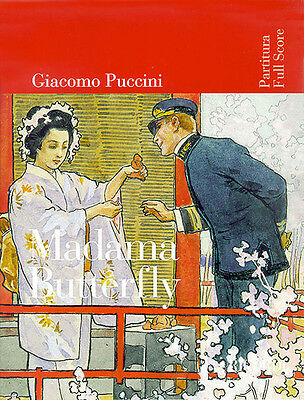
蝴蝶夫人 2018年中央歌剧院版 [演出] 豆瓣
所属 演出: 蝴蝶夫人
语言:
italian 意大利语
剧团:
中央歌剧院交响乐团;中央歌剧院合唱团;中央歌剧院歌剧团
剧院:
新清华学堂
导演:
李丹丹
Time: 1904
Place: Nagasaki, Japan
Act 1
In 1904, a U.S. naval officer named Pinkerton rents a house on a hill in Nagasaki, Japan, for himself and his soon-to-be wife, "Butterfly". Her real name is Ciocio-san (from the Japanese word for "butterfly" (蝶々 chōchō, pronounced [tɕoːtɕoː]); -san is a plain honorific). She is a 15-year-old Japanese girl whom he is marrying for convenience, and he intends to leave her once he finds a proper American wife, since Japanese divorce laws are very lax. The wedding is to take place at the house. Butterfly had been so excited to marry an American that she had earlier secretly converted to Christianity. After the wedding ceremony, her uninvited uncle, a bonze, who has found out about her conversion, comes to the house, curses her and orders all the guests to leave, which they do while renouncing her. Pinkerton and Butterfly sing a love duet and prepare to spend their first night together.
Act 2
Three years later, Butterfly is still waiting for Pinkerton to return, as he had left shortly after their wedding. Her maid Suzuki keeps trying to convince her that he is not coming back, but Butterfly will not listen to her. Goro, the marriage broker who arranged her marriage, keeps trying to marry her off again, but she does not listen to him either. The American consul, Sharpless, comes to the house with a letter which he has received from Pinkerton which asks him to break some news to Butterfly: that Pinkerton is coming back to Japan, but Sharpless cannot bring himself to finish it because Butterfly becomes very excited to hear that Pinkerton is coming back. Sharpless asks Butterfly what she would do if Pinkerton were not to return. She then reveals that she gave birth to Pinkerton's son after he had left and asks Sharpless to tell him.
From the hill house, Butterfly sees Pinkerton's ship arriving in the harbour. She and Suzuki prepare for his arrival, and then they wait. Suzuki and the child fall asleep, but Butterfly stays up all night waiting for him to arrive.
Act 3
Suzuki wakes up in the morning and Butterfly finally falls asleep. Sharpless and Pinkerton arrive at the house, along with Pinkerton's new American wife, Kate. They have come because Kate has agreed to raise the child. But, as Pinkerton sees how Butterfly has decorated the house for his return, he realizes he has made a huge mistake. He admits that he is a coward and cannot face her, leaving Suzuki, Sharpless and Kate to break the news to Butterfly. Agreeing to give up her child if Pinkerton comes himself to see her, she then prays to statues of her ancestral gods, says goodbye to her son, and blindfolds him. She places a small American flag in his hands and goes behind a screen, killing herself with her father's seppuku knife. Pinkerton rushes in, but he is too late, and Butterfly dies.
Place: Nagasaki, Japan
Act 1
In 1904, a U.S. naval officer named Pinkerton rents a house on a hill in Nagasaki, Japan, for himself and his soon-to-be wife, "Butterfly". Her real name is Ciocio-san (from the Japanese word for "butterfly" (蝶々 chōchō, pronounced [tɕoːtɕoː]); -san is a plain honorific). She is a 15-year-old Japanese girl whom he is marrying for convenience, and he intends to leave her once he finds a proper American wife, since Japanese divorce laws are very lax. The wedding is to take place at the house. Butterfly had been so excited to marry an American that she had earlier secretly converted to Christianity. After the wedding ceremony, her uninvited uncle, a bonze, who has found out about her conversion, comes to the house, curses her and orders all the guests to leave, which they do while renouncing her. Pinkerton and Butterfly sing a love duet and prepare to spend their first night together.
Act 2
Three years later, Butterfly is still waiting for Pinkerton to return, as he had left shortly after their wedding. Her maid Suzuki keeps trying to convince her that he is not coming back, but Butterfly will not listen to her. Goro, the marriage broker who arranged her marriage, keeps trying to marry her off again, but she does not listen to him either. The American consul, Sharpless, comes to the house with a letter which he has received from Pinkerton which asks him to break some news to Butterfly: that Pinkerton is coming back to Japan, but Sharpless cannot bring himself to finish it because Butterfly becomes very excited to hear that Pinkerton is coming back. Sharpless asks Butterfly what she would do if Pinkerton were not to return. She then reveals that she gave birth to Pinkerton's son after he had left and asks Sharpless to tell him.
From the hill house, Butterfly sees Pinkerton's ship arriving in the harbour. She and Suzuki prepare for his arrival, and then they wait. Suzuki and the child fall asleep, but Butterfly stays up all night waiting for him to arrive.
Act 3
Suzuki wakes up in the morning and Butterfly finally falls asleep. Sharpless and Pinkerton arrive at the house, along with Pinkerton's new American wife, Kate. They have come because Kate has agreed to raise the child. But, as Pinkerton sees how Butterfly has decorated the house for his return, he realizes he has made a huge mistake. He admits that he is a coward and cannot face her, leaving Suzuki, Sharpless and Kate to break the news to Butterfly. Agreeing to give up her child if Pinkerton comes himself to see her, she then prays to statues of her ancestral gods, says goodbye to her son, and blindfolds him. She places a small American flag in his hands and goes behind a screen, killing herself with her father's seppuku knife. Pinkerton rushes in, but he is too late, and Butterfly dies.
费加罗的婚礼 2014年中国国家大剧院版 [演出] 豆瓣
所属 演出: 费加罗的婚礼
语言:
italian 意大利语
剧团:
中国国家大剧院管弦乐团;中国国家大剧院合唱团
剧院:
中国国家大剧院
导演:
José Luis Castro
其它标题:
2014年中国国家大剧院版
编剧:
Lorenzo Da Ponte
作曲:
Wolfgang Amadeus Mozart
演员:
李鳌 / Riccardo Novaro
/
黄英 / Valentina Farcas
…
The Marriage of Figaro continues the plot of The Barber of Seville several years later, and recounts a single "day of madness" (la folle journée) in the palace of Count Almaviva near Seville, Spain. Rosina is now the Countess; Dr. Bartolo is seeking revenge against Figaro for thwarting his plans to marry Rosina himself; and Count Almaviva has degenerated from the romantic youth of Barber into a scheming, bullying, skirt-chasing baritone. Having gratefully given Figaro a job as head of his servant-staff, he is now persistently trying to exercise his droit du seigneur – his right to bed a servant girl on her wedding night – with Figaro's bride-to-be, Susanna, who is the Countess's maid. He keeps finding excuses to delay the civil part of the wedding of his two servants, which is arranged for this very day. Figaro, Susanna, and the Countess conspire to embarrass the Count and expose his scheming. He retaliates by trying to compel Figaro legally to marry a woman old enough to be his mother, but it turns out at the last minute that she really is his mother. Through Figaro's and Susanna's clever manipulations, the Count's love for his Countess is finally restored.
Place: Count Almaviva's estate, Aguas-Frescas, three leagues outside Seville, Spain.
Overture
The overture is in the key of D major; the tempo marking is presto; i.e. very fast. The work is well known and often played independently as a concert piece.
Act 1
A partly furnished room, with a chair in the centre.
Figaro happily measures the space where the bridal bed will fit while Susanna tries on her wedding bonnet in front of a mirror (in the present day, a more traditional French floral wreath or a modern veil are often substituted, often in combination with a bonnet, so as to accommodate what Susanna happily describes as her wedding cappellino). (Duet: "Cinque, dieci, venti" – "Five, ten, twenty"). Figaro is quite pleased with their new room; Susanna far less so (Duettino: "Se a caso madama la notte ti chiama" – "If the Countess should call you during the night"). She is bothered by its proximity to the Count's chambers: it seems he has been making advances toward her and plans on exercising his droit du seigneur, the purported feudal right of a lord to bed a servant girl on her wedding night before her husband can sleep with her. The Count had the right abolished when he married Rosina, but he now wants to reinstate it. The Countess rings for Susanna and she rushes off to answer. Figaro, confident in his own resourcefulness, resolves to outwit the Count (Cavatina: "Se vuol ballare signor contino" – "If you want to dance, sir count").
Figaro departs, and Dr. Bartolo arrives with Marcellina, his old housekeeper. Figaro had previously borrowed a large sum of money from her, and, in lieu of collateral, had promised to marry her if unable to repay at the appointed time; she now intends to enforce that promise by suing him. Bartolo, seeking revenge against Figaro for having facilitated the union of the Count and Rosina (in The Barber of Seville), agrees to represent Marcellina pro bono, and assures her, in comical lawyer-speak, that he can win the case for her (aria: "La vendetta" – "Vengeance").
Bartolo departs, Susanna returns, and Marcellina and Susanna exchange very politely delivered sarcastic insults (duet: "Via resti servita, madama brillante" – "After you, brilliant madam"). Susanna triumphs in the exchange by congratulating her rival on her impressive age. The older woman departs in a fury.
Cherubino then arrives and, after describing his emerging infatuation with all women, particularly with his "beautiful godmother" the Countess (aria: "Non so più cosa son" – "I don't know anymore what I am"), asks for Susanna's aid with the Count. It seems the Count is angry with Cherubino's amorous ways, having discovered him with the gardener's daughter, Barbarina, and plans to punish him. Cherubino wants Susanna to ask the Countess to intercede on his behalf. When the Count appears, Cherubino hides behind a chair, not wanting to be seen alone with Susanna. The Count uses the opportunity of finding Susanna alone to step up his demands for favours from her, including financial inducements to sell herself to him. As Basilio, the music teacher, arrives, the Count, not wanting to be caught alone with Susanna, hides behind the chair. Cherubino leaves that hiding place just in time, and jumps onto the chair while Susanna scrambles to cover him with a dress.
When Basilio starts to gossip about Cherubino's obvious attraction to the Countess, the Count angrily leaps from his hiding place (terzetto: "Cosa sento!" – "What do I hear!"). He disparages the "absent" page's incessant flirting and describes how he caught him with Barbarina under the kitchen table. As he lifts the dress from the chair to illustrate how he lifted the tablecloth to expose Cherubino, he finds ... the self same Cherubino! The count is furious, but is reminded that the page overheard the Count's advances on Susanna, something that the Count wants to keep from the Countess. The young man is ultimately saved from punishment by the entrance of the peasants of the Count's estate, a preemptive attempt by Figaro to commit the Count to a formal gesture symbolizing his promise that Susanna would enter into the marriage unsullied. The Count evades Figaro's plan by postponing the gesture. The Count says that he forgives Cherubino, but he dispatches him to his own regiment in Seville for army duty, effective immediately. Figaro gives Cherubino mocking advice about his new, harsh, military life from which all luxury, and especially women, will be totally excluded (aria: "Non più andrai" – "No more gallivanting").
Act 2
A handsome room with an alcove, a dressing room on the left, a door in the background (leading to the servants' quarters) and a window at the side.
The Countess laments her husband's infidelity (aria: "Porgi, amor, qualche ristoro" – "Grant, love, some comfort"). Susanna comes in to prepare the Countess for the day. She responds to the Countess's questions by telling her that the Count is not trying to seduce her; he is merely offering her a monetary contract in return for her affection. Figaro enters and explains his plan to distract the Count with anonymous letters warning him of adulterers. He has already sent one to the Count (via Basilio) that indicates that the Countess has a rendezvous of her own that evening. They hope that the Count will be too busy looking for imaginary adulterers to interfere with Figaro and Susanna's wedding. Figaro additionally advises the Countess to keep Cherubino around. She should dress him up as a girl and lure the Count into an illicit rendezvous where he can be caught red-handed. Figaro leaves.
Cherubino arrives, sent in by Figaro and eager to co-operate. Susanna urges him to sing the song he wrote for the Countess (aria: "Voi che sapete che cosa è amor" – "You ladies who know what love is, is it what I'm suffering from?"). After the song, the Countess, seeing Cherubino's military commission, notices that the Count was in such a hurry that he forgot to seal it with his signet ring (which would be necessary to make it an official document).
Susanna and the Countess then begin with their plan. Susanna takes off Cherubino's cloak, and she begins to comb his hair and teach him to behave and walk like a woman (aria of Susanna: "Venite, inginocchiatevi" – "Come, kneel down before me"). Then she leaves the room through a door at the back to get the dress for Cherubino, taking his cloak with her.
While the Countess and Cherubino are waiting for Susanna to come back, they suddenly hear the Count arriving. Cherubino hides in the closet. The Count demands to be allowed into the room and the Countess reluctantly unlocks the door. The Count enters and hears a noise from the closet. He tries to open it, but it is locked. The Countess tells him it is only Susanna, trying on her wedding dress. At this moment, Susanna re-enters unobserved, quickly realizes what's going on, and hides behind a couch (Trio: "Susanna, or via, sortite" – "Susanna, come out!"). The Count shouts for her to identify herself by her voice, but the Countess orders her to be silent. Furious and suspicious, the Count leaves, with the Countess, in search of tools to force the closet door open. As they leave, he locks all the bedroom doors to prevent the intruder from escaping. Cherubino and Susanna emerge from their hiding places, and Cherubino escapes by jumping through the window into the garden. Susanna then takes Cherubino's former place in the closet, vowing to make the Count look foolish (duet: "Aprite, presto, aprite" – "Open the door, quickly!").
The Count and Countess return. The Countess, thinking herself trapped, desperately admits that Cherubino is hidden in the closet. The enraged Count draws his sword, promising to kill Cherubino on the spot, but when the door is opened, they both find to their astonishment only Susanna (Finale: "Esci omai, garzon malnato" – "Come out of there, you ill-born boy!"). The Count demands an explanation; the Countess tells him it is a practical joke, to test his trust in her. Shamed by his jealousy, the Count begs for forgiveness. When the Count presses about the anonymous letter, Susanna and the Countess reveal that the letter was written by Figaro, and then delivered by Basilio. Figaro then arrives and tries to start the wedding festivities, but the Count berates him with questions about the anonymous note. Just as the Count is starting to run out of questions, Antonio the gardener arrives, complaining that a man has jumped out of the window and damaged his carnations while running away. Antonio adds that he tentatively identified the running man as Cherubino, but Figaro claims it was he himself who jumped out of the window, and pretends to have injured his foot while landing. Figaro, Susanna, and the Countess attempt to discredit Antonio as a chronic drunkard whose constant inebriation makes him unreliable and prone to fantasy, but Antonio brings forward a paper which, he says, was dropped by the escaping man. The Count orders Figaro to prove he was the jumper by identifying the paper (which is, in fact, Cherubino's appointment to the army). Figaro is at a loss, but Susanna and the Countess manage to signal the correct answers, and Figaro triumphantly identifies the document. His victory is, however, short-lived: Marcellina, Bartolo, and Basilio enter, bringing charges against Figaro and demanding that he honor his contract to marry Marcellina, since he cannot repay her loan. The Count happily postpones the wedding in order to investigate the charge.
Act 3
A rich hall, with two thrones, prepared for the wedding ceremony.
The Count mulls over the confusing situation. At the urging of the Countess, Susanna enters and gives a false promise to meet the Count later that night in the garden (duet: "Crudel! perchè finora" – "Cruel girl, why did you make me wait so long"). As Susanna leaves, the Count overhears her telling Figaro that he has already won the case. Realizing that he is being tricked (recitative and aria: "Hai già vinta la causa! ... Vedrò, mentr'io sospiro" – "You've already won the case!" ... "Shall I, while sighing, see"), he resolves to punish Figaro by forcing him to marry Marcellina.
Figaro's hearing follows, and the Count's judgment is that Figaro must marry Marcellina. Figaro argues that he cannot get married without his parents' permission, and that he does not know who his parents are, because he was stolen from them when he was a baby. The ensuing discussion reveals that Figaro is Rafaello, the long-lost illegitimate son of Bartolo and Marcellina. A touching scene of reconciliation occurs. During the celebrations, Susanna enters with a payment to release Figaro from his debt to Marcellina. Seeing Figaro and Marcellina in celebration together, Susanna mistakenly believes that Figaro now prefers Marcellina to her. She has a tantrum and slaps Figaro's face. Marcellina explains, and Susanna, realizing her mistake, joins the celebration. Bartolo, overcome with emotion, agrees to marry Marcellina that evening in a double wedding (sextet: "Riconosci in questo amplesso" – "Recognize in this embrace").
All leave, before Barbarina, Antonio's daughter, invites Cherubino back to her house so they can disguise him as a girl. The Countess, alone, ponders the loss of her happiness (aria: "Dove sono i bei momenti" – "Where are they, the beautiful moments"). Meanwhile, Antonio informs the Count that Cherubino is not in Seville, but in fact at his house. Susanna enters and updates her mistress regarding the plan to trap the Count. The Countess dictates a love letter for Susanna to send to the Count, which suggests that he meet her (Susanna) that night, "under the pines". The letter instructs the Count to return the pin which fastens the letter (duet: "Sull'aria...che soave zeffiretto" – "On the breeze... What a gentle little zephyr").
A chorus of young peasants, among them Cherubino disguised as a girl, arrives to serenade the Countess. The Count arrives with Antonio and, discovering the page, is enraged. His anger is quickly dispelled by Barbarina, who publicly recalls that he had once offered to give her anything she wants in exchange for certain favors, and asks for Cherubino's hand in marriage. Thoroughly embarrassed, the Count allows Cherubino to stay.
The act closes with the double wedding, during the course of which Susanna delivers her letter to the Count (Finale: "Ecco la marcia" – "Here is the procession"). Figaro watches the Count prick his finger on the pin, and laughs, unaware that the love-note is an invitation for the Count to tryst with Figaro's own bride Susanna. As the curtain drops, the two newlywed couples rejoice.
Act 4
The garden, with two pavilions. Night.
Following the directions in the letter, the Count has sent the pin back to Susanna, giving it to Barbarina. However, Barbarina has lost it (aria: "L'ho perduta, me meschina" – "I have lost it, poor me"). Figaro and Marcellina see Barbarina, and Figaro asks her what she is doing. When he hears the pin is Susanna's, he is overcome with jealousy, especially as he recognises the pin to be the one that fastened the letter to the Count. Thinking that Susanna is meeting the Count behind his back, Figaro complains to his mother, and swears to be avenged on the Count and Susanna, and on all unfaithful wives. Marcellina urges caution, but Figaro will not listen. Figaro rushes off, and Marcellina resolves to inform Susanna of Figaro's intentions. Marcellina sings an aria lamenting that male and female wild beasts get along with each other, but rational humans can't (aria: "Il capro e la capretta" – "The billy-goat and the she-goat"). (This aria and Basilio's ensuing aria are usually omitted from performances due to their relative unimportance, both musically and dramatically; however, some recordings include them.)
Motivated by jealousy, Figaro tells Bartolo and Basilio to come to his aid when he gives the signal. Basilio comments on Figaro's foolishness and claims he was once as frivolous as Figaro was. He tells a tale of how he was given common sense by "Donna Flemma" ("Dame Prudence") and learned the importance of not crossing powerful people. (aria: "In quegli anni" – "In those years"). They exit, leaving Figaro alone. Figaro muses bitterly on the inconstancy of women (recitative and aria: "Tutto è disposto ... Aprite un po' quegli occhi" – "Everything is ready ... Open those eyes a little"). Susanna and the Countess arrive, each dressed in the other's clothes. Marcellina is with them, having informed Susanna of Figaro's suspicions and plans. After they discuss the plan, Marcellina and the Countess leave, and Susanna teases Figaro by singing a love song to her beloved within Figaro's hearing (aria: "Deh vieni, non tardar" – "Oh come, don't delay"). Figaro is hiding behind a bush and, thinking the song is for the Count, becomes increasingly jealous.
The Countess arrives in Susanna's dress. Cherubino shows up and starts teasing "Susanna" (really the Countess), endangering the plan. (Finale: "Pian pianin le andrò più presso" - "Softly, softly I'll approach her") The Count gets rid of him by striking out in the dark. His punch actually ends up hitting Figaro, but the point is made and Cherubino runs off.
The Count now begins making earnest love to "Susanna" (really the Countess), and gives her a jeweled ring. They go offstage together, where the Countess dodges him, hiding in the dark. Onstage, meanwhile, the real Susanna enters, wearing the Countess' clothes. Figaro mistakes her for the real Countess, and starts to tell her of the Count's intentions, but he suddenly recognizes his bride in disguise. He plays along with the joke by pretending to be in love with "my lady", and inviting her to make love right then and there. Susanna, fooled, loses her temper and slaps him many times. Figaro finally lets on that he has recognized Susanna's voice, and they make peace, resolving to conclude the comedy together ("Pace, pace, mio dolce tesoro" - "Peace, peace, my sweet treasure").
The Count, unable to find "Susanna", enters frustrated. Figaro gets his attention by loudly declaring his love for "the Countess" (really Susanna). The enraged Count calls for his people and for weapons: his servant is seducing his wife. (Ultima scena: "Gente, gente, all'armi, all'armi" – "Gentlemen, to arms!") Bartolo, Basilio and Antonio enter with torches as, one by one, the Count drags out Cherubino, Barbarina, Marcellina and the "Countess" from behind the pavilion.
All beg him to forgive Figaro and the "Countess", but he loudly refuses, repeating "no" at the top of his voice, until finally the real Countess re-enters and reveals her true identity. The Count, seeing the ring he had given her, realizes that the supposed Susanna he was trying to seduce was actually his wife. Ashamed and remorseful, he kneels and pleads for forgiveness himself ("Contessa perdono!" – "Countess, forgive me!"). The Countess, more kind than he ("Più docile io sono" – "I am more mild"), forgives her husband and all are contented.
Place: Count Almaviva's estate, Aguas-Frescas, three leagues outside Seville, Spain.
Overture
The overture is in the key of D major; the tempo marking is presto; i.e. very fast. The work is well known and often played independently as a concert piece.
Act 1
A partly furnished room, with a chair in the centre.
Figaro happily measures the space where the bridal bed will fit while Susanna tries on her wedding bonnet in front of a mirror (in the present day, a more traditional French floral wreath or a modern veil are often substituted, often in combination with a bonnet, so as to accommodate what Susanna happily describes as her wedding cappellino). (Duet: "Cinque, dieci, venti" – "Five, ten, twenty"). Figaro is quite pleased with their new room; Susanna far less so (Duettino: "Se a caso madama la notte ti chiama" – "If the Countess should call you during the night"). She is bothered by its proximity to the Count's chambers: it seems he has been making advances toward her and plans on exercising his droit du seigneur, the purported feudal right of a lord to bed a servant girl on her wedding night before her husband can sleep with her. The Count had the right abolished when he married Rosina, but he now wants to reinstate it. The Countess rings for Susanna and she rushes off to answer. Figaro, confident in his own resourcefulness, resolves to outwit the Count (Cavatina: "Se vuol ballare signor contino" – "If you want to dance, sir count").
Figaro departs, and Dr. Bartolo arrives with Marcellina, his old housekeeper. Figaro had previously borrowed a large sum of money from her, and, in lieu of collateral, had promised to marry her if unable to repay at the appointed time; she now intends to enforce that promise by suing him. Bartolo, seeking revenge against Figaro for having facilitated the union of the Count and Rosina (in The Barber of Seville), agrees to represent Marcellina pro bono, and assures her, in comical lawyer-speak, that he can win the case for her (aria: "La vendetta" – "Vengeance").
Bartolo departs, Susanna returns, and Marcellina and Susanna exchange very politely delivered sarcastic insults (duet: "Via resti servita, madama brillante" – "After you, brilliant madam"). Susanna triumphs in the exchange by congratulating her rival on her impressive age. The older woman departs in a fury.
Cherubino then arrives and, after describing his emerging infatuation with all women, particularly with his "beautiful godmother" the Countess (aria: "Non so più cosa son" – "I don't know anymore what I am"), asks for Susanna's aid with the Count. It seems the Count is angry with Cherubino's amorous ways, having discovered him with the gardener's daughter, Barbarina, and plans to punish him. Cherubino wants Susanna to ask the Countess to intercede on his behalf. When the Count appears, Cherubino hides behind a chair, not wanting to be seen alone with Susanna. The Count uses the opportunity of finding Susanna alone to step up his demands for favours from her, including financial inducements to sell herself to him. As Basilio, the music teacher, arrives, the Count, not wanting to be caught alone with Susanna, hides behind the chair. Cherubino leaves that hiding place just in time, and jumps onto the chair while Susanna scrambles to cover him with a dress.
When Basilio starts to gossip about Cherubino's obvious attraction to the Countess, the Count angrily leaps from his hiding place (terzetto: "Cosa sento!" – "What do I hear!"). He disparages the "absent" page's incessant flirting and describes how he caught him with Barbarina under the kitchen table. As he lifts the dress from the chair to illustrate how he lifted the tablecloth to expose Cherubino, he finds ... the self same Cherubino! The count is furious, but is reminded that the page overheard the Count's advances on Susanna, something that the Count wants to keep from the Countess. The young man is ultimately saved from punishment by the entrance of the peasants of the Count's estate, a preemptive attempt by Figaro to commit the Count to a formal gesture symbolizing his promise that Susanna would enter into the marriage unsullied. The Count evades Figaro's plan by postponing the gesture. The Count says that he forgives Cherubino, but he dispatches him to his own regiment in Seville for army duty, effective immediately. Figaro gives Cherubino mocking advice about his new, harsh, military life from which all luxury, and especially women, will be totally excluded (aria: "Non più andrai" – "No more gallivanting").
Act 2
A handsome room with an alcove, a dressing room on the left, a door in the background (leading to the servants' quarters) and a window at the side.
The Countess laments her husband's infidelity (aria: "Porgi, amor, qualche ristoro" – "Grant, love, some comfort"). Susanna comes in to prepare the Countess for the day. She responds to the Countess's questions by telling her that the Count is not trying to seduce her; he is merely offering her a monetary contract in return for her affection. Figaro enters and explains his plan to distract the Count with anonymous letters warning him of adulterers. He has already sent one to the Count (via Basilio) that indicates that the Countess has a rendezvous of her own that evening. They hope that the Count will be too busy looking for imaginary adulterers to interfere with Figaro and Susanna's wedding. Figaro additionally advises the Countess to keep Cherubino around. She should dress him up as a girl and lure the Count into an illicit rendezvous where he can be caught red-handed. Figaro leaves.
Cherubino arrives, sent in by Figaro and eager to co-operate. Susanna urges him to sing the song he wrote for the Countess (aria: "Voi che sapete che cosa è amor" – "You ladies who know what love is, is it what I'm suffering from?"). After the song, the Countess, seeing Cherubino's military commission, notices that the Count was in such a hurry that he forgot to seal it with his signet ring (which would be necessary to make it an official document).
Susanna and the Countess then begin with their plan. Susanna takes off Cherubino's cloak, and she begins to comb his hair and teach him to behave and walk like a woman (aria of Susanna: "Venite, inginocchiatevi" – "Come, kneel down before me"). Then she leaves the room through a door at the back to get the dress for Cherubino, taking his cloak with her.
While the Countess and Cherubino are waiting for Susanna to come back, they suddenly hear the Count arriving. Cherubino hides in the closet. The Count demands to be allowed into the room and the Countess reluctantly unlocks the door. The Count enters and hears a noise from the closet. He tries to open it, but it is locked. The Countess tells him it is only Susanna, trying on her wedding dress. At this moment, Susanna re-enters unobserved, quickly realizes what's going on, and hides behind a couch (Trio: "Susanna, or via, sortite" – "Susanna, come out!"). The Count shouts for her to identify herself by her voice, but the Countess orders her to be silent. Furious and suspicious, the Count leaves, with the Countess, in search of tools to force the closet door open. As they leave, he locks all the bedroom doors to prevent the intruder from escaping. Cherubino and Susanna emerge from their hiding places, and Cherubino escapes by jumping through the window into the garden. Susanna then takes Cherubino's former place in the closet, vowing to make the Count look foolish (duet: "Aprite, presto, aprite" – "Open the door, quickly!").
The Count and Countess return. The Countess, thinking herself trapped, desperately admits that Cherubino is hidden in the closet. The enraged Count draws his sword, promising to kill Cherubino on the spot, but when the door is opened, they both find to their astonishment only Susanna (Finale: "Esci omai, garzon malnato" – "Come out of there, you ill-born boy!"). The Count demands an explanation; the Countess tells him it is a practical joke, to test his trust in her. Shamed by his jealousy, the Count begs for forgiveness. When the Count presses about the anonymous letter, Susanna and the Countess reveal that the letter was written by Figaro, and then delivered by Basilio. Figaro then arrives and tries to start the wedding festivities, but the Count berates him with questions about the anonymous note. Just as the Count is starting to run out of questions, Antonio the gardener arrives, complaining that a man has jumped out of the window and damaged his carnations while running away. Antonio adds that he tentatively identified the running man as Cherubino, but Figaro claims it was he himself who jumped out of the window, and pretends to have injured his foot while landing. Figaro, Susanna, and the Countess attempt to discredit Antonio as a chronic drunkard whose constant inebriation makes him unreliable and prone to fantasy, but Antonio brings forward a paper which, he says, was dropped by the escaping man. The Count orders Figaro to prove he was the jumper by identifying the paper (which is, in fact, Cherubino's appointment to the army). Figaro is at a loss, but Susanna and the Countess manage to signal the correct answers, and Figaro triumphantly identifies the document. His victory is, however, short-lived: Marcellina, Bartolo, and Basilio enter, bringing charges against Figaro and demanding that he honor his contract to marry Marcellina, since he cannot repay her loan. The Count happily postpones the wedding in order to investigate the charge.
Act 3
A rich hall, with two thrones, prepared for the wedding ceremony.
The Count mulls over the confusing situation. At the urging of the Countess, Susanna enters and gives a false promise to meet the Count later that night in the garden (duet: "Crudel! perchè finora" – "Cruel girl, why did you make me wait so long"). As Susanna leaves, the Count overhears her telling Figaro that he has already won the case. Realizing that he is being tricked (recitative and aria: "Hai già vinta la causa! ... Vedrò, mentr'io sospiro" – "You've already won the case!" ... "Shall I, while sighing, see"), he resolves to punish Figaro by forcing him to marry Marcellina.
Figaro's hearing follows, and the Count's judgment is that Figaro must marry Marcellina. Figaro argues that he cannot get married without his parents' permission, and that he does not know who his parents are, because he was stolen from them when he was a baby. The ensuing discussion reveals that Figaro is Rafaello, the long-lost illegitimate son of Bartolo and Marcellina. A touching scene of reconciliation occurs. During the celebrations, Susanna enters with a payment to release Figaro from his debt to Marcellina. Seeing Figaro and Marcellina in celebration together, Susanna mistakenly believes that Figaro now prefers Marcellina to her. She has a tantrum and slaps Figaro's face. Marcellina explains, and Susanna, realizing her mistake, joins the celebration. Bartolo, overcome with emotion, agrees to marry Marcellina that evening in a double wedding (sextet: "Riconosci in questo amplesso" – "Recognize in this embrace").
All leave, before Barbarina, Antonio's daughter, invites Cherubino back to her house so they can disguise him as a girl. The Countess, alone, ponders the loss of her happiness (aria: "Dove sono i bei momenti" – "Where are they, the beautiful moments"). Meanwhile, Antonio informs the Count that Cherubino is not in Seville, but in fact at his house. Susanna enters and updates her mistress regarding the plan to trap the Count. The Countess dictates a love letter for Susanna to send to the Count, which suggests that he meet her (Susanna) that night, "under the pines". The letter instructs the Count to return the pin which fastens the letter (duet: "Sull'aria...che soave zeffiretto" – "On the breeze... What a gentle little zephyr").
A chorus of young peasants, among them Cherubino disguised as a girl, arrives to serenade the Countess. The Count arrives with Antonio and, discovering the page, is enraged. His anger is quickly dispelled by Barbarina, who publicly recalls that he had once offered to give her anything she wants in exchange for certain favors, and asks for Cherubino's hand in marriage. Thoroughly embarrassed, the Count allows Cherubino to stay.
The act closes with the double wedding, during the course of which Susanna delivers her letter to the Count (Finale: "Ecco la marcia" – "Here is the procession"). Figaro watches the Count prick his finger on the pin, and laughs, unaware that the love-note is an invitation for the Count to tryst with Figaro's own bride Susanna. As the curtain drops, the two newlywed couples rejoice.
Act 4
The garden, with two pavilions. Night.
Following the directions in the letter, the Count has sent the pin back to Susanna, giving it to Barbarina. However, Barbarina has lost it (aria: "L'ho perduta, me meschina" – "I have lost it, poor me"). Figaro and Marcellina see Barbarina, and Figaro asks her what she is doing. When he hears the pin is Susanna's, he is overcome with jealousy, especially as he recognises the pin to be the one that fastened the letter to the Count. Thinking that Susanna is meeting the Count behind his back, Figaro complains to his mother, and swears to be avenged on the Count and Susanna, and on all unfaithful wives. Marcellina urges caution, but Figaro will not listen. Figaro rushes off, and Marcellina resolves to inform Susanna of Figaro's intentions. Marcellina sings an aria lamenting that male and female wild beasts get along with each other, but rational humans can't (aria: "Il capro e la capretta" – "The billy-goat and the she-goat"). (This aria and Basilio's ensuing aria are usually omitted from performances due to their relative unimportance, both musically and dramatically; however, some recordings include them.)
Motivated by jealousy, Figaro tells Bartolo and Basilio to come to his aid when he gives the signal. Basilio comments on Figaro's foolishness and claims he was once as frivolous as Figaro was. He tells a tale of how he was given common sense by "Donna Flemma" ("Dame Prudence") and learned the importance of not crossing powerful people. (aria: "In quegli anni" – "In those years"). They exit, leaving Figaro alone. Figaro muses bitterly on the inconstancy of women (recitative and aria: "Tutto è disposto ... Aprite un po' quegli occhi" – "Everything is ready ... Open those eyes a little"). Susanna and the Countess arrive, each dressed in the other's clothes. Marcellina is with them, having informed Susanna of Figaro's suspicions and plans. After they discuss the plan, Marcellina and the Countess leave, and Susanna teases Figaro by singing a love song to her beloved within Figaro's hearing (aria: "Deh vieni, non tardar" – "Oh come, don't delay"). Figaro is hiding behind a bush and, thinking the song is for the Count, becomes increasingly jealous.
The Countess arrives in Susanna's dress. Cherubino shows up and starts teasing "Susanna" (really the Countess), endangering the plan. (Finale: "Pian pianin le andrò più presso" - "Softly, softly I'll approach her") The Count gets rid of him by striking out in the dark. His punch actually ends up hitting Figaro, but the point is made and Cherubino runs off.
The Count now begins making earnest love to "Susanna" (really the Countess), and gives her a jeweled ring. They go offstage together, where the Countess dodges him, hiding in the dark. Onstage, meanwhile, the real Susanna enters, wearing the Countess' clothes. Figaro mistakes her for the real Countess, and starts to tell her of the Count's intentions, but he suddenly recognizes his bride in disguise. He plays along with the joke by pretending to be in love with "my lady", and inviting her to make love right then and there. Susanna, fooled, loses her temper and slaps him many times. Figaro finally lets on that he has recognized Susanna's voice, and they make peace, resolving to conclude the comedy together ("Pace, pace, mio dolce tesoro" - "Peace, peace, my sweet treasure").
The Count, unable to find "Susanna", enters frustrated. Figaro gets his attention by loudly declaring his love for "the Countess" (really Susanna). The enraged Count calls for his people and for weapons: his servant is seducing his wife. (Ultima scena: "Gente, gente, all'armi, all'armi" – "Gentlemen, to arms!") Bartolo, Basilio and Antonio enter with torches as, one by one, the Count drags out Cherubino, Barbarina, Marcellina and the "Countess" from behind the pavilion.
All beg him to forgive Figaro and the "Countess", but he loudly refuses, repeating "no" at the top of his voice, until finally the real Countess re-enters and reveals her true identity. The Count, seeing the ring he had given her, realizes that the supposed Susanna he was trying to seduce was actually his wife. Ashamed and remorseful, he kneels and pleads for forgiveness himself ("Contessa perdono!" – "Countess, forgive me!"). The Countess, more kind than he ("Più docile io sono" – "I am more mild"), forgives her husband and all are contented.
费加罗的婚礼 2016年中国国家大剧院版 [演出] 豆瓣
所属 演出: 费加罗的婚礼
语言:
italian 意大利语
剧团:
中国国家大剧院管弦乐团;中国国家大剧院合唱团
剧院:
中国国家大剧院
导演:
José Luis Castro
/
Alessandra Panzavolta
其它标题:
2016年中国国家大剧院版
编剧:
Lorenzo Da Ponte
作曲:
Wolfgang Amadeus Mozart
演员:
Thomas Tatzl / 梅杰
/
黄英 / 袁晨星
…
The Marriage of Figaro continues the plot of The Barber of Seville several years later, and recounts a single "day of madness" (la folle journée) in the palace of Count Almaviva near Seville, Spain. Rosina is now the Countess; Dr. Bartolo is seeking revenge against Figaro for thwarting his plans to marry Rosina himself; and Count Almaviva has degenerated from the romantic youth of Barber into a scheming, bullying, skirt-chasing baritone. Having gratefully given Figaro a job as head of his servant-staff, he is now persistently trying to exercise his droit du seigneur – his right to bed a servant girl on her wedding night – with Figaro's bride-to-be, Susanna, who is the Countess's maid. He keeps finding excuses to delay the civil part of the wedding of his two servants, which is arranged for this very day. Figaro, Susanna, and the Countess conspire to embarrass the Count and expose his scheming. He retaliates by trying to compel Figaro legally to marry a woman old enough to be his mother, but it turns out at the last minute that she really is his mother. Through Figaro's and Susanna's clever manipulations, the Count's love for his Countess is finally restored.
Place: Count Almaviva's estate, Aguas-Frescas, three leagues outside Seville, Spain.
Overture
The overture is in the key of D major; the tempo marking is presto; i.e. very fast. The work is well known and often played independently as a concert piece.
Act 1
A partly furnished room, with a chair in the centre.
Figaro happily measures the space where the bridal bed will fit while Susanna tries on her wedding bonnet in front of a mirror (in the present day, a more traditional French floral wreath or a modern veil are often substituted, often in combination with a bonnet, so as to accommodate what Susanna happily describes as her wedding cappellino). (Duet: "Cinque, dieci, venti" – "Five, ten, twenty"). Figaro is quite pleased with their new room; Susanna far less so (Duettino: "Se a caso madama la notte ti chiama" – "If the Countess should call you during the night"). She is bothered by its proximity to the Count's chambers: it seems he has been making advances toward her and plans on exercising his droit du seigneur, the purported feudal right of a lord to bed a servant girl on her wedding night before her husband can sleep with her. The Count had the right abolished when he married Rosina, but he now wants to reinstate it. The Countess rings for Susanna and she rushes off to answer. Figaro, confident in his own resourcefulness, resolves to outwit the Count (Cavatina: "Se vuol ballare signor contino" – "If you want to dance, sir count").
Figaro departs, and Dr. Bartolo arrives with Marcellina, his old housekeeper. Figaro had previously borrowed a large sum of money from her, and, in lieu of collateral, had promised to marry her if unable to repay at the appointed time; she now intends to enforce that promise by suing him. Bartolo, seeking revenge against Figaro for having facilitated the union of the Count and Rosina (in The Barber of Seville), agrees to represent Marcellina pro bono, and assures her, in comical lawyer-speak, that he can win the case for her (aria: "La vendetta" – "Vengeance").
Bartolo departs, Susanna returns, and Marcellina and Susanna exchange very politely delivered sarcastic insults (duet: "Via resti servita, madama brillante" – "After you, brilliant madam"). Susanna triumphs in the exchange by congratulating her rival on her impressive age. The older woman departs in a fury.
Cherubino then arrives and, after describing his emerging infatuation with all women, particularly with his "beautiful godmother" the Countess (aria: "Non so più cosa son" – "I don't know anymore what I am"), asks for Susanna's aid with the Count. It seems the Count is angry with Cherubino's amorous ways, having discovered him with the gardener's daughter, Barbarina, and plans to punish him. Cherubino wants Susanna to ask the Countess to intercede on his behalf. When the Count appears, Cherubino hides behind a chair, not wanting to be seen alone with Susanna. The Count uses the opportunity of finding Susanna alone to step up his demands for favours from her, including financial inducements to sell herself to him. As Basilio, the music teacher, arrives, the Count, not wanting to be caught alone with Susanna, hides behind the chair. Cherubino leaves that hiding place just in time, and jumps onto the chair while Susanna scrambles to cover him with a dress.
When Basilio starts to gossip about Cherubino's obvious attraction to the Countess, the Count angrily leaps from his hiding place (terzetto: "Cosa sento!" – "What do I hear!"). He disparages the "absent" page's incessant flirting and describes how he caught him with Barbarina under the kitchen table. As he lifts the dress from the chair to illustrate how he lifted the tablecloth to expose Cherubino, he finds ... the self same Cherubino! The count is furious, but is reminded that the page overheard the Count's advances on Susanna, something that the Count wants to keep from the Countess. The young man is ultimately saved from punishment by the entrance of the peasants of the Count's estate, a preemptive attempt by Figaro to commit the Count to a formal gesture symbolizing his promise that Susanna would enter into the marriage unsullied. The Count evades Figaro's plan by postponing the gesture. The Count says that he forgives Cherubino, but he dispatches him to his own regiment in Seville for army duty, effective immediately. Figaro gives Cherubino mocking advice about his new, harsh, military life from which all luxury, and especially women, will be totally excluded (aria: "Non più andrai" – "No more gallivanting").
Act 2
A handsome room with an alcove, a dressing room on the left, a door in the background (leading to the servants' quarters) and a window at the side.
The Countess laments her husband's infidelity (aria: "Porgi, amor, qualche ristoro" – "Grant, love, some comfort"). Susanna comes in to prepare the Countess for the day. She responds to the Countess's questions by telling her that the Count is not trying to seduce her; he is merely offering her a monetary contract in return for her affection. Figaro enters and explains his plan to distract the Count with anonymous letters warning him of adulterers. He has already sent one to the Count (via Basilio) that indicates that the Countess has a rendezvous of her own that evening. They hope that the Count will be too busy looking for imaginary adulterers to interfere with Figaro and Susanna's wedding. Figaro additionally advises the Countess to keep Cherubino around. She should dress him up as a girl and lure the Count into an illicit rendezvous where he can be caught red-handed. Figaro leaves.
Cherubino arrives, sent in by Figaro and eager to co-operate. Susanna urges him to sing the song he wrote for the Countess (aria: "Voi che sapete che cosa è amor" – "You ladies who know what love is, is it what I'm suffering from?"). After the song, the Countess, seeing Cherubino's military commission, notices that the Count was in such a hurry that he forgot to seal it with his signet ring (which would be necessary to make it an official document).
Susanna and the Countess then begin with their plan. Susanna takes off Cherubino's cloak, and she begins to comb his hair and teach him to behave and walk like a woman (aria of Susanna: "Venite, inginocchiatevi" – "Come, kneel down before me"). Then she leaves the room through a door at the back to get the dress for Cherubino, taking his cloak with her.
While the Countess and Cherubino are waiting for Susanna to come back, they suddenly hear the Count arriving. Cherubino hides in the closet. The Count demands to be allowed into the room and the Countess reluctantly unlocks the door. The Count enters and hears a noise from the closet. He tries to open it, but it is locked. The Countess tells him it is only Susanna, trying on her wedding dress. At this moment, Susanna re-enters unobserved, quickly realizes what's going on, and hides behind a couch (Trio: "Susanna, or via, sortite" – "Susanna, come out!"). The Count shouts for her to identify herself by her voice, but the Countess orders her to be silent. Furious and suspicious, the Count leaves, with the Countess, in search of tools to force the closet door open. As they leave, he locks all the bedroom doors to prevent the intruder from escaping. Cherubino and Susanna emerge from their hiding places, and Cherubino escapes by jumping through the window into the garden. Susanna then takes Cherubino's former place in the closet, vowing to make the Count look foolish (duet: "Aprite, presto, aprite" – "Open the door, quickly!").
The Count and Countess return. The Countess, thinking herself trapped, desperately admits that Cherubino is hidden in the closet. The enraged Count draws his sword, promising to kill Cherubino on the spot, but when the door is opened, they both find to their astonishment only Susanna (Finale: "Esci omai, garzon malnato" – "Come out of there, you ill-born boy!"). The Count demands an explanation; the Countess tells him it is a practical joke, to test his trust in her. Shamed by his jealousy, the Count begs for forgiveness. When the Count presses about the anonymous letter, Susanna and the Countess reveal that the letter was written by Figaro, and then delivered by Basilio. Figaro then arrives and tries to start the wedding festivities, but the Count berates him with questions about the anonymous note. Just as the Count is starting to run out of questions, Antonio the gardener arrives, complaining that a man has jumped out of the window and damaged his carnations while running away. Antonio adds that he tentatively identified the running man as Cherubino, but Figaro claims it was he himself who jumped out of the window, and pretends to have injured his foot while landing. Figaro, Susanna, and the Countess attempt to discredit Antonio as a chronic drunkard whose constant inebriation makes him unreliable and prone to fantasy, but Antonio brings forward a paper which, he says, was dropped by the escaping man. The Count orders Figaro to prove he was the jumper by identifying the paper (which is, in fact, Cherubino's appointment to the army). Figaro is at a loss, but Susanna and the Countess manage to signal the correct answers, and Figaro triumphantly identifies the document. His victory is, however, short-lived: Marcellina, Bartolo, and Basilio enter, bringing charges against Figaro and demanding that he honor his contract to marry Marcellina, since he cannot repay her loan. The Count happily postpones the wedding in order to investigate the charge.
Act 3
A rich hall, with two thrones, prepared for the wedding ceremony.
The Count mulls over the confusing situation. At the urging of the Countess, Susanna enters and gives a false promise to meet the Count later that night in the garden (duet: "Crudel! perchè finora" – "Cruel girl, why did you make me wait so long"). As Susanna leaves, the Count overhears her telling Figaro that he has already won the case. Realizing that he is being tricked (recitative and aria: "Hai già vinta la causa! ... Vedrò, mentr'io sospiro" – "You've already won the case!" ... "Shall I, while sighing, see"), he resolves to punish Figaro by forcing him to marry Marcellina.
Figaro's hearing follows, and the Count's judgment is that Figaro must marry Marcellina. Figaro argues that he cannot get married without his parents' permission, and that he does not know who his parents are, because he was stolen from them when he was a baby. The ensuing discussion reveals that Figaro is Rafaello, the long-lost illegitimate son of Bartolo and Marcellina. A touching scene of reconciliation occurs. During the celebrations, Susanna enters with a payment to release Figaro from his debt to Marcellina. Seeing Figaro and Marcellina in celebration together, Susanna mistakenly believes that Figaro now prefers Marcellina to her. She has a tantrum and slaps Figaro's face. Marcellina explains, and Susanna, realizing her mistake, joins the celebration. Bartolo, overcome with emotion, agrees to marry Marcellina that evening in a double wedding (sextet: "Riconosci in questo amplesso" – "Recognize in this embrace").
All leave, before Barbarina, Antonio's daughter, invites Cherubino back to her house so they can disguise him as a girl. The Countess, alone, ponders the loss of her happiness (aria: "Dove sono i bei momenti" – "Where are they, the beautiful moments"). Meanwhile, Antonio informs the Count that Cherubino is not in Seville, but in fact at his house. Susanna enters and updates her mistress regarding the plan to trap the Count. The Countess dictates a love letter for Susanna to send to the Count, which suggests that he meet her (Susanna) that night, "under the pines". The letter instructs the Count to return the pin which fastens the letter (duet: "Sull'aria...che soave zeffiretto" – "On the breeze... What a gentle little zephyr").
A chorus of young peasants, among them Cherubino disguised as a girl, arrives to serenade the Countess. The Count arrives with Antonio and, discovering the page, is enraged. His anger is quickly dispelled by Barbarina, who publicly recalls that he had once offered to give her anything she wants in exchange for certain favors, and asks for Cherubino's hand in marriage. Thoroughly embarrassed, the Count allows Cherubino to stay.
The act closes with the double wedding, during the course of which Susanna delivers her letter to the Count (Finale: "Ecco la marcia" – "Here is the procession"). Figaro watches the Count prick his finger on the pin, and laughs, unaware that the love-note is an invitation for the Count to tryst with Figaro's own bride Susanna. As the curtain drops, the two newlywed couples rejoice.
Act 4
The garden, with two pavilions. Night.
Following the directions in the letter, the Count has sent the pin back to Susanna, giving it to Barbarina. However, Barbarina has lost it (aria: "L'ho perduta, me meschina" – "I have lost it, poor me"). Figaro and Marcellina see Barbarina, and Figaro asks her what she is doing. When he hears the pin is Susanna's, he is overcome with jealousy, especially as he recognises the pin to be the one that fastened the letter to the Count. Thinking that Susanna is meeting the Count behind his back, Figaro complains to his mother, and swears to be avenged on the Count and Susanna, and on all unfaithful wives. Marcellina urges caution, but Figaro will not listen. Figaro rushes off, and Marcellina resolves to inform Susanna of Figaro's intentions. Marcellina sings an aria lamenting that male and female wild beasts get along with each other, but rational humans can't (aria: "Il capro e la capretta" – "The billy-goat and the she-goat"). (This aria and Basilio's ensuing aria are usually omitted from performances due to their relative unimportance, both musically and dramatically; however, some recordings include them.)
Motivated by jealousy, Figaro tells Bartolo and Basilio to come to his aid when he gives the signal. Basilio comments on Figaro's foolishness and claims he was once as frivolous as Figaro was. He tells a tale of how he was given common sense by "Donna Flemma" ("Dame Prudence") and learned the importance of not crossing powerful people. (aria: "In quegli anni" – "In those years"). They exit, leaving Figaro alone. Figaro muses bitterly on the inconstancy of women (recitative and aria: "Tutto è disposto ... Aprite un po' quegli occhi" – "Everything is ready ... Open those eyes a little"). Susanna and the Countess arrive, each dressed in the other's clothes. Marcellina is with them, having informed Susanna of Figaro's suspicions and plans. After they discuss the plan, Marcellina and the Countess leave, and Susanna teases Figaro by singing a love song to her beloved within Figaro's hearing (aria: "Deh vieni, non tardar" – "Oh come, don't delay"). Figaro is hiding behind a bush and, thinking the song is for the Count, becomes increasingly jealous.
The Countess arrives in Susanna's dress. Cherubino shows up and starts teasing "Susanna" (really the Countess), endangering the plan. (Finale: "Pian pianin le andrò più presso" - "Softly, softly I'll approach her") The Count gets rid of him by striking out in the dark. His punch actually ends up hitting Figaro, but the point is made and Cherubino runs off.
The Count now begins making earnest love to "Susanna" (really the Countess), and gives her a jeweled ring. They go offstage together, where the Countess dodges him, hiding in the dark. Onstage, meanwhile, the real Susanna enters, wearing the Countess' clothes. Figaro mistakes her for the real Countess, and starts to tell her of the Count's intentions, but he suddenly recognizes his bride in disguise. He plays along with the joke by pretending to be in love with "my lady", and inviting her to make love right then and there. Susanna, fooled, loses her temper and slaps him many times. Figaro finally lets on that he has recognized Susanna's voice, and they make peace, resolving to conclude the comedy together ("Pace, pace, mio dolce tesoro" - "Peace, peace, my sweet treasure").
The Count, unable to find "Susanna", enters frustrated. Figaro gets his attention by loudly declaring his love for "the Countess" (really Susanna). The enraged Count calls for his people and for weapons: his servant is seducing his wife. (Ultima scena: "Gente, gente, all'armi, all'armi" – "Gentlemen, to arms!") Bartolo, Basilio and Antonio enter with torches as, one by one, the Count drags out Cherubino, Barbarina, Marcellina and the "Countess" from behind the pavilion.
All beg him to forgive Figaro and the "Countess", but he loudly refuses, repeating "no" at the top of his voice, until finally the real Countess re-enters and reveals her true identity. The Count, seeing the ring he had given her, realizes that the supposed Susanna he was trying to seduce was actually his wife. Ashamed and remorseful, he kneels and pleads for forgiveness himself ("Contessa perdono!" – "Countess, forgive me!"). The Countess, more kind than he ("Più docile io sono" – "I am more mild"), forgives her husband and all are contented.
Place: Count Almaviva's estate, Aguas-Frescas, three leagues outside Seville, Spain.
Overture
The overture is in the key of D major; the tempo marking is presto; i.e. very fast. The work is well known and often played independently as a concert piece.
Act 1
A partly furnished room, with a chair in the centre.
Figaro happily measures the space where the bridal bed will fit while Susanna tries on her wedding bonnet in front of a mirror (in the present day, a more traditional French floral wreath or a modern veil are often substituted, often in combination with a bonnet, so as to accommodate what Susanna happily describes as her wedding cappellino). (Duet: "Cinque, dieci, venti" – "Five, ten, twenty"). Figaro is quite pleased with their new room; Susanna far less so (Duettino: "Se a caso madama la notte ti chiama" – "If the Countess should call you during the night"). She is bothered by its proximity to the Count's chambers: it seems he has been making advances toward her and plans on exercising his droit du seigneur, the purported feudal right of a lord to bed a servant girl on her wedding night before her husband can sleep with her. The Count had the right abolished when he married Rosina, but he now wants to reinstate it. The Countess rings for Susanna and she rushes off to answer. Figaro, confident in his own resourcefulness, resolves to outwit the Count (Cavatina: "Se vuol ballare signor contino" – "If you want to dance, sir count").
Figaro departs, and Dr. Bartolo arrives with Marcellina, his old housekeeper. Figaro had previously borrowed a large sum of money from her, and, in lieu of collateral, had promised to marry her if unable to repay at the appointed time; she now intends to enforce that promise by suing him. Bartolo, seeking revenge against Figaro for having facilitated the union of the Count and Rosina (in The Barber of Seville), agrees to represent Marcellina pro bono, and assures her, in comical lawyer-speak, that he can win the case for her (aria: "La vendetta" – "Vengeance").
Bartolo departs, Susanna returns, and Marcellina and Susanna exchange very politely delivered sarcastic insults (duet: "Via resti servita, madama brillante" – "After you, brilliant madam"). Susanna triumphs in the exchange by congratulating her rival on her impressive age. The older woman departs in a fury.
Cherubino then arrives and, after describing his emerging infatuation with all women, particularly with his "beautiful godmother" the Countess (aria: "Non so più cosa son" – "I don't know anymore what I am"), asks for Susanna's aid with the Count. It seems the Count is angry with Cherubino's amorous ways, having discovered him with the gardener's daughter, Barbarina, and plans to punish him. Cherubino wants Susanna to ask the Countess to intercede on his behalf. When the Count appears, Cherubino hides behind a chair, not wanting to be seen alone with Susanna. The Count uses the opportunity of finding Susanna alone to step up his demands for favours from her, including financial inducements to sell herself to him. As Basilio, the music teacher, arrives, the Count, not wanting to be caught alone with Susanna, hides behind the chair. Cherubino leaves that hiding place just in time, and jumps onto the chair while Susanna scrambles to cover him with a dress.
When Basilio starts to gossip about Cherubino's obvious attraction to the Countess, the Count angrily leaps from his hiding place (terzetto: "Cosa sento!" – "What do I hear!"). He disparages the "absent" page's incessant flirting and describes how he caught him with Barbarina under the kitchen table. As he lifts the dress from the chair to illustrate how he lifted the tablecloth to expose Cherubino, he finds ... the self same Cherubino! The count is furious, but is reminded that the page overheard the Count's advances on Susanna, something that the Count wants to keep from the Countess. The young man is ultimately saved from punishment by the entrance of the peasants of the Count's estate, a preemptive attempt by Figaro to commit the Count to a formal gesture symbolizing his promise that Susanna would enter into the marriage unsullied. The Count evades Figaro's plan by postponing the gesture. The Count says that he forgives Cherubino, but he dispatches him to his own regiment in Seville for army duty, effective immediately. Figaro gives Cherubino mocking advice about his new, harsh, military life from which all luxury, and especially women, will be totally excluded (aria: "Non più andrai" – "No more gallivanting").
Act 2
A handsome room with an alcove, a dressing room on the left, a door in the background (leading to the servants' quarters) and a window at the side.
The Countess laments her husband's infidelity (aria: "Porgi, amor, qualche ristoro" – "Grant, love, some comfort"). Susanna comes in to prepare the Countess for the day. She responds to the Countess's questions by telling her that the Count is not trying to seduce her; he is merely offering her a monetary contract in return for her affection. Figaro enters and explains his plan to distract the Count with anonymous letters warning him of adulterers. He has already sent one to the Count (via Basilio) that indicates that the Countess has a rendezvous of her own that evening. They hope that the Count will be too busy looking for imaginary adulterers to interfere with Figaro and Susanna's wedding. Figaro additionally advises the Countess to keep Cherubino around. She should dress him up as a girl and lure the Count into an illicit rendezvous where he can be caught red-handed. Figaro leaves.
Cherubino arrives, sent in by Figaro and eager to co-operate. Susanna urges him to sing the song he wrote for the Countess (aria: "Voi che sapete che cosa è amor" – "You ladies who know what love is, is it what I'm suffering from?"). After the song, the Countess, seeing Cherubino's military commission, notices that the Count was in such a hurry that he forgot to seal it with his signet ring (which would be necessary to make it an official document).
Susanna and the Countess then begin with their plan. Susanna takes off Cherubino's cloak, and she begins to comb his hair and teach him to behave and walk like a woman (aria of Susanna: "Venite, inginocchiatevi" – "Come, kneel down before me"). Then she leaves the room through a door at the back to get the dress for Cherubino, taking his cloak with her.
While the Countess and Cherubino are waiting for Susanna to come back, they suddenly hear the Count arriving. Cherubino hides in the closet. The Count demands to be allowed into the room and the Countess reluctantly unlocks the door. The Count enters and hears a noise from the closet. He tries to open it, but it is locked. The Countess tells him it is only Susanna, trying on her wedding dress. At this moment, Susanna re-enters unobserved, quickly realizes what's going on, and hides behind a couch (Trio: "Susanna, or via, sortite" – "Susanna, come out!"). The Count shouts for her to identify herself by her voice, but the Countess orders her to be silent. Furious and suspicious, the Count leaves, with the Countess, in search of tools to force the closet door open. As they leave, he locks all the bedroom doors to prevent the intruder from escaping. Cherubino and Susanna emerge from their hiding places, and Cherubino escapes by jumping through the window into the garden. Susanna then takes Cherubino's former place in the closet, vowing to make the Count look foolish (duet: "Aprite, presto, aprite" – "Open the door, quickly!").
The Count and Countess return. The Countess, thinking herself trapped, desperately admits that Cherubino is hidden in the closet. The enraged Count draws his sword, promising to kill Cherubino on the spot, but when the door is opened, they both find to their astonishment only Susanna (Finale: "Esci omai, garzon malnato" – "Come out of there, you ill-born boy!"). The Count demands an explanation; the Countess tells him it is a practical joke, to test his trust in her. Shamed by his jealousy, the Count begs for forgiveness. When the Count presses about the anonymous letter, Susanna and the Countess reveal that the letter was written by Figaro, and then delivered by Basilio. Figaro then arrives and tries to start the wedding festivities, but the Count berates him with questions about the anonymous note. Just as the Count is starting to run out of questions, Antonio the gardener arrives, complaining that a man has jumped out of the window and damaged his carnations while running away. Antonio adds that he tentatively identified the running man as Cherubino, but Figaro claims it was he himself who jumped out of the window, and pretends to have injured his foot while landing. Figaro, Susanna, and the Countess attempt to discredit Antonio as a chronic drunkard whose constant inebriation makes him unreliable and prone to fantasy, but Antonio brings forward a paper which, he says, was dropped by the escaping man. The Count orders Figaro to prove he was the jumper by identifying the paper (which is, in fact, Cherubino's appointment to the army). Figaro is at a loss, but Susanna and the Countess manage to signal the correct answers, and Figaro triumphantly identifies the document. His victory is, however, short-lived: Marcellina, Bartolo, and Basilio enter, bringing charges against Figaro and demanding that he honor his contract to marry Marcellina, since he cannot repay her loan. The Count happily postpones the wedding in order to investigate the charge.
Act 3
A rich hall, with two thrones, prepared for the wedding ceremony.
The Count mulls over the confusing situation. At the urging of the Countess, Susanna enters and gives a false promise to meet the Count later that night in the garden (duet: "Crudel! perchè finora" – "Cruel girl, why did you make me wait so long"). As Susanna leaves, the Count overhears her telling Figaro that he has already won the case. Realizing that he is being tricked (recitative and aria: "Hai già vinta la causa! ... Vedrò, mentr'io sospiro" – "You've already won the case!" ... "Shall I, while sighing, see"), he resolves to punish Figaro by forcing him to marry Marcellina.
Figaro's hearing follows, and the Count's judgment is that Figaro must marry Marcellina. Figaro argues that he cannot get married without his parents' permission, and that he does not know who his parents are, because he was stolen from them when he was a baby. The ensuing discussion reveals that Figaro is Rafaello, the long-lost illegitimate son of Bartolo and Marcellina. A touching scene of reconciliation occurs. During the celebrations, Susanna enters with a payment to release Figaro from his debt to Marcellina. Seeing Figaro and Marcellina in celebration together, Susanna mistakenly believes that Figaro now prefers Marcellina to her. She has a tantrum and slaps Figaro's face. Marcellina explains, and Susanna, realizing her mistake, joins the celebration. Bartolo, overcome with emotion, agrees to marry Marcellina that evening in a double wedding (sextet: "Riconosci in questo amplesso" – "Recognize in this embrace").
All leave, before Barbarina, Antonio's daughter, invites Cherubino back to her house so they can disguise him as a girl. The Countess, alone, ponders the loss of her happiness (aria: "Dove sono i bei momenti" – "Where are they, the beautiful moments"). Meanwhile, Antonio informs the Count that Cherubino is not in Seville, but in fact at his house. Susanna enters and updates her mistress regarding the plan to trap the Count. The Countess dictates a love letter for Susanna to send to the Count, which suggests that he meet her (Susanna) that night, "under the pines". The letter instructs the Count to return the pin which fastens the letter (duet: "Sull'aria...che soave zeffiretto" – "On the breeze... What a gentle little zephyr").
A chorus of young peasants, among them Cherubino disguised as a girl, arrives to serenade the Countess. The Count arrives with Antonio and, discovering the page, is enraged. His anger is quickly dispelled by Barbarina, who publicly recalls that he had once offered to give her anything she wants in exchange for certain favors, and asks for Cherubino's hand in marriage. Thoroughly embarrassed, the Count allows Cherubino to stay.
The act closes with the double wedding, during the course of which Susanna delivers her letter to the Count (Finale: "Ecco la marcia" – "Here is the procession"). Figaro watches the Count prick his finger on the pin, and laughs, unaware that the love-note is an invitation for the Count to tryst with Figaro's own bride Susanna. As the curtain drops, the two newlywed couples rejoice.
Act 4
The garden, with two pavilions. Night.
Following the directions in the letter, the Count has sent the pin back to Susanna, giving it to Barbarina. However, Barbarina has lost it (aria: "L'ho perduta, me meschina" – "I have lost it, poor me"). Figaro and Marcellina see Barbarina, and Figaro asks her what she is doing. When he hears the pin is Susanna's, he is overcome with jealousy, especially as he recognises the pin to be the one that fastened the letter to the Count. Thinking that Susanna is meeting the Count behind his back, Figaro complains to his mother, and swears to be avenged on the Count and Susanna, and on all unfaithful wives. Marcellina urges caution, but Figaro will not listen. Figaro rushes off, and Marcellina resolves to inform Susanna of Figaro's intentions. Marcellina sings an aria lamenting that male and female wild beasts get along with each other, but rational humans can't (aria: "Il capro e la capretta" – "The billy-goat and the she-goat"). (This aria and Basilio's ensuing aria are usually omitted from performances due to their relative unimportance, both musically and dramatically; however, some recordings include them.)
Motivated by jealousy, Figaro tells Bartolo and Basilio to come to his aid when he gives the signal. Basilio comments on Figaro's foolishness and claims he was once as frivolous as Figaro was. He tells a tale of how he was given common sense by "Donna Flemma" ("Dame Prudence") and learned the importance of not crossing powerful people. (aria: "In quegli anni" – "In those years"). They exit, leaving Figaro alone. Figaro muses bitterly on the inconstancy of women (recitative and aria: "Tutto è disposto ... Aprite un po' quegli occhi" – "Everything is ready ... Open those eyes a little"). Susanna and the Countess arrive, each dressed in the other's clothes. Marcellina is with them, having informed Susanna of Figaro's suspicions and plans. After they discuss the plan, Marcellina and the Countess leave, and Susanna teases Figaro by singing a love song to her beloved within Figaro's hearing (aria: "Deh vieni, non tardar" – "Oh come, don't delay"). Figaro is hiding behind a bush and, thinking the song is for the Count, becomes increasingly jealous.
The Countess arrives in Susanna's dress. Cherubino shows up and starts teasing "Susanna" (really the Countess), endangering the plan. (Finale: "Pian pianin le andrò più presso" - "Softly, softly I'll approach her") The Count gets rid of him by striking out in the dark. His punch actually ends up hitting Figaro, but the point is made and Cherubino runs off.
The Count now begins making earnest love to "Susanna" (really the Countess), and gives her a jeweled ring. They go offstage together, where the Countess dodges him, hiding in the dark. Onstage, meanwhile, the real Susanna enters, wearing the Countess' clothes. Figaro mistakes her for the real Countess, and starts to tell her of the Count's intentions, but he suddenly recognizes his bride in disguise. He plays along with the joke by pretending to be in love with "my lady", and inviting her to make love right then and there. Susanna, fooled, loses her temper and slaps him many times. Figaro finally lets on that he has recognized Susanna's voice, and they make peace, resolving to conclude the comedy together ("Pace, pace, mio dolce tesoro" - "Peace, peace, my sweet treasure").
The Count, unable to find "Susanna", enters frustrated. Figaro gets his attention by loudly declaring his love for "the Countess" (really Susanna). The enraged Count calls for his people and for weapons: his servant is seducing his wife. (Ultima scena: "Gente, gente, all'armi, all'armi" – "Gentlemen, to arms!") Bartolo, Basilio and Antonio enter with torches as, one by one, the Count drags out Cherubino, Barbarina, Marcellina and the "Countess" from behind the pavilion.
All beg him to forgive Figaro and the "Countess", but he loudly refuses, repeating "no" at the top of his voice, until finally the real Countess re-enters and reveals her true identity. The Count, seeing the ring he had given her, realizes that the supposed Susanna he was trying to seduce was actually his wife. Ashamed and remorseful, he kneels and pleads for forgiveness himself ("Contessa perdono!" – "Countess, forgive me!"). The Countess, more kind than he ("Più docile io sono" – "I am more mild"), forgives her husband and all are contented.
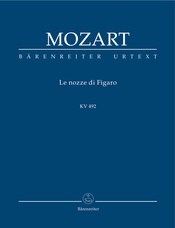
费加罗的婚礼 2013年中国国家大剧院版 [演出] 豆瓣
所属 演出: 费加罗的婚礼
语言:
意大利语
剧团:
中国国家大剧院管弦乐团;中国国家大剧院合唱团
剧院:
中国国家大剧院
导演:
José Luis Castro
其它标题:
2013年中国国家大剧院版
编剧:
Lorenzo Da Ponte
作曲:
Wolfgang Amadeus Mozart
演员:
沈洋 / Ugo Guagliardo
/
黄英 / Rosa Feola
…
The Marriage of Figaro continues the plot of The Barber of Seville several years later, and recounts a single "day of madness" (la folle journée) in the palace of Count Almaviva near Seville, Spain. Rosina is now the Countess; Dr. Bartolo is seeking revenge against Figaro for thwarting his plans to marry Rosina himself; and Count Almaviva has degenerated from the romantic youth of Barber into a scheming, bullying, skirt-chasing baritone. Having gratefully given Figaro a job as head of his servant-staff, he is now persistently trying to exercise his droit du seigneur – his right to bed a servant girl on her wedding night – with Figaro's bride-to-be, Susanna, who is the Countess's maid. He keeps finding excuses to delay the civil part of the wedding of his two servants, which is arranged for this very day. Figaro, Susanna, and the Countess conspire to embarrass the Count and expose his scheming. He retaliates by trying to compel Figaro legally to marry a woman old enough to be his mother, but it turns out at the last minute that she really is his mother. Through Figaro's and Susanna's clever manipulations, the Count's love for his Countess is finally restored.
Place: Count Almaviva's estate, Aguas-Frescas, three leagues outside Seville, Spain.
Overture
The overture is in the key of D major; the tempo marking is presto; i.e. very fast. The work is well known and often played independently as a concert piece.
Act 1
A partly furnished room, with a chair in the centre.
Figaro happily measures the space where the bridal bed will fit while Susanna tries on her wedding bonnet in front of a mirror (in the present day, a more traditional French floral wreath or a modern veil are often substituted, often in combination with a bonnet, so as to accommodate what Susanna happily describes as her wedding cappellino). (Duet: "Cinque, dieci, venti" – "Five, ten, twenty"). Figaro is quite pleased with their new room; Susanna far less so (Duettino: "Se a caso madama la notte ti chiama" – "If the Countess should call you during the night"). She is bothered by its proximity to the Count's chambers: it seems he has been making advances toward her and plans on exercising his droit du seigneur, the purported feudal right of a lord to bed a servant girl on her wedding night before her husband can sleep with her. The Count had the right abolished when he married Rosina, but he now wants to reinstate it. The Countess rings for Susanna and she rushes off to answer. Figaro, confident in his own resourcefulness, resolves to outwit the Count (Cavatina: "Se vuol ballare signor contino" – "If you want to dance, sir count").
Figaro departs, and Dr. Bartolo arrives with Marcellina, his old housekeeper. Figaro had previously borrowed a large sum of money from her, and, in lieu of collateral, had promised to marry her if unable to repay at the appointed time; she now intends to enforce that promise by suing him. Bartolo, seeking revenge against Figaro for having facilitated the union of the Count and Rosina (in The Barber of Seville), agrees to represent Marcellina pro bono, and assures her, in comical lawyer-speak, that he can win the case for her (aria: "La vendetta" – "Vengeance").
Bartolo departs, Susanna returns, and Marcellina and Susanna exchange very politely delivered sarcastic insults (duet: "Via resti servita, madama brillante" – "After you, brilliant madam"). Susanna triumphs in the exchange by congratulating her rival on her impressive age. The older woman departs in a fury.
Cherubino then arrives and, after describing his emerging infatuation with all women, particularly with his "beautiful godmother" the Countess (aria: "Non so più cosa son" – "I don't know anymore what I am"), asks for Susanna's aid with the Count. It seems the Count is angry with Cherubino's amorous ways, having discovered him with the gardener's daughter, Barbarina, and plans to punish him. Cherubino wants Susanna to ask the Countess to intercede on his behalf. When the Count appears, Cherubino hides behind a chair, not wanting to be seen alone with Susanna. The Count uses the opportunity of finding Susanna alone to step up his demands for favours from her, including financial inducements to sell herself to him. As Basilio, the music teacher, arrives, the Count, not wanting to be caught alone with Susanna, hides behind the chair. Cherubino leaves that hiding place just in time, and jumps onto the chair while Susanna scrambles to cover him with a dress.
When Basilio starts to gossip about Cherubino's obvious attraction to the Countess, the Count angrily leaps from his hiding place (terzetto: "Cosa sento!" – "What do I hear!"). He disparages the "absent" page's incessant flirting and describes how he caught him with Barbarina under the kitchen table. As he lifts the dress from the chair to illustrate how he lifted the tablecloth to expose Cherubino, he finds ... the self same Cherubino! The count is furious, but is reminded that the page overheard the Count's advances on Susanna, something that the Count wants to keep from the Countess. The young man is ultimately saved from punishment by the entrance of the peasants of the Count's estate, a preemptive attempt by Figaro to commit the Count to a formal gesture symbolizing his promise that Susanna would enter into the marriage unsullied. The Count evades Figaro's plan by postponing the gesture. The Count says that he forgives Cherubino, but he dispatches him to his own regiment in Seville for army duty, effective immediately. Figaro gives Cherubino mocking advice about his new, harsh, military life from which all luxury, and especially women, will be totally excluded (aria: "Non più andrai" – "No more gallivanting").
Act 2
A handsome room with an alcove, a dressing room on the left, a door in the background (leading to the servants' quarters) and a window at the side.
The Countess laments her husband's infidelity (aria: "Porgi, amor, qualche ristoro" – "Grant, love, some comfort"). Susanna comes in to prepare the Countess for the day. She responds to the Countess's questions by telling her that the Count is not trying to seduce her; he is merely offering her a monetary contract in return for her affection. Figaro enters and explains his plan to distract the Count with anonymous letters warning him of adulterers. He has already sent one to the Count (via Basilio) that indicates that the Countess has a rendezvous of her own that evening. They hope that the Count will be too busy looking for imaginary adulterers to interfere with Figaro and Susanna's wedding. Figaro additionally advises the Countess to keep Cherubino around. She should dress him up as a girl and lure the Count into an illicit rendezvous where he can be caught red-handed. Figaro leaves.
Cherubino arrives, sent in by Figaro and eager to co-operate. Susanna urges him to sing the song he wrote for the Countess (aria: "Voi che sapete che cosa è amor" – "You ladies who know what love is, is it what I'm suffering from?"). After the song, the Countess, seeing Cherubino's military commission, notices that the Count was in such a hurry that he forgot to seal it with his signet ring (which would be necessary to make it an official document).
Susanna and the Countess then begin with their plan. Susanna takes off Cherubino's cloak, and she begins to comb his hair and teach him to behave and walk like a woman (aria of Susanna: "Venite, inginocchiatevi" – "Come, kneel down before me"). Then she leaves the room through a door at the back to get the dress for Cherubino, taking his cloak with her.
While the Countess and Cherubino are waiting for Susanna to come back, they suddenly hear the Count arriving. Cherubino hides in the closet. The Count demands to be allowed into the room and the Countess reluctantly unlocks the door. The Count enters and hears a noise from the closet. He tries to open it, but it is locked. The Countess tells him it is only Susanna, trying on her wedding dress. At this moment, Susanna re-enters unobserved, quickly realizes what's going on, and hides behind a couch (Trio: "Susanna, or via, sortite" – "Susanna, come out!"). The Count shouts for her to identify herself by her voice, but the Countess orders her to be silent. Furious and suspicious, the Count leaves, with the Countess, in search of tools to force the closet door open. As they leave, he locks all the bedroom doors to prevent the intruder from escaping. Cherubino and Susanna emerge from their hiding places, and Cherubino escapes by jumping through the window into the garden. Susanna then takes Cherubino's former place in the closet, vowing to make the Count look foolish (duet: "Aprite, presto, aprite" – "Open the door, quickly!").
The Count and Countess return. The Countess, thinking herself trapped, desperately admits that Cherubino is hidden in the closet. The enraged Count draws his sword, promising to kill Cherubino on the spot, but when the door is opened, they both find to their astonishment only Susanna (Finale: "Esci omai, garzon malnato" – "Come out of there, you ill-born boy!"). The Count demands an explanation; the Countess tells him it is a practical joke, to test his trust in her. Shamed by his jealousy, the Count begs for forgiveness. When the Count presses about the anonymous letter, Susanna and the Countess reveal that the letter was written by Figaro, and then delivered by Basilio. Figaro then arrives and tries to start the wedding festivities, but the Count berates him with questions about the anonymous note. Just as the Count is starting to run out of questions, Antonio the gardener arrives, complaining that a man has jumped out of the window and damaged his carnations while running away. Antonio adds that he tentatively identified the running man as Cherubino, but Figaro claims it was he himself who jumped out of the window, and pretends to have injured his foot while landing. Figaro, Susanna, and the Countess attempt to discredit Antonio as a chronic drunkard whose constant inebriation makes him unreliable and prone to fantasy, but Antonio brings forward a paper which, he says, was dropped by the escaping man. The Count orders Figaro to prove he was the jumper by identifying the paper (which is, in fact, Cherubino's appointment to the army). Figaro is at a loss, but Susanna and the Countess manage to signal the correct answers, and Figaro triumphantly identifies the document. His victory is, however, short-lived: Marcellina, Bartolo, and Basilio enter, bringing charges against Figaro and demanding that he honor his contract to marry Marcellina, since he cannot repay her loan. The Count happily postpones the wedding in order to investigate the charge.
Act 3
A rich hall, with two thrones, prepared for the wedding ceremony.
The Count mulls over the confusing situation. At the urging of the Countess, Susanna enters and gives a false promise to meet the Count later that night in the garden (duet: "Crudel! perchè finora" – "Cruel girl, why did you make me wait so long"). As Susanna leaves, the Count overhears her telling Figaro that he has already won the case. Realizing that he is being tricked (recitative and aria: "Hai già vinta la causa! ... Vedrò, mentr'io sospiro" – "You've already won the case!" ... "Shall I, while sighing, see"), he resolves to punish Figaro by forcing him to marry Marcellina.
Figaro's hearing follows, and the Count's judgment is that Figaro must marry Marcellina. Figaro argues that he cannot get married without his parents' permission, and that he does not know who his parents are, because he was stolen from them when he was a baby. The ensuing discussion reveals that Figaro is Rafaello, the long-lost illegitimate son of Bartolo and Marcellina. A touching scene of reconciliation occurs. During the celebrations, Susanna enters with a payment to release Figaro from his debt to Marcellina. Seeing Figaro and Marcellina in celebration together, Susanna mistakenly believes that Figaro now prefers Marcellina to her. She has a tantrum and slaps Figaro's face. Marcellina explains, and Susanna, realizing her mistake, joins the celebration. Bartolo, overcome with emotion, agrees to marry Marcellina that evening in a double wedding (sextet: "Riconosci in questo amplesso" – "Recognize in this embrace").
All leave, before Barbarina, Antonio's daughter, invites Cherubino back to her house so they can disguise him as a girl. The Countess, alone, ponders the loss of her happiness (aria: "Dove sono i bei momenti" – "Where are they, the beautiful moments"). Meanwhile, Antonio informs the Count that Cherubino is not in Seville, but in fact at his house. Susanna enters and updates her mistress regarding the plan to trap the Count. The Countess dictates a love letter for Susanna to send to the Count, which suggests that he meet her (Susanna) that night, "under the pines". The letter instructs the Count to return the pin which fastens the letter (duet: "Sull'aria...che soave zeffiretto" – "On the breeze... What a gentle little zephyr").
A chorus of young peasants, among them Cherubino disguised as a girl, arrives to serenade the Countess. The Count arrives with Antonio and, discovering the page, is enraged. His anger is quickly dispelled by Barbarina, who publicly recalls that he had once offered to give her anything she wants in exchange for certain favors, and asks for Cherubino's hand in marriage. Thoroughly embarrassed, the Count allows Cherubino to stay.
The act closes with the double wedding, during the course of which Susanna delivers her letter to the Count (Finale: "Ecco la marcia" – "Here is the procession"). Figaro watches the Count prick his finger on the pin, and laughs, unaware that the love-note is an invitation for the Count to tryst with Figaro's own bride Susanna. As the curtain drops, the two newlywed couples rejoice.
Act 4
The garden, with two pavilions. Night.
Following the directions in the letter, the Count has sent the pin back to Susanna, giving it to Barbarina. However, Barbarina has lost it (aria: "L'ho perduta, me meschina" – "I have lost it, poor me"). Figaro and Marcellina see Barbarina, and Figaro asks her what she is doing. When he hears the pin is Susanna's, he is overcome with jealousy, especially as he recognises the pin to be the one that fastened the letter to the Count. Thinking that Susanna is meeting the Count behind his back, Figaro complains to his mother, and swears to be avenged on the Count and Susanna, and on all unfaithful wives. Marcellina urges caution, but Figaro will not listen. Figaro rushes off, and Marcellina resolves to inform Susanna of Figaro's intentions. Marcellina sings an aria lamenting that male and female wild beasts get along with each other, but rational humans can't (aria: "Il capro e la capretta" – "The billy-goat and the she-goat"). (This aria and Basilio's ensuing aria are usually omitted from performances due to their relative unimportance, both musically and dramatically; however, some recordings include them.)
Motivated by jealousy, Figaro tells Bartolo and Basilio to come to his aid when he gives the signal. Basilio comments on Figaro's foolishness and claims he was once as frivolous as Figaro was. He tells a tale of how he was given common sense by "Donna Flemma" ("Dame Prudence") and learned the importance of not crossing powerful people. (aria: "In quegli anni" – "In those years"). They exit, leaving Figaro alone. Figaro muses bitterly on the inconstancy of women (recitative and aria: "Tutto è disposto ... Aprite un po' quegli occhi" – "Everything is ready ... Open those eyes a little"). Susanna and the Countess arrive, each dressed in the other's clothes. Marcellina is with them, having informed Susanna of Figaro's suspicions and plans. After they discuss the plan, Marcellina and the Countess leave, and Susanna teases Figaro by singing a love song to her beloved within Figaro's hearing (aria: "Deh vieni, non tardar" – "Oh come, don't delay"). Figaro is hiding behind a bush and, thinking the song is for the Count, becomes increasingly jealous.
The Countess arrives in Susanna's dress. Cherubino shows up and starts teasing "Susanna" (really the Countess), endangering the plan. (Finale: "Pian pianin le andrò più presso" - "Softly, softly I'll approach her") The Count gets rid of him by striking out in the dark. His punch actually ends up hitting Figaro, but the point is made and Cherubino runs off.
The Count now begins making earnest love to "Susanna" (really the Countess), and gives her a jeweled ring. They go offstage together, where the Countess dodges him, hiding in the dark. Onstage, meanwhile, the real Susanna enters, wearing the Countess' clothes. Figaro mistakes her for the real Countess, and starts to tell her of the Count's intentions, but he suddenly recognizes his bride in disguise. He plays along with the joke by pretending to be in love with "my lady", and inviting her to make love right then and there. Susanna, fooled, loses her temper and slaps him many times. Figaro finally lets on that he has recognized Susanna's voice, and they make peace, resolving to conclude the comedy together ("Pace, pace, mio dolce tesoro" - "Peace, peace, my sweet treasure").
The Count, unable to find "Susanna", enters frustrated. Figaro gets his attention by loudly declaring his love for "the Countess" (really Susanna). The enraged Count calls for his people and for weapons: his servant is seducing his wife. (Ultima scena: "Gente, gente, all'armi, all'armi" – "Gentlemen, to arms!") Bartolo, Basilio and Antonio enter with torches as, one by one, the Count drags out Cherubino, Barbarina, Marcellina and the "Countess" from behind the pavilion.
All beg him to forgive Figaro and the "Countess", but he loudly refuses, repeating "no" at the top of his voice, until finally the real Countess re-enters and reveals her true identity. The Count, seeing the ring he had given her, realizes that the supposed Susanna he was trying to seduce was actually his wife. Ashamed and remorseful, he kneels and pleads for forgiveness himself ("Contessa perdono!" – "Countess, forgive me!"). The Countess, more kind than he ("Più docile io sono" – "I am more mild"), forgives her husband and all are contented.
Place: Count Almaviva's estate, Aguas-Frescas, three leagues outside Seville, Spain.
Overture
The overture is in the key of D major; the tempo marking is presto; i.e. very fast. The work is well known and often played independently as a concert piece.
Act 1
A partly furnished room, with a chair in the centre.
Figaro happily measures the space where the bridal bed will fit while Susanna tries on her wedding bonnet in front of a mirror (in the present day, a more traditional French floral wreath or a modern veil are often substituted, often in combination with a bonnet, so as to accommodate what Susanna happily describes as her wedding cappellino). (Duet: "Cinque, dieci, venti" – "Five, ten, twenty"). Figaro is quite pleased with their new room; Susanna far less so (Duettino: "Se a caso madama la notte ti chiama" – "If the Countess should call you during the night"). She is bothered by its proximity to the Count's chambers: it seems he has been making advances toward her and plans on exercising his droit du seigneur, the purported feudal right of a lord to bed a servant girl on her wedding night before her husband can sleep with her. The Count had the right abolished when he married Rosina, but he now wants to reinstate it. The Countess rings for Susanna and she rushes off to answer. Figaro, confident in his own resourcefulness, resolves to outwit the Count (Cavatina: "Se vuol ballare signor contino" – "If you want to dance, sir count").
Figaro departs, and Dr. Bartolo arrives with Marcellina, his old housekeeper. Figaro had previously borrowed a large sum of money from her, and, in lieu of collateral, had promised to marry her if unable to repay at the appointed time; she now intends to enforce that promise by suing him. Bartolo, seeking revenge against Figaro for having facilitated the union of the Count and Rosina (in The Barber of Seville), agrees to represent Marcellina pro bono, and assures her, in comical lawyer-speak, that he can win the case for her (aria: "La vendetta" – "Vengeance").
Bartolo departs, Susanna returns, and Marcellina and Susanna exchange very politely delivered sarcastic insults (duet: "Via resti servita, madama brillante" – "After you, brilliant madam"). Susanna triumphs in the exchange by congratulating her rival on her impressive age. The older woman departs in a fury.
Cherubino then arrives and, after describing his emerging infatuation with all women, particularly with his "beautiful godmother" the Countess (aria: "Non so più cosa son" – "I don't know anymore what I am"), asks for Susanna's aid with the Count. It seems the Count is angry with Cherubino's amorous ways, having discovered him with the gardener's daughter, Barbarina, and plans to punish him. Cherubino wants Susanna to ask the Countess to intercede on his behalf. When the Count appears, Cherubino hides behind a chair, not wanting to be seen alone with Susanna. The Count uses the opportunity of finding Susanna alone to step up his demands for favours from her, including financial inducements to sell herself to him. As Basilio, the music teacher, arrives, the Count, not wanting to be caught alone with Susanna, hides behind the chair. Cherubino leaves that hiding place just in time, and jumps onto the chair while Susanna scrambles to cover him with a dress.
When Basilio starts to gossip about Cherubino's obvious attraction to the Countess, the Count angrily leaps from his hiding place (terzetto: "Cosa sento!" – "What do I hear!"). He disparages the "absent" page's incessant flirting and describes how he caught him with Barbarina under the kitchen table. As he lifts the dress from the chair to illustrate how he lifted the tablecloth to expose Cherubino, he finds ... the self same Cherubino! The count is furious, but is reminded that the page overheard the Count's advances on Susanna, something that the Count wants to keep from the Countess. The young man is ultimately saved from punishment by the entrance of the peasants of the Count's estate, a preemptive attempt by Figaro to commit the Count to a formal gesture symbolizing his promise that Susanna would enter into the marriage unsullied. The Count evades Figaro's plan by postponing the gesture. The Count says that he forgives Cherubino, but he dispatches him to his own regiment in Seville for army duty, effective immediately. Figaro gives Cherubino mocking advice about his new, harsh, military life from which all luxury, and especially women, will be totally excluded (aria: "Non più andrai" – "No more gallivanting").
Act 2
A handsome room with an alcove, a dressing room on the left, a door in the background (leading to the servants' quarters) and a window at the side.
The Countess laments her husband's infidelity (aria: "Porgi, amor, qualche ristoro" – "Grant, love, some comfort"). Susanna comes in to prepare the Countess for the day. She responds to the Countess's questions by telling her that the Count is not trying to seduce her; he is merely offering her a monetary contract in return for her affection. Figaro enters and explains his plan to distract the Count with anonymous letters warning him of adulterers. He has already sent one to the Count (via Basilio) that indicates that the Countess has a rendezvous of her own that evening. They hope that the Count will be too busy looking for imaginary adulterers to interfere with Figaro and Susanna's wedding. Figaro additionally advises the Countess to keep Cherubino around. She should dress him up as a girl and lure the Count into an illicit rendezvous where he can be caught red-handed. Figaro leaves.
Cherubino arrives, sent in by Figaro and eager to co-operate. Susanna urges him to sing the song he wrote for the Countess (aria: "Voi che sapete che cosa è amor" – "You ladies who know what love is, is it what I'm suffering from?"). After the song, the Countess, seeing Cherubino's military commission, notices that the Count was in such a hurry that he forgot to seal it with his signet ring (which would be necessary to make it an official document).
Susanna and the Countess then begin with their plan. Susanna takes off Cherubino's cloak, and she begins to comb his hair and teach him to behave and walk like a woman (aria of Susanna: "Venite, inginocchiatevi" – "Come, kneel down before me"). Then she leaves the room through a door at the back to get the dress for Cherubino, taking his cloak with her.
While the Countess and Cherubino are waiting for Susanna to come back, they suddenly hear the Count arriving. Cherubino hides in the closet. The Count demands to be allowed into the room and the Countess reluctantly unlocks the door. The Count enters and hears a noise from the closet. He tries to open it, but it is locked. The Countess tells him it is only Susanna, trying on her wedding dress. At this moment, Susanna re-enters unobserved, quickly realizes what's going on, and hides behind a couch (Trio: "Susanna, or via, sortite" – "Susanna, come out!"). The Count shouts for her to identify herself by her voice, but the Countess orders her to be silent. Furious and suspicious, the Count leaves, with the Countess, in search of tools to force the closet door open. As they leave, he locks all the bedroom doors to prevent the intruder from escaping. Cherubino and Susanna emerge from their hiding places, and Cherubino escapes by jumping through the window into the garden. Susanna then takes Cherubino's former place in the closet, vowing to make the Count look foolish (duet: "Aprite, presto, aprite" – "Open the door, quickly!").
The Count and Countess return. The Countess, thinking herself trapped, desperately admits that Cherubino is hidden in the closet. The enraged Count draws his sword, promising to kill Cherubino on the spot, but when the door is opened, they both find to their astonishment only Susanna (Finale: "Esci omai, garzon malnato" – "Come out of there, you ill-born boy!"). The Count demands an explanation; the Countess tells him it is a practical joke, to test his trust in her. Shamed by his jealousy, the Count begs for forgiveness. When the Count presses about the anonymous letter, Susanna and the Countess reveal that the letter was written by Figaro, and then delivered by Basilio. Figaro then arrives and tries to start the wedding festivities, but the Count berates him with questions about the anonymous note. Just as the Count is starting to run out of questions, Antonio the gardener arrives, complaining that a man has jumped out of the window and damaged his carnations while running away. Antonio adds that he tentatively identified the running man as Cherubino, but Figaro claims it was he himself who jumped out of the window, and pretends to have injured his foot while landing. Figaro, Susanna, and the Countess attempt to discredit Antonio as a chronic drunkard whose constant inebriation makes him unreliable and prone to fantasy, but Antonio brings forward a paper which, he says, was dropped by the escaping man. The Count orders Figaro to prove he was the jumper by identifying the paper (which is, in fact, Cherubino's appointment to the army). Figaro is at a loss, but Susanna and the Countess manage to signal the correct answers, and Figaro triumphantly identifies the document. His victory is, however, short-lived: Marcellina, Bartolo, and Basilio enter, bringing charges against Figaro and demanding that he honor his contract to marry Marcellina, since he cannot repay her loan. The Count happily postpones the wedding in order to investigate the charge.
Act 3
A rich hall, with two thrones, prepared for the wedding ceremony.
The Count mulls over the confusing situation. At the urging of the Countess, Susanna enters and gives a false promise to meet the Count later that night in the garden (duet: "Crudel! perchè finora" – "Cruel girl, why did you make me wait so long"). As Susanna leaves, the Count overhears her telling Figaro that he has already won the case. Realizing that he is being tricked (recitative and aria: "Hai già vinta la causa! ... Vedrò, mentr'io sospiro" – "You've already won the case!" ... "Shall I, while sighing, see"), he resolves to punish Figaro by forcing him to marry Marcellina.
Figaro's hearing follows, and the Count's judgment is that Figaro must marry Marcellina. Figaro argues that he cannot get married without his parents' permission, and that he does not know who his parents are, because he was stolen from them when he was a baby. The ensuing discussion reveals that Figaro is Rafaello, the long-lost illegitimate son of Bartolo and Marcellina. A touching scene of reconciliation occurs. During the celebrations, Susanna enters with a payment to release Figaro from his debt to Marcellina. Seeing Figaro and Marcellina in celebration together, Susanna mistakenly believes that Figaro now prefers Marcellina to her. She has a tantrum and slaps Figaro's face. Marcellina explains, and Susanna, realizing her mistake, joins the celebration. Bartolo, overcome with emotion, agrees to marry Marcellina that evening in a double wedding (sextet: "Riconosci in questo amplesso" – "Recognize in this embrace").
All leave, before Barbarina, Antonio's daughter, invites Cherubino back to her house so they can disguise him as a girl. The Countess, alone, ponders the loss of her happiness (aria: "Dove sono i bei momenti" – "Where are they, the beautiful moments"). Meanwhile, Antonio informs the Count that Cherubino is not in Seville, but in fact at his house. Susanna enters and updates her mistress regarding the plan to trap the Count. The Countess dictates a love letter for Susanna to send to the Count, which suggests that he meet her (Susanna) that night, "under the pines". The letter instructs the Count to return the pin which fastens the letter (duet: "Sull'aria...che soave zeffiretto" – "On the breeze... What a gentle little zephyr").
A chorus of young peasants, among them Cherubino disguised as a girl, arrives to serenade the Countess. The Count arrives with Antonio and, discovering the page, is enraged. His anger is quickly dispelled by Barbarina, who publicly recalls that he had once offered to give her anything she wants in exchange for certain favors, and asks for Cherubino's hand in marriage. Thoroughly embarrassed, the Count allows Cherubino to stay.
The act closes with the double wedding, during the course of which Susanna delivers her letter to the Count (Finale: "Ecco la marcia" – "Here is the procession"). Figaro watches the Count prick his finger on the pin, and laughs, unaware that the love-note is an invitation for the Count to tryst with Figaro's own bride Susanna. As the curtain drops, the two newlywed couples rejoice.
Act 4
The garden, with two pavilions. Night.
Following the directions in the letter, the Count has sent the pin back to Susanna, giving it to Barbarina. However, Barbarina has lost it (aria: "L'ho perduta, me meschina" – "I have lost it, poor me"). Figaro and Marcellina see Barbarina, and Figaro asks her what she is doing. When he hears the pin is Susanna's, he is overcome with jealousy, especially as he recognises the pin to be the one that fastened the letter to the Count. Thinking that Susanna is meeting the Count behind his back, Figaro complains to his mother, and swears to be avenged on the Count and Susanna, and on all unfaithful wives. Marcellina urges caution, but Figaro will not listen. Figaro rushes off, and Marcellina resolves to inform Susanna of Figaro's intentions. Marcellina sings an aria lamenting that male and female wild beasts get along with each other, but rational humans can't (aria: "Il capro e la capretta" – "The billy-goat and the she-goat"). (This aria and Basilio's ensuing aria are usually omitted from performances due to their relative unimportance, both musically and dramatically; however, some recordings include them.)
Motivated by jealousy, Figaro tells Bartolo and Basilio to come to his aid when he gives the signal. Basilio comments on Figaro's foolishness and claims he was once as frivolous as Figaro was. He tells a tale of how he was given common sense by "Donna Flemma" ("Dame Prudence") and learned the importance of not crossing powerful people. (aria: "In quegli anni" – "In those years"). They exit, leaving Figaro alone. Figaro muses bitterly on the inconstancy of women (recitative and aria: "Tutto è disposto ... Aprite un po' quegli occhi" – "Everything is ready ... Open those eyes a little"). Susanna and the Countess arrive, each dressed in the other's clothes. Marcellina is with them, having informed Susanna of Figaro's suspicions and plans. After they discuss the plan, Marcellina and the Countess leave, and Susanna teases Figaro by singing a love song to her beloved within Figaro's hearing (aria: "Deh vieni, non tardar" – "Oh come, don't delay"). Figaro is hiding behind a bush and, thinking the song is for the Count, becomes increasingly jealous.
The Countess arrives in Susanna's dress. Cherubino shows up and starts teasing "Susanna" (really the Countess), endangering the plan. (Finale: "Pian pianin le andrò più presso" - "Softly, softly I'll approach her") The Count gets rid of him by striking out in the dark. His punch actually ends up hitting Figaro, but the point is made and Cherubino runs off.
The Count now begins making earnest love to "Susanna" (really the Countess), and gives her a jeweled ring. They go offstage together, where the Countess dodges him, hiding in the dark. Onstage, meanwhile, the real Susanna enters, wearing the Countess' clothes. Figaro mistakes her for the real Countess, and starts to tell her of the Count's intentions, but he suddenly recognizes his bride in disguise. He plays along with the joke by pretending to be in love with "my lady", and inviting her to make love right then and there. Susanna, fooled, loses her temper and slaps him many times. Figaro finally lets on that he has recognized Susanna's voice, and they make peace, resolving to conclude the comedy together ("Pace, pace, mio dolce tesoro" - "Peace, peace, my sweet treasure").
The Count, unable to find "Susanna", enters frustrated. Figaro gets his attention by loudly declaring his love for "the Countess" (really Susanna). The enraged Count calls for his people and for weapons: his servant is seducing his wife. (Ultima scena: "Gente, gente, all'armi, all'armi" – "Gentlemen, to arms!") Bartolo, Basilio and Antonio enter with torches as, one by one, the Count drags out Cherubino, Barbarina, Marcellina and the "Countess" from behind the pavilion.
All beg him to forgive Figaro and the "Countess", but he loudly refuses, repeating "no" at the top of his voice, until finally the real Countess re-enters and reveals her true identity. The Count, seeing the ring he had given her, realizes that the supposed Susanna he was trying to seduce was actually his wife. Ashamed and remorseful, he kneels and pleads for forgiveness himself ("Contessa perdono!" – "Countess, forgive me!"). The Countess, more kind than he ("Più docile io sono" – "I am more mild"), forgives her husband and all are contented.
茶花女 2015年中央歌剧院版 [演出] 豆瓣
所属 演出: 茶花女
剧团:
中央歌剧院交响乐团;中央歌剧院合唱团;中央歌剧院歌剧团
剧院:
新清华学堂
导演:
Gianfranco de Bosio
/
李丹丹
Place: Paris and its vicinity
Time: Beginning of the 19th century
Act 1
The salon in Violetta's house
Violetta Valéry, a famed courtesan, throws a lavish party at her Paris salon to celebrate her recovery from an illness. Gastone, a viscount, has brought with him a friend, Alfredo Germont, a young bourgeois from a provincial family who has long adored Violetta from afar. While walking to the salon, Gastone tells Violetta that Alfredo loves her, and that while she was ill, he came to her house every day. Alfredo joins them, admitting the truth of Gastone's remarks.
Baron Douphol, Violetta's current lover, waits nearby to escort her to the salon; once there, the Baron is asked to give a toast, but refuses, and the crowd turns to Alfredo, who agrees to sing a brindisi – a drinking song (Alfredo, Violetta, chorus: Libiamo ne' lieti calici – "Let's drink from the joyful cups").
From the next room, the sound of the orchestra is heard and the guests move there to dance. After a series of severe coughs and almost fainting, Violetta begins to feel dizzy and asks her guests to go ahead and to leave her to rest until she recovers. While the guests dance in the next room, Violetta looks at her pale face in her mirror. Alfredo enters and expresses his concern for her fragile health, later declaring his love for her (Alfredo, Violetta: Un dì, felice, eterea – "One day, happy and ethereal"). At first, she rejects him because his love means nothing to her, but there is something about Alfredo that touches her heart. He is about to leave when she gives him a flower, telling him to return it when it has wilted, which will be the very next day.
After the guests leave, Violetta wonders if Alfredo could actually be the one in her life (Violetta: È strano! ... Ah, fors' è lui – "Ah, perhaps he is the one"). But she concludes that she needs freedom to live her life (Violetta, Alfredo: Sempre libera – "Always free"). From off stage, Alfredo's voice is heard singing about love as he walks down the street.
Act 2
Scene 1: Violetta's country house outside Paris
Three months later, Alfredo and Violetta are living together in a peaceful country house outside Paris. Violetta has fallen in love with Alfredo and she has completely abandoned her former life. Alfredo sings of their happy life together (Alfredo: De' miei bollenti spiriti / Il giovanile ardore – "The youthful ardor of my ebullient spirits"). Annina, the maid, arrives from Paris, and, when questioned by Alfredo, tells him that she went there to sell the horses, carriages and everything owned by Violetta to support their country lifestyle.
Alfredo is shocked to learn this and leaves for Paris immediately to settle matters himself. Violetta returns home and receives an invitation from her friend, Flora, to a party in Paris that evening. Alfredo's father, Giorgio Germont, is announced and demands that she break off her relationship with his son for the sake of his family, since he reveals that Violetta's relationship with Alfredo has threatened his daughter's engagement (Giorgio: Pura siccome un angelo, Iddio mi diè una figlia – "Pure as an angel, God gave me a daughter") because of Violetta's reputation. Meanwhile, he reluctantly becomes impressed by Violetta's nobility, something which he did not expect from a courtesan. She responds that she cannot end the relationship because she loves him so much, but Giorgio pleads with her for the sake of his family. With growing remorse, she finally agrees (Violetta, Giorgio: Dite alla giovine, sì bella e pura, – "Tell the young girl, so beautiful and pure,") and says goodbye to Giorgio. In a gesture of gratitude for her kindness and sacrifice, Giorgio kisses her forehead before leaving her weeping alone.
Violetta gives a note to Annina to send to Flora accepting the party invitation and, as she is writing a farewell letter to Alfredo, he enters. She can barely control her sadness and tears; she tells him repeatedly of her unconditional love (Violetta: Amami, Alfredo, amami quant'io t'amo – "Love me, Alfredo, love me as I love you"). Before rushing out and setting off for Paris, she hands the farewell letter to her servant to give to Alfredo.
Soon, the servant brings the letter to Alfredo and, as soon as he has read it, Giorgio returns and attempts to comfort his son, reminding him of his family in Provence (Giorgio: Di Provenza il mar, il suol chi dal cor ti cancellò? – "Who erased the sea, the land of Provence from your heart?"). Alfredo suspects that the Baron is behind his separation with Violetta, and the party invitation, which he finds on the desk, strengthens his suspicions. He decides to confront Violetta at the party. Giorgio tries to stop Alfredo, but he rushes out.
Scene 2: Party at Flora's house
At the party, the Marquis tells Flora that Violetta and Alfredo have separated, much to the amazement of everyone who had previously seen the happy couple. She calls for the entertainers to perform for the guests (Chorus: Noi siamo zingarelle venute da lontano – "We are gypsy girls who have come from afar"; Di Madride noi siam mattadori – "We are matadors from Madrid"). Gastone and his friends join the matadors and sing (Gastone, chorus, dancers: È Piquillo un bel gagliardo Biscaglino mattador – "Piquillo is a bold and handsome matador from Biscay").
Violetta arrives with Baron Douphol. They see Alfredo at the gambling table. When he sees them, Alfredo loudly proclaims that he will take Violetta home with him. Feeling annoyed, the Baron goes to the gambling table and joins him in a game. As they bet, Alfredo wins some large sums until Flora announces that supper is ready. Alfredo leaves with handfuls of money.
As everyone is leaving the room, Violetta has asked Alfredo to see her. Fearing that the Baron's anger will lead him to challenge Alfredo to a duel, she gently asks Alfredo to leave. Alfredo misunderstands her apprehension and demands that she admit that she loves the Baron. In grief, she makes that admission and, furiously, Alfredo calls the guests to witness what he has to say (Questa donna conoscete? – "You know this woman?"). He humiliates and denounces Violetta in front of the guests and then throws his winnings at her feet in payment for her services. She faints onto the floor. The guests reprimand Alfredo: Di donne ignobile insultatore, di qua allontanati, ne desti orror! ("Ignoble insulter of women, go away from here, you fill us with horror!").
In search of his son, Giorgio enters the hall and, knowing the real significance of the scene, denounces his son's behavior (Giorgio, Alfredo, Violetta, chorus: Di sprezzo degno sè stesso rende chi pur nell'ira la donna offende. – "A man, who even in anger, offends a woman renders himself deserving of contempt.").
Flora and the ladies attempt to persuade Violetta to leave the dining room, but Violetta turns to Alfredo: Alfredo, Alfredo, di questo core non puoi comprendere tutto l'amore... – "Alfredo, Alfredo, you can't understand all the love in this heart...".
Act 3
Violetta's bedroom
Dr. Grenvil tells Annina that Violetta will not live long since her tuberculosis has worsened. Alone in her room, Violetta reads a letter from Alfredo's father telling her that the Baron was only wounded in his duel with Alfredo. He has informed Alfredo of the sacrifice she has made for him and his sister; and that he is sending his son to see her as quickly as possible to ask for her forgiveness. But Violetta senses it is too late (Violetta: Addio, del passato bei sogni ridenti – "Farewell, lovely, happy dreams of the past").
Annina rushes in the room to tell Violetta of Alfredo's arrival. The lovers are reunited and Alfredo suggests that they leave Paris (Alfredo, Violetta: Parigi, o cara, noi lasceremo – "We will leave Paris, O beloved").
But it is too late: she knows her time is up (Alfredo, Violetta: Gran Dio!...morir sì giovane – "Great God!...to die so young"). Alfredo's father enters with the doctor, regretting what he has done. After singing a duet with Alfredo, Violetta suddenly revives, exclaiming that the pain and discomfort have left her. A moment later, she dies in Alfredo's arms.
Time: Beginning of the 19th century
Act 1
The salon in Violetta's house
Violetta Valéry, a famed courtesan, throws a lavish party at her Paris salon to celebrate her recovery from an illness. Gastone, a viscount, has brought with him a friend, Alfredo Germont, a young bourgeois from a provincial family who has long adored Violetta from afar. While walking to the salon, Gastone tells Violetta that Alfredo loves her, and that while she was ill, he came to her house every day. Alfredo joins them, admitting the truth of Gastone's remarks.
Baron Douphol, Violetta's current lover, waits nearby to escort her to the salon; once there, the Baron is asked to give a toast, but refuses, and the crowd turns to Alfredo, who agrees to sing a brindisi – a drinking song (Alfredo, Violetta, chorus: Libiamo ne' lieti calici – "Let's drink from the joyful cups").
From the next room, the sound of the orchestra is heard and the guests move there to dance. After a series of severe coughs and almost fainting, Violetta begins to feel dizzy and asks her guests to go ahead and to leave her to rest until she recovers. While the guests dance in the next room, Violetta looks at her pale face in her mirror. Alfredo enters and expresses his concern for her fragile health, later declaring his love for her (Alfredo, Violetta: Un dì, felice, eterea – "One day, happy and ethereal"). At first, she rejects him because his love means nothing to her, but there is something about Alfredo that touches her heart. He is about to leave when she gives him a flower, telling him to return it when it has wilted, which will be the very next day.
After the guests leave, Violetta wonders if Alfredo could actually be the one in her life (Violetta: È strano! ... Ah, fors' è lui – "Ah, perhaps he is the one"). But she concludes that she needs freedom to live her life (Violetta, Alfredo: Sempre libera – "Always free"). From off stage, Alfredo's voice is heard singing about love as he walks down the street.
Act 2
Scene 1: Violetta's country house outside Paris
Three months later, Alfredo and Violetta are living together in a peaceful country house outside Paris. Violetta has fallen in love with Alfredo and she has completely abandoned her former life. Alfredo sings of their happy life together (Alfredo: De' miei bollenti spiriti / Il giovanile ardore – "The youthful ardor of my ebullient spirits"). Annina, the maid, arrives from Paris, and, when questioned by Alfredo, tells him that she went there to sell the horses, carriages and everything owned by Violetta to support their country lifestyle.
Alfredo is shocked to learn this and leaves for Paris immediately to settle matters himself. Violetta returns home and receives an invitation from her friend, Flora, to a party in Paris that evening. Alfredo's father, Giorgio Germont, is announced and demands that she break off her relationship with his son for the sake of his family, since he reveals that Violetta's relationship with Alfredo has threatened his daughter's engagement (Giorgio: Pura siccome un angelo, Iddio mi diè una figlia – "Pure as an angel, God gave me a daughter") because of Violetta's reputation. Meanwhile, he reluctantly becomes impressed by Violetta's nobility, something which he did not expect from a courtesan. She responds that she cannot end the relationship because she loves him so much, but Giorgio pleads with her for the sake of his family. With growing remorse, she finally agrees (Violetta, Giorgio: Dite alla giovine, sì bella e pura, – "Tell the young girl, so beautiful and pure,") and says goodbye to Giorgio. In a gesture of gratitude for her kindness and sacrifice, Giorgio kisses her forehead before leaving her weeping alone.
Violetta gives a note to Annina to send to Flora accepting the party invitation and, as she is writing a farewell letter to Alfredo, he enters. She can barely control her sadness and tears; she tells him repeatedly of her unconditional love (Violetta: Amami, Alfredo, amami quant'io t'amo – "Love me, Alfredo, love me as I love you"). Before rushing out and setting off for Paris, she hands the farewell letter to her servant to give to Alfredo.
Soon, the servant brings the letter to Alfredo and, as soon as he has read it, Giorgio returns and attempts to comfort his son, reminding him of his family in Provence (Giorgio: Di Provenza il mar, il suol chi dal cor ti cancellò? – "Who erased the sea, the land of Provence from your heart?"). Alfredo suspects that the Baron is behind his separation with Violetta, and the party invitation, which he finds on the desk, strengthens his suspicions. He decides to confront Violetta at the party. Giorgio tries to stop Alfredo, but he rushes out.
Scene 2: Party at Flora's house
At the party, the Marquis tells Flora that Violetta and Alfredo have separated, much to the amazement of everyone who had previously seen the happy couple. She calls for the entertainers to perform for the guests (Chorus: Noi siamo zingarelle venute da lontano – "We are gypsy girls who have come from afar"; Di Madride noi siam mattadori – "We are matadors from Madrid"). Gastone and his friends join the matadors and sing (Gastone, chorus, dancers: È Piquillo un bel gagliardo Biscaglino mattador – "Piquillo is a bold and handsome matador from Biscay").
Violetta arrives with Baron Douphol. They see Alfredo at the gambling table. When he sees them, Alfredo loudly proclaims that he will take Violetta home with him. Feeling annoyed, the Baron goes to the gambling table and joins him in a game. As they bet, Alfredo wins some large sums until Flora announces that supper is ready. Alfredo leaves with handfuls of money.
As everyone is leaving the room, Violetta has asked Alfredo to see her. Fearing that the Baron's anger will lead him to challenge Alfredo to a duel, she gently asks Alfredo to leave. Alfredo misunderstands her apprehension and demands that she admit that she loves the Baron. In grief, she makes that admission and, furiously, Alfredo calls the guests to witness what he has to say (Questa donna conoscete? – "You know this woman?"). He humiliates and denounces Violetta in front of the guests and then throws his winnings at her feet in payment for her services. She faints onto the floor. The guests reprimand Alfredo: Di donne ignobile insultatore, di qua allontanati, ne desti orror! ("Ignoble insulter of women, go away from here, you fill us with horror!").
In search of his son, Giorgio enters the hall and, knowing the real significance of the scene, denounces his son's behavior (Giorgio, Alfredo, Violetta, chorus: Di sprezzo degno sè stesso rende chi pur nell'ira la donna offende. – "A man, who even in anger, offends a woman renders himself deserving of contempt.").
Flora and the ladies attempt to persuade Violetta to leave the dining room, but Violetta turns to Alfredo: Alfredo, Alfredo, di questo core non puoi comprendere tutto l'amore... – "Alfredo, Alfredo, you can't understand all the love in this heart...".
Act 3
Violetta's bedroom
Dr. Grenvil tells Annina that Violetta will not live long since her tuberculosis has worsened. Alone in her room, Violetta reads a letter from Alfredo's father telling her that the Baron was only wounded in his duel with Alfredo. He has informed Alfredo of the sacrifice she has made for him and his sister; and that he is sending his son to see her as quickly as possible to ask for her forgiveness. But Violetta senses it is too late (Violetta: Addio, del passato bei sogni ridenti – "Farewell, lovely, happy dreams of the past").
Annina rushes in the room to tell Violetta of Alfredo's arrival. The lovers are reunited and Alfredo suggests that they leave Paris (Alfredo, Violetta: Parigi, o cara, noi lasceremo – "We will leave Paris, O beloved").
But it is too late: she knows her time is up (Alfredo, Violetta: Gran Dio!...morir sì giovane – "Great God!...to die so young"). Alfredo's father enters with the doctor, regretting what he has done. After singing a duet with Alfredo, Violetta suddenly revives, exclaiming that the pain and discomfort have left her. A moment later, she dies in Alfredo's arms.
《罗慕路斯大帝》 2018年中间剧场版 [演出] 豆瓣
所属 演出: 《罗慕路斯大帝》
语言:
普通话
剧团:
新蝉戏剧中心
剧院:
中间剧场
导演:
易立明
罗慕路斯·奥古斯都是西罗马帝国的末代皇帝,在一座乡村别墅里饱食终日,专心致志饲养着一群母鸡。一日,专差从早到晚不断飞报:前线失守,日耳曼人正向罗马进军。他却无动于衷,依然向古董商出售他的历代皇祖们的胸像。
当罗马已变成了罪恶深重的帝国时,他宁可当一个只知吃喝的无为皇帝,充当“罗马的法官”来宣判这个帝国的死刑。帝国成为制造罪恶的机器,敌军大举攻城国家危在旦夕,末代皇帝缘何始终不理朝政,自顾养鸡的滑稽背后又隐藏着怎样不为人知的心境和抱负?
图兰朵 2017年中央歌剧院版 [演出] 豆瓣
所属 演出: 图兰朵
语言:
意大利语
剧团:
中央歌剧院交响乐团;中央歌剧院合唱团;中央歌剧院歌剧团
剧院:
新清华学堂
导演:
王湖泉
Place: Peking, China
Time: Legendary times
Act 1
In China, beautiful Princess Turandot will only marry a suitor who can answer 3 secret riddles. A Mandarin announces the law of the land (Aria – Popolo di Pechino! – "People of Peking!"). The Prince of Persia has failed to answer the three riddles, and he is to be beheaded at the next moonrising. As the crowd surges towards the gates of the palace, the imperial guards brutally repulse them, causing a blind old man to be knocked to the ground. The old man's slave-girl, Liù, cries out for help. A young man hears her cry and recognizes that the old man is his long-lost father, Timur, the deposed king of Tartary. The young Prince of Tartary is overjoyed at seeing Timur alive, but still urges Timur to not speak his name because he is afraid that the Chinese rulers, who have conquered Tartary, may kill or harm them. Timur then tells his son that, of all his servants, only Liù has remained faithful to him. When the Prince asks her why, she tells him that once, long ago in the palace, the Prince had smiled at her (Trio with chorus – The crowd, Liù, Prince of Tartary, Timur: Indietro, cani! – "Back, dogs!").
The moon rises, and the crowd's cries for blood dissolve into silence. The doomed Prince of Persia, who is on his way to be executed, is led before the crowd. The young Prince is so handsome and kind that the crowd and the Prince of Tartary decide that they want Turandot to act compassionately, and they beg Turandot to appear and spare his life (Aria – The crowd, Prince of Tartary: O giovinetto! – "O youth!"). She then appears, and with a single imperious gesture, orders the execution to continue. The Prince of Tartary, who has never seen Turandot before, falls immediately in love with her, and joyfully cries out Turandot's name three times, foreshadowing the riddles to come. Then the Prince of Persia cries out one final time. The crowd, horrified, screams out one final time and the Prince of Persia is beheaded.
The Prince of Tartary is dazzled by Turandot's beauty. He is about to rush towards the gong and to strike it three times – the symbolic gesture of whoever wishes to attempt to solve the riddles so that he can marry Turandot – when the ministers Ping, Pang, and Pong appear. They urge him cynically to not lose his head for Turandot and to instead go back to his own country (Fermo, che fai?). Timur urges his son to desist, and Liù, who is secretly in love with the Prince, pleads with him not to attempt to solve the riddles (Signore, ascolta! – "Lord, hear!"). Liù's words touch the Prince's heart. He begs Liù to make Timur's exile more bearable by not abandoning Timur if the Prince fails to answer the riddles (Non piangere, Liù – "Do not cry, Liù"). The three ministers, Timur, and Liù then try one last time to stop the Prince (Ah! Per l'ultima volta! – "Ah! For the last time!") from attempting to answer the riddles, but he refuses to heed their advice.
He calls Turandot's name three times, and each time Liù, Timur, and the ministers reply, "Death!" and the crowd declares, "We're already digging your grave!" Rushing to the gong that hangs in front of the palace, the Prince strikes it three times, declaring himself to be a suitor. From the palace balcony, Turandot accepts his challenge, as Ping, Pang, and Pong laugh at the Prince's foolishness.
Act 2
Scene 1: A pavilion in the imperial palace. Before sunrise
Ping, Pang, and Pong lament their place as ministers, poring over palace documents and presiding over endless rituals. They prepare themselves for either a wedding or a funeral (Trio – Ping, Pang, Pong: Ola, Pang!). Ping suddenly longs for his country house in Honan, with its small lake surrounded by bamboo. Pong remembers his grove of forests near Tsiang, and Pang recalls his gardens near Kiu. The three share their fond memories of their lives away from the palace (Trio – Ping, Pang, Pong: Ho una casa nell'Honan – "I have a house in Honan"). They turn their thoughts back to how they have been accompanying young princes to their deaths. As the palace trumpet sounds, the ministers ready themselves for another spectacle as they await the entrance of their Emperor.
Scene 2: The courtyard of the palace. Sunrise
The Emperor Altoum, father of Turandot, sits on his grand throne in his palace. Weary of having to judge his isolated daughter's sport, he urges the Prince to withdraw his challenge, but the Prince refuses (Aria – Altoum, the Prince: Un giuramento atroce – "An atrocious oath"). Turandot enters and explains (In questa reggia – "In this palace") that her ancestress of millennia past, Princess Lo-u-Ling, reigned over her kingdom "in silence and joy, resisting the harsh domination of men" until she was raped and murdered by an invading foreign prince. Turandot claims that Lo-u-Ling now lives in her, and out of revenge, Turandot has sworn to never let any man wed her. She warns the Prince to withdraw but again he refuses. The Princess presents her first riddle: Straniero, ascolta! – "What is born each night and dies each dawn?" The Prince correctly replies, Speranza – "Hope." The Princess, unnerved, presents her second riddle (Guizza al pari di fiamma – "What flickers red and warm like a flame, but is not fire?") The Prince thinks for a moment before replying, Sangue – "Blood". Turandot is shaken. The crowd cheers the Prince, provoking Turandot's anger. She presents her third riddle (Gelo che ti da foco – "What is ice which gives you fire and which your fire freezes still more?"). He proclaims, "It is Turandot! Turandot!"
The crowd cheers for the triumphant Prince. Turandot throws herself at her father's feet and pleads with him not to leave her to the Prince's mercy. The Emperor insists that an oath is sacred and that it is Turandot's duty to wed the Prince (Duet – Turandot, Altoum, the Prince: Figlio del cielo). She cries out in despair, "Will you take me by force? (Mi porterai con la forza?) The Prince stops her, saying that he has a riddle for her: Tre enigmi m'hai proposto – "You do not know my name. Tell me my name before sunrise, and at dawn, I will die." Turandot accepts. The Emperor then declares that he hopes that he will be able to call the Prince his son when the sun next rises.
Act 3
Scene 1: The palace gardens. Night
In the distance, heralds call out Turandot's command: Cosi comanda Turandot – "This night, none shall sleep in Peking! The penalty for all will be death if the Prince's name is not discovered by morning". The Prince waits for dawn and anticipates his victory: Nessun dorma – "Nobody shall sleep!"
Ping, Pong, and Pang appear and offer the Prince women and riches if he will only give up Turandot (Tu che guardi le stelle), but he refuses. A group of soldiers then drag in Timur and Liù. They have been seen speaking to the Prince, so they must know his name. Turandot enters and orders Timur and Liù to speak. The Prince feigns ignorance, saying they know nothing. But when the guards begin to treat Timur harshly, Liù declares that she alone knows the Prince's name, but she will not reveal it. Ping demands the Prince's name, and when Liù refuses to say it, she is tortured. Turandot is clearly taken aback by Liù's resolve and asks Liù who or what gave her such a strong resolve. Liù answers, "Princess, love!" (Principessa, amore!). Turandot demands that Ping tear the Prince's name from Liù, and Ping orders Liù to be tortured even more. Liù counters Turandot (Tu che di gel sei cinta – "You who are begirdled by ice"), saying that Turandot too will learn the exquisite joy of being guided by caring and compassionate love.[note 1] Having spoken, Liù seizes a dagger from a soldier's belt and stabs herself. As she staggers towards the Prince and falls dead, the crowd screams for her to speak the Prince's name. Since Timur is blind, he must be told about Liù's death, and he cries out in anguish. When Timur warns that the gods will be offended by Liù's death, the crowd becomes subdued, very afraid and ashamed. The grieving Timur and the crowd follow Liù's body as it is carried away. Everybody departs, leaving the Prince and Turandot alone. He reproaches Turandot for her cruelty (Duet – The Prince, Turandot: Principessa di morte – "Princess of death"), then takes her in his arms and kisses her in spite of her resistance.
The Prince tries to convince Turandot to love him. At first she feels disgusted, but after he kisses her, she feels herself becoming more ardently desiring to be held and compassionately loved by him. She admits that ever since she met the Prince, she realized she both hated and loved him. She asks him to ask for nothing more and to leave, taking his mystery with him. The Prince, however, then reveals his name: "Calaf, son of Timur – Calaf, figlio di Timur", thereby placing his life in Turandot's hands. She can now destroy him if she wants (Duet – Turandot, Calaf: Del primo pianto).
Scene 2: The courtyard of the palace. Dawn
Turandot and Calaf approach the Emperor's throne. She declares that she knows the Prince's name: Diecimila anni al nostro Imperatore! – "It is ... love!" The crowd cheers and acclaims the two lovers (O sole! Vita! Eternità).
Time: Legendary times
Act 1
In China, beautiful Princess Turandot will only marry a suitor who can answer 3 secret riddles. A Mandarin announces the law of the land (Aria – Popolo di Pechino! – "People of Peking!"). The Prince of Persia has failed to answer the three riddles, and he is to be beheaded at the next moonrising. As the crowd surges towards the gates of the palace, the imperial guards brutally repulse them, causing a blind old man to be knocked to the ground. The old man's slave-girl, Liù, cries out for help. A young man hears her cry and recognizes that the old man is his long-lost father, Timur, the deposed king of Tartary. The young Prince of Tartary is overjoyed at seeing Timur alive, but still urges Timur to not speak his name because he is afraid that the Chinese rulers, who have conquered Tartary, may kill or harm them. Timur then tells his son that, of all his servants, only Liù has remained faithful to him. When the Prince asks her why, she tells him that once, long ago in the palace, the Prince had smiled at her (Trio with chorus – The crowd, Liù, Prince of Tartary, Timur: Indietro, cani! – "Back, dogs!").
The moon rises, and the crowd's cries for blood dissolve into silence. The doomed Prince of Persia, who is on his way to be executed, is led before the crowd. The young Prince is so handsome and kind that the crowd and the Prince of Tartary decide that they want Turandot to act compassionately, and they beg Turandot to appear and spare his life (Aria – The crowd, Prince of Tartary: O giovinetto! – "O youth!"). She then appears, and with a single imperious gesture, orders the execution to continue. The Prince of Tartary, who has never seen Turandot before, falls immediately in love with her, and joyfully cries out Turandot's name three times, foreshadowing the riddles to come. Then the Prince of Persia cries out one final time. The crowd, horrified, screams out one final time and the Prince of Persia is beheaded.
The Prince of Tartary is dazzled by Turandot's beauty. He is about to rush towards the gong and to strike it three times – the symbolic gesture of whoever wishes to attempt to solve the riddles so that he can marry Turandot – when the ministers Ping, Pang, and Pong appear. They urge him cynically to not lose his head for Turandot and to instead go back to his own country (Fermo, che fai?). Timur urges his son to desist, and Liù, who is secretly in love with the Prince, pleads with him not to attempt to solve the riddles (Signore, ascolta! – "Lord, hear!"). Liù's words touch the Prince's heart. He begs Liù to make Timur's exile more bearable by not abandoning Timur if the Prince fails to answer the riddles (Non piangere, Liù – "Do not cry, Liù"). The three ministers, Timur, and Liù then try one last time to stop the Prince (Ah! Per l'ultima volta! – "Ah! For the last time!") from attempting to answer the riddles, but he refuses to heed their advice.
He calls Turandot's name three times, and each time Liù, Timur, and the ministers reply, "Death!" and the crowd declares, "We're already digging your grave!" Rushing to the gong that hangs in front of the palace, the Prince strikes it three times, declaring himself to be a suitor. From the palace balcony, Turandot accepts his challenge, as Ping, Pang, and Pong laugh at the Prince's foolishness.
Act 2
Scene 1: A pavilion in the imperial palace. Before sunrise
Ping, Pang, and Pong lament their place as ministers, poring over palace documents and presiding over endless rituals. They prepare themselves for either a wedding or a funeral (Trio – Ping, Pang, Pong: Ola, Pang!). Ping suddenly longs for his country house in Honan, with its small lake surrounded by bamboo. Pong remembers his grove of forests near Tsiang, and Pang recalls his gardens near Kiu. The three share their fond memories of their lives away from the palace (Trio – Ping, Pang, Pong: Ho una casa nell'Honan – "I have a house in Honan"). They turn their thoughts back to how they have been accompanying young princes to their deaths. As the palace trumpet sounds, the ministers ready themselves for another spectacle as they await the entrance of their Emperor.
Scene 2: The courtyard of the palace. Sunrise
The Emperor Altoum, father of Turandot, sits on his grand throne in his palace. Weary of having to judge his isolated daughter's sport, he urges the Prince to withdraw his challenge, but the Prince refuses (Aria – Altoum, the Prince: Un giuramento atroce – "An atrocious oath"). Turandot enters and explains (In questa reggia – "In this palace") that her ancestress of millennia past, Princess Lo-u-Ling, reigned over her kingdom "in silence and joy, resisting the harsh domination of men" until she was raped and murdered by an invading foreign prince. Turandot claims that Lo-u-Ling now lives in her, and out of revenge, Turandot has sworn to never let any man wed her. She warns the Prince to withdraw but again he refuses. The Princess presents her first riddle: Straniero, ascolta! – "What is born each night and dies each dawn?" The Prince correctly replies, Speranza – "Hope." The Princess, unnerved, presents her second riddle (Guizza al pari di fiamma – "What flickers red and warm like a flame, but is not fire?") The Prince thinks for a moment before replying, Sangue – "Blood". Turandot is shaken. The crowd cheers the Prince, provoking Turandot's anger. She presents her third riddle (Gelo che ti da foco – "What is ice which gives you fire and which your fire freezes still more?"). He proclaims, "It is Turandot! Turandot!"
The crowd cheers for the triumphant Prince. Turandot throws herself at her father's feet and pleads with him not to leave her to the Prince's mercy. The Emperor insists that an oath is sacred and that it is Turandot's duty to wed the Prince (Duet – Turandot, Altoum, the Prince: Figlio del cielo). She cries out in despair, "Will you take me by force? (Mi porterai con la forza?) The Prince stops her, saying that he has a riddle for her: Tre enigmi m'hai proposto – "You do not know my name. Tell me my name before sunrise, and at dawn, I will die." Turandot accepts. The Emperor then declares that he hopes that he will be able to call the Prince his son when the sun next rises.
Act 3
Scene 1: The palace gardens. Night
In the distance, heralds call out Turandot's command: Cosi comanda Turandot – "This night, none shall sleep in Peking! The penalty for all will be death if the Prince's name is not discovered by morning". The Prince waits for dawn and anticipates his victory: Nessun dorma – "Nobody shall sleep!"
Ping, Pong, and Pang appear and offer the Prince women and riches if he will only give up Turandot (Tu che guardi le stelle), but he refuses. A group of soldiers then drag in Timur and Liù. They have been seen speaking to the Prince, so they must know his name. Turandot enters and orders Timur and Liù to speak. The Prince feigns ignorance, saying they know nothing. But when the guards begin to treat Timur harshly, Liù declares that she alone knows the Prince's name, but she will not reveal it. Ping demands the Prince's name, and when Liù refuses to say it, she is tortured. Turandot is clearly taken aback by Liù's resolve and asks Liù who or what gave her such a strong resolve. Liù answers, "Princess, love!" (Principessa, amore!). Turandot demands that Ping tear the Prince's name from Liù, and Ping orders Liù to be tortured even more. Liù counters Turandot (Tu che di gel sei cinta – "You who are begirdled by ice"), saying that Turandot too will learn the exquisite joy of being guided by caring and compassionate love.[note 1] Having spoken, Liù seizes a dagger from a soldier's belt and stabs herself. As she staggers towards the Prince and falls dead, the crowd screams for her to speak the Prince's name. Since Timur is blind, he must be told about Liù's death, and he cries out in anguish. When Timur warns that the gods will be offended by Liù's death, the crowd becomes subdued, very afraid and ashamed. The grieving Timur and the crowd follow Liù's body as it is carried away. Everybody departs, leaving the Prince and Turandot alone. He reproaches Turandot for her cruelty (Duet – The Prince, Turandot: Principessa di morte – "Princess of death"), then takes her in his arms and kisses her in spite of her resistance.
The Prince tries to convince Turandot to love him. At first she feels disgusted, but after he kisses her, she feels herself becoming more ardently desiring to be held and compassionately loved by him. She admits that ever since she met the Prince, she realized she both hated and loved him. She asks him to ask for nothing more and to leave, taking his mystery with him. The Prince, however, then reveals his name: "Calaf, son of Timur – Calaf, figlio di Timur", thereby placing his life in Turandot's hands. She can now destroy him if she wants (Duet – Turandot, Calaf: Del primo pianto).
Scene 2: The courtyard of the palace. Dawn
Turandot and Calaf approach the Emperor's throne. She declares that she knows the Prince's name: Diecimila anni al nostro Imperatore! – "It is ... love!" The crowd cheers and acclaims the two lovers (O sole! Vita! Eternità).
托斯卡 2015年中央歌剧院版 [演出] 豆瓣
所属 演出: 托斯卡
语言:
意大利语
剧团:
中央歌剧院交响乐团;中央歌剧院合唱团;中央歌剧院歌剧团
剧院:
世纪剧院
导演:
Hans-Joachim Frey
其它标题:
2015年中央歌剧院版
编剧:
Giuseppe Giacosa
/
Luigi Illica
作曲:
Giacomo Puccini
演员:
孙秀苇 / 郝菲
/
王丰 / 徐森
…
Historical context
A crowded scene with many soldiers and horses, and much smoke. Some soldiers lie dead or wounded. In the distance, beyond a short line of trees, is a tall church tower.
According to the libretto, the action of Tosca occurs in Rome in June 1800. Sardou, in his play, dates it more precisely; La Tosca takes place in the afternoon, evening, and early morning of 17 and 18 June 1800.
Italy had long been divided into a number of small states, with the Pope in Rome ruling the Papal States in Central Italy. Following the French Revolution, a French army under Napoleon invaded Italy in 1796, entering Rome almost unopposed on 11 February 1798 and establishing a republic there. Pope Pius VI was taken prisoner, and was sent into exile on February 20, 1798. (Pius VI would die in exile in 1799, and his successor, Pius VII, who was elected in Venice on 14 March 1800, would not enter Rome until July 3. There is thus neither a Pope nor papal government in Rome during the days depicted in the opera.) The new republic was ruled by seven consuls; in the opera this is the office formerly held by Angelotti, whose character may be based on the real-life consul Liborio Angelucci. In September 1799 the French, who had protected the republic, withdrew from Rome. As they left, troops of the Kingdom of Naples occupied the city.
In May 1800 Napoleon, by then the undisputed leader of France, brought his troops across the Alps to Italy once again. On 14 June his army met the Austrian forces at the Battle of Marengo (near Alessandria). Austrian troops were initially successful; by mid-morning they were in control of the field of battle. Their commander, Michael von Melas, sent this news south towards Rome. However, fresh French troops arrived in late afternoon, and Napoleon attacked the tired Austrians. As Melas retreated in disarray with the remains of his army, he sent a second courier south with the revised message. The Neapolitans abandoned Rome, and the city spent the next fourteen years under French domination.
Act 1
Inside the church of Sant'Andrea della Valle
Scene depicting a church interior with high stained-glass windows and heavy ornamental columns. The central figure is a high dignatory around whom several figures are kneeling, while in the background can be seen the tall pikes of the Swiss Guard.
Cesare Angelotti, former consul of the Roman Republic and now an escaped political prisoner, runs into the church and hides in the Attavanti private chapel – his sister, the Marchesa Attavanti, has left a key to the chapel hidden at the feet of the statue of the Madonna. The elderly Sacristan enters and begins cleaning. The Sacristan kneels in prayer as the Angelus sounds.
The painter Mario Cavaradossi arrives to continue work on his picture of Mary Magdalene. The Sacristan identifies a likeness between the portrait and a blonde-haired woman who has been visiting the church recently (unknown to him, it is Angelotti's sister the Marchesa). Cavaradossi describes the "hidden harmony" ("Recondita armonia") in the contrast between the blonde beauty of his painting and his dark-haired lover, the singer Floria Tosca. The Sacristan mumbles his disapproval before leaving.
Angelotti emerges and tells Cavaradossi, an old friend who has republican sympathies, that he is being pursued by the Chief of Police, Baron Scarpia. Cavaradossi promises to assist him after nightfall. Tosca's voice is heard, calling to Cavaradossi. Cavaradossi gives Angelotti his basket of food and Angelotti hurriedly returns to his hiding place.
Tosca enters and suspiciously asks Cavaradossi what he has been doing – she thinks that he has been talking to another woman. Cavaradossi reassures her and Tosca tries to persuade him to take her to his villa that evening: "Non la sospiri, la nostra casetta" ("Do you not long for our little cottage"). She then expresses jealousy over the woman in the painting, whom she recognises as the Marchesa Attavanti. Cavaradossi explains the likeness; he has merely observed the Marchesa at prayer in the church. He reassures Tosca of his fidelity and asks her what eyes could be more beautiful than her own: "Qual'occhio al mondo" ("What eyes in the world").
After Tosca has left, Angelotti reappears and discusses with the painter his plan to flee disguised as a woman, using clothes left in the chapel by his sister. Cavaradossi gives Angelotti a key to his villa, suggesting that he hide in a disused well in the garden. The sound of a cannon signals that Angelotti's escape has been discovered. He and Cavaradossi hasten out of the church.
The Sacristan re-enters with choristers, celebrating the news that Napoleon has apparently been defeated at Marengo. The celebrations cease abruptly with the entry of Scarpia, his henchman Spoletta and several police agents. They have heard that Angelotti has sought refuge in the church. Scarpia orders a search, and the empty food basket and a fan bearing the Attavanti coat of arms are found in the chapel. Scarpia questions the Sacristan, and his suspicions are aroused further when he learns that Cavaradossi has been in the church; Scarpia mistrusts the painter, and believes him complicit in Angelotti's escape.
When Tosca arrives looking for her lover, Scarpia artfully arouses her jealous instincts by implying a relationship between the painter and the Marchesa Attavanti. He draws Tosca's attention to the fan and suggests that someone must have surprised the lovers in the chapel. Tosca falls for his deceit; enraged, she rushes off to confront Cavaradossi. Scarpia orders Spoletta and his agents to follow her, assuming she will lead them to Cavaradossi and Angelotti. He privately gloats as he reveals his intentions to possess Tosca and execute Cavaradossi. A procession enters the church singing the Te Deum; exclaiming 'Tosca, you make me forget even God!', Scarpia joins the chorus in the prayer.
Act 2
The body of a man lies supine, with a woman, crucifix in hand, kneeling over him. A candle is placed to each side of his head.
Scarpia's apartment in the Palazzo Farnese, that evening
Scarpia, at supper, sends a note to Tosca asking her to come to his apartment, anticipating that two of his goals will soon be fulfilled at once. His agent, Spoletta, arrives to report that Angelotti remains at large, but Cavaradossi has been arrested for questioning. He is brought in, and an interrogation ensues. As the painter steadfastly denies knowing anything about Angelotti's escape, Tosca's voice is heard singing a celebratory cantata elsewhere in the Palace.
She enters the apartment in time to see Cavaradossi being escorted to an antechamber. All he has time to say is that she mustn't tell them anything. Scarpia then claims she can save her lover from indescribable pain if she reveals Angelotti's hiding place. She resists, but the sound of screams coming through the door eventually breaks her down, and she tells Scarpia to search the well in the garden of Cavaradossi's villa.
Scarpia orders his torturers to cease, and the bloodied painter is dragged back in. He's devastated to discover that Tosca has betrayed his friend. Sciarrone, another agent, then enters with news: there was an upset on the battlefield at Marengo, and the French are marching on Rome. Cavaradossi, unable to contain himself, gloats to Scarpia that his rule of terror will soon be at an end. This is enough for the police to consider him guilty, and they haul him away to be shot.
Scarpia, now alone with Tosca, proposes a bargain: if she gives herself to him, Cavaradossi will be freed. She is revolted, and repeatedly rejects his advances, but she hears the drums outside announcing an execution. As Scarpia awaits her decision, she prays, asking why God has abandoned her in her hour of need: "Vissi d'arte" ("I lived for art"). She tries to offer money, but Scarpia isn't interested in that kind of bribe: he wants Tosca herself.
Spoletta returns with the news that Angelotti has killed himself upon discovery, and that everything is in place for Cavaradossi's execution. Scarpia hesitates to give the order, looking to Tosca, and despairingly she agrees to submit to him. He tells Spoletta to arrange a mock execution, both men repeating that it will be "as we did with Count Palmieri," and Spoletta exits.
Tosca insists that Scarpia must provide safe-conduct out of Rome for herself and Cavaradossi. He easily agrees to this and heads to his desk. While he's drafting the document, she quietly takes a knife from the supper table. Scarpia triumphantly strides toward Tosca. When he begins to embrace her, she stabs him, crying "this is Tosca's kiss!" Once she's certain he's dead, she ruefully says "now I forgive him." She removes the safe-conduct from his pocket, lights candles in a gesture of piety, and places a crucifix on the body before leaving.
Act 3
The upper parts of the Castel Sant'Angelo, early the following morning
Roman panorama showing, centre, an arched bridge over a river with a domed building in the distance. To the right of the bridge is a large circular fortress.
A shepherd boy is heard offstage singing (in Romanesco dialect) "Io de' sospiri" ("I give you sighs") as church bells sound for matins. The guards lead Cavaradossi in and inform him that he has one hour to live. He declines to see a priest, but asks permission to write a letter to Tosca. He begins to write, but is soon overwhelmed by memories: "E lucevan le stelle" ("And the stars shone").
Tosca enters and shows him the safe-conduct pass she's obtained, adding that she has killed Scarpia and that the imminent execution is a sham. Cavaradossi must feign death, after which they can flee together before Scarpia's body is discovered. Cavaradossi is awestruck by his gentle lover's courage: "O dolci mani" ("Oh sweet hands"). The pair ecstatically imagines the life they will share, far from Rome. Tosca then anxiously coaches Cavaradossi on how to play dead when the firing squad shoots at him with blanks. He giddily promises he'll fall "like Tosca in the theatre."
Cavaradossi is led away, and Tosca watches with increasing impatience as the execution is prepared. The men fire, Cavaradossi falls, and Tosca exclaims "Ecco un artista!" ("What an actor!"). When the soldiers have all left, she hurries towards Cavaradossi, only to find that Scarpia betrayed her: the bullets were real. Heartbroken, she clasps her lover's lifeless body and weeps.
The voices of Spoletta, Sciarrone, and the soldiers are heard, shouting that Scarpia is dead and Tosca has killed him. As the men rush in, Tosca rises, evades their clutches, and runs to the parapet. Crying "O Scarpia, Avanti a Dio!" ("O Scarpia, we meet before God!"), she flings herself over the edge to her death.
A crowded scene with many soldiers and horses, and much smoke. Some soldiers lie dead or wounded. In the distance, beyond a short line of trees, is a tall church tower.
According to the libretto, the action of Tosca occurs in Rome in June 1800. Sardou, in his play, dates it more precisely; La Tosca takes place in the afternoon, evening, and early morning of 17 and 18 June 1800.
Italy had long been divided into a number of small states, with the Pope in Rome ruling the Papal States in Central Italy. Following the French Revolution, a French army under Napoleon invaded Italy in 1796, entering Rome almost unopposed on 11 February 1798 and establishing a republic there. Pope Pius VI was taken prisoner, and was sent into exile on February 20, 1798. (Pius VI would die in exile in 1799, and his successor, Pius VII, who was elected in Venice on 14 March 1800, would not enter Rome until July 3. There is thus neither a Pope nor papal government in Rome during the days depicted in the opera.) The new republic was ruled by seven consuls; in the opera this is the office formerly held by Angelotti, whose character may be based on the real-life consul Liborio Angelucci. In September 1799 the French, who had protected the republic, withdrew from Rome. As they left, troops of the Kingdom of Naples occupied the city.
In May 1800 Napoleon, by then the undisputed leader of France, brought his troops across the Alps to Italy once again. On 14 June his army met the Austrian forces at the Battle of Marengo (near Alessandria). Austrian troops were initially successful; by mid-morning they were in control of the field of battle. Their commander, Michael von Melas, sent this news south towards Rome. However, fresh French troops arrived in late afternoon, and Napoleon attacked the tired Austrians. As Melas retreated in disarray with the remains of his army, he sent a second courier south with the revised message. The Neapolitans abandoned Rome, and the city spent the next fourteen years under French domination.
Act 1
Inside the church of Sant'Andrea della Valle
Scene depicting a church interior with high stained-glass windows and heavy ornamental columns. The central figure is a high dignatory around whom several figures are kneeling, while in the background can be seen the tall pikes of the Swiss Guard.
Cesare Angelotti, former consul of the Roman Republic and now an escaped political prisoner, runs into the church and hides in the Attavanti private chapel – his sister, the Marchesa Attavanti, has left a key to the chapel hidden at the feet of the statue of the Madonna. The elderly Sacristan enters and begins cleaning. The Sacristan kneels in prayer as the Angelus sounds.
The painter Mario Cavaradossi arrives to continue work on his picture of Mary Magdalene. The Sacristan identifies a likeness between the portrait and a blonde-haired woman who has been visiting the church recently (unknown to him, it is Angelotti's sister the Marchesa). Cavaradossi describes the "hidden harmony" ("Recondita armonia") in the contrast between the blonde beauty of his painting and his dark-haired lover, the singer Floria Tosca. The Sacristan mumbles his disapproval before leaving.
Angelotti emerges and tells Cavaradossi, an old friend who has republican sympathies, that he is being pursued by the Chief of Police, Baron Scarpia. Cavaradossi promises to assist him after nightfall. Tosca's voice is heard, calling to Cavaradossi. Cavaradossi gives Angelotti his basket of food and Angelotti hurriedly returns to his hiding place.
Tosca enters and suspiciously asks Cavaradossi what he has been doing – she thinks that he has been talking to another woman. Cavaradossi reassures her and Tosca tries to persuade him to take her to his villa that evening: "Non la sospiri, la nostra casetta" ("Do you not long for our little cottage"). She then expresses jealousy over the woman in the painting, whom she recognises as the Marchesa Attavanti. Cavaradossi explains the likeness; he has merely observed the Marchesa at prayer in the church. He reassures Tosca of his fidelity and asks her what eyes could be more beautiful than her own: "Qual'occhio al mondo" ("What eyes in the world").
After Tosca has left, Angelotti reappears and discusses with the painter his plan to flee disguised as a woman, using clothes left in the chapel by his sister. Cavaradossi gives Angelotti a key to his villa, suggesting that he hide in a disused well in the garden. The sound of a cannon signals that Angelotti's escape has been discovered. He and Cavaradossi hasten out of the church.
The Sacristan re-enters with choristers, celebrating the news that Napoleon has apparently been defeated at Marengo. The celebrations cease abruptly with the entry of Scarpia, his henchman Spoletta and several police agents. They have heard that Angelotti has sought refuge in the church. Scarpia orders a search, and the empty food basket and a fan bearing the Attavanti coat of arms are found in the chapel. Scarpia questions the Sacristan, and his suspicions are aroused further when he learns that Cavaradossi has been in the church; Scarpia mistrusts the painter, and believes him complicit in Angelotti's escape.
When Tosca arrives looking for her lover, Scarpia artfully arouses her jealous instincts by implying a relationship between the painter and the Marchesa Attavanti. He draws Tosca's attention to the fan and suggests that someone must have surprised the lovers in the chapel. Tosca falls for his deceit; enraged, she rushes off to confront Cavaradossi. Scarpia orders Spoletta and his agents to follow her, assuming she will lead them to Cavaradossi and Angelotti. He privately gloats as he reveals his intentions to possess Tosca and execute Cavaradossi. A procession enters the church singing the Te Deum; exclaiming 'Tosca, you make me forget even God!', Scarpia joins the chorus in the prayer.
Act 2
The body of a man lies supine, with a woman, crucifix in hand, kneeling over him. A candle is placed to each side of his head.
Scarpia's apartment in the Palazzo Farnese, that evening
Scarpia, at supper, sends a note to Tosca asking her to come to his apartment, anticipating that two of his goals will soon be fulfilled at once. His agent, Spoletta, arrives to report that Angelotti remains at large, but Cavaradossi has been arrested for questioning. He is brought in, and an interrogation ensues. As the painter steadfastly denies knowing anything about Angelotti's escape, Tosca's voice is heard singing a celebratory cantata elsewhere in the Palace.
She enters the apartment in time to see Cavaradossi being escorted to an antechamber. All he has time to say is that she mustn't tell them anything. Scarpia then claims she can save her lover from indescribable pain if she reveals Angelotti's hiding place. She resists, but the sound of screams coming through the door eventually breaks her down, and she tells Scarpia to search the well in the garden of Cavaradossi's villa.
Scarpia orders his torturers to cease, and the bloodied painter is dragged back in. He's devastated to discover that Tosca has betrayed his friend. Sciarrone, another agent, then enters with news: there was an upset on the battlefield at Marengo, and the French are marching on Rome. Cavaradossi, unable to contain himself, gloats to Scarpia that his rule of terror will soon be at an end. This is enough for the police to consider him guilty, and they haul him away to be shot.
Scarpia, now alone with Tosca, proposes a bargain: if she gives herself to him, Cavaradossi will be freed. She is revolted, and repeatedly rejects his advances, but she hears the drums outside announcing an execution. As Scarpia awaits her decision, she prays, asking why God has abandoned her in her hour of need: "Vissi d'arte" ("I lived for art"). She tries to offer money, but Scarpia isn't interested in that kind of bribe: he wants Tosca herself.
Spoletta returns with the news that Angelotti has killed himself upon discovery, and that everything is in place for Cavaradossi's execution. Scarpia hesitates to give the order, looking to Tosca, and despairingly she agrees to submit to him. He tells Spoletta to arrange a mock execution, both men repeating that it will be "as we did with Count Palmieri," and Spoletta exits.
Tosca insists that Scarpia must provide safe-conduct out of Rome for herself and Cavaradossi. He easily agrees to this and heads to his desk. While he's drafting the document, she quietly takes a knife from the supper table. Scarpia triumphantly strides toward Tosca. When he begins to embrace her, she stabs him, crying "this is Tosca's kiss!" Once she's certain he's dead, she ruefully says "now I forgive him." She removes the safe-conduct from his pocket, lights candles in a gesture of piety, and places a crucifix on the body before leaving.
Act 3
The upper parts of the Castel Sant'Angelo, early the following morning
Roman panorama showing, centre, an arched bridge over a river with a domed building in the distance. To the right of the bridge is a large circular fortress.
A shepherd boy is heard offstage singing (in Romanesco dialect) "Io de' sospiri" ("I give you sighs") as church bells sound for matins. The guards lead Cavaradossi in and inform him that he has one hour to live. He declines to see a priest, but asks permission to write a letter to Tosca. He begins to write, but is soon overwhelmed by memories: "E lucevan le stelle" ("And the stars shone").
Tosca enters and shows him the safe-conduct pass she's obtained, adding that she has killed Scarpia and that the imminent execution is a sham. Cavaradossi must feign death, after which they can flee together before Scarpia's body is discovered. Cavaradossi is awestruck by his gentle lover's courage: "O dolci mani" ("Oh sweet hands"). The pair ecstatically imagines the life they will share, far from Rome. Tosca then anxiously coaches Cavaradossi on how to play dead when the firing squad shoots at him with blanks. He giddily promises he'll fall "like Tosca in the theatre."
Cavaradossi is led away, and Tosca watches with increasing impatience as the execution is prepared. The men fire, Cavaradossi falls, and Tosca exclaims "Ecco un artista!" ("What an actor!"). When the soldiers have all left, she hurries towards Cavaradossi, only to find that Scarpia betrayed her: the bullets were real. Heartbroken, she clasps her lover's lifeless body and weeps.
The voices of Spoletta, Sciarrone, and the soldiers are heard, shouting that Scarpia is dead and Tosca has killed him. As the men rush in, Tosca rises, evades their clutches, and runs to the parapet. Crying "O Scarpia, Avanti a Dio!" ("O Scarpia, we meet before God!"), she flings herself over the edge to her death.


天神传 (2013) [电影] 豆瓣
导演:
刘雪涛
演员:
泷泽萝拉
/
李想
…
阿机(李想 饰)样貌平平,家世平平,沉迷于手机游戏之中无法自拔,是一个典型的屌丝青年。阿机暗恋着名为小瞳(胡丹丹 饰)的女孩,然而他自知和小瞳并不般配,只能将这份感情深深的埋藏在心底。
某日,一位名叫小巫(泷泽萝拉 饰)的神秘女子出现在了阿机的身边,在小巫的鼓励和帮助之下,阿机决心改编自己颓废的现状,并且鼓起勇气找到小瞳,向她表白自己的心迹。然而,又帅又有钱的高富帅恋峰(程品然 饰)成为了阻挡在阿机和小瞳之间的万丈深渊,并且,恋峰根本就不把阿机放在眼中。小巫用自己的法力帮助阿机完成心愿,阿机却并不知道,小巫要因此付出多大的代价。
某日,一位名叫小巫(泷泽萝拉 饰)的神秘女子出现在了阿机的身边,在小巫的鼓励和帮助之下,阿机决心改编自己颓废的现状,并且鼓起勇气找到小瞳,向她表白自己的心迹。然而,又帅又有钱的高富帅恋峰(程品然 饰)成为了阻挡在阿机和小瞳之间的万丈深渊,并且,恋峰根本就不把阿机放在眼中。小巫用自己的法力帮助阿机完成心愿,阿机却并不知道,小巫要因此付出多大的代价。

祝愿你:我心中你的旋律 (2020) [剧集] 豆瓣
위시유 : 나의 마음속 너의 멜로디 Season 1 所属 电视剧集: 祝愿你:我心中你的旋律
该剧讲述两个偶像组合成员之间故事的“爱豆罗曼史”。

SNH48 GROUP x 米娜mina 第四届年度风尚大赏 (2018) [电影] 豆瓣
演员:
李艺彤
/
冯薪朵
…
其它标题:
风尚2018
SNH48 GROUP年度三大盛事之SNH48 GROUP x 米娜mina 第四届年度风尚大赏将于10月27日在北京水立方举办,SNH48 GROUP携手米娜时尚媒体 打造一年一度的SNH48 GROUP时尚造星盛会!本届风尚大赏由知名主持人高山峰主持,特邀知名流行女歌手郭静共享最IN时尚盛典。SNH48 GROUP来自SNH48(上海)、BEJ48(北京)、GNZ48(广州)、SHY48(沈阳)以及CKG48(重庆)五个团体共111名具有时尚属性的人气成员将共聚北京。北京历史悠久,传统文化气息浓厚,同时也兼备着最前沿的时尚气息,意在用时尚表达传统文化,打造专属偶像时尚、走向国际化的中国品牌活动。

2019 新春特辑 偶像明星运动会 (2019) [剧集] 豆瓣
2019 아이돌스타 육상 양궁 리듬체조 승부차기 볼링 선수권 대회 Season 16
导演:
임찬
演员:
全炫茂
/
朴正洙
…
《2019年偶像明星运动会:春节特辑》是在春节期间于2019年2月5日至6日播出的MBC电视节目。
在本次大赛中,迎来了偶像明星运动会的10周年,真是历届级别的超豪华阵容。据悉,Super Junior、Red Velvet、TWICE、iKON、SEVENTEEN、IZ*ONE等南韩三大大型企划公司—— SM、JYP、YG 等顶级偶像都将纷纷出动。当天TWICE的成员们将和全炫茂、利特一起担任偶像运动会的主持人,将于2019年1月7日在仁川三山世界体育馆进行拍摄。
在本次大赛中,迎来了偶像明星运动会的10周年,真是历届级别的超豪华阵容。据悉,Super Junior、Red Velvet、TWICE、iKON、SEVENTEEN、IZ*ONE等南韩三大大型企划公司—— SM、JYP、YG 等顶级偶像都将纷纷出动。当天TWICE的成员们将和全炫茂、利特一起担任偶像运动会的主持人,将于2019年1月7日在仁川三山世界体育馆进行拍摄。