Leo Nucci — 演员 (14)
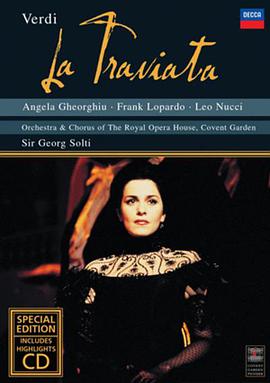
茶花女 (1994) [电影] 豆瓣
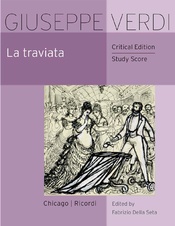
La Traviata
9.3 (14 个评分) 导演: Humphrey Burton 演员: Angela Gheorghiu / Frank Lopardo
其它标题: La Traviata / 威尔第 歌剧《茶花女》
故事发生在十九世纪的巴黎,维奥莱塔是当时的一代名妓,一次偶然中,她同名叫阿尔弗雷多的年轻人相遇了,两人一见钟情,无法自拔。维奥莱塔甘愿放弃曾经的一切生活,追随阿尔弗雷多而去,然而,两人的恋情却遭到了阿尔弗雷多父亲的坚决反对。
在阿尔弗雷多的父亲的几经干预之下,维奥莱塔无奈回到了曾经的相好杜费尔男爵的身边,心上人的背叛令阿尔弗雷多心碎不已,愤怒又悲伤的他决定报复。遭到阿尔弗雷多的报复,依然爱着他的维奥莱塔心碎了,她积怨成疾最终患上了不治之症。就在此时,阿尔弗雷多终于知道了维奥莱塔当年离开他的前因后果和苦衷,然而为时已晚,当他回到维奥莱塔的身边时,后者已经奄奄一息。
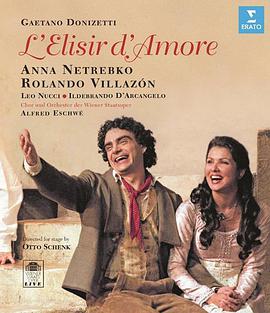
爱情灵药 (2005) [电影] 豆瓣
Donizetti: L'Elisir d'Amore
演员: Anna Netrebko / Rolando Villazón
其它标题: Donizetti: L'Elisir d'Amore
Three new releases this month (March) feature tenor Rolando Villazon--a CD of Zarzuela arias, one of works by Monteverdi, and this new DVD of a performance at the Vienna State Opera in 2005 of Donizetti's L'Elisir d'amore. Villazon is a remarkably versatile tenor and he puts his individual stamp on everything he does. Nemorino was a role in the repertoire of all "three tenors" in the 1970s and '80s: Domingo brought a certain smoothness to it early in his career, but his voice soon grew too heavy; Pavarotti was simple, affectionate, and bright-toned; and Carreras had vulnerability and warmth. Villazon has it all.
The voice gleams at the top, the baritonal bottom adds tenderness in introspective moments, and he handles the coloratura handsomely. He's even a master at messa di voce--that glorious affect in which a note is attacked softly, swelled to almost forte and then drawn back to pianissimo--and he uses it at the close of his big aria, "Una furtiva lagrima". After two minutes of applause from the normally reticent Viennese audience, he repeats the aria, with even greater nuance. Villazon makes everything the bumpkin Nemorino says and does seem spontaneous. With his mop-top hair and big eyes he seems to be channeling Harpo, Chico, and Chaplin at once. He's a born ham--he juggles three pieces of fruit while singing one aria--and he offers one of the most delightful portrayals of the role ever.
The gorgeous Russian superstar Anna Netrebko is his beloved Adina and she seems likewise relaxed; she executes endless streams of coloratura with beautiful tone and ease, and she's truly alert and appealing. The two share a one-minute-long kiss that has the audience erupting in applause. Bass Ildebrando d'Arcangelo makes a nicely snide, mellifluous, younger-than-usual quack Dr. Dulcamara, and veteran baritone Leo Nucci still has it as the boastful soldier, Belcore.
Conductor Alfred Eschwé clearly realizes he has struck gold with the casting (apparently Villazon and Netrebko were thrown into the show on a couple of weeks' notice), and he leads an energetic and tight reading of the score. The traditional sets and costumes (from 1980, by Jürgen Rose) are charming, and the direction for both stage and TV is fine. Choice of DTS 5.0 Surround, Dolby 5.0 Surround, and LPCM Stereo; subtitles in English, Spanish, French, Italian and German. A real treat.
--Robert Levine, ClassicsToday.com
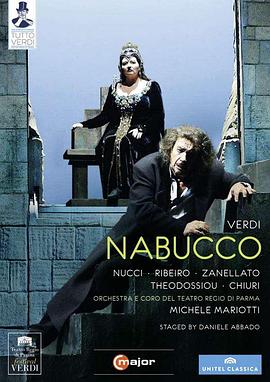
纳布科 (2012) [电影] 豆瓣
Nabucco
演员: Dimitra Theodossiou / Leo Nucci
其它标题: Nabucco / 纳布科(帕尔玛歌剧院版)
帕尔玛歌剧院,威尔第200年纪念演出系列。
强烈推荐女高音Dimitra Theodossiou。本版Nucci和合唱队也很不错。
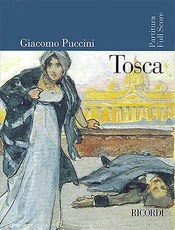
托斯卡 2000年斯卡拉剧院版 [演出] 豆瓣
所属 演出: 托斯卡
语言: italian 意大利语 剧团: Orchestra del Teatro alla Scala 斯卡拉剧院管弦乐团 ; Coro del Teatro alla Scala 斯卡拉剧院合唱团 ; Coro di voci bianche del Teatro alla Scala e del Conservatorio "G. Verdi" di Milano 斯卡拉剧院和米兰“G. 威尔第”音乐学院童声合唱团 剧院: Teatro alla Scala 斯卡拉剧院 导演: Luca Ronconi / Lorenza Cantini
其它标题: 2000年斯卡拉剧院版 编剧: Giuseppe Giacosa / Luigi Illica 作曲: Giacomo Puccini 演员: Maria Guleghina / Salvatore Licitra
Historical context
A crowded scene with many soldiers and horses, and much smoke. Some soldiers lie dead or wounded. In the distance, beyond a short line of trees, is a tall church tower.
According to the libretto, the action of Tosca occurs in Rome in June 1800. Sardou, in his play, dates it more precisely; La Tosca takes place in the afternoon, evening, and early morning of 17 and 18 June 1800.
Italy had long been divided into a number of small states, with the Pope in Rome ruling the Papal States in Central Italy. Following the French Revolution, a French army under Napoleon invaded Italy in 1796, entering Rome almost unopposed on 11 February 1798 and establishing a republic there. Pope Pius VI was taken prisoner, and was sent into exile on February 20, 1798. (Pius VI would die in exile in 1799, and his successor, Pius VII, who was elected in Venice on 14 March 1800, would not enter Rome until July 3. There is thus neither a Pope nor papal government in Rome during the days depicted in the opera.) The new republic was ruled by seven consuls; in the opera this is the office formerly held by Angelotti, whose character may be based on the real-life consul Liborio Angelucci. In September 1799 the French, who had protected the republic, withdrew from Rome. As they left, troops of the Kingdom of Naples occupied the city.
In May 1800 Napoleon, by then the undisputed leader of France, brought his troops across the Alps to Italy once again. On 14 June his army met the Austrian forces at the Battle of Marengo (near Alessandria). Austrian troops were initially successful; by mid-morning they were in control of the field of battle. Their commander, Michael von Melas, sent this news south towards Rome. However, fresh French troops arrived in late afternoon, and Napoleon attacked the tired Austrians. As Melas retreated in disarray with the remains of his army, he sent a second courier south with the revised message. The Neapolitans abandoned Rome, and the city spent the next fourteen years under French domination.
Act 1
Inside the church of Sant'Andrea della Valle
Scene depicting a church interior with high stained-glass windows and heavy ornamental columns. The central figure is a high dignatory around whom several figures are kneeling, while in the background can be seen the tall pikes of the Swiss Guard.
Cesare Angelotti, former consul of the Roman Republic and now an escaped political prisoner, runs into the church and hides in the Attavanti private chapel – his sister, the Marchesa Attavanti, has left a key to the chapel hidden at the feet of the statue of the Madonna. The elderly Sacristan enters and begins cleaning. The Sacristan kneels in prayer as the Angelus sounds.
The painter Mario Cavaradossi arrives to continue work on his picture of Mary Magdalene. The Sacristan identifies a likeness between the portrait and a blonde-haired woman who has been visiting the church recently (unknown to him, it is Angelotti's sister the Marchesa). Cavaradossi describes the "hidden harmony" ("Recondita armonia") in the contrast between the blonde beauty of his painting and his dark-haired lover, the singer Floria Tosca. The Sacristan mumbles his disapproval before leaving.
Angelotti emerges and tells Cavaradossi, an old friend who has republican sympathies, that he is being pursued by the Chief of Police, Baron Scarpia. Cavaradossi promises to assist him after nightfall. Tosca's voice is heard, calling to Cavaradossi. Cavaradossi gives Angelotti his basket of food and Angelotti hurriedly returns to his hiding place.
Tosca enters and suspiciously asks Cavaradossi what he has been doing – she thinks that he has been talking to another woman. Cavaradossi reassures her and Tosca tries to persuade him to take her to his villa that evening: "Non la sospiri, la nostra casetta" ("Do you not long for our little cottage"). She then expresses jealousy over the woman in the painting, whom she recognises as the Marchesa Attavanti. Cavaradossi explains the likeness; he has merely observed the Marchesa at prayer in the church. He reassures Tosca of his fidelity and asks her what eyes could be more beautiful than her own: "Qual'occhio al mondo" ("What eyes in the world").
After Tosca has left, Angelotti reappears and discusses with the painter his plan to flee disguised as a woman, using clothes left in the chapel by his sister. Cavaradossi gives Angelotti a key to his villa, suggesting that he hide in a disused well in the garden. The sound of a cannon signals that Angelotti's escape has been discovered. He and Cavaradossi hasten out of the church.
The Sacristan re-enters with choristers, celebrating the news that Napoleon has apparently been defeated at Marengo. The celebrations cease abruptly with the entry of Scarpia, his henchman Spoletta and several police agents. They have heard that Angelotti has sought refuge in the church. Scarpia orders a search, and the empty food basket and a fan bearing the Attavanti coat of arms are found in the chapel. Scarpia questions the Sacristan, and his suspicions are aroused further when he learns that Cavaradossi has been in the church; Scarpia mistrusts the painter, and believes him complicit in Angelotti's escape.
When Tosca arrives looking for her lover, Scarpia artfully arouses her jealous instincts by implying a relationship between the painter and the Marchesa Attavanti. He draws Tosca's attention to the fan and suggests that someone must have surprised the lovers in the chapel. Tosca falls for his deceit; enraged, she rushes off to confront Cavaradossi. Scarpia orders Spoletta and his agents to follow her, assuming she will lead them to Cavaradossi and Angelotti. He privately gloats as he reveals his intentions to possess Tosca and execute Cavaradossi. A procession enters the church singing the Te Deum; exclaiming 'Tosca, you make me forget even God!', Scarpia joins the chorus in the prayer.
Act 2
The body of a man lies supine, with a woman, crucifix in hand, kneeling over him. A candle is placed to each side of his head.
Scarpia's apartment in the Palazzo Farnese, that evening
Scarpia, at supper, sends a note to Tosca asking her to come to his apartment, anticipating that two of his goals will soon be fulfilled at once. His agent, Spoletta, arrives to report that Angelotti remains at large, but Cavaradossi has been arrested for questioning. He is brought in, and an interrogation ensues. As the painter steadfastly denies knowing anything about Angelotti's escape, Tosca's voice is heard singing a celebratory cantata elsewhere in the Palace.
She enters the apartment in time to see Cavaradossi being escorted to an antechamber. All he has time to say is that she mustn't tell them anything. Scarpia then claims she can save her lover from indescribable pain if she reveals Angelotti's hiding place. She resists, but the sound of screams coming through the door eventually breaks her down, and she tells Scarpia to search the well in the garden of Cavaradossi's villa.
Scarpia orders his torturers to cease, and the bloodied painter is dragged back in. He's devastated to discover that Tosca has betrayed his friend. Sciarrone, another agent, then enters with news: there was an upset on the battlefield at Marengo, and the French are marching on Rome. Cavaradossi, unable to contain himself, gloats to Scarpia that his rule of terror will soon be at an end. This is enough for the police to consider him guilty, and they haul him away to be shot.
Scarpia, now alone with Tosca, proposes a bargain: if she gives herself to him, Cavaradossi will be freed. She is revolted, and repeatedly rejects his advances, but she hears the drums outside announcing an execution. As Scarpia awaits her decision, she prays, asking why God has abandoned her in her hour of need: "Vissi d'arte" ("I lived for art"). She tries to offer money, but Scarpia isn't interested in that kind of bribe: he wants Tosca herself.
Spoletta returns with the news that Angelotti has killed himself upon discovery, and that everything is in place for Cavaradossi's execution. Scarpia hesitates to give the order, looking to Tosca, and despairingly she agrees to submit to him. He tells Spoletta to arrange a mock execution, both men repeating that it will be "as we did with Count Palmieri," and Spoletta exits.
Tosca insists that Scarpia must provide safe-conduct out of Rome for herself and Cavaradossi. He easily agrees to this and heads to his desk. While he's drafting the document, she quietly takes a knife from the supper table. Scarpia triumphantly strides toward Tosca. When he begins to embrace her, she stabs him, crying "this is Tosca's kiss!" Once she's certain he's dead, she ruefully says "now I forgive him." She removes the safe-conduct from his pocket, lights candles in a gesture of piety, and places a crucifix on the body before leaving.
Act 3
The upper parts of the Castel Sant'Angelo, early the following morning
Roman panorama showing, centre, an arched bridge over a river with a domed building in the distance. To the right of the bridge is a large circular fortress.
A shepherd boy is heard offstage singing (in Romanesco dialect) "Io de' sospiri" ("I give you sighs") as church bells sound for matins. The guards lead Cavaradossi in and inform him that he has one hour to live. He declines to see a priest, but asks permission to write a letter to Tosca. He begins to write, but is soon overwhelmed by memories: "E lucevan le stelle" ("And the stars shone").
Tosca enters and shows him the safe-conduct pass she's obtained, adding that she has killed Scarpia and that the imminent execution is a sham. Cavaradossi must feign death, after which they can flee together before Scarpia's body is discovered. Cavaradossi is awestruck by his gentle lover's courage: "O dolci mani" ("Oh sweet hands"). The pair ecstatically imagines the life they will share, far from Rome. Tosca then anxiously coaches Cavaradossi on how to play dead when the firing squad shoots at him with blanks. He giddily promises he'll fall "like Tosca in the theatre."
Cavaradossi is led away, and Tosca watches with increasing impatience as the execution is prepared. The men fire, Cavaradossi falls, and Tosca exclaims "Ecco un artista!" ("What an actor!"). When the soldiers have all left, she hurries towards Cavaradossi, only to find that Scarpia betrayed her: the bullets were real. Heartbroken, she clasps her lover's lifeless body and weeps.
The voices of Spoletta, Sciarrone, and the soldiers are heard, shouting that Scarpia is dead and Tosca has killed him. As the men rush in, Tosca rises, evades their clutches, and runs to the parapet. Crying "O Scarpia, Avanti a Dio!" ("O Scarpia, we meet before God!"), she flings herself over the edge to her death.
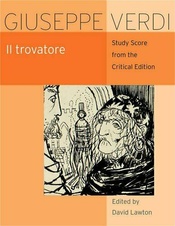
游吟诗人 2000年斯卡拉剧院版 [演出] 豆瓣
所属 演出: 游吟诗人
语言: italian 意大利语 剧团: Orchestra del Teatro alla Scala 斯卡拉剧院管弦乐团 ; Coro del Teatro alla Scala 斯卡拉剧院合唱团 剧院: Teatro alla Scala 斯卡拉剧院 导演: Hugo de Ana
其它标题: 2000年斯卡拉剧院版 编剧: Salvadore Cammarano / Leone Emanuele Bardare 作曲: Giuseppe Verdi 演员: Salvatore Licitra / Barbara Frittoli
Place: Biscay and Aragon (Spain)
Time: Fifteenth century.
Act 1: The Duel
Scene 1: The guard room in the castle of Luna (The Palace of Aljafería, Zaragoza, Spain)
Ferrando, the captain of the guards, orders his men to keep watch while Count di Luna wanders restlessly beneath the windows of Leonora, lady-in-waiting to the Princess. Di Luna loves Leonora and is jealous of his successful rival, a troubadour whose identity he does not know. In order to keep the guards awake, Ferrando narrates the history of the count (Racconto: Di due figli vivea padre beato / "The good Count di Luna lived happily, the father of two sons"): many years ago, a gypsy was wrongfully accused of having bewitched the youngest of the di Luna children; the child had fallen sick, and for this the gypsy had been burnt alive as a witch, her protests of innocence ignored. Dying, she had commanded her daughter Azucena to avenge her, which she did by abducting the baby. Although the burnt bones of a child were found in the ashes of the pyre, the father refused to believe his son's death. Dying, the father commanded his firstborn, the new Count di Luna, to seek Azucena.
Scene 2: Garden in the palace of the princess
Leonora confesses her love for the Troubadour to her confidante, Ines (Cavatina:Tacea la notte placida / "The peaceful night lay silent"... Di tale amor / "A love that words can scarcely describe"), in which she tells how she fell in love with a mystery knight, victor at a tournament: lost track of him when a civil war broke out: then encountered him again, in disguise as a wandering troubadour who sang beneath her window. When they have gone, Count di Luna enters, intending to pay court to Leonora himself, but hears the voice of his rival, in the distance: (Deserto sulla terra / "Alone upon this earth"). Leonora in the darkness briefly mistakes the count for her lover, until the Troubadour himself enters the garden, and she rushes to his arms. The Count challenges his rival to reveal his true identity, which he does: Manrico, a knight now outlawed and under death sentence for his allegiance to a rival prince. Manrico in turn challenges him to call the guards, but the Count regards this encounter as a personal rather than political matter, and challenges Manrico instead to a duel over their common love. Leonora tries to intervene, but cannot stop them from fighting (Trio: Di geloso amor sprezzato / "The fire of jealous love" ).
Act 2: The Gypsy Woman
Scene 1: The gypsies' camp
The gypsies sing the Anvil Chorus: Vedi le fosche notturne / "See! The endless sky casts off her sombre nightly garb...". Azucena, the daughter of the Gypsy burnt by the count, is still haunted by her duty to avenge her mother (Canzone: Stride la vampa / "The flames are roaring!"). The Gypsies break camp while Azucena confesses to Manrico that after stealing the di Luna baby she had intended to burn the count's little son along with her mother, but overwhelmed by the screams and the gruesome scene of her mother's execution, she became confused and threw her own child into the flames instead (Racconto: Condotta ell'era in ceppi / "They dragged her in bonds").
Manrico realises that he is not the son of Azucena, but loves her as if she were indeed his mother, as she has always been faithful and loving to him - and, indeed, saved his life only recently, discovering him left for dead on a battlefield after being caught in ambush. Manrico tells Azucena that he defeated di Luna in their earlier duel, but was held back from killing him by a mysterious power (Duet: Mal reggendo / "He was helpless under my savage attack"): and Azucena reproaches him for having stayed his hand then, especially since it was the Count's forces that defeated him in the subsequent battle of Pelilla. A messenger arrives and reports that Manrico's allies have taken Castle Castellor, which Manrico is ordered to hold in the name of his prince: and also that Leonora, who believes Manrico dead, is about to enter a convent and take the veil that night. Although Azucena tries to prevent him from leaving in his weak state (Ferma! Son io che parlo a te! / "I must talk to you"), Manrico rushes away to prevent her from carrying out this intent.
Scene 2: In front of the convent
Di Luna and his attendants intend to abduct Leonora and the Count sings of his love for her (Aria: Il balen del suo sorriso / "The light of her smile" ... Per me ora fatale / "Fatal hour of my life"). Leonora and the nuns appear in procession, but Manrico prevents di Luna from carrying out his plans and takes Leonora away with him, although once again leaving the Count behind unharmed, as the soldiers on both sides back down from bloodshed, the Count being held back by his own men.
Act 3: The Son of the Gypsy Woman
Scene 1: Di Luna's camp
Di Luna and his army are attacking the fortress Castellor where Manrico has taken refuge with Leonora (Chorus: Or co' dadi ma fra poco / "Now we play at dice"). Ferrando drags in Azucena, who has been captured wandering near the camp. When she hears di Luna’s name, Azucena’s reactions arouse suspicion and Ferrando recognizes her as the supposed murderer of the count’s brother. Azucena cries out to her son Manrico to rescue her and the count realizes that he has the means to flush his enemy out of the fortress. He orders his men to build a pyre and burn Azucena before the walls.
Scene 2: A chamber in the castle
Inside the castle, Manrico and Leonora are preparing to be married. She is frightened; the battle with di Luna is imminent and Manrico’s forces are outnumbered. He assures her of his love (Aria: Ah sì, ben mio, coll'essere / "Ah, yes, my love, in being yours"), even in the face of death. When news of Azucena’s capture reaches him, he summons his men and desperately prepares to attack (Cabaletta: Di quella pira l'orrendo foco / "The horrid flames of that pyre"). Leonora faints.
Act 4: The Punishment
Scene 1: Before the dungeon keep
Manrico has failed to free Azucena and has been imprisoned himself. Leonora attempts to free him (Aria: D'amor sull'ali rosee / "On the rosy wings of love"; Chorus & Duet: Miserere / "Lord, thy mercy on this soul") by begging di Luna for mercy and offers herself in place of her lover. She promises to give herself to the count, but secretly swallows poison from her ring in order to die before di Luna can possess her (Duet: Mira, d'acerbe lagrime / "See the bitter tears I shed").
Scene 2: In the dungeon
Manrico and Azucena are awaiting their execution. Manrico attempts to soothe Azucena, whose mind wanders to happier days in the mountains (Duet: Ai nostri monti ritorneremo / "Again to our mountains we shall return"). At last the gypsy slumbers. Leonora comes to Manrico and tells him that he is saved, begging him to escape. When he discovers she cannot accompany him, he refuses to leave his prison. He believes Leonora has betrayed him until he realizes that she has taken poison to remain true to him. As she dies in agony in Manrico's arms she confesses that she prefers to die with him than to marry another (Trio: Prima che d'altri vivere / "Rather than live as another's"). The count has heard Leonora's last words and orders Manrico's execution. Azucena awakes and tries to stop di Luna. Once Manrico is dead, she cries: Egli era tuo fratello! Sei vendicata, o madre. / "He was your brother ... You are avenged, oh mother!"
茶花女 1994年英国皇家歌剧团版 [演出] 豆瓣
所属 演出: 茶花女
语言: 意大利语 剧团: Orchestra of the Royal Opera House 英国皇家歌剧院管弦乐团 ; Royal Opera Chorus 英国皇家歌剧团合唱团 剧院: Royal Opera House, Covent Garden 考文特花园皇家歌剧院 导演: Richard Eyre
其它标题: 1994年英国皇家歌剧团版 编剧: Francesco Maria Piave 作曲: Giuseppe Verdi 演员: Angela Gheorghiu / Frank Lopardo
Place: Paris and its vicinity
Time: Beginning of the 19th century
Act 1
The salon in Violetta's house
Violetta Valéry, a famed courtesan, throws a lavish party at her Paris salon to celebrate her recovery from an illness. Gastone, a viscount, has brought with him a friend, Alfredo Germont, a young bourgeois from a provincial family who has long adored Violetta from afar. While walking to the salon, Gastone tells Violetta that Alfredo loves her, and that while she was ill, he came to her house every day. Alfredo joins them, admitting the truth of Gastone's remarks.
Baron Douphol, Violetta's current lover, waits nearby to escort her to the salon; once there, the Baron is asked to give a toast, but refuses, and the crowd turns to Alfredo, who agrees to sing a brindisi – a drinking song (Alfredo, Violetta, chorus: Libiamo ne' lieti calici – "Let's drink from the joyful cups").
From the next room, the sound of the orchestra is heard and the guests move there to dance. After a series of severe coughs and almost fainting, Violetta begins to feel dizzy and asks her guests to go ahead and to leave her to rest until she recovers. While the guests dance in the next room, Violetta looks at her pale face in her mirror. Alfredo enters and expresses his concern for her fragile health, later declaring his love for her (Alfredo, Violetta: Un dì, felice, eterea – "One day, happy and ethereal"). At first, she rejects him because his love means nothing to her, but there is something about Alfredo that touches her heart. He is about to leave when she gives him a flower, telling him to return it when it has wilted, which will be the very next day.
After the guests leave, Violetta wonders if Alfredo could actually be the one in her life (Violetta: È strano! ... Ah, fors' è lui – "Ah, perhaps he is the one"). But she concludes that she needs freedom to live her life (Violetta, Alfredo: Sempre libera – "Always free"). From off stage, Alfredo's voice is heard singing about love as he walks down the street.
Act 2
Scene 1: Violetta's country house outside Paris
Three months later, Alfredo and Violetta are living together in a peaceful country house outside Paris. Violetta has fallen in love with Alfredo and she has completely abandoned her former life. Alfredo sings of their happy life together (Alfredo: De' miei bollenti spiriti / Il giovanile ardore – "The youthful ardor of my ebullient spirits"). Annina, the maid, arrives from Paris, and, when questioned by Alfredo, tells him that she went there to sell the horses, carriages and everything owned by Violetta to support their country lifestyle.
Alfredo is shocked to learn this and leaves for Paris immediately to settle matters himself. Violetta returns home and receives an invitation from her friend, Flora, to a party in Paris that evening. Alfredo's father, Giorgio Germont, is announced and demands that she break off her relationship with his son for the sake of his family, since he reveals that Violetta's relationship with Alfredo has threatened his daughter's engagement (Giorgio: Pura siccome un angelo, Iddio mi diè una figlia – "Pure as an angel, God gave me a daughter") because of Violetta's reputation. Meanwhile, he reluctantly becomes impressed by Violetta's nobility, something which he did not expect from a courtesan. She responds that she cannot end the relationship because she loves him so much, but Giorgio pleads with her for the sake of his family. With growing remorse, she finally agrees (Violetta, Giorgio: Dite alla giovine, sì bella e pura, – "Tell the young girl, so beautiful and pure,") and says goodbye to Giorgio. In a gesture of gratitude for her kindness and sacrifice, Giorgio kisses her forehead before leaving her weeping alone.
Violetta gives a note to Annina to send to Flora accepting the party invitation and, as she is writing a farewell letter to Alfredo, he enters. She can barely control her sadness and tears; she tells him repeatedly of her unconditional love (Violetta: Amami, Alfredo, amami quant'io t'amo – "Love me, Alfredo, love me as I love you"). Before rushing out and setting off for Paris, she hands the farewell letter to her servant to give to Alfredo.
Soon, the servant brings the letter to Alfredo and, as soon as he has read it, Giorgio returns and attempts to comfort his son, reminding him of his family in Provence (Giorgio: Di Provenza il mar, il suol chi dal cor ti cancellò? – "Who erased the sea, the land of Provence from your heart?"). Alfredo suspects that the Baron is behind his separation with Violetta, and the party invitation, which he finds on the desk, strengthens his suspicions. He decides to confront Violetta at the party. Giorgio tries to stop Alfredo, but he rushes out.
Scene 2: Party at Flora's house
At the party, the Marquis tells Flora that Violetta and Alfredo have separated, much to the amazement of everyone who had previously seen the happy couple. She calls for the entertainers to perform for the guests (Chorus: Noi siamo zingarelle venute da lontano – "We are gypsy girls who have come from afar"; Di Madride noi siam mattadori – "We are matadors from Madrid"). Gastone and his friends join the matadors and sing (Gastone, chorus, dancers: È Piquillo un bel gagliardo Biscaglino mattador – "Piquillo is a bold and handsome matador from Biscay").
Violetta arrives with Baron Douphol. They see Alfredo at the gambling table. When he sees them, Alfredo loudly proclaims that he will take Violetta home with him. Feeling annoyed, the Baron goes to the gambling table and joins him in a game. As they bet, Alfredo wins some large sums until Flora announces that supper is ready. Alfredo leaves with handfuls of money.
As everyone is leaving the room, Violetta has asked Alfredo to see her. Fearing that the Baron's anger will lead him to challenge Alfredo to a duel, she gently asks Alfredo to leave. Alfredo misunderstands her apprehension and demands that she admit that she loves the Baron. In grief, she makes that admission and, furiously, Alfredo calls the guests to witness what he has to say (Questa donna conoscete? – "You know this woman?"). He humiliates and denounces Violetta in front of the guests and then throws his winnings at her feet in payment for her services. She faints onto the floor. The guests reprimand Alfredo: Di donne ignobile insultatore, di qua allontanati, ne desti orror! ("Ignoble insulter of women, go away from here, you fill us with horror!").
In search of his son, Giorgio enters the hall and, knowing the real significance of the scene, denounces his son's behavior (Giorgio, Alfredo, Violetta, chorus: Di sprezzo degno sè stesso rende chi pur nell'ira la donna offende. – "A man, who even in anger, offends a woman renders himself deserving of contempt.").
Flora and the ladies attempt to persuade Violetta to leave the dining room, but Violetta turns to Alfredo: Alfredo, Alfredo, di questo core non puoi comprendere tutto l'amore... – "Alfredo, Alfredo, you can't understand all the love in this heart...".
Act 3
Violetta's bedroom
Dr. Grenvil tells Annina that Violetta will not live long since her tuberculosis has worsened. Alone in her room, Violetta reads a letter from Alfredo's father telling her that the Baron was only wounded in his duel with Alfredo. He has informed Alfredo of the sacrifice she has made for him and his sister; and that he is sending his son to see her as quickly as possible to ask for her forgiveness. But Violetta senses it is too late (Violetta: Addio, del passato bei sogni ridenti – "Farewell, lovely, happy dreams of the past").
Annina rushes in the room to tell Violetta of Alfredo's arrival. The lovers are reunited and Alfredo suggests that they leave Paris (Alfredo, Violetta: Parigi, o cara, noi lasceremo – "We will leave Paris, O beloved").
But it is too late: she knows her time is up (Alfredo, Violetta: Gran Dio!...morir sì giovane – "Great God!...to die so young"). Alfredo's father enters with the doctor, regretting what he has done. After singing a duet with Alfredo, Violetta suddenly revives, exclaiming that the pain and discomfort have left her. A moment later, she dies in Alfredo's arms.
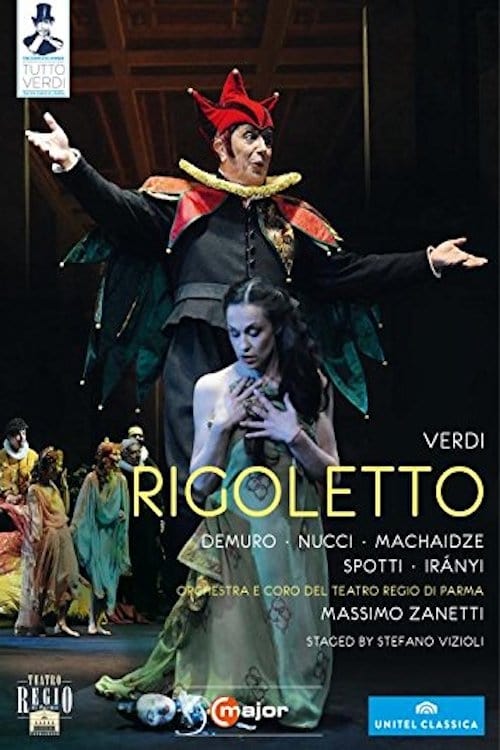
弄臣 2008年帕尔马皇家剧院版 [演出] 豆瓣
所属 演出: 弄臣
语言: italian 意大利语 剧团: Orchestra del Teatro Regio di Parma 帕尔马皇家剧院管弦乐团 ; Coro del Teatro Regio di Parma 帕尔马皇家剧院合唱团 剧院: Teatro Regio di Parma 帕尔马皇家剧院 导演: Stefano Vizioli
其它标题: 2008年帕尔马皇家剧院版 编剧: Francesco Maria Piave 作曲: Giuseppe Verdi 演员: Leo Nucci / Nino Machaidze
Place: Mantua
Time: the sixteenth century
Act 1
Scene 1: Mantua. A magnificent hall in the ducal palace. Doors at the back open into other rooms, splendidly lit up. A crowd of lords and ladies in grand costumes are seen walking about in the rear rooms; page boys come and go. The festivities are at their height. Music is heard from offstage. The Duke and Borsa enter from a door in the back.
At a ball in his palace, the Duke sings of a life of pleasure with as many women as possible, and mentions that he particularly enjoys cuckolding his courtiers: "Questa o quella" ("This woman or that"). He mentions to Borsa that he has seen an unknown beauty in church and desires to possess her, but he also wishes to seduce the Countess of Ceprano. Rigoletto, the Duke's hunchbacked court jester, mocks the husbands of the ladies to whom the Duke is paying attention, including the Count Ceprano, and advises the Duke to get rid of him by prison or death. The Duke laughs indulgently, but Ceprano is not amused. Marullo, one of the guests at the ball, informs the courtiers that Rigoletto has a "lover", which astonishes them. (Marullo is not aware that the "lover" is actually Rigoletto's daughter.) The courtiers, at Ceprano's suggestion, resolve to take vengeance on Rigoletto for making fun of them. The festivities are interrupted by the arrival of the elderly Count Monterone, whose daughter the Duke had seduced. Rigoletto provokes him further by making fun of his helplessness to avenge his daughter's honor. Monterone confronts the Duke, and is immediately arrested by the Duke's guards. Before being led off to prison, Monterone curses both the Duke for the attack on his daughter and Rigoletto for having mocked his righteous anger. The curse terrifies Rigoletto, who believes the popular superstition that an old man's curse has real power.
Scene 2: The end of a dead-end street. On the left, a house of discreet appearance with one small courtyard surrounded by walls. In the yard there is one tall tree and a marble seat; in the wall, a door that leads to the street; above the wall, a terrace supported by arches. The second floor door opens on to the said terrace, which can also be reached by a staircase in front. To the right of the street is the very high wall of the garden and a side of the Ceprano palace. It is night.
Preoccupied with the old man's curse, Rigoletto approaches the house where he is concealing his daughter from the world and is accosted by the hit-man Sparafucile, who walks up to him and offers his services. Rigoletto declines for the moment, but leaves open the possibility of hiring Sparafucile later, should the need arise. Sparafucile wanders off, after repeating his own name a few times. Rigoletto contemplates the similarities between the two of them: "Pari siamo!" ("We are alike!"); Sparafucile kills men with his sword, and Rigoletto uses "a tongue of malice" to stab his victims. Rigoletto opens a door in the wall and embraces his daughter Gilda. They greet each other warmly: "Figlia!" "Mio padre!" ("Daughter!" "My father!"). Rigoletto has been concealing his daughter from the Duke and the rest of the city, and she does not know her father's occupation. Since he has forbidden her to appear in public, she has been nowhere except to church and does not even know her own father's name.
When Rigoletto has gone, the Duke appears and overhears Gilda confess to her nurse Giovanna that she feels guilty for not having told her father about a young man she had met at the church. She says that she fell in love with him, but that she would love him even more if he were a student and poor. As she declares her love, the Duke enters, overjoyed. Gilda, alarmed, calls for Giovanna, unaware that the Duke had sent her away. Pretending to be a student, the Duke convinces Gilda of his love: "È il sol dell'anima" ("Love is the sunshine of the soul"). When she asks for his name, he hesitantly calls himself Gualtier Maldè. Hearing sounds and fearing that her father has returned, Gilda sends the Duke away after they quickly trade vows of love: "Addio, addio" ("Farewell, farewell"). Alone, Gilda meditates on her love for the Duke, whom she believes is a student: "Gualtier Maldè!... Caro nome che il mio cor" ("Dearest name").
Later, Rigoletto returns: "Riedo!... perché?" ("I've returned!... why?"), while the hostile courtiers outside the walled garden (believing Gilda to be the jester's mistress, unaware she is his daughter) get ready to abduct the helpless girl. They tell Rigoletto that they are actually abducting the Countess Ceprano. He sees that they are masked and asks for a mask for himself; while they are tying the mask onto his face, they also blindfold him. Blindfolded and deceived, he holds the ladder steady while they climb up to Gilda's room: Chorus: "Zitti, zitti" ("Softly, softly"). With her father's unknowing assistance Gilda is carried away by the courtiers. Left alone, Rigoletto removes his mask and blindfold, and realizes that it was in fact Gilda who was carried away. He collapses in despair, remembering the old man's curse.
Act 2
A room in the ducal palace. There are doors on both sides as well as a larger one at the far end by the sides of which hang full length portraits of the Duke and his wife. There is one high-backed chair at a table covered with velvet and other furnishings.
The Duke is concerned that Gilda has disappeared: "Ella mi fu rapita!" ("She was stolen from me!") and "Parmi veder le lagrime" ("I seem to see tears"). The courtiers then enter and inform him that they have captured Rigoletto's mistress: Chorus: "Scorrendo uniti" ("We went together at nightfall"). By their description, he recognizes it to be Gilda and rushes off to the room where she is held: "Possente amor mi chiama" ("Mighty love beckons me"). Rigoletto enters singing and feigning nonchalance, but also looking anxiously for any trace of Gilda, whom he fears may have fallen into the hands of the Duke. The courtiers pretend not to notice his anxiety, but quietly laugh at him with each other. A page boy arrives with a message from the Duke's wife - the Duchess wishes to speak to her husband - but the courtiers reply suggestively that the Duke cannot be disturbed at the moment. Rigoletto realizes this must mean that Gilda is with the Duke. To the courtiers' surprise, he reveals that Gilda is his daughter. He first demands, then tearfully pleads with the courtiers to return her to him: "Cortigiani, vil razza dannata" ("Accursed race of courtiers"). Rigoletto attempts to run into the room in which Gilda is being held, but the courtiers block his way. After a time, Gilda enters, and Rigoletto orders the courtiers to leave him alone with her. The courtiers leave the room, believing Rigoletto has gone mad. Gilda describes to her father what has happened to her in the palace: "Tutte le feste al tempio" ("On all the holy days") and he attempts to console her. Monterone is led across the room on the way to prison and pauses in front of the portrait of the Duke to regret that his curse on the libertine has had no effect. As the guards lead Monterone away, Rigoletto mutters that the old man is mistaken; he, Rigoletto, the dishonored buffoon, shall make thunder and lightning rain from heaven onto the offender's head. He repeats this vow as Gilda pleads for mercy for her lover the Duke: Duet:"Sì! Vendetta, tremenda vendetta!" ("Yes! Revenge, terrible revenge!").
Act 3
The right bank of the river Mincio. On the left is a two-story house, half ruined. Through a large arch on the ground floor a rustic tavern can be seen as well as a rough stone staircase that leads to an attic room with a small bed which is in full view as there are no shutters. In the wall downstairs that faces the street is a door that opens to the inside. The wall is so full of holes and cracks that everything that happens inside is easily seen from the exterior. At the back of the stage are deserted areas by the river which flows behind a parapet that has half collapsed into ruins. Beyond the river is Mantua. It is night. Gilda and Rigoletto, both uneasy, are standing in the road; Sparafucile is seated at a table in the tavern.
A portion of Sparafucile's house is seen, with two rooms open to the view of the audience. Rigoletto and Gilda arrive outside. The Duke's voice can be heard from inside, singing "La donna è mobile" ("Woman is fickle"). Sparafucile's sister, Maddalena, has lured him to the house. Rigoletto and Gilda listen from outside as the Duke flirts with Maddalena. Gilda laments that the Duke is unfaithful; Rigoletto assures her that he is arranging revenge: "Bella figlia dell’amore" ("Beautiful daughter of love").
Rigoletto orders Gilda to put on a man's clothes to prepare to leave for Verona and tells her that he plans to follow later. After she leaves, he completes his bargain with the assassin, who is ready to murder his guest for 20 scudi. Rigoletto then withdraws.
With falling darkness, a thunderstorm approaches and the Duke decides to spend the rest of the night in the house. Sparafucile directs him to the upstairs sleeping quarters, resolving to kill him in his sleep.
Gilda, who still loves the Duke despite knowing him to be unfaithful, returns dressed as a man and stands outside the house. Maddalena, who is smitten with the Duke, begs Sparafucile to spare his life: "È amabile invero cotal giovinotto/ Ah, più non ragiono!...". Sparafucile reluctantly promises her that if by midnight another victim can be found, he will kill the other instead of the Duke. Gilda, overhearing this exchange, resolves to sacrifice herself for the Duke, and enters the house: "Trio: Se pria ch’abbia il mezzo la notte toccato". Sparafucile stabs her and she collapses, mortally wounded.
At midnight, when Rigoletto arrives with money, he receives a corpse wrapped in a sack, and rejoices in his triumph. Weighting it with stones, he is about to cast the sack into the river when he hears the voice of the Duke, sleepily singing a reprise of his "La donna è mobile" aria. Bewildered, Rigoletto opens the sack and, to his despair, discovers his dying daughter. For a moment, she revives and declares she is glad to die for her beloved: "V'ho ingannato" ("Father, I deceived you"). She dies in his arms. Rigoletto cries out in horror: "La maledizione!" ("The curse!")
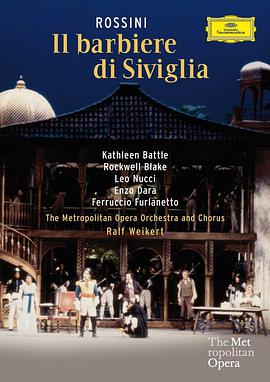
塞维利亚的理发师 1988年大都会歌剧团版 [演出] 豆瓣
所属 演出: 塞维利亚的理发师
语言: italian 意大利语 剧团: Metropolitan Opera Orchestra 大都会歌剧团管弦乐团 ; Metropolitan Opera Chorus 大都会歌剧团合唱团 剧院: Metropolitan Opera House 大都会歌剧院 导演: John Cox
其它标题: 1988年大都会歌剧团版 编剧: Cesare Sterbini 作曲: Gioachino Rossini 演员: Leo Nucci / Rockwell Blake
Place: Seville, Spain
Time: 18th century
Act 1
The square in front of Bartolo's house
In a public square outside Bartolo's house a band of musicians and a poor student named Lindoro are serenading, to no avail, the window of Rosina ("Ecco, ridente in cielo"; "There, laughing in the sky"). Lindoro, who is really the young Count Almaviva in disguise, hopes to make the beautiful Rosina love him for himself – not his money. Almaviva pays off the musicians who then depart, leaving him to brood alone. Rosina is the young ward of the grumpy, elderly Bartolo and she is allowed very little freedom because Bartolo plans to marry her once she is of age and thus appropriate her not inconsiderable dowry.
Figaro approaches singing (Aria: "Largo al factotum della città"; "Make way for the factotum of the city"). Since Figaro used to be a servant of the Count, the Count asks him for assistance in helping him meet Rosina, offering him money should he be successful in arranging this. (Duet: "All'idea di quel metallo"; "At the idea of that metal"). Figaro advises the Count to disguise himself as a drunken soldier, ordered to be billeted with Bartolo, so as to gain entrance to the house. For this suggestion, Figaro is richly rewarded.
A room in Bartolo's house with four doors
The scene begins with Rosina's cavatina, "Una voce poco fa" ("A voice a little while ago"). (This aria was originally written in the key of E major, but it is sometimes transposed a semitone up into F major for coloratura sopranos to perform, giving them the chance to sing extra, almost traditional, cadenzas, sometimes reaching high Ds or even Fs.)
Knowing the Count only as Lindoro, Rosina writes to him. As she is leaving the room, Bartolo and Basilio enter. Bartolo is suspicious of the Count, and Basilio advises that he be put out of the way by creating false rumours about him (this aria, "La calunnia è un venticello" – "Calumny is a little breeze" – is almost always sung a tone lower than the original D major).
When the two have gone, Rosina and Figaro enter. Figaro asks Rosina to write a few encouraging words to Lindoro, which she has actually already written. (Duet: "Dunque io son...tu non m'inganni?"; "Then I'm the one...you're not fooling me?"). Although surprised by Bartolo, Rosina manages to fool him, but he remains suspicious. (Aria: "A un dottor della mia sorte"; "To a doctor of my class").
Count Almaviva, disguised as a soldier and pretending to be drunk, enters the house and demands to be quartered there. In fear of the drunken man, Berta the housekeeper rushes to Bartolo for protection. Bartolo tells the "soldier" that he (Bartolo) has an official exemption which excuses him from the requirement to quarter soldiers in his home. Almaviva pretends to be too drunk and belligerent to understand, and dares Bartolo to brawl. While Bartolo searches his cluttered desk for the official document which would prove his exemption, Almaviva whispers to Rosina that he is Lindoro in disguise, and passes a love-letter to her. Bartolo suspiciously demands to know what is in the piece of paper in Rosina's hands, but she fools him by handing over her laundry list. Bartolo and the Count argue loudly. Basilio enters; then Figaro, who warns that the noise of the argument is rousing the whole neighborhood. Finally, the noise attracts the attention of the Officer of the Watch and his troops, who crowd into the room. Bartolo demands that the Officer arrest the "drunken soldier". The Officer starts to do so, but Almaviva quietly reveals his true identity to the Officer, and he (the Officer) backs off and stands down. Bartolo and Basilio are astonished and mystified; Figaro laughs quietly at them. (Finale: "Fredda ed immobile, come una statua"; "Cold and still, just like a statue"). The confusion intensifies and causes everyone to suffer headaches and auditory hallucinations ("Mi par d'esser con la testa in un'orrida fucina; dell'incudini sonore l'importuno strepitar."; "My head seems to be in a fiery forge: the sound of the anvils deafens the ear.")
Act 2
A room in Bartolo's house with a piano
Almaviva again appears at the doctor's house, this time disguised as a priest who is also a singing tutor and pretending to act as substitute for the supposedly ailing Basilio, Rosina's regular singing teacher. Initially, Bartolo is suspicious, but does allow Almaviva to enter when the Count gives him Rosina's letter. He describes his plan to discredit Lindoro whom he believes to be one of the Count's servants, intent on pursuing women for his master. While Almaviva pretends to give Rosina her singing lesson, Figaro arrives to shave Bartolo. Bartolo demurs, but Figaro makes such a scene he agrees, but in order not to leave the supposed music master alone with Rosina, the doctor has Figaro shave him right there in the music room. When Basilio suddenly appears, he is bribed by a full purse from Almaviva and persuaded to leave again, with much discussion of how ill he looks. (Quintet: "Don Basilio! – Cosa veggo!"; "Don Basilio! – What do I see?"). Figaro begins to shave Bartolo, but Bartolo overhears the lovers conspiring, and angrily drives everybody away.
The scene returns to the location of act 1 with a grill looking out onto the square. Bartolo orders Basilio to have the notary ready to marry him to Rosina that evening. He also explains his plot to come between the lovers. Basilio leaves and Rosina arrives. Bartolo shows Rosina the letter she wrote to "Lindoro", and persuades her that this is evidence that Lindoro is merely a flunky of Almaviva and is toying with her at Almaviva's behest. Rosina believes him and agrees to marry him.
During an instrumental interlude, the music creates a thunder storm to indicate the passage of time. The Count and Figaro climb up a ladder to the balcony and enter the room through a window. Rosina shows Almaviva the letter and accuses him of betraying her. Almaviva reveals his identity and the two reconcile. While Almaviva and Rosina are enraptured by one another, Figaro keeps urging them to leave. Two people are heard approaching the front door, who later turn out to be Basilio and the notary. However, when the Count, Rosina, and Figaro attempt to leave by way of the ladder, they discover it has been removed. The marriage contract requires two witnesses; Figaro is one, but another is needed. The Count makes Basilio an offer he can't refuse: the choice of accepting a bribe and being a witness to his marriage or receiving two bullets in the head (an easy choice, Basilio says). He and Figaro witness the signatures to a marriage contract between the Count and Rosina. Bartolo barges in, accompanied by the Officer and the men of the watch, but too late; the marriage is already complete. The befuddled Bartolo (who was the one who had removed the ladder) is pacified by being allowed to retain Rosina's dowry. The opera concludes with an anthem to love ("Amor e fede eterna, si vegga in noi regnar!").
假面舞会 1991年大都会歌剧团版 [演出] 豆瓣
所属 演出: 假面舞会
语言: 意大利语 剧团: Metropolitan Opera Orchestra 大都会歌剧团管弦乐团 ; Metropolitan Opera Chorus 大都会歌剧团合唱团 剧院: Metropolitan Opera House 大都会歌剧院 导演: Piero Faggioni
其它标题: 1991年大都会歌剧团版 编剧: Antonio Somma 作曲: Giuseppe Verdi 演员: Luciano Pavarotti / Aprile Millo
Place: Stockholm, Sweden or Boston, Massachusetts
Time: March 1792 in Sweden or the end of the 17th century in Boston
Act 1
Scene 1: A public audience at Riccardo's palace, attended by his supporters, but also by his enemies who hope for his demise.
Riccardo (Gustavo) reviews the list of guests who will attend an upcoming masked ball. He is elated to see the name of the woman he loves on the list – Amelia, the wife of his friend and advisor, Renato (Count Anckarström). (Aria: La rivedrò nell'estasi / "There I will be in ecstasy to see her again"). When Renato arrives, he tries to warn Riccardo about the growing conspiracy against him (aria: Alla vita che t'arride / "Your life, so full of joy and hope"), but Riccardo refuses to listen to his words.
Next, Riccardo is presented with a complaint against a fortune-teller named Ulrica (Madame Arvidson), accused of witchcraft. A magistrate calls for her banishment, but Oscar the page defends her (Aria: Volta la terrea / "Turning her eyes from the earth"). Riccardo resolves to investigate for himself and tells the members of the court to disguise themselves and to meet him at Ulrica's lodging later that day.
Scene 2: At Ulrica's dwelling
Ulrica summons her magical powers: Re dell'abisso, affrettati / "King of the abyss, make haste". Disguised as a fisherman, Riccardo arrives before the others. He makes the fortune of a sailor named Silvano come true by spiriting a document of promotion into his pouch, convincing the crowd of the truth of Ulrica's powers. When he realizes that Amelia is coming to see Ulrica, he hides and watches. Alone with Ulrica, Amelia confesses that she is tormented by her love for Riccardo, and asks for a means to bring peace to her heart. Ulrica tells her to gather a certain herb with magical powers; Riccardo resolves to be there when she does so. Amelia leaves.
Now Riccardo presents himself again, along with all of the courtiers, and asks to have his fortune told. (Aria: Di' tu se fedele / "Tell me if the sea awaits me faithfully"). Ulrica reveals that he will be killed by the next man who shakes his hand. He laughingly dismisses her prophecy and offers his hand to the courtiers, who refuse to take it. Renato arrives and shakes Riccardo's hand in greeting. Riccardo's true identity is now revealed and he is acclaimed by the people.
Act 2
On the outskirts of the town, at the gallows-place. Midnight
Amelia, conquering her fears, has come here alone to pick the herb of which Ulrica told her (Aria: Ma dall'arido stelo divulsa / "But when I have plucked the herb"). She is surprised by Riccardo, who has come to meet her, and the two finally declare their love for each other.
Unexpectedly, Renato arrives, and Amelia covers her face with her veil before he can recognize her. Renato explains to Riccardo that the conspirators are pursuing him, and his life is in danger. Riccardo leaves, making Renato promise to escort the veiled woman safely back to town, not asking her identity. When the conspirators arrive, they confront Renato; in the struggle, Amelia's veil drops. Renato assumes that Amelia and Riccardo have been involved in an adulterous love affair. He asks the two leaders of the conspiracy, Samuel and Tom, to meet him the next day.
Act 3
Scene 1: Renato's house
Renato has resolved to kill Amelia for the dishonor she has brought on him. She protests her innocence and begs to see her son one last time. (Aria: Morrò, ma prima in grazia / "I will die, but first, a kindness"). Renato relents, and declares that it is Riccardo, not Amelia, who deserves to die (Aria: Eri tu che macchiavi quell'anima / "You were the one who stained her soul").
Samuel (Count Ribbing) and Tom (Count Horn) arrive, and Renato asks to join their plot, pledging the life of his son as proof of his sincerity. They agree to draw lots to decide who will kill Riccardo. Amelia is forced to draw the winning name – Renato.
Oscar, the page, arrives with invitations to the masked ball; Samuel, Tom and Renato agree that this is where the assassination will take place.
Scene 2: The ball
Riccardo, torn between love and duty, has resolved to renounce his love for Amelia and send her and Renato back to England (Aria: Ma se m'è forza perderti / "But if I am forced to lose her").
At the ball, Renato tries to learn from Oscar what costume Riccardo is wearing. Oscar at first refuses to tell (Aria: Saper vorreste / "You want to know"), but he finally answers: a black cloak and a red ribbon. Riccardo manages to identify Amelia and tells her of the decision he has made. As they say goodbye, Renato stabs Riccardo. The wounded Riccardo discloses that though he loved Amelia, she never broke her marriage vows. He pardons all the conspirators, bidding farewell to his friends and his country as he dies.
奥赛罗 2001年斯卡拉剧院版 [演出] 豆瓣
所属 演出: 奥赛罗
语言: italian 意大利语 剧团: Orchestra del Teatro alla Scala 斯卡拉剧院管弦乐团 ; Coro del Teatro alla Scala 斯卡拉剧院合唱团 ; Coro di voci bianche del Teatro alla Scala e del Conservatorio "G. Verdi" di Milano 斯卡拉剧院和米兰“G. 威尔第”音乐学院童声合唱团 剧院: Teatro alla Scala 斯卡拉剧院 导演: Graham Vick
其它标题: 2001年斯卡拉剧院版 编剧: Arrigo Boito 作曲: Giuseppe Verdi 演员: Plácido Domingo / Barbara Frittoli
Time: The late 16th century
Place: A coastal city on the island of Cyprus
Act 1
A town in Cyprus, outside the castle. An inn with a pergola, in the background the quayside and sea. It is evening. Lightning, thunder, gale force winds.
On a stormy evening, the people of Cyprus anxiously await the arrival of the new governor, Otello, from a naval battle with the Turks (Chorus, Montano, Cassio, Iago, Roderigo: Una vela! / "A sail!"). For a moment it seems as if Otello's ship will founder, to the delight of Otello's treacherous ensign, Iago, but Otello arrives safely and announces that the Turkish fleet has been destroyed, and the Cypriots cheer (Otello, chorus: Esultate! L'orgoglio musulmano sepolto è in mar / "Rejoice! The Muslim’s pride is buried in the sea").
Iago offers to help the young Venetian gentleman Roderigo in his seduction of Otello's wife, Desdemona – Iago envies Otello his success and longs to destroy the Moor (Iago, Roderigo: Roderigo, ebben che pensi? / "Well, Roderigo, what are you thinking?"). Among his grievances, Iago is outraged that Otello has appointed Cassio to be the captain of the navy, a position that Iago hoped to have. The people of Cyprus celebrate the safe return of Otello and his men by lighting a bonfire and drinking (Chorus: Fuoco di gioia!/ "Fire of joy").
Iago proposes a toast to Otello and his wife, while Cassio praises Desdemona (Iago, Cassio, Chorus, Roderigo: Roderigo, beviam! / "Roderigo, let's drink!"). Iago offers Cassio more wine, but Cassio says he has had enough. Iago pressures him and offers a toast to Otello and Desdemona. Cassio gives in. Iago sings a drinking song and continues to pour Cassio wine (Iago, Cassio, Roderigo, chorus: Inaffia l'ugola! / "Wet your throat").
Montano enters and calls for Cassio to begin his watch; he is surprised to find Cassio drunk and barely able to stand upright. Iago lies to Montano, telling him that this is how Cassio spends every evening. Roderigo laughs at Cassio's drunkenness and Cassio attacks him. Montano tells Cassio to calm down, but Cassio draws his sword and threatens to crack open Montano's head. (Montano, Cassio, Iago, Roderigo, chorus: Capitano, v'attende la fazione ai baluardi / "Captain, the guard awaits you on the ramparts".) Cassio and Montano begin to duel, and Iago sends Roderigo to call the alarm. Montano is wounded and the fight is stopped only by the appearance of Otello.
Otello orders Montano and Cassio to lower their swords. He then asks "honest Iago" to explain how the duel began, but Iago says he doesn't know. Otello then turns to Cassio, who is embarrassed and cannot excuse his actions. When Otello discovers that Montano is wounded, he becomes enraged. Desdemona enters, and, upon seeing that his bride's rest has been disturbed, Otello declares that Cassio is no longer Captain. (Otello, Iago, Cassio, Montano: Abbasso le spade / "Down with your swords".) He tells Iago to patrol the town to restore quiet, calls for help for Montano and orders everyone to return to their houses.
The Cypriots leave Otello alone with Desdemona. Together Otello and Desdemona recall why they fell in love. Otello, in an ecstasy of joy, invites death, fearing that he will never know such happiness again. Desdemona prays that their love will remain unchanged. They kiss, overcome with love for each other. (Otello, Desdemona: Già nella notte densa s'estingue ogni clamor /"Now in the dark night all noise is silenced".)
Act 2
A hall on the ground floor of the castle, divided by a glass partition from the garden at the back, with a balcony.
Iago suggests to Cassio that he should ask Desdemona to talk to Otello about his demotion; Desdemona can influence her husband to reinstate him (Iago, Cassio: Non ti crucciar / "Do not fret"). Desdemona and Emilia can be seen walking the garden. Cassio approaches Desdemona. Watching from the room, Iago voices his nihilistic beliefs and hatred of humankind (Credo in un Dio crudel / "I believe in a cruel God").
Otello enters the room; Iago, pretending not to notice him, says that he is deeply troubled. Cassio sees Otello from afar and goes discreetly away. Otello asks what's wrong, but Iago gives only vague answers. Finally, he hints that Cassio and Desdemona are having an affair. Otello begins to get suspicious, but declares that he needs proof before believing that Desdemona has been unfaithful. (Iago, Otello: Ciò m'accora... Che parli? / "That worries me..." "What did you say?") Iago warns Otello against jealousy, but also advises him to be vigilant.
A crowd of children, sailors, and Cypriots sing to Desdemona, praising her beauty and purity (Chorus, Iago, children, Desdemona, Otello: Dove guardi splendono raggi / "Wherever you look, brightness shines..."). They present her with gifts and wish her happiness before leaving.
Desdemona carries Cassio's request for reinstatement to Otello. Otello sourly tells her to ask him another time; as she persists, he grows impatient and says he has a headache. Desdemona offers to wrap his head in a handkerchief Otello once gave her, linen embroidered with strawberries. Otello throws it to the ground and says he doesn't need it (Desdemona, Otello: D'un uom che geme sotto il tuo disdegno la preghiera ti porto / "I bring a petition from one who suffers under your displeasure"). Emilia picks up the handkerchief. Desdemona asks for Otello's forgiveness. Aside, Iago demands that Emilia give him the handkerchief. When she refuses, Iago forcibly takes it from her.
Otello dismisses the others, and declares that he now believes that Desdemona may be deceiving him (Otello: Ora e per sempre addio sante memorie / "Now and forever farewell, holy memories"). Iago returns, and the jealous Otello demands proof of Desdemona's infidelity. Iago says that once, when he and Cassio were sleeping in the same room, he heard Cassio talking to Desdemona in a dream. In the dream, says Iago, Cassio told Desdemona that they must be careful to conceal their love. (Iago: Era la notte, Cassio dormia / "It was night, Cassio was sleeping".) Iago says that dreams don't prove anything, but remarks that he saw Cassio carrying Desdemona's strawberry-embroidered handkerchief just the day before. Otello swears vengeance on Desdemona and Cassio, and Iago joins him in his vow (Otello, Iago: Sì, pel ciel marmoreo giuro / "Yes, by the marble heavens I swear").
Act 3
The great hall of the castle. To the right, a large colonnade leading to a smaller hall, in the back of which is a balcony. Othello and Iago talking in the hall as a herald enters.
A herald brings news of the approach of ambassadors from Venice. Iago explains to Otello that he will lure Cassio here and talk with him while Otello watches, hidden. He leaves to go get Cassio. (Iago: Qui trarrò Cassio / "Here I will bring Cassio".)
Desdemona enters and reminds Otello of Cassio's request. Otello says that his headache has returned, and asks Desdemona to wrap her handkerchief around his head. When Desdemona produces a different handkerchief, Otello demands the one with strawberries. When she says she does not have it, Otello says that it was a talisman, and troubles will befall her if she loses it. Desdemona says that he is trying to ignore Cassio's plea, and as she asks him about Cassio, he demands the handkerchief ever more insistently. (Desdemona, Otello: Dio ti giocondi, o sposo / "God keep you merry, husband".) Desdemona protests that she is faithful; Otello sends her away (Desdemona, Otello: Esterrefatta fisso lo sguardo tuo tremendo / "Terrified, I face your dreadful look").
Otello laments his fate (Dio! mi potevi scagliar tutti i mali / "God, you could have thrown every evil at me" ). When Iago calls out "Cassio is here!" Otello hides as Iago and Cassio enter. Cassio says he had hoped to see Desdemona here, for he wanted to know whether she had been successful with Otello (Iago, Cassio, Otello: Vieni; l'aula è deserta / "Come, the hall is deserted"). Iago asks him to tell of his adventures with that woman. Cassio asks which woman, and, softly, so that Otello cannot hear, Iago says "Bianca" (the name of Cassio's actual lover). As Cassio laughs about his romantic adventures, Otello assumes he is speaking of Desdemona. In a conversation only partially heard, Cassio seems to be telling Iago that another woman, a secret admirer, left him a handkerchief as a token. At Iago's urging, Cassio produces it, whereupon Iago seizes it—for it is Desdemona's—and holds it out where he knows Otello can see it. He then returns it to Cassio and teases him, while in his hiding place Otello fumes (Iago, Cassio, Otello: Questa è una ragna dove il tuo cuor casca / "This is a spiderweb in which your heart is caught").
Bugles sound, announcing the arrival of the Venetian ambassador, Lodovico. Iago warns Cassio that he should leave unless he wants to see Otello. Cassio exits, and Otello asks Iago how he should kill his wife. Iago advises Otello to kill Desdemona by suffocating her in her bed, while he will take care of Cassio. Otello promotes Iago to Captain.
Lodovico, Desdemona, Emilia, Roderigo, and other dignitaries enter. When Lodovico notes Cassio's absence, Iago tells him that Cassio is out of favor. Desdemona interrupts, telling Lodovico that she hopes he will soon be restored. Otello calls her a demon and almost strikes her violently but is held back by Lodovico. Otello then calls for Cassio. (Lodovico, Otello, Desdemona, Emilia, Iago, chorus: Il Doge ed il Senato salutano l'eroe trionfatore / "The Doge and the Senate greet the triumphant hero".) Cassio enters and Otello reads (mixing in insults to Desdemona) a letter from the Doge, announcing that he (Otello) has been called back to Venice and Cassio is to succeed him as governor of Cyprus. Enraged, Otello throws Desdemona to the ground. (Otello, Roderigo, Iago, Cassio, Lodovico: Messeri! il Doge mi richiama a Venezia / "Gentlemen! The Doge recalls me to Venice".)
Desdemona, on the ground, laments (A terra! … sì … nel livido fango / "Fallen! yes, in the foul mud..."). The various characters express their feelings: Emilia and Lodovico express their sympathy for Desdemona, Cassio marvels at his sudden change of fortune, and Roderigo laments that Desdemona will soon depart. In separate asides, Iago urges Otello to take his revenge as soon as possible, while he will take care of Cassio. He advises Roderigo that the only way to prevent Desdemona from leaving is for Cassio, the new Duke, to die, and suggests that Roderigo murder Cassio that night. (Emilia, Cassio, Desdemona, Roderigo, Lodovico, Iago, Otello, chorus: Quell'innocente un fremito d'odio non ha nè un gesto / "That innocent one is without feeling or gesture of hatred"). In a fury, Otello orders everyone to leave. Desdemona goes to comfort him, but Lodovico pulls her away as Otello curses her. As the others leave, Otello raves about the handkerchief, then collapses. Iago presses Otello's forehead with his heel, then walks away. Outside the crowd of Cypriots calls out victory and glory for Otello. (Otello, Desdemona, Emilia, Cassio, Roderigo, Lodovico, Iago, chorus: Fuggite! / "Begone".)
Act 4
Desdemona's bedchamber. A bed, a prie-dieu, a table, a mirror, some chairs. A light burns in front of an image of the Madonna which hangs above the prie-dieu. To the right is a door. On the table a light. It is night.
Desdemona is preparing for bed with the assistance of Emilia. She asks Emilia to put out the bridal gown she used on her wedding day, and says that if she dies, she wants to be buried in it. Emilia tells her not to talk about such things. Desdemona recalls how her mother's servant Barbara was abandoned by her lover, and how she used to sing the Willow Song (Desdemona: Piangea cantando nell'erma landa / "Singing, she wept on the lonely hearth"). After Emilia leaves, Desdemona prays (Ave Maria) and then falls asleep.
Silently, Otello enters, with a sword. He kisses his wife three times; she awakens. Otello asks her if she has prayed tonight; she must die, and he does not wish to condemn her soul. She asks God for mercy, both for her and for Otello. Otello accuses her of sin, saying that he must kill her because she loves Cassio. Desdemona denies it and asks that he summon Cassio to testify to her innocence. Otello says that Cassio is already dead. Desdemona, horrified, pleads for mercy, but Otello tells her it's too late and strangles her (Otello, Desdemona: Diceste questa sera le vostre preci / "Have you said your prayers tonight?").
Emilia knocks at the door, (Emilia: Aprite! Aprite! / "Open up!") announcing that Cassio has killed Roderigo. Desdemona softly calls out that she has been unjustly accused, but refuses to blame Otello. She dies. Emilia calls Otello a murderer; he retorts that Iago gave him proof of Desdemona's infidelity. Otello begins to threaten Emilia, who calls for help. Iago, Cassio, and Lodovico enter. Emilia demands that Iago deny Otello's accusation; he refuses. Otello says that the handkerchief Desdemona gave to Cassio is proof enough. Emilia, horrified, explains that Iago stole the handkerchief from her—Cassio confirms that the handkerchief appeared mysteriously in his lodgings. Montano enters and says that Roderigo, with his dying breath, has revealed Iago's plot. Iago, brandishing his sword, runs away.
After he realizes what has happened, Otello grieves over Desdemona's death. Initially he draws his scimitar (Otello: Niun mi tema / "That none fear me") but then relinquishes it. He then stealthily draws a dagger from his robe (Otello: Ho un'arma ancor! / I still have another weapon!) and stabs himself. Others try to stop him, but it is too late. Before he dies, he drags himself next to his wife and kisses her (Otello: Un bacio...un bacio ancora...ah!...un altro bacio... / A kiss.. another kiss...ah...and yet another kiss). He lies dead next to Desdemona.
福斯塔夫 1982年英国皇家歌剧团版 [演出] 豆瓣
所属 演出: 福斯塔夫
语言: italian 意大利语 剧团: Orchestra of the Royal Opera House 英国皇家歌剧院管弦乐团 ; Royal Opera Chorus 英国皇家歌剧团合唱团 剧院: Royal Opera House, Covent Garden 考文特花园皇家歌剧院 导演: Ronald Eyre
其它标题: 1982年英国皇家歌剧团版 编剧: Arrigo Boito 作曲: Giuseppe Verdi 演员: Renato Bruson / Katia Ricciarelli
Time: The reign of Henry IV, 1399 to 1413
Place: Windsor, England
Act 1
A room at the Garter Inn
Falstaff and his servants, Bardolfo and Pistola, are drinking at the inn. Dr Caius bursts in and accuses Falstaff of burgling his house and Bardolfo of picking his pocket. He is ejected. Falstaff hands a letter to each of his servants for delivery to Alice Ford and Meg Page, two wealthy married women. In these two identical letters, Falstaff professes his love for each of the women, although it is access to their husbands' money that he chiefly covets. Bardolfo and Pistola refuse, claiming that honour prevents them from obeying him. Falstaff dispatches his page, Robin, to deliver the letters. Falstaff delivers a tirade at his rebellious followers (L'onore! Ladri ... ! / "Honour! You rogues ... !") telling them that honour is a mere word and is of no practical value. He chases them out of his sight.
Ford's garden
Alice and Meg have received Falstaff's letters. They compare them, see that they are identical and, together with Mistress Quickly and Nannetta Ford, resolve to punish Falstaff. Meanwhile, Ford has been warned of the letters by Bardolfo and Pistola. All three are thirsty for revenge and are supported by Dr Caius and Fenton, a young gentleman. To Ford's disapproval, Fenton is in love with Nannetta. Finding a moment to be alone, the young lovers exchange banter. They are interrupted by the return of Alice, Meg and Mistress Quickly. The act ends with an ensemble in which the women and the men separately plan revenge on Falstaff.
Act 2
A room at the Garter Inn
Falstaff is alone at the inn. Bardolfo and Pistola, now in the pay of Ford, enter and pretend to beg for forgiveness for past transgressions. They announce to their master the arrival of Mistress Quickly, who delivers an invitation to go to Alice's house that afternoon between the hours of two and three. She also delivers an answer from Meg Page and assures Falstaff that neither is aware of the other's letter. Falstaff celebrates his potential success ("Va, vecchio John" / "Go, old Jack, go your own way"). Ford arrives, masquerading as "Signor Fontana", supposedly an admirer of Alice; he offers money to the fat knight to seduce her. Falstaff is puzzled at the request, and "Fontana" explains that if Alice succumbs to Falstaff, it will then be easier for Fontana to overcome her virtuous scruples. Falstaff agrees with pleasure and reveals that he already has a rendezvous arranged with Alice for two o'clock – the hour when Ford is always absent from home. Falstaff goes off to change into his best clothes; Ford is consumed with jealousy (È sogno o realtà? / "Is it a dream or reality?"). When Falstaff returns in his finery, they leave together with elaborate displays of mutual courtesy.
A room in Ford's house
The three women plot their strategy ("Gaie Comari di Windsor" / "Merry wives of Windsor, the time has come!"). They are in high spirits, but Alice notices that Nannetta is not. This is because Ford plans to marry her to Dr Caius, a man old enough to be her grandfather; the women reassure her that they will prevent it. Mistress Quickly announces Falstaff's arrival, and Mistress Ford has a large laundry basket and a screen placed in readiness. Falstaff's attempts to seduce Alice with tales of his past glory ("Quand'ero paggio del Duca di Norfolk" / "When I was page to the Duke of Norfolk I was slender") are cut short, as Mistress Quickly reports the impending arrival of Ford with a retinue of henchmen to catch his wife's lover. Falstaff hides first behind the screen, and then the women hide him in the laundry basket. In the meantime Fenton and Nannetta hide behind the screen. The men hear the sound of a kiss behind it. They assume it is Falstaff with Alice, but instead they find the young lovers. Ford orders Fenton to leave. Inside the hamper Falstaff is almost suffocating. While the men resume the search of the house Alice orders her servants to throw the laundry basket through the window into the River Thames, where Falstaff endures the jeers of the crowd.
Act 3
Before the inn
Falstaff glumly curses the sorry state of the world. Some mulled wine soon improves his mood. Mistress Quickly arrives and delivers another invitation to meet Alice. Falstaff at first wants nothing to do with it, but she persuades him. He is to meet Alice at midnight at Herne's Oak in Windsor Great Park dressed up as Herne the Hunter. He and Mistress Quickly go inside the inn. Ford has realised his error in suspecting his wife, and they and their allies have been watching secretly. They now concoct a plan for Falstaff's punishment: dressed as supernatural creatures, they will ambush and torment him at midnight. Ford privately proposes a separate plot to Caius: Nannetta will be disguised as Queen of the Fairies, Caius will wear a monk's costume, and Ford will join the two of them with a nuptial blessing. Mistress Quickly overhears and quietly vows to thwart Ford's scheme.
Herne's Oak in Windsor Park on a moonlit midnight
Fenton arrives at the oak tree and sings of his happiness ("Dal labbro il canto estasiato vola" / "From my lips, a song of ecstasy flies") ending with "Lips that are kissed lose none of their allure." Nannetta enters to finish the line with "Indeed, they renew it, like the moon." The women arrive and disguise Fenton as a monk, telling him that they have arranged to spoil Ford's and Caius's plans. Nannetta, as the Fairy Queen, instructs her helpers ("Sul fil d'un soffio etesio" / "On the breath of a fragrant breeze, fly, nimble spirits") before all the characters arrive on the scene. Falstaff's attempted love scene with Alice is interrupted by the announcement that witches are approaching, and the men, disguised as elves and fairies, soundly thrash Falstaff. At length he recognises Bardolfo in disguise. The joke is over, and Falstaff acknowledges that he has received his due. Ford announces that a wedding shall ensue. Caius and the Queen of the Fairies enter. A second couple, also in masquerade, ask Ford to deliver the same blessing for them as well. Ford conducts the double ceremony. Caius finds that instead of Nannetta, his bride is the disguised Bardolfo, and Ford has unwittingly blessed the marriage of Fenton and Nannetta. Ford accepts the fait accompli with good grace. Falstaff, pleased to find himself not the only dupe, proclaims in a fugue, which the entire company sings, that all the world is folly, and all are figures of fun (Tutto nel mondo è burla ... Tutti gabbati! / "Everything in the world is a jest ...").