Philip Glass — 艺术家 (115)
Songs from Liquid Days [音乐] 豆瓣
发布日期 2008年7月1日 出版发行: CBS Masterworks
Exclusive set from Holland contains his two albums, Songs From Liquid Days & Songs From The Trilogy. The albums also feature Linda Ronstadt, Kronos Quartet, Paul Esswood & The Roches. 2001.
Music in Twelve Parts [音乐] 豆瓣
发布日期 2008年7月12日 出版发行: Orange Mountain Music
This four disc boxed set of Philip Glass' seminal Minimalist work is offered as a new recording by Philip Glass and the Philip Glass Ensemble from 2006.
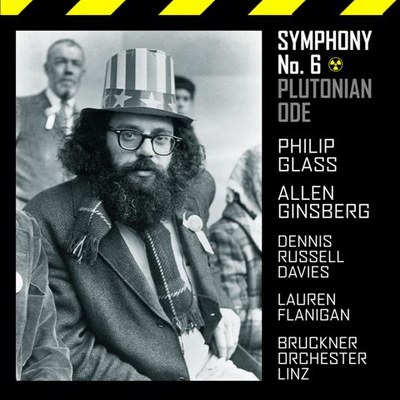
Symphony No. 6, Plutonian Ode [音乐] 豆瓣
Philip Glass / Allen Ginsberg 类型: 流行
发布日期 2006年1月1日 出版发行: Orange Mountain Music
Irwin Allen Ginsberg was an American poet and writer. As a student at Columbia University in the 1940s, he began friendships with William S. Burroughs and Jack Kerouac, forming the core of the Beat Generation.
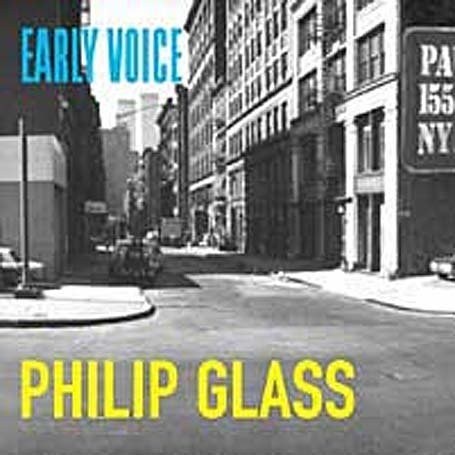
Philip Glass : Early Voice [音乐] 豆瓣
Philip Glass / Mabou Mines 类型: 古典
发布日期 2002年4月8日 出版发行: Orange Mountain
In the late 1960's and early 1970's Philip Glass emerged as one of the leading architects of a music termed "minimalist". During this period Glass and his ensemble performed in art galleries and loft spaces in the artist's neighborhood that became known as SoHo. It is now evident the influences of the music and art of that time were deeply felt by many.
The two selections found on the "Early Voice" CD are "Music for Voices", written in 1970 and "Another Look at Harmony, Part 4" written in 1970-1974. The fine live performance of "Music for Voices", recorded by Kurt Munkacsi at the Paula Cooper Art Gallery in 1972 is one of the earlier recordings from the archive of Philip Glass material. The repeating patterns of "Music for Voices" are assembled into a score that divides the performers into pairs and in this performance eight singers sat in a circle facing inwards. Each singer's part raises and lowers in volume in a regular pattern, and the entry of each voice is timed to coincide with the dynamic peak of its partner. The use of solfege as text for the unaccompanied vocal parts is a hint as to what is coming in "Music in 12 Parts" and the groundbreaking "Einstein on the Beach".
The other piece on the disk is a 1989 recording produced by Michael Riesman of the transitional "Another Look at Harmony, Part 4". This piece is scored for chorus and electric organ. The organ is played by Riesman and the vocals are skillfully handled by the Western Wind. Referring to "Music in Twelve Parts", Philip Glass stated, "I had worked 8 or 9 years creating a system, and now I'd written through it and come out the other end. My next piece was called "Another Look at Harmony" and that's just what it was. I'd taken everything out with my early works and it was now time to decide what I wanted to put back in." This piece marks the arrival of harmonic motion but is not a departure from the structural concerns and rhythmic intricacy of Glass' earlier work
The Concerto Project, Volume 3 [音乐] 豆瓣
Philip Glass 类型: 古典
发布日期 2008年5月26日 出版发行: Orange Mountain
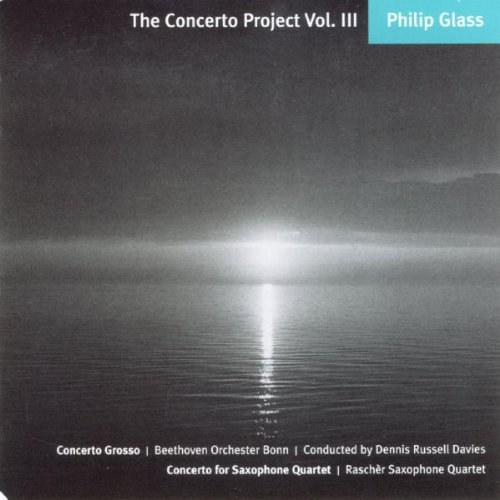
The premiere recording of Glass’s Concerto Grosso is paired with one of his most performed works, the Concerto for Saxophone Quartet, on this third disc in a series documenting all eight concertos that Philip Glass has written to date. Both concertos are played by the musicians who premiered them: the Beethoven Orchester Bonn conducted by Dennis Russell Davies and the internationally renowned Raschèr Saxophone Quartet.
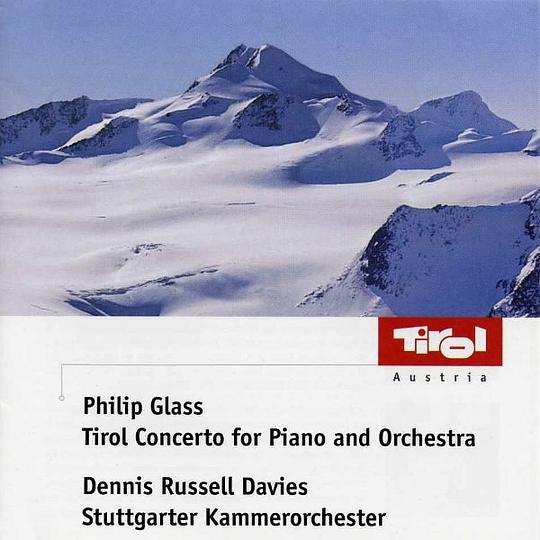
菲利普·格拉斯:钢琴协奏曲“蒂罗尔” [音乐] 豆瓣
发布日期 2002年1月1日 出版发行: Tirol Austria
菲利普·格拉斯,美国作曲家,1937年1月31日,这位立陶宛的犹太移民后裔出生于马里兰州巴尔的摩城。他的父亲拥有自己的唱片商店,因此格拉斯从小就接触了从贝多芬、舒伯特到巴托克、兴德米特和肖斯塔科维奇等人的作品。他自幼在皮博迪音乐学院学习长笛,15岁就到芝加哥大学速成班学习,同时学习数学及哲学。随后到朱利亚德音乐学院学习键盘。他的作曲老师有帕西契第(Vincent Persichetti) 和贝格斯玛(William Bergsma) 。1960年夏,他师从米约,并为一位学生同伴皮克西雷(Dorothy Pixley-Rothschild) 写下了他著名的《小提琴协奏曲》。1963~1965年,他到巴黎师从鲍朗格(Nadia Boulanger) 习作曲,分析巴赫、莫扎特和贝多芬等人的作品。
现年四十八岁的格拉斯是极简主义音乐的代表作曲家, 他也曾是位计程车司机. 格拉斯的因乐迄今听起仍相当前卫, 不仅贯穿现代音乐与另类摇滚乐的领域, 更同时横跨了电影配乐和剧场音乐. 在巴尔的摩出身的格拉斯先是在大学修习数学与哲学后再至纽约茱莉亚音乐学院学作曲, 在那里他碰到了史蒂夫.莱希 (Steve Reich) , 当时两人的创作方法皆不同, 不过后来皆被称为极简音乐, 日后两人的名字也一直被相提并论.
在七十年代, 现代作曲方向有两大主流, 一是将数学运算引用至作曲上的序列音乐 (Serialism), 另一个是约翰.凯奇 (John Cage) 融合禅学的机遇音乐 (ChanceMusic), 然而这两种音乐却未得到听众的心, 因为演奏困难, 而且不容易唱. 当现代音乐学院主流似乎正面临乾枯之际, 另外的前卫实验音乐与摇滚乐却正蓬勃发展. 使就在这时, 格拉斯发展出了新的音乐风格.相对於之前的机遇音乐艰深几近无调, 新的音乐回归调性, 并由数个单纯组合旋律一直重覆, 产生出让人印象深刻的强烈力量感. 这种新的风格正好填补了常久以来界於现代乐与前卫摇滚等音乐间的空差. 之后, 格拉斯到巴黎为拉费.尚卡 (Ravi Shankar) 的电影配乐. 他从这位印度乐手处开始对东方音乐产生兴趣. 1966 年时, 葛拉斯即前往印度学习当地音乐. 葛拉斯音乐中不断反覆的节奏循环与变化极微的合声等技巧也在此确定下来. 1968 年后, 他回到纽约组织了他自己的乐团, "The Philip Glass Ensemble". 1970 年开始, 他和莱希等人的音乐开始被叫作极简主义音乐, 不过格拉斯自己倒是认为, 那是指他以前写的,现在他的音乐则不太适用. 这时期的格拉斯也成立他自己的唱片公司 Chatham Square Lebel, 不过唱片销售却奇惨, 这种由电子键盘合奏加上扩大过的人声与管乐组成的声响,只吸引了对音乐抱持热忱的年青人而已. 格拉斯因此只有打工开计程车以维持他的音乐理想. 这阶段的作品有 Strung Out, amplified Vn. (1967); Music in Similar Motion (1969); Music with Changing Parts (1970); Music in 12 Parts (1971-4) 等, 1975 年的专辑 "North Star" 则是有关於雕刻家 Mark Di Surero 影片的音乐.
他的创作融合了摇滚乐、非洲与印度音乐、西方古典音乐的元素。他的作品经常重复简短的旋律和节奏模式,同时加以缓慢渐进的变奏,被称为极简主义音乐。20世纪中期,格拉斯与史蒂夫·赖希、拉蒙特·扬、特里·赖利等美国作曲家开始创作这种风格的音乐。《钢琴协奏曲“蒂罗尔”》为奥地利蒂罗尔州klanspuren音乐节委托创作,并于2000年音乐节上首次演出。
(
)