Philip Glass — 艺术家 (115)
三岛由纪夫传 [音乐] 豆瓣
Philip Glass / Michael Riesman 类型: 原声
发布日期 1990年10月25日 出版发行: Nonesuch
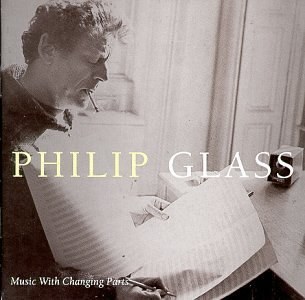
菲利普·莫里斯·葛拉斯,美國當代作曲家,簡約主義風格的代表人物之一。他的創作涉及了傳統古典音樂的幾乎所有體裁,並且在流行音樂領域有不少創作,產生了很大的影響。
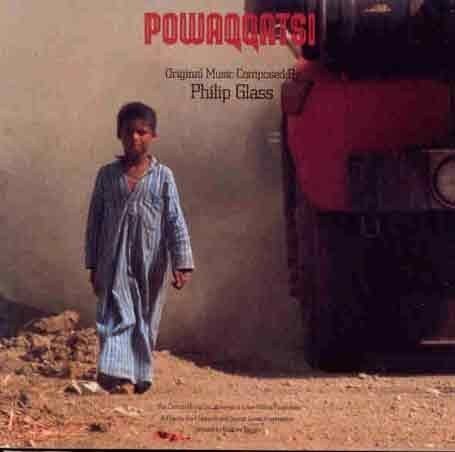
Powaqqatsi [音乐] 豆瓣
发布日期 2003年7月1日
Japanese 'memorial edition' reissue of the famed composer's score to the 1988 film. Nonesuch. 2003.
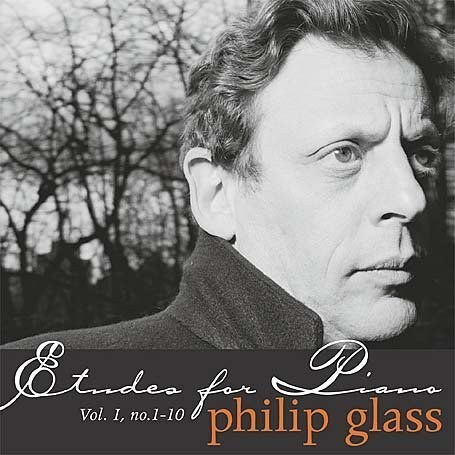
Glass : Etudes For Piano, Vol.1, No.1-10 [音乐] 豆瓣
Philip Glass 类型: 古典
发布日期 2003年9月9日 出版发行: Orange Mountain Music
Philip Glass’ wildly popular solo piano performances inspired the recording of "Etudes for Piano, Vol. I, nos. 1-10". Orange Mountain Music is proud to present the premiere recordings of these compositions. Mr. Glass states in the album’s liner notes: "The Etudes began for me in the mid-90s and I am still adding new music to this collection as I write these notes in 2003. Their purpose was two-fold. First, to provide new music for my solo piano concerts. And second, for me to expand my piano technique with music that would enhance and challenge my playing. Hence, the name Etudes, or "studies". The result is a body of work that has a broad range of dynamic, tempo and emotion. I hope to complete the second set of ten etudes, of which the first six are already composed, in the next few years."

This is Orange Mountain Music’s seventh release of Philip Glass’ material and the first to contain all new recordings.
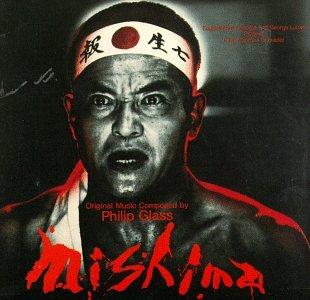
Mishima [音乐] 豆瓣
Philip Glass 类型: 原声
发布日期 1995年4月16日 出版发行: Elektra / Wea
菲利普·莫里斯·葛拉斯,美國當代作曲家,簡約主義風格的代表人物之一。他的創作涉及了傳統古典音樂的幾乎所有體裁,並且在流行音樂領域有不少創作,產生了很大的影響。
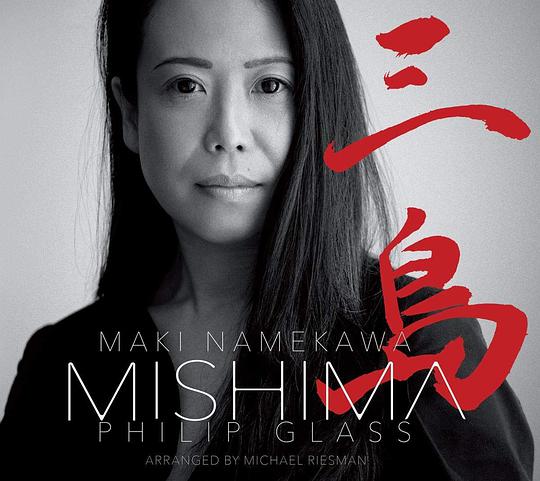
Mishima [音乐] 豆瓣
Maki Namekawa / Philip Glass 类型: 古典
发布日期 2018年9月7日 出版发行: Orange Mountain
On September 7th, 2018, Maki Namekawa premieres the piano version of Philip Glass’ soundtrack to Paul Schrader’s film MISHIMA – A Life in Four Chapters.
The 1985 film by Paul Schrader (Taxi Driver, American Gigolo), produced by Francis Ford Coppola, employs a highly stylized aesthetic to portray the life of the Japanese poet and three-time Nobel Prize nominee Yukio MISHIMA.
In 2018, Maki Namekawa recorded the piano version of the entire film score for MISHIMA – A Life in Four Chapters (Glass’ first Hollywood score), for the first time since the original soundtrack in 1985.
Namekawa’s performance features her crystal-clear technique, which corresponds perfectly to Glass’ music. Glass’ musical character-study of Mishima is consistent with his other “portrait operas” (Kepler, Einstein on the Beach).
Yukio MISHIMA’s meandering sexuality, his unusual intellect, his uncompromising artistic and political energy, and his erotic fascination with violent death set off a chain of events on November 25th, 1970 that led to a high-ranking General in the Japanese Self-Defense Forces being taken hostage by MISHIMA’s private army and then to MISHIMA’s death by harakiri.
Due to the decidedly negative reaction of MISHIMA’s family to the Schrader/Glass film, the film studio distanced itself and the film was not released in Japan. MISHIMA himself said he would only be understood in Japan after 50 or 100 years – even today, the honor paid to his art coexists with perplexity at his actions on the day of his death.
Philip Glass decided in 2014 that Maki Namekawa should be the first pianist to record his Complete Piano Etudes. The double CD was released in November 2014 and reached number 1 on the iTunes Classical Charts. Making the first recording of MISHIMA, as a Japanese pianist and with a piano arrangement crafted especially for her by Glass’ longtime musical director Michael Riesman, is a new high point in the collaboration between Namekawa and Glass.
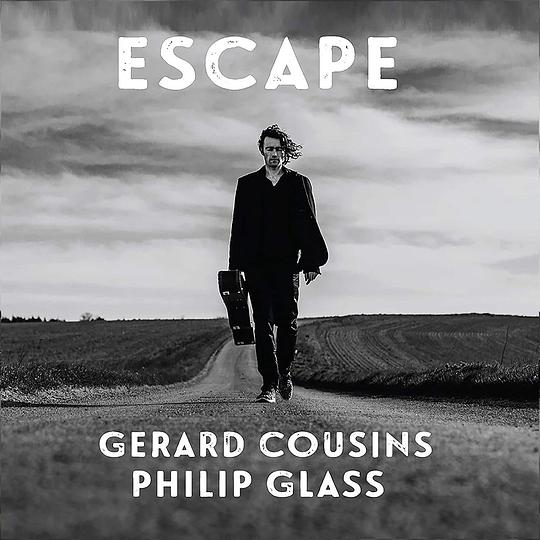
Philip Glass: Escape [音乐] 豆瓣
9.2 (5 个评分) Gerard Cousins / Philip Glass 类型: 古典
发布日期 2020年10月16日 出版发行: Orange Mountain Music
2020 release. Guitarist Gerard Cousins's Escape features arrangements for solo guitar of Philip Glass's best known music. Appropriately, Cousins starts with a flowing account of 'Opening', the first track from Glass's iconic 1983 album Glassworks, designed to introduce the public to the composer's music. Cousins follows the mood with four tracks from Glass's piano pieces Metamorphosis, the second of which, 'Metamorphosis No.2', became the basis for the piece 'Escape!' from the Oscar-nominated score to The Hours. The album concludes with 'Knee Play 2' from Glass's 1976 opera Einstein on the Beach, a landmark of 20th century theater, and finally 'Truman Sleeps' from Glass's Golden Globe-winning score to The Truman Show.
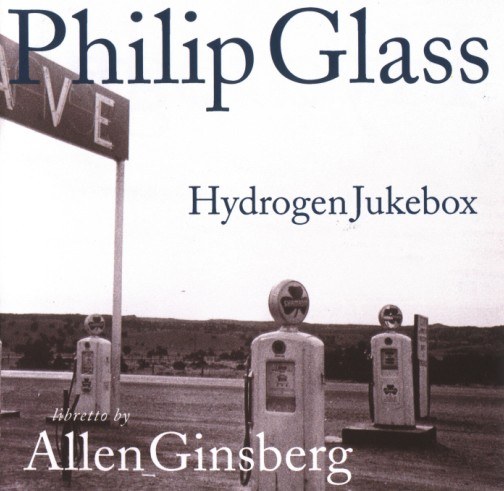
Hydrogen Jukebox [音乐] 豆瓣
Philip Glass / Allen Ginsberg 类型: 流行
发布日期 1993年10月26日 出版发行: Nonesuch
Irwin Allen Ginsberg was an American poet and writer. As a student at Columbia University in the 1940s, he began friendships with William S. Burroughs and Jack Kerouac, forming the core of the Beat Generation.
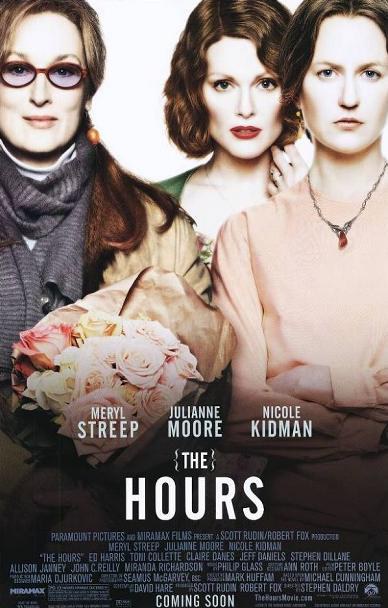
时时刻刻 [音乐] 豆瓣
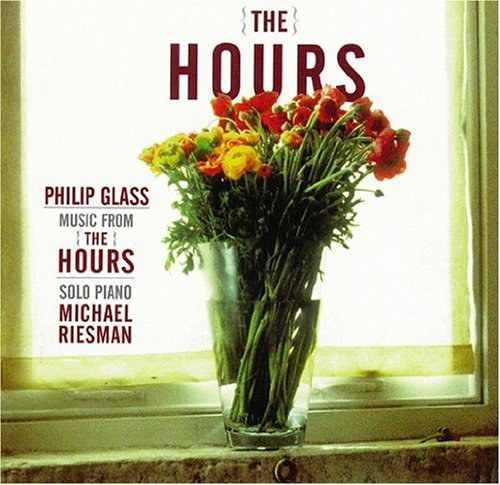
9.9 (14 个评分) Philip Glass 类型: 原声
发布日期 2002年12月10日 出版发行: 华纳国际音乐
How better to score a movie that takes place in three tangentially related time periods than with music that strives for timelessness? The hallmarks of Philip Glass´s minimalism serve The Hours well. The film, based on Michael Cunningham´s novel, tells the stories of three women--Virginia Woolf in the early 1920s, a housewife just after World War II, and a book editor in the present--whose days relate in different ways to Woolf´s novel Mrs. Dalloway. Yet rather than construct a sonic montage of these three time periods (perhaps some Ravel for Woolf, some Max Steiner for the housewife, some Enya for the editor), Hours producer Scott Rudin turned to Glass, a contemporary-classical composer who has had a substantial side career in film, most notably with Koyaanisqatsi. The familiar Glass sounds--the endlessly layered violins, the static melodies, the glacial rhythms--all lend a consistent aural foundation to a story that moves fluidly back and forth in time. The music is scored for orchestra, string quartet, and piano. Those plentiful strings lend a thick cushion, a triumph of tonal suspension, for the piano part, which Michael Riesman plays coolly, emphasizing what are often single notes separated by thoughtful silences, as well as short sets of scales cascading in slow motion. Not only will these compositional themes be familiar to fans of Glass´s work, so too will several of the melodies. Some sections of the score are derived from his albums Glassworks and Solo Piano and from his opera Satyagraha--which, incidentally, involved the stories of three legendary men active in different eras.