Oscar Wilde — Author (130)
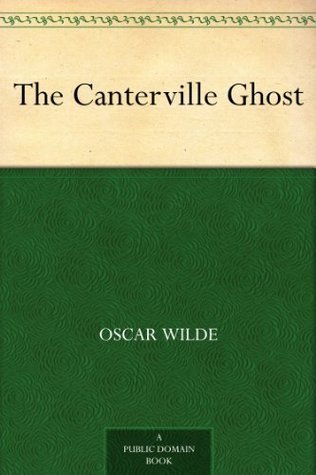
The Canterville Ghost [Book] Goodreads
author: Oscar Wilde 2012 - 5
This is Oscar Wilde's tale of the American family moved into a British mansion, Canterville Chase, much to the annoyance of its tired ghost. The family -- which refuses to believe in him -- is in Wilde's way a commentary on the British nobility of the day -- and on the Americans, too. The tale, like many of Wilde's, is rich with allusion, but ends as sentimental romance...
De Profundis [Book] Goodreads
author: Oscar Wilde 2011 - 3
This book was converted from its physical edition to the digital format by a community of volunteers. You may find it for free on the web. Purchase of the Kindle edition includes wireless delivery.
Oscar Wilde: The Importance of Being Earnest [Book] Goodreads
author: Oscar Wilde / James Marsters publishing house: L.A. Theatre Works 2009 - 11
This final play from the pen of Oscar Wilde is a stylish send-up of Victorian courtship and manners, complete with assumed names, mistaken lovers, and a lost handbag.
Listening Length 1 hour and 58 minutes

Jack and Algernon are best friends, both wooing ladies who think their names are Ernest, "that name which inspires absolute confidence". Wilde's effervescent wit, scathing social satire, and high farce make this one of the most cherished plays in the English language.

Includes an interview with director Michael Hackett, professor of Theater in the School of Theater, Film and Television at UCLA.

An L.A. Theatre Works full cast performance featuring:
James Marsters as Jack
Charles Busch as Lady Bracknell
Emily Bergl as Cecily
Neil Dickson as Lane and Merriman
Jill Gascoine as Miss Prism
Christopher Neame as Chasuble
Matthew Wolf as Algernon
Sarah Zimmerman as Gwendolen

Directed by Michael Hackett. Recorded before a live audience at the Skirball Cultural Center, Los Angeles.
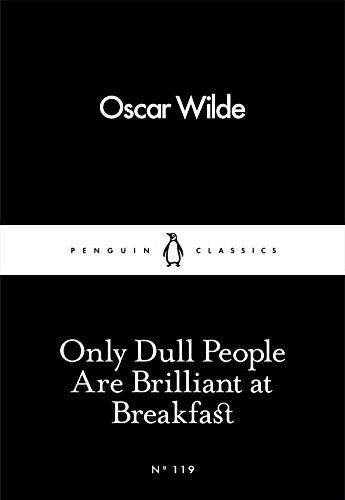
Only Dull People Are Brilliant at Breakfast [Book] Google Books
author: Oscar Wilde publishing house: Penguin UK 2016 - 03
'It would be unfair to expect other people to be as remarkable as oneself'

Wilde's celebrated witticisms on the dangers of sincerity, duplicitous biographers, the stupidity of the English - and his own genius.

One of 46 new books in the bestselling Little Black Classics series, to celebrate the first ever Penguin Classic in 1946. Each book gives readers a taste of the Classics' huge range and diversity, with works from around the world and across the centuries - including fables, decadence, heartbreak, tall tales, satire, ghosts, battles and elephants.
The Importance of Being Earnest [Book] Google Books
author: Oscar Wilde publishing house: L. Smithers 1899
Subtitled “A Trivial Comedy for Serious People,” Wilde’s play is a brilliantly satirical comedy of manners, sending up the absurdity of Victorian social mores and cleverly critiquing the conventions of love and marriage. The tale of two gentlemen who adopt fictitious identities in order to woo the objects of their affections is Wilde’s most beloved work, considered to be one of the wittiest plays ever written in English. The glowing critical reception in London on opening night at the St. James Theater in 1895 marked the high point of Wilde’s career as a writer.
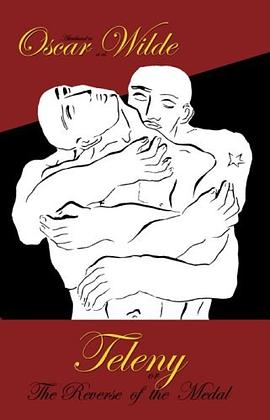
Teleny or The Reverse of the Medal [Book] Douban
author: [美] Anonymous / Oscar Wilde publishing house: Mondial 2006 - 3
The homoerotic novel Teleny is an important antithesis to the prudish idealism of the neo-classic and neo-romantic lyric love poetry of the fin du siecle. It is a work of unmasking the cynical double moral standards of the Victorian era: The love of Camille and Teleny is shattered by social reprisals. The book was published in 1893 in 200 copies by Leonard Smithers who praised it as being "the most powerful and cleverly written erotic romance which has appeared in the English language" during that era, "a book that will certainly rank as the chief of its class."
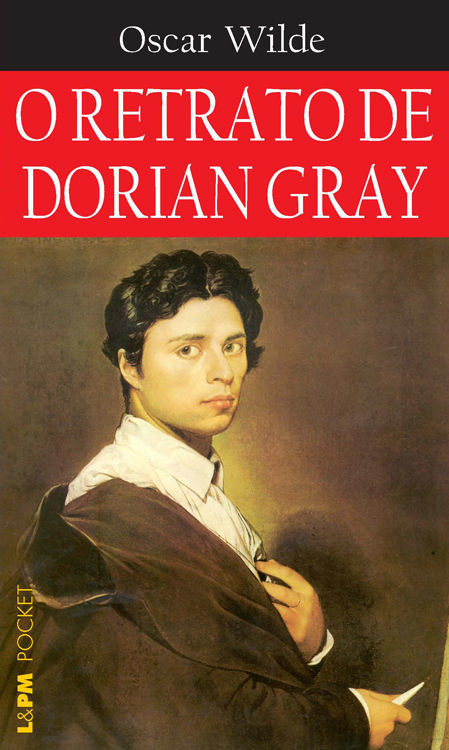
O Retrato de Dorian Gray [Book] Goodreads Eggplant.place
The Picture of Dorian Gray
author: Oscar Wilde translator: José Eduardo Ribeiro Moretzsohn publishing house: L&PM 2001 - 1
"O retrato de Dorian Gray", o único romance de Oscar Wilde, desde seu lançamento numa versão mais curta no Lippincott’s Magazine (1890), provocou reações simultâneas de ira e admiração entusiástica. Como desafio, resolveu publicar Dorian Gray em livro, acrescentando-lhe o prefácio e novos capítulos. A primeira edição saiu em abril de 1891. Escreveu ainda "O príncipe feliz" (1880), as pequenas novelas "O crime de lorde Arthur Savile" e "O fantasma de Canterville", e a peça "A importância de ser prudente", entre outras obras. Na prisão escreveu as obras "A Balada do Cárcere de Reading" e "De Profundis", cuja versão integral só apareceu em 1962.
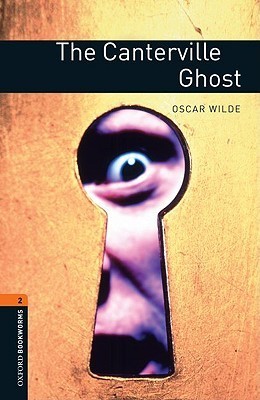
The Canterville Ghost [Book] Goodreads
author: John Escott / Oscar Wilde publishing house: Oxford University Press 2008 - 3
There has been a ghost in the house for three hundred years, and Lord Canterville's family have had enough of it. So Lord Canterville sells his grand old house to an American family. Mr Hiram B. Otis is happy to buy the house and the ghost - because of course Americans don't believe in ghosts. The Canterville ghost has great plans to frighten the life out of the Otis family. But Americans don't frighten easily - especially not two noisy little boys - and the poor ghost has a few surprises waiting for him.
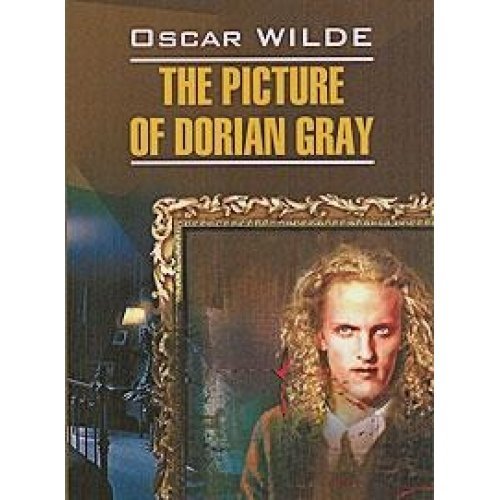
The Portrait of Dorian Gray [Book] Goodreads
author: Oscar Wilde publishing house: Sankt-Peterbyrg : KARO 2010 - 1
In this celebrated work, his only novel, Wilde forged a devastating portrait of the effects of evil and debauchery on a young aesthete in late-19th-century England. Combining elements of the Gothic horror novel and decadent French fiction, the book centers on a striking premise: As Dorian Gray sinks into a life of crime and gross sensuality, his body retains perfect youth and vigor while his recently painted portrait grows day by day into a hideous record of evil, which he must keep hidden from the world. For over a century, this mesmerizing tale of horror and suspense has enjoyed wide popularity. It ranks as one of Wilde's most important creations and among the classic achievements of its kind.
The Picture of Dorian Gray [Book] Goodreads Eggplant.place
author: Oscar Wilde publishing house: Digireads.com 2005 - 1
"The Picture of Dorian Gray" is Oscar Wilde's classic tale of the moral decline of its title character, Dorian Gray. When Dorian has his portrait painted by Basil Hallward and wishes that he would stay young while his picture changes, his wish comes true. In exchange for this Dorian gives up his soul and as he ages the bad deeds that he commits are reflected in his painting and not him. "The Picture of Dorian Gray", arguably Wilde's most popular work, was considered quite scandalous when it was first published in the late 1800s in Victorian England.
Only Dull People Are Brilliant at Breakfast [Book] Goodreads
author: Oscar Wilde publishing house: Penguin 2016 - 3
'It would be unfair to expect other people to be as remarkable as oneself'Wilde's celebrated witticisms on the dangers of sincerity, duplicitous biographers, the stupidity of the English - and his own genius. One of 46 new books in the bestselling Little Black Classics series, to celebrate the first ever Penguin Classic in 1946. Each book gives readers a taste of the Classics' huge range and diversity, with works from around the world and across the centuries - including fables, decadence, heartbreak, tall tales, satire, ghosts, battles and elephants.
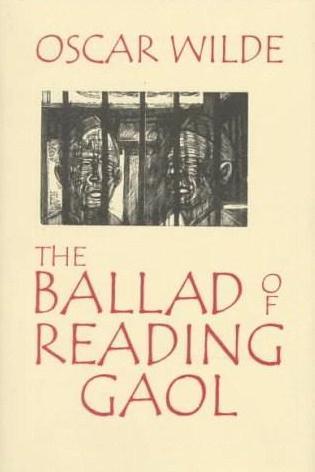
The Ballad of Reading Gaol [Book] Goodreads
author: Oscar Wilde / Garrick Palmer publishing house: Trafalgar Square Pub 1998 - 1
This dramatically illustrated collector's edition marks the centenary of Oscar Wilde's release from prison in 1898 and the publication of his anguished poetic masterpiece. One hundred years after his release from Reading Gaol, the life and work of Oscar Wilde has lost none of its fascination. In his day, his wit and writings enchanted and scandalized society in equal measure; his downfall came at the height of his powers. Devastated by his notorious trial for indecency, imprisoned for ``homosexual offenses,'' he was to spend two ruinous years in solitary confinement. As he was later to tell Andre Gide, Reading Gaol ``was not fit for dogs. I thought I would go mad.'' The Ballad was written from personal experience, and there was to be no more writing after this. As Wilde observed: ``Something is killed in me.'' Bankrupt, disgraced, and in exile, Wilde was to die not long after his release at the age of 46. His final resting place is the cemetery of Pere Lachaise in Paris. His tomb bears an inscription from The Ballad of Reading Gaol: ``And alien tears will fill for him/Pity's long broken urn/For his mourners will be outcast men/And outcasts always mourn.'' This commemorative edition of the poem is illustrated with the powerfully moving wood engravings of Garrick Palmer. 48 pp 5 x 8 8 wood engravings
The Star-Child [Book] Goodreads
author: Oscar Wilde publishing house: Harper Perennial 2009 - 4
Playwright, poet, essayist, flamboyant man-about-town, Oscar Wilde pack an astonishing amount of work, genius, and controversy into two short decades, producing masterworks in every literary genre. This selection includes almost all of his short stories, including "The Canterville Ghost," "The Fisherman and his Soul," and "The Remarkable Rocket."

Alongside THE MODEL MILLIONAIRE, Harper Perennial will publish the short fiction of Fyodor Dostoevsky, Herman Melville, Willa Cather, Leo Tolstoy, and Stephen Crane to be packaged in a beautifully designed, boldly colorful boxset in the aim to attract contemporary fans of short fiction to these revered masters of the form. Also, in each of these selections will appear a story from one of the new collections being published in the "Summer of the Short Story." A story from Simon Van Booy's forthcoming collection, LOVE BEGINS IN WINTER, will be printed at the back of this volume.
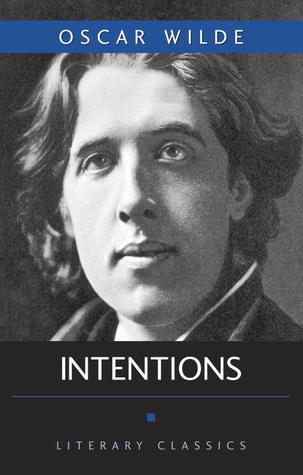
Intentions [Book] Goodreads
author: Oscar Wilde / Percival Pollard publishing house: Prometheus Books 2004 - 6
Originally published in 1891 when Wilde was at the height of his form, these brilliant essays on art, literature, criticism, and society display the flamboyant poseur’s famous wit and wide learning. A leading spokesman for the English Aesthetic movement, Wilde promoted "art for art’s sake" against critics who argued that art must serve a moral purpose. On every page of this collection the gifted literary stylist admirably demonstrates not only that the characteristics of art are "distinction, charm, beauty, and imaginative power," but also that criticism itself can be raised to an art form possessing these very qualities.
In the opening essay, Wilde laments the "decay of Lying as an art, a science, and a social pleasure." He takes to task modern literary realists like Henry James and Emile Zola for their "monstrous worship of facts" and stifling of the imagination. What makes art wonderful, he says, is that it is "absolutely indifferent to fact, [art] invents, imagines, dreams, and keeps between herself and reality the impenetrable barrier of beautiful style, of decorative or ideal treatment."
The next essay, "Pen, Pencil, and Poison," is a fascinating literary appreciation of the life of Thomas Griffiths Wainewright, a talented painter, art critic, antiquarian, friend of Charles Lamb, and — murderer.
The heart of the collection is the long two-part essay titled "The Critic as Artist." In one memorable passage after another, Wilde goes to great lengths to show that the critic is every bit as much an artist as the artist himself, in some cases more so. A good critic is like a virtuoso interpreter: "When Rubinstein plays … he gives us not merely Beethoven, but also himself, and so gives us Beethoven absolutely…made vivid and wonderful to us by a new and intense personality. When a great actor plays Shakespeare we have the same experience."
Finally, in "The Truth of Masks," Wilde returns to the theme of art as artifice and creative deception. This essay focuses on the use of masks, disguises, and costume in Shakespeare.
For newcomers to Wilde and those who already know his famous plays and fiction, this superb collection of his criticism offers many delights.

The introduction is by Percival Pollard New York, July, 1905.
El príncipe feliz [Book] Goodreads
author: Oscar Wilde publishing house: Panamericana Pub Llc 2003 - 2
Esta colección de cuentos clásicos deleitará tanto a los niños como a los adultos. Las adaptaciones accesibles, ilustraciones vibrantes y formas troqueladas proveerán horas de lectura, diversión y vinculación.
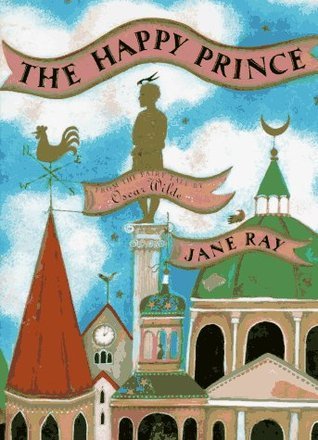
The Happy Prince [Book] Goodreads
author: Oscar Wilde / Jane Ray publishing house: Dutton Juvenile 1995 - 1
When he was alive, the Happy Prince lived in the Palace of Sans Souci, where sorrow was not allowed to enter, and where he knew only pleasure.

Now, a gilded statute set atop a high column, he can see all the wretchedness of the poor, the sick and the lonely who inhabit the great city where he stands.

A swallow, hurrying to reach the warmth of Egypt before winter sets in, stops to rest between the feet of the Happy Prince. He is moved by the prince's description of the helplessness and hopelessness he sees all around him, and agrees to stay with the prince and to assist him in bringing comfort to those in need.

This story of sacrifice and redemption is a parable for our time, as it was for that time more than a hundred years ago when Oscar Wilde first published this moving tale.


Oscar Wilde
(1854–1900) was an Irish writer of great wit and talent who was born Oscar Fingall O'Flahertie Wills Wilde in 1854. He wrote a number of tales for children, but is perhaps best known for his 'Dorian Gray' (1890) , 'Lady Windermere's Fan' (1892) , 'The Importance of Being Earnest' (1895) and 'The Ballad of Reading Gaol' (1896) . Wilde died in Paris in 1900.
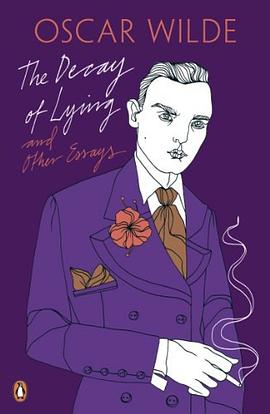
The Decay of Lying [Book] Douban
author: Oscar Wilde publishing house: Penguin Classics 2010 - 4
Perfect version for academic research and collection!
It contains the four essays from "Intention", which are The Decay of Lying; The Critic as Artist; Pen, Pencil, and Poison; The Truth of Masks.
Additionally, The Portrait of Mr W.H; The Soul of Man under Socialism; The Relation of Dress to Art; A Sentimental Journey through Literature; and In Defence of Dorian Gray are also included.
In "The Decay of Lying", Oscar Wilde uses his decadent ideology in an attempt to reverse and therefore reject his audiences' 'normal' conceptualizations of nature, art and morality. Wilde's views of life and art are illustrated through the use of Platonic dialogue where the character Vivian takes on the persona of Wilde. Wilde's goal is to subvert the norm by reversing its values. Wilde suggests to us that society is wrong, not him. Calling on diverse examples - from Ancient Greek sculpture to contemporary paintings - Oscar Wilde's brilliant essay creates a witty, paradoxical world in which the only art worth loving is that built on complete untruths.
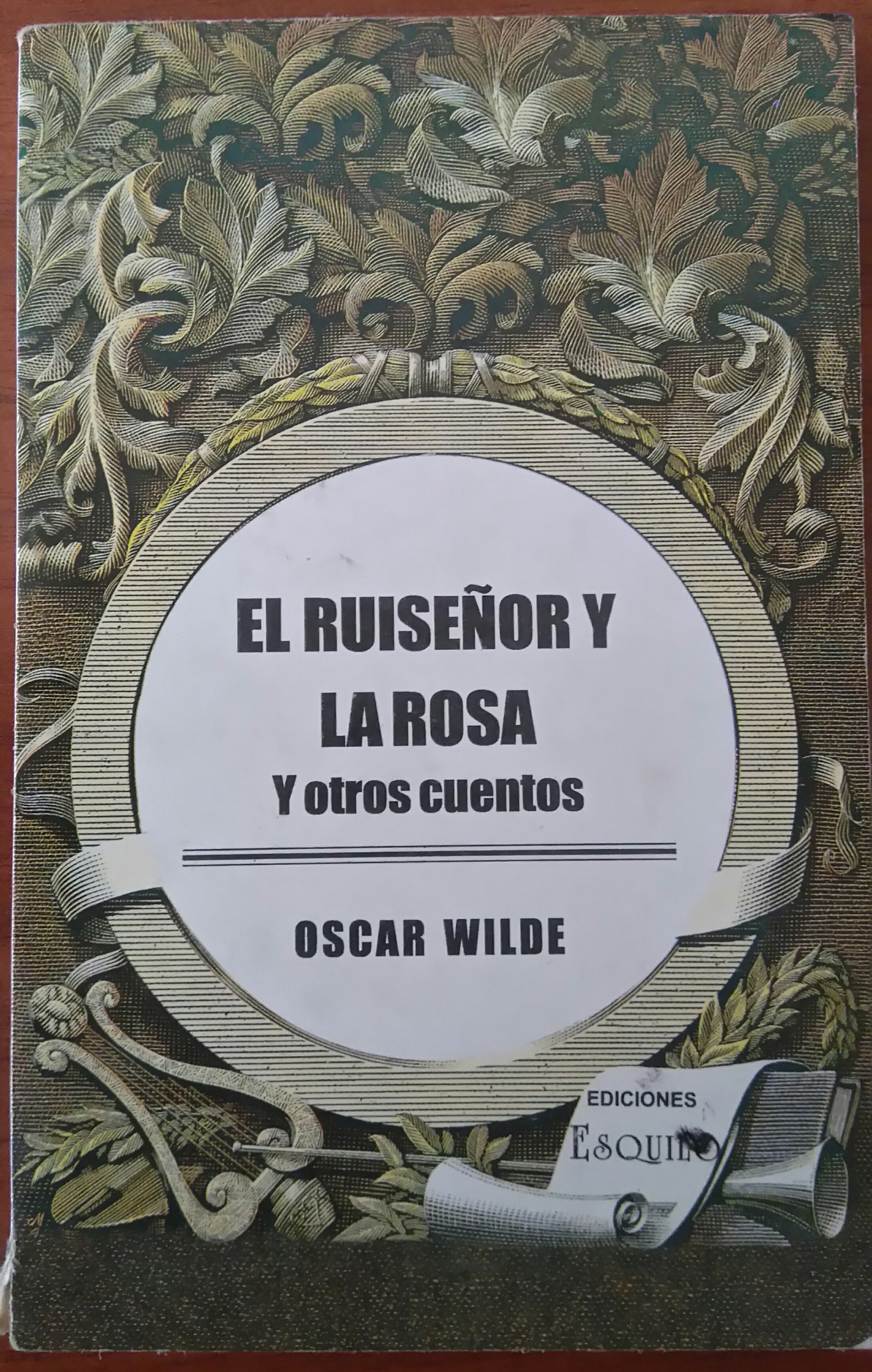
El Ruiseñor y la Rosa y Otros Cuentos [Book] Goodreads
author: Oscar Wilde / Elizabeth Galindo publishing house: Ediciones Esquilo 2003 - 7
El Ruiseñor y la Rosa: mientras el ruiseñor se entrega a la muerte por culto al amor, el estudiante sólo vive un capricho que cambia de dirección al primer desplante.
El Fantasma de Canterville: el fantasma "enhuesa" las nobles tradiciones pero es vejado, encarnecido y maltratado por las jugarretas de niños de costumbres modernas.
El Príncipe Feliz: contrasta la apariencia externa de lujo y alegría con la delicadeza y el dolor interno.
El Gigante Egoísta: enfrenta las contradicciones entre el egoísmo (invierno) y la generosidad (primavera). La fuerza del niño pequeño que abate el egoísmo del gigante y la grandeza de este, solo cuando se hace sencillo y generoso.
Pluma, Lápiz y Veneno: cuento extraordinario donde uno puede aprender a comprender y leer las pinturas y otras obras de arte. Se dice que de cada cuadro uno puede escribir un poema.
The Critic as Artist: (annotated) [Book] Goodreads
author: Oscar Wilde publishing house: Ediciones74 2014 - 6
The Critic as Artist is an essay by Oscar Wilde, containing the most extensive statements of his aesthetic philosophy. A dialogue in two parts, it is by far the longest one included in his collection of essays titled Intentions published in May 1891. The Critic as Artist is a significantly revised version of articles that first appeared in the July and September issues of The Nineteenth Century, originally entitled The True Function and Value of Criticism. The essay is a conversation between its leading voice Gilbert and Ernest, who suggests ideas for Gilbert to reject.

The essay sets to collapse the distinction between fine art and criticism cherished by artists and critics such as Matthew Arnold and James Abbott McNeill Whistler - only critical faculty enables any artistic creation at all, while criticism is independent of the object it criticises and not necessarily subject to it. The essay champions contemplative life to the life of action. According to Gilbert, scientific principle of heredity shows we are never less free, never have more illusions than when we try to act with some conscious aim in mind. Critical contemplation is guided by conscious aesthetic sense as well as by the soul. The soul is wiser than we are, writes Wilde, it is the concentrated racial experience revealed by the imagination. Criticism is above reason, sincerity and fairness; it is necessarily subjective. It is increasingly more to criticism than to creation that future belongs as its subject matter and the need to impose form on chaos constantly increases. It is criticism rather than emotional sympathies, abstract ethics or commercial advantages that would make us cosmopolitan and serve as the basis of peace.