Plácido Domingo — 演员 (39)
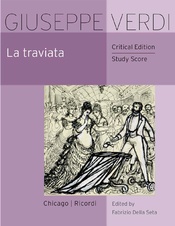
茶花女 2019年英国皇家歌剧团版 [演出] 豆瓣
所属 演出: 茶花女
语言: italian 意大利语 剧团: Orchestra of the Royal Opera House 英国皇家歌剧院管弦乐团 ; Royal Opera Chorus 英国皇家歌剧团合唱团 剧院: Royal Opera House, Covent Garden 考文特花园皇家歌剧院 导演: Richard Eyre / Andrew Sinclair
其它标题: 2019年英国皇家歌剧团版 编剧: Francesco Maria Piave 作曲: Giuseppe Verdi 演员: Ermonela Jaho / Charles Castronovo
Place: Paris and its vicinity
Time: Beginning of the 19th century
Act 1
The salon in Violetta's house
Violetta Valéry, a famed courtesan, throws a lavish party at her Paris salon to celebrate her recovery from an illness. Gastone, a viscount, has brought with him a friend, Alfredo Germont, a young bourgeois from a provincial family who has long adored Violetta from afar. While walking to the salon, Gastone tells Violetta that Alfredo loves her, and that while she was ill, he came to her house every day. Alfredo joins them, admitting the truth of Gastone's remarks.
Baron Douphol, Violetta's current lover, waits nearby to escort her to the salon; once there, the Baron is asked to give a toast, but refuses, and the crowd turns to Alfredo, who agrees to sing a brindisi – a drinking song (Alfredo, Violetta, chorus: Libiamo ne' lieti calici – "Let's drink from the joyful cups").
From the next room, the sound of the orchestra is heard and the guests move there to dance. After a series of severe coughs and almost fainting, Violetta begins to feel dizzy and asks her guests to go ahead and to leave her to rest until she recovers. While the guests dance in the next room, Violetta looks at her pale face in her mirror. Alfredo enters and expresses his concern for her fragile health, later declaring his love for her (Alfredo, Violetta: Un dì, felice, eterea – "One day, happy and ethereal"). At first, she rejects him because his love means nothing to her, but there is something about Alfredo that touches her heart. He is about to leave when she gives him a flower, telling him to return it when it has wilted, which will be the very next day.
After the guests leave, Violetta wonders if Alfredo could actually be the one in her life (Violetta: È strano! ... Ah, fors' è lui – "Ah, perhaps he is the one"). But she concludes that she needs freedom to live her life (Violetta, Alfredo: Sempre libera – "Always free"). From off stage, Alfredo's voice is heard singing about love as he walks down the street.
Act 2
Scene 1: Violetta's country house outside Paris
Three months later, Alfredo and Violetta are living together in a peaceful country house outside Paris. Violetta has fallen in love with Alfredo and she has completely abandoned her former life. Alfredo sings of their happy life together (Alfredo: De' miei bollenti spiriti / Il giovanile ardore – "The youthful ardor of my ebullient spirits"). Annina, the maid, arrives from Paris, and, when questioned by Alfredo, tells him that she went there to sell the horses, carriages and everything owned by Violetta to support their country lifestyle.
Alfredo is shocked to learn this and leaves for Paris immediately to settle matters himself. Violetta returns home and receives an invitation from her friend, Flora, to a party in Paris that evening. Alfredo's father, Giorgio Germont, is announced and demands that she break off her relationship with his son for the sake of his family, since he reveals that Violetta's relationship with Alfredo has threatened his daughter's engagement (Giorgio: Pura siccome un angelo, Iddio mi diè una figlia – "Pure as an angel, God gave me a daughter") because of Violetta's reputation. Meanwhile, he reluctantly becomes impressed by Violetta's nobility, something which he did not expect from a courtesan. She responds that she cannot end the relationship because she loves him so much, but Giorgio pleads with her for the sake of his family. With growing remorse, she finally agrees (Violetta, Giorgio: Dite alla giovine, sì bella e pura, – "Tell the young girl, so beautiful and pure,") and says goodbye to Giorgio. In a gesture of gratitude for her kindness and sacrifice, Giorgio kisses her forehead before leaving her weeping alone.
Violetta gives a note to Annina to send to Flora accepting the party invitation and, as she is writing a farewell letter to Alfredo, he enters. She can barely control her sadness and tears; she tells him repeatedly of her unconditional love (Violetta: Amami, Alfredo, amami quant'io t'amo – "Love me, Alfredo, love me as I love you"). Before rushing out and setting off for Paris, she hands the farewell letter to her servant to give to Alfredo.
Soon, the servant brings the letter to Alfredo and, as soon as he has read it, Giorgio returns and attempts to comfort his son, reminding him of his family in Provence (Giorgio: Di Provenza il mar, il suol chi dal cor ti cancellò? – "Who erased the sea, the land of Provence from your heart?"). Alfredo suspects that the Baron is behind his separation with Violetta, and the party invitation, which he finds on the desk, strengthens his suspicions. He decides to confront Violetta at the party. Giorgio tries to stop Alfredo, but he rushes out.
Scene 2: Party at Flora's house
At the party, the Marquis tells Flora that Violetta and Alfredo have separated, much to the amazement of everyone who had previously seen the happy couple. She calls for the entertainers to perform for the guests (Chorus: Noi siamo zingarelle venute da lontano – "We are gypsy girls who have come from afar"; Di Madride noi siam mattadori – "We are matadors from Madrid"). Gastone and his friends join the matadors and sing (Gastone, chorus, dancers: È Piquillo un bel gagliardo Biscaglino mattador – "Piquillo is a bold and handsome matador from Biscay").
Violetta arrives with Baron Douphol. They see Alfredo at the gambling table. When he sees them, Alfredo loudly proclaims that he will take Violetta home with him. Feeling annoyed, the Baron goes to the gambling table and joins him in a game. As they bet, Alfredo wins some large sums until Flora announces that supper is ready. Alfredo leaves with handfuls of money.
As everyone is leaving the room, Violetta has asked Alfredo to see her. Fearing that the Baron's anger will lead him to challenge Alfredo to a duel, she gently asks Alfredo to leave. Alfredo misunderstands her apprehension and demands that she admit that she loves the Baron. In grief, she makes that admission and, furiously, Alfredo calls the guests to witness what he has to say (Questa donna conoscete? – "You know this woman?"). He humiliates and denounces Violetta in front of the guests and then throws his winnings at her feet in payment for her services. She faints onto the floor. The guests reprimand Alfredo: Di donne ignobile insultatore, di qua allontanati, ne desti orror! ("Ignoble insulter of women, go away from here, you fill us with horror!").
In search of his son, Giorgio enters the hall and, knowing the real significance of the scene, denounces his son's behavior (Giorgio, Alfredo, Violetta, chorus: Di sprezzo degno sè stesso rende chi pur nell'ira la donna offende. – "A man, who even in anger, offends a woman renders himself deserving of contempt.").
Flora and the ladies attempt to persuade Violetta to leave the dining room, but Violetta turns to Alfredo: Alfredo, Alfredo, di questo core non puoi comprendere tutto l'amore... – "Alfredo, Alfredo, you can't understand all the love in this heart...".
Act 3
Violetta's bedroom
Dr. Grenvil tells Annina that Violetta will not live long since her tuberculosis has worsened. Alone in her room, Violetta reads a letter from Alfredo's father telling her that the Baron was only wounded in his duel with Alfredo. He has informed Alfredo of the sacrifice she has made for him and his sister; and that he is sending his son to see her as quickly as possible to ask for her forgiveness. But Violetta senses it is too late (Violetta: Addio, del passato bei sogni ridenti – "Farewell, lovely, happy dreams of the past").
Annina rushes in the room to tell Violetta of Alfredo's arrival. The lovers are reunited and Alfredo suggests that they leave Paris (Alfredo, Violetta: Parigi, o cara, noi lasceremo – "We will leave Paris, O beloved").
But it is too late: she knows her time is up (Alfredo, Violetta: Gran Dio!...morir sì giovane – "Great God!...to die so young"). Alfredo's father enters with the doctor, regretting what he has done. After singing a duet with Alfredo, Violetta suddenly revives, exclaiming that the pain and discomfort have left her. A moment later, she dies in Alfredo's arms.

茶花女 2019年大都会歌剧团版 [演出] 豆瓣
所属 演出: 茶花女
语言: italian 意大利语 剧团: Metropolitan Opera Orchestra 大都会歌剧团管弦乐团 ; Metropolitan Opera Chorus 大都会歌剧团合唱团 ; Metropolitan Opera Ballet 大都会歌剧团芭蕾舞团 剧院: Metropolitan Opera House 大都会歌剧院 导演: Michael Mayer
其它标题: 2019年大都会歌剧团版 编剧: Francesco Maria Piave 作曲: Giuseppe Verdi 演员: Anita Hartig / Stephen Costello
Place: Paris and its vicinity
Time: Beginning of the 19th century
Act 1
The salon in Violetta's house
Violetta Valéry, a famed courtesan, throws a lavish party at her Paris salon to celebrate her recovery from an illness. Gastone, a viscount, has brought with him a friend, Alfredo Germont, a young bourgeois from a provincial family who has long adored Violetta from afar. While walking to the salon, Gastone tells Violetta that Alfredo loves her, and that while she was ill, he came to her house every day. Alfredo joins them, admitting the truth of Gastone's remarks.
Baron Douphol, Violetta's current lover, waits nearby to escort her to the salon; once there, the Baron is asked to give a toast, but refuses, and the crowd turns to Alfredo, who agrees to sing a brindisi – a drinking song (Alfredo, Violetta, chorus: Libiamo ne' lieti calici – "Let's drink from the joyful cups").
From the next room, the sound of the orchestra is heard and the guests move there to dance. After a series of severe coughs and almost fainting, Violetta begins to feel dizzy and asks her guests to go ahead and to leave her to rest until she recovers. While the guests dance in the next room, Violetta looks at her pale face in her mirror. Alfredo enters and expresses his concern for her fragile health, later declaring his love for her (Alfredo, Violetta: Un dì, felice, eterea – "One day, happy and ethereal"). At first, she rejects him because his love means nothing to her, but there is something about Alfredo that touches her heart. He is about to leave when she gives him a flower, telling him to return it when it has wilted, which will be the very next day.
After the guests leave, Violetta wonders if Alfredo could actually be the one in her life (Violetta: È strano! ... Ah, fors' è lui – "Ah, perhaps he is the one"). But she concludes that she needs freedom to live her life (Violetta, Alfredo: Sempre libera – "Always free"). From off stage, Alfredo's voice is heard singing about love as he walks down the street.
Act 2
Scene 1: Violetta's country house outside Paris
Three months later, Alfredo and Violetta are living together in a peaceful country house outside Paris. Violetta has fallen in love with Alfredo and she has completely abandoned her former life. Alfredo sings of their happy life together (Alfredo: De' miei bollenti spiriti / Il giovanile ardore – "The youthful ardor of my ebullient spirits"). Annina, the maid, arrives from Paris, and, when questioned by Alfredo, tells him that she went there to sell the horses, carriages and everything owned by Violetta to support their country lifestyle.
Alfredo is shocked to learn this and leaves for Paris immediately to settle matters himself. Violetta returns home and receives an invitation from her friend, Flora, to a party in Paris that evening. Alfredo's father, Giorgio Germont, is announced and demands that she break off her relationship with his son for the sake of his family, since he reveals that Violetta's relationship with Alfredo has threatened his daughter's engagement (Giorgio: Pura siccome un angelo, Iddio mi diè una figlia – "Pure as an angel, God gave me a daughter") because of Violetta's reputation. Meanwhile, he reluctantly becomes impressed by Violetta's nobility, something which he did not expect from a courtesan. She responds that she cannot end the relationship because she loves him so much, but Giorgio pleads with her for the sake of his family. With growing remorse, she finally agrees (Violetta, Giorgio: Dite alla giovine, sì bella e pura, – "Tell the young girl, so beautiful and pure,") and says goodbye to Giorgio. In a gesture of gratitude for her kindness and sacrifice, Giorgio kisses her forehead before leaving her weeping alone.
Violetta gives a note to Annina to send to Flora accepting the party invitation and, as she is writing a farewell letter to Alfredo, he enters. She can barely control her sadness and tears; she tells him repeatedly of her unconditional love (Violetta: Amami, Alfredo, amami quant'io t'amo – "Love me, Alfredo, love me as I love you"). Before rushing out and setting off for Paris, she hands the farewell letter to her servant to give to Alfredo.
Soon, the servant brings the letter to Alfredo and, as soon as he has read it, Giorgio returns and attempts to comfort his son, reminding him of his family in Provence (Giorgio: Di Provenza il mar, il suol chi dal cor ti cancellò? – "Who erased the sea, the land of Provence from your heart?"). Alfredo suspects that the Baron is behind his separation with Violetta, and the party invitation, which he finds on the desk, strengthens his suspicions. He decides to confront Violetta at the party. Giorgio tries to stop Alfredo, but he rushes out.
Scene 2: Party at Flora's house
At the party, the Marquis tells Flora that Violetta and Alfredo have separated, much to the amazement of everyone who had previously seen the happy couple. She calls for the entertainers to perform for the guests (Chorus: Noi siamo zingarelle venute da lontano – "We are gypsy girls who have come from afar"; Di Madride noi siam mattadori – "We are matadors from Madrid"). Gastone and his friends join the matadors and sing (Gastone, chorus, dancers: È Piquillo un bel gagliardo Biscaglino mattador – "Piquillo is a bold and handsome matador from Biscay").
Violetta arrives with Baron Douphol. They see Alfredo at the gambling table. When he sees them, Alfredo loudly proclaims that he will take Violetta home with him. Feeling annoyed, the Baron goes to the gambling table and joins him in a game. As they bet, Alfredo wins some large sums until Flora announces that supper is ready. Alfredo leaves with handfuls of money.
As everyone is leaving the room, Violetta has asked Alfredo to see her. Fearing that the Baron's anger will lead him to challenge Alfredo to a duel, she gently asks Alfredo to leave. Alfredo misunderstands her apprehension and demands that she admit that she loves the Baron. In grief, she makes that admission and, furiously, Alfredo calls the guests to witness what he has to say (Questa donna conoscete? – "You know this woman?"). He humiliates and denounces Violetta in front of the guests and then throws his winnings at her feet in payment for her services. She faints onto the floor. The guests reprimand Alfredo: Di donne ignobile insultatore, di qua allontanati, ne desti orror! ("Ignoble insulter of women, go away from here, you fill us with horror!").
In search of his son, Giorgio enters the hall and, knowing the real significance of the scene, denounces his son's behavior (Giorgio, Alfredo, Violetta, chorus: Di sprezzo degno sè stesso rende chi pur nell'ira la donna offende. – "A man, who even in anger, offends a woman renders himself deserving of contempt.").
Flora and the ladies attempt to persuade Violetta to leave the dining room, but Violetta turns to Alfredo: Alfredo, Alfredo, di questo core non puoi comprendere tutto l'amore... – "Alfredo, Alfredo, you can't understand all the love in this heart...".
Act 3
Violetta's bedroom
Dr. Grenvil tells Annina that Violetta will not live long since her tuberculosis has worsened. Alone in her room, Violetta reads a letter from Alfredo's father telling her that the Baron was only wounded in his duel with Alfredo. He has informed Alfredo of the sacrifice she has made for him and his sister; and that he is sending his son to see her as quickly as possible to ask for her forgiveness. But Violetta senses it is too late (Violetta: Addio, del passato bei sogni ridenti – "Farewell, lovely, happy dreams of the past").
Annina rushes in the room to tell Violetta of Alfredo's arrival. The lovers are reunited and Alfredo suggests that they leave Paris (Alfredo, Violetta: Parigi, o cara, noi lasceremo – "We will leave Paris, O beloved").
But it is too late: she knows her time is up (Alfredo, Violetta: Gran Dio!...morir sì giovane – "Great God!...to die so young"). Alfredo's father enters with the doctor, regretting what he has done. After singing a duet with Alfredo, Violetta suddenly revives, exclaiming that the pain and discomfort have left her. A moment later, she dies in Alfredo's arms.
弄臣 1977年大都会歌剧团版 [演出] 豆瓣
所属 演出: 弄臣
语言: italian 意大利语 剧团: Metropolitan Opera Orchestra 大都会歌剧团管弦乐团 ; Metropolitan Opera Chorus 大都会歌剧团合唱团 剧院: Metropolitan Opera House 大都会歌剧院 导演: John Dexter
其它标题: 1977年大都会歌剧团版 编剧: Francesco Maria Piave 作曲: Giuseppe Verdi 演员: Cornell MacNeil / Ileana Cotrubaș
Place: Mantua
Time: the sixteenth century
Act 1
Scene 1: Mantua. A magnificent hall in the ducal palace. Doors at the back open into other rooms, splendidly lit up. A crowd of lords and ladies in grand costumes are seen walking about in the rear rooms; page boys come and go. The festivities are at their height. Music is heard from offstage. The Duke and Borsa enter from a door in the back.
At a ball in his palace, the Duke sings of a life of pleasure with as many women as possible, and mentions that he particularly enjoys cuckolding his courtiers: "Questa o quella" ("This woman or that"). He mentions to Borsa that he has seen an unknown beauty in church and desires to possess her, but he also wishes to seduce the Countess of Ceprano. Rigoletto, the Duke's hunchbacked court jester, mocks the husbands of the ladies to whom the Duke is paying attention, including the Count Ceprano, and advises the Duke to get rid of him by prison or death. The Duke laughs indulgently, but Ceprano is not amused. Marullo, one of the guests at the ball, informs the courtiers that Rigoletto has a "lover", which astonishes them. (Marullo is not aware that the "lover" is actually Rigoletto's daughter.) The courtiers, at Ceprano's suggestion, resolve to take vengeance on Rigoletto for making fun of them. The festivities are interrupted by the arrival of the elderly Count Monterone, whose daughter the Duke had seduced. Rigoletto provokes him further by making fun of his helplessness to avenge his daughter's honor. Monterone confronts the Duke, and is immediately arrested by the Duke's guards. Before being led off to prison, Monterone curses both the Duke for the attack on his daughter and Rigoletto for having mocked his righteous anger. The curse terrifies Rigoletto, who believes the popular superstition that an old man's curse has real power.
Scene 2: The end of a dead-end street. On the left, a house of discreet appearance with one small courtyard surrounded by walls. In the yard there is one tall tree and a marble seat; in the wall, a door that leads to the street; above the wall, a terrace supported by arches. The second floor door opens on to the said terrace, which can also be reached by a staircase in front. To the right of the street is the very high wall of the garden and a side of the Ceprano palace. It is night.
Preoccupied with the old man's curse, Rigoletto approaches the house where he is concealing his daughter from the world and is accosted by the hit-man Sparafucile, who walks up to him and offers his services. Rigoletto declines for the moment, but leaves open the possibility of hiring Sparafucile later, should the need arise. Sparafucile wanders off, after repeating his own name a few times. Rigoletto contemplates the similarities between the two of them: "Pari siamo!" ("We are alike!"); Sparafucile kills men with his sword, and Rigoletto uses "a tongue of malice" to stab his victims. Rigoletto opens a door in the wall and embraces his daughter Gilda. They greet each other warmly: "Figlia!" "Mio padre!" ("Daughter!" "My father!"). Rigoletto has been concealing his daughter from the Duke and the rest of the city, and she does not know her father's occupation. Since he has forbidden her to appear in public, she has been nowhere except to church and does not even know her own father's name.
When Rigoletto has gone, the Duke appears and overhears Gilda confess to her nurse Giovanna that she feels guilty for not having told her father about a young man she had met at the church. She says that she fell in love with him, but that she would love him even more if he were a student and poor. As she declares her love, the Duke enters, overjoyed. Gilda, alarmed, calls for Giovanna, unaware that the Duke had sent her away. Pretending to be a student, the Duke convinces Gilda of his love: "È il sol dell'anima" ("Love is the sunshine of the soul"). When she asks for his name, he hesitantly calls himself Gualtier Maldè. Hearing sounds and fearing that her father has returned, Gilda sends the Duke away after they quickly trade vows of love: "Addio, addio" ("Farewell, farewell"). Alone, Gilda meditates on her love for the Duke, whom she believes is a student: "Gualtier Maldè!... Caro nome che il mio cor" ("Dearest name").
Later, Rigoletto returns: "Riedo!... perché?" ("I've returned!... why?"), while the hostile courtiers outside the walled garden (believing Gilda to be the jester's mistress, unaware she is his daughter) get ready to abduct the helpless girl. They tell Rigoletto that they are actually abducting the Countess Ceprano. He sees that they are masked and asks for a mask for himself; while they are tying the mask onto his face, they also blindfold him. Blindfolded and deceived, he holds the ladder steady while they climb up to Gilda's room: Chorus: "Zitti, zitti" ("Softly, softly"). With her father's unknowing assistance Gilda is carried away by the courtiers. Left alone, Rigoletto removes his mask and blindfold, and realizes that it was in fact Gilda who was carried away. He collapses in despair, remembering the old man's curse.
Act 2
A room in the ducal palace. There are doors on both sides as well as a larger one at the far end by the sides of which hang full length portraits of the Duke and his wife. There is one high-backed chair at a table covered with velvet and other furnishings.
The Duke is concerned that Gilda has disappeared: "Ella mi fu rapita!" ("She was stolen from me!") and "Parmi veder le lagrime" ("I seem to see tears"). The courtiers then enter and inform him that they have captured Rigoletto's mistress: Chorus: "Scorrendo uniti" ("We went together at nightfall"). By their description, he recognizes it to be Gilda and rushes off to the room where she is held: "Possente amor mi chiama" ("Mighty love beckons me"). Rigoletto enters singing and feigning nonchalance, but also looking anxiously for any trace of Gilda, whom he fears may have fallen into the hands of the Duke. The courtiers pretend not to notice his anxiety, but quietly laugh at him with each other. A page boy arrives with a message from the Duke's wife - the Duchess wishes to speak to her husband - but the courtiers reply suggestively that the Duke cannot be disturbed at the moment. Rigoletto realizes this must mean that Gilda is with the Duke. To the courtiers' surprise, he reveals that Gilda is his daughter. He first demands, then tearfully pleads with the courtiers to return her to him: "Cortigiani, vil razza dannata" ("Accursed race of courtiers"). Rigoletto attempts to run into the room in which Gilda is being held, but the courtiers block his way. After a time, Gilda enters, and Rigoletto orders the courtiers to leave him alone with her. The courtiers leave the room, believing Rigoletto has gone mad. Gilda describes to her father what has happened to her in the palace: "Tutte le feste al tempio" ("On all the holy days") and he attempts to console her. Monterone is led across the room on the way to prison and pauses in front of the portrait of the Duke to regret that his curse on the libertine has had no effect. As the guards lead Monterone away, Rigoletto mutters that the old man is mistaken; he, Rigoletto, the dishonored buffoon, shall make thunder and lightning rain from heaven onto the offender's head. He repeats this vow as Gilda pleads for mercy for her lover the Duke: Duet:"Sì! Vendetta, tremenda vendetta!" ("Yes! Revenge, terrible revenge!").
Act 3
The right bank of the river Mincio. On the left is a two-story house, half ruined. Through a large arch on the ground floor a rustic tavern can be seen as well as a rough stone staircase that leads to an attic room with a small bed which is in full view as there are no shutters. In the wall downstairs that faces the street is a door that opens to the inside. The wall is so full of holes and cracks that everything that happens inside is easily seen from the exterior. At the back of the stage are deserted areas by the river which flows behind a parapet that has half collapsed into ruins. Beyond the river is Mantua. It is night. Gilda and Rigoletto, both uneasy, are standing in the road; Sparafucile is seated at a table in the tavern.
A portion of Sparafucile's house is seen, with two rooms open to the view of the audience. Rigoletto and Gilda arrive outside. The Duke's voice can be heard from inside, singing "La donna è mobile" ("Woman is fickle"). Sparafucile's sister, Maddalena, has lured him to the house. Rigoletto and Gilda listen from outside as the Duke flirts with Maddalena. Gilda laments that the Duke is unfaithful; Rigoletto assures her that he is arranging revenge: "Bella figlia dell’amore" ("Beautiful daughter of love").
Rigoletto orders Gilda to put on a man's clothes to prepare to leave for Verona and tells her that he plans to follow later. After she leaves, he completes his bargain with the assassin, who is ready to murder his guest for 20 scudi. Rigoletto then withdraws.
With falling darkness, a thunderstorm approaches and the Duke decides to spend the rest of the night in the house. Sparafucile directs him to the upstairs sleeping quarters, resolving to kill him in his sleep.
Gilda, who still loves the Duke despite knowing him to be unfaithful, returns dressed as a man and stands outside the house. Maddalena, who is smitten with the Duke, begs Sparafucile to spare his life: "È amabile invero cotal giovinotto/ Ah, più non ragiono!...". Sparafucile reluctantly promises her that if by midnight another victim can be found, he will kill the other instead of the Duke. Gilda, overhearing this exchange, resolves to sacrifice herself for the Duke, and enters the house: "Trio: Se pria ch’abbia il mezzo la notte toccato". Sparafucile stabs her and she collapses, mortally wounded.
At midnight, when Rigoletto arrives with money, he receives a corpse wrapped in a sack, and rejoices in his triumph. Weighting it with stones, he is about to cast the sack into the river when he hears the voice of the Duke, sleepily singing a reprise of his "La donna è mobile" aria. Bewildered, Rigoletto opens the sack and, to his despair, discovers his dying daughter. For a moment, she revives and declares she is glad to die for her beloved: "V'ho ingannato" ("Father, I deceived you"). She dies in his arms. Rigoletto cries out in horror: "La maledizione!" ("The curse!")
女武神 1994年斯卡拉剧院版 [演出] 豆瓣
所属 演出: 女武神
语言: german 德语 剧团: Orchestra del Teatro alla Scala 斯卡拉剧院管弦乐团 剧院: Teatro alla Scala 斯卡拉剧院 导演: André Engel
其它标题: 1994年斯卡拉剧院版 编剧: Richard Wagner 作曲: Richard Wagner 演员: Gabriele Schnaut / Plácido Domingo
Prior history
During the lengthy time that has passed since the gods entered Valhalla at the end of Das Rheingold, Fafner has used the Tarnhelm to assume the form of a dragon, and guards the gold and the ring in the depths of the forest. Wotan has visited Erda seeking wisdom, and by her has fathered a daughter, Brünnhilde; he has fathered eight other daughters, possibly also by Erda. These, with Brünnhilde, form the Valkyries, whose task is to recover heroes fallen in battle and bring them to Valhalla, where they will protect the fortress from Alberich's assault should the dwarf recover the ring. Wotan has also wandered the earth, and with a woman of the Völsung race has fathered the twins Siegmund and Sieglinde, who have grown up separately and unaware of each other. From the Volsungs Wotan hopes for a hero who, unencumbered by the gods' treaties, will obtain the ring from Fafner.
Act 1
As a storm rages, Siegmund finds shelter from his enemies in a large dwelling built around a massive ash-tree. Unarmed and wounded, he collapses with exhaustion. Sieglinde enters; she tells Siegmund that she is the wife of Hunding, and that he may rest here until Hunding's return. As they talk, they look at each other with growing interest and emotion. Siegmund gets ready to leave, telling Sieglinde that misfortune follows him and he does not want to bring it on her; she replies that misfortune dwells with her already.
Hunding returns, and questions Siegmund's presence. Calling himself Wehwalt ("woeful"), Siegmund explains that he grew up in the forest with his parents and twin sister. One day he found their home burned down, his mother killed and his sister gone. Recently he fought with the relatives of a girl being forced into marriage. His weapons were destroyed, the bride was killed, and he was forced to flee. Hunding reveals that he is one of Siegmund's pursuers; Siegmund may stay, he says, but they must fight in the morning. Before leaving, Sieglinde gives a meaningful glance to a particular spot on the tree in which, the firelight reveals, a sword is buried to the hilt.
Sieglinde returns, having drugged Hunding's drink. She reveals that she was forced into the marriage and that during their wedding feast, an old man appeared and plunged a sword into the trunk of the ash tree which neither Hunding nor any of his companions have been able to remove. She is longing for the hero who will draw the sword and save her. When Siegmund expresses his love for her, she reciprocates, and when he speaks the name of his father, Wälse, she recognises him as Siegmund, and realises that the sword was left for him. Siegmund then draws the sword from the tree. She reveals herself as Sieglinde, his twin sister. Siegmund names the sword "Nothung" and declares that it will be her protection. The two sing of their passionate love for each other, as the act ends.
Act 2
On a high mountain ridge, Wotan instructs Brünnhilde, his Valkyrie daughter, to protect Siegmund in his forthcoming battle with Hunding. Fricka arrives, and in her role as goddess of family values demands that Siegmund and Sieglinde be punished for their adultery and incest. She scorns Wotan's argument that he requires Siegmund as a "free hero", who can further his plans to recover the ring from Fafner, uninhibited by Wotan's contracts. She retorts that Siegmund is not free but is Wotan's pawn, whose every move the god seeks to direct. Defeated by Fricka's logic, Wotan reluctantly agrees that he will not protect Siegmund. After Fricka leaves, the troubled Wotan gives Brünnhilde the full backstory, and with great sorrow rescinds his earlier instruction; he orders her to give the victory to Hunding, and then departs.
Siegmund and Sieglinde now enter, and Sieglinde faints, consumed with guilt and exhaustion. Brünnhilde tells Siegmund of his impending death; he refuses to follow Brünnhilde to Valhalla when she tells him Sieglinde cannot accompany him. Siegmund still believes that his father's sword will assure him of victory over Hunding, but Brünnhilde tells him it has lost its power. Siegmund threatens to kill both Sieglinde and himself. Much moved, Brünnhilde decides to defy her father and grant victory to Siegmund.
Hunding's call is heard; he arrives, and attacks Siegmund. Under Brünnhilde's power Siegmund begins to overpower Hunding, but Wotan appears and shatters Siegmund's sword with his spear. Hunding then stabs him to death. Brünnhilde gathers up the fragments of the sword and flees on horseback with Sieglinde. Contemptuously, Wotan strikes Hunding dead, and swearing that Brünnhilde will be punished for her defiance, sets out in pursuit of her.
Act 3
The Valkyries congregate on the mountain-top, each carrying a dead hero and chattering excitedly. Brünnhilde arrives with Sieglinde, and begs her sisters for help, but they dare not defy Wotan. Sieglinde tells Brünnhilde that without Siegmund she no longer wishes to live. Brünnhilde informs her that she is pregnant by Siegmund, and urges her to remain alive for the child's sake, and to name the child Siegfried. Brünnhilde gives the fragments of the sword Nothung to Sieglinde, who thanks her for her loyalty and comfort, and resolves to save the child. As she departs, Wotan is heard approaching with great wrath.
When Wotan arrives, the Valkyries vainly try to hide Brünnhilde. He faces her and declares her punishment: she is to be stripped of her Valkyrie status and become a mortal woman, to be held in defenceless sleep on the mountain, prey to any man who finds her. The other Valkyries protest, but when Wotan threatens them with the same, they flee. In a long discourse with Wotan Brünnhilde explains that she decided to protect Siegmund knowing that this was Wotan's true desire. Wotan consents to her request that he surround her resting place with a circle of fire that will protect her from all but the bravest of heroes. He bids her a loving farewell and lays her sleeping form down on a rock. He then summons Loge, the demigod of fire, who creates a circle of flames around her. Before slowly departing, Wotan pronounces that anyone with fear shall never pass through the fire.
阿伊达 1989年大都会歌剧团版 [演出] 豆瓣
所属 演出: 阿伊达
语言: italian 意大利语 剧团: Metropolitan Opera Orchestra 大都会歌剧团管弦乐团 ; Metropolitan Opera Chorus 大都会歌剧团合唱团 ; Metropolitan Opera Ballet 大都会歌剧团芭蕾舞团 剧院: Metropolitan Opera House 大都会歌剧院 导演: Sonja Frisell
其它标题: 1989年大都会歌剧团版 编剧: Antonio Ghislanzoni 作曲: Giuseppe Verdi 演员: Aprile Millo / Plácido Domingo
Backstory: The Egyptians have captured and enslaved Aida, an Ethiopian princess. An Egyptian military commander, Radamès, struggles to choose between his love for her and his loyalty to the King of Egypt. To complicate the story further, the King's daughter Amneris is in love with Radamès, although he does not return her feelings.
Act 1
Scene 1: A hall in the King's palace; through the rear gate the pyramids and temples of Memphis are visible
Ramfis, the high priest of Egypt, tells Radamès, the young warrior, that war with the Ethiopians seems inevitable, and Radamès hopes that he will be chosen as the Egyptian commander (Ramfis, Radamès: "Sì, corre voce l'Etiope ardisca" / Yes, it is rumored that Ethiopia dares once again to threaten our power).
Radamès dreams both of gaining victory on the battlefield and of Aida, an Ethiopian slave, with whom he is secretly in love (Radamès: "Se quel guerrier io fossi! ... Celeste Aida" / Heavenly Aida). Aida, who is also secretly in love with Radamès, is the captured daughter of the Ethiopian King Amonasro, but her Egyptian captors are unaware of her true identity. Her father has invaded Egypt to deliver her from servitude.
Amneris, the daughter of the Egyptian King, enters the hall. She too loves Radamès, but fears that his heart belongs to someone else (Radamès, Amneris: "Quale insolita gioia nel tuo sguardo" / In your looks I trace a joy unwonted).
Aida appears and, when Radamès sees her, Amneris notices that he looks disturbed. She suspects that Aida could be her rival, but is able to hide her jealousy and approach Aida (Amneris, Aida, Radamès: "Vieni, o diletta, appressati" / Come, O delight, come closer).
The King enters, along with the High Priest, Ramfis, and the whole palace court. A messenger announces that the Ethiopians, led by King Amonasro, are marching towards Thebes. The King declares war and proclaims that Radamès is the man chosen by the goddess Isis to be the leader of the army (The King, Messenger, Radamès, Aida, Amneris, Ramfis, chorus: "Alta cagion v'aduna .. Guerra, guerra, guerra!" / Oh fate o'er Egypt looming .. War, war, war!). Upon receiving this mandate from the King, Radamès proceeds to the temple of Vulcan to take up the sacred arms (The King, Radamès, Aida, Amneris, chorus: "Su! del Nilo al sacro lido" .. (reprise) "Guerra, guerra guerra!" / On! Of Nilus' sacred river, guard the shores .. (reprise) War, war, war!).
Alone in the hall, Aida feels torn between her love for her father, her country, and Radamès (Aida: "Ritorna vincitor" / Return a conqueror).
Scene 2: Inside the Temple of Vulcan
Solemn ceremonies and dances by the priestesses take place (High Priestess, chorus, Radamès: "Possente Ftha ... Tu che dal nulla" / O mighty Ptah). This is followed by the installation of Radamès to the office of commander-in-chief (High Priestess, chorus, Ramfis, Radamès: "Immenso Ftha .. Mortal, diletto ai Numi" / O mighty one, guard and protect!). All present in the temple pray fervently for the victory of Egypt and protection for their warriors ("Nume, custode e vindice"/ Hear us, O guardian deity).
Act 2
Scene 1: The chamber of Amneris
Dances and music to celebrate Radamès' victory take place (Chorus, Amneris: "Chi mai fra gli inni e i plausi" / Our songs his glory praising). However, Amneris is still in doubt about Radamès' love and wonders whether Aida is in love with him. She tries to forget her doubt, entertaining her worried heart with the dance of Moorish slaves (Chorus, Amneris: "Vieni: sul crin ti piovano" / Come bind your flowing tresses).
When Aida enters the chamber, Amneris asks everyone to leave. By falsely telling Aida that Radamès has died in the battle, she tricks her into professing her love for him. In grief, and shocked by the news, Aida confesses that her heart belongs to Radamès eternally (Amneris, Aida: "Fu la sorte dell'armi a' tuoi funesta" / The battle's outcome was cruel for your people).
This confession fires Amneris with rage, and she plans on taking revenge on Aida. Ignoring Aida's pleadings (Amneris, Aida, chorus: "Su! del Nilo al sacro lido" / Up! at the sacred shores of the Nile), Amneris leaves her alone in the chamber.
Scene 2: The grand gate of the city of Thebes
Radamès returns victorious and the troops march into the city (Chorus, Ramfis: "Gloria all'Egitto, ad Iside" / Glory to Egypt, [and] to Isis!).
The Egyptian king decrees that on this day the triumphant Radamès may have anything he wishes. The Ethiopian captives are led onstage in chains, Amonasro among them. Aida immediately rushes to her father, who whispers to her to conceal his true identity as King of Ethiopia from the Egyptians. Amonasro deceptively proclaims to the Egyptians that the Ethiopian king (referring to himself) has been slain in battle. Aida, Amonasro, and the captured Ethiopians plead with the Egyptian King for mercy, but Ramfis and the Egyptian priests call for their death (Aida, Amneris, Radamès, The King, Amonasro, chorus: "Che veggo! .. Egli? .. Mio padre! .. Anch'io pugnai .. Struggi, o Re, queste ciurme feroci" / What do I see?.. Is it he? My father? .. Destroy, O King, these ferocious creatures).
Claiming the reward promised by the King of Egypt, Radamès pleads with him to spare the lives of the prisoners and to set them free. The King grants Radamès' wish, and declares that he (Radamès) will be his (the King's) successor and will marry the King's daughter (Amneris). (Aida, Amneris, Radamès, Ramfis, The King, Amonasro, chorus: "O Re: pei sacri Numi! .. Gloria all'Egitto" / O King, by the sacred gods ... Glory to Egypt!). At Ramfis' suggestion to the King, Aida and Amonasro remain as hostages to ensure that the Ethiopians do not avenge their defeat.
Act 3
On the banks of the Nile, near the Temple of Isis
Prayers are said (Chorus, High Priestess, Ramfis, Amneris: "O tu che sei d'Osiride" / O thou who to Osiris art) on the eve of Amneris and Radamès' wedding in the Temple of Isis. Outside, Aida waits to meet with Radamès as they had planned (Aida: "Qui Radamès verra .. O patria mia" / Oh, my dear country!).
Amonasro appears and orders Aida to find out the location of the Egyptian army from Radamès. Aida, torn between her love for Radamès and her loyalty to her native land and to her father, reluctantly agrees. (Aida, Amonasro: "Ciel, mio padre! .. Rivedrai le foreste imbalsamate" / Once again shalt thou gaze). When Radamès arrives, Amonasro hides behind a rock and listens to their conversation.
Radamès affirms that he will marry Aida ("Pur ti riveggo, mia dolce Aida .. Nel fiero anelito"; "Fuggiam gli ardori inospiti .. Là, tra foreste vergini" / I see you again, my sweet Aida!), and Aida convinces him to flee to the desert with her.
In order to make their escape easier, Radamès proposes that they use a safe route without any fear of discovery and reveals the location where his army has chosen to attack. Upon hearing this, Amonasro comes out of hiding and reveals his identity. Radamès realizes, to his extreme dismay, that he has unwittingly revealed a crucial military secret to the enemy. At the same time, Amneris and Ramfis leave the temple and, seeing Radamès in conference with the enemy, call for the imperial guards. Amonasro draws a dagger, intending to kill Amneris and Ramfis before the guards can hear them, but Radamès disarms him, quickly orders him to flee with Aida, and surrenders himself to the imperial guards as Aida and Amonasro run off. The guards arrest him as a traitor.
Act 4
Scene 1: A hall in the Temple of Justice. To one side is the door leading to Radamès' prison cell
Amneris desires to save Radamès ("L'aborrita rivale a me sfuggia" / My hated rival has escaped me). She calls for the guard to bring him to her.
She asks Radamès to deny the accusations, but Radamès, who does not wish to live without Aida, refuses. He is relieved to know Aida is still alive and hopes she has reached her own country (Amneris, Radamès: "Già i Sacerdoti adunansi" / Already the priests are assembling).
Offstage, Ramfis recites the charges against Radamès and calls on him to defend himself, but he stands mute, and is condemned to death as a traitor. Amneris, who remains onstage, protests that he Radamès is innocent, and pleads with the priests to show mercy. The priests sentence him to be buried alive; Amneris weeps and curses the priests as he is taken away (Judgment scene, Amneris, Ramfis, and chorus: "Ahimè! .. morir mi sento .. Radamès, e deciso il tuo fato" / Alas .. I feel death .. Radamès, your fate is decided).
Scene 2: The lower portion of the stage shows the vault in the Temple of Vulcan; the upper portion represents the temple itself
Radamès has been taken into the lower floor of the temple and sealed up in a dark vault, where he thinks that he is alone. As he hopes that Aida is in a safer place, he hears a sigh and then sees Aida. She has hidden herself in the vault in order to die with Radamès (Radamès and Aida: "La fatal pietra sovra me si chiuse." / The fatal stone now closes over me). They accept their terrible fate (Radamès: "Morir! Si pura e bella" / To die! So pure and lovely!) and bid farewell to Earth and its sorrows. Above the vault in the temple of Vulcan, Amneris weeps and prays to the goddess Isis. In the vault below, Aida dies in Radamès' arms as the priests, offstage, pray to the god Ftha. (Chorus, Aida, Radamès, Amneris: "Immenso Ftha" / Almighty Ptah).
阿伊达 1973年维也纳国家歌剧院版 [演出] 豆瓣
所属 演出: 阿伊达
语言: italian 意大利语 剧团: Orchester der Wiener Staatsoper 维也纳国家歌剧院管弦乐团 ; Chor der Wiener Staatsoper 维也纳国家歌剧院合唱团 ; Ballett der Wiener Staatsoper 维也纳国家歌剧院芭蕾舞团 剧院: Wiener Staatsoper 维也纳国家歌剧院 导演: Nathaniel Merrill
其它标题: 1973年维也纳国家歌剧院版 编剧: Antonio Ghislanzoni 作曲: Giuseppe Verdi 演员: Gwyneth Jones / Plácido Domingo
Backstory: The Egyptians have captured and enslaved Aida, an Ethiopian princess. An Egyptian military commander, Radamès, struggles to choose between his love for her and his loyalty to the King of Egypt. To complicate the story further, the King's daughter Amneris is in love with Radamès, although he does not return her feelings.
Act 1
Scene 1: A hall in the King's palace; through the rear gate the pyramids and temples of Memphis are visible
Ramfis, the high priest of Egypt, tells Radamès, the young warrior, that war with the Ethiopians seems inevitable, and Radamès hopes that he will be chosen as the Egyptian commander (Ramfis, Radamès: "Sì, corre voce l'Etiope ardisca" / Yes, it is rumored that Ethiopia dares once again to threaten our power).
Radamès dreams both of gaining victory on the battlefield and of Aida, an Ethiopian slave, with whom he is secretly in love (Radamès: "Se quel guerrier io fossi! ... Celeste Aida" / Heavenly Aida). Aida, who is also secretly in love with Radamès, is the captured daughter of the Ethiopian King Amonasro, but her Egyptian captors are unaware of her true identity. Her father has invaded Egypt to deliver her from servitude.
Amneris, the daughter of the Egyptian King, enters the hall. She too loves Radamès, but fears that his heart belongs to someone else (Radamès, Amneris: "Quale insolita gioia nel tuo sguardo" / In your looks I trace a joy unwonted).
Aida appears and, when Radamès sees her, Amneris notices that he looks disturbed. She suspects that Aida could be her rival, but is able to hide her jealousy and approach Aida (Amneris, Aida, Radamès: "Vieni, o diletta, appressati" / Come, O delight, come closer).
The King enters, along with the High Priest, Ramfis, and the whole palace court. A messenger announces that the Ethiopians, led by King Amonasro, are marching towards Thebes. The King declares war and proclaims that Radamès is the man chosen by the goddess Isis to be the leader of the army (The King, Messenger, Radamès, Aida, Amneris, Ramfis, chorus: "Alta cagion v'aduna .. Guerra, guerra, guerra!" / Oh fate o'er Egypt looming .. War, war, war!). Upon receiving this mandate from the King, Radamès proceeds to the temple of Vulcan to take up the sacred arms (The King, Radamès, Aida, Amneris, chorus: "Su! del Nilo al sacro lido" .. (reprise) "Guerra, guerra guerra!" / On! Of Nilus' sacred river, guard the shores .. (reprise) War, war, war!).
Alone in the hall, Aida feels torn between her love for her father, her country, and Radamès (Aida: "Ritorna vincitor" / Return a conqueror).
Scene 2: Inside the Temple of Vulcan
Solemn ceremonies and dances by the priestesses take place (High Priestess, chorus, Radamès: "Possente Ftha ... Tu che dal nulla" / O mighty Ptah). This is followed by the installation of Radamès to the office of commander-in-chief (High Priestess, chorus, Ramfis, Radamès: "Immenso Ftha .. Mortal, diletto ai Numi" / O mighty one, guard and protect!). All present in the temple pray fervently for the victory of Egypt and protection for their warriors ("Nume, custode e vindice"/ Hear us, O guardian deity).
Act 2
Scene 1: The chamber of Amneris
Dances and music to celebrate Radamès' victory take place (Chorus, Amneris: "Chi mai fra gli inni e i plausi" / Our songs his glory praising). However, Amneris is still in doubt about Radamès' love and wonders whether Aida is in love with him. She tries to forget her doubt, entertaining her worried heart with the dance of Moorish slaves (Chorus, Amneris: "Vieni: sul crin ti piovano" / Come bind your flowing tresses).
When Aida enters the chamber, Amneris asks everyone to leave. By falsely telling Aida that Radamès has died in the battle, she tricks her into professing her love for him. In grief, and shocked by the news, Aida confesses that her heart belongs to Radamès eternally (Amneris, Aida: "Fu la sorte dell'armi a' tuoi funesta" / The battle's outcome was cruel for your people).
This confession fires Amneris with rage, and she plans on taking revenge on Aida. Ignoring Aida's pleadings (Amneris, Aida, chorus: "Su! del Nilo al sacro lido" / Up! at the sacred shores of the Nile), Amneris leaves her alone in the chamber.
Scene 2: The grand gate of the city of Thebes
Radamès returns victorious and the troops march into the city (Chorus, Ramfis: "Gloria all'Egitto, ad Iside" / Glory to Egypt, [and] to Isis!).
The Egyptian king decrees that on this day the triumphant Radamès may have anything he wishes. The Ethiopian captives are led onstage in chains, Amonasro among them. Aida immediately rushes to her father, who whispers to her to conceal his true identity as King of Ethiopia from the Egyptians. Amonasro deceptively proclaims to the Egyptians that the Ethiopian king (referring to himself) has been slain in battle. Aida, Amonasro, and the captured Ethiopians plead with the Egyptian King for mercy, but Ramfis and the Egyptian priests call for their death (Aida, Amneris, Radamès, The King, Amonasro, chorus: "Che veggo! .. Egli? .. Mio padre! .. Anch'io pugnai .. Struggi, o Re, queste ciurme feroci" / What do I see?.. Is it he? My father? .. Destroy, O King, these ferocious creatures).
Claiming the reward promised by the King of Egypt, Radamès pleads with him to spare the lives of the prisoners and to set them free. The King grants Radamès' wish, and declares that he (Radamès) will be his (the King's) successor and will marry the King's daughter (Amneris). (Aida, Amneris, Radamès, Ramfis, The King, Amonasro, chorus: "O Re: pei sacri Numi! .. Gloria all'Egitto" / O King, by the sacred gods ... Glory to Egypt!). At Ramfis' suggestion to the King, Aida and Amonasro remain as hostages to ensure that the Ethiopians do not avenge their defeat.
Act 3
On the banks of the Nile, near the Temple of Isis
Prayers are said (Chorus, High Priestess, Ramfis, Amneris: "O tu che sei d'Osiride" / O thou who to Osiris art) on the eve of Amneris and Radamès' wedding in the Temple of Isis. Outside, Aida waits to meet with Radamès as they had planned (Aida: "Qui Radamès verra .. O patria mia" / Oh, my dear country!).
Amonasro appears and orders Aida to find out the location of the Egyptian army from Radamès. Aida, torn between her love for Radamès and her loyalty to her native land and to her father, reluctantly agrees. (Aida, Amonasro: "Ciel, mio padre! .. Rivedrai le foreste imbalsamate" / Once again shalt thou gaze). When Radamès arrives, Amonasro hides behind a rock and listens to their conversation.
Radamès affirms that he will marry Aida ("Pur ti riveggo, mia dolce Aida .. Nel fiero anelito"; "Fuggiam gli ardori inospiti .. Là, tra foreste vergini" / I see you again, my sweet Aida!), and Aida convinces him to flee to the desert with her.
In order to make their escape easier, Radamès proposes that they use a safe route without any fear of discovery and reveals the location where his army has chosen to attack. Upon hearing this, Amonasro comes out of hiding and reveals his identity. Radamès realizes, to his extreme dismay, that he has unwittingly revealed a crucial military secret to the enemy. At the same time, Amneris and Ramfis leave the temple and, seeing Radamès in conference with the enemy, call for the imperial guards. Amonasro draws a dagger, intending to kill Amneris and Ramfis before the guards can hear them, but Radamès disarms him, quickly orders him to flee with Aida, and surrenders himself to the imperial guards as Aida and Amonasro run off. The guards arrest him as a traitor.
Act 4
Scene 1: A hall in the Temple of Justice. To one side is the door leading to Radamès' prison cell
Amneris desires to save Radamès ("L'aborrita rivale a me sfuggia" / My hated rival has escaped me). She calls for the guard to bring him to her.
She asks Radamès to deny the accusations, but Radamès, who does not wish to live without Aida, refuses. He is relieved to know Aida is still alive and hopes she has reached her own country (Amneris, Radamès: "Già i Sacerdoti adunansi" / Already the priests are assembling).
Offstage, Ramfis recites the charges against Radamès and calls on him to defend himself, but he stands mute, and is condemned to death as a traitor. Amneris, who remains onstage, protests that he Radamès is innocent, and pleads with the priests to show mercy. The priests sentence him to be buried alive; Amneris weeps and curses the priests as he is taken away (Judgment scene, Amneris, Ramfis, and chorus: "Ahimè! .. morir mi sento .. Radamès, e deciso il tuo fato" / Alas .. I feel death .. Radamès, your fate is decided).
Scene 2: The lower portion of the stage shows the vault in the Temple of Vulcan; the upper portion represents the temple itself
Radamès has been taken into the lower floor of the temple and sealed up in a dark vault, where he thinks that he is alone. As he hopes that Aida is in a safer place, he hears a sigh and then sees Aida. She has hidden herself in the vault in order to die with Radamès (Radamès and Aida: "La fatal pietra sovra me si chiuse." / The fatal stone now closes over me). They accept their terrible fate (Radamès: "Morir! Si pura e bella" / To die! So pure and lovely!) and bid farewell to Earth and its sorrows. Above the vault in the temple of Vulcan, Amneris weeps and prays to the goddess Isis. In the vault below, Aida dies in Radamès' arms as the priests, offstage, pray to the god Ftha. (Chorus, Aida, Radamès, Amneris: "Immenso Ftha" / Almighty Ptah).
阿伊达 1977年英国皇家歌剧团版 [演出] 豆瓣
所属 演出: 阿伊达
语言: italian 意大利语 剧团: Orchestra of the Royal Opera House 英国皇家歌剧院管弦乐团 ; Royal Opera Chorus 英国皇家歌剧团合唱团 剧院: Royal Opera House, Covent Garden 考文特花园皇家歌剧院 导演: Peter Potter / Ande Anderson
其它标题: 1977年英国皇家歌剧团版 编剧: Antonio Ghislanzoni 作曲: Giuseppe Verdi 演员: Montserrat Caballé / Plácido Domingo
Backstory: The Egyptians have captured and enslaved Aida, an Ethiopian princess. An Egyptian military commander, Radamès, struggles to choose between his love for her and his loyalty to the King of Egypt. To complicate the story further, the King's daughter Amneris is in love with Radamès, although he does not return her feelings.
Act 1
Scene 1: A hall in the King's palace; through the rear gate the pyramids and temples of Memphis are visible
Ramfis, the high priest of Egypt, tells Radamès, the young warrior, that war with the Ethiopians seems inevitable, and Radamès hopes that he will be chosen as the Egyptian commander (Ramfis, Radamès: "Sì, corre voce l'Etiope ardisca" / Yes, it is rumored that Ethiopia dares once again to threaten our power).
Radamès dreams both of gaining victory on the battlefield and of Aida, an Ethiopian slave, with whom he is secretly in love (Radamès: "Se quel guerrier io fossi! ... Celeste Aida" / Heavenly Aida). Aida, who is also secretly in love with Radamès, is the captured daughter of the Ethiopian King Amonasro, but her Egyptian captors are unaware of her true identity. Her father has invaded Egypt to deliver her from servitude.
Amneris, the daughter of the Egyptian King, enters the hall. She too loves Radamès, but fears that his heart belongs to someone else (Radamès, Amneris: "Quale insolita gioia nel tuo sguardo" / In your looks I trace a joy unwonted).
Aida appears and, when Radamès sees her, Amneris notices that he looks disturbed. She suspects that Aida could be her rival, but is able to hide her jealousy and approach Aida (Amneris, Aida, Radamès: "Vieni, o diletta, appressati" / Come, O delight, come closer).
The King enters, along with the High Priest, Ramfis, and the whole palace court. A messenger announces that the Ethiopians, led by King Amonasro, are marching towards Thebes. The King declares war and proclaims that Radamès is the man chosen by the goddess Isis to be the leader of the army (The King, Messenger, Radamès, Aida, Amneris, Ramfis, chorus: "Alta cagion v'aduna .. Guerra, guerra, guerra!" / Oh fate o'er Egypt looming .. War, war, war!). Upon receiving this mandate from the King, Radamès proceeds to the temple of Vulcan to take up the sacred arms (The King, Radamès, Aida, Amneris, chorus: "Su! del Nilo al sacro lido" .. (reprise) "Guerra, guerra guerra!" / On! Of Nilus' sacred river, guard the shores .. (reprise) War, war, war!).
Alone in the hall, Aida feels torn between her love for her father, her country, and Radamès (Aida: "Ritorna vincitor" / Return a conqueror).
Scene 2: Inside the Temple of Vulcan
Solemn ceremonies and dances by the priestesses take place (High Priestess, chorus, Radamès: "Possente Ftha ... Tu che dal nulla" / O mighty Ptah). This is followed by the installation of Radamès to the office of commander-in-chief (High Priestess, chorus, Ramfis, Radamès: "Immenso Ftha .. Mortal, diletto ai Numi" / O mighty one, guard and protect!). All present in the temple pray fervently for the victory of Egypt and protection for their warriors ("Nume, custode e vindice"/ Hear us, O guardian deity).
Act 2
Scene 1: The chamber of Amneris
Dances and music to celebrate Radamès' victory take place (Chorus, Amneris: "Chi mai fra gli inni e i plausi" / Our songs his glory praising). However, Amneris is still in doubt about Radamès' love and wonders whether Aida is in love with him. She tries to forget her doubt, entertaining her worried heart with the dance of Moorish slaves (Chorus, Amneris: "Vieni: sul crin ti piovano" / Come bind your flowing tresses).
When Aida enters the chamber, Amneris asks everyone to leave. By falsely telling Aida that Radamès has died in the battle, she tricks her into professing her love for him. In grief, and shocked by the news, Aida confesses that her heart belongs to Radamès eternally (Amneris, Aida: "Fu la sorte dell'armi a' tuoi funesta" / The battle's outcome was cruel for your people).
This confession fires Amneris with rage, and she plans on taking revenge on Aida. Ignoring Aida's pleadings (Amneris, Aida, chorus: "Su! del Nilo al sacro lido" / Up! at the sacred shores of the Nile), Amneris leaves her alone in the chamber.
Scene 2: The grand gate of the city of Thebes
Radamès returns victorious and the troops march into the city (Chorus, Ramfis: "Gloria all'Egitto, ad Iside" / Glory to Egypt, [and] to Isis!).
The Egyptian king decrees that on this day the triumphant Radamès may have anything he wishes. The Ethiopian captives are led onstage in chains, Amonasro among them. Aida immediately rushes to her father, who whispers to her to conceal his true identity as King of Ethiopia from the Egyptians. Amonasro deceptively proclaims to the Egyptians that the Ethiopian king (referring to himself) has been slain in battle. Aida, Amonasro, and the captured Ethiopians plead with the Egyptian King for mercy, but Ramfis and the Egyptian priests call for their death (Aida, Amneris, Radamès, The King, Amonasro, chorus: "Che veggo! .. Egli? .. Mio padre! .. Anch'io pugnai .. Struggi, o Re, queste ciurme feroci" / What do I see?.. Is it he? My father? .. Destroy, O King, these ferocious creatures).
Claiming the reward promised by the King of Egypt, Radamès pleads with him to spare the lives of the prisoners and to set them free. The King grants Radamès' wish, and declares that he (Radamès) will be his (the King's) successor and will marry the King's daughter (Amneris). (Aida, Amneris, Radamès, Ramfis, The King, Amonasro, chorus: "O Re: pei sacri Numi! .. Gloria all'Egitto" / O King, by the sacred gods ... Glory to Egypt!). At Ramfis' suggestion to the King, Aida and Amonasro remain as hostages to ensure that the Ethiopians do not avenge their defeat.
Act 3
On the banks of the Nile, near the Temple of Isis
Prayers are said (Chorus, High Priestess, Ramfis, Amneris: "O tu che sei d'Osiride" / O thou who to Osiris art) on the eve of Amneris and Radamès' wedding in the Temple of Isis. Outside, Aida waits to meet with Radamès as they had planned (Aida: "Qui Radamès verra .. O patria mia" / Oh, my dear country!).
Amonasro appears and orders Aida to find out the location of the Egyptian army from Radamès. Aida, torn between her love for Radamès and her loyalty to her native land and to her father, reluctantly agrees. (Aida, Amonasro: "Ciel, mio padre! .. Rivedrai le foreste imbalsamate" / Once again shalt thou gaze). When Radamès arrives, Amonasro hides behind a rock and listens to their conversation.
Radamès affirms that he will marry Aida ("Pur ti riveggo, mia dolce Aida .. Nel fiero anelito"; "Fuggiam gli ardori inospiti .. Là, tra foreste vergini" / I see you again, my sweet Aida!), and Aida convinces him to flee to the desert with her.
In order to make their escape easier, Radamès proposes that they use a safe route without any fear of discovery and reveals the location where his army has chosen to attack. Upon hearing this, Amonasro comes out of hiding and reveals his identity. Radamès realizes, to his extreme dismay, that he has unwittingly revealed a crucial military secret to the enemy. At the same time, Amneris and Ramfis leave the temple and, seeing Radamès in conference with the enemy, call for the imperial guards. Amonasro draws a dagger, intending to kill Amneris and Ramfis before the guards can hear them, but Radamès disarms him, quickly orders him to flee with Aida, and surrenders himself to the imperial guards as Aida and Amonasro run off. The guards arrest him as a traitor.
Act 4
Scene 1: A hall in the Temple of Justice. To one side is the door leading to Radamès' prison cell
Amneris desires to save Radamès ("L'aborrita rivale a me sfuggia" / My hated rival has escaped me). She calls for the guard to bring him to her.
She asks Radamès to deny the accusations, but Radamès, who does not wish to live without Aida, refuses. He is relieved to know Aida is still alive and hopes she has reached her own country (Amneris, Radamès: "Già i Sacerdoti adunansi" / Already the priests are assembling).
Offstage, Ramfis recites the charges against Radamès and calls on him to defend himself, but he stands mute, and is condemned to death as a traitor. Amneris, who remains onstage, protests that he Radamès is innocent, and pleads with the priests to show mercy. The priests sentence him to be buried alive; Amneris weeps and curses the priests as he is taken away (Judgment scene, Amneris, Ramfis, and chorus: "Ahimè! .. morir mi sento .. Radamès, e deciso il tuo fato" / Alas .. I feel death .. Radamès, your fate is decided).
Scene 2: The lower portion of the stage shows the vault in the Temple of Vulcan; the upper portion represents the temple itself
Radamès has been taken into the lower floor of the temple and sealed up in a dark vault, where he thinks that he is alone. As he hopes that Aida is in a safer place, he hears a sigh and then sees Aida. She has hidden herself in the vault in order to die with Radamès (Radamès and Aida: "La fatal pietra sovra me si chiuse." / The fatal stone now closes over me). They accept their terrible fate (Radamès: "Morir! Si pura e bella" / To die! So pure and lovely!) and bid farewell to Earth and its sorrows. Above the vault in the temple of Vulcan, Amneris weeps and prays to the goddess Isis. In the vault below, Aida dies in Radamès' arms as the priests, offstage, pray to the god Ftha. (Chorus, Aida, Radamès, Amneris: "Immenso Ftha" / Almighty Ptah).
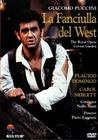
西部女郎 1978年英国皇家歌剧团版 [演出] 豆瓣
所属 演出: 西部女郎
语言: italian 意大利语 剧团: Orchestra of the Royal Opera House 英国皇家歌剧院管弦乐团 ; Royal Opera Chorus 英国皇家歌剧团合唱团 剧院: Royal Opera House, Covent Garden 考文特花园皇家歌剧院 导演: Piero Faggioni
其它标题: 1978年英国皇家歌剧团版 编剧: Guelfo Civinini / Carlo Zangarini 作曲: Giacomo Puccini 演员: Carol Neblett / Plácido Domingo
Time:1849 to 1850
Place: A mining camp at the foot of the Cloudy Mountains, California
Act 1
Inside the Polka Saloon
A group of Gold Rush miners enter the "Polka" saloon after a day working at the mine ("Hello! Hello! Alla 'Polka'"). After a song by traveling minstrel Jake Wallace ("Che faranno i vecchi miei"), one of the miners, Jim Larkens, is homesick and the miners collect enough money for his fare home ("Jim, perchè piangi?").
A group of miners playing cards discover that Sid is cheating and want to attack him. Sheriff Jack Rance quiets the fight and pins two cards to Sid's jacket, as a sign of a cheat.
A Wells Fargo agent, Ashby, enters and announces that he is chasing the bandit Ramerrez and his gang of Mexicans. Rance toasts Minnie, the woman who owns the saloon, as his future wife, which makes Sonora jealous. The two men begin to fight. Rance draws his revolver but at that moment, a shot rings out and Minnie stands next to the bar with a rifle in her hands ("Hello, Minnie!"). She gives the miners a reading lesson from the Bible ("Dove eravamo?").
The Pony Express rider arrives ("La posta!") and delivers a telegram from Nina Micheltorena, offering to reveal Ramerrez's hideout. The sheriff tells Minnie that he loves her, but Minnie puts him off as she is waiting for the right man ("Ti voglio bene, Minnie").
A stranger enters the saloon and asks for a whisky and water. He introduces himself as Dick Johnson from Sacramento, whom Minnie had met earlier. Johnson invites Minnie to dance with him and she accepts. Angrily, Rance watches them.
Ashby returns with the captured Ramerrez gang member, Castro. Upon seeing his leader, Johnson, in the saloon, Castro agrees to lead Rance, Ashby and the miners in a search for Ramerrez, and the group then follows him on a false trail and in what turns out to be a wild goose chase. But before Castro leaves, he whispers to Johnson that somebody will whistle and Johnson must reply to confirm that the place is clear. A whistle is heard, but Johnson fails to reply.
Minnie shows Johnson the keg of gold that she and the miners take turns to guard at night and Johnson reassures her that the gold will be safe there. Before he leaves the saloon, he promises to visit her at her cabin. They confess their love for each other. Minnie begins to cry, and Johnson comforts her before he leaves.
Act 2
Minnie's dwelling, later that evening
Wowkle, a Native American woman who is Minnie's servant, her lover Billy Jackrabbit and their baby are present as Minnie enters, wanting to get ready for Johnson's visit. Johnson enters Minnie's cabin and she tells him all about her life. It begins to snow. They kiss and Minnie asks him to stay till morning. He denies knowing Nina Micheltorena. As Johnson hides, a posse enters looking for Ramerrez and reveal to Minnie that Johnson is the bandit Ramerrez himself. Angry, she orders Johnson to leave. After he leaves, Minnie hears a gunshot and she knows Johnson has been shot. Johnson staggers in and collapses, Minnie helps him by hiding him up in the loft. Rance enters Minnie's cabin looking for the bandit and is about to give up searching for Johnson when drops of blood fall on his hand. Rance forces Johnson to climb down. Minnie desperately makes Rance an offer: if she beats him at poker, he must let Johnson go free; if Rance wins, she will marry him. Hiding some cards in her stockings, Minnie cheats and wins. Rance honors the deal and Minnie throws herself on the unconscious Johnson on the floor.
Act 3
In the Great Californian Forest at dawn, sometime later
Johnson is again on the run from Ashby and the miners. Nick and Rance are discussing Johnson and wonder what Minnie sees in him when Ashby arrives in triumph: Johnson has been captured. Rance and the miners all want Johnson to be hanged. Johnson accepts the sentence and only asks the miners not to tell Minnie about his capture and his fate ("Ch'ella mi creda"). Minnie arrives, armed with a pistol, just before the execution and throws herself in front of Johnson to protect him. While Rance tries to proceed, she convinces the miners that they owe her too much to kill the man she loves, and asks them to forgive him ("Ah! Ah! E Minnie!"). One by one, the miners yield to her plea ("E anche tu lo vorrai, Joe"). Rance is not happy but finally he too gives in. Sonora unties Johnson and sets him free. The miners bid Minnie farewell ("Le tue parole sono di Dio"). Minnie and Johnson leave California to start a new life together.
西部女郎 1982年英国皇家歌剧团版 [演出] 豆瓣
所属 演出: 西部女郎
语言: italian 意大利语 剧团: Orchestra of the Royal Opera House 英国皇家歌剧院管弦乐团 ; Royal Opera Chorus 英国皇家歌剧团合唱团 剧院: Royal Opera House, Covent Garden 考文特花园皇家歌剧院 导演: Piero Faggioni
其它标题: 1982年英国皇家歌剧团版 编剧: Guelfo Civinini / Carlo Zangarini 作曲: Giacomo Puccini 演员: Carol Neblett / Plácido Domingo
Time:1849 to 1850
Place: A mining camp at the foot of the Cloudy Mountains, California
Act 1
Inside the Polka Saloon
A group of Gold Rush miners enter the "Polka" saloon after a day working at the mine ("Hello! Hello! Alla 'Polka'"). After a song by traveling minstrel Jake Wallace ("Che faranno i vecchi miei"), one of the miners, Jim Larkens, is homesick and the miners collect enough money for his fare home ("Jim, perchè piangi?").
A group of miners playing cards discover that Sid is cheating and want to attack him. Sheriff Jack Rance quiets the fight and pins two cards to Sid's jacket, as a sign of a cheat.
A Wells Fargo agent, Ashby, enters and announces that he is chasing the bandit Ramerrez and his gang of Mexicans. Rance toasts Minnie, the woman who owns the saloon, as his future wife, which makes Sonora jealous. The two men begin to fight. Rance draws his revolver but at that moment, a shot rings out and Minnie stands next to the bar with a rifle in her hands ("Hello, Minnie!"). She gives the miners a reading lesson from the Bible ("Dove eravamo?").
The Pony Express rider arrives ("La posta!") and delivers a telegram from Nina Micheltorena, offering to reveal Ramerrez's hideout. The sheriff tells Minnie that he loves her, but Minnie puts him off as she is waiting for the right man ("Ti voglio bene, Minnie").
A stranger enters the saloon and asks for a whisky and water. He introduces himself as Dick Johnson from Sacramento, whom Minnie had met earlier. Johnson invites Minnie to dance with him and she accepts. Angrily, Rance watches them.
Ashby returns with the captured Ramerrez gang member, Castro. Upon seeing his leader, Johnson, in the saloon, Castro agrees to lead Rance, Ashby and the miners in a search for Ramerrez, and the group then follows him on a false trail and in what turns out to be a wild goose chase. But before Castro leaves, he whispers to Johnson that somebody will whistle and Johnson must reply to confirm that the place is clear. A whistle is heard, but Johnson fails to reply.
Minnie shows Johnson the keg of gold that she and the miners take turns to guard at night and Johnson reassures her that the gold will be safe there. Before he leaves the saloon, he promises to visit her at her cabin. They confess their love for each other. Minnie begins to cry, and Johnson comforts her before he leaves.
Act 2
Minnie's dwelling, later that evening
Wowkle, a Native American woman who is Minnie's servant, her lover Billy Jackrabbit and their baby are present as Minnie enters, wanting to get ready for Johnson's visit. Johnson enters Minnie's cabin and she tells him all about her life. It begins to snow. They kiss and Minnie asks him to stay till morning. He denies knowing Nina Micheltorena. As Johnson hides, a posse enters looking for Ramerrez and reveal to Minnie that Johnson is the bandit Ramerrez himself. Angry, she orders Johnson to leave. After he leaves, Minnie hears a gunshot and she knows Johnson has been shot. Johnson staggers in and collapses, Minnie helps him by hiding him up in the loft. Rance enters Minnie's cabin looking for the bandit and is about to give up searching for Johnson when drops of blood fall on his hand. Rance forces Johnson to climb down. Minnie desperately makes Rance an offer: if she beats him at poker, he must let Johnson go free; if Rance wins, she will marry him. Hiding some cards in her stockings, Minnie cheats and wins. Rance honors the deal and Minnie throws herself on the unconscious Johnson on the floor.
Act 3
In the Great Californian Forest at dawn, sometime later
Johnson is again on the run from Ashby and the miners. Nick and Rance are discussing Johnson and wonder what Minnie sees in him when Ashby arrives in triumph: Johnson has been captured. Rance and the miners all want Johnson to be hanged. Johnson accepts the sentence and only asks the miners not to tell Minnie about his capture and his fate ("Ch'ella mi creda"). Minnie arrives, armed with a pistol, just before the execution and throws herself in front of Johnson to protect him. While Rance tries to proceed, she convinces the miners that they owe her too much to kill the man she loves, and asks them to forgive him ("Ah! Ah! E Minnie!"). One by one, the miners yield to her plea ("E anche tu lo vorrai, Joe"). Rance is not happy but finally he too gives in. Sonora unties Johnson and sets him free. The miners bid Minnie farewell ("Le tue parole sono di Dio"). Minnie and Johnson leave California to start a new life together.
西部女郎 1988年维也纳国家歌剧院版 [演出] 豆瓣
所属 演出: 西部女郎
语言: italian 意大利语 剧团: Orchester der Wiener Staatsoper 维也纳国家歌剧院管弦乐团 ; Chor der Wiener Staatsoper 维也纳国家歌剧院合唱团 剧院: Wiener Staatsoper 维也纳国家歌剧院 导演: Wolfgang Weber
其它标题: 1988年维也纳国家歌剧院版 编剧: Guelfo Civinini / Carlo Zangarini 作曲: Giacomo Puccini 演员: Mara Zampieri / Plácido Domingo
Time:1849 to 1850
Place: A mining camp at the foot of the Cloudy Mountains, California
Act 1
Inside the Polka Saloon
A group of Gold Rush miners enter the "Polka" saloon after a day working at the mine ("Hello! Hello! Alla 'Polka'"). After a song by traveling minstrel Jake Wallace ("Che faranno i vecchi miei"), one of the miners, Jim Larkens, is homesick and the miners collect enough money for his fare home ("Jim, perchè piangi?").
A group of miners playing cards discover that Sid is cheating and want to attack him. Sheriff Jack Rance quiets the fight and pins two cards to Sid's jacket, as a sign of a cheat.
A Wells Fargo agent, Ashby, enters and announces that he is chasing the bandit Ramerrez and his gang of Mexicans. Rance toasts Minnie, the woman who owns the saloon, as his future wife, which makes Sonora jealous. The two men begin to fight. Rance draws his revolver but at that moment, a shot rings out and Minnie stands next to the bar with a rifle in her hands ("Hello, Minnie!"). She gives the miners a reading lesson from the Bible ("Dove eravamo?").
The Pony Express rider arrives ("La posta!") and delivers a telegram from Nina Micheltorena, offering to reveal Ramerrez's hideout. The sheriff tells Minnie that he loves her, but Minnie puts him off as she is waiting for the right man ("Ti voglio bene, Minnie").
A stranger enters the saloon and asks for a whisky and water. He introduces himself as Dick Johnson from Sacramento, whom Minnie had met earlier. Johnson invites Minnie to dance with him and she accepts. Angrily, Rance watches them.
Ashby returns with the captured Ramerrez gang member, Castro. Upon seeing his leader, Johnson, in the saloon, Castro agrees to lead Rance, Ashby and the miners in a search for Ramerrez, and the group then follows him on a false trail and in what turns out to be a wild goose chase. But before Castro leaves, he whispers to Johnson that somebody will whistle and Johnson must reply to confirm that the place is clear. A whistle is heard, but Johnson fails to reply.
Minnie shows Johnson the keg of gold that she and the miners take turns to guard at night and Johnson reassures her that the gold will be safe there. Before he leaves the saloon, he promises to visit her at her cabin. They confess their love for each other. Minnie begins to cry, and Johnson comforts her before he leaves.
Act 2
Minnie's dwelling, later that evening
Wowkle, a Native American woman who is Minnie's servant, her lover Billy Jackrabbit and their baby are present as Minnie enters, wanting to get ready for Johnson's visit. Johnson enters Minnie's cabin and she tells him all about her life. It begins to snow. They kiss and Minnie asks him to stay till morning. He denies knowing Nina Micheltorena. As Johnson hides, a posse enters looking for Ramerrez and reveal to Minnie that Johnson is the bandit Ramerrez himself. Angry, she orders Johnson to leave. After he leaves, Minnie hears a gunshot and she knows Johnson has been shot. Johnson staggers in and collapses, Minnie helps him by hiding him up in the loft. Rance enters Minnie's cabin looking for the bandit and is about to give up searching for Johnson when drops of blood fall on his hand. Rance forces Johnson to climb down. Minnie desperately makes Rance an offer: if she beats him at poker, he must let Johnson go free; if Rance wins, she will marry him. Hiding some cards in her stockings, Minnie cheats and wins. Rance honors the deal and Minnie throws herself on the unconscious Johnson on the floor.
Act 3
In the Great Californian Forest at dawn, sometime later
Johnson is again on the run from Ashby and the miners. Nick and Rance are discussing Johnson and wonder what Minnie sees in him when Ashby arrives in triumph: Johnson has been captured. Rance and the miners all want Johnson to be hanged. Johnson accepts the sentence and only asks the miners not to tell Minnie about his capture and his fate ("Ch'ella mi creda"). Minnie arrives, armed with a pistol, just before the execution and throws herself in front of Johnson to protect him. While Rance tries to proceed, she convinces the miners that they owe her too much to kill the man she loves, and asks them to forgive him ("Ah! Ah! E Minnie!"). One by one, the miners yield to her plea ("E anche tu lo vorrai, Joe"). Rance is not happy but finally he too gives in. Sonora unties Johnson and sets him free. The miners bid Minnie farewell ("Le tue parole sono di Dio"). Minnie and Johnson leave California to start a new life together.
西部女郎 1991年斯卡拉剧院版 [演出] 豆瓣
所属 演出: 西部女郎
语言: italian 意大利语 剧团: Orchestra del Teatro alla Scala 斯卡拉剧院管弦乐团 ; Coro del Teatro alla Scala 斯卡拉剧院合唱团 剧院: Teatro alla Scala 斯卡拉剧院 导演: Jonathan Miller
其它标题: 1991年斯卡拉剧院版 编剧: Guelfo Civinini / Carlo Zangarini 作曲: Giacomo Puccini 演员: Mara Zampieri / Plácido Domingo
Time:1849 to 1850
Place: A mining camp at the foot of the Cloudy Mountains, California
Act 1
Inside the Polka Saloon
A group of Gold Rush miners enter the "Polka" saloon after a day working at the mine ("Hello! Hello! Alla 'Polka'"). After a song by traveling minstrel Jake Wallace ("Che faranno i vecchi miei"), one of the miners, Jim Larkens, is homesick and the miners collect enough money for his fare home ("Jim, perchè piangi?").
A group of miners playing cards discover that Sid is cheating and want to attack him. Sheriff Jack Rance quiets the fight and pins two cards to Sid's jacket, as a sign of a cheat.
A Wells Fargo agent, Ashby, enters and announces that he is chasing the bandit Ramerrez and his gang of Mexicans. Rance toasts Minnie, the woman who owns the saloon, as his future wife, which makes Sonora jealous. The two men begin to fight. Rance draws his revolver but at that moment, a shot rings out and Minnie stands next to the bar with a rifle in her hands ("Hello, Minnie!"). She gives the miners a reading lesson from the Bible ("Dove eravamo?").
The Pony Express rider arrives ("La posta!") and delivers a telegram from Nina Micheltorena, offering to reveal Ramerrez's hideout. The sheriff tells Minnie that he loves her, but Minnie puts him off as she is waiting for the right man ("Ti voglio bene, Minnie").
A stranger enters the saloon and asks for a whisky and water. He introduces himself as Dick Johnson from Sacramento, whom Minnie had met earlier. Johnson invites Minnie to dance with him and she accepts. Angrily, Rance watches them.
Ashby returns with the captured Ramerrez gang member, Castro. Upon seeing his leader, Johnson, in the saloon, Castro agrees to lead Rance, Ashby and the miners in a search for Ramerrez, and the group then follows him on a false trail and in what turns out to be a wild goose chase. But before Castro leaves, he whispers to Johnson that somebody will whistle and Johnson must reply to confirm that the place is clear. A whistle is heard, but Johnson fails to reply.
Minnie shows Johnson the keg of gold that she and the miners take turns to guard at night and Johnson reassures her that the gold will be safe there. Before he leaves the saloon, he promises to visit her at her cabin. They confess their love for each other. Minnie begins to cry, and Johnson comforts her before he leaves.
Act 2
Minnie's dwelling, later that evening
Wowkle, a Native American woman who is Minnie's servant, her lover Billy Jackrabbit and their baby are present as Minnie enters, wanting to get ready for Johnson's visit. Johnson enters Minnie's cabin and she tells him all about her life. It begins to snow. They kiss and Minnie asks him to stay till morning. He denies knowing Nina Micheltorena. As Johnson hides, a posse enters looking for Ramerrez and reveal to Minnie that Johnson is the bandit Ramerrez himself. Angry, she orders Johnson to leave. After he leaves, Minnie hears a gunshot and she knows Johnson has been shot. Johnson staggers in and collapses, Minnie helps him by hiding him up in the loft. Rance enters Minnie's cabin looking for the bandit and is about to give up searching for Johnson when drops of blood fall on his hand. Rance forces Johnson to climb down. Minnie desperately makes Rance an offer: if she beats him at poker, he must let Johnson go free; if Rance wins, she will marry him. Hiding some cards in her stockings, Minnie cheats and wins. Rance honors the deal and Minnie throws herself on the unconscious Johnson on the floor.
Act 3
In the Great Californian Forest at dawn, sometime later
Johnson is again on the run from Ashby and the miners. Nick and Rance are discussing Johnson and wonder what Minnie sees in him when Ashby arrives in triumph: Johnson has been captured. Rance and the miners all want Johnson to be hanged. Johnson accepts the sentence and only asks the miners not to tell Minnie about his capture and his fate ("Ch'ella mi creda"). Minnie arrives, armed with a pistol, just before the execution and throws herself in front of Johnson to protect him. While Rance tries to proceed, she convinces the miners that they owe her too much to kill the man she loves, and asks them to forgive him ("Ah! Ah! E Minnie!"). One by one, the miners yield to her plea ("E anche tu lo vorrai, Joe"). Rance is not happy but finally he too gives in. Sonora unties Johnson and sets him free. The miners bid Minnie farewell ("Le tue parole sono di Dio"). Minnie and Johnson leave California to start a new life together.
西部女郎 1992年大都会歌剧团版 [演出] 豆瓣
所属 演出: 西部女郎
语言: italian 意大利语 剧团: Metropolitan Opera Orchestra 大都会歌剧团管弦乐团 ; Metropolitan Opera Chorus 大都会歌剧团合唱团 剧院: Metropolitan Opera House 大都会歌剧院 导演: Giancarlo del Monaco
其它标题: 1992年大都会歌剧团版 编剧: Guelfo Civinini / Carlo Zangarini 作曲: Giacomo Puccini 演员: Barbara Daniels / Plácido Domingo
Time:1849 to 1850
Place: A mining camp at the foot of the Cloudy Mountains, California
Act 1
Inside the Polka Saloon
A group of Gold Rush miners enter the "Polka" saloon after a day working at the mine ("Hello! Hello! Alla 'Polka'"). After a song by traveling minstrel Jake Wallace ("Che faranno i vecchi miei"), one of the miners, Jim Larkens, is homesick and the miners collect enough money for his fare home ("Jim, perchè piangi?").
A group of miners playing cards discover that Sid is cheating and want to attack him. Sheriff Jack Rance quiets the fight and pins two cards to Sid's jacket, as a sign of a cheat.
A Wells Fargo agent, Ashby, enters and announces that he is chasing the bandit Ramerrez and his gang of Mexicans. Rance toasts Minnie, the woman who owns the saloon, as his future wife, which makes Sonora jealous. The two men begin to fight. Rance draws his revolver but at that moment, a shot rings out and Minnie stands next to the bar with a rifle in her hands ("Hello, Minnie!"). She gives the miners a reading lesson from the Bible ("Dove eravamo?").
The Pony Express rider arrives ("La posta!") and delivers a telegram from Nina Micheltorena, offering to reveal Ramerrez's hideout. The sheriff tells Minnie that he loves her, but Minnie puts him off as she is waiting for the right man ("Ti voglio bene, Minnie").
A stranger enters the saloon and asks for a whisky and water. He introduces himself as Dick Johnson from Sacramento, whom Minnie had met earlier. Johnson invites Minnie to dance with him and she accepts. Angrily, Rance watches them.
Ashby returns with the captured Ramerrez gang member, Castro. Upon seeing his leader, Johnson, in the saloon, Castro agrees to lead Rance, Ashby and the miners in a search for Ramerrez, and the group then follows him on a false trail and in what turns out to be a wild goose chase. But before Castro leaves, he whispers to Johnson that somebody will whistle and Johnson must reply to confirm that the place is clear. A whistle is heard, but Johnson fails to reply.
Minnie shows Johnson the keg of gold that she and the miners take turns to guard at night and Johnson reassures her that the gold will be safe there. Before he leaves the saloon, he promises to visit her at her cabin. They confess their love for each other. Minnie begins to cry, and Johnson comforts her before he leaves.
Act 2
Minnie's dwelling, later that evening
Wowkle, a Native American woman who is Minnie's servant, her lover Billy Jackrabbit and their baby are present as Minnie enters, wanting to get ready for Johnson's visit. Johnson enters Minnie's cabin and she tells him all about her life. It begins to snow. They kiss and Minnie asks him to stay till morning. He denies knowing Nina Micheltorena. As Johnson hides, a posse enters looking for Ramerrez and reveal to Minnie that Johnson is the bandit Ramerrez himself. Angry, she orders Johnson to leave. After he leaves, Minnie hears a gunshot and she knows Johnson has been shot. Johnson staggers in and collapses, Minnie helps him by hiding him up in the loft. Rance enters Minnie's cabin looking for the bandit and is about to give up searching for Johnson when drops of blood fall on his hand. Rance forces Johnson to climb down. Minnie desperately makes Rance an offer: if she beats him at poker, he must let Johnson go free; if Rance wins, she will marry him. Hiding some cards in her stockings, Minnie cheats and wins. Rance honors the deal and Minnie throws herself on the unconscious Johnson on the floor.
Act 3
In the Great Californian Forest at dawn, sometime later
Johnson is again on the run from Ashby and the miners. Nick and Rance are discussing Johnson and wonder what Minnie sees in him when Ashby arrives in triumph: Johnson has been captured. Rance and the miners all want Johnson to be hanged. Johnson accepts the sentence and only asks the miners not to tell Minnie about his capture and his fate ("Ch'ella mi creda"). Minnie arrives, armed with a pistol, just before the execution and throws herself in front of Johnson to protect him. While Rance tries to proceed, she convinces the miners that they owe her too much to kill the man she loves, and asks them to forgive him ("Ah! Ah! E Minnie!"). One by one, the miners yield to her plea ("E anche tu lo vorrai, Joe"). Rance is not happy but finally he too gives in. Sonora unties Johnson and sets him free. The miners bid Minnie farewell ("Le tue parole sono di Dio"). Minnie and Johnson leave California to start a new life together.
乡村骑士 1978年大都会歌剧团版 [演出] 豆瓣
所属 演出: 乡村骑士
语言: italian 意大利语 剧团: Metropolitan Opera Orchestra 大都会歌剧团管弦乐团 ; Metropolitan Opera Chorus 大都会歌剧团合唱团 剧院: Metropolitan Opera House 大都会歌剧院 导演: Franco Zeffirelli / Fabrizio Melano
其它标题: 1978年大都会歌剧团版 编剧: Giovanni Targioni-Tozzetti / Guido Menasci 作曲: Pietro Mascagni 演员: Plácido Domingo / Tatiana Troyanos
Place: A 19th-century Sicilian village
Time: Easter morning
Before the action takes place, the young villager Turiddu had returned from military service to find that his fiancée Lola had married the carter Alfio while Turiddu was away. In revenge, Turiddu had seduced Santuzza, a young woman in the village. As the opera begins, Lola, overcome by her jealousy of Santuzza, has begun an adulterous affair with Turiddu.
The main square of the village
Offstage, Turiddu is heard singing a siciliana, "O Lola c'hai di latti la cammisa" ("O Lola! like the snow, pure in thy whiteness!"). To one side is the church; to the other is Lucia's wine shop and the house where she lives with her son, Turiddu. The villagers move about the square, singing of the beautiful spring day, "Gli aranci olezzano sui verdi margini" ("The air is sweet with orange blossoms") and a hymn to the Blessed Virgin Mary. Some villagers enter the church, and others wander off still singing.
Santuzza, having slept with Turiddu and suspecting that he has betrayed her for Lola, is distraught and approaches Lucia as she comes out of her house. Santuzza asks for Turiddu, but Lucia replies that he has gone to another town to fetch some wine. Santuzza tells her that he was seen during the night in the village. Lucia asks her inside to talk, but just at that moment Alfio arrives on his wagon, accompanied by the villagers. He praises the joys of a teamster's life and the beauty of Lola his bride. Alfio asks Lucia for some of her fine old wine. She tells him it has run out and Turiddu has gone away to buy more. Alfio replies that he had seen Turiddu early that morning near his cottage. Lucia starts to express surprise, but Santuzza stops her.
Alfio leaves. The choir inside the church is heard singing the Regina Coeli. Outside, the villagers sing an Easter Hymn, "Inneggiamo, il Signor non è morto" ("We rejoice that our Saviour is living!") joined by Santuzza. The villagers enter the church, while Santuzza and Lucia remain outside. Lucia asks Santuzza why she signalled her to remain silent when Alfio said that he had seen Turiddu that morning. Santuzza exclaims, "Voi lo sapete" ("You well know") and tells Lucia the story of her seduction by Turiddu and his affair with Lola. Lucia pities Santuzza, who feels dishonored, having been seduced by Turiddu only to be abandoned by him for his old flame, Lola. Santuzza feels she cannot enter the church, but begs Lucia to go inside herself and pray for Santuzza who stays behind to try to plead with Turiddu to leave Lola and return to her.
Turiddu arrives. Santuzza upbraids him for pretending to have gone away, when he was actually seeing Lola. Lola enters the square singing. She mocks Santuzza and goes inside the church. Turiddu turns to follow Lola, but Santuzza begs him to stay. Turiddu pushes her away. She clings to him. He loosens her hands, throws her to the ground, and enters the church. Alfio arrives looking for Lola. Santuzza tells him that his wife has betrayed him with Turiddu. Alfio swears to take vendetta (revenge) which causes Santuzza to repent for having disclosed the affair and begs Alfio to stop to no avail.
The square is empty as the orchestra plays the famous Intermezzo.
The villagers come out of the church. Turiddu is in high spirits because he is with Lola and Santuzza appears to have gone. He invites his friends to his mother’s wine shop where he sings a drinking song, "Viva, il vino spumeggiante" ("Hail to the bubbling wine!"). Alfio joins them. Turiddu offers him wine, but he refuses it. All understand that trouble is in the air. The women leave, taking Lola with them. In a brief exchange of words, Alfio challenges Turiddu to a duel. Following Sicilian custom, the two men embrace, and Turiddu, in a token of acceptance, bites Alfio’s ear, drawing blood which signifies a fight to the death. Alfio leaves and Turiddu calls Lucia back. He tells her that he is going outside to get some air and asks that she be a kindly mother to Santuzza if he should not return: "Un bacio, mamma! Un altro bacio!—Addio!" ("One kiss, mother! One more kiss! – Farewell!").
Turiddu rushes out. Lucia, weeping, wanders aimlessly around outside her house. Santuzza approaches and throws her arms around her. The villagers start to crowd around. Voices are heard in the distance and a woman cries, "They have murdered Turiddu!" Santuzza faints and Lucia collapses in the arms of the women villagers.
乡村骑士 1982年电影版 [演出] 豆瓣
所属 演出: 乡村骑士
语言: italian 意大利语 剧团: Orchestra del Teatro alla Scala 斯卡拉剧院管弦乐团 ; Coro del Teatro alla Scala 斯卡拉剧院合唱团 导演: Franco Zeffirelli
其它标题: 1982年电影版 编剧: Giovanni Targioni-Tozzetti / Guido Menasci 作曲: Pietro Mascagni 演员: Plácido Domingo / Elena Obraztsova
Place: A 19th-century Sicilian village
Time: Easter morning
Before the action takes place, the young villager Turiddu had returned from military service to find that his fiancée Lola had married the carter Alfio while Turiddu was away. In revenge, Turiddu had seduced Santuzza, a young woman in the village. As the opera begins, Lola, overcome by her jealousy of Santuzza, has begun an adulterous affair with Turiddu.
The main square of the village
Offstage, Turiddu is heard singing a siciliana, "O Lola c'hai di latti la cammisa" ("O Lola! like the snow, pure in thy whiteness!"). To one side is the church; to the other is Lucia's wine shop and the house where she lives with her son, Turiddu. The villagers move about the square, singing of the beautiful spring day, "Gli aranci olezzano sui verdi margini" ("The air is sweet with orange blossoms") and a hymn to the Blessed Virgin Mary. Some villagers enter the church, and others wander off still singing.
Santuzza, having slept with Turiddu and suspecting that he has betrayed her for Lola, is distraught and approaches Lucia as she comes out of her house. Santuzza asks for Turiddu, but Lucia replies that he has gone to another town to fetch some wine. Santuzza tells her that he was seen during the night in the village. Lucia asks her inside to talk, but just at that moment Alfio arrives on his wagon, accompanied by the villagers. He praises the joys of a teamster's life and the beauty of Lola his bride. Alfio asks Lucia for some of her fine old wine. She tells him it has run out and Turiddu has gone away to buy more. Alfio replies that he had seen Turiddu early that morning near his cottage. Lucia starts to express surprise, but Santuzza stops her.
Alfio leaves. The choir inside the church is heard singing the Regina Coeli. Outside, the villagers sing an Easter Hymn, "Inneggiamo, il Signor non è morto" ("We rejoice that our Saviour is living!") joined by Santuzza. The villagers enter the church, while Santuzza and Lucia remain outside. Lucia asks Santuzza why she signalled her to remain silent when Alfio said that he had seen Turiddu that morning. Santuzza exclaims, "Voi lo sapete" ("You well know") and tells Lucia the story of her seduction by Turiddu and his affair with Lola. Lucia pities Santuzza, who feels dishonored, having been seduced by Turiddu only to be abandoned by him for his old flame, Lola. Santuzza feels she cannot enter the church, but begs Lucia to go inside herself and pray for Santuzza who stays behind to try to plead with Turiddu to leave Lola and return to her.
Turiddu arrives. Santuzza upbraids him for pretending to have gone away, when he was actually seeing Lola. Lola enters the square singing. She mocks Santuzza and goes inside the church. Turiddu turns to follow Lola, but Santuzza begs him to stay. Turiddu pushes her away. She clings to him. He loosens her hands, throws her to the ground, and enters the church. Alfio arrives looking for Lola. Santuzza tells him that his wife has betrayed him with Turiddu. Alfio swears to take vendetta (revenge) which causes Santuzza to repent for having disclosed the affair and begs Alfio to stop to no avail.
The square is empty as the orchestra plays the famous Intermezzo.
The villagers come out of the church. Turiddu is in high spirits because he is with Lola and Santuzza appears to have gone. He invites his friends to his mother’s wine shop where he sings a drinking song, "Viva, il vino spumeggiante" ("Hail to the bubbling wine!"). Alfio joins them. Turiddu offers him wine, but he refuses it. All understand that trouble is in the air. The women leave, taking Lola with them. In a brief exchange of words, Alfio challenges Turiddu to a duel. Following Sicilian custom, the two men embrace, and Turiddu, in a token of acceptance, bites Alfio’s ear, drawing blood which signifies a fight to the death. Alfio leaves and Turiddu calls Lucia back. He tells her that he is going outside to get some air and asks that she be a kindly mother to Santuzza if he should not return: "Un bacio, mamma! Un altro bacio!—Addio!" ("One kiss, mother! One more kiss! – Farewell!").
Turiddu rushes out. Lucia, weeping, wanders aimlessly around outside her house. Santuzza approaches and throws her arms around her. The villagers start to crowd around. Voices are heard in the distance and a woman cries, "They have murdered Turiddu!" Santuzza faints and Lucia collapses in the arms of the women villagers.
奥赛罗 1992年英国皇家歌剧团版 [演出] 豆瓣
所属 演出: 奥赛罗
语言: italian 意大利语 剧团: Orchestra of the Royal Opera House 英国皇家歌剧院管弦乐团 ; Royal Opera Chorus 英国皇家歌剧团合唱团 剧院: Royal Opera House, Covent Garden 考文特花园皇家歌剧院 导演: Elijah Moshinsky
其它标题: 1992年英国皇家歌剧团版 编剧: Arrigo Boito 作曲: Giuseppe Verdi 演员: Plácido Domingo / Kiri Te Kanawa
Time: The late 16th century
Place: A coastal city on the island of Cyprus
Act 1
A town in Cyprus, outside the castle. An inn with a pergola, in the background the quayside and sea. It is evening. Lightning, thunder, gale force winds.
On a stormy evening, the people of Cyprus anxiously await the arrival of the new governor, Otello, from a naval battle with the Turks (Chorus, Montano, Cassio, Iago, Roderigo: Una vela! / "A sail!"). For a moment it seems as if Otello's ship will founder, to the delight of Otello's treacherous ensign, Iago, but Otello arrives safely and announces that the Turkish fleet has been destroyed, and the Cypriots cheer (Otello, chorus: Esultate! L'orgoglio musulmano sepolto è in mar / "Rejoice! The Muslim’s pride is buried in the sea").
Iago offers to help the young Venetian gentleman Roderigo in his seduction of Otello's wife, Desdemona – Iago envies Otello his success and longs to destroy the Moor (Iago, Roderigo: Roderigo, ebben che pensi? / "Well, Roderigo, what are you thinking?"). Among his grievances, Iago is outraged that Otello has appointed Cassio to be the captain of the navy, a position that Iago hoped to have. The people of Cyprus celebrate the safe return of Otello and his men by lighting a bonfire and drinking (Chorus: Fuoco di gioia!/ "Fire of joy").
Iago proposes a toast to Otello and his wife, while Cassio praises Desdemona (Iago, Cassio, Chorus, Roderigo: Roderigo, beviam! / "Roderigo, let's drink!"). Iago offers Cassio more wine, but Cassio says he has had enough. Iago pressures him and offers a toast to Otello and Desdemona. Cassio gives in. Iago sings a drinking song and continues to pour Cassio wine (Iago, Cassio, Roderigo, chorus: Inaffia l'ugola! / "Wet your throat").
Montano enters and calls for Cassio to begin his watch; he is surprised to find Cassio drunk and barely able to stand upright. Iago lies to Montano, telling him that this is how Cassio spends every evening. Roderigo laughs at Cassio's drunkenness and Cassio attacks him. Montano tells Cassio to calm down, but Cassio draws his sword and threatens to crack open Montano's head. (Montano, Cassio, Iago, Roderigo, chorus: Capitano, v'attende la fazione ai baluardi / "Captain, the guard awaits you on the ramparts".) Cassio and Montano begin to duel, and Iago sends Roderigo to call the alarm. Montano is wounded and the fight is stopped only by the appearance of Otello.
Otello orders Montano and Cassio to lower their swords. He then asks "honest Iago" to explain how the duel began, but Iago says he doesn't know. Otello then turns to Cassio, who is embarrassed and cannot excuse his actions. When Otello discovers that Montano is wounded, he becomes enraged. Desdemona enters, and, upon seeing that his bride's rest has been disturbed, Otello declares that Cassio is no longer Captain. (Otello, Iago, Cassio, Montano: Abbasso le spade / "Down with your swords".) He tells Iago to patrol the town to restore quiet, calls for help for Montano and orders everyone to return to their houses.
The Cypriots leave Otello alone with Desdemona. Together Otello and Desdemona recall why they fell in love. Otello, in an ecstasy of joy, invites death, fearing that he will never know such happiness again. Desdemona prays that their love will remain unchanged. They kiss, overcome with love for each other. (Otello, Desdemona: Già nella notte densa s'estingue ogni clamor /"Now in the dark night all noise is silenced".)
Act 2
A hall on the ground floor of the castle, divided by a glass partition from the garden at the back, with a balcony.
Iago suggests to Cassio that he should ask Desdemona to talk to Otello about his demotion; Desdemona can influence her husband to reinstate him (Iago, Cassio: Non ti crucciar / "Do not fret"). Desdemona and Emilia can be seen walking the garden. Cassio approaches Desdemona. Watching from the room, Iago voices his nihilistic beliefs and hatred of humankind (Credo in un Dio crudel / "I believe in a cruel God").
Otello enters the room; Iago, pretending not to notice him, says that he is deeply troubled. Cassio sees Otello from afar and goes discreetly away. Otello asks what's wrong, but Iago gives only vague answers. Finally, he hints that Cassio and Desdemona are having an affair. Otello begins to get suspicious, but declares that he needs proof before believing that Desdemona has been unfaithful. (Iago, Otello: Ciò m'accora... Che parli? / "That worries me..." "What did you say?") Iago warns Otello against jealousy, but also advises him to be vigilant.
A crowd of children, sailors, and Cypriots sing to Desdemona, praising her beauty and purity (Chorus, Iago, children, Desdemona, Otello: Dove guardi splendono raggi / "Wherever you look, brightness shines..."). They present her with gifts and wish her happiness before leaving.
Desdemona carries Cassio's request for reinstatement to Otello. Otello sourly tells her to ask him another time; as she persists, he grows impatient and says he has a headache. Desdemona offers to wrap his head in a handkerchief Otello once gave her, linen embroidered with strawberries. Otello throws it to the ground and says he doesn't need it (Desdemona, Otello: D'un uom che geme sotto il tuo disdegno la preghiera ti porto / "I bring a petition from one who suffers under your displeasure"). Emilia picks up the handkerchief. Desdemona asks for Otello's forgiveness. Aside, Iago demands that Emilia give him the handkerchief. When she refuses, Iago forcibly takes it from her.
Otello dismisses the others, and declares that he now believes that Desdemona may be deceiving him (Otello: Ora e per sempre addio sante memorie / "Now and forever farewell, holy memories"). Iago returns, and the jealous Otello demands proof of Desdemona's infidelity. Iago says that once, when he and Cassio were sleeping in the same room, he heard Cassio talking to Desdemona in a dream. In the dream, says Iago, Cassio told Desdemona that they must be careful to conceal their love. (Iago: Era la notte, Cassio dormia / "It was night, Cassio was sleeping".) Iago says that dreams don't prove anything, but remarks that he saw Cassio carrying Desdemona's strawberry-embroidered handkerchief just the day before. Otello swears vengeance on Desdemona and Cassio, and Iago joins him in his vow (Otello, Iago: Sì, pel ciel marmoreo giuro / "Yes, by the marble heavens I swear").
Act 3
The great hall of the castle. To the right, a large colonnade leading to a smaller hall, in the back of which is a balcony. Othello and Iago talking in the hall as a herald enters.
A herald brings news of the approach of ambassadors from Venice. Iago explains to Otello that he will lure Cassio here and talk with him while Otello watches, hidden. He leaves to go get Cassio. (Iago: Qui trarrò Cassio / "Here I will bring Cassio".)
Desdemona enters and reminds Otello of Cassio's request. Otello says that his headache has returned, and asks Desdemona to wrap her handkerchief around his head. When Desdemona produces a different handkerchief, Otello demands the one with strawberries. When she says she does not have it, Otello says that it was a talisman, and troubles will befall her if she loses it. Desdemona says that he is trying to ignore Cassio's plea, and as she asks him about Cassio, he demands the handkerchief ever more insistently. (Desdemona, Otello: Dio ti giocondi, o sposo / "God keep you merry, husband".) Desdemona protests that she is faithful; Otello sends her away (Desdemona, Otello: Esterrefatta fisso lo sguardo tuo tremendo / "Terrified, I face your dreadful look").
Otello laments his fate (Dio! mi potevi scagliar tutti i mali / "God, you could have thrown every evil at me" ). When Iago calls out "Cassio is here!" Otello hides as Iago and Cassio enter. Cassio says he had hoped to see Desdemona here, for he wanted to know whether she had been successful with Otello (Iago, Cassio, Otello: Vieni; l'aula è deserta / "Come, the hall is deserted"). Iago asks him to tell of his adventures with that woman. Cassio asks which woman, and, softly, so that Otello cannot hear, Iago says "Bianca" (the name of Cassio's actual lover). As Cassio laughs about his romantic adventures, Otello assumes he is speaking of Desdemona. In a conversation only partially heard, Cassio seems to be telling Iago that another woman, a secret admirer, left him a handkerchief as a token. At Iago's urging, Cassio produces it, whereupon Iago seizes it—for it is Desdemona's—and holds it out where he knows Otello can see it. He then returns it to Cassio and teases him, while in his hiding place Otello fumes (Iago, Cassio, Otello: Questa è una ragna dove il tuo cuor casca / "This is a spiderweb in which your heart is caught").
Bugles sound, announcing the arrival of the Venetian ambassador, Lodovico. Iago warns Cassio that he should leave unless he wants to see Otello. Cassio exits, and Otello asks Iago how he should kill his wife. Iago advises Otello to kill Desdemona by suffocating her in her bed, while he will take care of Cassio. Otello promotes Iago to Captain.
Lodovico, Desdemona, Emilia, Roderigo, and other dignitaries enter. When Lodovico notes Cassio's absence, Iago tells him that Cassio is out of favor. Desdemona interrupts, telling Lodovico that she hopes he will soon be restored. Otello calls her a demon and almost strikes her violently but is held back by Lodovico. Otello then calls for Cassio. (Lodovico, Otello, Desdemona, Emilia, Iago, chorus: Il Doge ed il Senato salutano l'eroe trionfatore / "The Doge and the Senate greet the triumphant hero".) Cassio enters and Otello reads (mixing in insults to Desdemona) a letter from the Doge, announcing that he (Otello) has been called back to Venice and Cassio is to succeed him as governor of Cyprus. Enraged, Otello throws Desdemona to the ground. (Otello, Roderigo, Iago, Cassio, Lodovico: Messeri! il Doge mi richiama a Venezia / "Gentlemen! The Doge recalls me to Venice".)
Desdemona, on the ground, laments (A terra! … sì … nel livido fango / "Fallen! yes, in the foul mud..."). The various characters express their feelings: Emilia and Lodovico express their sympathy for Desdemona, Cassio marvels at his sudden change of fortune, and Roderigo laments that Desdemona will soon depart. In separate asides, Iago urges Otello to take his revenge as soon as possible, while he will take care of Cassio. He advises Roderigo that the only way to prevent Desdemona from leaving is for Cassio, the new Duke, to die, and suggests that Roderigo murder Cassio that night. (Emilia, Cassio, Desdemona, Roderigo, Lodovico, Iago, Otello, chorus: Quell'innocente un fremito d'odio non ha nè un gesto / "That innocent one is without feeling or gesture of hatred"). In a fury, Otello orders everyone to leave. Desdemona goes to comfort him, but Lodovico pulls her away as Otello curses her. As the others leave, Otello raves about the handkerchief, then collapses. Iago presses Otello's forehead with his heel, then walks away. Outside the crowd of Cypriots calls out victory and glory for Otello. (Otello, Desdemona, Emilia, Cassio, Roderigo, Lodovico, Iago, chorus: Fuggite! / "Begone".)
Act 4
Desdemona's bedchamber. A bed, a prie-dieu, a table, a mirror, some chairs. A light burns in front of an image of the Madonna which hangs above the prie-dieu. To the right is a door. On the table a light. It is night.
Desdemona is preparing for bed with the assistance of Emilia. She asks Emilia to put out the bridal gown she used on her wedding day, and says that if she dies, she wants to be buried in it. Emilia tells her not to talk about such things. Desdemona recalls how her mother's servant Barbara was abandoned by her lover, and how she used to sing the Willow Song (Desdemona: Piangea cantando nell'erma landa / "Singing, she wept on the lonely hearth"). After Emilia leaves, Desdemona prays (Ave Maria) and then falls asleep.
Silently, Otello enters, with a sword. He kisses his wife three times; she awakens. Otello asks her if she has prayed tonight; she must die, and he does not wish to condemn her soul. She asks God for mercy, both for her and for Otello. Otello accuses her of sin, saying that he must kill her because she loves Cassio. Desdemona denies it and asks that he summon Cassio to testify to her innocence. Otello says that Cassio is already dead. Desdemona, horrified, pleads for mercy, but Otello tells her it's too late and strangles her (Otello, Desdemona: Diceste questa sera le vostre preci / "Have you said your prayers tonight?").
Emilia knocks at the door, (Emilia: Aprite! Aprite! / "Open up!") announcing that Cassio has killed Roderigo. Desdemona softly calls out that she has been unjustly accused, but refuses to blame Otello. She dies. Emilia calls Otello a murderer; he retorts that Iago gave him proof of Desdemona's infidelity. Otello begins to threaten Emilia, who calls for help. Iago, Cassio, and Lodovico enter. Emilia demands that Iago deny Otello's accusation; he refuses. Otello says that the handkerchief Desdemona gave to Cassio is proof enough. Emilia, horrified, explains that Iago stole the handkerchief from her—Cassio confirms that the handkerchief appeared mysteriously in his lodgings. Montano enters and says that Roderigo, with his dying breath, has revealed Iago's plot. Iago, brandishing his sword, runs away.
After he realizes what has happened, Otello grieves over Desdemona's death. Initially he draws his scimitar (Otello: Niun mi tema / "That none fear me") but then relinquishes it. He then stealthily draws a dagger from his robe (Otello: Ho un'arma ancor! / I still have another weapon!) and stabs himself. Others try to stop him, but it is too late. Before he dies, he drags himself next to his wife and kisses her (Otello: Un bacio...un bacio ancora...ah!...un altro bacio... / A kiss.. another kiss...ah...and yet another kiss). He lies dead next to Desdemona.
奥赛罗 2001年斯卡拉剧院版 [演出] 豆瓣
所属 演出: 奥赛罗
语言: italian 意大利语 剧团: Orchestra del Teatro alla Scala 斯卡拉剧院管弦乐团 ; Coro del Teatro alla Scala 斯卡拉剧院合唱团 ; Coro di voci bianche del Teatro alla Scala e del Conservatorio "G. Verdi" di Milano 斯卡拉剧院和米兰“G. 威尔第”音乐学院童声合唱团 剧院: Teatro alla Scala 斯卡拉剧院 导演: Graham Vick
其它标题: 2001年斯卡拉剧院版 编剧: Arrigo Boito 作曲: Giuseppe Verdi 演员: Plácido Domingo / Barbara Frittoli
Time: The late 16th century
Place: A coastal city on the island of Cyprus
Act 1
A town in Cyprus, outside the castle. An inn with a pergola, in the background the quayside and sea. It is evening. Lightning, thunder, gale force winds.
On a stormy evening, the people of Cyprus anxiously await the arrival of the new governor, Otello, from a naval battle with the Turks (Chorus, Montano, Cassio, Iago, Roderigo: Una vela! / "A sail!"). For a moment it seems as if Otello's ship will founder, to the delight of Otello's treacherous ensign, Iago, but Otello arrives safely and announces that the Turkish fleet has been destroyed, and the Cypriots cheer (Otello, chorus: Esultate! L'orgoglio musulmano sepolto è in mar / "Rejoice! The Muslim’s pride is buried in the sea").
Iago offers to help the young Venetian gentleman Roderigo in his seduction of Otello's wife, Desdemona – Iago envies Otello his success and longs to destroy the Moor (Iago, Roderigo: Roderigo, ebben che pensi? / "Well, Roderigo, what are you thinking?"). Among his grievances, Iago is outraged that Otello has appointed Cassio to be the captain of the navy, a position that Iago hoped to have. The people of Cyprus celebrate the safe return of Otello and his men by lighting a bonfire and drinking (Chorus: Fuoco di gioia!/ "Fire of joy").
Iago proposes a toast to Otello and his wife, while Cassio praises Desdemona (Iago, Cassio, Chorus, Roderigo: Roderigo, beviam! / "Roderigo, let's drink!"). Iago offers Cassio more wine, but Cassio says he has had enough. Iago pressures him and offers a toast to Otello and Desdemona. Cassio gives in. Iago sings a drinking song and continues to pour Cassio wine (Iago, Cassio, Roderigo, chorus: Inaffia l'ugola! / "Wet your throat").
Montano enters and calls for Cassio to begin his watch; he is surprised to find Cassio drunk and barely able to stand upright. Iago lies to Montano, telling him that this is how Cassio spends every evening. Roderigo laughs at Cassio's drunkenness and Cassio attacks him. Montano tells Cassio to calm down, but Cassio draws his sword and threatens to crack open Montano's head. (Montano, Cassio, Iago, Roderigo, chorus: Capitano, v'attende la fazione ai baluardi / "Captain, the guard awaits you on the ramparts".) Cassio and Montano begin to duel, and Iago sends Roderigo to call the alarm. Montano is wounded and the fight is stopped only by the appearance of Otello.
Otello orders Montano and Cassio to lower their swords. He then asks "honest Iago" to explain how the duel began, but Iago says he doesn't know. Otello then turns to Cassio, who is embarrassed and cannot excuse his actions. When Otello discovers that Montano is wounded, he becomes enraged. Desdemona enters, and, upon seeing that his bride's rest has been disturbed, Otello declares that Cassio is no longer Captain. (Otello, Iago, Cassio, Montano: Abbasso le spade / "Down with your swords".) He tells Iago to patrol the town to restore quiet, calls for help for Montano and orders everyone to return to their houses.
The Cypriots leave Otello alone with Desdemona. Together Otello and Desdemona recall why they fell in love. Otello, in an ecstasy of joy, invites death, fearing that he will never know such happiness again. Desdemona prays that their love will remain unchanged. They kiss, overcome with love for each other. (Otello, Desdemona: Già nella notte densa s'estingue ogni clamor /"Now in the dark night all noise is silenced".)
Act 2
A hall on the ground floor of the castle, divided by a glass partition from the garden at the back, with a balcony.
Iago suggests to Cassio that he should ask Desdemona to talk to Otello about his demotion; Desdemona can influence her husband to reinstate him (Iago, Cassio: Non ti crucciar / "Do not fret"). Desdemona and Emilia can be seen walking the garden. Cassio approaches Desdemona. Watching from the room, Iago voices his nihilistic beliefs and hatred of humankind (Credo in un Dio crudel / "I believe in a cruel God").
Otello enters the room; Iago, pretending not to notice him, says that he is deeply troubled. Cassio sees Otello from afar and goes discreetly away. Otello asks what's wrong, but Iago gives only vague answers. Finally, he hints that Cassio and Desdemona are having an affair. Otello begins to get suspicious, but declares that he needs proof before believing that Desdemona has been unfaithful. (Iago, Otello: Ciò m'accora... Che parli? / "That worries me..." "What did you say?") Iago warns Otello against jealousy, but also advises him to be vigilant.
A crowd of children, sailors, and Cypriots sing to Desdemona, praising her beauty and purity (Chorus, Iago, children, Desdemona, Otello: Dove guardi splendono raggi / "Wherever you look, brightness shines..."). They present her with gifts and wish her happiness before leaving.
Desdemona carries Cassio's request for reinstatement to Otello. Otello sourly tells her to ask him another time; as she persists, he grows impatient and says he has a headache. Desdemona offers to wrap his head in a handkerchief Otello once gave her, linen embroidered with strawberries. Otello throws it to the ground and says he doesn't need it (Desdemona, Otello: D'un uom che geme sotto il tuo disdegno la preghiera ti porto / "I bring a petition from one who suffers under your displeasure"). Emilia picks up the handkerchief. Desdemona asks for Otello's forgiveness. Aside, Iago demands that Emilia give him the handkerchief. When she refuses, Iago forcibly takes it from her.
Otello dismisses the others, and declares that he now believes that Desdemona may be deceiving him (Otello: Ora e per sempre addio sante memorie / "Now and forever farewell, holy memories"). Iago returns, and the jealous Otello demands proof of Desdemona's infidelity. Iago says that once, when he and Cassio were sleeping in the same room, he heard Cassio talking to Desdemona in a dream. In the dream, says Iago, Cassio told Desdemona that they must be careful to conceal their love. (Iago: Era la notte, Cassio dormia / "It was night, Cassio was sleeping".) Iago says that dreams don't prove anything, but remarks that he saw Cassio carrying Desdemona's strawberry-embroidered handkerchief just the day before. Otello swears vengeance on Desdemona and Cassio, and Iago joins him in his vow (Otello, Iago: Sì, pel ciel marmoreo giuro / "Yes, by the marble heavens I swear").
Act 3
The great hall of the castle. To the right, a large colonnade leading to a smaller hall, in the back of which is a balcony. Othello and Iago talking in the hall as a herald enters.
A herald brings news of the approach of ambassadors from Venice. Iago explains to Otello that he will lure Cassio here and talk with him while Otello watches, hidden. He leaves to go get Cassio. (Iago: Qui trarrò Cassio / "Here I will bring Cassio".)
Desdemona enters and reminds Otello of Cassio's request. Otello says that his headache has returned, and asks Desdemona to wrap her handkerchief around his head. When Desdemona produces a different handkerchief, Otello demands the one with strawberries. When she says she does not have it, Otello says that it was a talisman, and troubles will befall her if she loses it. Desdemona says that he is trying to ignore Cassio's plea, and as she asks him about Cassio, he demands the handkerchief ever more insistently. (Desdemona, Otello: Dio ti giocondi, o sposo / "God keep you merry, husband".) Desdemona protests that she is faithful; Otello sends her away (Desdemona, Otello: Esterrefatta fisso lo sguardo tuo tremendo / "Terrified, I face your dreadful look").
Otello laments his fate (Dio! mi potevi scagliar tutti i mali / "God, you could have thrown every evil at me" ). When Iago calls out "Cassio is here!" Otello hides as Iago and Cassio enter. Cassio says he had hoped to see Desdemona here, for he wanted to know whether she had been successful with Otello (Iago, Cassio, Otello: Vieni; l'aula è deserta / "Come, the hall is deserted"). Iago asks him to tell of his adventures with that woman. Cassio asks which woman, and, softly, so that Otello cannot hear, Iago says "Bianca" (the name of Cassio's actual lover). As Cassio laughs about his romantic adventures, Otello assumes he is speaking of Desdemona. In a conversation only partially heard, Cassio seems to be telling Iago that another woman, a secret admirer, left him a handkerchief as a token. At Iago's urging, Cassio produces it, whereupon Iago seizes it—for it is Desdemona's—and holds it out where he knows Otello can see it. He then returns it to Cassio and teases him, while in his hiding place Otello fumes (Iago, Cassio, Otello: Questa è una ragna dove il tuo cuor casca / "This is a spiderweb in which your heart is caught").
Bugles sound, announcing the arrival of the Venetian ambassador, Lodovico. Iago warns Cassio that he should leave unless he wants to see Otello. Cassio exits, and Otello asks Iago how he should kill his wife. Iago advises Otello to kill Desdemona by suffocating her in her bed, while he will take care of Cassio. Otello promotes Iago to Captain.
Lodovico, Desdemona, Emilia, Roderigo, and other dignitaries enter. When Lodovico notes Cassio's absence, Iago tells him that Cassio is out of favor. Desdemona interrupts, telling Lodovico that she hopes he will soon be restored. Otello calls her a demon and almost strikes her violently but is held back by Lodovico. Otello then calls for Cassio. (Lodovico, Otello, Desdemona, Emilia, Iago, chorus: Il Doge ed il Senato salutano l'eroe trionfatore / "The Doge and the Senate greet the triumphant hero".) Cassio enters and Otello reads (mixing in insults to Desdemona) a letter from the Doge, announcing that he (Otello) has been called back to Venice and Cassio is to succeed him as governor of Cyprus. Enraged, Otello throws Desdemona to the ground. (Otello, Roderigo, Iago, Cassio, Lodovico: Messeri! il Doge mi richiama a Venezia / "Gentlemen! The Doge recalls me to Venice".)
Desdemona, on the ground, laments (A terra! … sì … nel livido fango / "Fallen! yes, in the foul mud..."). The various characters express their feelings: Emilia and Lodovico express their sympathy for Desdemona, Cassio marvels at his sudden change of fortune, and Roderigo laments that Desdemona will soon depart. In separate asides, Iago urges Otello to take his revenge as soon as possible, while he will take care of Cassio. He advises Roderigo that the only way to prevent Desdemona from leaving is for Cassio, the new Duke, to die, and suggests that Roderigo murder Cassio that night. (Emilia, Cassio, Desdemona, Roderigo, Lodovico, Iago, Otello, chorus: Quell'innocente un fremito d'odio non ha nè un gesto / "That innocent one is without feeling or gesture of hatred"). In a fury, Otello orders everyone to leave. Desdemona goes to comfort him, but Lodovico pulls her away as Otello curses her. As the others leave, Otello raves about the handkerchief, then collapses. Iago presses Otello's forehead with his heel, then walks away. Outside the crowd of Cypriots calls out victory and glory for Otello. (Otello, Desdemona, Emilia, Cassio, Roderigo, Lodovico, Iago, chorus: Fuggite! / "Begone".)
Act 4
Desdemona's bedchamber. A bed, a prie-dieu, a table, a mirror, some chairs. A light burns in front of an image of the Madonna which hangs above the prie-dieu. To the right is a door. On the table a light. It is night.
Desdemona is preparing for bed with the assistance of Emilia. She asks Emilia to put out the bridal gown she used on her wedding day, and says that if she dies, she wants to be buried in it. Emilia tells her not to talk about such things. Desdemona recalls how her mother's servant Barbara was abandoned by her lover, and how she used to sing the Willow Song (Desdemona: Piangea cantando nell'erma landa / "Singing, she wept on the lonely hearth"). After Emilia leaves, Desdemona prays (Ave Maria) and then falls asleep.
Silently, Otello enters, with a sword. He kisses his wife three times; she awakens. Otello asks her if she has prayed tonight; she must die, and he does not wish to condemn her soul. She asks God for mercy, both for her and for Otello. Otello accuses her of sin, saying that he must kill her because she loves Cassio. Desdemona denies it and asks that he summon Cassio to testify to her innocence. Otello says that Cassio is already dead. Desdemona, horrified, pleads for mercy, but Otello tells her it's too late and strangles her (Otello, Desdemona: Diceste questa sera le vostre preci / "Have you said your prayers tonight?").
Emilia knocks at the door, (Emilia: Aprite! Aprite! / "Open up!") announcing that Cassio has killed Roderigo. Desdemona softly calls out that she has been unjustly accused, but refuses to blame Otello. She dies. Emilia calls Otello a murderer; he retorts that Iago gave him proof of Desdemona's infidelity. Otello begins to threaten Emilia, who calls for help. Iago, Cassio, and Lodovico enter. Emilia demands that Iago deny Otello's accusation; he refuses. Otello says that the handkerchief Desdemona gave to Cassio is proof enough. Emilia, horrified, explains that Iago stole the handkerchief from her—Cassio confirms that the handkerchief appeared mysteriously in his lodgings. Montano enters and says that Roderigo, with his dying breath, has revealed Iago's plot. Iago, brandishing his sword, runs away.
After he realizes what has happened, Otello grieves over Desdemona's death. Initially he draws his scimitar (Otello: Niun mi tema / "That none fear me") but then relinquishes it. He then stealthily draws a dagger from his robe (Otello: Ho un'arma ancor! / I still have another weapon!) and stabs himself. Others try to stop him, but it is too late. Before he dies, he drags himself next to his wife and kisses her (Otello: Un bacio...un bacio ancora...ah!...un altro bacio... / A kiss.. another kiss...ah...and yet another kiss). He lies dead next to Desdemona.
帕西法尔 1991年斯卡拉剧院版 [演出] 豆瓣
所属 演出: 帕西法尔
语言: german 德语 剧团: Orchestra del Teatro alla Scala 斯卡拉剧院管弦乐团 ; Coro del Teatro alla Scala 斯卡拉剧院合唱团 ; Coro di voci bianche del Teatro alla Scala 斯卡拉剧院童声合唱团 剧院: Teatro alla Scala 斯卡拉剧院 导演: Cesare Lievi
其它标题: 1991年斯卡拉剧院版 编剧: Richard Wagner 作曲: Richard Wagner 演员: Plácido Domingo / Waltraud Meier
Place: Near the seat of the Grail
Act I
In a forest near the home of the Grail and its Knights, Gurnemanz, eldest Knight of the Grail, wakes his young squires and leads them in prayer. He sees Amfortas, King of the Grail Knights, and his entourage approaching. Amfortas has been injured by his own Holy Spear, and the wound will not heal.
Vorspiel
Musical introduction to the work with a duration of c. 9–13 minutes.
Scene 1
Gurnemanz asks the lead Knight for news of the King's health. The Knight says the King has suffered during the night and is going early to bathe in the holy lake. The squires ask Gurnemanz to explain how the King's injury can be healed, but he evades their question and a wild woman – Kundry – bursts in. She gives Gurnemanz a vial of balsam, brought from Arabia, to ease the King's pain and then collapses, exhausted.
Amfortas arrives, borne on a stretcher by Knights of the Grail. He calls out for Gawain, whose attempt at relieving the King's pain had failed. He is told that Gawain has left again, seeking a better remedy. Raising himself somewhat, the King says going off without leave ("Ohn' Urlaub?") is the sort of impulsiveness which led himself into Klingsor's realm and to his downfall. He accepts the potion from Gurnemanz and tries to thank Kundry, but she answers abruptly that thanks will not help and urges him onward to his bath.
The procession leaves. The squires eye Kundry with mistrust and question her. After a brief retort, she falls silent. Gurnemanz tells them Kundry has often helped the Grail Knights but that she comes and goes unpredictably. When he asks directly why she does not stay to help, she answers, "I never help! ("Ich helfe nie!"). The squires think she is a witch and sneer that if she does so much, why will she not find the Holy Spear for them? Gurnemanz reveals that this deed is destined for someone else. He says Amfortas was given guardianship of the Spear, but lost it as he was seduced by an irresistibly attractive woman in Klingsor's domain. Klingsor grabbed the Spear and stabbed Amfortas. The wound causes Amfortas both suffering and shame, and will never heal on its own.
Squires returning from the King's bath tell Gurnemanz that the balsam has eased the King's suffering. Gurnemanz's own squires ask how it is that he knew Klingsor. He solemnly tells them how both the Holy Spear, which pierced the side of the Redeemer on the Cross, and the Holy Grail, which caught the flowing blood, had come to Monsalvat to be guarded by the Knights of the Grail under the rule of Titurel, father of Amfortas. Klingsor had yearned to join the Knights but, unable to keep impure thoughts from his mind, resorted to self-castration, causing him to be expelled from the Order. Klingsor then set himself up in opposition to the realm of the Grail, learning dark arts, claiming the valley domain below and filling it with beautiful Flowermaidens to seduce and enthrall wayward Grail Knights. It was here that Amfortas lost the Holy Spear, kept by Klingsor as he schemes to get hold of the Grail as well. Gurnemanz tells how Amfortas later had a holy vision which told him to wait for a "pure fool, enlightened by compassion" ("Durch Mitleid wissend, der reine Tor") who will finally heal the wound.
At this moment, cries are heard from the Knights ("Weh! Weh!"): a flying swan has been shot, and a young man is brought forth, a bow in his hand and a quiver of matching arrows. Gurnemanz speaks sternly to the lad, saying this is a holy place. He asks him outright if he shot the swan, and the lad boasts that if it flies, he can hit it ("Im Fluge treff' ich was fliegt!") Gurnemanz tells him that the swan is a holy animal, and asks what harm the swan had done him, and shows the youth its lifeless body. Now remorseful, the young man breaks his bow and casts it aside. Gurnemanz asks him why he is here, who his father is, how he found this place and, lastly, his name. To each question the lad replies, "I don't know." The elder Knight sends his squires away to help the King and now asks the boy to tell what he does know. The young man says he has a mother, Herzeleide (Heart's Sorrow) and that he made the bow himself. Kundry has been listening and now tells them that this boy's father was Gamuret, a knight killed in battle, and also how the lad's mother had forbidden her son to use a sword, fearing that he would meet the same fate as his father. The youth now recalls that upon seeing knights pass through his forest, he had left his home and mother to follow them. Kundry laughs and tells the young man that, as she rode by, she saw Herzeleide die of grief. Hearing this, the lad first lunges at Kundry but then collapses in grief. Kundry herself is now weary for sleep, but cries out that she must not sleep and wishes that she might never again waken. She disappears into the undergrowth.
Gurnemanz knows that the Grail draws only the pious to Monsalvat and invites the boy to observe the Grail rite. The youth does not know what the Grail is, but remarks that as they walk he seems to scarcely move, yet feels as if he is traveling far. Gurnemanz says that in this realm time becomes space ("Zum Raum wird hier die Zeit").
Verwandlungsmusik (Transformation)
An orchestral interlude of about 4 minutes.
Scene 2
They arrive at the Hall of the Grail, where the Knights are assembling to receive Holy Communion ("Zum letzten Liebesmahle"). The voice of Titurel is heard, telling his son, Amfortas, to uncover the Grail. Amfortas is wracked with shame and suffering ("Wehvolles Erbe, dem ich verfallen"). He is the guardian of these holy relics yet has succumbed to temptation and lost the Spear. He declares himself unworthy of his office. He cries out for forgiveness ("Erbarmen!") but hears only the promise that he will one day be redeemed by the pure fool.
On hearing Amfortas' cry, the youth appears to suffer with him, clutching at his heart. The knights and Titurel urge Amfortas to reveal the Grail ("Enthüllet den Gral"), and he finally does. The dark hall is now bathed in the light of the Grail as the Knights eat. Gurnemanz motions to the youth to participate, but he seems entranced and does not. Amfortas does not share in taking communion and, as the ceremony ends, collapses in pain and is carried away. Slowly the hall empties leaving only the young man and Gurnemanz, who asks him if he has understood what he has seen. When the lad cannot answer, Gurnemanz dismisses him as just a fool and sends him out with a warning to hunt geese, if he must, but to leave the swans alone. A voice from high above repeats the promise: "The pure fool, enlightened by compassion".
Act II
Vorspiel
Musical introduction of c. 2–3 minutes.
Scene 1
Klingsor's magic castle. Klingsor conjures up Kundry, waking her from her sleep. He calls her by many names: First Sorceress (Urteufelin), Hell's Rose (Höllenrose), Herodias, Gundryggia and, lastly, Kundry. She is now transformed into an incredibly alluring woman, as when she once seduced Amfortas. She mocks Klingsor's mutilated condition by sarcastically inquiring if he is chaste ("Ha ha! Bist du keusch?"), but she cannot resist his power. Klingsor observes that Parsifal is approaching and summons his enchanted knights to fight the boy. Klingsor watches as Parsifal overcomes his knights, and they flee. Klingsor wishes destruction on their whole race.
Klingsor sees this young man stray into his Flowermaiden garden and calls to Kundry to seek the boy out and seduce him, but when he turns, he sees that Kundry has already left on her mission.
Scene 2
The triumphant youth finds himself in a wondrous garden, surrounded by beautiful and seductive Flowermaidens. They call to him and entwine themselves about him while chiding him for wounding their lovers ("Komm, komm, holder Knabe!"). They soon fight and bicker among themselves to win his devotion, to the point that he is about to flee, but then a voice calls out, "Parsifal!" He now recalls this name is what his mother called him when she appeared in his dreams. The Flowermaidens back away from him and call him a fool as they leave him and Kundry alone.
Parsifal wonders if the Garden is a dream and asks how it is that Kundry knows his name. Kundry tells him she learned it from his mother ("Ich sah das Kind an seiner Mutter Brust"), who had loved him and tried to shield him from his father's fate, the mother he had abandoned and who had finally died of grief. She reveals many parts of Parsifal's history to him and he is stricken with remorse, blaming himself for his mother's death. He thinks himself very stupid to have forgotten her. Kundry says this realization is a first sign of understanding and that, with a kiss, she can help him understand his mother's love. As they kiss Parsifal suddenly recoils in pain and cries out Amfortas' name: he feels the wounded king's pain burning in his own side and now understands Amfortas' passion during the Grail Ceremony ("Amfortas! Die Wunde! Die Wunde!"). Filled with this compassion, Parsifal rejects Kundry's advances.
Furious that her ploy has failed, Kundry tells Parsifal that if he can feel compassion for Amfortas, then he should be able to feel it for her as well. She has been cursed for centuries, unable to rest, because she saw Christ on the cross and laughed at His pains. Now she can never weep, only jeer, and she is enslaved to Klingsor as well. Parsifal rejects her again but then asks her to lead him to Amfortas. She begs him to stay with her for just one hour, and then she will take him to Amfortas. When he still refuses, she curses him to wander without ever finding the Kingdom of the Grail, and finally calls on her master Klingsor to help her.
Klingsor appears and throws the Spear at Parsifal, but it stops in midair, above his head. Parsifal takes it and makes the sign of the Cross with it. The castle crumbles and the enchanted garden withers. As Parsifal leaves, he tells Kundry that she knows where she can find him.
Act III
Vorspiel
Musical introduction of c. 4–6 minutes.
Scene 1
The scene is the same as that of the opening of the opera, in the domain of the Grail, but many years later. Gurnemanz is now aged and bent. It is Good Friday. He hears moaning near his hermit's hut and discovers Kundry unconscious in the brush, as he had many years before ("Sie! Wieder da!"). He revives her using water from the Holy Spring, but she will only speak the word "serve" ("Dienen"). Gurnemanz wonders if there is any significance to her reappearance on this special day. Looking into the forest, he sees a figure approaching, armed and in full armour. The stranger wears a helmet and the hermit cannot see who it is. Gurnemanz queries him and chides him for being armed on sanctified ground and on a holy day, but gets no response. Finally, the apparition removes the helmet and Gurnemanz recognizes the lad who shot the swan, and joyfully sees that he bears the Holy Spear.
Parsifal tells of his desire to return to Amfortas ("Zu ihm, des tiefe Klagen"). He relates his long journey, how he wandered for years, unable to find a path back to the Grail. He had often been forced to fight, but never wielded the Spear in battle. Gurnemanz tells him that the curse preventing Parsifal from finding his right path has now been lifted, but that in his absence Amfortas has never unveiled the Grail, and lack of its sustaining properties has caused the death of Titurel. Parsifal is overcome with remorse, blaming himself for this state of affairs. Gurnemanz tells him that today is the day of Titurel's funeral, and that Parsifal has a great duty to perform. Kundry washes Parsifal's feet and Gurnemanz anoints him with water from the Holy Spring, recognizing him as the pure fool, now enlightened by compassion, and as the new King of the Knights of the Grail.
Parsifal looks about and comments on the beauty of the meadow. Gurnemanz explains that today is Good Friday, when all the world is renewed. Parsifal baptizes the weeping Kundry. Tolling bells are heard in the distance. Gurnemanz says "Midday: the hour has come. My lord, permit your servant to guide you!" ("Mittag: – Die Stund ist da: gestatte Herr, dass dich dein Knecht geleite") – and all three set off for the castle of the Grail. A dark orchestral interlude ("Mittag") leads into the solemn gathering of the knights.
Scene 2
Within the castle of the Grail, Amfortas is brought before the Grail shrine and Titurel's coffin. He cries out, asking his dead father to grant him rest from his sufferings and expresses the desire to join him in death ("Mein Vater! Hochgesegneter der Helden!"). The Knights of the Grail passionately urge Amfortas to uncover the Grail again but Amfortas, in a frenzy, says he will never again show the Grail. He commands the Knights, instead, to kill him and end his suffering and the shame he has brought on the Knighthood. At this moment, Parsifal steps forth and says that only one weapon can heal the wound ("Nur eine Waffe taugt"). He touches Amfortas' side with the Spear and both heals and absolves him. Parsifal commands the unveiling of the Grail. As all present kneel, Kundry, released from her curse, sinks lifeless to the ground as a white dove descends and hovers above Parsifal.
丑角 1998年拉韦纳音乐节版 [演出] 豆瓣
所属 演出: 丑角
语言: italian 意大利语 剧团: Orchestra del Teatro Comunale di Bologna 博洛尼亚市立剧院管弦乐团 ; Coro del Teatro Comunale di Bologna 博洛尼亚市立剧院合唱团 ; Coro di voci bianche del Teatro Comunale di Bologna 博洛尼亚市立剧院童声合唱团 剧院: Teatro Alighieri 阿利吉耶里剧院 导演: Liliana Cavani
其它标题: 1998年拉韦纳音乐节版 编剧: Ruggero Leoncavallo 作曲: Ruggero Leoncavallo 演员: Plácido Domingo / Svetla Vassileva
Place: Calabria, near Montalto, on the Feast of the Assumption
Time: between 1865 and 1870
Prologue
During the overture, the curtain rises. From behind a second curtain, Tonio, dressed as his commedia character Taddeo, addresses the audience (Si può?... Si può?... Signore! Signori! ... Un nido di memorie). He reminds the audience that actors have feelings too, and that the show is about real people.
Act 1
At three o'clock in the afternoon, the commedia troupe enters the village to the cheering of the villagers. Canio describes the night's performance: the troubles of Pagliaccio. He says the play will begin at "ventitré ore", an agricultural method of time-keeping that means the play will begin an hour before sunset. As Nedda steps down from the cart, Tonio offers his hand, but Canio pushes him aside and helps her down himself.
The villagers suggest drinking at the tavern. Canio and Beppe accept, but Tonio stays behind. The villagers tease Canio that Tonio is planning an affair with Nedda. Canio warns everyone that while he may act the foolish husband in the play, in real life he will not tolerate other men making advances to Nedda. Shocked, a villager asks if Canio really suspects her. He says no, and sweetly kisses her on the forehead. As the church bells ring vespers, he and Beppe leave for the tavern, leaving Nedda alone.
Nedda is frightened by Canio's vehemence (Qual fiamma avea nel guardo), but the birdsong comforts her (Stridono lassù). Tonio returns and confesses his love for her, but she laughs. Enraged, Tonio grabs Nedda, but she takes a whip, strikes him and drives him off. Silvio, who is Nedda's lover, comes from the tavern, where he has left Canio and Beppe drinking. He asks Nedda to elope with him after the performance and, though she is afraid, she agrees. Tonio, who has been eavesdropping, leaves to inform Canio so that he might catch Silvio and Nedda together. Canio and Tonio return and, as Silvio escapes, Nedda calls after him, "I will always be yours!"
Canio chases Silvio, but does not catch him and does not see his face. He demands that Nedda tell him the name of her lover, but she refuses. He threatens her with a knife, but Beppe disarms him. Beppe insists that they prepare for the performance. Tonio tells Canio that her lover will give himself away at the play. Canio is left alone to put on his costume and prepares to laugh (Vesti la giubba – "Put on the costume").
Act 2
As the crowd arrives, Nedda, costumed as Colombina, collects their money. She whispers a warning to Silvio, and the crowd cheers as the play begins.
Colombina's husband Pagliaccio has gone away until morning, and Taddeo is at the market. She anxiously awaits her lover Arlecchino, who comes to serenade her (O Colombina) from beneath her window. Taddeo returns and confesses his love, but she mocks him. She lets Arlecchino in through the window. He boxes Taddeo's ears and kicks him out of the room, and the audience laughs.
Arlecchino and Colombina dine, and he gives her a sleeping potion to use later. When Pagliaccio returns, Colombina will drug him and elope with Arlecchino. Taddeo bursts in, warning that Pagliaccio is suspicious of his wife and is about to return. As Arlecchino escapes through the window, Colombina tells him, "I will always be yours!"
As Canio (as Pagliaccio) enters, he hears Nedda (as Colombina) and exclaims "Name of God! Those same words!" He tries to continue the play, but loses control and demands to know her lover's name. Nedda, hoping to keep to the performance, calls Canio by his stage name "Pagliaccio," to remind him of the audience's presence. He answers with his arietta: No! Pagliaccio non son! He sings that if his face is pale, it is not from the stage makeup but from the shame she has brought him. The crowd, impressed by his emotional performance, which they do not realize is real, cheers him.
Nedda, trying to continue the play, admits that she has been visited by the innocent Arlecchino. Canio, furious and forgetting the play, demands the name of her lover. Nedda swears she will never tell him, and it becomes apparent that they are not acting. Beppe asks Tonio to intervene, but Tonio refrains and prevents Beppe from halting the action. Silvio begins to fight his way toward the stage. Canio, grabbing a knife from the table, stabs Nedda. As she dies, she calls: "Help! Silvio!" Silvio attacks Canio, but Canio kills Silvio also. The horrified audience then hears the celebrated final line:
La commedia è finita! – "The comedy is finished!"
玛侬 • 莱斯科 1980年大都会歌剧团版 [演出] 豆瓣
所属 演出: 玛侬 • 莱斯科
语言: italian 意大利语 剧团: Metropolitan Opera Orchestra 大都会歌剧团管弦乐团 ; Metropolitan Opera Chorus 大都会歌剧团合唱团 剧院: Metropolitan Opera House 大都会歌剧院 导演: Gian Carlo Menotti
其它标题: 1980年大都会歌剧团版 编剧: Ruggero Leoncavallo / Marco Praga 作曲: Giacomo Puccini 演员: Renata Scotto / Plácido Domingo
Time: The second half of the eighteenth century
Places: Amiens, Paris, Le Havre, New Orleans
Act 1
Amiens: A large public square near the Paris Gate
Off the square is an Avenue on one side and an Inn on the other, with a balcony. It is evening, townspeople, soldiers and a crowd of male students and girls stroll through the avenue and square while others gather in groups. Some are seated at the tables outside the Inn, drinking and gambling.
Edmondo sings a song of youthful pleasure (Edmondo, chorus of students, girls and townspeople: Ave, sera gentile – Hail gentle evening). Des Grieux enters, and they greet him, but he is melancholic and does not join the others, singing cynically of love (des Grieux, Edmondo, chorus: L'amor?, L'amor? ...io non conosco! – Love?, Love?...I know nothing of that). They joke with him and provoke him to feign flirtation with the girls (des Grieux: Tra voi, belle, brune e bionde – Among you beauties, dark and fair); (Edmondo, chorus: Ma, bravo!).
A postillion horn is heard and the carriage from Arras pulls up at the Inn, as the crowd peers in to see who the passengers are (Chorus: Giunge il cocchio d'Arras! – Here comes the Arras coach!) Lescaut (Manon's brother), then an elderly treasurer-general, Geronte di Ravoir, descend from the coach, Geronte helping Manon, then the remainder of the passengers. The crowd comments (Chorus, Edmondo, Lescaut, des Grieux, Geronte: Discendono, vediam! – Look, they are getting down!) Edmondo and the students admire Manon (Chi non darebbe a quella donnina bella? – Who would not give to that beautiful young woman?). Des Grieux is also smitten (Dio, quanto è bella! – Dear God, such beauty!). The other passengers enter the Inn, while Lescaut signals Manon to wait for him. She sits, as des Grieux, who has been fixated on her, approaches her and declares his feelings for her (des Grieux, Manon,: Cortese damigella – Gentle lady), only to learn she is destined for a convent at the will of her father. He offers to help her, and when Lescaut calls her he begs her to meet him later; she reluctantly agrees. After Manon leaves, des Grieux sings of his feelings for her (des Grieux: Donna non vidi mai – Never before have I beheld a woman such as this). The students and girls, who have been observing the couple, comment mockingly on his good fortune (Edmondo, students: La tua ventura ci rassicura – Your good fortune encourages us).
Lescaut and Geronte descend and converse in the square about Manon's fate, observed by Edmondo. Geronte, who also is captivated by Manon, says she would be wasted in a convent. On hearing his fellow traveller's opinion, Lescaut begins to reconsider his task of escorting his sister to the convent. The students invite Lescaut to join in their card game. Geronte observes that Lescaut is preoccupied with the game and discloses his plan to abduct Manon and take her to Paris to the Innkeeper, offering him money for assistance and his silence. Edmondo overhears the plan and informs des Grieux (Edmondo: Cavaliere, te la fanno! – Sir, they are outwitting you!). He offers to help des Grieux, arranging for the card players to keep Lescaut occupied.
Manon slips out of the inn to meet des Grieux as promised (Manon: Vedete? Io son fedele alla parola mia – You see? I am faithful to my word). He declares his love for her and advises her of the plot to abduct her, while Edmondo arranges for the carriage Geronte has hired to take the couple to Paris. They leave together just as Geronte arrives, ready to execute his plans (Geronte: Di sedur la sorellina e il momento! – The moment to seduce the little sister has arrived). Geronte is taunted by Edmondo. Realising he has been tricked, Geronte urges Lescaut to follow the departed pair. The more pragmatic Lescaut advises him that the pair will soon run out of money, and then Manon will be his.
Act 2
A room in Geronte's house in Paris
(Puccini omits the part of the novel in which Manon and des Grieux live together for a few months, and Manon leaves des Grieux when his money has run out.)
Manon is now Geronte's mistress. Manon and her hairdresser are in the room when Lescaut enters (Manon, Lescaut: Dispettosetto questo riccio!); (Lescaut: Sei splendida e lucente!). She tells him that Geronte is too old and wicked; he bores her. Manon is sad, and her thoughts turn to des Grieux (Manon: In quelle trine morbide); (Lescaut, Manon: Poiché tu vuoi saper).
Musicians hired by Geronte enter to amuse her (Madrigal: Sulla vetta tu del monte); (Manon, Lescaut: Paga costor). Geronte brings a dancing master; they dance a minuet, then she sings a gavotte (Dancing master, Geronte, Manon, chorus: Vi prego, signorina [minuet]); (Manon, Geronte, chorus: L'ora, o Tirsi, è vaga e bella). After dancing, Geronte and the musicians leave the house.
Dismayed that his sister is unhappy living with Geronte, Lescaut goes to find des Grieux. Des Grieux appears in Geronte's house (Manon, des Grieux: Oh, sarò la più bella! – This love's own magic spell). As des Grieux and Manon renew their vows of love, Geronte returns unexpectedly. He salutes the couple, reminding Manon of his many favors to her, including some precious jewels. She replies that she cannot love him (Geronte, des Grieux, Manon: Affè, madamigella).
Bowing low, he leaves them. Manon rejoices in their freedom (Manon: Ah! Ah! Liberi!); (des Grieux: "Ah, manon, mi tradisce il tuo folle pensiero). Lescaut urges them to leave the house at once, but Manon hesitates at the thought of leaving her jewels and pretty frocks. Again, Lescaut enters in breathless haste, making signs that they must depart immediately. Manon snatches up her jewels, and they go to the door. It has been locked by Geronte's order. Soldiers appear to arrest Manon who, in trying to escape, drops the jewels at Geronte's feet. She is dragged away and des Grieux is not permitted to follow her (des Grieux, Manon, Lescaut, sergeant, Geronte: Lescaut! – Tu qui?).
(Intermezzo: The journey to Le Havre.)
His various efforts to have Manon released and even to free her by force having failed, des Grieux follows her to Le Havre.
Act 3
A square near the harbor in Le Havre
At dawn Manon is with the other imprisoned courtesans (des Grieux, Lescaut, Manon: Ansia eterna, crudel). Lescaut has bribed a guard to let des Grieux speak with Manon. Talking to her through the bars, he learns that she is to be deported to Louisiana. A lamplighter passes, singing a song as he extinguishes the lights (Lamplighter, des Grieux, Manon: E Kate ripose al re); (des Grieux, Manon: Manon, disperato è il mio prego).
They attempt a rescue, but in vain. The guard appears, escorting a group of women, who are going on the same ship as Manon. She walks among them, pale and sad. The crowd makes brutal comments during the roll call of the courtesans (Chorus, Lescaut, des Grieux, Manon: All'armi! All'armi!), but Lescaut inspires pity for Manon (Sergeant, chorus, Lescaut, Manon, des Grieux: Rosetta! – Eh, che aria!).
Des Grieux, in despair at the idea of being separated from Manon forever, goes to her side. He tries to seize her but is pushed away by the sergeant. However, the captain of the ship sees his intense grief (des Grieux: Pazzo son!) and allows him to board the ship.
Act 4
A vast plain near the outskirts of the New Orleans territory
Having fled the jealous intrigues of New Orleans, the lovers make their way across a desert to seek refuge in a British settlement. Wandering in the desert, the ailing Manon is exhausted. She falls and cannot go any farther (des Grieux, Manon: Tutta su me ti posa); (des Grieux: Vedi, son io che piango); (Manon, des Grieux: Sei tu che piangi).
Des Grieux is alarmed by Manon's appearance and goes to look for water. While he is gone, Manon recalls her past and muses about her fatal beauty and her fate (Manon: Sola, perduta, abbandonata).
Des Grieux returns, having been unable to find water. Manon bids him a heart-rending farewell, however not before complaining about how her life has not been fair and that she is no longer beautiful. Before dying in his arms Manon asks des Grieux to tell her how beautiful she used to be, and how he must forgive her wrongdoings and faults before she dies, not listening to him repeat how much he loves her and will miss her. Overcome by grief at the death of his vain and selfish lover, des Grieux collapses across her body (Manon, des Grieux: Fra le tue braccia, amore).