华北
Languages of Ancient Southern Mongolia and North China 豆瓣
作者: Andrew Shimunek 出版社: Harrassowitz 2017 - 5
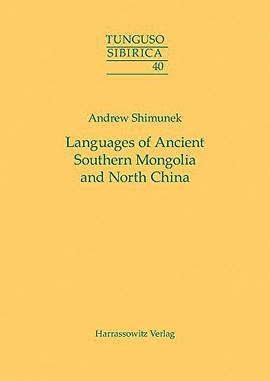
This is the first book on the Serbi-Mongolic language family - a major language family of Asia - and the first modern linguistic study of the Serbi (Xianbei) peoples, whose conquest of North China took place at approximately the same time as the Germanic and Hunnic Volkerwanderung into the former Western Roman Empire. The findings presented in this book - the first rigorous and systematic unified theory on the origins of the Mongolic and Serbi languages - add substantially to our understanding of the linguistic geography of Eastern Eurasia, and to the ethnolinguistic history of the Mongolic peoples and their neighbors, including speakers of Chinese, Japanese-Koguryoic, Tibeto-Burman, Tungusic, possibly Indo-European, and later, Turkic. This book also enhances our understanding of attested Middle Chinese, Early Old Mandarin, and Old Tibetan phonology. Moreover, it is the first study to present linguistic sketches of Taghbach (Tuoba), Tuyuhun ('Azha), and Kitan (Qidan), and to systematically compare Kitan and Mongol morphological and syntactic paradigms, resulting in the first reconstruction of Common Serbi-Mongolic phonology, morphology, lexicon, and syntax. Readers interested in Mongolia, the Mongols, North China, Central Eurasia, the Tibetan Empire, languages of Asia, historical linguistics, and history will find this book to be a useful resource.
In Search of the Folk Daoists of North China 豆瓣
作者: Stephen Jones 出版社: Ashgate 2010
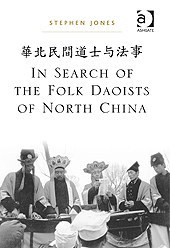
The living practice of Daoist ritual is still only a small part of Daoist studies. Most of this work focuses on the southeast, with the vast area of north China often assumed to be a tabula rasa for local lay liturgical traditions. This book, based on fieldwork, challenges this assumption.
With case studies on parts of Hebei, Shanxi, Shaanxi, and Gansu provinces, Stephen Jones describes ritual sequences within funerals and temple fairs, offering details on occupational hereditary lay Daoists, temple-dwelling priests, and even amateur ritual groups. Stressing performance, Jones observes the changing ritual scene in this poor countryside, both since the 1980s and through all the tribulations of twentieth-century warfare and political campaigns. The whole vocabulary of north Chinese Daoists differs significantly from that of the southeast, which has so far dominated our image.
Largely unstudied by scholars of religion, folk Daoist ritual in north China has been a constant theme of music scholars within China. Stephen Jones places lay Daoists within the wider context of folk religious practices - including those of lay Buddhists, sectarians, and spirit mediums. This book opens up a new field for scholars of religion, ritual, music, and modern Chinese society.
#
Contents: Preface; A well-kept secret; Part 1 Singing from a Different Hymn-Sheet: North and Central Shanxi: North Shanxi; North-central Shanxi. Part 2 Temple-Lay Connections: South Shanxi and South Hebei, Shaanxi and Gansu: South Shanxi and South Hebei; Shaanxi; Gansu. Part 3 Just Can't Get the Staff: the Central Hebei Plain: Introduction: ritual associations on the Hebei plain; Daxing: the Liangshanpo transmission; Bazhou and Jinghai; The western area: Houshan and the Houtu cult. Conclusion: It's Daoism, but not as we know it; Appendices; Bibliography; Glossary; Index.
#
About the Author: Stephen Jones read classical Chinese at Cambridge, and has been documenting living traditions of folk music in rural China since 1986. Since 1993 he has held research fellowships at SOAS, London University. He is author of the influential Folk music of China: living instrumental traditions, Plucking the winds, and his two volumes Ritual and music of north China (Ashgate, 2007, 2009), on north Shanxi and Shaanbei respectively, both include DVD documentaries. He is also a violinist in leading early music ensembles in London.
#
Reviews: 'In this groundbreaking study, Stephen Jones brings to light the service of Daoist rites among common people in northern China and compares them with what until now have been far better researched Daoist ritual performances in southern China. From his extensive fieldwork, he provides convincing evidence that distinctive Daoist ritual traditions are deeply embedded in rural northern China.'
Stephan Feuchtwang, London School of Economics, UK
Stephen Jones' twenty years of fieldwork with Daoists and musicians in north China come to full blossom with this superb book. Its comparative project is admirably ambitious, looking at key rituals done very differently across an area as wide as Europe; yet the writing always remains lively, witty and focused on actual people and performance rather than theories.
Vincent Goossaert, CNRS, author of The Taoists of Peking
过年 豆瓣
作者: 李军全 出版社: 中国社会科学出版社 2018 - 10
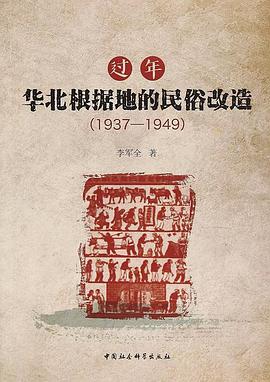
1937—1949年是中国共产党由革命型政党转变为执政党的关键期,春节亦成为一条融合革命与民众的动员路径。本书以春节为研究对象,集中于两个层面的考察:一是春节革命化,即春节对于中国共产党革命的政治意义,表现为中国共产党政治力量介入乡村社会后利用、开发春节价值的政治活动;二是革命化春节,即春节对于乡村民众的民俗意义,表现为乡村民俗对于政治改造春节的因应过程。通过这两个层面分析春节在中国共产党政治文化与乡村民俗文化之间相互交融的作用,梳理中国共产党在构建革命意识形态过程中认知和处理乡村传统的政治难题,及乡村传统给予中国共产党革命动员技术的张力。
2019年1月24日 已读
只是单纯收集分类介绍了中共单方面书写的各种材料,对这些史料之间的关系未深入考究。更不用说对民俗史料、华北民俗源流,以及中共宣传能力组织学上的来源的把握了。绪论说可以发掘比较国民党、西方的分析,然而却没在书中用上。可以关注中共禁欲思维的源流、审查制度在早期宣传工作的运用、抗日时期根据地实际经济发展与宣传氛围、救世信仰的效力、群众自主崇拜之前政府的宣传、解放区群众新历史观的形成等。
2018 中国 中国政治 中知 华北