哲
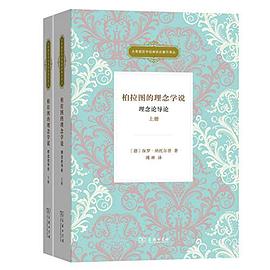
柏拉图的理念学说 Douban
Platos Ideenlehre: Eine Einführung in den Idealismus
author:
[德] 保罗·纳托尔普
translator:
溥林
publishing house:
商务印书馆
2018
- 9
本书是德国哲学家、新康德主义者(马堡学派)保罗·纳托尔普的代表作之一。作者基于德国观念论立场,尤其基于马堡学派的新康德主义立场,对柏拉图的理念学说进行了重新理解和解读,并批判了亚里士多德对柏拉图“理念”的理解。本书是柏拉图思想研究和诠释的里程碑式的著作,海德格尔在1925年就指出:“该书已经决定性地规定了最近二十年的柏拉图研究”。 全书除了两版前言之外,正文一共12章,外加一个“反批评附录”和对12章内容的补充说明。
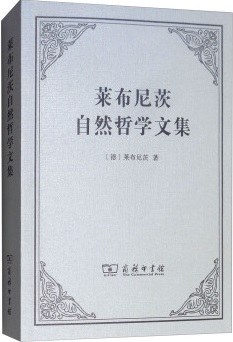
莱布尼茨自然哲学文集 Douban
author:
[德] 戈特弗里德·莱布尼茨
translator:
段德智 编译
publishing house:
商务印书馆
2018
- 7
自然,作为莱布尼茨可能世界中最好世界的一个极其重要的组成部分,从人类被“造出”之后,就一直是人类的唯一家园。 在本书中,编译者共收录了20篇相关论文和书信:从1671年的《对物理学与物体本性的研究》一直到1715年的《斐拉莱特与阿里斯特的对话》。基于我们对莱布尼茨自然哲学学术背景的上述考察,我们拟结合文本对这本文集的主题内容从八个方面作出扼要的说明。其中,前四个方面旨在从莱布尼茨自然哲学生成的角度依序考察莱布尼茨对笛卡尔、笛卡尔派、自然主义及野蛮哲学(即泛活力论)和牛顿的批判,后四个方面则旨在从逻辑层面依序考察莱布尼茨自然哲学的宏观结构、动力学思想、物质观与有形实体学说及其历史影响和理论得失等。
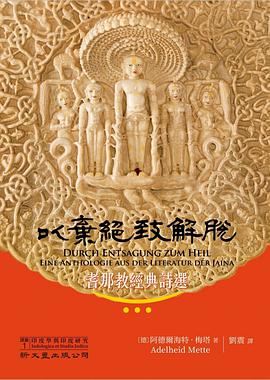
以棄絕致解脫 Douban
author:
[德] 阿爾德海特·梅塔(Adelheid Mette)
translator:
劉震
publishing house:
新文豐出版社
2017
- 5
耆那教根植於印度早期的思想世界,直至今日仍然十分活躍。如印度其他宗教一般,耆那教也相信靈魂輪迴轉世說。但是該宗教給予人類一條特殊的道路──一條能脫離無盡輪迴的道路,人們孤獨地面對著這條十分艱辛的道路,只有極少的人能夠踐行始終:嚴苛的苦行“tapas”,得以使靈魂從物質存在的羈絆中解脫,並且引入永恆的快樂之所。
德國著名的俗語和耆那教專家梅塔教授引經據典,為我們深入淺出地介紹了這一相對陌生的印度古老宗教。其創始人的生平、重要的教義和經典,皆以故事和詩歌的文學形式來展現。但願讀者們能藉由這部中譯本,體會到一些原文和德語譯文的優美。(印度學與印度研究.譯叢Ⅰ)
德國著名的俗語和耆那教專家梅塔教授引經據典,為我們深入淺出地介紹了這一相對陌生的印度古老宗教。其創始人的生平、重要的教義和經典,皆以故事和詩歌的文學形式來展現。但願讀者們能藉由這部中譯本,體會到一些原文和德語譯文的優美。(印度學與印度研究.譯叢Ⅰ)
意义与无意义 Douban
8.8 (12 ratings)
author:
梅洛-庞蒂
translator:
张颖
publishing house:
商务印书馆
2018
- 5
梅洛-庞蒂的《意义与无意义》收入梅洛-庞蒂于1945年到1947年之间发表的文章,共计十三篇,其中六篇来自梅洛-庞蒂和萨特联合编辑的言论阵地《现代》杂志。除序言外,全书共分三个部分:作品、观念、政治。“作品”部分有四篇文章,分别讨论塞尚绘画、波伏娃小说、萨特文学和电影艺术。“观念”部分有五篇文章,分别涉及黑格尔、马克思主义(计两篇)、形而上学、存在主义。“政治”部分有四篇文章,题目分别为《战争已经发生》、《为了真理》、《信仰与诚意》、《英雄,人》。本书之价值在于:首先,本书集中体现了梅洛-庞蒂早期思想的全貌,包括美学、文学、艺术、哲学、政治思想,也直接反映出当时法国哲学界的焦点所在。另外,近年来,侧面记录二战时期巴黎知识分子思想和活动状况的译著,在我国颇为流行;相比之下,像《意义与无意义》这样由当事人直接表达当下思想状况的书籍,应该是更具史料价值。
The Ignorant Schoolmaster Douban Goodreads Skybridge
author:
Jacques Rancière
translator:
Kristin Ross
publishing house:
Stanford University Press
1991
- 7
other title:
The Ignorant Schoolmaster: Five Lessons in Intellectual Emancipation
Review
'An extremely provocative, original, and engaging book, it raises questions of great relevance and urgency about the process of cultural selection and canonization.'Denis Hollier, Yale UniversityIgnorant Schoolmaster
In The Ignorant Schoolmaster, Rancière uses the historical figure of Joseph Jacotot as a way of discussing human nature, education, pedagogy, ignorance, intelligence, and emancipation. These ideas have profound implications on the nature of schooling and research, and the role that teachers and scholars play. Contents [hide]
1 Joseph Jacotot (1770-1840)
2 Explication
3 Emancipation
4 Ignorance
5 Intelligence
6 Will
7 Language
[edit]
Joseph Jacotot (1770-1840)
Jacotot was a French instructor who taught subjects as far-ranging as French, literature, mathematics, ideology and law (p. 1). He had a profound realization one time when he had to teach a group of Flemish students French. Since he didn’t know Flemish himself, he had the challenge of teaching these students French.
[edit]
Explication
The conventional view of the teacher’s (or master’s, as Rancière calls it), is to “explicate”. But Jacotot noticed that his Flemish students were able to learn French without any explication from him. He had given them a bilingual text of Télémaque; using that, his students were able to eventually under French grammar and spelling, using a text that was aimed for adults, and not “simplified” for school children. Jacotot (or maybe Rancière?) was inspired to ask: Were schoolmaster’s explications superfluous? (p. 4) Rancière believes that explication stultifies learning by short-circuiting the journey that the student is able to make. Teachers who rely on explication inadvertently creates a “veil of ignorance” (p. 6) what the student is expected to learn, thus creating a world of superior (i.e. the master, the explicator) and inferior (i.e. the student, the ignorant). But Rancière believes that all people are capable of learning without explication because they have all acquired their mother tongues without explication (p. 5, 10). They learn, imitate, and correct themselves, and universally, all children will grow up to understand their parents without every spent one day in school. Why do we presume this intelligence goes away?
[edit]
Emancipation
Rancière distinguishes between two human traits: intelligence and will. In Jacotot’s classroom, there are two wills (the students’ and Jacotot’s) and two intelligences (the students’ and the book’s). Students may need to follow the teacher’s will, who guides them towards the subject. But stultification occurs when the students’ intelligences are linked with the teacher’s, when they have to rely on the schoolmaster to explain what they have learned. The opposite of stultification is, therefore, emancipation. But who emancipates? Once again, conventionally, it is the scholar, the philosopher, the wise, the learned, the Teachers College doctoral student. But Rancière believes that the only way to emancipate is when an intelligence obeys only itself even if its will obeys another’s will (p. 13). In reality, universal teaching has existed since the beginning of the world, alongside all the explicative methods...Everyone has done this experiment a thousand times in life, and yet it has never occurred to someone to say to someone else: I’ve learned many things without explanations, I think that you can too... (p. 16)In Jacotot’s class, the students learned using their own methods, not his. And in the end, they learned French, and they have done so using the oldest method in the world: universal teaching.
[edit]
Ignorance
Rancière argues that the “Socratic Method” is a perfected form of stultification, where the role of the Master is to interrogate (demand speech) and verify that intelligence is done with attention (p. 29). Even if these pedagogies are aimed at “empowering” the student, it is still done so after the master has verified it. Thus, it is still the master’s method, not the student’s.
The ignorant schoolmaster does not verify what the student has found, only that the student has searched (p. 31). This means that anyone, including illiterate parents, can teach their children how to read and write. For example, they can question whether they pronounce the same word each time in the same way, or hide it under their hand and ask the student what is under it. This is true not only for re
[edit]
Intelligence
Most people become stultified because they believe in their inferiority (p. 39). And superior minds can only be superior if they can make everyone else inferior. Thus we never break out of that circle, not matter how generous our intentions may be. The word intelligence is often understood as a number, or variable, that describes different people’s capacities to comprehend complex ideas or solve logic problems. But Rancière believes that everyone has the same intelligence (p. 50). He argues that a statement like “Bob is smarter because he produces better work” is a tautological statement that explains nothing. It’s true that people will produce different types of work, but he doesn’t see this as the result of different intelligence, but as a result of not bringing sufficient attention to the work.
[edit]
Will
Intelligence has to do with attention while will has to do with the “power to be moved” (p. 54). Rancière argues that each of us represents a will that is served by an intelligence. We see, analyze, compare, reason, correct, reconsider, on an everyday basis. We do not always learn the same things because we do not pay the same amount of attention to the situation. Furthermore, he suggests that “[m]eaning is the work of the will” (p. 56). He calls “secret” of universal teaching, something that geniuses all know. All humans are capable of anything they want.
[edit]
Language
Jacotot/Rancière believed that truth cannot be told. When it is expressed in language it becomes fragmented (p. 60). Hence, he goes into the arbitrariness of language to suggest that there is no language that is superior than others because they are equally arbitrary. Intelligence does not have a language. As Jacotot argued, we are not intelligent because we speak; we are intelligent because we exist. But this is not a problem. It is precisely because all languages are arbitrary that we employ all we have access to (including but not limited to language) in expressing truth. (p. 62) Rancière calls our expression through language as a form of art, like improvisation. He calls “telling the story” and “figuring things out” the two master operations of intelligence (p. 64). He believes that the artist is the exact opposite of the professor. He argues: “Each one of us is an artist to the extent that he carries out a double process; he is not content to be a mere journeyman but wants to make all work a means of expression, and he is not content to feel something but tries to impart it to others” (p. 70).
'An extremely provocative, original, and engaging book, it raises questions of great relevance and urgency about the process of cultural selection and canonization.'Denis Hollier, Yale UniversityIgnorant Schoolmaster
In The Ignorant Schoolmaster, Rancière uses the historical figure of Joseph Jacotot as a way of discussing human nature, education, pedagogy, ignorance, intelligence, and emancipation. These ideas have profound implications on the nature of schooling and research, and the role that teachers and scholars play. Contents [hide]
1 Joseph Jacotot (1770-1840)
2 Explication
3 Emancipation
4 Ignorance
5 Intelligence
6 Will
7 Language
[edit]
Joseph Jacotot (1770-1840)
Jacotot was a French instructor who taught subjects as far-ranging as French, literature, mathematics, ideology and law (p. 1). He had a profound realization one time when he had to teach a group of Flemish students French. Since he didn’t know Flemish himself, he had the challenge of teaching these students French.
[edit]
Explication
The conventional view of the teacher’s (or master’s, as Rancière calls it), is to “explicate”. But Jacotot noticed that his Flemish students were able to learn French without any explication from him. He had given them a bilingual text of Télémaque; using that, his students were able to eventually under French grammar and spelling, using a text that was aimed for adults, and not “simplified” for school children. Jacotot (or maybe Rancière?) was inspired to ask: Were schoolmaster’s explications superfluous? (p. 4) Rancière believes that explication stultifies learning by short-circuiting the journey that the student is able to make. Teachers who rely on explication inadvertently creates a “veil of ignorance” (p. 6) what the student is expected to learn, thus creating a world of superior (i.e. the master, the explicator) and inferior (i.e. the student, the ignorant). But Rancière believes that all people are capable of learning without explication because they have all acquired their mother tongues without explication (p. 5, 10). They learn, imitate, and correct themselves, and universally, all children will grow up to understand their parents without every spent one day in school. Why do we presume this intelligence goes away?
[edit]
Emancipation
Rancière distinguishes between two human traits: intelligence and will. In Jacotot’s classroom, there are two wills (the students’ and Jacotot’s) and two intelligences (the students’ and the book’s). Students may need to follow the teacher’s will, who guides them towards the subject. But stultification occurs when the students’ intelligences are linked with the teacher’s, when they have to rely on the schoolmaster to explain what they have learned. The opposite of stultification is, therefore, emancipation. But who emancipates? Once again, conventionally, it is the scholar, the philosopher, the wise, the learned, the Teachers College doctoral student. But Rancière believes that the only way to emancipate is when an intelligence obeys only itself even if its will obeys another’s will (p. 13). In reality, universal teaching has existed since the beginning of the world, alongside all the explicative methods...Everyone has done this experiment a thousand times in life, and yet it has never occurred to someone to say to someone else: I’ve learned many things without explanations, I think that you can too... (p. 16)In Jacotot’s class, the students learned using their own methods, not his. And in the end, they learned French, and they have done so using the oldest method in the world: universal teaching.
[edit]
Ignorance
Rancière argues that the “Socratic Method” is a perfected form of stultification, where the role of the Master is to interrogate (demand speech) and verify that intelligence is done with attention (p. 29). Even if these pedagogies are aimed at “empowering” the student, it is still done so after the master has verified it. Thus, it is still the master’s method, not the student’s.
The ignorant schoolmaster does not verify what the student has found, only that the student has searched (p. 31). This means that anyone, including illiterate parents, can teach their children how to read and write. For example, they can question whether they pronounce the same word each time in the same way, or hide it under their hand and ask the student what is under it. This is true not only for re
[edit]
Intelligence
Most people become stultified because they believe in their inferiority (p. 39). And superior minds can only be superior if they can make everyone else inferior. Thus we never break out of that circle, not matter how generous our intentions may be. The word intelligence is often understood as a number, or variable, that describes different people’s capacities to comprehend complex ideas or solve logic problems. But Rancière believes that everyone has the same intelligence (p. 50). He argues that a statement like “Bob is smarter because he produces better work” is a tautological statement that explains nothing. It’s true that people will produce different types of work, but he doesn’t see this as the result of different intelligence, but as a result of not bringing sufficient attention to the work.
[edit]
Will
Intelligence has to do with attention while will has to do with the “power to be moved” (p. 54). Rancière argues that each of us represents a will that is served by an intelligence. We see, analyze, compare, reason, correct, reconsider, on an everyday basis. We do not always learn the same things because we do not pay the same amount of attention to the situation. Furthermore, he suggests that “[m]eaning is the work of the will” (p. 56). He calls “secret” of universal teaching, something that geniuses all know. All humans are capable of anything they want.
[edit]
Language
Jacotot/Rancière believed that truth cannot be told. When it is expressed in language it becomes fragmented (p. 60). Hence, he goes into the arbitrariness of language to suggest that there is no language that is superior than others because they are equally arbitrary. Intelligence does not have a language. As Jacotot argued, we are not intelligent because we speak; we are intelligent because we exist. But this is not a problem. It is precisely because all languages are arbitrary that we employ all we have access to (including but not limited to language) in expressing truth. (p. 62) Rancière calls our expression through language as a form of art, like improvisation. He calls “telling the story” and “figuring things out” the two master operations of intelligence (p. 64). He believes that the artist is the exact opposite of the professor. He argues: “Each one of us is an artist to the extent that he carries out a double process; he is not content to be a mere journeyman but wants to make all work a means of expression, and he is not content to feel something but tries to impart it to others” (p. 70).
想透彻 Douban
Thinking It Through: An Introduction to Contemporary Philosophy
author:
[美] 夸梅·安东尼·阿皮亚
translator:
姜昊骞
publishing house:
新华出版社
2017
- 7
本书是一部全面、生动的当代哲学导论著作,介绍了人类生活中最为关键的那些问题,包括心灵与知识的本质、道德论断的状况、上帝的存在、科学的作用,以及语言的法则。
著名哲学家夸梅·安东尼·阿皮亚阐述了在我们的时代“做”哲学意味着什么,以及对于希望活得更有思想深度的人们来说,思考这些哲学问题为什么重要。人们有一种普遍的误解,认为作为一名哲学家就意味着信奉某些哲学观点,或者是某位思想家的追随者。与此相反,阿皮亚认为,“哲学探索的成果并不结束于某一固定观念,而是心灵在众多的可能性上更舒服地休憩;或者重新表述问题,开始新的探索。”
本书围绕八个核心主题展开论述:心灵、知识、语言、科学、道德、政治、法律、形而上学,追述了过去的哲学家们如何思考这些主题,比如霍布斯、维特根斯坦、弗雷格如何思考语言问题,并进而探讨了仍然吸引着当代哲学家的一些重要问题。更重要的,阿皮亚不仅介绍了哲学家们对这些问题的观点,而且解释了哲学家们思考这些问题的方法。在当今的读者思考他们所面对的复杂问题时,这些方法无疑能起到导航作用。
著名哲学家夸梅·安东尼·阿皮亚阐述了在我们的时代“做”哲学意味着什么,以及对于希望活得更有思想深度的人们来说,思考这些哲学问题为什么重要。人们有一种普遍的误解,认为作为一名哲学家就意味着信奉某些哲学观点,或者是某位思想家的追随者。与此相反,阿皮亚认为,“哲学探索的成果并不结束于某一固定观念,而是心灵在众多的可能性上更舒服地休憩;或者重新表述问题,开始新的探索。”
本书围绕八个核心主题展开论述:心灵、知识、语言、科学、道德、政治、法律、形而上学,追述了过去的哲学家们如何思考这些主题,比如霍布斯、维特根斯坦、弗雷格如何思考语言问题,并进而探讨了仍然吸引着当代哲学家的一些重要问题。更重要的,阿皮亚不仅介绍了哲学家们对这些问题的观点,而且解释了哲学家们思考这些问题的方法。在当今的读者思考他们所面对的复杂问题时,这些方法无疑能起到导航作用。
古代小说研究十大问题 Douban
author:
刘勇强
/
潘建国
…
publishing house:
北京大学出版社
2017
- 10
古代小说历来是古代文学重要一支,而相对于古代诗词研究而言,对古代小说的研究稍显薄弱。本书是北京大学中文系三位古代文学研究专家以对话形式探讨古代小说研究的基本问题,包括文体、风格、结构、情节等,生发出诸多新的思路和观点,富有启发意义,对古代文学研究有一定的前沿借鉴价值。古代小说历来是古代文学重要一支,而相对于古代诗词研究而言,对古代小说的研究稍显薄弱。本书是北京大学中文系三位古代文学研究专家以对话形式探讨古代小说研究的基本问题,包括文体、风格、结构、情节等,生发出诸多新的思路和观点,富有启发意义,对古代文学研究有一定的前沿借鉴价值。
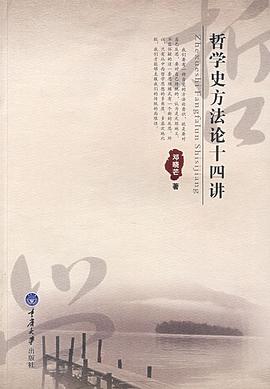
哲学史方法论十四讲 Douban
author:
邓晓芒
publishing house:
重庆大学出版社
2008
- 3
本书是我在2006年春季学期给研究生开设的“哲学史方法论”课的讲课录音。这门课每周一次,每次三个小时,常常拖堂到近四小时,一共讲了16次。在收入本书时,有两次没有收入进来,一次是关于黑格尔《哲学史讲演录•导言》的,由于当时录音未能录上,没有留下资料;另一次是谈中西怀疑论的比较的,由于考虑到不想使本书篇幅太大,而且该讲演在别的地方作过多次并已收入到了其他文集,为避免重复,删掉了。于是还有十四讲,都是根据我已往发表的有关方法论的文章而作的讲演。本次哲学史方法论课,由于是最近的一次,所以也是内容最丰富的一次。多年来思考的积累使我在课堂上滔滔不绝,巴不得一口气把所想到的都倾倒出来,总觉得时间不够,形成了一种典型的“满堂灌”式的教学。如果把所讲的不加删节全部收进来的话,估计全书要超过50万字。但是奇怪的是,这门课不但没有人感到厌烦,没有人打瞌睡,而且由于课堂开放,什么人都可以进来,找个位置坐下来听,所以听众有越来越多之势,甚至有一种热烈的气氛,高峰时达到一、两百人。其中有外系的,也有外校的,不但有研究生、教师,还有个体户、小商人、职员。有从西安专程赶来的书商,也有每个星期六坐火车来武汉,听完课又赶回长沙的湖南师大的研究生。每次课后,学生们都有一大群跟着我边走边谈,问问题,一直送到家门口,时常还在我家门口展开一场临时的讨论会,形成武汉大学校园中的“一景”。我知道这门课的缺陷就是没有更加深入的课堂讨论,本应该留出时间来让大家发表意见、互相切磋。但如果这样干,恐怕就不能讲这么多新内容了,所以我宁可把讨论放到课后回家的路上进行(大约有20分钟),学亚里士多德的“逍遥学派”。
Subjective Probability Douban Goodreads
Subjective Probability
publishing house:
John Wiley & Sons
1994
- 10
Prominent authorities from multiple disciplines analyze and document the human ability to deal with uncertainty. Coverage ranges from discussions of the philosophy of axiom systems through studies in the psychological laboratory to the reality of business decision making.
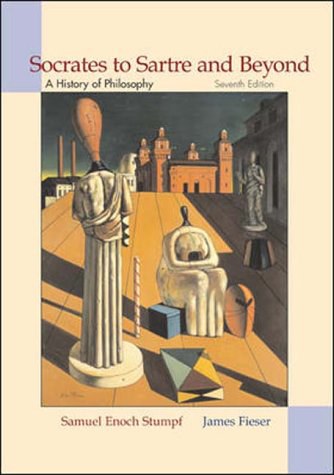
Socrates to Sartre and Beyond Douban
author:
Samuel Enoch Stumpf
publishing house:
McGraw-Hill Higher Education
2002
- 8
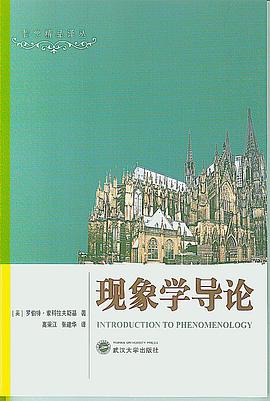
现象学导论 Douban
Introduction to phenomenology
9.1 (15 ratings)
author:
[美] 罗伯特·索科拉夫斯基
translator:
高秉江
/
张建华
publishing house:
武汉大学出版社
2009
- 10
《现象学导论》一书简洁明快,论理深入浅出,就如同索科拉夫斯基教授讲课的风格一样。追求思想的清晰性一直是哲学乃至现象学的最高境界,胡塞尔曾说过没有思维的明晰性,他就没法活下去;把哲学从黑格尔式的繁琐概念思辨返回到思维的自明呈现,原本是胡塞尔创立“直面实事本身”的现象学方法的主旨。就这一点而言,索科拉夫斯基教授恰恰是顺应了现象学的原初精义。索科拉夫斯基教授一直在天主教大学开讲胡塞尔的《逻辑研究》和《笛卡尔沉思》,对胡塞尔及现象学本文数十年的教学与研究,成为这本导论性著作的自然朴实之风的前提和基础。这本《导论》梳理和诠释了现象学的主题,诸如“意向性”、“形式结构”、“自我”、“时间性”、“生活世界”、“主体间性”和“本质直观”等等,将纷繁复杂的现象学思想系统地纳入到这些主题之中,思想深刻而又条理明晰。