复杂性

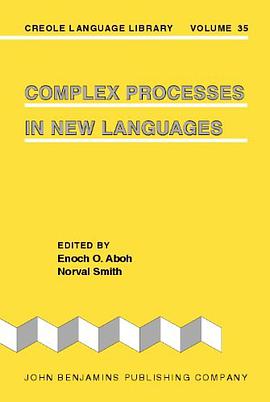
Complex Processes in New Languages (Creole Language Library) Douban
publishing house:
John Benjamins Publishing Company
2009

失败的逻辑 Douban Goodreads
The Logic Of Failure: Recognizing And Avoiding Error In Complex Situations
为什么铁路信号系统工作正常时,列车仍然会发生撞车事故?为什么所有操作人员都警觉地坚守着工作岗位,核反应堆依然会发生灾难性的熔化事故?为什么我们制定得甚好的那么多专业和个人计划,会如此频繁地出岔子?
迪特里希·德尔纳,德国最高科学将获得者,在此考虑为什么--假定具备所有的 智能、经验和信息条件--我们却仍然会犯错误,有时甚至引起灾难性的后果。令人惊讶的是,他发现问题的答案不在于疏忽或粗心,而是缘于他所谓的"失败的逻辑":我们思维模式中的某些倾向--诸如一次只做一件事,因果关系,还有线性思维--它们适合于过去的简单世界,对于我们现在所生活的复杂世界却有着灾难性影响。当今世界,一切事物都是相互关联的。我们不能一次只做一件事情,因为每件事都有多重结果;我们不能用孤立的因果模式考虑问题,因为所有的情况都有副作用和长远影响。
德尔纳给我们找到了不少例子。为什么阿斯旺水坝的规划者们,只想到会给埃及带来廉价用电的好处,却没有意识到他们也将会中断几千年来维持尼罗河谷地肥沃富饶的一年一次的洪水漫灌?为什么第三世界健康计划的规划者们不能认识到提高平均寿命就要求增加食物供应,从而疏忽地终止对饥民的捐助?
德尔纳指出,在未了解一个复杂系统中所有连锁因素之前就采取行动,即使我们怀着善良的意愿,也难免铸成大错。面对我们力不能及的问题,小错误累积起来,最后就会酿成严重的错误结论。过于频繁地忽视问题的大局,却只在我们知道如何做的范围内寻求权宜之计--这只能是杯水车薪无济于事。
德尔纳用他自己编制的引人入胜的计算机模拟程序,揭示了我们思维中的这些缺陷。他的例子--有时是开心的,有时是吓人的--和他那"梳脑"思维实验,使我们认识到应该如何处理复杂问题。这些实例使本书成为一件矫正工具,一种明智的规划和决策指南,使商业经理、决策者以及面临由此及彼日常挑战的每一个人的思维技巧更加敏锐。本书将改变我们构思变化的方法本身,使我们对成功之路的判断能力得到提高。
迪特里希·德尔纳,德国最高科学将获得者,在此考虑为什么--假定具备所有的 智能、经验和信息条件--我们却仍然会犯错误,有时甚至引起灾难性的后果。令人惊讶的是,他发现问题的答案不在于疏忽或粗心,而是缘于他所谓的"失败的逻辑":我们思维模式中的某些倾向--诸如一次只做一件事,因果关系,还有线性思维--它们适合于过去的简单世界,对于我们现在所生活的复杂世界却有着灾难性影响。当今世界,一切事物都是相互关联的。我们不能一次只做一件事情,因为每件事都有多重结果;我们不能用孤立的因果模式考虑问题,因为所有的情况都有副作用和长远影响。
德尔纳给我们找到了不少例子。为什么阿斯旺水坝的规划者们,只想到会给埃及带来廉价用电的好处,却没有意识到他们也将会中断几千年来维持尼罗河谷地肥沃富饶的一年一次的洪水漫灌?为什么第三世界健康计划的规划者们不能认识到提高平均寿命就要求增加食物供应,从而疏忽地终止对饥民的捐助?
德尔纳指出,在未了解一个复杂系统中所有连锁因素之前就采取行动,即使我们怀着善良的意愿,也难免铸成大错。面对我们力不能及的问题,小错误累积起来,最后就会酿成严重的错误结论。过于频繁地忽视问题的大局,却只在我们知道如何做的范围内寻求权宜之计--这只能是杯水车薪无济于事。
德尔纳用他自己编制的引人入胜的计算机模拟程序,揭示了我们思维中的这些缺陷。他的例子--有时是开心的,有时是吓人的--和他那"梳脑"思维实验,使我们认识到应该如何处理复杂问题。这些实例使本书成为一件矫正工具,一种明智的规划和决策指南,使商业经理、决策者以及面临由此及彼日常挑战的每一个人的思维技巧更加敏锐。本书将改变我们构思变化的方法本身,使我们对成功之路的判断能力得到提高。

Two's Company, Three Is Complexity Douban
author:
Neil F. Johnson
publishing house:
Oneworld Publications
2007
Preface
It is 2050, and you are watching Who Wants to be a Billionaire? The contestant is one question away from the jackpot. Up comes his
question: “What is the name of the theory that scientists started developing at the beginning of the twenty-first century, and
which helped the world overcome traffic congestion, financial market crashes, terrorist attacks, pandemic viruses, and cancer?” The contestant cannot believe his luck. What an easy question! But he is so nervous that his mind temporarily goes blank. He starts to consider option A: “They are all still unsolved problems” – but then quickly realizes that this is a dumb answer. Instead, he uses his last lifeline to ask the audience. The audience responds unanimously and instantaneously with option B: “The Theory of Complexity”. Without hesitation, he goes with option B. The host hands him the cheque, and the world has yet another billionaire.
Pure fantasy? Maybe not.
In this book, we will go on a journey to the heart of Complexity, an emerging science which looks set to trigger the next great wave of advances in everything from medicine and biology through to economics and sociology. Complexity Science also comes with the
prospect of solving a wide range of important problems which face us as individuals and as a Society. Consequently, it is set to permeate through every aspect of our lives.
There is, however, one problem. We don’t yet have a fullyfledged “theory” of Complexity. Instead, I will use this book to assemble all the likely ingredients of such a theory within a common framework, and then analyze a wide range of real-world applications within this same common framework. It will then require someone from the future – perhaps one of the younger readers of this book – to finally put all these pieces into place.
Complexity Science is a double-edged sword in the best possible sense. It is truly “big science” in that it embodies some of the hardest, most fundamental and most challenging open problems in academia. Yet it also manages to encapsulate the major practical issues which face us every day from our personal lives and health, through to global security. Making a pizza is complicated, but not complex. The same holds for filling out your tax return, or mending a bicycle puncture. Just follow the instructions step by step, and you will eventually be able to go from start to finish without too much trouble. But imagine trying to do all three at the same time. Worse still, suppose that the sequence of steps that you follow in one task actually depends on how things are progressing with the other two. Difficult? Well, you now have an indication of what Complexity is all about. With that in mind, now substitute those three interconnected tasks for a situation in which three interconnected people each try to follow their own instincts and strategies while reacting to the actions of the others. This then gives an idea of just how Complexity
might arise all around us in our daily lives.
While I was writing this book, I had the following “wish-list” in my head concerning its goals:
1. To provide a book which a wide cross-section of people would want to read and would enjoy reading – regardless of age,
background or level of scientific knowledge.
2. To introduce readers to the exciting range of real-world scenarios in which Complexity Science can prove its worth.
3. To provide the book on Complexity that “I never had but always needed”. In other words, to provide an easily readable yet thorough guide to this important scientific revolution.
4. To provide a book that my kids could read – or rather, a book that they would actually choose to read all by themselves. This is a very important goal, since Complexity will likely become the science of interest for future generations.
5. To provide a book which is just as readable on a plane or bus as in a library. As such, it should also make sense when read in short chunks.
6. To provide a book which provides professional scientists,economists, and policy-makers with a new perspective on
open problems in their field, and to help stimulate new Complexity-based interdisciplinary research projects.
However, as I finish the book and offer it up to potential readers,I realize that the above wish-list can essentially be reduced to just
one item: I would wish that you enjoy reading this book, and that it might provide you with fresh thoughts and insights for dealing
with the complex world in which we live, and which our children will inherit.
There are some practicalities concerning the book’s content and layout which I would like to explain. The language, examples and
analogies are kept simple since the focus of the book is to explain what Complexity Science is all about, and why it is so important for
us all. I therefore avoid delving into too much detail in the main text. Instead, the Appendix describes how to access the technical
research papers upon which the discussions in the book are based, and gives a list of Internet websites containing additional information about Complexity research around the world. Having said this, I won’t pull any punches in the sense that I tackle all the topics
which I believe to be relevant. Part 1 of the book takes us through the theoretical underpinnings of Complexity, while Part 2
delves into its real-world applications. Some of the territory is only just beginning to be explored, with very few answers available
for the questions being posed. From the perspective of other scientific revolutions throughout history this might seem to be par
for the course. However we are not talking about history here –instead, we are looking at work which is emerging at the forefront
of a new discipline. For this reason we will be highlighting where such research is heading, rather than where it has been.
But why should you believe what I write about Complexity? This is a crucially important question given that Complexity Science is still being developed and its potential applications explored. Unfortunately many accounts of Complexity in the popular press are second-hand, i.e. they are typically written by people who have done little, if any, research on Complexity themselves and are instead reporting on their interpretation of
other people’s work. Given the relatively immature nature of the field, I believe that such indirect interpretations are potentially
dangerous. For this reason, I will base the book’s content around my own research group’s experience in Complexity. This has
various advantages: (i) it reflects my own understanding of the Complexity field; (ii) it represents what I believe to be the most
relevant and important topics; (iii) it will hopefully give the reader a sense of what it is like to be at the “pit-face” in such a
challenging area of research; and (iv) it ensures that any reader can challenge me directly on any claims that I make, and can
demand an informed answer. To facilitate this process of public scrutiny, a complete list of the relevant scientific research reports
is presented in the latter part of the Appendix. I also encourage any readers who wish to email me with questions, to do so at
n.johnson@physics.ox.ac.uk
It is 2050, and you are watching Who Wants to be a Billionaire? The contestant is one question away from the jackpot. Up comes his
question: “What is the name of the theory that scientists started developing at the beginning of the twenty-first century, and
which helped the world overcome traffic congestion, financial market crashes, terrorist attacks, pandemic viruses, and cancer?” The contestant cannot believe his luck. What an easy question! But he is so nervous that his mind temporarily goes blank. He starts to consider option A: “They are all still unsolved problems” – but then quickly realizes that this is a dumb answer. Instead, he uses his last lifeline to ask the audience. The audience responds unanimously and instantaneously with option B: “The Theory of Complexity”. Without hesitation, he goes with option B. The host hands him the cheque, and the world has yet another billionaire.
Pure fantasy? Maybe not.
In this book, we will go on a journey to the heart of Complexity, an emerging science which looks set to trigger the next great wave of advances in everything from medicine and biology through to economics and sociology. Complexity Science also comes with the
prospect of solving a wide range of important problems which face us as individuals and as a Society. Consequently, it is set to permeate through every aspect of our lives.
There is, however, one problem. We don’t yet have a fullyfledged “theory” of Complexity. Instead, I will use this book to assemble all the likely ingredients of such a theory within a common framework, and then analyze a wide range of real-world applications within this same common framework. It will then require someone from the future – perhaps one of the younger readers of this book – to finally put all these pieces into place.
Complexity Science is a double-edged sword in the best possible sense. It is truly “big science” in that it embodies some of the hardest, most fundamental and most challenging open problems in academia. Yet it also manages to encapsulate the major practical issues which face us every day from our personal lives and health, through to global security. Making a pizza is complicated, but not complex. The same holds for filling out your tax return, or mending a bicycle puncture. Just follow the instructions step by step, and you will eventually be able to go from start to finish without too much trouble. But imagine trying to do all three at the same time. Worse still, suppose that the sequence of steps that you follow in one task actually depends on how things are progressing with the other two. Difficult? Well, you now have an indication of what Complexity is all about. With that in mind, now substitute those three interconnected tasks for a situation in which three interconnected people each try to follow their own instincts and strategies while reacting to the actions of the others. This then gives an idea of just how Complexity
might arise all around us in our daily lives.
While I was writing this book, I had the following “wish-list” in my head concerning its goals:
1. To provide a book which a wide cross-section of people would want to read and would enjoy reading – regardless of age,
background or level of scientific knowledge.
2. To introduce readers to the exciting range of real-world scenarios in which Complexity Science can prove its worth.
3. To provide the book on Complexity that “I never had but always needed”. In other words, to provide an easily readable yet thorough guide to this important scientific revolution.
4. To provide a book that my kids could read – or rather, a book that they would actually choose to read all by themselves. This is a very important goal, since Complexity will likely become the science of interest for future generations.
5. To provide a book which is just as readable on a plane or bus as in a library. As such, it should also make sense when read in short chunks.
6. To provide a book which provides professional scientists,economists, and policy-makers with a new perspective on
open problems in their field, and to help stimulate new Complexity-based interdisciplinary research projects.
However, as I finish the book and offer it up to potential readers,I realize that the above wish-list can essentially be reduced to just
one item: I would wish that you enjoy reading this book, and that it might provide you with fresh thoughts and insights for dealing
with the complex world in which we live, and which our children will inherit.
There are some practicalities concerning the book’s content and layout which I would like to explain. The language, examples and
analogies are kept simple since the focus of the book is to explain what Complexity Science is all about, and why it is so important for
us all. I therefore avoid delving into too much detail in the main text. Instead, the Appendix describes how to access the technical
research papers upon which the discussions in the book are based, and gives a list of Internet websites containing additional information about Complexity research around the world. Having said this, I won’t pull any punches in the sense that I tackle all the topics
which I believe to be relevant. Part 1 of the book takes us through the theoretical underpinnings of Complexity, while Part 2
delves into its real-world applications. Some of the territory is only just beginning to be explored, with very few answers available
for the questions being posed. From the perspective of other scientific revolutions throughout history this might seem to be par
for the course. However we are not talking about history here –instead, we are looking at work which is emerging at the forefront
of a new discipline. For this reason we will be highlighting where such research is heading, rather than where it has been.
But why should you believe what I write about Complexity? This is a crucially important question given that Complexity Science is still being developed and its potential applications explored. Unfortunately many accounts of Complexity in the popular press are second-hand, i.e. they are typically written by people who have done little, if any, research on Complexity themselves and are instead reporting on their interpretation of
other people’s work. Given the relatively immature nature of the field, I believe that such indirect interpretations are potentially
dangerous. For this reason, I will base the book’s content around my own research group’s experience in Complexity. This has
various advantages: (i) it reflects my own understanding of the Complexity field; (ii) it represents what I believe to be the most
relevant and important topics; (iii) it will hopefully give the reader a sense of what it is like to be at the “pit-face” in such a
challenging area of research; and (iv) it ensures that any reader can challenge me directly on any claims that I make, and can
demand an informed answer. To facilitate this process of public scrutiny, a complete list of the relevant scientific research reports
is presented in the latter part of the Appendix. I also encourage any readers who wish to email me with questions, to do so at
n.johnson@physics.ox.ac.uk
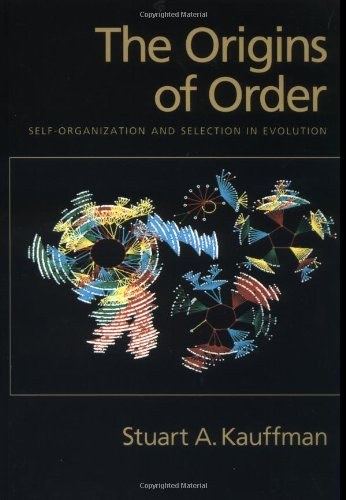
The Origins of Order: Self-Organization and Selection in Evolution Goodreads Douban
author:
Stuart A. Kauffman
publishing house:
Oxford University Press, U.S.A.
1993
- 6
other title:
The Origins of Order
Stuart Kauffman here presents a brilliant new paradigm for evolutionary biology, one that extends the basic concepts of Darwinian evolution to accommodate recent findings and perspectives from the fields of biology, physics, chemistry and mathematics. The book drives to the heart of the exciting debate on the origins of life and maintenance of order in complex biological systems. It focuses on the concept of the spontaneous emergence of order that is widely observed throughout nature Kauffman argues that self-organization plays an important role in the Darwinian process of natural selection. Yet until now no systematic effort has been made to incorporate the concept of self-organization into evolutionary theory. The construction requirements which permit complex systems to adapt are poorly understood, as is the extent to which selection itself can yield systems able to adapt more successfully. This book explores these themes. It shows how complex systems,
contrary to expectations, can spontaneously exhibit stunning degrees of order, and how this order, in turn, is essential for understanding the emergence and development of life on Earth. Topics include the new biotechnology of applied molecular evolution, with its important implications for developing new drugs and vaccines; the balance between order and chaos observed in many naturally occurring systems; new insights concerning the predictive power of statistical mechanics in biology; and other major issues. Indeed, the approaches investigated here may prove to be the new center around which biological science itself will evolve. The work is written for all those interested in the cutting edge of research in the life sciences.
contrary to expectations, can spontaneously exhibit stunning degrees of order, and how this order, in turn, is essential for understanding the emergence and development of life on Earth. Topics include the new biotechnology of applied molecular evolution, with its important implications for developing new drugs and vaccines; the balance between order and chaos observed in many naturally occurring systems; new insights concerning the predictive power of statistical mechanics in biology; and other major issues. Indeed, the approaches investigated here may prove to be the new center around which biological science itself will evolve. The work is written for all those interested in the cutting edge of research in the life sciences.

Theory of Self-Reproducing Automata Douban
author:
John von Neumann
/
Edit by Arthur Burk
publishing house:
UMl Reprint University Illinois 1966 Ed
2002
该书是一本von Neumann关于“自复制自动机”的研究论文集,由von Neumann在密西根大学的助手Arthur Burk(大名鼎鼎的John Holland的博士导师)整理编辑。
这本书的意义不仅仅在于它实际上开创了“人工生命”、“细胞自动机”等多门复杂性研究的分支。更重要的是,该书将“自我复制”作为生命的一个本质特征加以数学建模的研究。而这套理论和可计算性理论、歌德尔定理以及热力学深深地联系到了一起。这一点也许对于我们研究复杂系统的人来说仍具有重要的意义。
这本书的意义不仅仅在于它实际上开创了“人工生命”、“细胞自动机”等多门复杂性研究的分支。更重要的是,该书将“自我复制”作为生命的一个本质特征加以数学建模的研究。而这套理论和可计算性理论、歌德尔定理以及热力学深深地联系到了一起。这一点也许对于我们研究复杂系统的人来说仍具有重要的意义。

规模 Douban
Scale: The Universal Laws of Growth, Innovation, Sustainability, and the Pace of Life in Organisms, Cities, Economies, and Companies
7.9 (17 ratings)
author:
杰弗里·韦斯特 (Geoffrey West)
translator:
张培
publishing house:
中信出版社
2018
- 6
生命体、城市、公司,乃至一切复杂万物,是否都存在相通的内在生长逻辑?制约生命与死亡、城市化的扩张及公司寿命的决定因素究竟是什么?人类能否通过融汇生物学、物理学、社会学、经济学等跨学科知识,找到揭开复杂万物生长背后的简单法则?
享誉全球的复杂系统性科学研究中心圣塔菲研究所前所长杰弗里•韦斯特潜心研究数十年,经过反复试验和求证,终于找到了解构复杂世界的简单逻辑——规模法则。在韦斯特眼中,规模成为衡量世间万物的不变标准,利用规模法则,复杂世界变得可量化、可预测、清晰明了且极度统一。规模法则阐明了从生命体到城市、从经济体到公司的生长与衰败都离不开其自身规模的制约,并与其规模呈一定比例关系,遵守统一的公式。这一算法框架不仅为人类思考未知世界提供了难得的简单法则,而且能解答不同生命体的生长极限之谜,优化城市发展架构并找到推动经济实现可持续发展、公司从初创到卓越的生长曲线。
《规模》将帮助你重新思考生命、认识自身、了解你的生活与工作,并告诉你复杂世界其实充满简单的逻辑,只要跳脱思维框架,打破学科限制,你就会重新看清你周遭的一切。
享誉全球的复杂系统性科学研究中心圣塔菲研究所前所长杰弗里•韦斯特潜心研究数十年,经过反复试验和求证,终于找到了解构复杂世界的简单逻辑——规模法则。在韦斯特眼中,规模成为衡量世间万物的不变标准,利用规模法则,复杂世界变得可量化、可预测、清晰明了且极度统一。规模法则阐明了从生命体到城市、从经济体到公司的生长与衰败都离不开其自身规模的制约,并与其规模呈一定比例关系,遵守统一的公式。这一算法框架不仅为人类思考未知世界提供了难得的简单法则,而且能解答不同生命体的生长极限之谜,优化城市发展架构并找到推动经济实现可持续发展、公司从初创到卓越的生长曲线。
《规模》将帮助你重新思考生命、认识自身、了解你的生活与工作,并告诉你复杂世界其实充满简单的逻辑,只要跳脱思维框架,打破学科限制,你就会重新看清你周遭的一切。

同步 Douban
SYNC: How Order Emerges from Chaos in the Universe,Nature and Daily Life
author:
[美] 斯蒂芬·斯托加茨
translator:
张羿
publishing house:
湛庐文化/四川人民出版社
2018
- 4
成千上万只同步闪烁的萤火虫,整齐划一收缩的心脏起搏细胞,上万亿个在超导体中一致前进的电子……这些我们身边的同步现象,都指向了某种自组织现象,有关这种秩序的自发产生,是许多科学家终其一生研究的主题。而研究表明,持续、自发的同步现象与“耦合振子”的运动密切相关。
耦合振子究竟如何自发同步?在什么条件下同步?什么时候同步不可能出现,什么时候又不可避免?当失去同步时,会出现什么样的组织形式?我们正在努力学习的一切,其实际意义是什么?通过阅读本书,回答这些问题,我们将遇见一个隐藏的美丽世界,一个只有通过数学才能看到的世界。
除了理解同步现象本身,读者还将与作者一起体验在科学战壕中工作的诸多感受——曲折的探索、碰壁的苦楚、新发现的兴奋、从学生到同事再到导师的蜕变。阅读本书将是一种难得的乐趣!
耦合振子究竟如何自发同步?在什么条件下同步?什么时候同步不可能出现,什么时候又不可避免?当失去同步时,会出现什么样的组织形式?我们正在努力学习的一切,其实际意义是什么?通过阅读本书,回答这些问题,我们将遇见一个隐藏的美丽世界,一个只有通过数学才能看到的世界。
除了理解同步现象本身,读者还将与作者一起体验在科学战壕中工作的诸多感受——曲折的探索、碰壁的苦楚、新发现的兴奋、从学生到同事再到导师的蜕变。阅读本书将是一种难得的乐趣!



探索复杂性 Douban
author:
(比利时)G.尼科里斯
/
普利高津
translator:
罗久里
/
陈奎宁
publishing house:
四川教育出版社
2010
- 4
《探索复杂性》内容简介:耗散结构理论由于在社会经济等大范围领域中展现的广阔前景,引起了人们的极大兴趣,与协同论、突变论并称为现代科学方法论的新三论。美国著名作家托夫勒认为,这一理论“可能代表了下一次科学革命”。《探索复杂性》作者之一普利高津因提出这一理论而获得1977年诺贝尔奖,《探索复杂性》的另一作者布鲁塞尔学派主要成员尼科里斯教授,是欧洲著名的物理学家,对发展耗散结构理论做出了杰出的贡献。
书中全面地介绍了以耗散结构理论为代表的进化论物理学的最新成就,着力于打破自然科学各门类之间乃至自然科学与社会科学之间的壁垒,再次点燃科学革命之火。
《探索复杂性》内容新颖、文笔优美、深入浅出,适宜于物理学、化学、数学、生物学、医学、地质学等专业的科学工作者、大专院校师生阅读,也适宜于社会科学工作者和具有中等文化程度的读者阅读。
书中全面地介绍了以耗散结构理论为代表的进化论物理学的最新成就,着力于打破自然科学各门类之间乃至自然科学与社会科学之间的壁垒,再次点燃科学革命之火。
《探索复杂性》内容新颖、文笔优美、深入浅出,适宜于物理学、化学、数学、生物学、医学、地质学等专业的科学工作者、大专院校师生阅读,也适宜于社会科学工作者和具有中等文化程度的读者阅读。

混沌与秩序 Douban
Chaos and order : the complex structure of living system
最近在生命科学中取得的进展,已经在我们对自然的认识方面产生了意义深远的影响。对远离平衡态的非线性系统和自组织的深入研究,已被纳入科学视界。因分子生物学领域的卓越贡献而著称的克拉默教授,以其独特的洞见致力于展现一幅整体图景,回答长期以来一直强烈吸引着人类的重大问题——生命是什么。
克拉默教授探究了耗散结构理论、超循环理论、混沌理论和突变论等自组织理论,剖析了生命结构的有序与混沌,基因治疗的可行性,物种进化和进化主义,树与闪电的相似形态,三体问题,天体结构,分形艺术,大爆炸,衰老与死亡,由此建立了事物的根本复杂性的概念和相关理论。
本书每一章皆以一段哲理性对话开篇,以一首抒情诗作结,旨在以这种别出心裁的结构,架起沟通科学技术与哲学人文“两种文化”的桥梁。
克拉默教授探究了耗散结构理论、超循环理论、混沌理论和突变论等自组织理论,剖析了生命结构的有序与混沌,基因治疗的可行性,物种进化和进化主义,树与闪电的相似形态,三体问题,天体结构,分形艺术,大爆炸,衰老与死亡,由此建立了事物的根本复杂性的概念和相关理论。
本书每一章皆以一段哲理性对话开篇,以一首抒情诗作结,旨在以这种别出心裁的结构,架起沟通科学技术与哲学人文“两种文化”的桥梁。

文明分岔、经济混沌和演化经济动力学 Douban
author:
陈平
publishing house:
北京大学出版社
2004
- 9
这是作者参加与建立现代复杂经济科学的论文集,跨越了比较历史学、理论生态学、经济动力学、社会心理学和非平衡态物理学等领域,以探讨两大社会科学的基本问题:劳动分工的演化机制和市场经济持续波动的内因。作者从宏观和股市运动的定量分析与历史案例出发,挑战目前均衡经济学与计量经济学的基本模型,发现了有效市场、噪声驱动、理性预期、微观基础等显学的生大谬误,发展的统一的非线性经济演化动力学的一般理论,以理解长至千年的东西方文明分岔、短至几年左右的技术换代与经济波动。

古代哲学中的信息、系统、复杂性思想 Douban
author:
邬焜
publishing house:
商务印书馆
2010
- 5
《古代哲学中的信息、系统、复杂性思想:希腊·中国·印度》中写到人类古代浩繁的哲学文献恰如一座全息蕴涵人类古老智慧的思想宝库。其中既有泥土沙石,也有珍珠美玉。当人们从不同的角度、运用不同的方法对其进行挖掘和解读时,便可能会得出十分不同的意见和结论。《古代哲学中的信息、系统、复杂性思想:希腊·中国·印度》所做的工作,是作者从一个特定的角度、运用一种特定的方法对人类古代哲学文献中蕴涵的部分思想的再挖掘和再阐释。

非线性科学及其应用 Douban
author:
李士勇
2011
- 10
《非线性科学及其应用》全面地介绍了非线性科学的基本概念、基本方法、基本理论及其应用。全书共7章,内容包括系统科学引论、耗散结构论、协同学、突变论、混沌学、分形及非线性科学在工程中的应用实例。
《非线性科学及其应用》内容取材广泛而新颖,具有多学科融合的交叉性、前沿性和普适性。写作上力求由浅入深、举一反三,融会辩证思维的哲学思想,力争给读者以科学思想方法论的深刻启迪。《非线性科学及其应用》可作为科研人员、工程技术人员及高级管理人员的参考书,也可供高等院校工学、理学、生命科学、管理科学、军事科学、环境科学、地球科学、农林科学及医药卫生等领域相关专业研究生参考。
《非线性科学及其应用》内容取材广泛而新颖,具有多学科融合的交叉性、前沿性和普适性。写作上力求由浅入深、举一反三,融会辩证思维的哲学思想,力争给读者以科学思想方法论的深刻启迪。《非线性科学及其应用》可作为科研人员、工程技术人员及高级管理人员的参考书,也可供高等院校工学、理学、生命科学、管理科学、军事科学、环境科学、地球科学、农林科学及医药卫生等领域相关专业研究生参考。

复杂系统理论基础 Douban
author:
[美] 欧阳莹之
translator:
田宝国
/
周亚
…
publishing house:
上海科技教育出版社
2002
- 10
本书的相当大部分致力于对科学理论和模型的表述,从而为进行哲学分析提供素材。由于多体系统的复杂性,诸学科基本上依赖于理想化和近似,各学科部分成了许多强调系统不同假面的模型。我将尽力展开模型。背扣的假设和预设,便于读者评价它们那些通常是有文化影响的声称。除了对一般概念进行澄清,我希望本书可以激起不同领域科学家之间的相互对话,不仅关于他们正在研究什么,还关于他们正在如何进行。因此,我努力使本书的内容易于一般读者理解,把诸学科的概念结构(conceptual struc-tures)尽可能解释清楚,尽量少引用行话,并在每一专业术语第一次出现时予以解释。由于本书的覆盖面很广,我将力求简明,使主要思想凸现出来,而不拘泥于细节。
科学主义过分炫耀科学且背离科学精神,这激起了让许多科学家吃惊的对科学的敌意。祸起萧墙。我们不要仅仅抱怨公众不愿意支持科学研究,或许我们应当检查自己,看看是不是我们做得太过分了,而成了科学主义。
——欧阳莹之
科学主义过分炫耀科学且背离科学精神,这激起了让许多科学家吃惊的对科学的敌意。祸起萧墙。我们不要仅仅抱怨公众不愿意支持科学研究,或许我们应当检查自己,看看是不是我们做得太过分了,而成了科学主义。
——欧阳莹之

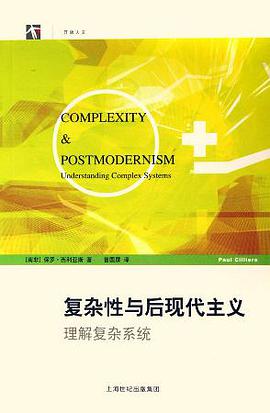
复杂性与后现代主义 Douban
author:
(南非)保罗·西利亚斯
translator:
曾国屏
publishing house:
上海世纪出版集团
2006
- 4
本书的目标,是要从后现代,或者也许更精确地说是从后结构(post-struct ural)的视角来阐明复杂性概念。从这种视角获得的最明显的结论是,不存在总揽一切的、可忽略掉复杂系统中偶发性方面的复杂性理论。如果某事物的确是复杂的,就不可能从简单理论得到恰当的描述。关注复杂性,必须关注特定的复杂系统。尽管如此,我们还是可以在非常基础的层面上,对复杂行为和复杂系统动力学的条件进行一般性说明。而且我还认为,可以对复杂系统进行建模。模型可以在计算上执行,并可能导致可以执行更复杂任务的机器。不过,模型本身将至少与被建模的系统同样复杂,因此不可能导致我们对于系统本身理解的任何简化。作为这种模型的一个例子,我广泛地使用了神经网络,即一种称作联结论的趋法。事实上本书通过指出神经网络的运行与德里达的语言工作的描述之间具有结构相似性,来理解后现代理论对于复杂性研究的意义。

复杂性思维:物质、精神和人类的计算动力学 Douban
Thinking in Complexity
author:
[德]迈因策尔
translator:
曾国屏
/
苏俊斌
publishing house:
上海辞书出版社
2014
- 4
复杂性科学是可与相对论、量子力学媲美的20世纪重大科学突破之一。在某种意义上,复杂性对整个科学体系的影响,也许比后两者更深刻、更广泛。进入21世纪,探索和理解复杂性,依然受到自然、社会、人文等各学科的共同关注。德国著名哲学家、复杂性科学专家克劳斯o迈因策尔教授的这本名著已出至第五版,它从哲学的高度,广泛涉猎物理学、生命科学、认知科学、计算机科学、经济学、社会学等诸多方面,揭示了不同学科体现出的共同的复杂性特征,以详尽而不失之繁琐的例证,和严谨而又尽可能通俗的笔法,阐释了对复杂性的探索将如何引起人们思维方式的深刻变化。
显示更多
显示更少
显示更多
显示更少