复杂性
人工科学 豆瓣
The Science of Artificial
作者: [美] 司马贺 译者: 武夷山 出版社: 上海科技教育出版社 2004 - 10
本书是诺贝尔经济学奖得主司马贺的代表作之一,是1996年修订出版的第三版的中译本。第三版增加了全新的一章“复杂性面面观”,修改了文字内容并更新了部分数据。
作者率先构造出“人工科学”的概念,据以将经济学、思维心理学、学习科学、设计科学、管理学、复杂性研究等领域贯穿联系起来,使人获得很多启迪。本书对传统思维提出挑战,指出人工智能所期望达到的领域,揭示了人工性和层级对于复杂性的意义,从多个领域说明人工科学何以是可能的,并试图说明它的性质。本书的基本主题是:物质符号系统具备必要和充分的手段来采取智能行动。
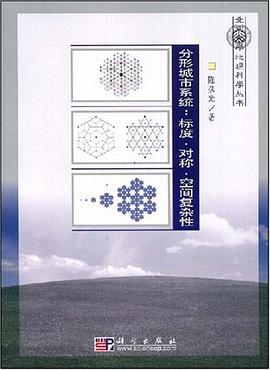
分形城市系统 豆瓣
作者: 陈彦光 2008 - 7
《分形城市系统:标度•对称•空间复杂性》的主要内容是基于对称思想和标度概念建立城市系统的理论模型,以期反映城市演化及其时空结构的一般规律。根据维数与空间的对应性,从时间、空间和等级三个角度将地理空间分为三种类型。基于三类空间,从宏观城市层面发展了刻画城市系统的标度定律,揭示城市系统演化现象背后的简单与复杂的数学联系和物理本质。
城市和城市体系是复杂的空间系统,分形是探索复杂性的有效工具。运用分形思想探索城市系统的空间复杂性具有重要的理论意义和实践价值。
混沌与分形 豆瓣
Chaos and Fractals
作者: [德] 佩特根 / [德] 于尔根斯 译者: 田逢喜 出版社: 国防工业出版社 2008 - 1
《混沌与分形:科学的新疆界(第2版)》介绍了分形与混沌理论的基础知识、基本原理和特性,包括:分形与自相似、分形的维数与测度、分形与图像数据压缩编码、随机性与确定性、分形的递归结构、细胞元自动机与吸引子、分形构造中的随机性、确定性混沌:灵敏度、混合与周期点、有序与混沌、奇异吸引子、典型的分形集如Julia集、Mandelbrot集等,重点介绍了分形与混沌的物理意义、两者之间的关系、与数学的其它方面以及自然现象的联系,展示出分形与混沌的在视觉、图像方面的优美结构和图案。
复杂 豆瓣
Complexity: The Emerging Science at the Edge of Order and Chaos
9.0 (17 个评分) 作者: [美] 米歇尔·沃尔德罗普 译者: 陈玲 出版社: 生活·读书·新知三联书店 1997 - 4
这部书叙述一群美国科学家如何开创“21世纪的科学”的故事,对正在形成的科学的复杂体系做了深入浅出的描述。介绍了“一场新的启蒙运动”。故事是,美国的一些不同领域的科学家们越来越无法忍受自牛顿以来一直主导科学的线性和还原的思想束缚。他们在各自领域发现,这个世界是一个相互关联和相互进化的世界,并非线性发展的,并非现有科学可以解释清楚的。他们认为这个世界上不仅存在着混沌,也存在着结构和秩序,他们逐渐将自己的新发现和新观点聚集起来,共同努力形成对整个自然界,对人类社会的一个全新的认识。
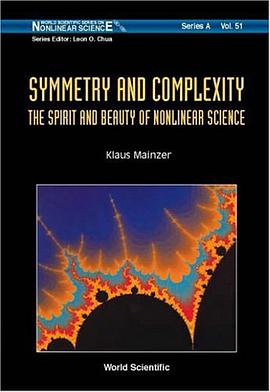
对称与复杂 豆瓣
作者: [德] Klaus Mainzer 出版社: 科学出版社 2007 - 8
宇宙通过对称破缺和相变从对称向复杂演化,本书用非线性动力学的理论从物理学、化学、生物学、经济自组织的角度阐释自然界和社会中新出现的序和结构。这些动力学系统是处理信息和熵而建立的计算机模型。我们不禁产生这样的疑问:对称和复杂仅仅是科学中有用的模型呢,还是现实世界的普遍现象?书中讨论了自然科学、社会科学、计算机科学、哲学和艺术领域中一些与之有关有趣的问题。本书包含大量的图示和图片,向读者展现了非线性科学的魂与美。全球化的复杂世界正说明了多样性的统一。
本书目录:
Preface
序言
Introduction
前言
Chapter 1 Symmetry and Complexity in Early Culture and Philosophy
早期文化和哲学中的对称与复杂
1.1 Cultural and Cosmic Harmony
文化与宇宙中的和谐
1.2 Cultural and Cosmic Diversity
文化与宇宙中的多样性
Chapter 2 Symmetry and Complexity in Mathematics
数学中的对称与复杂
2.1 Symmetry and Group Theory
对称和群论
2.2 Symmetry Breaking and Bifurcation Theory
对称破缺和分岔理论
2.3 Complexity,N onlinearity and Fractals
复杂性、非线性和分形
Chapter 3 Symmetry and Complexity in Physical Sciences
物理学中的对称与复杂
3.1 Symmetry in Physics
物理学中的对称
3.2 Symmetry Breaking and Phase Transitions
对称破缺和相变
3.3 Complexity,A ttractors and D ynam icalSystems
复杂性、吸引子和动力系统
Chapter 4 Symmetry and Complexity in Chemical Sciences
化学中的对称与复杂
4.1 Symmetry in Chemistry
化学中的对称
4.2 Symmetry Breaking and Chirality
对称破缺与手性
4.3 Complexity,D issipation and N anosystems
复杂性、耗散和纳米系统
Chapter 5 Symmetry and Complexity in Life Sciences
生命科学中的对称与复杂
5.1 Symmetry in Biology
生命科学中的对称
5.2 Symmetry Breaking and Evolution
对称破缺与生命演化
5.3 Complexity and Biodiversity of Life
复杂性和生物多样性
Chapter 6 Symmetry and Complexity in Economic and Social Sciences
经济学和社会学中的对称与复杂
6.1 Symmetry,SocialBalance and Econom ic Equilibrium
对称性、社会稳定和经济平衡
6.2 Symmetry Breaking and Socio-economic Transitions
对称破缺和社会-经济变迁
6.3 Complexity and Sociodiversity of Globalization
复杂性、社会多样性和全球化
Chapter 7 Symmetry and Complexity in Computer Science
计算机科学中的对称与复杂
7.1 Symmetry and Complexity in Information Dynamics
信息动力系统中的对称与复杂
7.2 Symmetry and Complexity in Computational Dynamics
计算动力系统中的对称与复杂
Chapter 8 Symmetry and Complexity in Philosophy and Arts
哲学和艺术中的对称与复杂
8.1 The Philosophy of Symmetry and Complexity
对称与复杂性的哲学
8.2 The Beauty of Symmetry and Complexity
对称与复杂之美
References
参考文献
Subject Index
名词索引
Name Index
人名索引
Simplexity 豆瓣
作者: Berthoz, Alain 译者: Weiss, Giselle 2012 - 1
In this book a noted physiologist and neuroscientist introduces the concept of simplexity, the set of solutions living organisms find that enable them to deal with information and situations, while taking into account past experiences and anticipating future ones. Such solutions are new ways of addressing problems so that actions may be taken more quickly, more elegantly, and more efficiently. In a sense, the history of living organisms may be summed up by their remarkable ability to find solutions that avoid the world's complexity by imposing on it their own rules and functions. Evolution has resolved the problem of complexity not by simplifying but by finding solutions whose processes - though they can sometimes be complex - allow us to act in the midst of complexity and of uncertainty. Nature can inspire us by making us realize that simplification is never simple and requires instead that we choose, refuse, connect, and imagine, in order to act in the best possible manner. Such solutions are already being applied in design and engineering and are significant in biology, medicine, economics, and the behavioural sciences.