數學
R.A. Fisher: The Life of a Scientist Douban
author:
Joan Fisher Box
publishing house:
John Wiley & Sons Inc
1978
An exclusive insight -- by Fisher's daughter -- of a man whose achievements in mathematical statistics continue to dominate the age. Traces his mobilization and extension of the resources of mathematics to solve the problems of estimation, analysis and design of experiments, and inductive inference. Reflecting the vitality of Fisher's immense pleasure in the process of thinking, the play of ideas, and the solution of puzzles, this biography introduces a complex and fascinating personality.
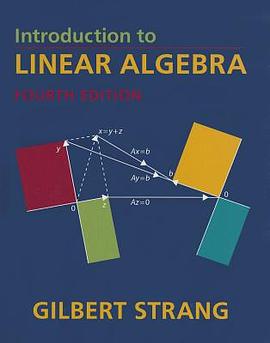
Introduction to Linear Algebra, Fourth Edition Douban Goodreads
author:
Gilbert Strang
publishing house:
Wellesley Cambridge Press
2009
- 2
Gilbert Strang's textbooks have changed the entire approach to learning linear algebra -- away from abstract vector spaces to specific examples of the four fundamental subspaces: the column space and nullspace of A and A'.
Introduction to Linear Algebra, Fourth Edition includes challenge problems to complement the review problems that have been highly praised in previous editions. The basic course is followed by seven applications: differential equations, engineering, graph theory, statistics, fourier methods and the FFT, linear programming, and computer graphics.
Thousands of teachers in colleges and universities and now high schools are using this book, which truly explains this crucial subject.
Chapter 1: Introduction to Vectors; Chapter 2: Solving Linear Equations; Chapter 3: Vector Spaces and Subspaces; Chapter 4: Orthogonality; Chapter 5: Determinants; Chapter 6: Eigenvalues and Eigenvectors; Chapter 7: Linear Transformations; Chapter 8: Applications; Chapter 9: Numerical Linear Algebra; Chapter 10: Complex Vectors and Matrices; Solutions to Selected Exercises; Final Exam. Matrix Factorizations. Conceptual Questions for Review. Glossary: A Dictionary for Linear Algebra Index Teaching Codes Linear Algebra in a Nutshell.
Introduction to Linear Algebra, Fourth Edition includes challenge problems to complement the review problems that have been highly praised in previous editions. The basic course is followed by seven applications: differential equations, engineering, graph theory, statistics, fourier methods and the FFT, linear programming, and computer graphics.
Thousands of teachers in colleges and universities and now high schools are using this book, which truly explains this crucial subject.
Chapter 1: Introduction to Vectors; Chapter 2: Solving Linear Equations; Chapter 3: Vector Spaces and Subspaces; Chapter 4: Orthogonality; Chapter 5: Determinants; Chapter 6: Eigenvalues and Eigenvectors; Chapter 7: Linear Transformations; Chapter 8: Applications; Chapter 9: Numerical Linear Algebra; Chapter 10: Complex Vectors and Matrices; Solutions to Selected Exercises; Final Exam. Matrix Factorizations. Conceptual Questions for Review. Glossary: A Dictionary for Linear Algebra Index Teaching Codes Linear Algebra in a Nutshell.
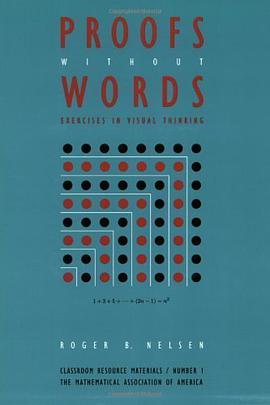
Proofs without Words Douban
author:
Roger B. Nelsen
publishing house:
The Mathematical Association of America
1993
- 10
Proofs without words are generally pictures or diagrams that help the reader see why a particular mathematical statement may be true, and how one could begin to go about proving it. While in some proofs without words an equation or two may appear to help guide that process, the emphasis is clearly on providing visual clues to stimulate mathematical thought. The proofs in this collection are arranged by topic into five chapters: Geometry and algebra; Trigonometry, calculus and analytic geometry; Inequalities; Integer sums; and Sequences and series. Teachers will find that many of the proofs in this collection are well suited for classroom discussion and for helping students to think visually in mathematics.
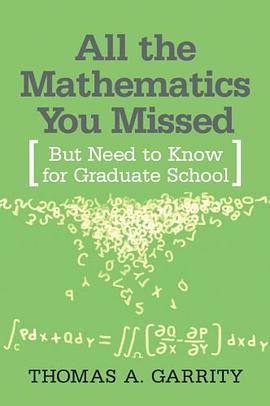
All the Mathematics You Missed Douban Goodreads
author:
Thomas A. Garrity
publishing house:
Cambridge University Press
2001
- 11
other title:
All the Mathematics You Missed: But Need to Know for Graduate School
Beginning graduate students in mathematics and other quantitative subjects are expected to have a daunting breadth of mathematical knowledge. But few have such a background. This 2002 book will help students to see the broad outline of mathematics and to fill in the gaps in their knowledge. The author explains the basic points and a few key results of all the most important undergraduate topics in mathematics, emphasizing the intuitions behind the subject. The topics include linear algebra, vector calculus, differential geometry, real analysis, point-set topology, probability, complex analysis, abstract algebra, and more. An annotated bibliography then offers a guide to further reading and to more rigorous foundations. This book will be an essential resource for advanced undergraduate and beginning graduate students in mathematics, the physical sciences, engineering, computer science, statistics, and economics who need to quickly learn some serious mathematics.
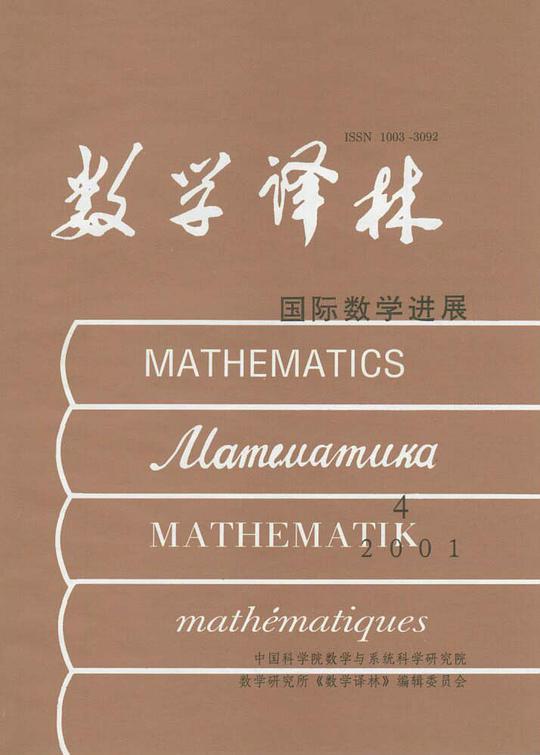
数学译林 Douban
数学译林——国际数学进展
国内唯一的综合性数学译刊。精选国际各类数学刊物中有关数学发展趋势与现状、数学教学、数学争鸣、数学史及人物传记的重要文章。
《数学译林》自1980年创刊以来,得到数学界各方面人士及广大读者的支持与帮助,我们仅向爱护和鼓励本刊的各界人士致意!
《数学译林》是综合性学术刊物,介绍国外数学最新进展、现代数学知识、各种数学观点、数学史及人物传记资料,以促进我国数学事业的发展,加速数学人
才的培养。
《数学译林》翻译英。日、法、德、俄等多种文字的资料,选题广泛,内容丰富。数学研究工作者、大学教师、中学教师、研究生、大学生、数学爱好者都能从本刊找到感兴趣和具有保存价值的文献资料。己开设的主要栏目是。
综合报告 世界著名数学家在各种会议、讨论班及杂志上发表的对某一学科或专题的综述性文章,从中可窥见世界数学研究的潮流
学科与专题介绍 涉及数学中古老分支与新兴交叉学科或专题的现代研究内容及方法。为您了解当代数学面貌,选择研究方向提供信息。
进展简介 尽快反映数学家近期获得的重要研究成果。您能从中感知当今世界数学发展的脉搏
数 学 史 介绍重要数学分支和概念的萌发、形成与发展,对数学发展产生重大影响的事件,以及数学家集体的活动。它将使您更全面地了解和认识数学家成长发展之路。
人物与传记 杰出数学家的奋斗之路、研究方法、治学态度及生平轶事,将向您提供启迪思路的精神营养。
数学争鸣 选登数学家对数学本质、数学发展前景,数学教育改革等各种问题的见解与争论。读后能开阔眼界、活跃思想、耳目一新。
数学教育 各国各级数学教育的过去及现在、数学教育改革问题、外国数学博士资格试题等。
数学小品 为您展现数学宝库中那些晶莹的小宝石。对数学感兴趣的人,都能亲自领略它们的光彩。
本刊还不定期地开设数学哲学、数学奖与数学竞赛、书评、研究生课程设置、数学问题等栏目。
自2000年始,本刊将陆续增加国内数学信息的内容,如招考研究生,学术会议及数学出版物等方面的信息。
国内唯一的综合性数学译刊。精选国际各类数学刊物中有关数学发展趋势与现状、数学教学、数学争鸣、数学史及人物传记的重要文章。
《数学译林》自1980年创刊以来,得到数学界各方面人士及广大读者的支持与帮助,我们仅向爱护和鼓励本刊的各界人士致意!
《数学译林》是综合性学术刊物,介绍国外数学最新进展、现代数学知识、各种数学观点、数学史及人物传记资料,以促进我国数学事业的发展,加速数学人
才的培养。
《数学译林》翻译英。日、法、德、俄等多种文字的资料,选题广泛,内容丰富。数学研究工作者、大学教师、中学教师、研究生、大学生、数学爱好者都能从本刊找到感兴趣和具有保存价值的文献资料。己开设的主要栏目是。
综合报告 世界著名数学家在各种会议、讨论班及杂志上发表的对某一学科或专题的综述性文章,从中可窥见世界数学研究的潮流
学科与专题介绍 涉及数学中古老分支与新兴交叉学科或专题的现代研究内容及方法。为您了解当代数学面貌,选择研究方向提供信息。
进展简介 尽快反映数学家近期获得的重要研究成果。您能从中感知当今世界数学发展的脉搏
数 学 史 介绍重要数学分支和概念的萌发、形成与发展,对数学发展产生重大影响的事件,以及数学家集体的活动。它将使您更全面地了解和认识数学家成长发展之路。
人物与传记 杰出数学家的奋斗之路、研究方法、治学态度及生平轶事,将向您提供启迪思路的精神营养。
数学争鸣 选登数学家对数学本质、数学发展前景,数学教育改革等各种问题的见解与争论。读后能开阔眼界、活跃思想、耳目一新。
数学教育 各国各级数学教育的过去及现在、数学教育改革问题、外国数学博士资格试题等。
数学小品 为您展现数学宝库中那些晶莹的小宝石。对数学感兴趣的人,都能亲自领略它们的光彩。
本刊还不定期地开设数学哲学、数学奖与数学竞赛、书评、研究生课程设置、数学问题等栏目。
自2000年始,本刊将陆续增加国内数学信息的内容,如招考研究生,学术会议及数学出版物等方面的信息。
华罗庚科普著作选集 Douban
author:
华罗庚
publishing house:
上海教育出版社
1997
- 1
目录:
第一部分
- 从杨辉三角谈起
- 从祖冲之的圆周率谈起
- 从孙子的“神奇妙算”谈起
- 数学归纳法
- 三分角问题
- 有限与无穷,离散与连续
- 《全国中学数学竞赛题解》前言
- 天才与锻炼
第二部分
- 数学是我国人民所擅长的学科
- 谈谈同学们学科学的几个问题
- 谈革命干部学习科学知识问题
- 和同学们谈谈学习数学
- 我从事科学研究工作的体会
- 聪明在于学习,天才由于积累
- 学·思·锲而不舍
- 取法务上,仅得乎中
- 和青年谈学习
- 学与识
- 学习和研究数学的一些体会
第三部分
- 大哉数学之为用
- 数学的用场(无则)
- 关于在等高线图赏计算矿藏量与坡地面积的问题
- 统筹方法评话及补充
- 优选法评话及补充
- 在中华人民共和国普及数学方法的若干个人体会
- 附录 应用数学
第一部分
- 从杨辉三角谈起
- 从祖冲之的圆周率谈起
- 从孙子的“神奇妙算”谈起
- 数学归纳法
- 三分角问题
- 有限与无穷,离散与连续
- 《全国中学数学竞赛题解》前言
- 天才与锻炼
第二部分
- 数学是我国人民所擅长的学科
- 谈谈同学们学科学的几个问题
- 谈革命干部学习科学知识问题
- 和同学们谈谈学习数学
- 我从事科学研究工作的体会
- 聪明在于学习,天才由于积累
- 学·思·锲而不舍
- 取法务上,仅得乎中
- 和青年谈学习
- 学与识
- 学习和研究数学的一些体会
第三部分
- 大哉数学之为用
- 数学的用场(无则)
- 关于在等高线图赏计算矿藏量与坡地面积的问题
- 统筹方法评话及补充
- 优选法评话及补充
- 在中华人民共和国普及数学方法的若干个人体会
- 附录 应用数学
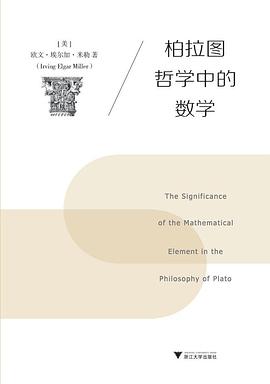
柏拉图哲学中的数学 Douban
The Significance of the Mathematical Element in the Philosophy of Plato
author:
[美] 欧文·埃尔加·米勒
translator:
覃方明
publishing house:
浙江大学出版社·启真馆
2017
- 4
柏拉图对于数学有着深湛的兴趣;但哲学仍是他的酷爱。这两种兴趣汇聚成为智识上完全相互作用的关系。柏拉图的数学研究有着迥异的动机、表象和结果,这来自这样的事实:他首先是哲学家,他的哲学(对数学)有着不同的运用;也来自这样的事实:他热爱数学。
当柏拉图把他的注意力转向数学时,他是用哲学家的眼睛在看,这对数学的进步很有意义。数学与哲学要素的相互作用在柏拉图哲学体系的发展中是个重要的因素。本书的主要部分将交付予展示数学如何影响哲学问题的构想,决定其方法,影响哲学的内容的任务。
本书将数学要素置于显著的位置,特别提及要展示哲学要素对数学的意义。在其余部分里,要把哲学要素置于显著位置,试图展示数学要素对它的影响。
当柏拉图把他的注意力转向数学时,他是用哲学家的眼睛在看,这对数学的进步很有意义。数学与哲学要素的相互作用在柏拉图哲学体系的发展中是个重要的因素。本书的主要部分将交付予展示数学如何影响哲学问题的构想,决定其方法,影响哲学的内容的任务。
本书将数学要素置于显著的位置,特别提及要展示哲学要素对数学的意义。在其余部分里,要把哲学要素置于显著位置,试图展示数学要素对它的影响。
Complex Analysis Douban
author:
Lars Ahlfors
publishing house:
McGraw-Hill Education
1979
- 1
A standard source of information of functions of one complex variable, this text has retained its wide popularity in this field by being consistently rigorous without becoming needlessly concerned with advanced or overspecialized material. Difficult points have been clarified, the book has been reviewed for accuracy, and notations and terminology have been modernized. Chapter 2, Complex Functions, features a brief section on the change of length and area under conformal mapping, and much of Chapter 8, Global-Analytic Functions, has been rewritten in order to introduce readers to the terminology of germs and sheaves while still emphasizing that classical concepts are the backbone of the theory. Chapter 4, Complex Integration, now includes a new and simpler proof of the general form of Cauchy's theorem. There is a short section on the Riemann zeta function, showing the use of residues in a more exciting situation than in the computation of definite integrals.
Our Mathematical Universe Douban
author:
Max Tegmark
publishing house:
Knopf
2014
- 1
Max Tegmark leads us on an astonishing journey through past, present and future, and through the physics, astronomy and mathematics that are the foundation of his work, most particularly his hypothesis that our physical reality is a mathematical structure and his theory of the ultimate multiverse. In a dazzling combination of both popular and groundbreaking science, he not only helps us grasp his often mind-boggling theories, but he also shares with us some of the often surprising triumphs and disappointments that have shaped his life as a scientist. Fascinating from first to last—this is a book that has already prompted the attention and admiration of some of the most prominent scientists and mathematicians.
“Tegmark offers a fascinating exploration of multiverse theories, each one offering new ways to explain ‘quantum weirdness’ and other mysteries that have plagued physicists, culminating in the idea that our physical world is ‘a giant mathematical object’ shaped by geometry and symmetry. Tegmark’s writing is lucid, enthusiastic, and outright entertaining, a thoroughly accessible discussion leavened with anecdotes and the pure joy of a scientist at work.” —Publishers Weekly (starred review)
“Lively and lucid, the narrative invites general readers into debates over computer models for brain function, over scientific explanations of consciousness, and over prospects for finding advanced life in other galaxies. Though he reflects soberly on the perils of nuclear war and of hostile artificial intelligence, Tegmark concludes with a bracingly upbeat call for scientifically minded activists who recognize a rare opportunity to make our special planet a force for cosmic progress. An exhilarating adventure for bold readers.” —Bryce Cristensen, Booklist (starred review)
“Our Mathematical Universe boldly confronts one of the deepest questions at the fertile interface of physics and philosophy: why is mathematics so spectacularly successful at describing the cosmos? Through lively writing and wonderfully accessible explanations, Max Tegmark—one of the world’s leading theoretical physicists—guides the reader to a possible answer, and reveals how, if it’s right, our understanding of reality itself would be radically altered.” —Brian Greene, physicist, author of The Elegant Universe and The Hidden Reality
“Daring, Radical. Innovative. A game changer. If Dr. Tegmark is correct, this represents a paradigm shift in the relationship between physics and mathematics, forcing us to rewrite our textbooks. A must read for anyone deeply concerned about our universe.” —Michio Kaku, author of Physics of the Future
“Tegmark offers a fresh and fascinating perspective on the fabric of physical reality and life itself. He helps us see ourselves in a cosmic context that highlights the grand opportunities for the future of life in our universe.” —Ray Kurzweil, author of The Singularity is Near
“Readers of varied backgrounds will enjoy this book. Almost anyone will find something to learn here, much to ponder, and perhaps something to disagree with.” —Prof. Edward Witten, physicist, Fields Medalist & Milner Laureate
“This inspirational book written by a true expert presents an explosive mixture of physics, mathematics and philosophy which may alter your views on reality.” —Prof. Andrei Linde, physicist, Gruber & Milner Laureate for development of inflationary cosmology
“Galileo famously said that the universe is written in the language of mathematics. Now Max Tegmark says that the universe IS mathematics. You don’t have to necessarily agree, to enjoy this fascinating journey into the nature of reality.” —Prof. Mario Livio, astrophysicist, author of Brilliant Blunders and Is God a Mathematician?
“Scientists and lay aficionados alike will find Tegmark’s book packed with information and very thought provoking. You may recoil from his thesis, but nearly every page will make you wish you could debate the issues face-to-face with him.” —Prof. Julian Barbour, physicist, author of The End of Time
“In Our Mathematical Universe, renowned cosmologist Max Tegmark takes us on a whirlwind tour of the universe, past, present—and other. With lucid language and clear examples, Tegmark provides us with the master measure of not only of our cosmos, but of all possible universes. The universe may be lonely, but it is not alone.” —Prof. Seth Lloyd, Professor of quantum mechanical engineering, MIT, author of Programming the Universe
“A lucid, engaging account of the various many-universes theories of fundamental physics that are currently being considered, from the multiverse of quantum theory to Tegmark’s own grand vision.” —Prof. David Deutsch, physicist, Dirac Laureate for pioneering quantum computing
“Tegmark offers a fascinating exploration of multiverse theories, each one offering new ways to explain ‘quantum weirdness’ and other mysteries that have plagued physicists, culminating in the idea that our physical world is ‘a giant mathematical object’ shaped by geometry and symmetry. Tegmark’s writing is lucid, enthusiastic, and outright entertaining, a thoroughly accessible discussion leavened with anecdotes and the pure joy of a scientist at work.” —Publishers Weekly (starred review)
“Lively and lucid, the narrative invites general readers into debates over computer models for brain function, over scientific explanations of consciousness, and over prospects for finding advanced life in other galaxies. Though he reflects soberly on the perils of nuclear war and of hostile artificial intelligence, Tegmark concludes with a bracingly upbeat call for scientifically minded activists who recognize a rare opportunity to make our special planet a force for cosmic progress. An exhilarating adventure for bold readers.” —Bryce Cristensen, Booklist (starred review)
“Our Mathematical Universe boldly confronts one of the deepest questions at the fertile interface of physics and philosophy: why is mathematics so spectacularly successful at describing the cosmos? Through lively writing and wonderfully accessible explanations, Max Tegmark—one of the world’s leading theoretical physicists—guides the reader to a possible answer, and reveals how, if it’s right, our understanding of reality itself would be radically altered.” —Brian Greene, physicist, author of The Elegant Universe and The Hidden Reality
“Daring, Radical. Innovative. A game changer. If Dr. Tegmark is correct, this represents a paradigm shift in the relationship between physics and mathematics, forcing us to rewrite our textbooks. A must read for anyone deeply concerned about our universe.” —Michio Kaku, author of Physics of the Future
“Tegmark offers a fresh and fascinating perspective on the fabric of physical reality and life itself. He helps us see ourselves in a cosmic context that highlights the grand opportunities for the future of life in our universe.” —Ray Kurzweil, author of The Singularity is Near
“Readers of varied backgrounds will enjoy this book. Almost anyone will find something to learn here, much to ponder, and perhaps something to disagree with.” —Prof. Edward Witten, physicist, Fields Medalist & Milner Laureate
“This inspirational book written by a true expert presents an explosive mixture of physics, mathematics and philosophy which may alter your views on reality.” —Prof. Andrei Linde, physicist, Gruber & Milner Laureate for development of inflationary cosmology
“Galileo famously said that the universe is written in the language of mathematics. Now Max Tegmark says that the universe IS mathematics. You don’t have to necessarily agree, to enjoy this fascinating journey into the nature of reality.” —Prof. Mario Livio, astrophysicist, author of Brilliant Blunders and Is God a Mathematician?
“Scientists and lay aficionados alike will find Tegmark’s book packed with information and very thought provoking. You may recoil from his thesis, but nearly every page will make you wish you could debate the issues face-to-face with him.” —Prof. Julian Barbour, physicist, author of The End of Time
“In Our Mathematical Universe, renowned cosmologist Max Tegmark takes us on a whirlwind tour of the universe, past, present—and other. With lucid language and clear examples, Tegmark provides us with the master measure of not only of our cosmos, but of all possible universes. The universe may be lonely, but it is not alone.” —Prof. Seth Lloyd, Professor of quantum mechanical engineering, MIT, author of Programming the Universe
“A lucid, engaging account of the various many-universes theories of fundamental physics that are currently being considered, from the multiverse of quantum theory to Tegmark’s own grand vision.” —Prof. David Deutsch, physicist, Dirac Laureate for pioneering quantum computing

应用随机过程 Douban
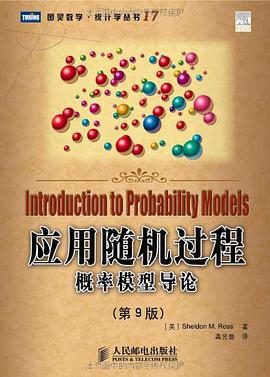
Introduction to Probability Models
author:
Sheldon M.Ross
translator:
龚光鲁
publishing house:
人民邮电出版社
2007
《应用随机过程概率模型导论》是一部经典的随机过程著作, 叙述深入浅出、涉及面广,主要内容有随机变量、条件概率及条件期望、离散及连续马尔可夫链、指数分布、泊松过程、布朗运动及平稳过程、更新理论及排队论等;也包括了随机过程在物理、生物、运筹、网络、遗传、经济、保险、金融及可靠性中的应用,特别是有关随机模拟的内容, 给随机系统运行的模拟计算提供了有力的工具。《应用随机过程概率模型导论》有约700道习题, 其中带星号的习题还提供了解答。

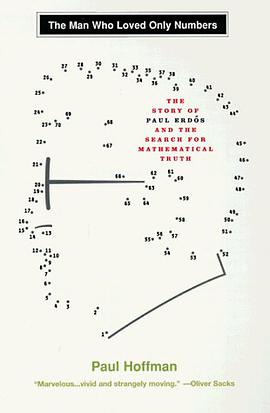
The Man Who Loved Only Numbers Douban Goodreads Skybridge
author:
Paul Hoffman
publishing house:
Hachette Books
1999
- 5
other title:
The Man Who Loved Only Numbers: The Story of Paul Erdős and the Search for Mathematical Truth
Based on a National Magazine Award-winning article, this masterful biography of Hungarian-born Paul Erdos is both a vivid portrait of an eccentric genius and a layman's guide to some of this century's most startling mathematical discoveries.
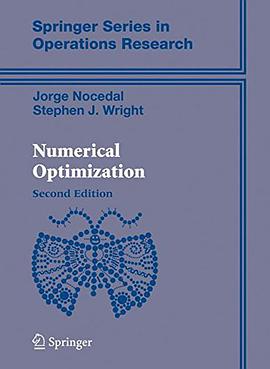
Numerical Optimization Douban
Optimization is an important tool used in decision science and for the analysis of physical systems used in engineering. One can trace its roots to the Calculus of Variations and the work of Euler and Lagrange. This natural and reasonable approach to mathematical programming covers numerical methods for finite-dimensional optimization problems. It begins with very simple ideas progressing through more complicated concepts, concentrating on methods for both unconstrained and constrained optimization.