物理
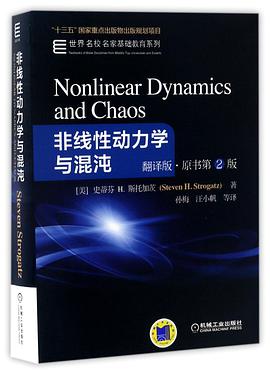
非线性动力学与混沌(翻译版原书第2版)/世界名校名家基础教育系列 豆瓣
Nonlinear dynamics and chaos: with applications to physics, biology, chemistry, and engineering
作者: [美] Steven H. Strogatz 译者: 孙梅 / 汪小帆 出版社: 机械工业出版社 2016 - 10
本书主要面向非线性动力学与混沌领域的初学者,特别是首次选择该课程的学生。本书非常系统地给出了相关理论,从一阶微分方程及其分岔开始,其次是相平面分析、极限环以及它们的分岔,后以Lorenz方程、混沌、迭代映射、倍周期分岔、重整化、分形和奇怪吸引子作为结尾。本书的一个特色是突出了应用。主要包括机械振动、激光、生物节律、超导电路、昆虫爆发、化学振荡器、基因控制系统、混沌水车,乃至利用混沌加密信息的技术。所有情形都给出了基本的科学背景,并与数学理论紧密结合。在本书首次出版以来的20年里,非线性动力学的思想与方法已被应用到很多激动人心的新领域,如系统生物学、演化博弈论和社会物理学。本书的第2版给出了很多关于前沿进展的新练习题,例如关于视觉中的双目竞争与名著《乱世佳人》中纷乱的爱情动力学。本书可作为数学、力学、物理、化学、生物、控制科学、机械等工程专业高年级本科生或研究生教材。
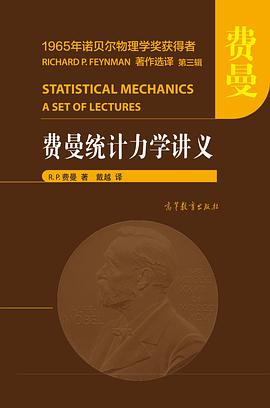
费曼统计力学讲义 豆瓣
Statistical Mechanics: A Set of Lectures
作者: R. P. 费曼 译者: 戴越 出版社: 高等教育出版社 2021 - 6
本书根据理查德·费曼于1961年在美国加州马利布 (Malibu) 的休斯研究实验室 (Hughes Research Laboratories) 所作的一系列讲座整理而成,内容涵盖统计力学和凝聚态物理学。
全书共11章。从配分函数出发,首先阐述了统计力学的基本原理,随后讲述了密度矩阵和路径积分方法。作为应用,详细讨论了N个粒子组成的经典系统和晶格体系。接着介绍了算符表示形式,并以此为基础,具体讨论了自旋波、极化子问题、金属中的电子气、超导和超流等凝聚态物理学的重要课题。
费曼是一位顶尖的物理学家,同时也是一名出色的教师。和费曼的其他讲义一样,本书有着非常鲜明的“费曼风格”,注重物理思维,对一些难以理解的概念都有着独到而清晰的阐述,反映出费曼对于这一领域的深刻思考和深邃洞察力。本书对于统计力学的教与学两方面均有极高的参考价值,具备统计力学基础知识的学生可利用本书更为深入地探索这一领域,此外本书亦可供相关专业科研人员和教师参考。
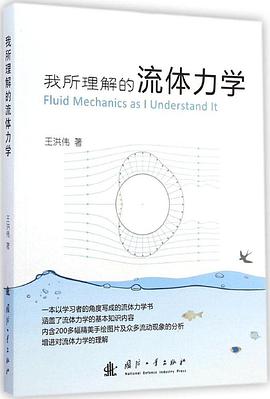
我所理解的流体力学 豆瓣
作者: 王洪伟 出版社: 国防工业出版社 2015 - 1
《我所理解的流体力学》是站在学习者的角度来写的,目的是通过《我所理解的流体力学》让读者更深入地理解流体力学的原理,使之成为自己真正掌握并可以运用的知识。和现有教材及相关图书相比,《我所理解的流体力学》的一个特色是尽量使用力学基本概念并以通俗的方式表述,更易于为学习者所接受。另一个特色是作者专门绘制了大量既精美又保持了科学性的插图,增加了学习的趣味性,并有助于对流动的理解。另外,书中还对众多生活中的流动现象进行了深入的分析,比如:下落中的雨滴是什么形状的?朝天开枪,落下来的子弹会不会打死人?用橡胶管放水时,捏扁出口为什么会使流速增加?等等。通过阅读《我所理解的流体力学》,读者会发现,其实这些都是可以用基本的流体力学知识解释的。尽管不是一本传统意义上的教材,《我所理解的流体力学》的章节和内容仍然基本涵盖了普通高等院校流体力学教学大纲的所有内容。
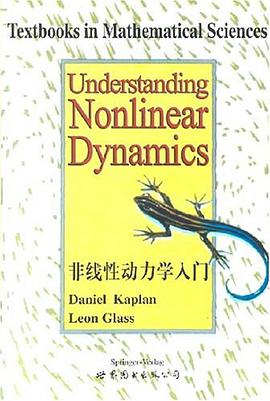
非线性动力学入门 豆瓣
Understanding Nonlinear Dynamics
作者: Daniel Kaplan / Leon Glass 出版社: 世界图书出版公司 1997 - 9
The book is about dynamics-the mathematics of how things change in time.The universe around us presents a kaleidoscope of quantities that vary with time, ranging from the extragalactic pulsation of quasars to the fluctuations in sunspot activity on our sun; from the changeing outdoor temperature associated with the four season to the aily temperature gluctuations in our bodies; from the incidence of infectious diseases such as meales to the tumultuous trend of stock prices.
本书为英文版.
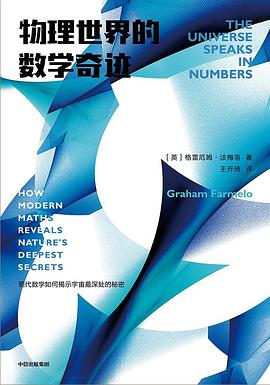
物理世界的数学奇迹 豆瓣
作者: [英]格雷厄姆·法梅洛 译者: 王乔琦 出版社: 中信出版·鹦鹉螺 2020 - 7
现代数学如何揭示宇宙最深处的秘密?
《洛杉矶时报》图书奖获得者讲述物理学家与数学家的百年纠葛
《环球科学》第七届最美科学阅读榜主榜单入榜图书
2020年原理“科学之美”年度书单推荐图书
-
从科学巨人爱因斯坦到量子力学大师保罗•狄拉克,众多数学家和理论物理学家都因这样的问题而困惑不解:为何物理学家为描述现实世界而创造出的理论会与数学家以自己的纯粹思想构造出来的数学结构殊途同归?为何宇宙碰巧就是以数学的语言书写而成的?事实上,这种现象正是物理学家维格纳所说的 “数学在自然科学中不合理的有效性”。
-
在长达300多年的时间里,物理和数学时而并驾齐驱,时而渐行渐远。进入21世纪以来,数学家和理论物理学家越发意识到这两门学科交叉的意义。在数学与理论物理学紧密合作的领域已经结出累累硕果,两门学科的发展也互为补充和促进。
-
在未来,人类可能无法通过实验来证实物理理论的真实性和准确性。未来的理论物理学研究进展可能会以千年为尺度,不再会有20世纪的相对论和量子力学这样全方位的革命性理论。但有了高等数学这一新武器的帮助,在长远的时间尺度上,我们仍可以认为理论物理学的前途是光明的
2020年8月14日 已读
4.5 Graham Farmelo不愧是狄拉克铁粉,一心怀揣在数学中求索物理的梦想,美就对了。总体这是一本从物理学视角出发描写近代到当代的物理和数学时即时离关系的科学史作品,挺全面写到了各个阶段基础物理学如何凭借新的数学工具来开拓光怪陆离的物理世界。从微积分到微分几何,群论再到拓扑学、纽结理论,数学世界似乎总是为自然原理准备了一席之地,直到物理数学这样的“贸易区”出现,两个学科索性搬到一块儿各取所需。有意思的是感觉为什么老是说理论物理学家做出了什么超越时代的成果,可能是因为他们是弯道超车的能手,当数学家在埋怨其数学基础还不踏实,实验物理学家还觉得要做出符合预言的实验还得几十年的时候,他们已经凭着对自然的敏感性突进了。
2020 数学 数学文化 未知 物理
分子系统发生学 豆瓣
作者: 黄原 2012 - 6
《分子系统发生学》是应用分子数据重建系统发生关系的学科。本教材全面系统地论述了分子系统发生学的基础、原理、方法及应用。由18章组成,可以归纳为五大部分:第一部分包括第1~3章,分别介绍了系统发生和系统树的基本知识;第二部分包括第4~7章,是分子系统发生分析的基础,其中第4章和第5章是分子系统发生学的信息学基础,第6章是数据集系统发生信号评估,第7章讨论了分子进化模型及模型选择原理与方法;第三部分中的第8~12章是各种系统发生分析方法,分别就目前主要的系统发生分析方法(距离矩阵法、简约法、最大似然法、贝叶斯推论法和系统发生网络法等)从原理、软件操作、应用及局限性等方面进行了详细的介绍,第13章讨论了系统发生假设检验的原理和方法,第14章讨论了系统发生分析可靠性与影响因素;第四部分主要涉及各类数据集分析策略,其中第15章总结了不同类型数据的分析策略,第16章对复杂数据系统发生的分析策略与方法进行了详细地介绍,第17章是多基因数据分析策略和方法;最后一部分即第18章是系统树的可视化、注释与应用方面的内容。
《分子系统发生学》可作为生物学、生物技术、生态学和生物信息学专业的本科生、研究生及科研人员学习分子系统发生学的教材或参考资料。
超导百年 豆瓣
Superconductivity Centennial
2013 - 5
《超导百年》由韩汝珊主编,本书涵盖了高温超导发展过程中华人的重要贡献。具体包括国际上最先报导的液氮温度以上90K转变温度的Y系高温超导体的研究,至今仍保持是超导转变温度的世界纪录的工作,配对对称性研究,NMR研究,d波对称性谱的研究,超导能隙的测量,微观电子不均匀性的研究,ARPES的研究,“Kinks”研究等对于高温超导铜氧化物的研究。同时,本书还收录了关于铁基超导的研究。为了凝聚态物性的全面介绍,本书还加进了对高温超导体热力学性质、低温热输运及Raman谱的研究的内容。此外,本书还包括了理论研究方面的重要内容,包括铁基材料磁性和超导电性的计算研究,凝聚量子相中的非对角长程序,CuO2平面中空穴掺杂建立的氧位的自旋涨落导致超导态等研究。本书适合凝聚态物理、材料科学、光学等领域的科研工作者和研究生阅读。
群论导论 豆瓣
作者: 罗曼 2009 - 8
《群论导论(第4版)(英文版)》介绍了:Group Theory is a vast subject and, in this Introduction (as well as in theearlier editions), I have tried to select important and representative theoremsand to organize them in a coherent way. Proofs must be clear, and examplesshould illustrate theorems and also explain the presence of restrictive hypo-theses. ! also believe that some history should be given so that one canunderstand the origin of problems and the context in which the subjectdeveloped. Just as each of the earlier editions differs from the previous one in a signifi-cant way, the present (fourth) edition is genuinely different from the third.Indeed, this is already apparent in the Table of Contents. The book nowbegins with the unique factorization of permutations into disjoint cycles andthe parity of permutations; only then is the idea of group introduced. This isconsistent with the history of Group Theory, for these first results on permu-tations can be found in an 1815 paper by Cauchy, whereas groups of permu-tations were not introduced until 1831 (by Galois)But even if history
统计物理学中的量子场论方法(第3版) 豆瓣
【采用英译名】Methods of quantum field theory in statistical physics
作者: AA Abrikosov / LP Gor'kov 译者: 郝柏林 出版社: 北京大学出版社 2014
《统计物理学中的量子场论方法(第3版)》原书为1962年的俄文第1版,是这个领域内的世界上第一本专著和教材,也是早期凝聚态理论中最经典和最权威的著作之一,同时也是中国在20世纪的60—70年代学习凝聚态理论(早期场论方法)的最早和最普及的一本专著和教材。
根据原书1962年的俄文第1版,1963年美国和中国均出版了相应的英译本和中译本(中文译者:郝柏林)。此后,在1965年欧美国家又在原书1962年的俄文第1版和原作者提供的补充和订正材料的基础上,翻译出版了该书第2版的英译本。
中国的郝柏林院士参考了该书以往的几个版本,对其进行重新翻译出版,且将原作者为英译本准备的补充和订正也加了进去。
物理学名词(第三版) 豆瓣
作者: 物理学名词审定委员会 出版社: 科学出版社 2019 - 3
物理学名词审定委员会编的《物理学名词(2019第3版)(精)》内容包括通类,力学、电磁学,光学、声学,热学、统计物理学,相对论、量子理论,原子、分子物理学,凝聚态物理学,原子核物理学、粒子物理学,等离子体物理学、交学科等共11方面,共14426条。这些名词是科研、教学、生产、经营以及新闻出版等部门应遵照使用的物理学规范名词。
高温超导 (平装) 豆瓣
作者: 解思深 出版社: 湖南教育出版社 1999 - 4
高温超导电性是1987年诞生的新领域,本书是一本系统介绍高温超导的科普读物,它收集了近几年来各国研究高温超导的最新成果和丰富的资料,深入浅出地叙述了超导物理的基本知识;生动描述了高温超导发展中的趣话,简要介绍了高温超导体家族和它们的物理性质;全面地讨论了高温超导体在电子工业、计算机、交通、医疗等领域中的实用化问题。
相对论之路 豆瓣
作者: [以]哈诺赫·古特弗罗因德(Hanoch Gutfreund) / [德]于尔根·雷恩(Jürgen Renn) 译者: 李新洲 / 翟向华 出版社: 湖南科学技术出版社 2019 - 8
本书讲述爱因斯坦如何创建了相对论,它的意义何在等内容,由手稿阐释及相对论相关论文组成。
这本书是在爱因斯坦1915年发现广义相对论百年庆之际出版的,这是标志相对论由狭义向广义飞跃高潮的论文的注释本。广义相对论发展历程中蕴涵着革命性意义。
Two's Company, Three Is Complexity 豆瓣
作者: Neil F. Johnson 出版社: Oneworld Publications 2007
Preface
It is 2050, and you are watching Who Wants to be a Billionaire? The contestant is one question away from the jackpot. Up comes his
question: “What is the name of the theory that scientists started developing at the beginning of the twenty-first century, and
which helped the world overcome traffic congestion, financial market crashes, terrorist attacks, pandemic viruses, and cancer?” The contestant cannot believe his luck. What an easy question! But he is so nervous that his mind temporarily goes blank. He starts to consider option A: “They are all still unsolved problems” – but then quickly realizes that this is a dumb answer. Instead, he uses his last lifeline to ask the audience. The audience responds unanimously and instantaneously with option B: “The Theory of Complexity”. Without hesitation, he goes with option B. The host hands him the cheque, and the world has yet another billionaire.
Pure fantasy? Maybe not.
In this book, we will go on a journey to the heart of Complexity, an emerging science which looks set to trigger the next great wave of advances in everything from medicine and biology through to economics and sociology. Complexity Science also comes with the
prospect of solving a wide range of important problems which face us as individuals and as a Society. Consequently, it is set to permeate through every aspect of our lives.
There is, however, one problem. We don’t yet have a fullyfledged “theory” of Complexity. Instead, I will use this book to assemble all the likely ingredients of such a theory within a common framework, and then analyze a wide range of real-world applications within this same common framework. It will then require someone from the future – perhaps one of the younger readers of this book – to finally put all these pieces into place.
Complexity Science is a double-edged sword in the best possible sense. It is truly “big science” in that it embodies some of the hardest, most fundamental and most challenging open problems in academia. Yet it also manages to encapsulate the major practical issues which face us every day from our personal lives and health, through to global security. Making a pizza is complicated, but not complex. The same holds for filling out your tax return, or mending a bicycle puncture. Just follow the instructions step by step, and you will eventually be able to go from start to finish without too much trouble. But imagine trying to do all three at the same time. Worse still, suppose that the sequence of steps that you follow in one task actually depends on how things are progressing with the other two. Difficult? Well, you now have an indication of what Complexity is all about. With that in mind, now substitute those three interconnected tasks for a situation in which three interconnected people each try to follow their own instincts and strategies while reacting to the actions of the others. This then gives an idea of just how Complexity
might arise all around us in our daily lives.
While I was writing this book, I had the following “wish-list” in my head concerning its goals:
1. To provide a book which a wide cross-section of people would want to read and would enjoy reading – regardless of age,
background or level of scientific knowledge.
2. To introduce readers to the exciting range of real-world scenarios in which Complexity Science can prove its worth.
3. To provide the book on Complexity that “I never had but always needed”. In other words, to provide an easily readable yet thorough guide to this important scientific revolution.
4. To provide a book that my kids could read – or rather, a book that they would actually choose to read all by themselves. This is a very important goal, since Complexity will likely become the science of interest for future generations.
5. To provide a book which is just as readable on a plane or bus as in a library. As such, it should also make sense when read in short chunks.
6. To provide a book which provides professional scientists,economists, and policy-makers with a new perspective on
open problems in their field, and to help stimulate new Complexity-based interdisciplinary research projects.
However, as I finish the book and offer it up to potential readers,I realize that the above wish-list can essentially be reduced to just
one item: I would wish that you enjoy reading this book, and that it might provide you with fresh thoughts and insights for dealing
with the complex world in which we live, and which our children will inherit.
There are some practicalities concerning the book’s content and layout which I would like to explain. The language, examples and
analogies are kept simple since the focus of the book is to explain what Complexity Science is all about, and why it is so important for
us all. I therefore avoid delving into too much detail in the main text. Instead, the Appendix describes how to access the technical
research papers upon which the discussions in the book are based, and gives a list of Internet websites containing additional information about Complexity research around the world. Having said this, I won’t pull any punches in the sense that I tackle all the topics
which I believe to be relevant. Part 1 of the book takes us through the theoretical underpinnings of Complexity, while Part 2
delves into its real-world applications. Some of the territory is only just beginning to be explored, with very few answers available
for the questions being posed. From the perspective of other scientific revolutions throughout history this might seem to be par
for the course. However we are not talking about history here –instead, we are looking at work which is emerging at the forefront
of a new discipline. For this reason we will be highlighting where such research is heading, rather than where it has been.
But why should you believe what I write about Complexity? This is a crucially important question given that Complexity Science is still being developed and its potential applications explored. Unfortunately many accounts of Complexity in the popular press are second-hand, i.e. they are typically written by people who have done little, if any, research on Complexity themselves and are instead reporting on their interpretation of
other people’s work. Given the relatively immature nature of the field, I believe that such indirect interpretations are potentially
dangerous. For this reason, I will base the book’s content around my own research group’s experience in Complexity. This has
various advantages: (i) it reflects my own understanding of the Complexity field; (ii) it represents what I believe to be the most
relevant and important topics; (iii) it will hopefully give the reader a sense of what it is like to be at the “pit-face” in such a
challenging area of research; and (iv) it ensures that any reader can challenge me directly on any claims that I make, and can
demand an informed answer. To facilitate this process of public scrutiny, a complete list of the relevant scientific research reports
is presented in the latter part of the Appendix. I also encourage any readers who wish to email me with questions, to do so at
n.johnson@physics.ox.ac.uk

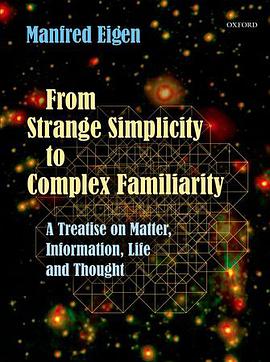
From Strange Simplicity to Complex Familiarity 豆瓣
作者: Manfred Eigen 出版社: Oxford University Press 2013 - 3
- Presents the life's work of a Nobel Laureate and internationally recognised leader in the field
- Builds new bridges between physics and biology
- Provides a physical basis for Darwin's principle of natural selection
- Presents a new theory of information including semantics
This book presents a vivid argument for the almost lost idea of a unity of all natural sciences. It starts with the "strange" physics of matter, including particle physics, atomic physics and quantum mechanics, cosmology, relativity and their consequences (Chapter I), and it continues by describing the properties of material systems that are best understood by statistical and phase-space concepts (Chapter II). These lead to entropy and to the classical picture of quantitative information, initially devoid of value and meaning (Chapter III). Finally, "information space" and dynamics within it are introduced as a basis for semantics (Chapter IV), leading to an exploration of life and thought as new problems in physics (Chapter V).
Dynamic equations - again of a strange (but very general) nature - bring about the complex familiarity of the world we live in. Surprising new results in the life sciences open our eyes to the richness of physical thought, and they show us what can and what cannot be explained by a Darwinian approach. The abstract physical approach is applicable to the origins of life, of meaningful information and even of our universe.
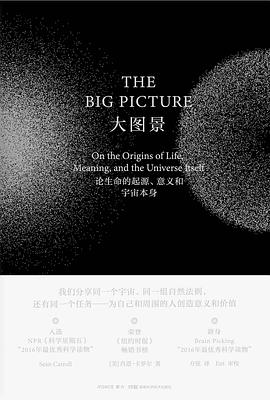
大图景 豆瓣
THE BIG PICTURE:On the Origins of Life, Meaning, and the Universe Itself
8.8 (9 个评分) 作者: [美]肖恩·卡罗尔 译者: 方弦 / ENT审校 出版社: 湖南科学技术出版社 2019
作者用天文学、物理学、化学、生物学和哲学的丝线编织成一张宇宙大图景,让我们尝试一起思考世界的本质。
关于世界的运作方式,还有很多地方我们仍不了解,但我们有着绝佳的理由去认为核心理论在它的适用范围中就是自然的正确描述。
从无知无觉的宏大宇宙看来,我们个人有很大的意义吗?我们需要正视这个问题,通过思考去理解,我们对意义的追求应该符合现实最深层面的本性。
本书好评不断,跻身Brain Picking的“2016年最优秀科学读物”列表、登上美国全国公共广播电台《科学星期五》的“2016年最优秀科学读物”列表。
本书探索了我们宇宙的历史,包括宇宙运转和进化的方式,也就是我们当前理解的整体图景,并尝试如何去理解这个世界,理解那些构成我们的物质,包括粒子、力和量子现象的领域,它们构成了我们感知和思考的系统的方式。同时,作者带我们思考这个世界的本质,在一个没有终极意义的宇宙中,应该如何构建意义和价值。
生命与新物理学 豆瓣
The Demon in the Machine
作者: [英] 保罗·戴维斯(Paul Davies) 译者: 王培 出版社: 中信出版社 2019 - 8
大开眼界的跨学科前沿探索之旅
-
重新理解生命起源和进化的奇迹
-
弥合生物学与物理学之间的巨大鸿沟
-
运用全新视角破解生命谜题
-
信息引擎、生物电路、量子计算机、癌症基因、表观遗传学、地外生命……聚焦前沿成果,阐释宏大议题,解读生命秩序的隐秘动力,剖析复杂世界的内在逻辑,启迪思想、提升智识,一本不容错过的深度好书!
-
-
-
-----------------------------------------------------------------------------------------------
★生物物理学点睛之笔——全新的视角,开拓性思考
★对薛定谔《生命是什么》的绝妙回应——融合生物学、物理学、计算科学、认知科学等前沿研究
★《物种起源》+《自私的基因》,达尔文进化论2.0——分子生物学、表观遗传学
★《今日简史》+《十问》,关于未来的“大问题”——科学家对人类命运的前瞻性思考
★生命领域的《规模》——解读复杂世界的简单法则,展现尺度不同带来的巨变
-
-
-
【内容简介】
生命是什么?
1943年,诺贝尔奖获得者、量子力学的重要奠基人薛定谔提出了这个划时代的问题,他指出:我们需要新物理学来给出答案。
-
这本书从这个经典问题出发,结合香农的信息论、达尔文的进化论和诸多领域的前沿研究,将量子力学应用于生物学、计算科学等领域,超越各个学科的界限,用全新视角探究生命的本质。书中提出了一个突破性的观点:生命=物质+信息,分子组构是生命的“硬件”,信息组构则是生命的“软件”。生物体中含有大量高效的微型机器,它们聪明地处理和控制着信息,像变魔术一样从混沌中获得秩序。进化让这张隐形的信息网络不断升级。
-
保罗·戴维斯将生物学、物理学、数学、化学、信息科学、医学和哲学等领域融为一体,引领了极具洞见的全新交叉学科。这种新科学涉及信息引擎、生物电路、癌症基因、量子计算机等众多前沿科学领域,用信息的观点重新解读生命之谜。
-
这是一本探索生命起源及内在逻辑的生物物理学普及读物,也是一次让人大开眼界的跨学科前沿探索之旅。
-
让智力探险,思想旅行,一起寻找生命秩序的隐秘动力!