经济学

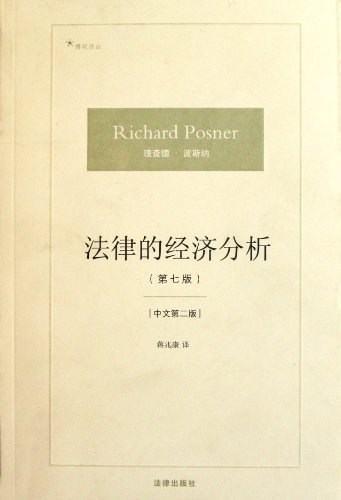
法律的经济分析 豆瓣
Economic Analysis of Law
作者:
理查德•波斯纳 (Richard Allen Posner)
译者:
蒋兆康
出版社:
法律出版社
2012
- 1
《法律的经济分析(第7版)(中文第2版)》是法律经济学领域最为杰出和全面的著作。波斯纳运用以古典经济学为基础的价格理论等学说对美国的法律理论、法律史、宪法、财产权法、契约法、侵权法、刑法、反托拉斯法、劳工法、公司法、证券法、税收法、国际贸易法、法律程序规则等问题进行了全面的经济分析,为法律经济学的研究提供了学术向导和成果总结,使《法律的经济分析(第7版)(中文第2版)》成为美国乃至全世界法律经济学领域中最为杰出的经典著作和教科书。它不仅有助于我们全面了解法律经济学研究的历史和进展,而且是我们学习法律经济学研究方法并将其运用于解决中国法律实际问题的重要途径。
《法律的经济分析(第7版)(中文第2版)》第四版曾在国内出版,出版后即成为法律经济学领域的必读图书。此次引进原著第七版,译者在中文初版的基础上,按照最新版本对译稿进行了彻底修订,并附波斯纳最新论文一一不确定性、经济危机和法律经济学的未来(罗纳德?科斯奖章获奖演说)。
《法律的经济分析(第7版)(中文第2版)》第四版曾在国内出版,出版后即成为法律经济学领域的必读图书。此次引进原著第七版,译者在中文初版的基础上,按照最新版本对译稿进行了彻底修订,并附波斯纳最新论文一一不确定性、经济危机和法律经济学的未来(罗纳德?科斯奖章获奖演说)。
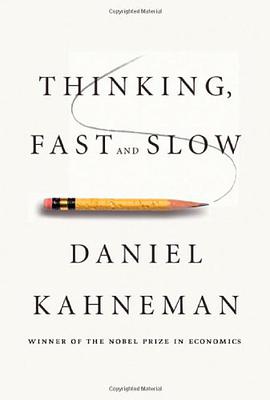
Thinking, Fast and Slow 豆瓣 Goodreads
Thinking, Fast and Slow
8.4 (37 个评分)
作者:
Daniel Kahneman
出版社:
Farrar, Straus and Giroux
2011
- 10
Major New York Times bestseller
Winner of the National Academy of Sciences Best Book Award in 2012
Selected by the New York Times Book Review as one of the best books of 2011
A Globe and Mail Best Books of the Year 2011 Title
One of The Economist’s 2011 Books of the Year
One of The Wall Street Journal's Best Nonfiction Books of the Year 2011
In the international bestseller, Thinking, Fast and Slow, Daniel Kahneman, the renowned psychologist and winner of the Nobel Prize in Economics, takes us on a groundbreaking tour of the mind and explains the two systems that drive the way we think. System 1 is fast, intuitive, and emotional; System 2 is slower, more deliberative, and more logical. The impact of overconfidence on corporate strategies, the difficulties of predicting what will make us happy in the future, the profound effect of cognitive biases on everything from playing the stock market to planning our next vacation—each of these can be understood only by knowing how the two systems shape our judgments and decisions.
Engaging the reader in a lively conversation about how we think, Kahneman reveals where we can and cannot trust our intuitions and how we can tap into the benefits of slow thinking. He offers practical and enlightening insights into how choices are made in both our business and our personal lives—and how we can use different techniques to guard against the mental glitches that often get us into trouble. Winner of the National Academy of Sciences Best Book Award and the Los Angeles Times Book Prize and selected by The New York Times Book Review as one of the ten best books of 2011, Thinking, Fast and Slow is destined to be a classic.
One of the New York Times Book Review's Top 10 Books of 2011
Editorial Reviews
Amazon.com Review
Amazon Best Books of the Month, November 2011: Drawing on decades of research in psychology that resulted in a Nobel Prize in Economic Sciences, Daniel Kahneman takes readers on an exploration of what influences thought example by example, sometimes with unlikely word pairs like "vomit and banana." System 1 and System 2, the fast and slow types of thinking, become characters that illustrate the psychology behind things we think we understand but really don't, such as intuition. Kahneman's transparent and careful treatment of his subject has the potential to change how we think, not just about thinking, but about how we live our lives. Thinking, Fast and Slow gives deep--and sometimes frightening--insight about what goes on inside our heads: the psychological basis for reactions, judgments, recognition, choices, conclusions, and much more. --JoVon Sotak
Review
“A tour de force. . . Kahneman’s book is a must read for anyone interested in either human behavior or investing. He clearly shows that while we like to think of ourselves as rational in our decision making, the truth is we are subject to many biases. At least being aware of them will give you a better chance of avoiding them, or at least making fewer of them.”—Larry Swedroe, CBS News
“Daniel Kahneman demonstrates forcefully in his new book, Thinking, Fast and Slow, how easy it is for humans to swerve away from rationality.”—Christopher Shea, The Washington Post
“An outstanding book, distinguished by beauty and clarity of detail, precision of presentation and gentleness of manner. Its truths are open to all those whose System 2 is not completely defunct. I have hardly touched on its richness.”— Galen Strawson, The Guardian
“Brilliant . . . It is impossible to exaggerate the importance of Daniel Kahneman’s contribution to the understanding of the way we think and choose. He stands among the giants, a weaver of the threads of Charles Darwin, Adam Smith and Sigmund Freud. Arguably the most important psychologist in history, Kahneman has reshaped cognitive psychology, the analysis of rationality and reason, the understanding of risk and the study of happiness and well-being . . . A magisterial work, stunning in its ambition, infused with knowledge, laced with wisdom, informed by modesty and deeply humane. If you can read only one book this year, read this one.”— Janice Gross Stein, The Globe and Mail
“A sweeping, compelling tale of just how easily our brains are bamboozled, bringing in both his own research and that of numerous psychologists, economists, and other experts...Kahneman has a remarkable ability to take decades worth of research and distill from it what would be important and interesting for a lay audience...Thinking, Fast and Slow is an immensely important book. Many science books are uneven, with a useful or interesting chapter too often followed by a dull one. Not so here. With rare exceptions, the entire span of this weighty book is fascinating and applicable to day-to-day life. Everyone should read Thinking, Fast and Slow.” —Jesse Singal, Boston Globe
“We must be grateful to Kahneman for giving us in this book a joyful understanding of the practical side of our personalities.” —Freeman Dyson, The New York Review of Books
“Brilliant . . . It is impossible to exaggerate the importance of Daniel Kahneman’s contribution to the understanding of the way we think and choose. He stands among the giants, a weaver of the threads of Charles Darwin, Adam Smith and Sigmund Freud. Arguably the most important psychologist in history, Kahneman has reshaped cognitive psychology, the analysis of rationality and reason, the understanding of risk and the study of happiness and well-being . . . A magisterial work, stunning in its ambition, infused with knowledge, laced with wisdom, informed by modesty and deeply humane. If you can read only one book this year, read this one.” — Janice Gross Stein, The Globe and Mail
“It is an astonishingly rich book: lucid, profound, full of intellectual surprises and self-help value. It is consistently entertaining and frequently touching, especially when Kahneman is recounting his collaboration with Tversky . . . So impressive is its vision of flawed human reason that the New York Times columnist David Brooks recently declared that Kahneman and Tversky’s work ‘will be remembered hundreds of years from now,’ and that it is ‘a crucial pivot point in the way we see ourselves.’ They are, Brooks said, ‘like the Lewis and Clark of the mind’ . . . By the time I got to the end of Thinking, Fast and Slow, my skeptical frown had long since given way to a grin of intellectual satisfaction. Appraising the book by the peak-end rule, I overconfidently urge everyone to buy and read it. But for those who are merely interested in Kahenman’s takeaway on the Malcolm Gladwell question it is this: If you've had 10,000 hours of training in a predictable, rapid-feedback environment—chess, firefighting, anesthesiology—then blink. In all other cases, think.”—The New York Times Book Review
“Ask around and you hear pretty much the same thing. 'Kahneman is the most influential psychologist since Sigmund Freud,' says Christopher Chabris, a professor of psychology at Union College, in New York. 'No one else has had such a broad impact on so many fields' . . . It now seems inevitable that Kahneman, who made his reputation by ignoring or defying conventional wisdom, is about to be anointed the intellectual guru of our economically irrational times.”— Evan R. Goldstein, The Chronicle of Higher Education
“There have been many good books on human rationality and irrationality, but only one masterpiece. That masterpiece is Daniel Kahneman’s Thinking, Fast and Slow . . . This is one of the greatest and most engaging collections of insights into the human mind I have read.”—William Easterly, Financial Times
“[Thinking, Fast and Slow] is wonderful, of course. To anyone with the slightest interest in the workings of his own mind, it is so rich and fascinating that any summary would seem absurd.”— Michael Lewis, Vanity Fair
“Absorbingly articulate and infinitely intelligent . . . What's most enjoyable and compelling about Thinking, Fast and Slow is that it's so utterly, refreshingly anti-Gladwellian. There is nothing pop about Kahneman's psychology, no formulaic story arc, no beating you over the head with an artificial, buzzword-encrusted Big Idea. It's just the wisdom that comes from five decades of honest, rigorous scientific work, delivered humbly yet brilliantly, in a way that will forever change the way you think about thinking.”—Maria Popova, The Atlantic
“I will never think about thinking quite the same. [Thinking, Fast and Slow] is a monumental achievement.”—Roger Lowenstein, Bloomberg/Businessweek
“Profound . . . As Copernicus removed the Earth from the centre of the universe and Darwin knocked humans off their biological perch, Mr. Kahneman has shown that we are not the paragons of reason we assume ourselves to be.” —The Economist
“[Kahneman’s] disarmingly simple experiments have profoundly changed the way that we think about thinking . . . We like to see ourselves as a Promethean species, uniquely endowed with the gift of reason. But Mr. Kahneman’s simple experiments reveal a very different mind, stuffed full of habits that, in most situations, lead us astray.” —Jonah Lehrer, The Wall Street Journal
“[A] tour de force of psychological insight, research explication and compelling narrative that brings together in one volume the high points of Mr. Kahneman's notable contributions, over five decades, to the study of human judgment, decision-making and choice . . . Thanks to the elegance and force of his ideas, and the robustness of the evidence he offers for them, he has helped us to a new understanding of our divided minds—and our whole selves.” —Christoper F. Chabris, The Wall Street Journal
“The ramifications of Kahenman’s work are wide, extending into education, business, marketing, politics . . . and even happiness research. Call his field “psychonomics,” the hidden reasoning behind our choices. Thinking, Fast and Slow is essential reading for anyone with a mind.” —Kyle Smith, The New York Post
“A major intellectual event . . . The work of Kahneman and Tversky was a crucial pivot point in the way we see ourselves.” —David Brooks, The New York Times
“Kahneman provides a detailed, yet accessible, description of the psychological mechanisms involved in making decisions.” —Jacek Debiec, Nature
“With Kahneman’s expert help, readers may understand this mix of psychology and economics better than most accountants, therapists, or elected representatives. VERDICT A stellar accomplishment, a book for everyone who likes to think and wants to do it better.” —Library Journal
“The mind is a hilariously muddled compromise between incompatible modes of thought in this fascinating treatise by a giant in the field of decision research. Nobel-winning psychologist Kahneman (Attention and Effort) posits a brain governed by two clashing decision-making processes. The largely unconscious System 1, he contends, makes intuitive snap judgments based on emotion, memory, and hard-wired rules of thumb; the painfully conscious System 2 laboriously checks the facts and does the math, but is so "lazy" and distractible that it usually defers to System 1. Kahneman uses this scheme to frame a scintillating discussion of his findings in cognitive psychology and behavioral economics, and of the ingenious experiments that tease out the irrational, self-contradictory logics that underlie our choices. We learn why we mistake statistical noise for cohere...
Winner of the National Academy of Sciences Best Book Award in 2012
Selected by the New York Times Book Review as one of the best books of 2011
A Globe and Mail Best Books of the Year 2011 Title
One of The Economist’s 2011 Books of the Year
One of The Wall Street Journal's Best Nonfiction Books of the Year 2011
In the international bestseller, Thinking, Fast and Slow, Daniel Kahneman, the renowned psychologist and winner of the Nobel Prize in Economics, takes us on a groundbreaking tour of the mind and explains the two systems that drive the way we think. System 1 is fast, intuitive, and emotional; System 2 is slower, more deliberative, and more logical. The impact of overconfidence on corporate strategies, the difficulties of predicting what will make us happy in the future, the profound effect of cognitive biases on everything from playing the stock market to planning our next vacation—each of these can be understood only by knowing how the two systems shape our judgments and decisions.
Engaging the reader in a lively conversation about how we think, Kahneman reveals where we can and cannot trust our intuitions and how we can tap into the benefits of slow thinking. He offers practical and enlightening insights into how choices are made in both our business and our personal lives—and how we can use different techniques to guard against the mental glitches that often get us into trouble. Winner of the National Academy of Sciences Best Book Award and the Los Angeles Times Book Prize and selected by The New York Times Book Review as one of the ten best books of 2011, Thinking, Fast and Slow is destined to be a classic.
One of the New York Times Book Review's Top 10 Books of 2011
Editorial Reviews
Amazon.com Review
Amazon Best Books of the Month, November 2011: Drawing on decades of research in psychology that resulted in a Nobel Prize in Economic Sciences, Daniel Kahneman takes readers on an exploration of what influences thought example by example, sometimes with unlikely word pairs like "vomit and banana." System 1 and System 2, the fast and slow types of thinking, become characters that illustrate the psychology behind things we think we understand but really don't, such as intuition. Kahneman's transparent and careful treatment of his subject has the potential to change how we think, not just about thinking, but about how we live our lives. Thinking, Fast and Slow gives deep--and sometimes frightening--insight about what goes on inside our heads: the psychological basis for reactions, judgments, recognition, choices, conclusions, and much more. --JoVon Sotak
Review
“A tour de force. . . Kahneman’s book is a must read for anyone interested in either human behavior or investing. He clearly shows that while we like to think of ourselves as rational in our decision making, the truth is we are subject to many biases. At least being aware of them will give you a better chance of avoiding them, or at least making fewer of them.”—Larry Swedroe, CBS News
“Daniel Kahneman demonstrates forcefully in his new book, Thinking, Fast and Slow, how easy it is for humans to swerve away from rationality.”—Christopher Shea, The Washington Post
“An outstanding book, distinguished by beauty and clarity of detail, precision of presentation and gentleness of manner. Its truths are open to all those whose System 2 is not completely defunct. I have hardly touched on its richness.”— Galen Strawson, The Guardian
“Brilliant . . . It is impossible to exaggerate the importance of Daniel Kahneman’s contribution to the understanding of the way we think and choose. He stands among the giants, a weaver of the threads of Charles Darwin, Adam Smith and Sigmund Freud. Arguably the most important psychologist in history, Kahneman has reshaped cognitive psychology, the analysis of rationality and reason, the understanding of risk and the study of happiness and well-being . . . A magisterial work, stunning in its ambition, infused with knowledge, laced with wisdom, informed by modesty and deeply humane. If you can read only one book this year, read this one.”— Janice Gross Stein, The Globe and Mail
“A sweeping, compelling tale of just how easily our brains are bamboozled, bringing in both his own research and that of numerous psychologists, economists, and other experts...Kahneman has a remarkable ability to take decades worth of research and distill from it what would be important and interesting for a lay audience...Thinking, Fast and Slow is an immensely important book. Many science books are uneven, with a useful or interesting chapter too often followed by a dull one. Not so here. With rare exceptions, the entire span of this weighty book is fascinating and applicable to day-to-day life. Everyone should read Thinking, Fast and Slow.” —Jesse Singal, Boston Globe
“We must be grateful to Kahneman for giving us in this book a joyful understanding of the practical side of our personalities.” —Freeman Dyson, The New York Review of Books
“Brilliant . . . It is impossible to exaggerate the importance of Daniel Kahneman’s contribution to the understanding of the way we think and choose. He stands among the giants, a weaver of the threads of Charles Darwin, Adam Smith and Sigmund Freud. Arguably the most important psychologist in history, Kahneman has reshaped cognitive psychology, the analysis of rationality and reason, the understanding of risk and the study of happiness and well-being . . . A magisterial work, stunning in its ambition, infused with knowledge, laced with wisdom, informed by modesty and deeply humane. If you can read only one book this year, read this one.” — Janice Gross Stein, The Globe and Mail
“It is an astonishingly rich book: lucid, profound, full of intellectual surprises and self-help value. It is consistently entertaining and frequently touching, especially when Kahneman is recounting his collaboration with Tversky . . . So impressive is its vision of flawed human reason that the New York Times columnist David Brooks recently declared that Kahneman and Tversky’s work ‘will be remembered hundreds of years from now,’ and that it is ‘a crucial pivot point in the way we see ourselves.’ They are, Brooks said, ‘like the Lewis and Clark of the mind’ . . . By the time I got to the end of Thinking, Fast and Slow, my skeptical frown had long since given way to a grin of intellectual satisfaction. Appraising the book by the peak-end rule, I overconfidently urge everyone to buy and read it. But for those who are merely interested in Kahenman’s takeaway on the Malcolm Gladwell question it is this: If you've had 10,000 hours of training in a predictable, rapid-feedback environment—chess, firefighting, anesthesiology—then blink. In all other cases, think.”—The New York Times Book Review
“Ask around and you hear pretty much the same thing. 'Kahneman is the most influential psychologist since Sigmund Freud,' says Christopher Chabris, a professor of psychology at Union College, in New York. 'No one else has had such a broad impact on so many fields' . . . It now seems inevitable that Kahneman, who made his reputation by ignoring or defying conventional wisdom, is about to be anointed the intellectual guru of our economically irrational times.”— Evan R. Goldstein, The Chronicle of Higher Education
“There have been many good books on human rationality and irrationality, but only one masterpiece. That masterpiece is Daniel Kahneman’s Thinking, Fast and Slow . . . This is one of the greatest and most engaging collections of insights into the human mind I have read.”—William Easterly, Financial Times
“[Thinking, Fast and Slow] is wonderful, of course. To anyone with the slightest interest in the workings of his own mind, it is so rich and fascinating that any summary would seem absurd.”— Michael Lewis, Vanity Fair
“Absorbingly articulate and infinitely intelligent . . . What's most enjoyable and compelling about Thinking, Fast and Slow is that it's so utterly, refreshingly anti-Gladwellian. There is nothing pop about Kahneman's psychology, no formulaic story arc, no beating you over the head with an artificial, buzzword-encrusted Big Idea. It's just the wisdom that comes from five decades of honest, rigorous scientific work, delivered humbly yet brilliantly, in a way that will forever change the way you think about thinking.”—Maria Popova, The Atlantic
“I will never think about thinking quite the same. [Thinking, Fast and Slow] is a monumental achievement.”—Roger Lowenstein, Bloomberg/Businessweek
“Profound . . . As Copernicus removed the Earth from the centre of the universe and Darwin knocked humans off their biological perch, Mr. Kahneman has shown that we are not the paragons of reason we assume ourselves to be.” —The Economist
“[Kahneman’s] disarmingly simple experiments have profoundly changed the way that we think about thinking . . . We like to see ourselves as a Promethean species, uniquely endowed with the gift of reason. But Mr. Kahneman’s simple experiments reveal a very different mind, stuffed full of habits that, in most situations, lead us astray.” —Jonah Lehrer, The Wall Street Journal
“[A] tour de force of psychological insight, research explication and compelling narrative that brings together in one volume the high points of Mr. Kahneman's notable contributions, over five decades, to the study of human judgment, decision-making and choice . . . Thanks to the elegance and force of his ideas, and the robustness of the evidence he offers for them, he has helped us to a new understanding of our divided minds—and our whole selves.” —Christoper F. Chabris, The Wall Street Journal
“The ramifications of Kahenman’s work are wide, extending into education, business, marketing, politics . . . and even happiness research. Call his field “psychonomics,” the hidden reasoning behind our choices. Thinking, Fast and Slow is essential reading for anyone with a mind.” —Kyle Smith, The New York Post
“A major intellectual event . . . The work of Kahneman and Tversky was a crucial pivot point in the way we see ourselves.” —David Brooks, The New York Times
“Kahneman provides a detailed, yet accessible, description of the psychological mechanisms involved in making decisions.” —Jacek Debiec, Nature
“With Kahneman’s expert help, readers may understand this mix of psychology and economics better than most accountants, therapists, or elected representatives. VERDICT A stellar accomplishment, a book for everyone who likes to think and wants to do it better.” —Library Journal
“The mind is a hilariously muddled compromise between incompatible modes of thought in this fascinating treatise by a giant in the field of decision research. Nobel-winning psychologist Kahneman (Attention and Effort) posits a brain governed by two clashing decision-making processes. The largely unconscious System 1, he contends, makes intuitive snap judgments based on emotion, memory, and hard-wired rules of thumb; the painfully conscious System 2 laboriously checks the facts and does the math, but is so "lazy" and distractible that it usually defers to System 1. Kahneman uses this scheme to frame a scintillating discussion of his findings in cognitive psychology and behavioral economics, and of the ingenious experiments that tease out the irrational, self-contradictory logics that underlie our choices. We learn why we mistake statistical noise for cohere...

和约的经济后果 豆瓣
Economic consequences of the peace
作者:
[英国] 约翰·梅纳德·凯恩斯
译者:
张军
/
贾晓屹
出版社:
华夏出版社
2008
- 1
《和约的经济后果》中,凯恩斯对《凡尔赛和约》给德国及世界所造成的影响进行了杰出的、预言性的分析,对劳合•乔治、乔治•克雷蒙梭、伍德罗•威尔逊作了细致深刻的描绘,因此,这也是那个时代的一本政治经济学巨著,它把人们对经济学的认知和接受程度提高到了一个更新和更高的水平。
《和约的经济后果》是凯恩斯的成名之作,在当时具有重要的影响和意义。 《和约的经济后果》对《凡尔赛和约》的缺陷进行了分析,并提出了一些补救办法,如修改《凡尔赛和约》的有关条款、解决各国之间的债务、进行国际贷款、改善与俄国的关系等。 《和约的经济后果》风格铿锵有力,妙语连珠,人物刻画栩栩如生,其中的尖刻嘲讽透露出凯恩斯在道义上的愤慨。
《和约的经济后果》是凯恩斯的成名之作,在当时具有重要的影响和意义。 《和约的经济后果》对《凡尔赛和约》的缺陷进行了分析,并提出了一些补救办法,如修改《凡尔赛和约》的有关条款、解决各国之间的债务、进行国际贷款、改善与俄国的关系等。 《和约的经济后果》风格铿锵有力,妙语连珠,人物刻画栩栩如生,其中的尖刻嘲讽透露出凯恩斯在道义上的愤慨。

大西洋的跨越 豆瓣 Goodreads
Atlantic Crossings:Social Politics in Progressive Age
作者:
[美] 丹尼尔·T. 罗杰斯
译者:
吴万伟
出版社:
译林出版社
2011
- 9
《大西洋的跨越:进步时代的社会政治》讲述了大西洋两岸在社会政策方面的相互联系、交流和竞争,反映在那个特定的历史时期,人们如何努力弥补过度放任的资本主义带来的破坏。从1900年的巴黎世界博览会到1942年伦敦《贝弗里奇报告》,从两次世界大战到罗斯福新政,生动描写各种关系民生的社会政策尝试,包括社会保险,城市规划、市政服务、农村合作社和住房改革等方面。视野不仅跨越大西洋,而且涉及澳大利亚和新西兰,始终把握国家间交流互动的脉络,打破了思想上固有边界的限制。

谁是中国土地的拥有者 豆瓣
作者:
何·皮特 (Peter Ho) 何培生
译者:
林韵然
出版社:
社会科学文献出版社
2008
- 9
本书启用了“可信度” 和“空制度”两个概念。一种为社会群体所信赖并确认为可信的制度,其创生在相当程度上取决于该群体根据其所面临的社会经济和政治因素所做出的选择和安排。无视这一条件,不仅会导致对社会行为人的行为方式作用甚微的空制度的产生,而且会导致社会不公加剧,甚至引起社会冲突。本书指出要正确理解中国农村改革所取得的成功,其诀窍在于理解政府所采取的放手政策,及其所刻意坚持的制度模糊原则的意义,因为这两者促成了适合不同地方特性并具有可信度的制度的产生。
目 录
绪 论…………………………………………………………………………………………1
第一章 农地产权制度的可信度,即“有意的制度模糊”之所以生效的原因…………26
第二章 为什么农民没有权利——土地产权纠纷和习俗权………………………………65
第三章 中国的草原管理:“空制度”的创建……………………………………………100
第四章 争议地带——森林权、登记和社会矛盾…………………………………………137
第五章 “四荒”拍卖政策174第六章国有化和私有化之间
——作为第三条道路的共有财产?………………………………………………217
结 论 过渡时期的政治经济学……………………………………………………………254
附录一 两个村庄的土地权属界线认可书…………………………………………………271
附录二 国营林场和村庄之间的土地纠纷材料……………………………………………274
附录三 乡村学校的土地权属界线认可书…………………………………………………277
附录四 某砖窑的土地权属界线认可书……………………………………………………280
附录五 “第二轮”土地承包(农民持有的副本)………………………………………283
附录六 “第二轮”土地承包(村民委员会持有的副本)………………………………286
附录七 责任山承包合同……………………………………………………………………288
附录八 长城村拍卖宜林“四荒地”造林合同……………………………………………289
附录九 官厅村“四荒地”拍卖合同书……………………………………………………291
附录十 将农村土地转让给一家企业的手写合同…………………………………………292
附录十一 上垣村草原界线四至范围的手写协议书(不包括地图)……………………293
附录十二 某村庄的草原使用合同…………………………………………………………295
附录十三 某农户的草原承包合同…………………………………………………………300
中英文专有名词索引…………………………………………………………………………302
目 录
绪 论…………………………………………………………………………………………1
第一章 农地产权制度的可信度,即“有意的制度模糊”之所以生效的原因…………26
第二章 为什么农民没有权利——土地产权纠纷和习俗权………………………………65
第三章 中国的草原管理:“空制度”的创建……………………………………………100
第四章 争议地带——森林权、登记和社会矛盾…………………………………………137
第五章 “四荒”拍卖政策174第六章国有化和私有化之间
——作为第三条道路的共有财产?………………………………………………217
结 论 过渡时期的政治经济学……………………………………………………………254
附录一 两个村庄的土地权属界线认可书…………………………………………………271
附录二 国营林场和村庄之间的土地纠纷材料……………………………………………274
附录三 乡村学校的土地权属界线认可书…………………………………………………277
附录四 某砖窑的土地权属界线认可书……………………………………………………280
附录五 “第二轮”土地承包(农民持有的副本)………………………………………283
附录六 “第二轮”土地承包(村民委员会持有的副本)………………………………286
附录七 责任山承包合同……………………………………………………………………288
附录八 长城村拍卖宜林“四荒地”造林合同……………………………………………289
附录九 官厅村“四荒地”拍卖合同书……………………………………………………291
附录十 将农村土地转让给一家企业的手写合同…………………………………………292
附录十一 上垣村草原界线四至范围的手写协议书(不包括地图)……………………293
附录十二 某村庄的草原使用合同…………………………………………………………295
附录十三 某农户的草原承包合同…………………………………………………………300
中英文专有名词索引…………………………………………………………………………302

原则政治,而非利益政治 豆瓣
作者:
James M. Buchanan Roger D. Congleton
译者:
张定淮
/
何志平
出版社:
社会科学文献出版社
2008
- 6
对宪政民主的诟病几乎同战争一样贯穿了整个20世纪。时至今日,认为民主无法逃脱“歧视性”命运的人仍不在少数。而本书可看做近年来为解决“歧视性民主”问题的重大理论尝试。
本书在理论构建上适时引入罗尔斯的“无知之幕”和海萨尼的“不确定性”两个技术元素。前者消除了制定政治正义原则时,为己谋私的利益博弈格局;后者则消除了由于信息不对称带来的利益不对称。本书认为,普遍性原则应该成为立宪的根本原则,唯有在宪政层面上贯彻这一原则,才能避免多数人通过合法的民主程序,剥夺少数人的利益。
译者序 / 1
前言 / 1
鸣谢 / 1
第一部分 导论
第一章 普遍性原则、法律与政治 / 3
一 规则是由人发现的还是人为制定的 / 4
二 无知之幕的运用 / 6
三 法律之下的平等 / 8
四 法律中普遍性原则的效能 / 10
五 法律与社会目标 / 12
六 政治中趋向普遍性原则 / 13
第二部分 分析
第二章 多数主义民主 / 19
一 契约主义的基础:作为交换的政治 / 20
二 契约遭到破坏:作为强占物的政治 / 24
三 政治选择的目标 / 26
四 选择对象的内生性 / 28
五 简化的图解 / 29
六 政治是否有必要是正集合 / 31
第三章 消除非对角线 / 35
一 多数主义轮换的必要性 / 36
二 非对角线上的不对称 / 37
三 寻租与非对角线 / 43
四 人与人之间有价产品的区别 / 45
五 对角线制约下的多数稳定 / 50
六 存在偏好差异背景下的普遍性原则的政治效率 / 51
第四章 扩展讨论 / 54
一 集体行为的基础 / 55
二 对称性的含义 / 55
三 宪政化作为普遍性原则 / 59
四 普遍性原则与集体行为的正当性 / 62
第五章 普遍性原则与政治议程 / 64
一 作为范例的政治 / 65
二 非自然的普遍性 / 66
三 公共性的神话 / 67
四 政治抉择的创造性 / 70
五 宪法性企业行为 / 71
第三部分 应用
引言 / 77
第六章 普遍性与外部性 / 78
一 公共土地的积极与消极管理问题:一点题外话 / 80
二 以环境法规为例证 / 82
三 多数党轮执与对等外部性管制中的普遍性 / 84
四 多数党轮执与非对等外部性集体化中的普遍性 / 86
五 普遍性与产权的发展 / 88
六 政治无效率的存在 / 90
七 代际及序列外部性 / 92
八 结论:外部性与政治失效 / 94
第七章 市场限制与普遍性标准 / 96
一 对内部(国内)贸易的政治干预 / 97
二 对外部(国外)贸易的政治干预 / 99
三 普遍性原则制约的应用 / 101
附件 最惠国条款 / 105
第八章 普遍征税的政治效率 / 107
一 不同政权下的税收效率 / 108
二 多数民主 / 112
三 效率的含义 / 115
四 税收普遍性的含义 / 118
五 结论 / 121
第九章 赤字财政与时段性歧视 / 123
一 赤字财政与时段性普遍原则 / 124
二 普遍原则与李嘉图—巴罗的债务中立原理 / 125
三 公债、公有资本与普遍性原则 / 127
四 赤字财政与宪法上的普遍性标准 / 128
五 债务偿还与普遍性原则的标准 / 130
六 结论 / 131
第十章 普遍性原则与公共服务的提供 / 132
一 普遍性与政府服务的分配 / 133
二 公共服务生产的分配方面 / 138
三 普遍性与公共服务的生产效率 / 140
四 政治效率与公共物品的资助 / 141
五 结论与总结 / 145
第十一章 普遍性原则与再分配 / 147
一 支付转移 / 147
二 程式化中间选民模式中再分配的范围 / 148
三 来自要求实行非普遍性原则的压力 / 150
四 公共和个人对支付转移的需求 / 153
五 对老年人实行的总财政转移支付 / 154
六 对其他目标群体的转移支付 / 156
七 提供实物或进行补贴的特殊服务 / 158
八 宪法性财政歧视中存在的一些困难 / 158
九 结论 / 161
第十二章 一致性缺失的普遍性:社会保险 / 163
一 统计的一致性:保险和彩票 / 164
二 普遍性与社会保险 / 166
三 国家扶持的竞争 / 168
四 犯罪和惩罚的随机成分 / 170
五 结论:统计的一致性和宪政抉择 / 171
第十三章 一致性缺失的普遍性:联邦主义 / 173
一 此地的同质性不一定需要彼地的同质性 / 173
二 普遍性与机动性 / 176
三 联邦主义和一致性服务水平的根源 / 177
四 结论:联邦制度作为目标服务的主要手段 / 178
第四部分 前景
第十四章 宪法秩序的政治构架 / 183
一 最低限度的但具歧视性的多数主义民主 / 185
二 最大限度但不具歧视性的多数主义民主 / 186
三 有限普遍性原则:受约束但又较为宽松的政治 / 187
四 对政治秩序的非契约论解释中的普遍性原则 / 189
五 21世纪的政治经济 / 190参考文献 / 192中外译名对照 / 199
本书在理论构建上适时引入罗尔斯的“无知之幕”和海萨尼的“不确定性”两个技术元素。前者消除了制定政治正义原则时,为己谋私的利益博弈格局;后者则消除了由于信息不对称带来的利益不对称。本书认为,普遍性原则应该成为立宪的根本原则,唯有在宪政层面上贯彻这一原则,才能避免多数人通过合法的民主程序,剥夺少数人的利益。
译者序 / 1
前言 / 1
鸣谢 / 1
第一部分 导论
第一章 普遍性原则、法律与政治 / 3
一 规则是由人发现的还是人为制定的 / 4
二 无知之幕的运用 / 6
三 法律之下的平等 / 8
四 法律中普遍性原则的效能 / 10
五 法律与社会目标 / 12
六 政治中趋向普遍性原则 / 13
第二部分 分析
第二章 多数主义民主 / 19
一 契约主义的基础:作为交换的政治 / 20
二 契约遭到破坏:作为强占物的政治 / 24
三 政治选择的目标 / 26
四 选择对象的内生性 / 28
五 简化的图解 / 29
六 政治是否有必要是正集合 / 31
第三章 消除非对角线 / 35
一 多数主义轮换的必要性 / 36
二 非对角线上的不对称 / 37
三 寻租与非对角线 / 43
四 人与人之间有价产品的区别 / 45
五 对角线制约下的多数稳定 / 50
六 存在偏好差异背景下的普遍性原则的政治效率 / 51
第四章 扩展讨论 / 54
一 集体行为的基础 / 55
二 对称性的含义 / 55
三 宪政化作为普遍性原则 / 59
四 普遍性原则与集体行为的正当性 / 62
第五章 普遍性原则与政治议程 / 64
一 作为范例的政治 / 65
二 非自然的普遍性 / 66
三 公共性的神话 / 67
四 政治抉择的创造性 / 70
五 宪法性企业行为 / 71
第三部分 应用
引言 / 77
第六章 普遍性与外部性 / 78
一 公共土地的积极与消极管理问题:一点题外话 / 80
二 以环境法规为例证 / 82
三 多数党轮执与对等外部性管制中的普遍性 / 84
四 多数党轮执与非对等外部性集体化中的普遍性 / 86
五 普遍性与产权的发展 / 88
六 政治无效率的存在 / 90
七 代际及序列外部性 / 92
八 结论:外部性与政治失效 / 94
第七章 市场限制与普遍性标准 / 96
一 对内部(国内)贸易的政治干预 / 97
二 对外部(国外)贸易的政治干预 / 99
三 普遍性原则制约的应用 / 101
附件 最惠国条款 / 105
第八章 普遍征税的政治效率 / 107
一 不同政权下的税收效率 / 108
二 多数民主 / 112
三 效率的含义 / 115
四 税收普遍性的含义 / 118
五 结论 / 121
第九章 赤字财政与时段性歧视 / 123
一 赤字财政与时段性普遍原则 / 124
二 普遍原则与李嘉图—巴罗的债务中立原理 / 125
三 公债、公有资本与普遍性原则 / 127
四 赤字财政与宪法上的普遍性标准 / 128
五 债务偿还与普遍性原则的标准 / 130
六 结论 / 131
第十章 普遍性原则与公共服务的提供 / 132
一 普遍性与政府服务的分配 / 133
二 公共服务生产的分配方面 / 138
三 普遍性与公共服务的生产效率 / 140
四 政治效率与公共物品的资助 / 141
五 结论与总结 / 145
第十一章 普遍性原则与再分配 / 147
一 支付转移 / 147
二 程式化中间选民模式中再分配的范围 / 148
三 来自要求实行非普遍性原则的压力 / 150
四 公共和个人对支付转移的需求 / 153
五 对老年人实行的总财政转移支付 / 154
六 对其他目标群体的转移支付 / 156
七 提供实物或进行补贴的特殊服务 / 158
八 宪法性财政歧视中存在的一些困难 / 158
九 结论 / 161
第十二章 一致性缺失的普遍性:社会保险 / 163
一 统计的一致性:保险和彩票 / 164
二 普遍性与社会保险 / 166
三 国家扶持的竞争 / 168
四 犯罪和惩罚的随机成分 / 170
五 结论:统计的一致性和宪政抉择 / 171
第十三章 一致性缺失的普遍性:联邦主义 / 173
一 此地的同质性不一定需要彼地的同质性 / 173
二 普遍性与机动性 / 176
三 联邦主义和一致性服务水平的根源 / 177
四 结论:联邦制度作为目标服务的主要手段 / 178
第四部分 前景
第十四章 宪法秩序的政治构架 / 183
一 最低限度的但具歧视性的多数主义民主 / 185
二 最大限度但不具歧视性的多数主义民主 / 186
三 有限普遍性原则:受约束但又较为宽松的政治 / 187
四 对政治秩序的非契约论解释中的普遍性原则 / 189
五 21世纪的政治经济 / 190参考文献 / 192中外译名对照 / 199
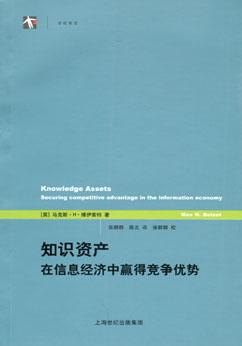
知识资产:在信息经济中赢得竞争优势 豆瓣
作者:
(英)马克斯・H・博伊索特
译者:
张群群
出版社:
上海人民出版社
2005
- 5
这是一部极富创新意义的著作。马克斯·H·博伊索特提供了一个简约有力的概念性框架——信息空间,用以考察实物资产与知识资产之间错综复杂的关系,并且指出,在信息经济时代,对知识资产的有效管理是组织赢得竞争优势的关键。博伊索特提出的知识流视角,对于理解21世纪管理的含义,是一项重要贡献。

良药还是砒霜?援助并非多多益善 豆瓣
作者:
[美]乔纳森·格伦尼
译者:
周玉峰
出版社:
民主与建设出版社
2015
- 1
本书作者以各国援助非洲的第一手资料,从非洲贫穷人民的实际利益出发,观察对非洲的经济援助,得出了与众不同的结论,这种结论与国内“书血不如造血”的扶贫理念有相似之处,这种思考也可帮助国际社会重新思考如何正确实际的援助非洲。
编辑推荐
援助对非洲国民带来的后果,究竟是利大于弊,还是弊大于利还很难说。仅仅靠增加援助额来提高非洲国民生活水平、摆脱贫困,似乎达不到预期效果。只是强调增加援助额实际上加重了非洲的贫困。在非洲不少国家,援助意味着更加贫困,更多人挨饿,为穷人提供的基本服务更糟,意味着早已摇摇欲坠的民主政体受到损害。捐助并非医治非洲贫困问题的良药!此书的目的很简单:劝说那些关注于非洲的贫困与不公平的斗士们不要再呼吁增加援助,而要致力于使贫困群体真正得以改善。
媒体推荐
十二五国家重点出版物出版规划项目非洲、坦赞铁路、
编辑推荐
援助对非洲国民带来的后果,究竟是利大于弊,还是弊大于利还很难说。仅仅靠增加援助额来提高非洲国民生活水平、摆脱贫困,似乎达不到预期效果。只是强调增加援助额实际上加重了非洲的贫困。在非洲不少国家,援助意味着更加贫困,更多人挨饿,为穷人提供的基本服务更糟,意味着早已摇摇欲坠的民主政体受到损害。捐助并非医治非洲贫困问题的良药!此书的目的很简单:劝说那些关注于非洲的贫困与不公平的斗士们不要再呼吁增加援助,而要致力于使贫困群体真正得以改善。
媒体推荐
十二五国家重点出版物出版规划项目非洲、坦赞铁路、


经济人的末日:极权主义的起源 豆瓣
THE END OF ECONOMIC MAN:THE ORIGINS OF TOTALITARIANISM
9.3 (32 个评分)
作者:
[美] 彼得·德鲁克
译者:
洪世民
/
赵志恒
出版社:
上海译文出版社
2015
- 8
《经济人的末日》是彼得•德鲁克的第一本书,也是他的成名作。
1933年,在希特勒上台前的几个星期,德鲁克开始动笔。1939年春,本书在美国出版,是第一本阐述极权主义起源的经典之作。
《经济人的末日》的出版,在美国和英国形成热烈回响,也被认为是一部惊世骇俗的异端之作。英国前首相丘吉尔为此写了一篇书评,称它是“唯一一本了解并解释两次大战间世界形势的书”。后来,丘吉尔下令,每位英国军官的背包里,都应该放一本《经济人的末日》。
正如德鲁克所言,“这是一本有关政治的书”。构成本书主线的是政治、经济与社会,它的主题是权力的崛起而非信仰的兴起。《经济人的末日》专注于一个特殊的历史事件:欧洲社会及政治结构的瓦解导致纳粹主义的兴起,并进而支配了整个欧洲。
在德鲁克眼中,《经济人的末日》是他所有作品中,与今天的年轻人关系最密切的一本书。它不仅有助于他们了解父辈们所经历的那场灾难,或许也有助于今天的这代人,避免在他们的人生中重蹈那场浩劫。
1933年,在希特勒上台前的几个星期,德鲁克开始动笔。1939年春,本书在美国出版,是第一本阐述极权主义起源的经典之作。
《经济人的末日》的出版,在美国和英国形成热烈回响,也被认为是一部惊世骇俗的异端之作。英国前首相丘吉尔为此写了一篇书评,称它是“唯一一本了解并解释两次大战间世界形势的书”。后来,丘吉尔下令,每位英国军官的背包里,都应该放一本《经济人的末日》。
正如德鲁克所言,“这是一本有关政治的书”。构成本书主线的是政治、经济与社会,它的主题是权力的崛起而非信仰的兴起。《经济人的末日》专注于一个特殊的历史事件:欧洲社会及政治结构的瓦解导致纳粹主义的兴起,并进而支配了整个欧洲。
在德鲁克眼中,《经济人的末日》是他所有作品中,与今天的年轻人关系最密切的一本书。它不仅有助于他们了解父辈们所经历的那场灾难,或许也有助于今天的这代人,避免在他们的人生中重蹈那场浩劫。


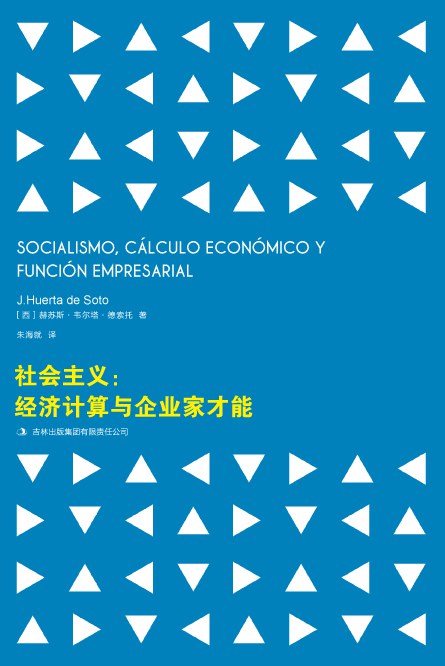
社会主义:经济计算与企业家才能 豆瓣
作者:
[西] 赫苏斯·韦尔塔·德索托
译者:
朱海就
出版社:
吉林出版集团有限责任公司
2011
- 1
上世纪二、三十年代,以米塞斯和哈耶克为一方,以兰格等社会主义计划手段的支持者为另一方,就社会主义经济计算之可能性展开了一场意义深远的大辩论。奥地利学派的思想家们卓越的理论洞识,推动了新的分析工具的形成,在学科内外都产生了广泛、深刻的影响。如今应该没有多少人还会怀疑这一结 论:中央计划经济不能解决资源的合理配置问题。然而在经济问题频现的时代,或对于在发展中的转型国家,政府的经济刺激措施、宏观干预政策仍屡屡回潮,对这场论辩做出全面的评估仍是十分必要的。
本书是当代奥地利学派经济学的重要著作,是对米塞斯企业家才能理论和哈耶克知识理论的拓展和应用。德索托完整地回顾了论辩始末,并对兰格的思想历程进行了详尽的考察和批判性研究。他揭示了各种形式的国家干预主义的危害,并深刻地指出“自由”、“道德”与“效率”的内在一致性,认为“对企业家才能的抑制,将阻碍经济计算所需的信息的产生,从而将导致社会的失调”。
本书是当代奥地利学派经济学的重要著作,是对米塞斯企业家才能理论和哈耶克知识理论的拓展和应用。德索托完整地回顾了论辩始末,并对兰格的思想历程进行了详尽的考察和批判性研究。他揭示了各种形式的国家干预主义的危害,并深刻地指出“自由”、“道德”与“效率”的内在一致性,认为“对企业家才能的抑制,将阻碍经济计算所需的信息的产生,从而将导致社会的失调”。

人的行动 豆瓣
Human Action: A Treatise on Economics
作者:
路德维希·冯·米塞斯
译者:
余晖
出版社:
上海世纪出版集团
2013
- 1
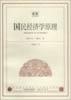
作为其思想集大成的晚年扛鼎之作的《人的行动》,米塞斯先是假定有一个“先验的”人类行动的“公理”,在这个公理基础上,他一步步地推导出了他眼中的人类社会经济运作的种种安排和运行原理,最后构建出了他的“人类行动学”的逻辑大厦。
人的行动学(Praxeology,或译人的行为学)是一种研究人类行动的学科。意指人对于环境及他人有所反应而表现出来的行为。这一词最先在1890年被A埃斯比纳斯(Alfred Espinas)提出,但真正为人所知的则是奥地利经济学派学者路德维希•冯•米塞斯稍后所提出的理论。
米塞斯试着探索经济学的根基。如同其他奥地利经济学派经济学家和古典经济学学者一样,米塞斯反对使用观察的方式研究人类行为。他认为人类的行为太过复杂,不可能将其以解构的方式进行研究,而且人类的害羞本性使得他们的行为总是无法被正确的观察。也因此,与自然科学不同的是,观察人的行动或者试图以历史资料解释人类的社会科学研究,都难以避免的会受到其他种种没有注意到的研究变因所影响。
在《人的行动》一书中,米塞斯主张自由市场机制不但可以完全取代任何政府计划的体制,更重要的,自由市场本身就是人类文明的根基。他将复杂的市场解释为无数的意识、有意识的行动、选择和个人偏好的结果。最终决定市场现象——供求、价格、生产方式,甚至盈亏的,是个人主观价值判断所反映出的个人选择。虽然政府可以设置价格,但最后还是个体自身,通过对于资金、产品和服务的选择和行动,真正决定了价格。因此,米塞斯不把经济学作为对于材料、服务和产品的研究,而是对于人的行动的研究。
人的行动学(Praxeology,或译人的行为学)是一种研究人类行动的学科。意指人对于环境及他人有所反应而表现出来的行为。这一词最先在1890年被A埃斯比纳斯(Alfred Espinas)提出,但真正为人所知的则是奥地利经济学派学者路德维希•冯•米塞斯稍后所提出的理论。
米塞斯试着探索经济学的根基。如同其他奥地利经济学派经济学家和古典经济学学者一样,米塞斯反对使用观察的方式研究人类行为。他认为人类的行为太过复杂,不可能将其以解构的方式进行研究,而且人类的害羞本性使得他们的行为总是无法被正确的观察。也因此,与自然科学不同的是,观察人的行动或者试图以历史资料解释人类的社会科学研究,都难以避免的会受到其他种种没有注意到的研究变因所影响。
在《人的行动》一书中,米塞斯主张自由市场机制不但可以完全取代任何政府计划的体制,更重要的,自由市场本身就是人类文明的根基。他将复杂的市场解释为无数的意识、有意识的行动、选择和个人偏好的结果。最终决定市场现象——供求、价格、生产方式,甚至盈亏的,是个人主观价值判断所反映出的个人选择。虽然政府可以设置价格,但最后还是个体自身,通过对于资金、产品和服务的选择和行动,真正决定了价格。因此,米塞斯不把经济学作为对于材料、服务和产品的研究,而是对于人的行动的研究。
人的行为 豆瓣
Human Action: A Treatise on Economics
作者:
[奥地利] 路德维希·冯·米塞斯
译者:
夏道平
出版社:
上海社会科学院出版社
2015
- 9
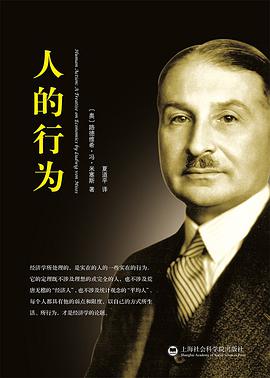
《人的行为》是米塞斯的扛鼎之作,也是继亚当·斯密《国富论》之后思想史上难得的对经济学理论进行全面整合的著作,为奥地利经济学派奠定了系统而清晰的理论基石。米塞斯认为人并非原子式的个人,而是运用其自由意志做出行为的人,他假定有一个“先验的”人的行为之“公理”,在此基础上一步 步推导出人类社会经济的种种安排和运作原理,将建立在个人行为逻辑上的经济学理论提升到社会哲学或人类行为通论的高度来处理,由此开创出“人的行为学”方法论。
米塞斯在经济学中的贡献还不仅仅是货币理论和对计划经济的分析。《人的行为》被认为是经济学中极为难读又意义深远的书。该书以人类行为学的一般理论为经济学的基础,认为关于社会组织的基本问题必须根据人类行为学来讨论。——梁小民
米塞斯最伟大的成就是1949年出版的巨著《人的行为》。他第一次世界大战期间就开始写作此书,第一次全面地论述了经济理论。米塞斯实践了自己的方法论和研究项目,并详细描绘了一个综合、庞大、完全由他本人演绎推导出的经济理论结构:人类行为原则。——穆瑞·罗斯巴德
米塞斯在经济学中的贡献还不仅仅是货币理论和对计划经济的分析。《人的行为》被认为是经济学中极为难读又意义深远的书。该书以人类行为学的一般理论为经济学的基础,认为关于社会组织的基本问题必须根据人类行为学来讨论。——梁小民
米塞斯最伟大的成就是1949年出版的巨著《人的行为》。他第一次世界大战期间就开始写作此书,第一次全面地论述了经济理论。米塞斯实践了自己的方法论和研究项目,并详细描绘了一个综合、庞大、完全由他本人演绎推导出的经济理论结构:人类行为原则。——穆瑞·罗斯巴德

法的经济解释 豆瓣
作者:
熊秉元
出版社:
东方出版社
2017
- 6
高全喜、于立推荐!
各种社会现象,都是由人类行为汇集而成,社会科学的功能,就是针对社会现象(而非自然现象),尝试提出合情合理的解释。本书分为四篇,第一篇的前四讲,就是构建社会科学的基本架构。第五讲是案例分析,把基本架构和社会现象作一联结。对于社会科学研究者而言,这个世界是有意义的,可以“以理解之”!法律的形成和变迁,也是社会现象之一。对于法律的基础,传统法学多是立基于道德哲学。相形之下,社会科学追本溯源,由初民/原始社会开始,描述法律的出现、性质以及道德的功能。第二篇的意义,是在第一篇的基础之上,建构“实证法学”。
正义的理念,贯穿法学和司法运作。由社会科学的角度,还有其他关键性的因素,对法学和司法运作有着不可忽视的影响。第三篇里,将探讨重要的影响因子:信息,是隐身于法学内部的主导力量。
“工欲善其事,必先利其器”。同样的道理,要学好法律,最好先掌握学习的态度、方向和技巧。第四篇的各个讲次,就是针对“学好法律”娓娓道来。而且,更进一步阐明,如何体会法学的智慧结晶,如何优游于法学的智慧资产财富之中。
各种社会现象,都是由人类行为汇集而成,社会科学的功能,就是针对社会现象(而非自然现象),尝试提出合情合理的解释。本书分为四篇,第一篇的前四讲,就是构建社会科学的基本架构。第五讲是案例分析,把基本架构和社会现象作一联结。对于社会科学研究者而言,这个世界是有意义的,可以“以理解之”!法律的形成和变迁,也是社会现象之一。对于法律的基础,传统法学多是立基于道德哲学。相形之下,社会科学追本溯源,由初民/原始社会开始,描述法律的出现、性质以及道德的功能。第二篇的意义,是在第一篇的基础之上,建构“实证法学”。
正义的理念,贯穿法学和司法运作。由社会科学的角度,还有其他关键性的因素,对法学和司法运作有着不可忽视的影响。第三篇里,将探讨重要的影响因子:信息,是隐身于法学内部的主导力量。
“工欲善其事,必先利其器”。同样的道理,要学好法律,最好先掌握学习的态度、方向和技巧。第四篇的各个讲次,就是针对“学好法律”娓娓道来。而且,更进一步阐明,如何体会法学的智慧结晶,如何优游于法学的智慧资产财富之中。
Poor Economics 豆瓣 Goodreads Goodreads
Poor Economics : A Radical Rethinking of the Way to Fight Global Poverty
8.7 (11 个评分)
作者:
Abhijit Banerjee
/
Esther Duflo
出版社:
PublicAffairs
2011
- 4
Winner of the 2011 Financial Times/Goldman Sachs Best Business Book of the Year Award
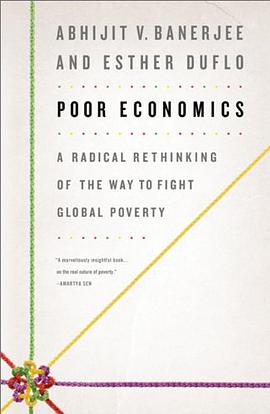
Billions of government dollars, and thousands of charitable organizations and NGOs, are dedicated to helping the world's poor. But much of their work is based on assumptions that are untested generalizations at best, harmful misperceptions at worst.
Abhijit Banerjee and Esther Duflo have pioneered the use of randomized control trials in development economics. Work based on these principles, supervised by the Poverty Action Lab, is being carried out in dozens of countries. Drawing on this and their 15 years of research from Chile to India, Kenya to Indonesia, they have identified wholly new aspects of the behavior of poor people, their needs, and the way that aid or financial investment can affect their lives. Their work defies certain presumptions: that microfinance is a cure-all, that schooling equals learning, that poverty at the level of 99 cents a day is just a more extreme version of the experience any of us have when our income falls uncomfortably low.
This important book illuminates how the poor live, and offers all of us an opportunity to think of a world beyond poverty.
Learn more at www.pooreconomics.com
Billions of government dollars, and thousands of charitable organizations and NGOs, are dedicated to helping the world's poor. But much of their work is based on assumptions that are untested generalizations at best, harmful misperceptions at worst.
Abhijit Banerjee and Esther Duflo have pioneered the use of randomized control trials in development economics. Work based on these principles, supervised by the Poverty Action Lab, is being carried out in dozens of countries. Drawing on this and their 15 years of research from Chile to India, Kenya to Indonesia, they have identified wholly new aspects of the behavior of poor people, their needs, and the way that aid or financial investment can affect their lives. Their work defies certain presumptions: that microfinance is a cure-all, that schooling equals learning, that poverty at the level of 99 cents a day is just a more extreme version of the experience any of us have when our income falls uncomfortably low.
This important book illuminates how the poor live, and offers all of us an opportunity to think of a world beyond poverty.
Learn more at www.pooreconomics.com
A Primer in Game Theory 豆瓣
作者:
Robert Gibbons
出版社:
Pearson Academic
1992
- 6
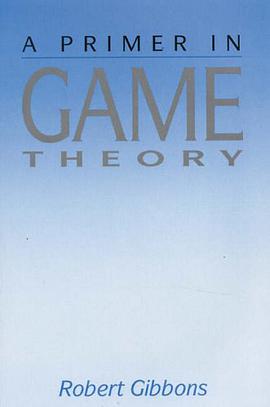
Game theory has revolutionized economics research and teaching during the past two decades. There are few undergraduate or graduate courses in which it does not form a core component. Game theory is the study of multi-decision problems and such problems occur frequently in economics. Industrial organization provides many examples where firms must consider the reactions of others. But there are many other areas in which it is applicable - from individual workers vying for promotion to countries competing or colluding to choose trade policies. Bob Gibbons provides an introduction to the branches of game theory that have been widely applied in economics. He emphasizes the applications as much as the pure theory. This not only helps to teach the theory, but also illustrates the process of model building - the process of translating an informal description of a multi-person decision situation into a formal, game theoretic problem to be analyzed. The approach aims to serve as both an introduction to those who will go on to specialize as pure game-theorists. It also introduces game theory to those who will later construct (or at least use) game-theoretic models in applied fields of economics.