Mozart
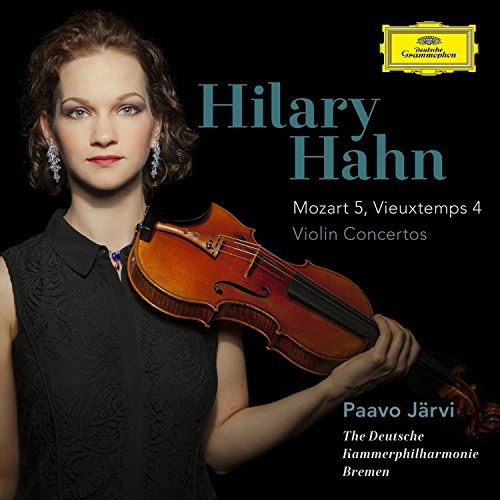
Mozart: Violin Concerto No. 5; Vieuxtemps: Violin Concerto No. 4 豆瓣
Hilary Hahn / Die Deutsche Kammerphilharmonie Bremen 类型: 古典
发布日期 2015年3月31日 出版发行: Deutsche Grammophon
“Without a doubt, she is the most complete, perfect, and intelligent interpreter of her instrument so far in the 21st century.” - El Mundo
Hilary-Hahn-Mozart-5Hilary Hahn’s newest album, Mozart 5, Vieuxtemps 4 – Violin Concertos, is her first recording with The Deutsche Kammerphilharmonie Bremen and Paavo Järvi, after performing and touring with the ensemble and conductor for many years. The disc releases on March 31, and is Hahn’s first orchestral offering since her 2010 pairing of Tchaikovsky’s violin concerto and Jennifer Higdon’s Pulitzer-prize winning violin concerto, which was written for Hahn. With this new album, she returns to core violin repertoire, hot on the heels of her critically-acclaimed, Grammy-winning album of 27 commissioned short pieces, In 27 Pieces: the Hilary Hahn Encores, and an improvised recording with prepared pianist Hauschka, titled Silfra.
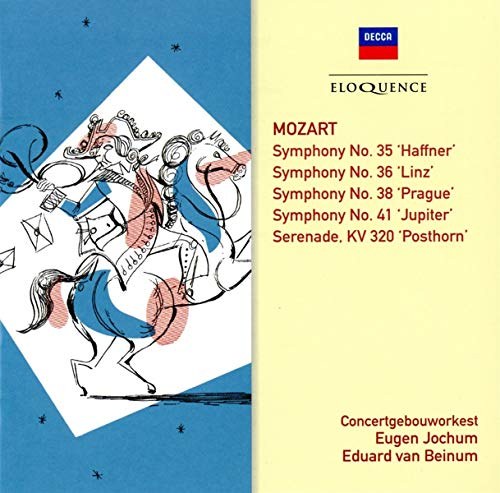
Mozart: Symphonies 35, 41, 36, 38 豆瓣
Eugen Jochum; Eduard Van Beinum; Concertgebeow Orchesta
发布日期 2018年7月27日 出版发行: Australian Eloquence
Dating from May 1956, this recording of the ‘Posthorn’ Serenade was made in what became the Indian Summer of Eduard van Beinum’s recorded legacy with the Concertgebouw. The orchestra was on song and entirely at one with their music director in this chamber-music repertoire, as may already be heard in the Bach suites recorded the previous month and recently reissued by Eloquence (4825495). Van Beinum favoured an up-tempo, crisply articulated approach which let the orchestra’s wind soloists shine: the performance is an essential complement to the Eloquence set of Mozart symphonies and concertos (4825525).
Van Beinum’s early passing in April 1959 left both the orchestra and the Philips company with an unexpected void in leadership and recording schedules. It was partially filled by Eugen Jochum as a transitional joint music director to work alongside the young Bernard Haitink, who would take over the role fully in 1963. Jochum made several recordings with the orchestra in this interim period which won praise at the time but have rarely been available since.
Among them are these four late Mozart symphonies, recorded in December 1960 (Symphonies Nos. 35 & 41) and 1961 (Symphonies Nos. 36 & 38).
In the tradition of Van Beinum’s recordings of Classical-era repertoire, there is both liveliness and grandeur to Jochum’s Mozart. These are monumental interpretations in the German tradition, particularly that of the ‘Linz’ Symphony, though not so laden with weight of sonority as his return to this repertoire on record late in life with the Bamberg Symphony Orchestra. This is Mozart from a bygone era, to be sure, but inflected with unfailing grace and good taste.
‘A delightful performance of the “Posthorn” Serenade. The tempos are crisp, the playing is elegant.’ High Fidelity, July 1957
‘That excellent orchestra plays for [Jochum] as well as it ever has on records… From the standpoint of sound, both works enjoy perfect balances and, especially in stereo, a wonderful clarity.’ High Fidelity, July 1962 (Symphonies Nos. 36 & 38)
‘What is so splendid about [Jochum’s] Mozart – and it is splendid here once again – is its combination of firm classical strength with a deep affection devoid of the slightest affectation. The “Linz” Symphony is particularly outstanding.’ Gramophone, January 1966
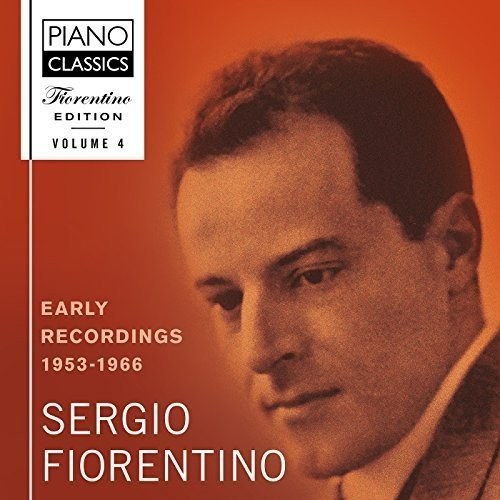
Early Recordings 1953-1966 / Fiorentino Edition Volume 4 豆瓣
Sergio Fiorentino 类型: 古典
发布日期 2016年4月29日 出版发行: Piano Classics
This is the fourth and last issue of the Piano Classics Fiorentino Edition, presenting the early recordings made between 1953 and 1966. Sergio Fiorentino (1927‐1998) was one of the greatest pianists of the 20th century, but remained largely unknown to the general public. His recordings show a stupendous virtuosity and command, and the natural understanding of an innate musical genius. Not for nothing did Arturo Benedetti Michelangeli call him “The only other pianist”. This 10‐CD set offers a wealth of repertoire, from magnificent Bach, barnstorming Beethoven, elegant and passionate Chopin, fantastic Schumann, robust Brahms and red‐hot Rachmaninov. The recordings were originally issued on the “Concert Artist” label . Sadly several of the master tapes have been lost, and the remastering of this set has been done with original LPs. Nevertheless the artistry of this wonderful pianist shines through every note!
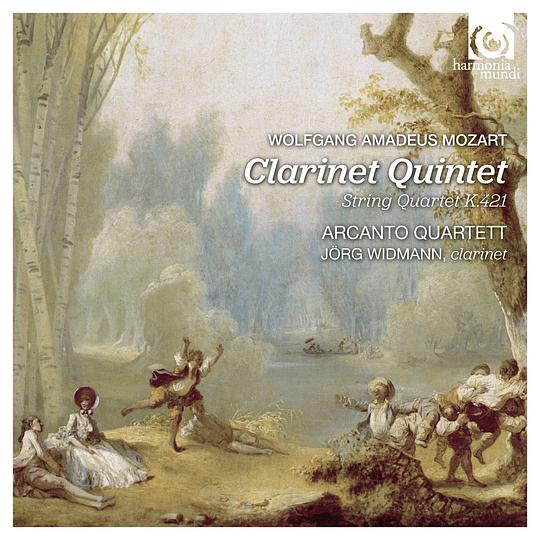
Mozart: Clarinet Quintet K581 & String Quartet K421 豆瓣
Arcanto Quartett / Jörg Widmann 类型: 古典
发布日期 2013年10月14日 出版发行: Harmonia Mundi
We owe these two masterpieces to the musical friendships Mozart made during his years in Vienna. The celestial beauties of the Quintet K581 were tailor-made for the great clarinettist Anton Stadler, while the Quartet K421, more severe in tone, is one of the six Mozart dedicated to his ‘caro amico’ Joseph Haydn. Here then is the ideal programme for the four friends of the Arcanto Quartett to show their affinities with the Mozartian repertoire – for the very first time on CD.
After trying out several different chamber combinations, Antje Weithaas, Daniel Sepec, Tabea Zimmermann and Jean-Guihen Queyras founded the Arcanto Quartet in 2002. The four musicians, who in addition to their musical affinities also share a close personal friendship, attracted the attention of the musical world right from their first concert in Stuttgart in 2004. Since then the quartet has performed at all the leading concert halls, including the Beethovenhaus in Bonn, the Théâtre du Châtelet and Cité de la Musique in Paris, the Wigmore Hall in London, the Vienna Konzerthaus, the Berlin Philharmonie, and the Edinburgh, Helsinki and Montreux festivals, not forgetting regular tours to Japan and North America.
Jörg Widmann studied the clarinet with Gerd Starke at the Munich Hochschule für Musik and later with Charles Neidich at the Juilliard School in New York. He regularly performs chamber music with partners including Tabea Zimmermann, Heinz Holliger, András Schiff, Christian Tetzlaff, Renaud Capuçon and Hélène Grimaud. As a soloist, he appears with major orchestras under conductors such as Christoph von Dohnányi, René Jacobs, Christoph Eschenbach and Kent Nagano. Several clarinet concertos have been dedicated to and premiered by him, notably works by Wolfgang Rihm, Aribert Reimann and Heinz Holliger. Widmann studied composition with Wolfgang Rihm and Hans Werner Henze, among others, and has won many prizes for his works. The 2012/13 season saw the premiere of his opera 'Babylon' at the Bavarian State Opera under Kent Nagano, and performances by the HRSinfonieorchester and Paavo Järvi and the Berlin Philharmonic conducted by Sir Simon Rattle.
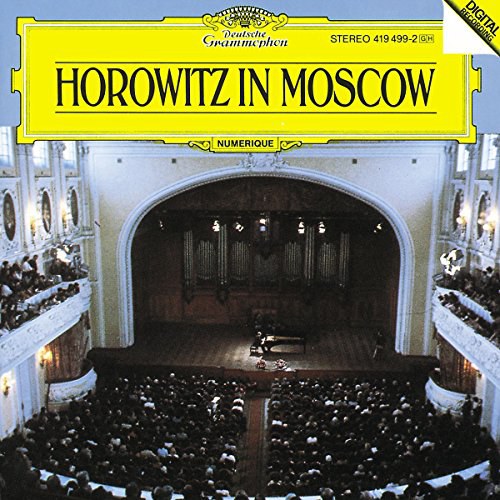
霍洛维茨在莫斯科 豆瓣
9.9 (41 个评分) Vladimir Horowitz 类型: 古典
发布日期 1986年8月11日 出版发行: Deutsche Grammophon
1986年4月20日的下午,4点,天下着雨。几百名莫斯科人打着伞在雨中,旁边,莫斯科音乐学院的大礼堂里,正举行着一场音乐会。雨中的人们一个音符也听不见,他们站在这里只是为了以后能对别人说:“那天,我在那里。”
演出的时间已到,在一片雷鸣般的掌声中,一个瘦小的老人出现在台 上。他身穿着蓝状,打着蝴蝶形领结,掌声夹杂着欢呼声,老人不太灵便的走到舞台中央,对着狂热的观众耸耸肩,挥挥手,笑了笑。然后,他轻轻抚了一下钢琴,似把乐器和自己都安置稳当,等待观众沉静下来。
手放在了键盘上,按下了斯卡拉蒂奏鸣曲的第一个音。历史,欢悦、激动的音乐从他手上流淌出来,仿佛宣示着:弗拉吉米尔 霍洛维茨,这位82岁的老人,在阔别祖国六十年之后回来了。
60年前的那天,当22岁的霍洛维兹在边境准备出关时,一位闻知这位年轻钢琴家大名的士兵,将手放在了他的肩上:“你走了,别忘了你的祖国。”霍洛维兹紧张的心放了下来,他知道,这位士兵不会再检查他了,而他的鞋里藏着几千美元,这是他出国后的全部费用。他的签证只有6个月,而他一去便是60年。1942年,他放弃了苏联国籍。他常说,他不想回苏联。
然而,时至暮年,他却开始生出了一个愿望:在死之前,再看一看莫斯科。1985年,随着美国与苏联间文化交流的恢复,他的回国之行安排好了。这年,他82岁。
听到他要回国的消息,他的侄女艾莱娜马上激动的来信确证。他出国时,她才9岁。在莫斯科机场的休息处,叔侄俩不顾记者的闪光灯和提问就坐在椅子上叙开了旧。
在莫斯科,霍洛维兹拜访了斯克里亚宾的故居。霍洛维兹9岁时,斯柯里亚宾就听过他的演奏。在作曲家生前用过的钢琴上,霍洛维兹为作曲家的女儿叶莱娜弹奏他父亲的练习曲。。。。。。
莫斯科音乐学院贴出了告示,霍洛维兹将举行演奏会,惊喜传遍了莫斯科。。。。。。
正式音乐会即将开始时,200多名没有票的音乐学院学生,避开警察的防线,钻进礼堂挤满了边道。。。。。。
现在,欢悦、激动的斯卡拉蒂奏鸣曲结束了。可是这首四五分钟的小区还不足以宣誓老人登上舞台为乡亲演奏的欣喜之情,第二手接着是莫扎特的《c大调奏鸣曲》,清新、欢畅、纯净的莫扎特音乐,让劳热更透彻的艺术情怀。斯卡拉蒂、莫扎特的的这两首曲子,是霍洛维兹深为喜爱的,他谈了多少次,可他今天弹得甚至比年轻人还有活力,还要有灵性。82岁的高龄竟然没有在这里印下痕迹,而且,今天圆润、自然、优美达到了他一生从未达到的境界,美得让人难以按耐住心中的喜悦。
接下来是拉赫玛尼诺夫的前奏曲和斯克里亚宾的练习曲。进入角色之后的霍洛维兹,要触及自己与听众共有的心魂了--俄罗斯的音乐。
第三首曲子是,拉赫玛尼诺夫的《g大调前奏曲》。以往多少次的演奏中,霍洛维兹曾在这个美丽的曲子中倾注了无限的优美与幻想的。但今天,味道不同以往,这首小曲的优美与幻想中,精神头出了从未有过的宽阔深情与苍劲感慨。
台下观众的心肯定在为之颤栗,他们肯定从中听到了俄罗斯大地上的歌声,感受到了一个在海外漂泊了60年的老人对这个伟大而饱受磨难的祖国的无限的感怀。许多观众落泪而泣,在这个悲得让人充实、美得让人落泪的曲中哭泣,激动而又幸福。
演奏在莫斯科人的欢呼与泪水中继续前行:肖邦、李斯特、舒曼。。。。。。
大厅以外,世界并不安宁。四时,北非的利比亚遭到了美国空军的轰炸,美国此举也是向敌人苏联的挑衅。但在莫斯科这边,从美国回来的老钢琴家正在为俄国乡亲演奏舒曼的《梦幻曲》。西欧、美国都在转播这场演出,从银幕上关注战争情况的人们,此刻也正从银幕上观看这场音乐会。
远在万里之外的纽约,专栏记者安德鲁 卢莱写道:“看着演出,我的眼睛湿润了。不是悲伤,而是喜悦。当电视镜头从钢琴家的收益到一位苏联听众的脸上时,我发现,他的头正在微颤,笔者的眼中流下了泪水。他不像是敌人。而同时,我的泪水也流了下来。”
----------李清《音乐大师和唱片》
1988年格莱美奖最佳古典专辑,1987年法国唱片大奖
这场「霍洛维兹在莫斯科音乐会」在俄国唯一有的宣传是只在莫斯科音乐学院墙外一张小小的公告纸,上面写着「霍洛维兹将于此演出一场音乐会」。一张小小的告示,却在整个莫斯科引发有如被电电到般的喜悦和兴奋。所有看到、没看到那张告示,或只是听到这件事的人,口耳相传,光是霍洛维兹要来开音乐会的消息对他们来说就是永生难忘。1986年4月20日,星期天下午4点,霍洛维兹一样步上舞台,一个他久违了的舞台,对着台下音乐会还没开始,就已经如痴如醉的观众挥手致意,献上一个飞吻,再加上他著名的笑容,开始了这场传奇的音乐会。
这场音乐会,从一开始,许多人眼中就是含着眼泪在听霍洛维兹的演奏,对在场聆听的人来说,永远不会忘记霍洛维兹走上台时心中的快乐,这是他们人生中一段永远特殊的珍藏记忆。对于这场音乐会的成功,第二天纽约时报的以头版头条报导的标题是「霍洛维兹在莫斯科,喝采与泪水」,他也上了时代杂志的封面人物,更不提唱片及录影带的狂卖,霍洛维兹的旋风,从1928年开始吹袭全世界,到这时到达了最高顶点。
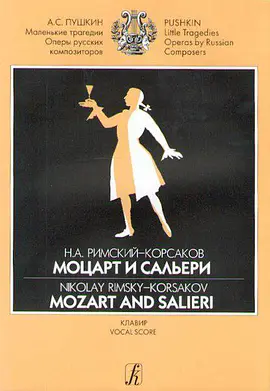
莫扎特与萨列里 (1962) 豆瓣
Моцарт и Сальери
导演: Vladimir Gorikker 演员: 因诺肯季·斯莫克图诺夫斯基 / 彼得·格列博夫
其它标题: Моцарт и Сальери / Mozart and Salieri
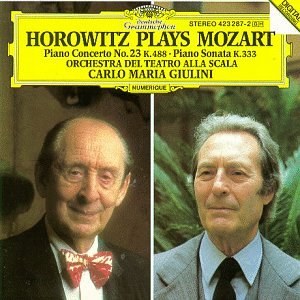
莫扎特:第23钢琴协奏曲 第13钢琴奏鸣曲(423 287-2) 豆瓣 Spotify
9.7 (43 个评分) Wolfgang Amadeus Mozart / Carlo Maria Giulini 类型: 古典
发布日期 1990年10月25日 出版发行: Deutsche Grammophon
介质为1CD!

钢琴家霍洛维茨是本世纪最伟大的钢琴家之一,被誉为“最后的浪漫”,这张唱片收录这是霍洛维茨生前最后一次协奏曲录音,由朱里尼指挥斯卡拉剧院管弦乐团协奏。曾荣获1988年 法国唱片大奖(Grand Prix du Disque)和1989年 格莱美奖。

晚年的霍洛维茨醉心于莫扎特,他非常喜欢阅读莫扎特的书信,因为莫扎特丰富的想法与感情都在信件中表露无遗,且常在写给父亲的信件中谈论他的作品该如何地演奏,因此霍洛维兹认为只有从莫扎特的书信中才能真正地了解如何弹他的作品。霍洛维茨的音乐世界里有着自己情感中的莫扎特,他的莫扎特是极端效果化的莫扎特,他认为他对作品效果的追求,是他的音乐创造,应该说他对所有作曲家有一种深具说服力的独特认知。

01 Concerto for Piano and Orchestra no. 23 in A major, K. 488: 1. Allegro
02 Concerto for Piano and Orchestra no. 23 in A major, K. 488: 2. Adagio
03 Concerto for Piano and Orchestra no. 23 in A major, K. 488: 3. Allegro assai
04 Piano Sonata In B Flat Major, K. 333: 1. Allegro
05 Piano Sonata In B Flat Major, K. 333: 2. Andante cantabile
06 Piano Sonata In B Flat Major, K. 333: 3. Allegretto grazioso
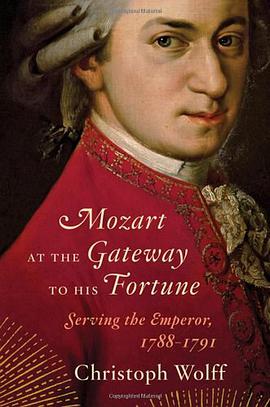
Mozart at the Gateway to His Fortune 豆瓣
作者: Christoph Wolff 出版社: W. W. Norton & Company 2012 - 6
"I now stand at the gateway to my fortune," Mozart wrote in a letter of 1790. He had entered into the service of Emperor Joseph II of Austria two years earlier as Imperial-Royal Chamber Composer--a salaried appointment with a distinguished title and few obligations. His extraordinary subsequent output, beginning with the three final great symphonies from the summer of 1788, invites a reassessment of this entire period of his life. Readers will gain a new appreciation and understanding of the composer's works from that time without the usual emphasis on his imminent death. The author discusses the major biographical and musical implications of the royal appointment and explores Mozart's "imperial style" on the basis of his major compositions--keyboard, chamber, orchestral, operatic, and sacred--and focuses on the large, unfamiliar works he left incomplete. This new perspective points to an energetic, fresh beginning for the composer and a promising creative and financial future.