STS
Relocating Modern Science 豆瓣
作者: Kapil Raj 出版社: Palgrave Macmillan 2010 - 3
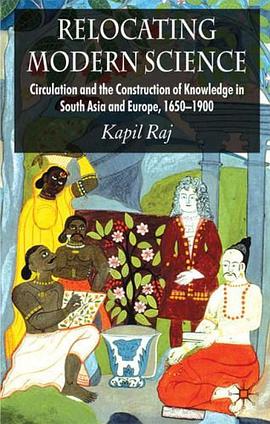
Drawing on recent scholarship in the history and sociology of science, as well as in imperial and colonial history, Relocating Modern Science challenges both the belief that modern science was created uniquely in the West and the assumption that it was subsequently diffused, or imposed, elsewhere. Through six chronologically ordered case studies of knowledge construction in botany, cartography, terrestrial surveying, linguistics, scientific education, and colonial administration at key moments in their history, this book demonstrates the crucial importance of intercultural encounter - here between South Asians and Europeans - for the emergence of these sciences. It also revisits questions at the heart of research in the social studies of science - interpersonal trust, replicability, calibration, translation, and the relationship between instruments and embodied skills - showing the complex nature of their resolution in multicultural, and colonial, contexts. By following practitioners, skills, instruments, and ideas as they moved between continents and communities, this book stresses the crucial role of circulation in the construction and reconfiguration of scientific notions and practices. In addition to engaging with questions central to imperial, colonial, and South Asian history, Relocating Modern Science presents a heuristic model for specialists of other contact zones, periods, and fields of knowledge, as also for transnational and global studies.
A Social History of Truth 豆瓣
作者: Steven Shapin 出版社: University of Chicago Press 1995 - 11
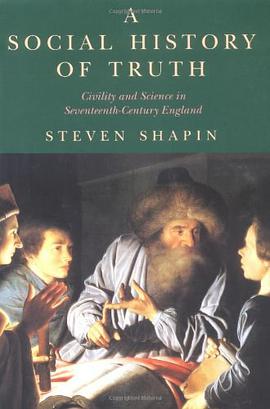
How do we come to trust our knowledge of the world? What are the means by which we distinguish true from false accounts? Why do we credit one observational statement over another? This study engages these universal questions through a recreation of a crucial period in the history of early modern science: the social world of gentlemen-philosophers in 17th-century England. The author paints a picture of the relations between gentlemanly culture and scientific practice. He argues that problems of credibility in science were practically solved through the codes and conventions of genteel conduct: trust, civility, honour, and integrity. These codes formed, and arguably still form, an important basis for securing reliable knowledge about the natural world. Shapin uses detailed historical narrative to argue about the establishment of factual knowledge both in science and in everyday practice. Accounts of the mores and manners of gentlemen-philosophers are used to illustrate Shapin's broad claim that trust is imperative for constituting every kind of knowledge. Knowledge-making is always a collective enterprise: people have to know whom to trust in order to know something about the natural world.
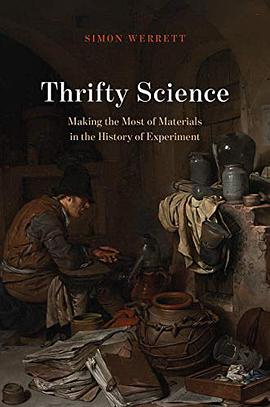
Thrifty Science 豆瓣
作者: Simon Werrett 出版社: University of Chicago Press 2019 - 2
If the twentieth century saw the rise of “Big Science,” then the seventeenth and eighteenth centuries were surely an age of thrift. As Simon Werrett’s new history shows, frugal early modern experimenters transformed their homes into laboratories as they recycled, repurposed, repaired, and reused their material possessions to learn about the natural world.
Thrifty Science explores this distinctive culture of experiment and demonstrates how the values of the household helped to shape an array of experimental inquiries, ranging from esoteric investigations of glowworms and sour beer to famous experiments such as Benjamin Franklin’s use of a kite to show lightning was electrical and Isaac Newton’s investigations of color using prisms. Tracing the diverse ways that men and women put their material possessions into the service of experiment, Werrett offers a history of practices of recycling and repurposing that are often assumed to be more recent in origin. This thriving domestic culture of inquiry was eclipsed by new forms of experimental culture in the nineteenth century, however, culminating in the resource-hungry science of the twentieth. Could thrifty science be making a comeback today, as scientists grapple with the need to make their research more environmentally sustainable?
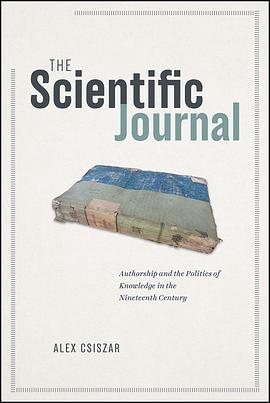
The Scientific Journal 豆瓣
作者: Alex Csiszar 出版社: University Of Chicago Press 2018 - 5
Not since the printing press has a media object been as celebrated for its role in the advancement of knowledge as the scientific journal. From open communication to peer review, the scientific journal has long been central both to the identity of academic scientists and to the public legitimacy of scientific knowledge. But that was not always the case. At the dawn of the nineteenth century, academies and societies dominated elite study of the natural world. Journals were a relatively marginal feature of this world, and sometimes even an object of outright suspicion.
The Scientific Journal tells the story of how that changed. Alex Csiszar takes readers deep into nineteenth-century London and Paris, where savants struggled to reshape scientific life in the light of rapidly changing political mores and the growing importance of the press in public life. The scientific journal did not arise as a natural solution to the problem of communicating scientific discoveries. Rather, as Csiszar shows, its dominance was a hard-won compromise born of political exigencies, shifting epistemic values, intellectual property debates, and the demands of commerce. Many of the tensions and problems that plague scholarly publishing today are rooted in these tangled beginnings. As we seek to make sense of our own moment of intense experimentation in publishing platforms, peer review, and information curation, Csiszar argues powerfully that a better understanding of the journal’s past will be crucial to imagining future forms for the expression and organization of knowledge.
2018年12月4日 想读 十九世纪初,学院和学会主导了对自然界的中坚研究。期刊是这个世界的一个相对边缘的特征,有时甚至是一个完全被怀疑的对象。《科学期刊》讲述了这一变化的故事。
Authorship STS UK 科学史
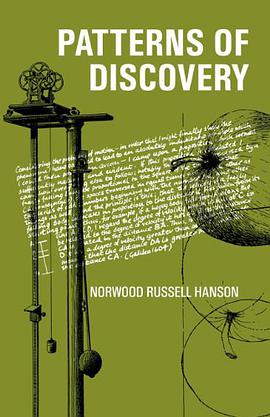
Patterns of Discovery 豆瓣
作者: Norwood Russell Hanson 出版社: Cambridge University Press 1958 - 1
Philosophers of science have given considerable attention to the logic of completed scientific systems. In this 1958 book, Professor Hanson turns to an equally important but comparatively neglected subject, the philosophical aspects of research and discovery. He shows that there is a logical pattern in finding theories as much as in using established theories to make deductions and predictions, and he sets out the features of this pattern with the help of striking examples in the history of science.
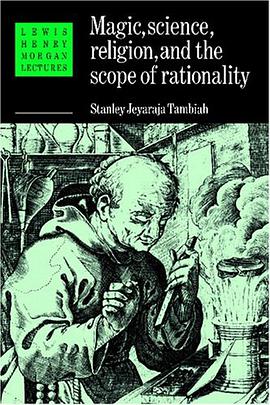
Magic, Science and Religion and the Scope of Rationality 豆瓣
作者: Stanley J. Tambiah 出版社: Cambridge University Press 1990 - 3
Professor Tambiah, one of today's leading anthropologists, is known particularly for his penetrating and scholarly studies of Buddhism. In this accessible and illuminating book he deals with the classical opposition between magic, science and religion. He reviews the great debates in classical Judaism, early Greek science, Renaissance philosophy, the Protestant Reformation, and the scientific revolution, and then reconsiders the three major interpretive approaches to magic in anthropology: the intellectualist and evolutionary theories of Tylor and Frazer, Malinowski's functionalism, and Levy Bruhl's philosophical anthropology, which posited a distinction between mystical and logical mentalities. There follows a wide-ranging and suggestive discussion of rationality and relativism. The book concludes with a discussion of thinking in the history and philosophy of science, which suggests interesting perspectives on the classical opposition between science and magic.
The Globalization of Knowledge in History 豆瓣
作者: Jürgen Renn 出版社: epubli 2012 - 7
Today scientific, technological and cultural knowledge is shared worldwide. The extent to which globalized knowledge also existed in the past is an open question and, moreover, a question that is important for understanding present processes of globalization. This book, the first volume of the series "Studies" of the "Max Planck Research Library for the History and Development of Knowledge," the result of an interdisciplinary cooperation launched in 2007 by a Dahlem Conference, offers surprising answers to this question.
Long-distance and intercontinental connections with an attendant spread of knowledge are as old as Homo sapiens themselves. Since its inception, the globalization of knowledge has been a process with its own dynamics, interfering significantly with other processes of intercultural transmission. The four parts of this volume address historical phases in which the production, transmission and transformation of knowledge were crucial for advancing these processes. Part 1 investigates a series of processes in the very early phases of globalization, from the transmission of practical knowledge to the emergence of science. Part 2 explores how knowledge was disseminated as a consequence of the spread of power and belief structures. Part 3 deals with the encounters between culturally specific knowledge and globalized knowledge. Part 4 is dedicated to the globalization of modern science and to the great challenges, such as energy supply and climate change, that humanity faces when dealing with knowledge today
The 97th Dahlem Workshop:
The present volume is based on the 97th Dahlem Workshop on Globalization of Knowledge and its Consequences, Berlin, 18–23 November 2007, coordinated by Katharina Ochse.
Participants:
Ian Baldwin, Angelo Baracca, Fabio Bevilacqua, Maria Emilia Beyer, Hans-Peter Blossfeld, Gianluca Bocchi, István M. Bodnár, Jens Erland Braarvig, Chiara Brambilla, Eva Cancik-Kirschbaum, Jacob Dahl, Peter Damerow, Hansjörg Dilger, Kostas Gavroglu, Matteo Gerlini, Denise Gimpel, Gerd Graßhoff, Hans Falk Hoffmann, Dirk Hofäcker, Jarita C. Holbrook, Malcolm D. Hyman, Birgit Krawietz, Manfred Krebernik, Joachim Kurtz, Manolis Patiniotis, Albert Presas I Puig, Daniel T. Potts, Dhruv Raina, Jürgen Renn, Richard Rottenburg, Dagmar Schäfer, Matthias Schemmel, Mark Schiefsky, Meredith Schuman, Gebhard J. Selz, Martina Siebert, Circe Mary Silva da Silva, Ana Simões, Tzveta Sofronieva, Saran Solongo, Karin Tybjerg, Hans Ulrich Vogel, Milena Wazeck, Gerhard Wolf, Harriet T. Zurndorfer
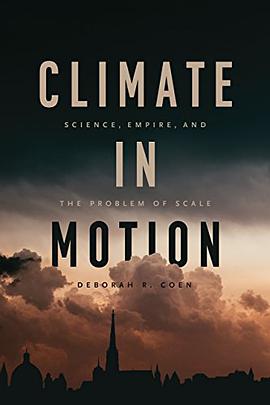
Climate in Motion 豆瓣
作者: Deborah R. Coen 出版社: University of Chicago Press 2018 - 8
Today, predicting the impact of human activities on the earth’s climate hinges on tracking interactions among phenomena of radically different dimensions, from the molecular to the planetary. Climate in Motion shows that this multiscalar, multicausal framework emerged well before computers and satellites. Extending the history of modern climate science back into the nineteenth century, Deborah R. Coen uncovers its roots in the politics of empire-building in central and eastern Europe. She argues that essential elements of the modern understanding of climate arose as a means of thinking across scales in a state—the multinational Habsburg Monarchy, a patchwork of medieval kingdoms and modern laws—where such thinking was a political imperative. Led by Julius Hann in Vienna, Habsburg scientists were the first to investigate precisely how local winds and storms might be related to the general circulation of the earth’s atmosphere as a whole. Linking Habsburg climatology to the political and artistic experiments of late imperial Austria, Coen grounds the seemingly esoteric science of the atmosphere in the everyday experiences of an earlier era of globalization. Climate in Motion presents the history of modern climate science as a history of “scaling”—that is, the embodied work of moving between different frameworks for measuring the world. In this way, it offers a critical historical perspective on the concepts of scale that structure thinking about the climate crisis today and the range of possibilities for responding to it.
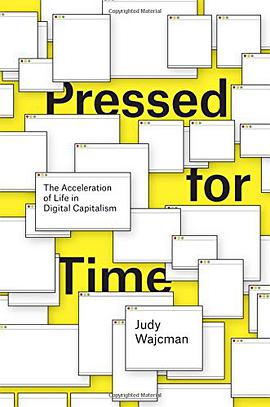
Pressed for Time 豆瓣
作者: Judy Wajcman 出版社: University Of Chicago Press 2014
The technologically tethered, iPhone-addicted figure is an image we can easily conjure. Most of us complain that there aren't enough hours in the day and too many e-mails in our thumb-accessible inboxes. This widespread perception that life is faster than it used to be is now ingrained in our culture, and smartphones and the Internet are continually being blamed. But isn't the sole purpose of the smartphone to give us such quick access to people and information that we'll be free to do other things? Isn't technology supposed to make our lives easier?
In Pressed for Time, Judy Wajcman explains why we immediately interpret our experiences with digital technology as inexorably accelerating everyday life. She argues that we are not mere hostages to communication devices, and the sense of always being rushed is the result of the priorities and parameters we ourselves set rather than the machines that help us set them. Indeed, being busy and having action-packed lives has become valorized by our productivity driven culture. Wajcman offers a bracing historical perspective, exploring the commodification of clock time, and how the speed of the industrial age became identified with progress. She also delves into the ways time-use differs for diverse groups in modern societies, showing how changes in work patterns, family arrangements, and parenting all affect time stress. Bringing together empirical research on time use and theoretical debates about dramatic digital developments, this accessible and engaging book will leave readers better versed in how to us
2018年9月22日 想读 为何先进的数字技术没有能减少人类的工作时间,而是让我们更加感到时间紧迫。
STS internet nyr technology time
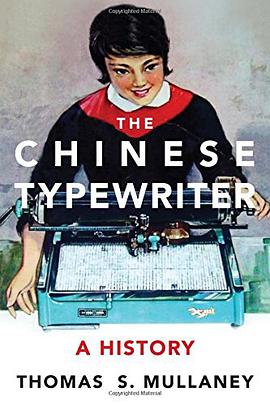
The Chinese Typewriter 豆瓣
9.3 (6 个评分) 作者: Thomas S. Mullaney 出版社: The MIT Press 2017 - 8
Chinese writing is character based, the one major world script that is neither alphabetic nor syllabic. Through the years, the Chinese written language encountered presumed alphabetic universalism in the form of Morse Code, Braille, stenography, Linotype, punch cards, word processing, and other systems developed with the Latin alphabet in mind. This book is about those encounters -- in particular thousands of Chinese characters versus the typewriter and its QWERTY keyboard. Thomas Mullaney describes a fascinating series of experiments, prototypes, failures, and successes in the century-long quest for a workable Chinese typewriter.
The earliest Chinese typewriters, Mullaney tells us, were figments of popular imagination, sensational accounts of twelve-foot keyboards with 5,000 keys. One of the first Chinese typewriters actually constructed was invented by a Christian missionary, who organized characters by common usage (but promoted the less-common characters for "Jesus" to the common usage level). Later came typewriters manufactured for use in Chinese offices, and typewriting schools that turned out trained "typewriter girls" and "typewriter boys." Still later was the "Double Pigeon" typewriter produced by the Shanghai Calculator and Typewriter Factory, the typewriter of choice under Mao. Clerks and secretaries in this era experimented with alternative ways of organizing characters on their tray beds, inventing an arrangement method that was the first instance of "predictive text."
Today, after more than a century of resistance against the alphabetic, not only have Chinese characters prevailed, they form the linguistic substrate of the vibrant world of Chinese information technology. The Chinese Typewriter, not just an "object history" but grappling with broad questions of technological change and global communication, shows how this happened.
The Genesis of the Copernican World 豆瓣
作者: Hans Blumenberg 译者: Robert M. Wallace 出版社: The MIT Press 1989 - 10
This major work by the German philosopher Hans Blumenberg is a monumental rethinking of the significance of the Copernican revolution for our understanding of modernity. It provides an important corrective to the view of science as an autonomous enterprise and presents a new account of the history of interpretations of the significance of the heavens for man.Hans Blumenberg is Professor of Philosophy, emeritus, at the University of Munster in West Germany. This book is included in the series Studies in Contemporary German Social Thought, edited by Thomas McCarthy
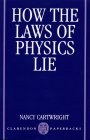
How the Laws of Physics Lie 豆瓣
作者: Nancy Cartwright 出版社: Oxford University Press, USA 1983 - 7
In this sequence of philosophical essays about natural science, Nancy Cartwright argues that fundamental explanatory laws, the deepest and most admired successes of modern physics, do not in fact describe the regularities that exist in nature. Yet she is not 'anti-realist'. Rather, she draws a novel distinction, arguing that theoretical entities, and the complex and localized laws that describe them, can be interpreted realistically, but that the simple unifying laws of basic theory cannot.
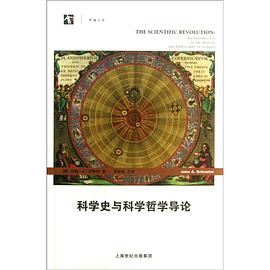
科学史与科学哲学导论 豆瓣
The Scientific Revolution:An Introduction to the History and Philosophy of Science
作者: (澳)约翰·A·舒斯特 译者: 安维复 出版社: 上海科技教育出版社 2013 - 8
本书是为非专业的读者和大学生们编写的一本科学史与科学哲学导论性质的著作。面对科学的叙事与理解的二难问题,本书的新意在于采取科学史与科学哲学穿插进行的方式,清晰地解读了欧洲近代科学革命从古希腊亚里士多德哲学一直到牛顿科学体系建立的思想进程,论证了科学革命其实是自然哲学的转变:第一篇破除了科学史对于“事实”的误解;第二篇论述了亚里士多德与哥白尼之争在于自然哲学的根本不同;第三篇批判了科学方法之谜;第四篇详细解读了第谷、开普勒和伽利略在维护哥白尼学说中的不同路径;第五篇对库恩的科学革命观进行了合理重建;第六篇分析了科学与社会之间的关联;第七篇表达了作者试图整合内史论和外史论的新探索。
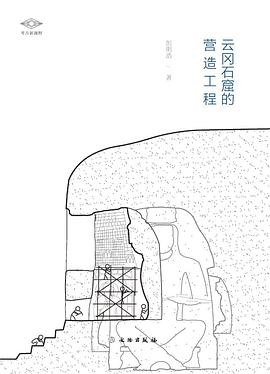
云冈石窟的营造工程 豆瓣
作者: 彭明浩 出版社: 文物出版社 2017 - 5
北魏云冈石窟规模宏大,气势雄浑,这样的大型工程在当时如何规划设计,又如何施工开凿,是一个值得探讨的问题。本书通过考察石窟外部的山体崖面、斩山遗迹,石窟内部的空间层次、壁面龛像,分析各类工程遗迹的空间关系,探讨云冈石窟的营造工程。
研究表明,云冈石窟所在的武州山南麓,原为两级阶地地貌,阶地后缘分布有自然断崖,石窟工程利用了山体上部的自然断崖,并向下斩山局部改造了山形。进入到洞窟开凿阶段,第一期工程主要为大像窟,依就大像头、身、腿的设计高度,从上往下分层施工,对大像以外的壁面控制力度较弱,允许民间势力进入开龛造像。而第二期工程逐渐采用了室窟设计,强调洞窟室内空间,壁面平直,多无凸出石壁的大像,逐渐流行统一施工,加强了壁面控制力度,分栏开龛造像,营造出规整完善的洞窟空间。可以说,云冈石窟的营造工程,从一期到二期有一个大的转变,规划设计、施工模式、工程组织都在逐渐进步。
彭明浩著的《云冈石窟的营造工程》从营造工程的视角,考察云冈石窟各类工事活动的关系,注重空间层次及打破、避让等遗迹现象,可视为考古层位学在石窟研究中的具体应用,与考古类型学结合,或有助于更为全面完整地考察石窟。
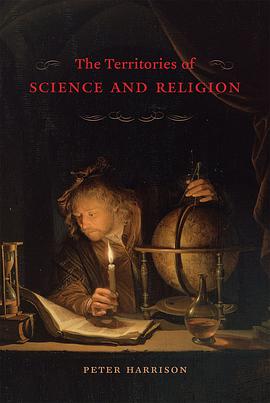
The Territories of Science and Religion 豆瓣
作者: Peter Harrison 出版社: University Of Chicago Press 2015 - 4
The conflict between science and religion seems indelible, even eternal. Surely two such divergent views of the universe have always been in fierce opposition? Actually, that’s not the case, says Peter Harrison: our very concepts of science and religion are relatively recent, emerging only in the past three hundred years, and it is those very categories, rather than their underlying concepts, that constrain our understanding of how the formal study of nature relates to the religious life.
In The Territories of Science and Religion, Harrison dismantles what we think we know about the two categories, then puts it all back together again in a provocative, productive new way. By tracing the history of these concepts for the first time in parallel, he illuminates alternative boundaries and little-known relations between them—thereby making it possible for us to learn from their true history, and see other possible ways that scientific study and the religious life might relate to, influence, and mutually enrich each other.
A tour de force by a distinguished scholar working at the height of his powers, The Territories of Science and Religion promises to forever alter the way we think about these fundamental pillars of human life and experience.
中国科学技术史 豆瓣
作者: 卢嘉锡 总主编 / 丘光明 出版社: 科学出版社 2001 - 6
本书系统、全面地研究了中国度量衡的产生、发展、管理制度、单位量值、科学技术成就。包括以下内容和新的见解:对古代文献中有关度量衡标准的确定,以及其科学性、实施的可能性和局限性,作了全面的分析;对春秋战国时期混乱的度量衡单位制作了梳理和考证;对古代货币与度量衡的关系作了考辨;对战国栗氏量与新嘉量的承传关系、科学技术成就作了比较性的研究;对北魏度量衡单位量值急剧增加的原因,从社会制度、历史发展等各方面作了深人研究,提出了新的看法;对十五等尺作了分析、考辨和订正;通过对唐宋文献资料的全面考证,重新审定了唐宋两代单位制与单位量值;对元代度量衡单位作了新的探索,补充了以往的空缺;阐述了清末与民国时期中国度量衡单位制与国际米制接轨与改制的过程。