Bach
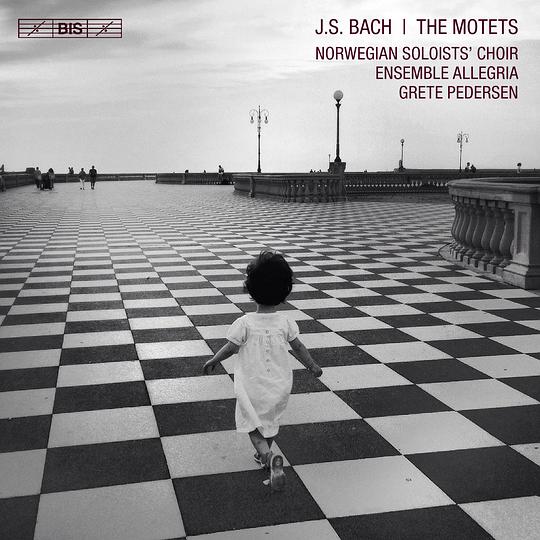
Bach: The Motets 豆瓣
The Norwegian Soloists' Choir / Ensemble Allegria 类型: 古典
发布日期 2017年12月1日 出版发行: BIS
This album is the moving homage of the Norwegian Soloists’ Choir to the man who founded it in 1950 and remained its leader for 40 years. The choral conductor and composer Knut Nystedt passed away in December 2014, at the age of 99, and the disc may to some extent be regarded as an epitaph for him. Alongside two Bach motets the programme includes four works which span almost forty years of Nystedt’s long career, from Peace I leave with you, written in 1957 and still one of the composer’s most often performed works, to Be not afraid from 1995. These two motets, as well as O Crux (1977) are a cappella compositions, while the setting from 1986 of Ave Maria is something of a rarity, for solo violin and mixed choir. The violin part is performed by Maria Angelika Carlsen, artistic leader of the Ensemble Allegria, a group of young Norwegian string players that join the choir in the two Bach motets, and also in the closing work on the disc: Immortal Bach. In this atmospheric piece, the composer has taken the first eight bars of Bach’s chorale Komm, süsser Tod, stretching the tempo of its melodies and harmonies to create an impression of timelessness and endlessness. Grete Pedersen, Nystedt's successor as artistic leader of the choir, provides the arrangement for strings and choir.
2025年7月2日 听过
Bach
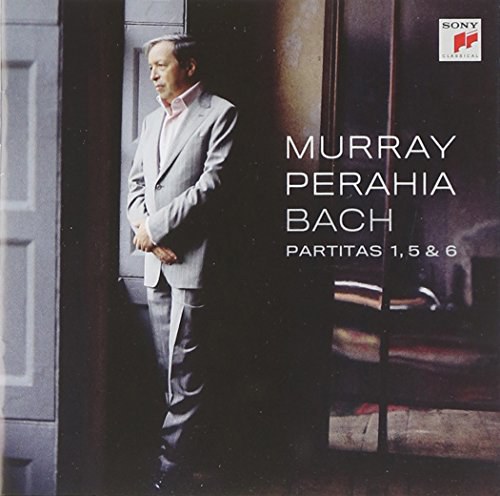
Bach : Partitas N° 1, 5 & 6 豆瓣
Murray Perahia 类型: 古典
发布日期 2009年8月31日 出版发行: Sony Classical
Johann Sebastian Bach
Partitas No. 1, 5 & 6
Murray Perahia
recorded December 2008 & April 2009
released in 2009
Sony Classical
886974436126
Murray Perahia imbues Bach's First, Fifth, and Sixth Partitas with the same mastery, care, and insight that distinguished his recordings of Nos. 2, 3, and 4. The B-flat Partita's tempos never exceed what one can comfortably dance to or sing, highlighted by the lyrically animated Sarabande and loud yet not aggressive Gigue. The E minor opening Toccata's declamatory and fugal sections emerge as an integrated, unified whole, while Perahia uses subtle accents and contrasted dynamics to bring out the Corrente's cross-rhythmic potential. He brings multi-colored, expressive variety to the Sarabande's arpeggiated chords and articulates the Tempo di Gavotta as if Glenn Gould's uncanny contrapuntal acumen and Edwin Fischer's velvet paws had morphed.
The latter description particularly befits the G major Partita's Corrente and Tempo di Minuetto, along with the other movements, each of which emerges with a distinct character. For example, the pianist's strong sense of conversational interplay justifies a leisurely tempo for the Allemande that others might have trouble sustaining. Perahia's variants in the repeats are noticeable yet discrete. In short, for modern sound and stylish aplomb, Perahia's Bach Partitas easily warrant a first choice recommendation. (Jed Distler for classicstoday.com)
2025年7月1日 听过
Bach
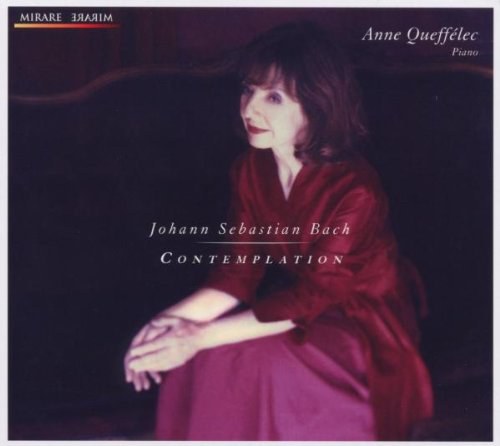
Bach : Contemplation / Anne Queffélec 豆瓣
Anne Queffelec
发布日期 2009年1月8日 出版发行: Mirare
2025年5月31日 听过 I was just beginning to undertake the ambitious project of making a bwv blacklist and voila, this album jumps in to make everything seem so easier
Bach
Bach, J S: Partitas Nos. 1-6, BWV825-830 豆瓣
Richard Egarr 类型: 古典
发布日期 2017年2月24日 出版发行: Harmonia Mundi
Any composer’s Op.1 is a big deal. Bach modelled his own after Kuhnau’s 'Neue Clavier Übung', books 1 and 2 of which were published in 1689 and 1692. Bach’s ability to ‘see’ and create a long-term ‘project’ has its spooky beginnings here.
Although the music that inhabits the six Partitas was ready and waiting, rather than publish them together, Bach staggered their delivery. Partita 1 came in 1726, with the other five appearing gradually over the next four years, until finally in 1731 the entire six Partitas were presented as his ‘Clavir [sic] Ubung . . . Opus 1 . . . 1731’. Bach infuses this seemingly effortless music with godly patterns and personal algorithms of stunning brilliance. Many pages have been spent in the pursuit of secret codes in Bach’s music: for many, a contentious subject. Bach began by publishing Partita 1 in 1726 – when he was 41 years old. Needless to say the final movement of the set (the 41st movement), has as its theme a subject containing 14 notes. The family name not only gave rise to a direct musical melody [BACH = B flat/A/C/B natural], but for Johann Sebastian a pair of deliciously mirrored numbers with which he was wont to sign his name at beginnings and endings in particular. If A=1, B=2 etc. (I and J are counted as the same letter),
2025年5月5日 听过
Bach