Long Walk 豆瓣
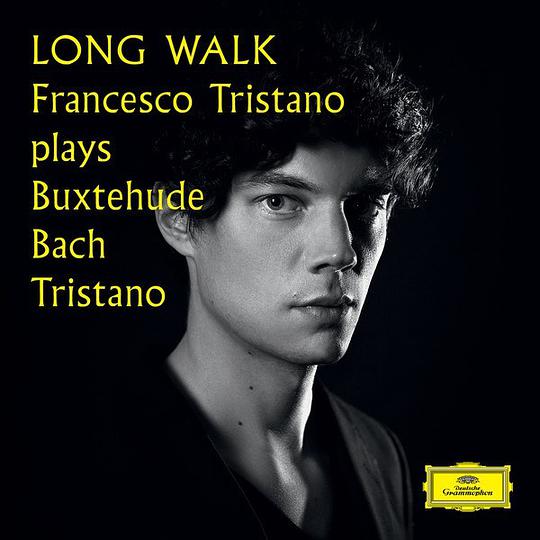
Francesco Tristano
类型:
古典
发布日期 2012年9月14日
出版发行:
Universal Music Classics & Jazz
Francesco Tristano plays Buxtehude, Bach and Tristano
“Long Walk” – the twenty-year-old Johann Sebastian Bach undertook one such walk in 1705, when he hiked the 250 miles from Arnstadt to Lübeck to hear Dietrich Buxtehude, who was famous for his organ playing. The visit had been planned to last only a few weeks but turned into a three-month period of study, during which Buxtehude became Bach’s teacher.
Dietrich Buxtehude (1637–1707) is arguably the most famous early Baroque German composer. As Kantor at the Marienkirche in Lübeck he occupied one of the leading positions in Germany’s musical life. His musical language is notable for its wealth of imagination and harmonic boldness. Central to Francesco Tristano’s new album is Buxtehude’s most important keyboard composition, the aria La capricciosa, thirty-two variations on the folksong Kraut und Rüben.
Bach’s three months with Buxtehude left a lasting mark on his musical output, a point that emerges with particular clarity from one of his most famous late works, the Goldberg Variations. Like La capricciosa, this set of variations is in G major. Both pieces, moreover, are formally identical and reveal many musical parallels. In his final variation, the Quodlibet, Bach even quotes the Kraut und Rüben theme as a homage to his teacher.
In 1974 Bach’s personal copy of the printed score of the Goldberg Variations came to light and was found to contain a kind of appendix in the form of fourteen canons on the first eight bass notes of the Aria. This appendix is now officially numbered as BWV 1087. In Long Walk, Francesco Tristano has combined and, as it were, “remixed” these sophisticated miniatures, in that way exploring the more playful dimension of Bach’s learned counterpoint. Tristano picks up another Baroque tradition with the second of his pieces in this album: Ground Bass is essentially a chaconne, a set of variations on an ostinato bass similar to the one that Buxtehude created three centuries earlier in his Ciaccona BuxWV 160.
In Long Walk Francesco Tristano relocates Baroque music in the here and now, which he does not only through his interpretation and adaptation of the music of Buxtehude and Bach but also in terms of the recording’s use of technology, which opens up new dimensions with regard to sonority: twelve microphones of differing tonal characteristics were used in the Kyoto Concert Hall in Japan, which was chosen because of its exceptional resonance. They capture the undistorted sound of the Yamaha CFX concert grand on which Francesco Tristano performs these works, a high-tech piano that is the result of many years of research into materials, tone colours and construction techniques.
“Long Walk” – the twenty-year-old Johann Sebastian Bach undertook one such walk in 1705, when he hiked the 250 miles from Arnstadt to Lübeck to hear Dietrich Buxtehude, who was famous for his organ playing. The visit had been planned to last only a few weeks but turned into a three-month period of study, during which Buxtehude became Bach’s teacher.
Dietrich Buxtehude (1637–1707) is arguably the most famous early Baroque German composer. As Kantor at the Marienkirche in Lübeck he occupied one of the leading positions in Germany’s musical life. His musical language is notable for its wealth of imagination and harmonic boldness. Central to Francesco Tristano’s new album is Buxtehude’s most important keyboard composition, the aria La capricciosa, thirty-two variations on the folksong Kraut und Rüben.
Bach’s three months with Buxtehude left a lasting mark on his musical output, a point that emerges with particular clarity from one of his most famous late works, the Goldberg Variations. Like La capricciosa, this set of variations is in G major. Both pieces, moreover, are formally identical and reveal many musical parallels. In his final variation, the Quodlibet, Bach even quotes the Kraut und Rüben theme as a homage to his teacher.
In 1974 Bach’s personal copy of the printed score of the Goldberg Variations came to light and was found to contain a kind of appendix in the form of fourteen canons on the first eight bass notes of the Aria. This appendix is now officially numbered as BWV 1087. In Long Walk, Francesco Tristano has combined and, as it were, “remixed” these sophisticated miniatures, in that way exploring the more playful dimension of Bach’s learned counterpoint. Tristano picks up another Baroque tradition with the second of his pieces in this album: Ground Bass is essentially a chaconne, a set of variations on an ostinato bass similar to the one that Buxtehude created three centuries earlier in his Ciaccona BuxWV 160.
In Long Walk Francesco Tristano relocates Baroque music in the here and now, which he does not only through his interpretation and adaptation of the music of Buxtehude and Bach but also in terms of the recording’s use of technology, which opens up new dimensions with regard to sonority: twelve microphones of differing tonal characteristics were used in the Kyoto Concert Hall in Japan, which was chosen because of its exceptional resonance. They capture the undistorted sound of the Yamaha CFX concert grand on which Francesco Tristano performs these works, a high-tech piano that is the result of many years of research into materials, tone colours and construction techniques.