Gilles Deleuze — 作者 (89)
What is Grounding? [图书] 豆瓣
Masochism [图书] 豆瓣
In his stunning essay, Coldness and Cruelty, Gilles Deleuze provides a rigorous and informed philosophical examination of the work of the late 19th-century German novelist Leopold von Sacher-Masoch. Deleuze's essay, certainly the most profound study yet produced on the relations between sadism and masochism, seeks to develop and explain Masoch's "peculiar way of 'desexualizing' love while at the same time sexualizing the entire history of humanity." He shows that masochism is something far more subtle and complex than the enjoyment of pain, that masochism has nothing to do with sadism; their worlds do not communicate, just as the genius of those who created them - Masoch and Sade - lie stylistically, philosophically, and politically poles a part.
Venus in Furs, the most famous of all of Masoch's novels was written in 1870 and belongs to an unfinished cycle of works that Masoch entitled The Heritage of Cain. The cycle was to treat a series of themes including love, war, and death. The present work is about love. Although the entire constellation of symbols that has come to characterize the masochistic syndrome can be found here - fetishes, whips, disguises, fur-clad women, contracts, humiliations, punishment, and always the volatile presence of a terrible coldness - these do not eclipse the singular power of Masoch's eroticism.
What Is Philosophy? [图书] 豆瓣 Goodreads
Called by many France's foremost philosopher, Gilles Deleuze is one of the leading thinkers in the Western World. His acclaimed works and celebrated collaborations with Félix Guattari have established him as a seminal figure in the fields of literary criticism and philosophy. The long-awaited publication of What is Philosophy? in English marks the culmination of Deleuze's career. Deleuze and Guattari differentiate between philosophy, science, and the arts, seeing as means of confronting chaos, and challenge the common view that philosophy is an extension of logic. The authors also discuss the similarities and distinctions between creative and philosophical writing. Fresh anecdotes from the history of philosophy illuminate the book, along with engaging discussions of composers, painters, writers, and architects. A milestone in Deleuze's collaboration with Guattari, What is Philosophy? brings a new perspective to Deleuze's studies of cinema, painting, and music, while setting a brilliant capstone upon his work.
Nomadology [图书] 豆瓣
In this daring essay inspired by Nietzsche, Gilles Deleuze and Felix Guattari redefine the relation between the state and its war machine. Far from being a part of the state, warriers (the army) are nomads who always come from the outside and keep threatening the authority of the state. In the same vein, nomadic science keeps infiltrating royal science, undermining its axioms and principles. Nomadology is a speedy, pocket-sized treatise that refuses to be pinned down. Theorizing a dynamic relationship between sedentary power and "schizophrenic lines of flight," this volume is meant to be read in transit, smuggled into urban nightclubs, offices, and subways.<br /> <br /> Deleuze and Guattari propose a creative and resistant ethics of becoming-imperceptible, strategizing a continuous invention of weapons on the run. An anarchic bricolage of ideas uprooted from anthropology, aesthetics, history, and military strategy, Nomadology carries out Deleuze's desire to "leave philosophy, but to leave it as a philosopher."
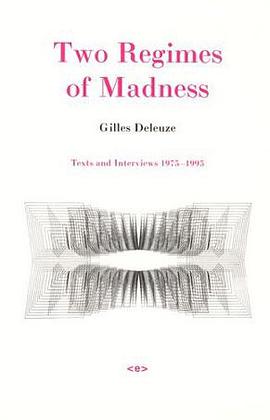
Two Regimes of Madness [图书] 豆瓣
People tend to confuse winning freedom with conversion to capitalism. It is doubtful that the joys of capitalism are enough to free peoples.... The American "revolution" failed long ago, long before the Soviet one. Revolutionary situations and attempts are born of capitalism itself and will not soon disappear, alas. Philosophy remains tied to a revolutionary becoming that is not to be confused with the history of revolutions. <br /> --from Two Regimes of Madness<br /> <br /> Covering the last twenty years of Gilles Deleuze's life (1975-1995), the texts and interviews gathered in this volume complete those collected in Desert Islands and Other Texts (1953-1974) . This period saw the publication of his major works: A Thousand Plateaus (1980), Cinema I: Image-Movement (1983), Cinema II: Image-Time (1985), all leading through language, concept and art to What is Philosophy? (1991). Two Regimes of Madness also documents Deleuze's increasing involvement with politics (with Toni Negri, for example, the Italian philosopher and professor accused of associating with the Red Brigades). Both volumes were conceived by the author himself and will be his last. Michel Foucault famously wrote: "One day, perhaps, this century will be Deleuzian." This book provides a prodigious entry into the work of the most important philosopher of our time. Unlike Foucault, Deleuze never stopped digging further into the same furrow. Concepts for him came from life. He was a vitalist and remained one to the last.
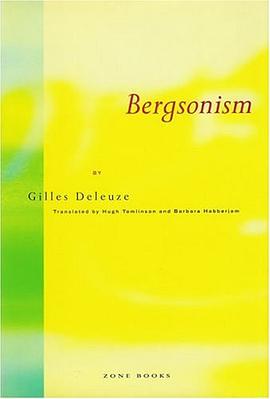
Bergsonism [图书] 豆瓣
In this analysis of one major philosopher by another, Gilles Deleuze identifies three pivotal concepts - duration, memory, and élan vital - that are found throughout Bergson's writings and shows the relevance of Bergson's work to contemporary philosophical debates. He interprets and integrates these themes into a single philosophical program, arguing that Bergson's philosophical intentions are methodological. They are more than a polemic against the limitations of science and common sense, particularly in Bergson's elaboration of the explanatory powers of the notion of duration - thinking in terms of time rather than space.
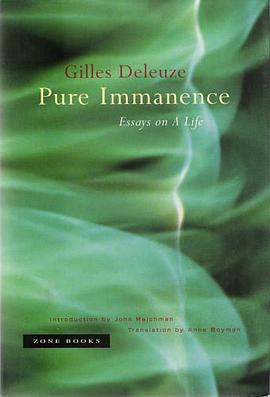
Pure Immanence [图书] 豆瓣
The essays in this book present a complex theme at the heart of the philosophy of Gilles Deleuze, what in his last writing he called simply "a life." They capture a problem that runs throughout his work--his long search for a new and superior empiricism. Announced in his first book, on David Hume, then taking off with his early studies of Nietzsche and Bergson, the problem of an "empiricist conversion" became central to Deleuze's work, in particular to his aesthetics and his conception of the art of cinema. In the new regime of communication and information-machines with which he thought we are confronted today, he came to believe that such a conversion, such an empiricism, such a new art and will-to-art, was what we need most. The last, seemingly minor question of "a life" is thus inseparable from Deleuze's striking image of philosophy not as a wisdom we already possess, but as a pure immanence of what is yet to come. Perhaps the full exploitation of that image, from one of the most original trajectories in contemporary philosophy, is also yet to come.
A Thousand Plateaus [图书] 豆瓣
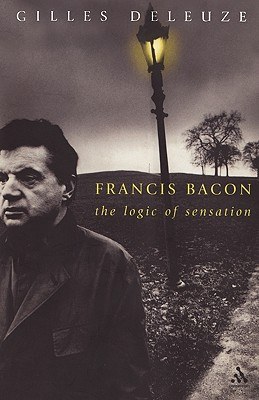
Francis Bacon [图书] 豆瓣
作者:
Gilles Deleuze
译者:
Daniel W. Smith
出版社:
Continuum International Publishing Group - Mansell
2003
- 4
Gilles Deleuze was one of the most influential and revolutionary philosophers of the 20th century. Francis Bacon is widely regarded as one of the most radical painters of the 20th century. This title presents a deep engagement with Bacon's work and the nature of art. Deleuze analyses the distinctive innovations that came to mark Bacon's style: the isolation of the figure, the violent deformations of the flesh, the complex use of colour, the method of chance, and the use of the triptych form. Along the way, Deleuze introduces a number of his own famous concepts, such as the "body without organs" and the "diagram", and contrasts his own approach to painting with that of both the phenomenological and the art historical traditions. Deleuze links Bacon's work to Cezanne's notion of a "logic" of sensation, which reaches its summit in colour and the "colouring sensation". Investigating this logic, Deleuze explores Bacon's crucial relation to past painters such as Velasquez, Cezanne and Soutine, as well as Bacon's rejection of expressionism and abstract painting.
Empiricism and Subjectivity [图书] 豆瓣
At last available in paperback, this book anticipates and explains the post-structuralist turn to empiricism. Presenting a challenging reading of David Hume's philosophy, the work is invaluable for understanding the progress of Deleuze's thought.
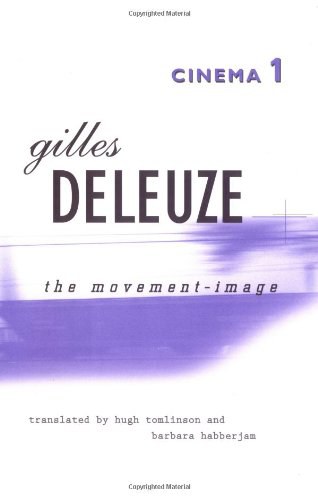
Cinema 1: the Movement-Image [图书] 豆瓣
作者:
Gilles Deleuze
译者:
Hugh Tomlinson
/
Babara Habberjam
出版社:
Continuum International Publishing Group
2001
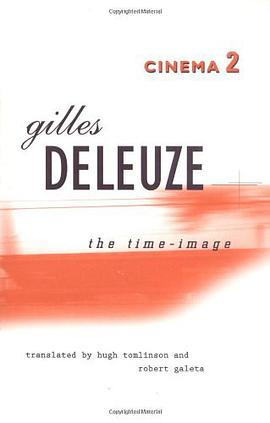
Cinema 2 [图书] 豆瓣
Cinema 2: The Time-Image brings to completion Gilles Deleuze's work on the theoretical implications of the cinematographic image. In Cinema 1: The Movement-Image, Deleuze proposed a new way to understand narrative cinema, based on Henri Bergson's notion of the movement-image and C. S. Peirce's classification of images and signs. In Cinema 2, he explains why, since World War II, time has come to dominate film: the fragment or solitary image, in supplanting narrative cinema's rational development of events, illustrates this new significance of time.
Deleuze ascribes this shift to the condition of postwar Europe: the situations and spaces "we no longer know how to describe"—buildings deserted but inhabited, cities undergoing demolition or reconstruction—and the new race of characters who emerged from this rubble, mutants, who "saw rather than acted." Deleuze discusses the films of Rossellini, De Sica, Fellini, Godard, Resnais, Antonioni, Pasolini, Rohmer, Ophuls, and many others, suggesting that contemporary cinema, far from being dead, is only beginning to find new ways to capture time in the image.
Cinema 1 [图书] 豆瓣
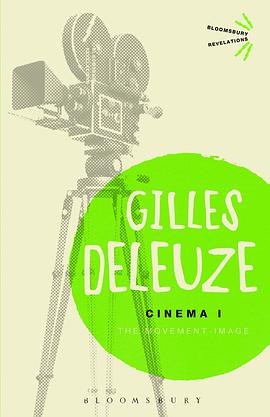
First published in France in 1983, this is at once a revolutionary work in philosophy and a book about cinema. For Deleuze, philosophy cannot be a reflection of something else; philosophical concepts are, rather, the images of thought, to be understood on their own terms. Here he puts this view of philosophy to work in understanding the concepts-or images-of film. Cinema, to Deleuze, is not a language that requires probing and interpretation, a search for hidden meanings; it can be understood directly, as a composition of images and signs, pre-verbal in nature. Thus he offers a powerful alternative to the psychoanalytic and semiological approaches that have dominated film studies.
Drawing upon Henri Bergson's thesis on perception and C. S. Peirce's classification of images and signs, Deleuze is able to put forth a new theory and taxonomy of the image, which he then applies to concrete examples from the work of a diverse group of filmmakers—Griffith, Eisenstein, Pasolini, Rohmer, Bresson, Dreyer, Stroheim, Buñuel, and many others. Because he finds movement to be the primary characteristic of cinema in the first half of the twentieth century, he devotes this first volume to that aspect of film. In the years since World War II, time has come to dominate film; that shift, and the signs and images associated with it, are addressed in Cinema 2: The Time-Image.
"The appearance of [this book] is an exciting event for film study and one that well deserves serious attention and commentary." —Film Quarterly
Drawing upon Henri Bergson's thesis on perception and C. S. Peirce's classification of images and signs, Deleuze is able to put forth a new theory and taxonomy of the image, which he then applies to concrete examples from the work of a diverse group of filmmakers—Griffith, Eisenstein, Pasolini, Rohmer, Bresson, Dreyer, Stroheim, Buñuel, and many others. Because he finds movement to be the primary characteristic of cinema in the first half of the twentieth century, he devotes this first volume to that aspect of film. In the years since World War II, time has come to dominate film; that shift, and the signs and images associated with it, are addressed in Cinema 2: The Time-Image.
"The appearance of [this book] is an exciting event for film study and one that well deserves serious attention and commentary." —Film Quarterly