Thomas Hampson — 演员 (14)
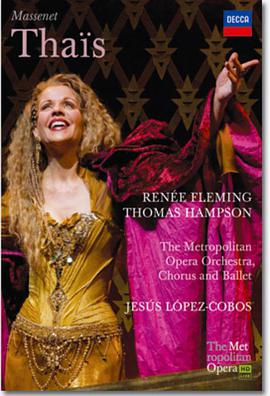
马斯奈《泰伊丝》 (2008) [电影] 豆瓣
The Metropolitan Opera HD Live: Season 3, Episode 5 Massenet: Thaïs
导演: Gary Halvorson 演员: 蕾妮·弗莱明 / Thomas Hampson
其它标题: The Metropolitan Opera HD Live: Season 3, Episode 5 Massenet: Thaïs / 大都会歌剧院高清转播系列 第三季第五集
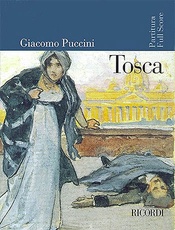
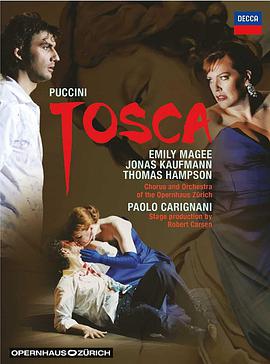
托斯卡 (2009) [电影] 豆瓣
Tosca
导演: Robert Carsen / Felix Breiscach 演员: Emily Magee / Thomas Hampson
其它标题: Tosca / 普契尼歌剧 2009年苏黎世歌剧院现场
霍夫曼的故事 (2015) [电影] 豆瓣
"The Metropolitan Opera HD Live" Offenbach: Les contes d'Hoffmann
导演: Gina Lapinski 演员: David Crawford / Hibla Gerzmava
其它标题: "The Metropolitan Opera HD Live" Offenbach: Les contes d'Hoffmann / 奥芬巴赫《霍夫曼的故事》
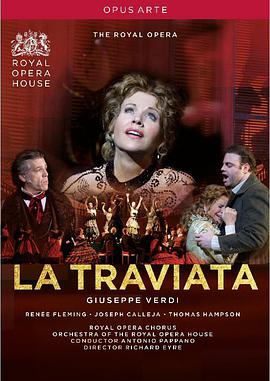
茶花女 (2009) [电影] 豆瓣
La Traviata
导演: Rhodri Huw 演员: 蕾妮·弗莱明 / Joseph Calleja
其它标题: La Traviata / 英国皇家歌剧院:茶花女
故事发生于19世纪的巴黎。城中名妓薇奥莱塔因为喜爱茶花而被称为“茶花女”。薇奥莱塔受到青年阿尔弗莱德真挚情意的感动,与他坠入爱河,毅然离开纸醉金迷的巴黎社交圈。不料这段爱情却受到了阿尔弗莱德父亲的阻拦。在他父亲的哀求下,薇奥莱塔为了爱人的前途和家族的声誉无奈选择了放弃,回到巴黎重操旧业。而不知实情的阿尔弗莱德无法理解她的举动,于是,当众羞辱了她……
托斯卡 2009年苏黎世歌剧团版 [演出] 豆瓣
所属 演出: 托斯卡
语言: 意大利语 剧团: Orchester der Oper Zürich 苏黎世歌剧团管弦乐团 ; Chor der Oper Zürich 苏黎世歌剧团合唱团 ; Kinderchor der Oper Zürich 苏黎世歌剧团儿童合唱团 ; Statistenverein am Opernhaus Zürich 剧院: Opernhaus Zürich 苏黎世歌剧院 导演: Robert Carsen
其它标题: 2009年苏黎世歌剧团版 编剧: Giuseppe Giacosa / Luigi Illica 作曲: Giacomo Puccini 演员: Emily Magee / Jonas Kaufmann
Historical context
A crowded scene with many soldiers and horses, and much smoke. Some soldiers lie dead or wounded. In the distance, beyond a short line of trees, is a tall church tower.
According to the libretto, the action of Tosca occurs in Rome in June 1800. Sardou, in his play, dates it more precisely; La Tosca takes place in the afternoon, evening, and early morning of 17 and 18 June 1800.
Italy had long been divided into a number of small states, with the Pope in Rome ruling the Papal States in Central Italy. Following the French Revolution, a French army under Napoleon invaded Italy in 1796, entering Rome almost unopposed on 11 February 1798 and establishing a republic there. Pope Pius VI was taken prisoner, and was sent into exile on February 20, 1798. (Pius VI would die in exile in 1799, and his successor, Pius VII, who was elected in Venice on 14 March 1800, would not enter Rome until July 3. There is thus neither a Pope nor papal government in Rome during the days depicted in the opera.) The new republic was ruled by seven consuls; in the opera this is the office formerly held by Angelotti, whose character may be based on the real-life consul Liborio Angelucci. In September 1799 the French, who had protected the republic, withdrew from Rome. As they left, troops of the Kingdom of Naples occupied the city.
In May 1800 Napoleon, by then the undisputed leader of France, brought his troops across the Alps to Italy once again. On 14 June his army met the Austrian forces at the Battle of Marengo (near Alessandria). Austrian troops were initially successful; by mid-morning they were in control of the field of battle. Their commander, Michael von Melas, sent this news south towards Rome. However, fresh French troops arrived in late afternoon, and Napoleon attacked the tired Austrians. As Melas retreated in disarray with the remains of his army, he sent a second courier south with the revised message. The Neapolitans abandoned Rome, and the city spent the next fourteen years under French domination.
Act 1
Inside the church of Sant'Andrea della Valle
Scene depicting a church interior with high stained-glass windows and heavy ornamental columns. The central figure is a high dignatory around whom several figures are kneeling, while in the background can be seen the tall pikes of the Swiss Guard.
Cesare Angelotti, former consul of the Roman Republic and now an escaped political prisoner, runs into the church and hides in the Attavanti private chapel – his sister, the Marchesa Attavanti, has left a key to the chapel hidden at the feet of the statue of the Madonna. The elderly Sacristan enters and begins cleaning. The Sacristan kneels in prayer as the Angelus sounds.
The painter Mario Cavaradossi arrives to continue work on his picture of Mary Magdalene. The Sacristan identifies a likeness between the portrait and a blonde-haired woman who has been visiting the church recently (unknown to him, it is Angelotti's sister the Marchesa). Cavaradossi describes the "hidden harmony" ("Recondita armonia") in the contrast between the blonde beauty of his painting and his dark-haired lover, the singer Floria Tosca. The Sacristan mumbles his disapproval before leaving.
Angelotti emerges and tells Cavaradossi, an old friend who has republican sympathies, that he is being pursued by the Chief of Police, Baron Scarpia. Cavaradossi promises to assist him after nightfall. Tosca's voice is heard, calling to Cavaradossi. Cavaradossi gives Angelotti his basket of food and Angelotti hurriedly returns to his hiding place.
Tosca enters and suspiciously asks Cavaradossi what he has been doing – she thinks that he has been talking to another woman. Cavaradossi reassures her and Tosca tries to persuade him to take her to his villa that evening: "Non la sospiri, la nostra casetta" ("Do you not long for our little cottage"). She then expresses jealousy over the woman in the painting, whom she recognises as the Marchesa Attavanti. Cavaradossi explains the likeness; he has merely observed the Marchesa at prayer in the church. He reassures Tosca of his fidelity and asks her what eyes could be more beautiful than her own: "Qual'occhio al mondo" ("What eyes in the world").
After Tosca has left, Angelotti reappears and discusses with the painter his plan to flee disguised as a woman, using clothes left in the chapel by his sister. Cavaradossi gives Angelotti a key to his villa, suggesting that he hide in a disused well in the garden. The sound of a cannon signals that Angelotti's escape has been discovered. He and Cavaradossi hasten out of the church.
The Sacristan re-enters with choristers, celebrating the news that Napoleon has apparently been defeated at Marengo. The celebrations cease abruptly with the entry of Scarpia, his henchman Spoletta and several police agents. They have heard that Angelotti has sought refuge in the church. Scarpia orders a search, and the empty food basket and a fan bearing the Attavanti coat of arms are found in the chapel. Scarpia questions the Sacristan, and his suspicions are aroused further when he learns that Cavaradossi has been in the church; Scarpia mistrusts the painter, and believes him complicit in Angelotti's escape.
When Tosca arrives looking for her lover, Scarpia artfully arouses her jealous instincts by implying a relationship between the painter and the Marchesa Attavanti. He draws Tosca's attention to the fan and suggests that someone must have surprised the lovers in the chapel. Tosca falls for his deceit; enraged, she rushes off to confront Cavaradossi. Scarpia orders Spoletta and his agents to follow her, assuming she will lead them to Cavaradossi and Angelotti. He privately gloats as he reveals his intentions to possess Tosca and execute Cavaradossi. A procession enters the church singing the Te Deum; exclaiming 'Tosca, you make me forget even God!', Scarpia joins the chorus in the prayer.
Act 2
The body of a man lies supine, with a woman, crucifix in hand, kneeling over him. A candle is placed to each side of his head.
Scarpia's apartment in the Palazzo Farnese, that evening
Scarpia, at supper, sends a note to Tosca asking her to come to his apartment, anticipating that two of his goals will soon be fulfilled at once. His agent, Spoletta, arrives to report that Angelotti remains at large, but Cavaradossi has been arrested for questioning. He is brought in, and an interrogation ensues. As the painter steadfastly denies knowing anything about Angelotti's escape, Tosca's voice is heard singing a celebratory cantata elsewhere in the Palace.
She enters the apartment in time to see Cavaradossi being escorted to an antechamber. All he has time to say is that she mustn't tell them anything. Scarpia then claims she can save her lover from indescribable pain if she reveals Angelotti's hiding place. She resists, but the sound of screams coming through the door eventually breaks her down, and she tells Scarpia to search the well in the garden of Cavaradossi's villa.
Scarpia orders his torturers to cease, and the bloodied painter is dragged back in. He's devastated to discover that Tosca has betrayed his friend. Sciarrone, another agent, then enters with news: there was an upset on the battlefield at Marengo, and the French are marching on Rome. Cavaradossi, unable to contain himself, gloats to Scarpia that his rule of terror will soon be at an end. This is enough for the police to consider him guilty, and they haul him away to be shot.
Scarpia, now alone with Tosca, proposes a bargain: if she gives herself to him, Cavaradossi will be freed. She is revolted, and repeatedly rejects his advances, but she hears the drums outside announcing an execution. As Scarpia awaits her decision, she prays, asking why God has abandoned her in her hour of need: "Vissi d'arte" ("I lived for art"). She tries to offer money, but Scarpia isn't interested in that kind of bribe: he wants Tosca herself.
Spoletta returns with the news that Angelotti has killed himself upon discovery, and that everything is in place for Cavaradossi's execution. Scarpia hesitates to give the order, looking to Tosca, and despairingly she agrees to submit to him. He tells Spoletta to arrange a mock execution, both men repeating that it will be "as we did with Count Palmieri," and Spoletta exits.
Tosca insists that Scarpia must provide safe-conduct out of Rome for herself and Cavaradossi. He easily agrees to this and heads to his desk. While he's drafting the document, she quietly takes a knife from the supper table. Scarpia triumphantly strides toward Tosca. When he begins to embrace her, she stabs him, crying "this is Tosca's kiss!" Once she's certain he's dead, she ruefully says "now I forgive him." She removes the safe-conduct from his pocket, lights candles in a gesture of piety, and places a crucifix on the body before leaving.
Act 3
The upper parts of the Castel Sant'Angelo, early the following morning
Roman panorama showing, centre, an arched bridge over a river with a domed building in the distance. To the right of the bridge is a large circular fortress.
A shepherd boy is heard offstage singing (in Romanesco dialect) "Io de' sospiri" ("I give you sighs") as church bells sound for matins. The guards lead Cavaradossi in and inform him that he has one hour to live. He declines to see a priest, but asks permission to write a letter to Tosca. He begins to write, but is soon overwhelmed by memories: "E lucevan le stelle" ("And the stars shone").
Tosca enters and shows him the safe-conduct pass she's obtained, adding that she has killed Scarpia and that the imminent execution is a sham. Cavaradossi must feign death, after which they can flee together before Scarpia's body is discovered. Cavaradossi is awestruck by his gentle lover's courage: "O dolci mani" ("Oh sweet hands"). The pair ecstatically imagines the life they will share, far from Rome. Tosca then anxiously coaches Cavaradossi on how to play dead when the firing squad shoots at him with blanks. He giddily promises he'll fall "like Tosca in the theatre."
Cavaradossi is led away, and Tosca watches with increasing impatience as the execution is prepared. The men fire, Cavaradossi falls, and Tosca exclaims "Ecco un artista!" ("What an actor!"). When the soldiers have all left, she hurries towards Cavaradossi, only to find that Scarpia betrayed her: the bullets were real. Heartbroken, she clasps her lover's lifeless body and weeps.
The voices of Spoletta, Sciarrone, and the soldiers are heard, shouting that Scarpia is dead and Tosca has killed him. As the men rush in, Tosca rises, evades their clutches, and runs to the parapet. Crying "O Scarpia, Avanti a Dio!" ("O Scarpia, we meet before God!"), she flings herself over the edge to her death.
托斯卡 2019年维也纳国家歌剧院版 [演出] 豆瓣
所属 演出: 托斯卡
语言: 意大利语 italian 剧团: Orchester der Wiener Staatsoper 维也纳国家歌剧院管弦乐团 ; Chor der Wiener Staatsoper 维也纳国家歌剧院合唱团 剧院: Wiener Staatsoper 维也纳国家歌剧院 导演: Margarethe Wallmann
其它标题: 2019年维也纳国家歌剧院版 编剧: Giuseppe Giacosa / Luigi Illica 作曲: Giacomo Puccini 演员: Sondra Radvanovsky / Piotr Beczała
Historical context
A crowded scene with many soldiers and horses, and much smoke. Some soldiers lie dead or wounded. In the distance, beyond a short line of trees, is a tall church tower.
According to the libretto, the action of Tosca occurs in Rome in June 1800. Sardou, in his play, dates it more precisely; La Tosca takes place in the afternoon, evening, and early morning of 17 and 18 June 1800.
Italy had long been divided into a number of small states, with the Pope in Rome ruling the Papal States in Central Italy. Following the French Revolution, a French army under Napoleon invaded Italy in 1796, entering Rome almost unopposed on 11 February 1798 and establishing a republic there. Pope Pius VI was taken prisoner, and was sent into exile on February 20, 1798. (Pius VI would die in exile in 1799, and his successor, Pius VII, who was elected in Venice on 14 March 1800, would not enter Rome until July 3. There is thus neither a Pope nor papal government in Rome during the days depicted in the opera.) The new republic was ruled by seven consuls; in the opera this is the office formerly held by Angelotti, whose character may be based on the real-life consul Liborio Angelucci. In September 1799 the French, who had protected the republic, withdrew from Rome. As they left, troops of the Kingdom of Naples occupied the city.
In May 1800 Napoleon, by then the undisputed leader of France, brought his troops across the Alps to Italy once again. On 14 June his army met the Austrian forces at the Battle of Marengo (near Alessandria). Austrian troops were initially successful; by mid-morning they were in control of the field of battle. Their commander, Michael von Melas, sent this news south towards Rome. However, fresh French troops arrived in late afternoon, and Napoleon attacked the tired Austrians. As Melas retreated in disarray with the remains of his army, he sent a second courier south with the revised message. The Neapolitans abandoned Rome, and the city spent the next fourteen years under French domination.
Act 1
Inside the church of Sant'Andrea della Valle
Scene depicting a church interior with high stained-glass windows and heavy ornamental columns. The central figure is a high dignatory around whom several figures are kneeling, while in the background can be seen the tall pikes of the Swiss Guard.
Cesare Angelotti, former consul of the Roman Republic and now an escaped political prisoner, runs into the church and hides in the Attavanti private chapel – his sister, the Marchesa Attavanti, has left a key to the chapel hidden at the feet of the statue of the Madonna. The elderly Sacristan enters and begins cleaning. The Sacristan kneels in prayer as the Angelus sounds.
The painter Mario Cavaradossi arrives to continue work on his picture of Mary Magdalene. The Sacristan identifies a likeness between the portrait and a blonde-haired woman who has been visiting the church recently (unknown to him, it is Angelotti's sister the Marchesa). Cavaradossi describes the "hidden harmony" ("Recondita armonia") in the contrast between the blonde beauty of his painting and his dark-haired lover, the singer Floria Tosca. The Sacristan mumbles his disapproval before leaving.
Angelotti emerges and tells Cavaradossi, an old friend who has republican sympathies, that he is being pursued by the Chief of Police, Baron Scarpia. Cavaradossi promises to assist him after nightfall. Tosca's voice is heard, calling to Cavaradossi. Cavaradossi gives Angelotti his basket of food and Angelotti hurriedly returns to his hiding place.
Tosca enters and suspiciously asks Cavaradossi what he has been doing – she thinks that he has been talking to another woman. Cavaradossi reassures her and Tosca tries to persuade him to take her to his villa that evening: "Non la sospiri, la nostra casetta" ("Do you not long for our little cottage"). She then expresses jealousy over the woman in the painting, whom she recognises as the Marchesa Attavanti. Cavaradossi explains the likeness; he has merely observed the Marchesa at prayer in the church. He reassures Tosca of his fidelity and asks her what eyes could be more beautiful than her own: "Qual'occhio al mondo" ("What eyes in the world").
After Tosca has left, Angelotti reappears and discusses with the painter his plan to flee disguised as a woman, using clothes left in the chapel by his sister. Cavaradossi gives Angelotti a key to his villa, suggesting that he hide in a disused well in the garden. The sound of a cannon signals that Angelotti's escape has been discovered. He and Cavaradossi hasten out of the church.
The Sacristan re-enters with choristers, celebrating the news that Napoleon has apparently been defeated at Marengo. The celebrations cease abruptly with the entry of Scarpia, his henchman Spoletta and several police agents. They have heard that Angelotti has sought refuge in the church. Scarpia orders a search, and the empty food basket and a fan bearing the Attavanti coat of arms are found in the chapel. Scarpia questions the Sacristan, and his suspicions are aroused further when he learns that Cavaradossi has been in the church; Scarpia mistrusts the painter, and believes him complicit in Angelotti's escape.
When Tosca arrives looking for her lover, Scarpia artfully arouses her jealous instincts by implying a relationship between the painter and the Marchesa Attavanti. He draws Tosca's attention to the fan and suggests that someone must have surprised the lovers in the chapel. Tosca falls for his deceit; enraged, she rushes off to confront Cavaradossi. Scarpia orders Spoletta and his agents to follow her, assuming she will lead them to Cavaradossi and Angelotti. He privately gloats as he reveals his intentions to possess Tosca and execute Cavaradossi. A procession enters the church singing the Te Deum; exclaiming 'Tosca, you make me forget even God!', Scarpia joins the chorus in the prayer.
Act 2
The body of a man lies supine, with a woman, crucifix in hand, kneeling over him. A candle is placed to each side of his head.
Scarpia's apartment in the Palazzo Farnese, that evening
Scarpia, at supper, sends a note to Tosca asking her to come to his apartment, anticipating that two of his goals will soon be fulfilled at once. His agent, Spoletta, arrives to report that Angelotti remains at large, but Cavaradossi has been arrested for questioning. He is brought in, and an interrogation ensues. As the painter steadfastly denies knowing anything about Angelotti's escape, Tosca's voice is heard singing a celebratory cantata elsewhere in the Palace.
She enters the apartment in time to see Cavaradossi being escorted to an antechamber. All he has time to say is that she mustn't tell them anything. Scarpia then claims she can save her lover from indescribable pain if she reveals Angelotti's hiding place. She resists, but the sound of screams coming through the door eventually breaks her down, and she tells Scarpia to search the well in the garden of Cavaradossi's villa.
Scarpia orders his torturers to cease, and the bloodied painter is dragged back in. He's devastated to discover that Tosca has betrayed his friend. Sciarrone, another agent, then enters with news: there was an upset on the battlefield at Marengo, and the French are marching on Rome. Cavaradossi, unable to contain himself, gloats to Scarpia that his rule of terror will soon be at an end. This is enough for the police to consider him guilty, and they haul him away to be shot.
Scarpia, now alone with Tosca, proposes a bargain: if she gives herself to him, Cavaradossi will be freed. She is revolted, and repeatedly rejects his advances, but she hears the drums outside announcing an execution. As Scarpia awaits her decision, she prays, asking why God has abandoned her in her hour of need: "Vissi d'arte" ("I lived for art"). She tries to offer money, but Scarpia isn't interested in that kind of bribe: he wants Tosca herself.
Spoletta returns with the news that Angelotti has killed himself upon discovery, and that everything is in place for Cavaradossi's execution. Scarpia hesitates to give the order, looking to Tosca, and despairingly she agrees to submit to him. He tells Spoletta to arrange a mock execution, both men repeating that it will be "as we did with Count Palmieri," and Spoletta exits.
Tosca insists that Scarpia must provide safe-conduct out of Rome for herself and Cavaradossi. He easily agrees to this and heads to his desk. While he's drafting the document, she quietly takes a knife from the supper table. Scarpia triumphantly strides toward Tosca. When he begins to embrace her, she stabs him, crying "this is Tosca's kiss!" Once she's certain he's dead, she ruefully says "now I forgive him." She removes the safe-conduct from his pocket, lights candles in a gesture of piety, and places a crucifix on the body before leaving.
Act 3
The upper parts of the Castel Sant'Angelo, early the following morning
Roman panorama showing, centre, an arched bridge over a river with a domed building in the distance. To the right of the bridge is a large circular fortress.
A shepherd boy is heard offstage singing (in Romanesco dialect) "Io de' sospiri" ("I give you sighs") as church bells sound for matins. The guards lead Cavaradossi in and inform him that he has one hour to live. He declines to see a priest, but asks permission to write a letter to Tosca. He begins to write, but is soon overwhelmed by memories: "E lucevan le stelle" ("And the stars shone").
Tosca enters and shows him the safe-conduct pass she's obtained, adding that she has killed Scarpia and that the imminent execution is a sham. Cavaradossi must feign death, after which they can flee together before Scarpia's body is discovered. Cavaradossi is awestruck by his gentle lover's courage: "O dolci mani" ("Oh sweet hands"). The pair ecstatically imagines the life they will share, far from Rome. Tosca then anxiously coaches Cavaradossi on how to play dead when the firing squad shoots at him with blanks. He giddily promises he'll fall "like Tosca in the theatre."
Cavaradossi is led away, and Tosca watches with increasing impatience as the execution is prepared. The men fire, Cavaradossi falls, and Tosca exclaims "Ecco un artista!" ("What an actor!"). When the soldiers have all left, she hurries towards Cavaradossi, only to find that Scarpia betrayed her: the bullets were real. Heartbroken, she clasps her lover's lifeless body and weeps.
The voices of Spoletta, Sciarrone, and the soldiers are heard, shouting that Scarpia is dead and Tosca has killed him. As the men rush in, Tosca rises, evades their clutches, and runs to the parapet. Crying "O Scarpia, Avanti a Dio!" ("O Scarpia, we meet before God!"), she flings herself over the edge to her death.
茶花女 2005年萨尔茨堡艺术节版 [演出] 豆瓣
所属 演出: 茶花女
语言: italian 意大利语 剧团: Wiener Philharmoniker 维也纳爱乐乐团 ; Konzertvereinigung Wiener Staatsopernchor 维也纳国家歌剧院合唱团音乐会协会 剧院: Großes Festspielhaus 萨尔茨堡艺术节大剧院 导演: Willy Decker
其它标题: 2005年萨尔茨堡艺术节版 编剧: Francesco Maria Piave 作曲: Giuseppe Verdi 演员: Anna Netrebko / Rolando Villazón
Place: Paris and its vicinity
Time: Beginning of the 19th century
Act 1
The salon in Violetta's house
Violetta Valéry, a famed courtesan, throws a lavish party at her Paris salon to celebrate her recovery from an illness. Gastone, a viscount, has brought with him a friend, Alfredo Germont, a young bourgeois from a provincial family who has long adored Violetta from afar. While walking to the salon, Gastone tells Violetta that Alfredo loves her, and that while she was ill, he came to her house every day. Alfredo joins them, admitting the truth of Gastone's remarks.
Baron Douphol, Violetta's current lover, waits nearby to escort her to the salon; once there, the Baron is asked to give a toast, but refuses, and the crowd turns to Alfredo, who agrees to sing a brindisi – a drinking song (Alfredo, Violetta, chorus: Libiamo ne' lieti calici – "Let's drink from the joyful cups").
From the next room, the sound of the orchestra is heard and the guests move there to dance. After a series of severe coughs and almost fainting, Violetta begins to feel dizzy and asks her guests to go ahead and to leave her to rest until she recovers. While the guests dance in the next room, Violetta looks at her pale face in her mirror. Alfredo enters and expresses his concern for her fragile health, later declaring his love for her (Alfredo, Violetta: Un dì, felice, eterea – "One day, happy and ethereal"). At first, she rejects him because his love means nothing to her, but there is something about Alfredo that touches her heart. He is about to leave when she gives him a flower, telling him to return it when it has wilted, which will be the very next day.
After the guests leave, Violetta wonders if Alfredo could actually be the one in her life (Violetta: È strano! ... Ah, fors' è lui – "Ah, perhaps he is the one"). But she concludes that she needs freedom to live her life (Violetta, Alfredo: Sempre libera – "Always free"). From off stage, Alfredo's voice is heard singing about love as he walks down the street.
Act 2
Scene 1: Violetta's country house outside Paris
Three months later, Alfredo and Violetta are living together in a peaceful country house outside Paris. Violetta has fallen in love with Alfredo and she has completely abandoned her former life. Alfredo sings of their happy life together (Alfredo: De' miei bollenti spiriti / Il giovanile ardore – "The youthful ardor of my ebullient spirits"). Annina, the maid, arrives from Paris, and, when questioned by Alfredo, tells him that she went there to sell the horses, carriages and everything owned by Violetta to support their country lifestyle.
Alfredo is shocked to learn this and leaves for Paris immediately to settle matters himself. Violetta returns home and receives an invitation from her friend, Flora, to a party in Paris that evening. Alfredo's father, Giorgio Germont, is announced and demands that she break off her relationship with his son for the sake of his family, since he reveals that Violetta's relationship with Alfredo has threatened his daughter's engagement (Giorgio: Pura siccome un angelo, Iddio mi diè una figlia – "Pure as an angel, God gave me a daughter") because of Violetta's reputation. Meanwhile, he reluctantly becomes impressed by Violetta's nobility, something which he did not expect from a courtesan. She responds that she cannot end the relationship because she loves him so much, but Giorgio pleads with her for the sake of his family. With growing remorse, she finally agrees (Violetta, Giorgio: Dite alla giovine, sì bella e pura, – "Tell the young girl, so beautiful and pure,") and says goodbye to Giorgio. In a gesture of gratitude for her kindness and sacrifice, Giorgio kisses her forehead before leaving her weeping alone.
Violetta gives a note to Annina to send to Flora accepting the party invitation and, as she is writing a farewell letter to Alfredo, he enters. She can barely control her sadness and tears; she tells him repeatedly of her unconditional love (Violetta: Amami, Alfredo, amami quant'io t'amo – "Love me, Alfredo, love me as I love you"). Before rushing out and setting off for Paris, she hands the farewell letter to her servant to give to Alfredo.
Soon, the servant brings the letter to Alfredo and, as soon as he has read it, Giorgio returns and attempts to comfort his son, reminding him of his family in Provence (Giorgio: Di Provenza il mar, il suol chi dal cor ti cancellò? – "Who erased the sea, the land of Provence from your heart?"). Alfredo suspects that the Baron is behind his separation with Violetta, and the party invitation, which he finds on the desk, strengthens his suspicions. He decides to confront Violetta at the party. Giorgio tries to stop Alfredo, but he rushes out.
Scene 2: Party at Flora's house
At the party, the Marquis tells Flora that Violetta and Alfredo have separated, much to the amazement of everyone who had previously seen the happy couple. She calls for the entertainers to perform for the guests (Chorus: Noi siamo zingarelle venute da lontano – "We are gypsy girls who have come from afar"; Di Madride noi siam mattadori – "We are matadors from Madrid"). Gastone and his friends join the matadors and sing (Gastone, chorus, dancers: È Piquillo un bel gagliardo Biscaglino mattador – "Piquillo is a bold and handsome matador from Biscay").
Violetta arrives with Baron Douphol. They see Alfredo at the gambling table. When he sees them, Alfredo loudly proclaims that he will take Violetta home with him. Feeling annoyed, the Baron goes to the gambling table and joins him in a game. As they bet, Alfredo wins some large sums until Flora announces that supper is ready. Alfredo leaves with handfuls of money.
As everyone is leaving the room, Violetta has asked Alfredo to see her. Fearing that the Baron's anger will lead him to challenge Alfredo to a duel, she gently asks Alfredo to leave. Alfredo misunderstands her apprehension and demands that she admit that she loves the Baron. In grief, she makes that admission and, furiously, Alfredo calls the guests to witness what he has to say (Questa donna conoscete? – "You know this woman?"). He humiliates and denounces Violetta in front of the guests and then throws his winnings at her feet in payment for her services. She faints onto the floor. The guests reprimand Alfredo: Di donne ignobile insultatore, di qua allontanati, ne desti orror! ("Ignoble insulter of women, go away from here, you fill us with horror!").
In search of his son, Giorgio enters the hall and, knowing the real significance of the scene, denounces his son's behavior (Giorgio, Alfredo, Violetta, chorus: Di sprezzo degno sè stesso rende chi pur nell'ira la donna offende. – "A man, who even in anger, offends a woman renders himself deserving of contempt.").
Flora and the ladies attempt to persuade Violetta to leave the dining room, but Violetta turns to Alfredo: Alfredo, Alfredo, di questo core non puoi comprendere tutto l'amore... – "Alfredo, Alfredo, you can't understand all the love in this heart...".
Act 3
Violetta's bedroom
Dr. Grenvil tells Annina that Violetta will not live long since her tuberculosis has worsened. Alone in her room, Violetta reads a letter from Alfredo's father telling her that the Baron was only wounded in his duel with Alfredo. He has informed Alfredo of the sacrifice she has made for him and his sister; and that he is sending his son to see her as quickly as possible to ask for her forgiveness. But Violetta senses it is too late (Violetta: Addio, del passato bei sogni ridenti – "Farewell, lovely, happy dreams of the past").
Annina rushes in the room to tell Violetta of Alfredo's arrival. The lovers are reunited and Alfredo suggests that they leave Paris (Alfredo, Violetta: Parigi, o cara, noi lasceremo – "We will leave Paris, O beloved").
But it is too late: she knows her time is up (Alfredo, Violetta: Gran Dio!...morir sì giovane – "Great God!...to die so young"). Alfredo's father enters with the doctor, regretting what he has done. After singing a duet with Alfredo, Violetta suddenly revives, exclaiming that the pain and discomfort have left her. A moment later, she dies in Alfredo's arms.
波希米亚人 1988年大都会歌剧团版 [演出] 豆瓣
所属 演出: 波希米亚人
语言: 意大利语 剧团: Metropolitan Opera Orchestra 大都会歌剧团管弦乐团 ; Metropolitan Opera Chorus 大都会歌剧团合唱团 剧院: Metropolitan Opera House 大都会歌剧院 导演: Franco Zeffirelli
其它标题: 1988年大都会歌剧团版 编剧: Giuseppe Giacosa / Luigi Illica 作曲: Giacomo Puccini 演员: Mirella Freni / Luciano Pavarotti
Place: Paris
Time: Around 1830
Act 1
In the four bohemians' garret (Christmas Eve)
Marcello is painting while Rodolfo gazes out of the window. They complain of the cold. In order to keep warm, they burn the manuscript of Rodolfo's drama. Colline, the philosopher, enters shivering and disgruntled at not having been able to pawn some books. Schaunard, the musician of the group, arrives with food, wine and cigars. He explains the source of his riches: a job with an eccentric English gentleman, who ordered him to play his violin to a parrot until it died. The others hardly listen to his tale as they set up the table to eat and drink. Schaunard interrupts, telling them that they must save the food for the days ahead: tonight they will all celebrate his good fortune by dining at Cafe Momus, and he will pay.
The friends are interrupted by Benoît, the landlord, who arrives to collect the rent. They flatter him and ply him with wine. In his drunkenness, he begins to boast of his amorous adventures, but when he also reveals that he is married, they thrust him from the room—without the rent payment—in comic moral indignation. The rent money is divided for their evening out in the Quartier Latin.
Marcello, Schaunard and Colline go out, but Rodolfo remains alone for a moment in order to finish an article he is writing, promising to join his friends soon. There is a knock at the door. It is a girl who lives in another room in the building. Her candle has blown out, and she has no matches; she asks Rodolfo to light it. She is briefly overcome with faintness, and Rodolfo helps her to a chair and offers her a glass of wine. She thanks him. After a few minutes, she says that she is better and must go. But as she turns to leave, she realizes that she has lost her key.
Her candle goes out in the draught and Rodolfo's candle goes out too; the pair stumble in the dark. Rodolfo, eager to spend time with the girl, to whom he is already attracted, finds the key and pockets it, feigning innocence. He takes her cold hand (Che gelida manina—"What a cold little hand") and tells her of his life as a poet, then asks her to tell him more about her life. The girl says her name is Mimì (Sì, mi chiamano Mimì—"Yes, they call me Mimì"), and describes her simple life as an embroiderer. Impatiently, the waiting friends call Rodolfo. He answers and turns to see Mimì bathed in moonlight (duet, Rodolfo and Mimì: O soave fanciulla—"Oh lovely girl"). They realize that they have fallen in love. Rodolfo suggests remaining at home with Mimì, but she decides to accompany him to the Cafe Momus. As they leave, they sing of their newfound love.
Act 2
Quartier Latin (same evening)
A great crowd, including children, has gathered with street sellers announcing their wares (chorus: Aranci, datteri! Caldi i marroni!—"Oranges, dates! Hot chestnuts!"). The friends arrive; Rodolfo buys Mimì a bonnet from a vendor, while Colline buys a coat and Schaunard a horn. Parisians gossip with friends and bargain with the vendors; the children of the streets clamor to see the wares of Parpignol, the toy seller. The friends enter the Cafe Momus.
As the men and Mimì dine at the cafe, Musetta, formerly Marcello's sweetheart, arrives with her rich (and elderly) government minister admirer, Alcindoro, whom she is tormenting. It is clear she has tired of him. To the delight of the Parisians and the embarrassment of her patron, she sings a risqué song (Musetta's waltz: Quando m'en vo'—"When I go along"), hoping to reclaim Marcello's attention. The ploy works; at the same time, Mimì recognizes that Musetta truly loves Marcello. To be rid of Alcindoro for a bit, Musetta pretends to be suffering from a tight shoe and sends him to the shoemaker to get her shoe mended. Alcindoro leaves, and Musetta and Marcello fall rapturously into each other's arms.
The friends are presented with their bill. However, Schaunard's purse has gone missing and no one else has enough money to pay. The sly Musetta has the entire bill charged to Alcindoro. The sound of a military band is heard, and the friends leave. Alcindoro returns with the repaired shoe seeking Musetta. The waiter hands him the bill and, dumbfounded, Alcindoro sinks into a chair.
Act 3
At the toll gate at the Barrière d'Enfer (late February)
Peddlers pass through the barriers and enter the city. Mimì appears, coughing violently. She tries to find Marcello, who is currently living in a little tavern where he paints signs for the innkeeper. She tells him of her hard life with Rodolfo, who abandoned her the night before, and of Rodolfo's terrible jealousy (O buon Marcello, aiuto!—"Oh, good Marcello, help me!"). Marcello tells her that Rodolfo is asleep inside, and expresses concern about Mimì's cough. Rodolfo wakes up and comes out looking for Marcello. Mimì hides and overhears Rodolfo first telling Marcello that he left Mimì because of her coquettishness, but finally confessing that his jealousy is a sham: he fears she is slowly being consumed by a deadly illness (most likely tuberculosis, known by the catchall name "consumption" in the nineteenth century). Rodolfo, in his poverty, can do little to help Mimì and hopes that his pretended unkindness will inspire her to seek another, wealthier suitor (Marcello, finalmente—"Marcello, finally").
Out of kindness towards Mimì, Marcello tries to silence him, but she has already heard all. Her weeping and coughing reveal her presence, and Rodolfo hurries to her. Musetta's laughter is heard and Marcello goes to find out what has happened. Mimì tells Rodolfo that she is leaving him, and asks that they separate amicably (Mimì: Donde lieta uscì—"From here she happily left"); but their love for one another is too strong for the pair to part. As a compromise, they agree to remain together until the spring, when the world is coming to life again and no one feels truly alone. Meanwhile, Marcello has found Musetta, and the couple quarrel fiercely about Musetta's flirtatiousness: an antithetical counterpoint to the other pair's reconciliation (quartet: Mimì, Rodolfo, Musetta, Marcello: Addio dolce svegliare alla mattina!—"Goodbye, sweet awakening in the morning!").
Act 4
Back in the garret (some months later)
Marcello and Rodolfo are trying to work, though they are primarily talking about their girlfriends, who have left them and found wealthy lovers. Rodolfo has seen Musetta in a fine carriage and Marcello has seen Mimì dressed like a queen. The men both express their nostalgia (duet: O Mimì, tu più non torni—"O Mimì, will you not return?"). Schaunard and Colline arrive with a very frugal dinner and all parody eating a plentiful banquet, dance together and sing, before Schaunard and Colline engage in a mock duel.
Musetta suddenly appears; Mimì, who took up with a wealthy viscount after leaving Rodolfo in the spring, has left her patron. Musetta found her that day in the street, severely weakened by her illness, and Mimì begged Musetta to bring her to Rodolfo. Mimì, haggard and pale, is assisted onto a bed. Briefly, she feels as though she is recovering. Musetta and Marcello leave to sell Musetta's earrings in order to buy medicine, and Colline leaves to pawn his overcoat (Vecchia zimarra—"Old coat"). Schaunard leaves with Colline to give Mimì and Rodolfo some time together. Mimì tells Rodolfo that her love for him is her whole life (aria/duet, Mimì and Rodolfo: Sono andati?—"Have they gone?").
To Mimì's delight, Rodolfo presents her with the pink bonnet he bought her, which he has kept as a souvenir of their love. They remember past happiness and their first meeting—the candles, the lost key. Suddenly, Mimì is overwhelmed by a coughing fit. The others return, with a gift of a muff to warm Mimì's hands and some medicine. Mimì gently thanks Rodolfo for the muff, which she believes is a present from him, reassures him that she is better and falls asleep. Musetta prays. Schaunard discovers that Mimì has died. Rodolfo rushes to the bed, calling Mimì's name in anguish, weeping helplessly as the curtain falls.
霍夫曼的故事 2015年大都会歌剧团版 [演出] 豆瓣
所属 演出: 霍夫曼的故事
语言: 法语 french 剧团: Metropolitan Opera Orchestra 大都会歌剧团管弦乐团 ; Metropolitan Opera Chorus 大都会歌剧团合唱团 剧院: Metropolitan Opera House 大都会歌剧院 导演: Bartlett Sher
其它标题: 2015年大都会歌剧团版 编剧: Jules Barbier 作曲: Jacques Offenbach 演员: Vittorio Grigolo / Erin Morley
Prologue
A tavern in Nuremberg: The Muse appears and reveals to the audience her purpose is to draw Hoffmann's attention, and make him abjure all other loves, so he can be devoted to her: poetry. She takes the appearance of Hoffmann's closest friend, Nicklausse. The prima donna Stella, performing Mozart's Don Giovanni, sends a letter to Hoffmann, requesting a meeting in her dressing room after the performance. The letter and the key to the room are intercepted by Councillor Lindorf ("Dans les rôles d'amoureux langoureux" – In the languid lovers' roles), the first of the opera's incarnations of evil, Hoffmann's nemesis. Lindorf intends to replace Hoffmann at the rendezvous. In the tavern, students wait for Hoffmann. He finally arrives, and entertains them with the legend of Kleinzach the dwarf ("Il était une fois à la cour d'Eisenach" – Once upon a time at the court of Eisenach). Lindorf coaxes Hoffmann into telling the audience about his three great loves.
Act 1 (Olympia)
This act is based on a portion of "Der Sandmann" (The Sandman).
Hoffmann's first love is Olympia, an automaton created by the scientist Spalanzani. Hoffmann falls in love with her, not knowing Olympia is a mechanical doll ("Allons! Courage et confiance...Ah! vivre deux!" – Come on! Courage and confidence ... Ah! to live!). To warn Hoffmann, Nicklausse, possessing the truth about Olympia, sings a story of a mechanical doll with the appearance of a human, but Hoffmann ignores him ("Une poupée aux yeux d'émail" – A doll with enamel eyes). Coppélius, Olympia's co-creator and this act's incarnation of Nemesis, sells Hoffmann magic glasses to make Olympia appear as a real woman ("J'ai des yeux" – I have eyes).
Olympia sings one of the opera's most-famous arias, "Les oiseaux dans la charmille" (The birds in the arbor, nicknamed "The Doll Song"), during which she runs-down and needs to be wound-up before she can continue. Hoffmann is tricked into believing his affections are returned, to the bemusement of Nicklausse, subtly attempting to warn his friend ("Voyez-la sous son éventail" – See her under her fan). While dancing with Olympia, Hoffmann falls on the ground and his glasses break. At the same time, Coppélius appears, tearing Olympia apart to retaliate against Spalanzani after cheating him of his fees. With the crowd ridiculing him, Hoffmann realizes he loved an automaton.
Act 2 (Antonia)
This act is based on "Rath Krespel".
After a long search, Hoffmann finds the house where Crespel and his daughter Antonia are hiding. Hoffmann and Antonia loved each other, but were separated after Crespel decided to hide his daughter from Hoffmann. Antonia inherited her mother's talent for singing, but her father forbids her to sing because of her mysterious illness. Antonia wishes her lover would return to her ("Elle a fui, la tourterelle" – "She fled, the dove"). Her father also forbids her to see Hoffmann, encourages Antonia in her musical career, and therefore, endangers her without knowing it. Crespel tells Frantz, his servant, to stay with his daughter, and after Crespel leaves, Frantz sings a comical song about his talents "Jour et nuit je me mets en quatre" – "Day and night, I quarter my mind."
After Crespel leaves his house, Hoffmann takes advantage of the occasion to sneak-in, and the lovers are re-united (love duet: "C'est une chanson d'amour" – "It's a love song"). After Crespel returns, he receives a visit from Dr Miracle, the act's Nemesis, forcing Crespel to let him heal her. Eavesdropping, Hoffmann learns Antonia may die if she sings too-much. He returns to her boudoir, and makes her promise to give-up her artistic-dreams. Antonia reluctantly accepts her lover's will. After she is alone, Dr Miracle enters Antonia's boudoir to persuade her to sing and follow her mother's path to glory, stating Hoffmann is sacrificing her to his brutishness, and loves her only for her beauty. With mystic powers, he raises a vision of Antonia's dead mother and induces Antonia to sing, causing her death. Crespel arrives just in time to witness his daughter's last breath. Hoffmann enters, and Crespel wants to kill him, thinking he is responsible for his daughter's death. Nicklausse saves his friend from the old man's vengeance.
Act 3 (Giulietta)
This act is loosely-based on Die Abenteuer der Silvester-Nacht (A New Year's Eve Adventure).
Venice. The act opens with the barcarolle "Belle nuit, ô nuit d'amour" – "Beautiful night, oh night of love". Hoffmann falls in love with the courtesan Giulietta, and thinks she returns his affections ("Amis, l'amour tendre et rêveur" – "Friends, tender and dreamy love"). Giulietta is not in love with Hoffmann, but seducing him under the orders of Captain Dapertutto, promising to give her a diamond if she steals Hoffmann's reflection from a mirror ("Scintille, diamant" – "Sparkle, diamond"). The jealous Schlemil (cf. Peter Schlemihl for a literary antecedent), a previous-victim of Giulietta and Dapertutto (he gave Giulietta his shadow), challenges the poet to a duel, but is killed. Nicklausse wants to take Hoffmann away from Venice, and goes looking for horses. Meanwhile, Hoffmann meets Giulietta, and cannot resist her ("O Dieu! de quelle ivresse" – "O God! of what intoxication"): he gives her his reflection, only to be abandoned by the courtesan, to Dapertutto's great pleasure. Hoffmann tells Dapertutto his friend Nicklausse will come and save him. Dapertutto prepares a poison to get rid of Nicklausse, but Giulietta drinks it by mistake, dropping dead in the poet's arms.
Epilogue
The tavern in Nuremberg: Hoffmann, drunk, swears he will never love again, and explains Olympia, Antonia, and Giulietta are three facets of the same person, Stella. They represent, respectively, the young girl's, the musician's, and the courtesan's side of the prima donna. After Hoffmann says he doesn't want to love any more, Nicklausse reveals she is the Muse and reclaims Hoffmann: "Be reborn a poet! I love you, Hoffmann! Be mine!" – "Renaîtra un poète! Je t'aime, Hoffmann! Sois à moi!" The magic of poetry reaches Hoffmann as he sings "O Dieu! de quelle ivresse – "O God! of what intoxication" once more, ending with "Muse, whom I love, I am yours!" – "Muse que j'aime, je suis à toi!" At this moment, Stella, tired of waiting for Hoffmann to come to her rendezvous, enters the tavern and finds him drunk. The poet tells her to leave ("Farewell, I will not follow you, phantom, spectre of the past" – "Adieu, je ne vais pas vous suivre, fantôme, spectre du passé"), and Lindorf, waiting in the shadows, comes forth. Nicklausse explains to Stella that Hoffmann does not love her anymore, but Councillor Lindorf is waiting for her. Some students enter the room for more drinking, while Stella and Lindorf leave together.
泰伊斯 2008年大都会歌剧团版 [演出] 豆瓣
所属 演出: 泰伊斯
语言: 法语 french 剧团: Metropolitan Opera Orchestra 大都会歌剧团管弦乐团 ; Metropolitan Opera Chorus 大都会歌剧团合唱团 剧院: Metropolitan Opera House 大都会歌剧院 导演: John Cox
其它标题: 2008年大都会歌剧团版 编剧: Louis Gallet 作曲: Jules Massenet 演员: Renée Fleming / Thomas Hampson
Act 1
Scene 1
A group of Cenobite monks go about their daily business. Athanaël, the most rigorous ascetic of them all, enters and confesses to the senior monk, Palémon, that he has lately been disturbed by visions of a courtesan and priestess of Venus named Thaïs, whom he had seen many years ago in his native city of Alexandria. Believing these visions to be a sign from God, he resolves, against Palémon's advice, to return to Alexandria, convert Thaïs to Christianity, and persuade her to enter a convent.
Scene 2
Athanaël arrives in Alexandria and visits his old friend Nicias, a wealthy voluptuary. Nicias welcomes him with open arms and reveals himself to be Thaïs's current lover. Upon hearing Athanaël's plan, he laughs and warns him that the revenge of Venus can be terrible. Nevertheless, he procures clothing for his friend in preparation for a feast that evening at which Thaïs will appear. His slaves, Crobyle and Myrtale, dress Athanaël and mock his prudery.
The feast begins. Thaïs arrives and sings a bittersweet love duet with Nicias: this is their last night together. She then asks him about Athanaël, who overhears her and tells her that he has come to teach her "contempt for the flesh and love of pain." Not tempted by this proposition, she offends his sense of propriety with a seductive song. He leaves, angrily promising to come back later, while she taunts him with a parting shot: "Dare to come, you who defy Venus!" and begins to disrobe as the curtain falls.
Act 2
Scene 1
Exhausted after the feast, Thaïs expresses dissatisfaction with her empty life and muses on the fact that one day, old age will destroy her beauty. Athanaël enters at this vulnerable moment, praying to God to conceal her beauty from him. He tells her that he loves her according to the spirit rather than the flesh, and that his love will last forever instead of a single night. Intrigued, she asks him to teach her the ways of this love. He nearly succumbs to her physical charm, but succeeds in explaining to her that if she converts, she will gain eternal life. She nearly succumbs to his eloquence, but then reasserts her nihilistic worldview and drives him away. However, after a long meditation she changes her mind.
Scene 2
Thaïs has joined Athanaël and resolved to follow him into the desert. He orders her to burn down her house and possessions in order to destroy all traces of her wicked past. She agrees, but asks if she can keep a statuette of Eros, the god of love, explaining to Athanaël that she sinned against love rather than through it. When he hears that Nicias gave it to her, however, Athanaël demands that she destroy it. Nicias appears with a group of revelers, who see Athanaël taking Thaïs away. Furious, they begin to stone him. Although Nicias is astonished at Thaïs' decision to leave, he respects it and throws handfuls of money to distract the crowd. Thaïs and Athanaël escape.
Act 3
Scene 1
Thaïs and Athanaël travel on foot through the desert. Thaïs is exhausted, but Athanaël forces her to keep going and thus do penance for her sins. They reach a spring, where Athanaël begins to feel pity rather than disgust for her, and they share a few moments of idyllic, platonic companionship as they rest. Shortly afterwards, they reach the convent where Thaïs is to stay. Placing her in the care of Mother Superior Albine, Athanaël realizes that he has accomplished his mission — and that he will never see her again.
Scene 2
The Cenobite monks express anxiety over Athanaël's asocial and morose behavior since his return from Alexandria. Athanaël enters and confesses to Palémon that he has begun to experience sexual longing for Thaïs. Palémon castigates him for having attempted to convert her in the first place. Athanaël falls into a depressed sleep and has an erotic vision of Thaïs. He tries to seize her, but she laughingly evades him. Then, a second vision tells him that Thaïs is dying.
Scene 3
Feeling that existence is worth nothing without her, he repudiates all his vows and rushes off to find her. He reaches the convent and finds her on her deathbed. He tells her that all he taught her was a lie, that "nothing is true but life and the love of human beings", and that he loves her. Blissfully unaware, she describes the heavens opening and the angels welcoming her into their midst. She dies, and Athanaël collapses in despair.