DG
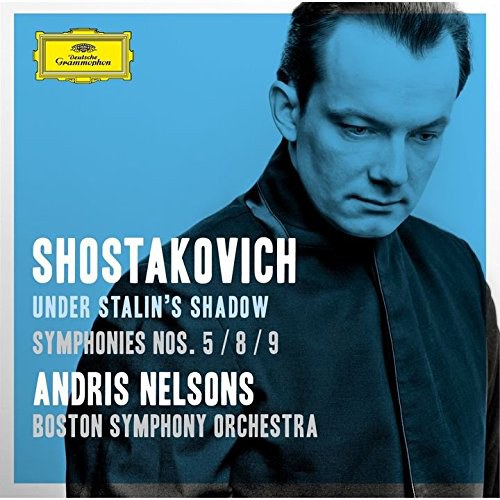
Shostakovich Under Stalin's Shadow - Symphonies Nos.5, 8, 9 豆瓣
Andris Nelsons / Boston Symphony Orchestra 类型: 古典
发布日期 2016年6月17日 出版发行: DG
Andris Nelsons is the Music Director of the Boston Symphony Orchestra and in fall 2015 he was announced as Gewandhauskapellmeister of the Gewandhausorchester Leipzig, commencing in the 2017/18 season. With both appointments, and in leading a pioneering alliance between these two esteemed institutions, Andris Nelsons is firmly underlined as one of the most renowned and innovative conductors on the international scene today.
Andris Nelsons even though he is only in his mid 30ies has had a long journey with Shostakovich. He is one of the last conductors of his generation who still grew up in the Russian and, more especially, the Soviet musical tradition ever since he started his training as a conductor. He studied in St Petersburg with Alexander Titov and also with Mariss Jansons. His new orchestra has had a great tradition in performing many of Shostakovich’s works in America for the first time.
This recording provides a kaleidoscope of Shostakovich’s struggle with historical events and political pressures. The pre-war eclectic but accessible and popular 5th, in which he would seem to bow to political pressure, ensured his temporary rehabilitation. The beautiful but dark and gloomy mid-war 8th provoked yet again his fall from favour and instead of providing the political authorities with a triumphant post-war 9th Symphony, Shostakovich wrote a light Haydnesque work which would not be performed until after Stalin’s death.
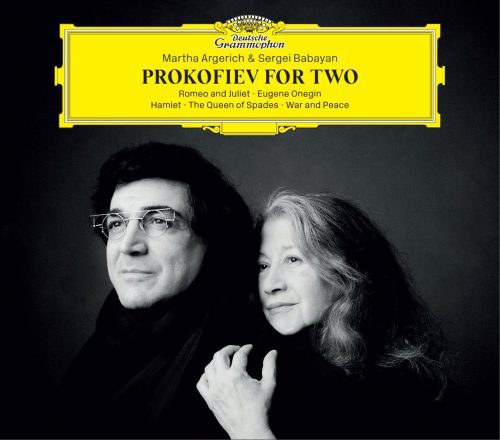
Prokofiev for Two 豆瓣
8.3 (6 个评分) 马尔塔·阿格里齐 Martha Argerich / Sergei Babayan 类型: 古典
发布日期 2018年3月23日 出版发行: Deutsche Grammophon
Pianists Martha Argerich and Sergei Babayan have recorded two selections from Prokofiev’s music for stage and screen in magnificent two-piano transcriptions by Babayan. Prokofiev for Two, set for release worldwide March 23 via Deutsche Grammophon/Universal Music Canada, the country’s leading music company, captures for posterity the sense of mutual inspiration felt by these kindred spirits, palpable in their live performances together. The upcoming album features Babayan’s twelve-movement transcription of numbers from the ballet Romeo and Juliet and his seven-movement suite transcribed from Prokofiev’s incidental music for Hamlet and Eugene Onegin, film score for The Queen of Spades and opera War and Peace.
Martha Argerich and Sergei Babayan first met in Brussels in 1991 when, on a whim, he looked her up in the phonebook and, to his own surprise, found her name and telephone number listed. His call from a phone box in the city started a strong friendship that led to numerous joint appearances in Europe and America. After one performance of Rachmaninov’s “Suite No.2” and other works for two pianos, Babayan told Argerich of his dream to transcribe pieces from Romeo and Juliet for their next duo date. “She was very inspired by the idea,” he recalls. “It was the greatest pleasure – and an honour – to create something that we would play together.” Babayan’s take on Prokofiev, coupled with a suite of rarities from the composer’s stage and film music, can be heard in Prokofiev for Two.
The freshly transcribed Prokofiev score received its premiere performance as part of the Martha Argerich Project at the 2013 Lugano Festival. Argerich and Babayan have since performed this work together with the revised Romeo and Juliet suite several times, most recently in concert at Stuttgart’s Liederhalle last November.
Martha Argerich is already renowned for her interpretations of Prokofiev’s music. The Argentine-born artist, hailed as one of the greatest pianists of all time, included the composer’s turbulent “Toccata” in her Deutsche Grammophon recital debut album, recorded in 1960. She reinforced her international reputation seven years later with a landmark recording for the yellow label of Prokofiev’s “Third Piano Concerto” with the Berliner Philharmoniker and Claudio Abbado. “I have loved Prokofiev ever since I can recall,” notes Argerich. “And people think he loves me too sometimes! I love the way Sergei [Babayan] plays Prokofiev and many other things. The first solo recital of his I heard was Bach’s Goldberg Variations and I was incredibly impressed by it. I very much liked his proposal that we should play his transcription of Romeo and Juliet and feel very honoured that he dedicated it to me.”
Babayan’s love for Prokofiev, like Argerich’s, is deeply rooted, dating back to his childhood in Armenia and student days at the Moscow Conservatoire. Having left the USSR for the first time in 1989, he settled in the U.S. Time and again, Babayan has paid tribute to Prokofiev, playing several of his piano concertos with Valery Gergiev including at the 2015 BBC Proms in a monumental concert with the London Symphony Orchestra featuring all five of the works.
His new Prokofiev transcriptions are both dedicated to Martha Argerich. “This project happened because of my love for Prokofiev, my love for Martha and my love for the ballet Romeo and Juliet,” reflects Babayan. The idea of transcribing Romeo and Juliet first arose decades ago while he was studying Prokofiev’s colourful instrumentation in close detail with an orchestra. Already aware of Argerich’s playing, he was further inspired after hearing a pirate recording of her 1981 Carnegie Hall performance of the “Ten Pieces Op.75” from Romeo and Juliet. “I listened and was immediately drawn to learn the cycle. But I felt that Prokofiev used chamber-like numbers for his selection of music for his transcription for solo piano. If you first became acquainted with the ballet through this piano score, you would never guess or understand the whole tragic, violent, and dark nature of the original work. Of course, the ballet contains lyrical, romantic music; music filled with humour and dance movement. But it also contains music for the “Death of Tybalt” – music of love and hate.”
Believing it would be impossible for music of such powerful emotion to be conveyed by two hands, and aware of Prokofiev’s own fondness for transcription, Babayan felt driven to exploit the full expressive force and tonal richness of two pianos. His created version contains what Martha Argerich, with a wry laugh, calls “difficult and demanding” technical and musical challenges. Both musicians, however, agree that transcription is “an act of love” and Babayan’s experience with Romeo and Juliet soon led him to explore some of the composer’s lesser-known works and create the second suite on this album. As he points out, this music will be new to most listeners. For example, only fragments of the film score for The Queen of Spades have ever been performed or recorded. He underlines its imaginative and innovative qualities, adding, “I’m sure if Prokofiev had lived longer he would have used the material for The Queen of Spades for a new movie, symphony, quartet or maybe even a piano duo. This music stayed on the shelf and it was my luck to hear it.”
Prokofiev for Two is driven by the passion and power of an ideal keyboard partnership. Martha Argerich considers playing in duo with Babayan to be “a thing of alchemy – a discovery”. For his part, Babayan says the experience of performing with Argerich is like joining a conversation with a divine being, one in which “you cannot be mundane or ordinary … Martha will somehow pull out the best from you.”
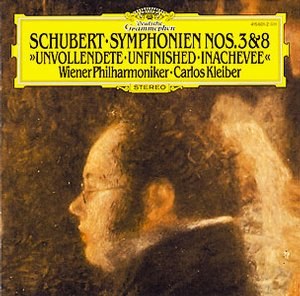
Schubert: Symphonies 3 & 8 豆瓣
9.1 (20 个评分) Carlos Kleiber / Wiener Philharmoniker 类型: 古典
发布日期 1990年10月25日 出版发行: Deutsche Grammophon
《舒伯特:第3,8交响曲》舒伯特是十九世纪的天才作曲家。其作品风格是以抒情性为主,结构较为自由,旋律性很强。在交响曲方面,舒伯特承袭和发展了维也纳古典音乐的传统。克莱伯指挥维也纳爱乐乐团。
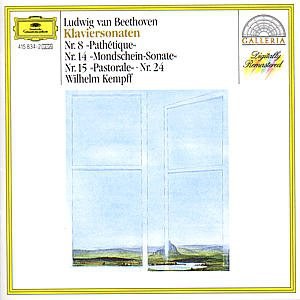
Beethoven: Piano Sonatas (No. 8 "Pathetique", No. 14 "Moonlight", No. 15 "Pastoral", No. 24) 豆瓣
Wilhelm Kempff
发布日期 1990年10月25日 出版发行: Polygram Records
L’adolescent, l’homme, le dieu” was Liszt’s description of Beethoven’s successive stages of development so patent in the 32 piano sonatas completed between 1795 and 1822, a series as remarkable for the composer’s constant quest for variety of pattern within the traditional sonata mould as his response to the challenge of the piano itself in crucial days of the instrument’s development in strength, compass and colour.
The Grande Sonate Pathetique, as its publisher first issued it, dates from 1798/99. Never before had Beethoven extracted more drama from C minor, always his most fateful key, than in the turbulent opening movement starting with an imposing Grave introduction twice recalled in the course of the sonata-form argument(like Clementi and Dussek he had already tried out a similar device in a sonata written at eleven). It is no surprise to learn from letters that already in the later 1790s he was secretly tormented by early symptoms of deafness. Assuagement comes in the idyllic, recurrent song melody of the Adagio cantabile in A flat, though tension mounts in two contrasting episodes. The finale is an urgent sonata-rondo back in the home key of C minor.
Composed in 1801, during an ill-starred romance with its youthful dedicatee, the Countess Giuleatta Guicciardi, the C sharp minor Sonata testifies to Beethoven”s tireless pursuit of formal adventure: like its predecessor in E flat it carries the subtitle “quasi una fantasia”. His boldest stroke was in opening with an Adagio sostenuto, music sufficiently hypnotic in its calm to remind the poet-critic Rellstab of moonlight on Lake Lucerne- hence the nickname appended after Beethoven’s death. For the Alegretto, a gracious old-style minuet and trio following without sharp break, Beethoven slips enharmonically into D flat major. The finale in the home key is a passionately disturbed Presto agitato in sonata form.
Following hard on the heels of the “Moonlight” in the same year of 1801, the D major Sonata reverts to a traditional four-movement sequence. The nickname “Pastoral” came frome the publisher Cranz. But the music exudes enough of the relaxationg and simple joy Beethoven always found in the country(openly confessed in the Sixth Symphony) to make it easy to believe Czerny’s contention that the sonata was one of the composer’s favourites. Repeated low Ds, like a rustic drone, support the opening tune of the sonata-form Allegro. The lilting main theme of the sonata-rondo finale, again with a drone-like accompaniment, is still more redolent of the village green. Though the D minor-major Andante, with its regular, march-like tread, is tinged with regret, the Scherzo is one of the composer’s most playful.
Beethoven was in his 40th year when composing the F sharp major Sonata in 1809, after four years away from the genre; in total contrast to its stormy F minor predecessor, the “Appassionata”, this gracious work in only two movements was dedicated to the Countess Therese von Brunsvik, who though no longer accepted as his legendary “immortal beloved”, was one of the few closest to his heart whose character approached his own exalted ideals of womanhood. With the unpredictability of genius Beethoven rejects heart-searching, after only the briefest Adagio cantabile introduction, to write a radiantly lyrical Allegro non troppo in concisely expressed sonata form. In the scherzando-like concluding Allegro vivace, also in(for him) the unusual key of F sharp major, he springs constant surprises of tonality, register and dynamics.
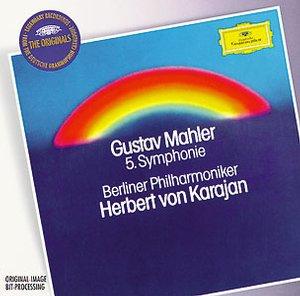
卡拉扬:马勒第五交响曲 豆瓣
8.0 (9 个评分) Berliner Philharmoniker / Herbert von Karajan 类型: 古典
发布日期 1996年8月13日 出版发行: Decca International
马勒在总谱上所罗列的表情符号时常会令演释者不知所云。比如他的《第二交响曲》,几乎每过五小节就出现一个提示,似乎是作为指挥家的马勒专为未来的演释者所设置的某种悬念。那里,隐含着他对未来音响空间的丰富想象。又如,面对pp和ff或渐强(crescendo)等表情符号,如果被埋在老贝和瓦格纳的乐谱里,演释者就可以凭自己的经验驾轻就熟。前者可依据古典的演释法则对之,后者则可凭个人的造化加以再创造。然而,遇马勒就不行。演释者如那样做就有可能迷失方向,几乎无从着手。对此,已入一流的大师英巴尔不无感叹道,马勒的音乐之于乐队要求甚高,乐队唯有相当熟练后,才有可能逐渐去领略马勒的多义性,刻画出那些极为动人的音响。确乎,演释马勒就止时间与才能的相并之果。诚如伯恩斯坦所言,马勒的音乐基本上就是音色的音乐。在此,音色成了他隐喻万下世界和宇宙之力的心理独白。《第五交响曲》就是他对未来音响空间所作的一次有益探寻。他将巴赫艰深的复调思维融在各种音色的组合之中,结果,书面上成了,排练却遭到了同仁的批评。人们抱怨他写得过于繁复,连外声部都快被吞没了。而马勒生前又最在乎别人说他外中部的不是,他的交响乐作品大多要求外声部结构轮廓要格外清晰。马勒自己也说:“一些个别音太难演奏……连那些经过句都给跑了。”后来,马勒听取了大伙意见,重新来了一稿。才有了今天《第五交响曲》(据阿尔玛说,马勒后来对《第五交响曲》的配器还是不满)。
说起《第五交响曲》,人们不由地想到了他对终乐章的偏爱。那不仅是因为那里有他人生的缩影和对生活的感受,而且还因他的创造力可以得到全面而综合的展现。《第一交响曲》、《第二交响曲》、《第三交响曲》,甚至到《第九交响曲》,均为如此。这回,为了《第五交响曲》的终乐章,马勒特意将第四乐章紧缩成了具有间奏风味的“小柔板”作为铺垫,其结果就令这多情的《小柔板》名震天下。
那是因为每当聆听《小柔板》,就令人想到了她与电影《魂断威尼斯》的神缘。意大利名导威斯康蒂慧眼识金,懂音乐,听马勒。为拓展托马斯?曼原作的意境,将马勒的这个《小柔板》切入了银幕。影片的凄美基调与马勒音乐之境颇为相吻,结果,就让人从此知道了马勒。也使这段悲愁的音乐几乎成了死亡的某种象征。这既可说是马勒复兴运动借助影视媒体发展成功的某种点缀,也意味着好音乐必因与好影视的联姻而令世纪末之人逐渐远离日益物化了的烦躁,“躲”进音乐里去玩味人生。有趣的是有关此曲的追问至今仍为纷扬。
人们关注的焦点自然就是威斯康蒂究竟为何要用马勒之乐作配乐呢?与影片相吻的浪漫时代悲乐何止马勒?!比如老柴的《悲怆》等。于是,世界影坛和乐坛的“马勒迷”们就此展开了和睦的争议。是因威斯康蒂导演的故事影射了马勒的爱情生活,还是威导没了别的选择,只是就属她了的那种?!孰是孰非,难以评说。一般而言,人们似乎更倾向于后者。想必威导对马勒颇有心得。影片中导演似淡即浓地让主人翁作家与英俊少男在充满瘟疫的威尼斯城相遇所引出的恻隐和凄楚,似高贵清纯而又似荒诞悲戚,确乎构成了电影配乐的难度。这则缠绵,除了马勒之乐能够胜任外,还会有别的选择吗?!何况原小说作者与马勒还是朋友。可见,威斯康蒂是聪明而富远见的。他当然知道“小柔板”是为了爱情;为了爱妻阿尔玛的负疚之情,更是为了预示某种成份的殉情。马勒的大男子气概,一直令阿尔玛无所适从。阿尔玛有很好的作曲人赋,又是与马勒齐过名的策姆林斯基的学生,并肩过成功的艺术歌曲,而马勒却禁止阿尔玛作曲。阿尔玛含泪顺从。这种心灵隐患令她终身难忘。她甘愿为马勒这具崇高的精神话体作出牺牲。《第五》还是由阿尔玛抄写定稿的。可以想象,马勒的创作灵感若离开了阿尔玛的鼎力相助,还会有今天的‘“巨人”马勒吗?!对此,马勒生前是深有感悟的。在他们的通信交往中,马勒曾无数次地向阿尔玛呼唤过爱和内疚之情。结果,除了“小柔板”,还有《第六交响曲》、《第七交响曲》、《第九交响曲》,尤其是《第十交响曲》的慢板乐章,马勒不失时机地将这些情感表达出来。
至于那些大指挥们,每俟品到此处,就分不清自己和马勒了。才有了有关“小柔板”的风格之别,有了速度等方面的角逐。有人曾评说大师们远离了马勒原速。他们怎么看?卡拉扬、伯恩斯坦、库贝利克、巴比罗里、腾斯泰德等都似乎对此不屑一顾。或许这是情有可原的。马勒有常在排练中即兴改变配器之习。马勒也曾说:“为了表达作品的意图,如果乐队的空间和质量要求指挥家在我的总谱上做一些改动,那他是正确的。”大师们所争的无非就是自身修养和对马勒风格的感悟,仿佛就在这个“小柔板“里融着道不尽的人间沧桑。所以,似乎一个比一个缠绵和悠长。竖琴潜在的简约风格和弦乐的如泣如诉般的吟颂,令人不由地想到了人生的无常。
19O2年,马勒完成此作。五个乐章。为了音色的倾述,马勒首次在此曲中开始了音响上的“剪接”和“叠影”。他不自觉地将电影蒙太奇的一些法则运用此曲中,结果,就令第一乐章的送葬进行曲动人心魂。乐曲由马勒从小偏爱的小号开始,在大鼓的逐渐弱奏下,由中提琴、大提琴和低音提琴在升C音上的拨奏声中结束。注意,马勒特意标明为P一 PP—PPP,为第二乐章的激情精心铺垫。
第二乐章又作第一乐章的持续和扩展。所以,那个大鼓的弱奏自然成了某种点缀,此乐章为自由奏鸣曲式。音响粗旷、尖锐、凝重,甚至个别段落还出现了九度音程。马勒要求长笛柔而飘逸,像天边回声;单簧管、双簧管和大管要奏得古怪而粗野、滑稽;圆号作大块面地吼叫。在此,音响的“剪接”象征着生存的苦难和不幸。其中,高潮即临的铜管齐鸣下的D大调圣咏,极富动力。
第三乐章,谐滤曲。弦乐在连德勒舞曲节奏下拨奏,音色似如吉他,很是轻灵、动听。在相当长的发展部中,令人印象深刻的就是三支单簧管和三支小号融在弦乐中的音响。十分流畅超迈。
第四乐章,小柔板。仅由竖琴和弦乐演奏,采用了他为五首吕克特诗歌之三“我消失于这个世界”而谱的旋律。具有夜曲风味。在降G大调的中部,通过持续不断的半终止来逐渐导向终乐章。所以,也可视此为终乐章的序奏。
第五乐章,回旋曲——终曲。马勒十分注重配器上的结构和色彩。这种章法直接影响了《第八交响曲》、《第九交响曲》,乃至《大地之歌》。法国号、低音号、双簧管和单簧管相互对答,由法国号将主题展开,在圣咏般的高潮中结束此曲。
法国文学大家罗曼?罗兰听了马勒《第五交响曲》后,声称是‘“严谨和松散的一个混合物”。对此,深喑马勒风格的伯恩斯坦却认为“马勒用音色喻示了20世纪的精神危机”。有心的听者只要认真聆听,便会觉得伯恩斯坦的结构色彩、句法和呼吸,以及对马勒独有的“剪接”音块和音色的把握均到了炉火纯青之境。他在用音色作着内心对天穹的表白。
马泽尔虽与伯恩斯坦在理性上积分不相上下,但效果上却不如伯氏浑然。
卡拉扬的马勒“第五”毋如他的《第六交响曲》和《第九交响曲》。卡氏似乎对马勒的“剪接”言语有些不以为然。所以,太本色,就凸现了结构、在色彩上却略有些平了。
西诺波里堪称独辟跟径,他通过演释和录制马勒“第五”而逐渐确立了自己在世界乐坛的地位。尽管人们对他在演出中的表现甚有微词、觉他水平很是波动,但也极为赞赏他首次试图用心理分析的方法来演释马勒。在他看来,马勒就是一个敏感而富幻想的大家。马勒通过音乐创作去寻觅不幸生活产生之原由。因此,他在演释上突出了幻想和色彩。如在终乐章之前的引子,他把法国号、低音黑管和双簧管所奏的过门音色处理得似悠闲而富冥想意昧。在终止的最后那瞬的小提琴所奏的圣咏般的和弦进行,他处理得一波三折、突出了终止的厚度和气派。
英巴尔自从录制了马勒以来,人们就对这位具有学术水平的马勒专家抱有期望。他的演释走向与阿巴多如此相近。然而,由于他采用了单点录音方法,又在德国古歌剧院大厅录制,所以,展现马勒生前那种对音响空间的远大理想可谓得天独厚。同样像阿巴多那么注重音色的光彩,但他的管弦音色却极具颗粒性,又有适度之美。甚至就连提琴的换弓,铜管部的呼吸以及器乐的方位感都能听到。尽管,他的音量总不太大,但就音色来看,他比伯恩斯坦、阿巴多等更为精细和清晰。他的唯一不足或许就是在驾驭激情上还略欠火候。股斯泰德的马勒《第五交响曲》荣登榜首,那是因为他对音乐具有超乎寻常的直觉和领悟事物的敏锐。这令他在诠释马勒《第五交响曲》的深度上堪与伯恩斯坦相匹,在人文上具有相当的高度。所憾的是面对铺天盖地的音响在处理上略有些含混,尽管如此,他对《小柔板》以及许多旋律悠长片断的处理,令人极为心动。
索尔蒂、海汀克和康德拉欣,均属结构力浑厚的那种,敢于表现,大刀阔斧,令人难忘。小泽的版本音色很好,透明、清新,还有回音感。但在把握马勒结构和色彩上略显不足。祖宾?梅塔也出了《第五交响曲》版本,但评价毋如他的马勒《第一交响曲》和《第二交响曲》。
老到的巴比罗里一如既往、一身贵气、色彩上虽不及伯恩斯坦、英巴尔那么富有新意,但他驾驭结构和激情的能力丝毫不逊卡拉扬。这不禁令人想起了当年他与卡拉扬、切利比达凯一起角逐柏林爱乐帅印的情景,确乎实力非凡。在巴比罗利的经典演绎中,小柔板乐章更具悲天悯人的感情J而麦克拉斯的这版使用了少许有争议的诠释方法和华丽的现代音响,使其成为绝佳的首选之作。巴比罗利的1969年版无论如何也应算作最伟大的演绎之一,是曾制成唱片的作品中最热烈动人的一张。音乐宽广繁华但感情强烈:尤其小柔板非常动人。这张唱片录制于沃特福德市政厅,重新制作得极为成功。堪称经典一版。
目前,世界上的不少乐团,常把马勒《第五交响曲》作为训练和提高乐团素质的手段之一。那是因为演释马勒既可把握古典浪漫风格,又为演释现代之乐作了必不可少的技术准备。
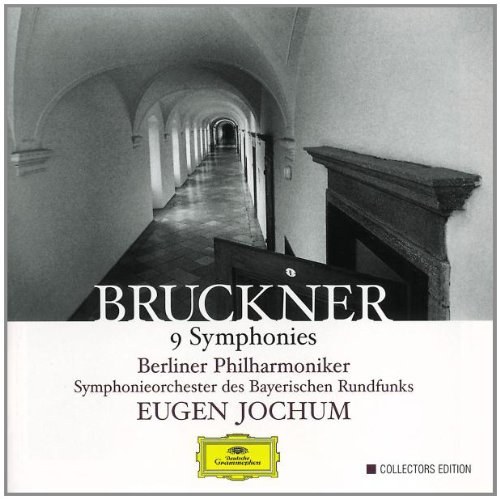
Bruckner: Symphonies Nos. 1 - 9 豆瓣
9.5 (8 个评分) A. Bruckner / Eugen Jochum 类型: 古典
发布日期 2003年4月8日 出版发行: Deutsche Grammophon
01. Symphony No. 1 in C minor ("The Saucy Maid"), WAB 101 (various versions)
Composed by Anton Bruckner
Performed by Berlin Philharmonic Orchestra
Conducted by Eugen Jochum

02. Symphony No. 2 in C minor ("Symphony of Pauses"), WAB 102 (various versions)
Composed by Anton Bruckner
Performed by Bavarian Radio Symphony Orchestra
Conducted by Eugen Jochum

03. Symphony No. 3 in D minor ("Wagner"), WAB 103 (various versions)
Composed by Anton Bruckner
Performed by Bavarian Radio Symphony Orchestra
Conducted by Eugen Jochum

04. Symphony No. 4 in E flat ("Romantic"), WAB 104 (various versions)
Composed by Anton Bruckner
Performed by Berlin Philharmonic Orchestra
Conducted by Eugen Jochum

05. Symphony No. 5 in B flat ("Tragic"; "Church of Faith"; "Pizzicato"), WAB 105 (various versions)
Composed by Anton Bruckner
Performed by Bavarian Radio Symphony Orchestra
Conducted by Eugen Jochum

06. Symphony No. 6 in A major ("Philosophic"), WAB 106 (various versions)
Composed by Anton Bruckner
Performed by Bavarian Radio Symphony Orchestra
Conducted by Eugen Jochum

07. Symphony No. 7 in E major ("Lyric"), WAB 107
Composed by Anton Bruckner
Performed by Berlin Philharmonic Orchestra
Conducted by Eugen Jochum

08. Symphony No. 8 in C minor ("Apocalyptic"; "The German Michel"), WAB 108 (various versions)
Composed by Anton Bruckner
Performed by Berlin Philharmonic Orchestra
Conducted by Eugen Jochum

09. Symphony No. 9 in D minor ("Unfinished"), WAB 109 (various versions)
Composed by Anton Bruckner
Performed by Berlin Philharmonic Orchestra
Conducted by Eugen Jochum
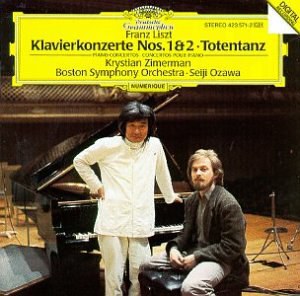
李斯特第一第二钢琴协奏曲 豆瓣 Spotify
9.3 (10 个评分) Boston Symphony Orchestra / Krystian Zimerman 类型: 古典
发布日期 1988年1月1日 出版发行: Deutsche Grammophon
降E大调 第一号 钢琴协奏曲 作于1839年。本曲虽由四个乐章构成,但是各乐章必须不间断地连续演奏,而且各乐章的主题也必须相互间保持极密切的关系。可以说,本曲有着自成一体的特殊结构。在协奏曲中插入诙谐乐章而获得成功的,也许这是绝无仅有的一首了。总而言之,整个乐曲在结构上非常紧密而周详。但是各乐章的构成又都非常自由。这些特色,也许正是李斯特被世人视为是一个标准的"交响诗作曲家"的缘由了。
此曲对演奏者的钢琴技巧有相当高的要求,没有深厚的功底,演奏者是无法演绎出辉煌的艺术效果的。钢琴的各个声部里都充溢着李斯特音乐所独有的特性,不但与管弦乐充分地保持了抗衡、对立之势,甚至主奏钢琴具有足够压倒管弦乐队的力量,这也仅有李斯特才能做到。
李斯特的第二钢琴协奏曲,创作于1849年,1857年1月7日在魏玛首演,独奏是李斯特当时的学生汉斯 冯 勃隆沙特,李斯特亲自担任指挥。这首协奏曲是整个不间断的乐章,它以一个基本主题统一全曲,是一个梦幻般充满美的旋律,这个主题出现各种各样的变形,配以变化音和弦的烘托,钢琴华彩始终在那里炫技。中部,有充满忧愁的大提琴倾诉,钢琴使用了琶音。末段,钢琴华彩后,发展为庄严的快板,最后是眼花缭乱闪电般的结尾。鲁宾斯坦曾对李斯特与肖邦作过一个比较,他说,肖邦是把人们带入梦境,使他们在那里流连忘返,而李斯特则是遍洒阳光和令人眼花缭乱的那种光辉。
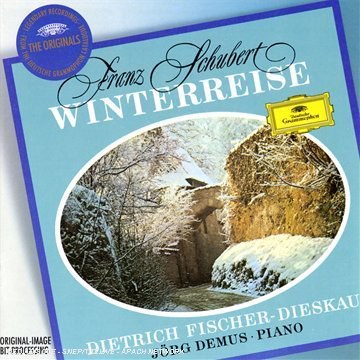
Schubert: Winterreise 豆瓣
9.8 (9 个评分) Dietrich Fischer-Dieskau / Jörg Demus 类型: 古典
发布日期 1995年2月24日 出版发行: DG
舒伯特的《冬之旅》是在去世前一年(30岁)创作的,跟《美丽的磨坊少女》一样也是根据威廉·缪勒的诗所谱曲。由24首歌曲组成,是舒伯特毕生的呕心巨著。舒伯特形容这部作品充满忧郁、凄凉的气氛,是“一套令人颤栗的歌曲”。这部声乐套曲叙述冬天里一位失恋者的孤独旅行,充满悲凉和迷惘,却有着揪心的美。才30岁的舒伯特就写出了这样一幕人生晚景。果然第二年他就去世了,仿佛是有预感似的。
整部作品共由24首歌曲组成,歌词也是威廉·缪勒的诗作,从这些小标题以及它们的排列次序上,你或许已经可以看出个大概,这里面讲的故事,是怎样的来去、怎样的始终。旅途是怎样的孤寂、阴冷,心情是怎样的苦楚、迷惘……舒伯特的歌曲不光美在演唱,钢琴伴奏也同样重要,等于是人声和钢琴的二重奏。只有两者合作相得益彰,这部作品才能算是成功。因此许多著名的钢琴家都有过与大牌歌唱家合作此作品的录音。
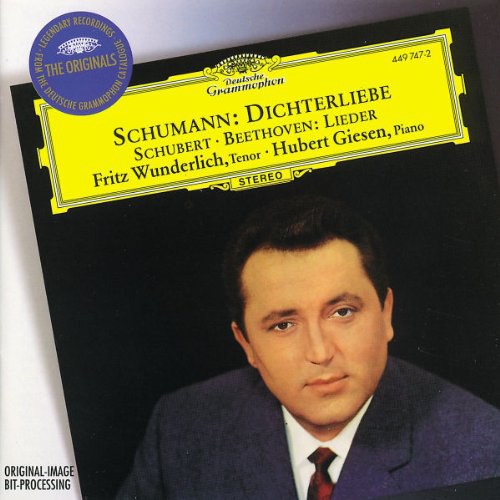
Schumann: Dichterliebe; Schubert & Beethoven: Lieder 豆瓣
9.7 (15 个评分) Fritz Wunderlich / Hubert Giesen 类型: 古典
发布日期 1997年2月4日 出版发行: Deutsche Grammophon
LUDWIG VAN BEETHOVEN
4 Lieder
Zärtliche Liebe · Adelaide
Resignation · Der Kuß
Fritz Wunderlich
Hubert Giesen
CD |A|D|D| 000289 449 7472 0 |G|OR|
+ Schumann: Dichterliebe
Schubert: 9 Lieder
The Originals
Int. Release 06 Jan. 1997
Robert Schumann (1810 - 1856)
Dichterliebe, Op.48
1. Im wunderschönen Monat Mai [1:33]
2. Aus meinen Tränen sprießen [0:52]
3. Die Rose, die Lilie, die Taube, die Sonne [0:32]
4. Wenn ich in deine Augen seh' [1:23]
5. Ich will meine Seele tauchen [0:55]
6. Im Rhein, im heiligen Strome [1:45]
7. Ich grolle nicht [1:19]
8. Und wüßten's die Blumen, die kleinen [1:17]
9 9. Das ist ein Flöten und Geigen [1:31]
10. Hör' ich das Liedchen klingen [1:55]
11. Ein Jüngling liebt ein Mädchen [1:02]
12. Am leuchtenden Sommermorgen [2:37]
13. Ich hab' im Traum geweinet [2:32]
14. Allnächtlich im Traume seh' ich dich [1:28]
15. Aus alten Märchen winkt es [2:31]
16. Die alten, bösen Lieder [4:08]
Ludwig van Beethoven (1770 - 1827)
17 Zärtliche Liebe, WoO 123 "Ich liebe dich" [2:08]
18 Adelaïde, Op.46 [5:56]
19 Resignation, WoO149 [2:26]
20 Der Kuss, Op.128 [1:59]
Franz Schubert (1797 - 1828)
21 An Sylvia, D.891 (Op.106/4) [3:00]
22 Lied eines Schiffers an die Dioskuren, D360 [2:46]
23 Liebhaber in allen Gestalten, D.558 [1:17]
24 Der Einsame, D.800 [4:23]
25 Im Abendrot, D.799 [3:26]
Schwanengesang, D.957
26 Ständchen "Leise flehen meine Lieder" [3:46]
27 An die Laute, D. 905 (Op.81/2) [1:56]
28 Der Musensohn, D.764 (Op.92/1) [2:16]
29 An die Musik, D.547 (Op.88/4) [2:24]
Fritz Wunderlich, Hubert Giesen
Total Playing Time[1:05:03]
马勒第2交响曲-复活 豆瓣
9.2 (17 个评分) Mahler / Latonia Moore
发布日期 2003年11月11日 出版发行: Deutsche Grammophon
马勒完成第一交响曲后,即动手写作第二《复活》交响曲(2nd SYMPHONY IN C MINOR, “AUFERSTEHUNG”/RESURRECTION),费了六年,到一八九四年七月廿五日完成,时年三十四岁。一八九五年五月四日,在理察史特劳斯指挥下,于柏林首演了前三个乐章,但反应不佳,乐评几乎全是抨击和谩骂。十二月十三日,才由马勒亲自指挥下演奏全曲五个乐章,这次演出票房极差,不少乐评人亦拒不出席,马勒演出当天又不适,演出后便晕倒,但反应却很成功。
全曲重点在前后两个乐章。第二交响曲中,马勒最初题有暗示性的解说。第一乐章是表现第一交响曲的英雄的葬礼:“我愿意把第一乐章题为送葬曲,把他运到墓地后,曾反思:他为何而生,为何而苦恼?……在终章中,给出了答案。”
事实上,马勒费了很长的时间和精力,为终章寻找适当的歌词,思考它的音乐和结构,他曾博览群书,细读整本圣经,后来他祟拜的指挥家毕罗去世,马勒前往汉堡参加葬礼,在安息礼拜中聆听到克罗斯托克(KLOPSTOCK)作词的《复活颂歌》(AUFERSTEHEN/RESURRECTION ODE),深受感动,并决定拿这诗篇写作第二交响曲的终乐章。至于第二、三、四等三个乐章,则以间奏曲的感觉创作,因此,全曲的重心也就在前后两个乐章上。
首乐章是一阕葬礼进行曲
第一乐章:庄严肃穆的快板,C小调,4/4拍子(葬礼进行曲,约23分钟)
结构上有如是扩大了的奏鸣曲式,在强奏的弦乐颤音上,由大提琴和低音提琴奏出粗犷有力的片断动机,不久出现以C小调为中心的第一主题,由双簧管和英国号主奏,随后又由另两三个相异的主题,构成第一主题群,阴暗的音色带有不祥的气氛。在由第一小提琴主奏的第二主题中,也相继出现几段不同的主题,随后英国管的新主题,给人印象也很深。
这两个主题群结构复杂,所以呈示部很庞大。展开部中除用已呈示的主题外,还加入别的新主题,再现部则加以浓缩精简,两个主题变得隐晦。
次乐章是往日幸福回忆的间奏曲
第二乐章:中庸的行板,降A大调,3/8拍子(连德勒舞曲,约10分钟)
马勒将这乐章当做回忆幸福的往日的间奏曲,表现失败的英雄的爱,是整首交响曲中音乐较为明朗的部份。
弦乐合奏的主题,是朴素的连德勒舞曲(发源于奥地利南部LANDLER的慢圆舞曲,是圆舞曲的前身),写得极美,较海顿、舒伯特等前辈的连德勒舞曲写得更为精致美妙。这个主题共反复出现三次,中间安插了两个没有显着的对比性格的中段曲调。
第三乐章是尖酸讽刺的谐谑曲
第三乐章:沉着的,流畅的,C小调,3/8拍子(谐谑曲,约11分钟)
这乐章可以说是《青年的魔笛》中的歌曲《圣安东尼与鱼群》(ST. ANTHONY AND THE FISHES)的管弦乐版本,复杂的织体、尖酸般的幽默、冷嘲般的讽刺,将前乐章渴望、沉思的气氛一扫而空。
整个乐章以三段体作成,由定音鼓和低音乐器的四度动机开始,但立即出现第一小提琴流动的明快的主题,中段主题由法国号和小号高奏出来,弦乐器再配以流畅的伴奏。全曲在首段重现后,空洞且了无生气地静静终止。
第四乐章女低音之歌《原始之光》
第四乐章:非常庄严但质朴地,降D大调,4/4拍子(原始之光,约5分钟)
这是一段管弦乐伴奏的声乐曲,由女低音唱出《青年的魔笛》中的《原始之光》(URLICHT),歌词中译:
啊!红艳的玫瑰/一无所有/痛苦悲伤/我多希望去天堂
我来到宽广洁净的大道/有个天使来到我前进的道路阻挡/噢不!你不能拒绝我/因我是属神的便应归回上神的地方/亲爱的主赐我亮光引我进福乐的永生。
整个乐章根据歌词可分为两段,首段有圣咏般的伴奏,次段则有纤细而流动的感觉,但最后又返回开始时的气氛,安宁、镇定而平静地结束。
终章女声独唱与大合唱《复活颂歌》
第五乐章:谐谑曲的速度,降A大调,3/8拍子(复活颂歌,约34分钟)
紧接着第四乐章不停演奏,整个乐章可分为器乐的前段与声乐的后段两部份。以弦乐总奏,有如叫嚣呼号,带有凄怆感和焦虑感的狂野强奏开始,接着幕后四个法国号和四个小号,在多种打击乐器伴同下,吹奏出一段信号曲,在远处消失。其后,此一铜管乐加打击乐的幕后“小乐队”,还不时出现,营造遥远(天外之音)的效果。
马勒在这乐章的最早的总谱上注释为“沙漠的呼声”。很快,木管组便奏出圣咏般的新主题,经过宁静的乐段,便进入马勒所说的“一切已死之人的进行曲”,从打击乐开始,乐器逐渐增加,音量亦逐渐增大,最后整个乐队再次卷入混乱与恐怖的嘶叫声中,有如死亡的号哭充满了大地,马勒对这段音乐有这样的解说:“当最后审判来临,大地震动,最后的号筒响彻云霄,所有坟墓都裂开了,墓中的死人都复活挣扎起来,呻吟着,战憟着,加入行进中的行列富有的、贫穷的、农民、君主、主教、教王,都在恐怖中战栗,高声呼求,恳求怜悯。”
这段具有强大张力,爆发出有如暴风雨般的强大音响的音乐,不仅预示了该曲面世后仅十年便爆发的第一次世界大战的恐怖,更深刻地描写了人类在二十世纪在精神上和肉体上的痛苦忧伤。
加入声乐的后段,由女高音独唱和合唱,徐缓而庄严地唱出克罗斯托克带有神秘感的《复活颂歌》,歌词中译:
(女高音及合唱)
复活吧,是的,你将复活/凡圣之身,小憩后将复活/不朽的生命!不朽的生命!/主将召唤你,赐福予你。
你播的种又盛开/收获的主前行/他将收获聚齐/甚至是我们这些亡人!
(女低音)
噢,信主吧,我的心灵,噢信主吧/汝等并无所失/汝等渴求归汝有/凡汝之所爱/凡汝之所求皆归汝!
(女高音)
噢,信主吧/汝之降生非徒然!/无徒然的生命/无徒然的痛苦!
(合唱)
凡已生者/必死!/凡已死者必将再生!/莫再战栗莫再战栗!/装备自己重生,装备自己重生!
(女高音、女低音及合唱)
噢痛苦无处不在!/但我把痛苦压倒!/噢死亡!你征伏一切/如今也被征伏!
展开我为自己赢得的翅膀/心中爱意激荡/我将翱翔九天/直飞肉眼难及的光明/展开我为自己赢得的翅膀/翱翔九天
(合唱)
我会死去,以求重生!
(齐唱)
复活吧,你将复活/瞬间我的心灵将复苏!/心灵的期望和搏战/向上帝,向上帝/将引你前赴上帝圣殿!
当全曲进入结尾的复活动机时,钟鼓齐鸣,庄严的风琴也加入总奏中,人声大合唱和强大的管弦乐融成一体,形成强大的,充满欢乐的高潮结束,「复活」的信念为人类带来了盼望和乐观