ALBERT CAMUS — 作者 (98)
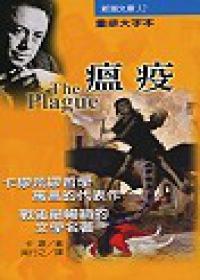
The Plague [图书] 豆瓣
La Peste
作者: Albert Camus 译者: Robin Buss 出版社: Penguin Classic 2013 - 11
The Plague is Albert Camus's world-renowned fable of fear and courage The townspeople of Oran are in the grip of a deadly plague, which condemns its victims to a swift and horrifying death. Fear, isolation and claustrophobia follow as they are forced into quarantine. Each person responds in their own way to the lethal disease: some resign themselves to fate, some seek blame, and a few, like Dr Rieux, resist the terror. An immediate triumph when it was published in 1947, The Plague is in part an allegory of France's suffering under the Nazi occupation, and a story of bravery and determination against the precariousness of human existence. 'A matchless fable of fear, courage and cowardice' Independent 'Magnificent'The Times Albert Camus was born in Algeria in 1913. He studied philosophy in Algiers and then worked in Paris as a journalist. He was one of the intellectual leaders of the Resistance movement and, after the War, established his international reputation as a writer. His books include The Plague, The Just and The Fall, and he won the Nobel Prize for Literature in 1957. Camus was killed in a road accident in 1960.
The Rebel [图书] 豆瓣 Goodreads
L'Homme révolté
作者: Albert Camus 译者: Anthony Bower 出版社: Vintage 1991 - 1
The Rebel is an essay on artistic, historical, and metaphysical rebellion, in which he lays out the difference between revolution and revolt.
Camus sees revolt as a peaceful, evolutionary process that requires leadership but not violence. He criticizes Hegel's work, accusing it of glorifying power and the state over social morality and ethics, and he accuses Marx of co-opting Hegelian philosophy to allow "any means to an end". Camus prefers Mediterranean humanism, a philosophy grounded in nature and moderation, to the violence and historicism he sees as part and parcel to what he calls the "Absolutist" philosophies. The attacks on Hegel, Marxism and nihilism in The Rebel had a profound effect on Camus' peers.
The book was described as intellectual treason by leftist critics, and a review by Francis Jeanson in Les Temps Modernes accused Camus of being a traitor to the left. After Camus attempted to defend himself in a letter to the publication, Jean-Paul Sartre, the editor of Les Temps Modernes at the time, published an open letter in response that tallied 19 pages. The letter included personal attacks, and marked the end of the two philosophers' friendship.
The First Man [图书] 豆瓣
Le Premier Homme
作者: Albert Camus 译者: David Hapgood 出版社: Penguin Books 2001
The unfinished manuscript of The First Man was discovered in the wreckage of car accident in which Camus died in 1960. Although it was not published for over thirty years, it was an instant bestseller when it finally appeared in 1994. The first man is Jacques Cormery, whose poverty-stricken childhood in Algiers is made bearable by his love for his silent and illiterate mother, and by the teacher who transforms his view of the world. The most autobiographical of Camuss novels, it gives profound insights into his life and the powerful themes underlying his work.
A Happy Death [图书] 豆瓣
作者: Albert Camus 出版社: Vintage 1995 - 8
In his first novel, A Happy Death, written when he was in his early twenties and retrieved from his private papers following his death in I960, Albert Camus laid the foundation for The Stranger, focusing in both works on an Algerian clerk who kills a man in cold blood. But he also revealed himself to an extent that he never would in his later fiction. For if A Happy Death is the study of a rule-bound being shattering the fetters of his existence, it is also a remarkably candid portrait of its author as a young man. As the novel follows the protagonist, Patrice Mersault, to his victim's house -- and then, fleeing, in a journey that takes him through stages of exile, hedonism, privation, and death -it gives us a glimpse into the imagination of one of the great writers of the twentieth century. For here is the young Camus himself, in love with the sea and sun, enraptured by women yet disdainful of romantic love, and already formulating the philosophy of action and moral responsibility that would make him central to the thought of our time. Translated from the French by Richard Howard
The Myth of Sisyphus [图书] 豆瓣
9.7 (7 个评分) 作者: Albert Camus 译者: Justin O'Brien 出版社: Vintage 1991 - 5
One of the most influential works of this century, The Myth of Sisyphus and Other Essays is a crucial exposition of existentialist thought. Influenced by works such as Don Juan and the novels of Kafka, these essays begin with a meditation on suicide; the question of living or not living in a universe devoid of order or meaning. With lyric eloquence, Albert Camus brilliantly posits a way out of despair, reaffirming the value of personal existence, and the possibility of life lived with dignity and authenticity.
La peste [图书] 豆瓣
作者: Albert Camus 出版社: Gallimard 1972 - 2
«- Naturellement, vous savez ce que c'est, Rieux ? - J'attends le résultat des analyses. - Moi, je le sais. Et je n'ai pas besoin d'analyses. J'ai fait une partie de ma carrière en Chine, et j'ai vu quelques cas à Paris, il y a une vingtaine d'années. Seulement, on n'a pas osé leur donner un nom, sur le moment... Et puis, comme disait un confrère : "C'est impossible, tout le monde sait qu'elle a disparu de l'Occident." Oui, tout le monde le savait, sauf les morts. Allons, Rieux, vous savez aussi bien que moi ce que c'est... - Oui, Castel, dit-il, c'est à peine croyable. Mais il semble bien que ce soit la peste.»
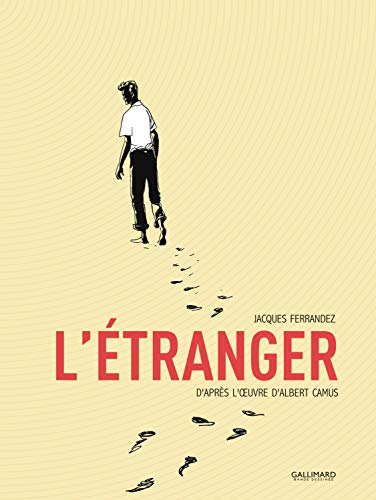
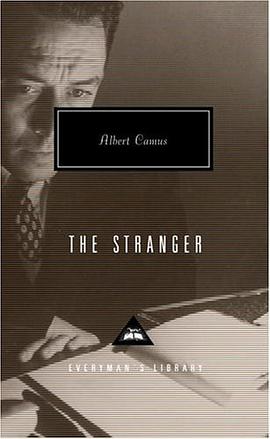
The Stranger [图书] 豆瓣
9.6 (24 个评分) 作者: Albert Camus 译者: Matthew Ward 出版社: Vintage 1989 - 3
The Stranger is not merely one of the most widely read novels of the 20th century, but one of the books likely to outlive it. Written in 1946, Camus's compelling and troubling tale of a disaffected, apparently amoral young man has earned a durable popularity (and remains a staple of U.S. high school literature courses) in part because it reveals so vividly the anxieties of its time. Alienation, the fear of anonymity, spiritual doubt--all could have been given a purely modern inflection in the hands of a lesser talent than Camus, who won the Nobel Prize in 1957 and was noted for his existentialist aesthetic. The remarkable trick of The Stranger, however, is that it's not mired in period philosophy.
The plot is simple. A young Algerian, Meursault, afflicted with a sort of aimless inertia, becomes embroiled in the petty intrigues of a local pimp and, somewhat inexplicably, ends up killing a man. Once he's imprisoned and eventually brought to trial, his crime, it becomes apparent, is not so much the arguably defensible murder he has committed as it is his deficient character. The trial's proceedings are absurd, a parsing of incidental trivialities--that Meursault, for instance, seemed unmoved by his own mother's death and then attended a comic movie the evening after her funeral are two ostensibly damning facts--so that the eventual sentence the jury issues is both ridiculous and inevitable.
Meursault remains a cipher nearly to the story's end--dispassionate, clinical, disengaged from his own emotions. "She wanted to know if I loved her," he says of his girlfriend. "I answered the same way I had the last time, that it didn't mean anything but that I probably didn't." There's a latent ominousness in such observations, a sense that devotion is nothing more than self-delusion. It's undoubtedly true that Meursault exhibits an extreme of resignation; however, his confrontation with "the gentle indifference of the world" remains as compelling as it was when Camus first recounted it. --Ben Guterson
From Library Journal
The new translation of Camus's classic is a cultural event; the translation of Cocteau's diary is a literary event. Both translations are superb, but Ward's will affect a naturalized narrative, while Browner's will strengthen Cocteau's reemerging critical standing. Since 1946 untold thousands of American students have read a broadly interpretative, albeit beautifully crafted British Stranger . Such readers have closed Part I on "door of undoing" and Part II on "howls of execration." Now with the domestications pruned away from the text, students will be as close to the original as another language will allow: "door of unhappiness" and "cries of hate." Browner has no need to "write-over" another translation. With Cocteau's reputation chiefly as a cineaste until recently, he has been read in French or not at all. Further, the essay puts a translator under less pressure to normalize for readers' expectations. Both translations show the current trend to stay closer to the original. Marilyn Gaddis Rose, SUNY at Binghamton
Copyright 1988 Reed Business Information, Inc. --This text refers to the Hardcover edition.
Review
“The Stranger is a strikingly modern text and Matthew Ward’s translation will enable readers to appreciate why Camus’s stoical anti-hero and ­devious narrator remains one of the key expressions of a postwar Western malaise, and one of the cleverest exponents of a literature of ambiguity.” –from the Introduction by Peter Dunwoodie
From the Hardcover edition.
Description
Through the story of an ordinary man unwittingly drawn into a senseless murder on an Algerian beach, Camus explored what he termed "the nakedness of man faced with the absurd." First published in 1946; now in a new translation by Matthew Ward.
Language Notes
Text: English (translation)
Original Language: French
From the Inside Flap
Through the story of an ordinary man unwittingly drawn into a senseless murder on an Algerian beach, Camus explored what he termed "the nakedness of man faced with the absurd." First published in 1946; now in a new translation by Matthew Ward.
Le mythe de Sisyphe [图书] 豆瓣
作者: Albert Camus 出版社: Folio 1985 - 2
La notion d'absurde et le rapport entre l'absurde et le suicide forment le sujet de cet essai. Une fois reconnu le divorce entre son désir raisonnable de compréhension et de bonheur et le silence du monde, l'homme peut-il juger que la vie vaut la peine d'être vécue ? Telle est la question fondamentale de la philosophie. Mais si l'absurde m'apparaît évident, je dois le maintenir par un effort lucide et accepter en le vivant de vivre. Ma révolte, ma liberté, ma passion seront ses conséquences. Assuré de mourir tout entier, mais refusant la mort, délivré de l'espoir surnaturel qui le liait, l'homme va pouvoir connaître la passion de vivre dans un monde rendu à son indifférence et à sa beauté périssable. Les images de Don Juan, du comédien, de l'aventurier illustrent la liberté et la sagesse lucide de l'homme absurde. Mais la création - une fois admis qu'elle peut ne pas être - est pour lui la meilleure chance de maintenir sa conscience éveillée aux images éclatantes et sans raison du monde. Le travail de Sisyphe qui méprise les dieux, aime la vie et hait la mort, figure la condition humaine. Mais la lutte vers les sommets porte sa récompense en elle-même. Il faut imaginer Sisyphe heureux.
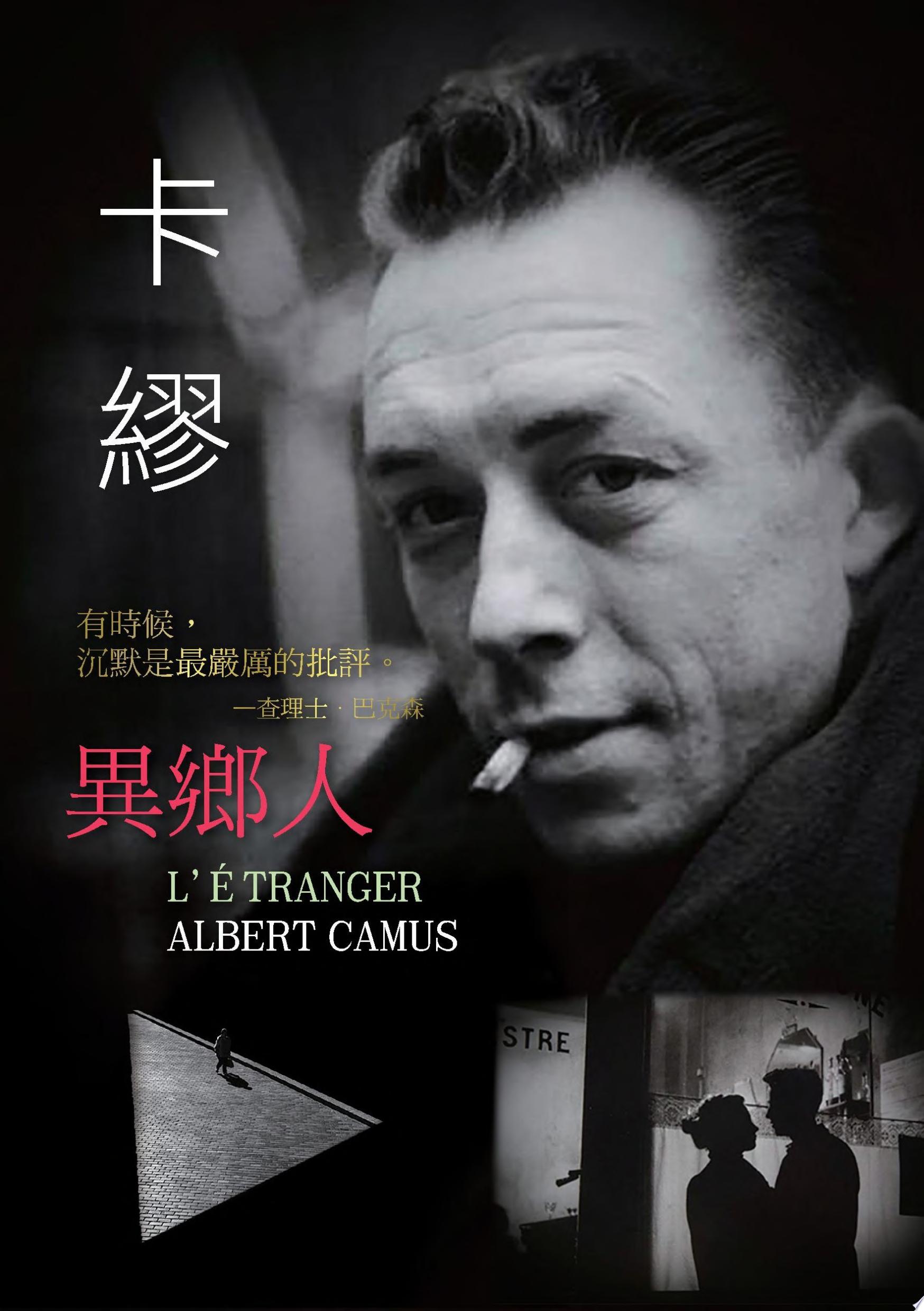
異鄉人 [图书] 豆瓣 Goodreads
9.2 (8 个评分) 作者: 卡繆 / Albert Camus 译者: 張一喬 出版社: 麥田出版 2009 - 9
我殺了人,只因為夏日陽光刺眼太熱。

世界總是喋喋不休地告訴人們,行為舉止甚至思想應該如何符合社會約定俗成的,種種道德規範下的節度。

但是,莫梭,一個居高臨下的鳥瞰者,冷靜自持,無動於衷,漠視七嘴八舌急於發表意見和批判的群眾。他倦於給出令眾人滿意的標準答案,他對合乎禮俗但不合於自己真實感受的事物,無法找到適當的對應方式和距離,於是,他被大家指責為無情、不孝、不義。

莫梭不知道在與世界衝撞的窘境下,自己存在的價值和意義。
他鳥瞰自己,也鳥瞰他人,探索內在情感與外在世界的關係,他還沒找到答案,如何給別人(何況是別人「想要的」)答案?

在這種種荒謬的情境中,莫梭凸顯了「獨立的個人」的困窘。

在他沒找到答案之前,(可能窮極一輩子都在摸索)他注定是:
一個心靈上永遠的異鄉人,一個與既定的社會格格不入的局外人。
La mort heureuse [图书] 豆瓣
作者: Albert Camus 出版社: Folio 2010 - 5
Je suis certain qu'on ne peut être heureux sans argent. Voilà tout. Je n'aime ni la facilité ni le romantisme. J'aime à me rendre compte. Eh bien, j'ai remarqué que chez certains êtres d'élite il y a une sorte de snobisme spirituel à croire que l'argent n'est pas nécessaire au bonheur. C'est bête, c'est faux, et dans une certaine mesure, c'est lâche.
Le premier homme [图书] 豆瓣 Goodreads
作者: Albert Camus 出版社: Gallimard 2016 - 2
« En somme, je vais parler de ceux que j'aimais », écrit Albert Camus dans une note pour Le premier homme. Le projet de ce roman auquel il travaillait au moment de sa mort était ambitieux. Il avait dit un jour que les écrivains « gardent l'espoir de retrouver les secrets d'un art universel qui, à force d'humilité et de maîtrise, ressusciterait enfin les personnages dans leur chair et dans leur durée ».

Il avait jeté les bases de ce qui serait le récit de l'enfance de son « premier homme ». Cette rédaction initiale a un caractère autobiographique qui aurait sûrement disparu dans la version définitive du roman. Mais c'est justement ce côté autobiographique qui est précieux aujourd'hui.

Après avoir lu ces pages, on voit apparaître les racines de ce qui fera la personnalité de Camus, sa sensibilité, la genèse de sa pensée, les raisons de son engagement. Pourquoi, toute sa vie, il aura voulu parler au nom de ceux à qui la parole est refusée.
The First Man [图书] 豆瓣
作者: Albert Camus 出版社: Vintage 1996 - 8
Camus tells the story of Jacques Cormery, a boy who lived a life much like his own. Camus summons up the sights, sounds and textures of a childhood circumscribed by poverty and a father's death yet redeemed by the austere beauty of Algeria and the boy's attachment to his nearly deaf-mute mother. Published thirty-five years after its discovery amid the wreckage of the car accident that killed Camus, The First Man is the brilliant consummation of the life and work of one of the 20th century's greatest novelists. Translated from the French by David Hapgood. "The First Man is perhaps the most honest book Camus ever wrote, and the most sensual...Camus is...writing at the depth of his powers...It is a work of genius."--The New Yorker "Fascinating...The First Man helps put all of Camus's work into a clearer perspective and brings into relief what separates him from the more militant literary personalities of his day...Camus's voice has never been more personal."--New York Times Book Review
The Rebel [图书] 豆瓣
L'Homme révolté
作者: Albert Camus 译者: Anthony Bower 出版社: Penguin Classics 2000
在线阅读本书
The Rebel is Camuss attempt to understand the time I live in and a brilliant essay on the nature of human revolt. Published in 1951, it makes a daring critique of communism how it had gone wrong behind the Iron Curtain and the resulting totalitarian regimes. It questions two events held sacred by the left wing the French Revolution of 1789 and the Russian Revolution of 1917 that had resulted, he believed, in terrorism as a political instrument. In this towering intellectual document, Camus argues that hope for the future lies in revolt, which unlike revolution is a spontaneous response to injustice and a chance to achieve change without giving up collective and intellectual freedom.
置身于苦难与阳光之间 [图书] 豆瓣
Entre la misère et le soleil
作者: (法)加缪 / Albert Camus 译者: 杜小真 / 顾嘉琛 出版社: 上海文艺出版社 2014 - 8
散文在加缪的作品中占有重要的篇幅与分量,《西西弗神话》、《反与正》、《反叛者》等等都是人们在研究加缪时必会提到的篇章。加缪的散文素以散淡、朴素又寓意深长著称,要深入理解加缪的哲学思想,这些随笔式的论文不可不读。这本集子选译了《反与正》及《反叛者》的部分章节。加缪在《反与正》中指出了生命的两面性,有生必有死,有青春必有衰老,有孤独与痛苦,才有对爱情与欢乐的渴望,苦难与阳光同在人间;在《反叛者》中,加缪展开对人生更深入的思索,在这荒谬的世界上生活,这本身就意味着反叛,他主张古希腊的均衡思想,反对悲观与虚无,反对集权与暴力,他颂扬爱,颂扬为了美去忍爱苦难。