Preface
In recent years, translation educators in China have argued that technical writing is an important dimension of professional translators’core competencies. The two main pain points that Master of Translation and Interpreting (MTI) programs have faced in offering any technical writing classes have been the few instructors with a technical writing education background and the lack of suitable textbooks. A handful of schools have explored inviting practicing technical writers to cover the classes as an alternative. Not every school has the luck to find technical writers who are willing to teach, however. In addition, students need access to affordable textbooks that fit their contexts so that they can systematically learn the principles and practices of technical writing. However, “there are some technical communication textbooks for Technical Communication majors, but teaching materials written for translation majors are not available yet (Tao and Xie 2019, p56)”.
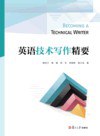
We hope Becoming a Technical Writer will help with these challenges!
Why did we give our book its title?
We used “The Textbook” as our unofficial title for quite some time until one day the publisher asked for a book title. Given all the possible options we considered, we had to go through a long deliberation process to finally settle on this one. We are happy with this decision. We are now openly sharing our rationale and we hope you agree and you will like it.
●We were looking for something short, easy to remember, and that potentially could be a frequently used search query.
●We were looking for a title that could truthfully reflect the user-centered approach we followed in our textbook. Instead of focusing on the subject “technical communication”, our title suggests that this textbook will walk our users through a process of learning the knowledge, acquiring the skills needed, obtaining a job as a technical writer, and finally pursuing a career in technical writing.
We chose to use “technical writer” after we consulted the common practices of two largest technical writing organizations: STC and tekom. STC conducted a census on the state of the technical communication industry in 2018. Guess what? 46% of the respondents identify themselves as technical writers—the most popular job title! The home page of tekom refers to “technical communication” as the subject while “technical writing” is considered the profession.
Who is our audience and why this audience?
One of the most distinctive features of technical writing is that it has a specific audience. Therefore, our textbook is not for everyone. We have targeted students in the MTI programs in China as our primary audience. If you are not in this audience, but want to try using it, anyway, go ahead! You can select the sections that work for you.
We have read research articles arguing the convergence of the fields of translation studies and technical writing in the last decade. Technical writers are “translators” who translate specialized technical information for their target users in a manner that meets their expectations and at their level. The concept of “trans-creation” has been adopted by translators and the trans-creation approach has become a common practice in technical translation. In addition, translators and technical writers have been collaborating for a long time. Writing for translation, especially writing in controlled languages, is not just to reduce the cost, but more importantly to improve translation efficiency and effectiveness. Knowledge of technical writing principles and practices will help translators like you to better communicate with technical writers, or even to change your occupation and become a technical writer yourself. At the same time, a well-written and well-edited technical document will lead to better quality in translation.
How do we take care of this audience?
We are fairly familiar with our audience through years of working with aspiring technical writers and translators or teaching them in class. Dr. Tao, a professor of 23 years of teaching experience at Fudan University, currently directs the MTI program and she has initiated some innovative courses taught by professionals from translation industry, one of which is Technical Writing. Ms. Xie is the instructor who was invited to teach Technical Writing class specifically offered to the first-year MTI students at Fudan University, and she also taught the same class at other universities. Dr. Zhou has delivered technical writing workshops to MTI instructors and students at Chongqing University of Posts &
Telecommunications. Dr. Li taught an intensive class in Technical Writing in Global Contexts to MTI students at Guangdong University of Foreign Studies in May 2019. And Mr. Cheng, a professional translator and an associate professor at Anhui University of Science and Technology, also teaches English writing and Computer-assisted Translation.
Audience analysis is the core of technical writing. Because of our experiences with, and our understanding of, this audience, we developed personas for our textbook. We conversed with them throughout the writing process. We believe this is what our personas want and what they deserve.
What do we hope to achieve?
We Want You for Technical Writing!
To our knowledge, this textbook may be the first comprehensive technical writing book, written in English, designed for Chinese graduate students in translation studies. Keeping at the foundational level, this textbook tries to introduce technical writing to you and guide you on your journey to become a technical writer.
We understand that you probably haven’t considered any occupation other than translator or interpreter. The world is changing rapidly with technological advancement, however. We believe that more technical writers will be needed to bridge the gap between complex technology and everyday users of technology. So, think about that, especially if you are the one who is passionate about technology, interested in writing, and good at communicating with people.
We are confident that, with study, you will be a competent technical writer and you will find technical writing a satisfying career.
How is our book different?
●It is written in English. Chinese companies are going global and their overseas businesses have now accounted for a larger part of their revenue. More and more technical documents have been created in English first. As MTI students, you probably have learned that it makes more business sense to use English as the source text because it is much cheaper to translate from English to multiple languages than using Chinese as a source text. Therefore, we chose to write in English because it reflects the common practices in both the technical writing industry and the language services industry in China.
●This book is for Chinese students—writers and translators, by Chinese authors. As authors, we are also English learners. We empathize with your fear of writing in English. We are here to help so that you will not go through the same unnecessary hurdles we faced.
●This book is the result of a true collaboration between people who have over a dozen years of direct technical writing industry experience and people who have almost two decades’technical writing teaching experience, unlike popular technical writing textbooks used in the U.S. which were written by either academics or practitioners (see Appendix A). Although each section was drafted by one individual, we all bounced ideas off each other, argued with and listened to each other, peer reviewed, and critiqued each other throughout the process to reach a balanced approach that reflects both technical writing principles taught at universities and practices in the industry.
●This book reflects the best practices in technical writing. We practiced the technical writing principles we highlight in this textbook while writing it. We went through the process of planning, developing, revising, and delivering. We embraced plain English guidelines: readability (short paragraphs, active voice), headings, lists, conversational tone, and addressing users as “you” whenever possible.
●This book has clearly-defined objectives and practicable exercises. Guided by Bloom’s taxonomy of educational objectives (see Appendix B), we developed a number of measurable learning objectives for each chapter at the foundational level (knowledge and comprehension). Typically, there are a variety of methods used to assess whether the learning objectives have been met, including quizzes, exams, tests, writing assignments, presentations, and projects. To help students remember and understand the concepts presented in each chapter, we designed exercises that correspond to the learning objectives in the chapter.
How should you use this textbook?
Reminder: This textbook is specifically designed for students in the MTI programs in China.
As experienced technical writers, we know that users of technical writing have different goals and in different contexts. Here we focus on instructors and MTI students, their goals and contexts of use.
●If you are a course instructor who is assigned to teach technical writing
This textbook is comprehensive because it covers the typical technical writing process in both unstructured and structured writing environments. Each of the topics, like structured authoring, usability testing, editing, could be expanded to a single independent course. That would be a common technical writing program curriculum in many U.S. universities. If your university is currently not considering a full technical writing program, that means, this technical writing class will probably be the only one your MTI students will take. In that case, you can either follow the textbook sequence to cover the entire process or choose the topics that relate more to your students’backgrounds.
If you have higher expectations of your students’abilities, we suggest you use Bloom’s taxonomy (Appendix B) when you design your syllabus. You may wish to consider moving up one or more levels on the learning objectives. If you do, of course, that also means, you need to design new exercises accordingly.
Anyway, we encourage you to contact us to share your reactions while using this textbook especially if you are unhappy with our book. Bill Gates once remarked that “Your most unhappy customers are your greatest source of learning.” Yes, we’d love to hear from you and we want to learn from you!
●If you are an MTI student taking a technical writing class
Read a specific section or chapter daily or weekly assigned by your professor. It could be helpful to read the entire book once very early in the semester. Definitely don’t wait until the final week.
Many concepts in this book might be new to you. Don’t feel discouraged. Discuss ideas with your classmates. Ask your professor for help. Use the resources you find in the book to reach out to experienced technical writers.
●If you are not taking a technical writing class
We are glad you have a copy of our book! Skim through to see if anything is enticing. Or, use it as a reference manual. One day, when you are ready to start out as a technical writer, or when you begin to consider freelancing as a technical writer, we highly recommend that you flip through the entire book before you consider a technical writing job posting. This book will help you understand what you see in the ad about the job description and the position requirements. After you have read the job ad, go back to specific book sections that cover the topics it mentions and read more closely. That way this book will help you prepare for the job interviews. It will also help you develop 2—3 questions to ask the interviewer!
Our final thoughts
Although the subject of technical communication is not new to us at all, writing a technical writing textbook has offered us a golden opportunity to reflect on our daily technical writing practices, to refresh the technical writing principles we learned years ago, to reexamine the field of technical communication and the future of the profession, and above all, to “translate” to novice users how the technical writing process works. In short, we have learned a lot from each other throughout this project. Embracing new perspectives, we have each grown as technical writers and technical writing educators.
We followed a user-centered approach in the textbook planning, developing, and revising processes. Now we offer you this textbook and we will sincerely appreciate your feedback and comments on what works, what needs improvement, and what doesn’t work. Contact us, your feedback matters! Here are two ways to reach us:
●Email us at authorsofbecomingatechwriter@aliyun.com
●Contact the Fudan University Press
Note: The whole book is written in an APA style consistently.