语言学
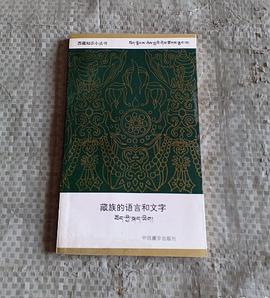
藏族的语言和文字 豆瓣
作者: 瞿霭堂 出版社: 中国藏学出版社 1996
为了如实地介绍西藏,加强对西藏地区的研究,继承和发扬藏族文化的优良传统,扩大各民族之间的文化交流和增进互相理解,加强国际文化合作,让关心西藏历史和现实的朋友们,从中了解到西藏今昔的真实情况,我们中国藏学研究中心编辑出版了这套《西藏知识小丛书》,包括政治、经济、历史、宗教、文化等类数十种。这套小丛书,运用历史唯物主义观点和丰富而翔实的藏汉文文献以及其他文字的资料,实事求是地分题撰写,力求具有学术性、知识性和可读性。用汉、藏、英三种文字出版。
本书主要介绍藏语文,把现代语言学的理论和实践与藏族传统的语言文字学理论,特别是文字学和文法学的理论有机地结合起来。
日本语言 豆瓣
作者: 徐一平 出版社: 高等教育出版社 1999 - 9
《日本语言》共分5章,即绪论、现代目语的语音与音韵、现代日语的词汇、现代日语的语法、现代日语的其它的问题(敬语、文字、方言、近代日语研究与教育)。为方便教学和练习,每章后附有思考题。
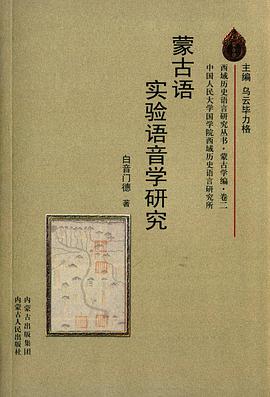
蒙古语实验语音学研究 豆瓣
作者: 白音门德 出版社: 内蒙古人民出版社 2014 - 1
《蒙古语实验语音学研究》是研究蒙古语语音学的学术著作,由声学分析和电子腭位仪分析两部分组成。《蒙古语实验语音学研究》进行了一种声学参数对照,其目的是从声学角度对蒙古语诸方言土语语音进行比较,从而探讨其内在发展规律。《蒙古语实验语音学研究》的整个方言土语语音的声学分析方案由白音门德制定。
《西域历史语言研究丛书·蒙古学研究丛书:蒙古语实验语音学研究》主要内容是:
这项研究得到教育部优秀年轻教师基金项目“蒙古语诸方言语音声学分析”(批准号:200011)、国家自然科学基金项目“面向人机对话的蒙古语辅音声学模型研究”(批准号:10064001)和教育部重点研究基地重大项目“面向语音合成的蒙古语语音数据库”(2009JJD740013)的支持。由于三个项目所使用的研究设备和方法不同,我们这个研究由两个部分组成,第一部分为声学分析部分,第二部分为电子腭位仪分析部分。从第一章到第六章为声学分析部分,第七章到第十章为电子腭位仪分析部分。
在“蒙古语诸方言语音声学分析”和“面向语音合成的蒙古语语音数据库”项目进行过程当中课题组对蒙古语内蒙古方言的察哈尔土语、巴林土语、科尔沁土语、鄂尔多斯土语、土默特次土语、阿拉善土语,乌珠穆沁次土语①,巴尔虎一布里亚特方言的陈巴尔虎土语、布里亚特土语,卫拉特方言,肃北土语②、青海土语、郭尔罗斯次土语,咯尔喀方言以及俄罗斯境内的布里亚特语、蒙古国境内的布里亚特方言进行了实地调查,按照统一的调查大纲在标准录音室录制了实验材料,利用这些第一手材料对蒙古语诸方言土语音进行声学分析,并根据这些声学数据在各个方言土语之间进行了声学比较。我们这里所进行的不是历史比较语言学上所说的比较,也许说对照更为确切,是一种声学参数的对照。我们的目的就是从声学角度对蒙古语诸方言土语语音进行比较,从而探讨其内在发展规律。当然共时的很多变化实际上就是历时变化的结果,所以从这些共时结果也可以看出一些历时变化的规律。
整个方言土语语音的声学分析方案由白音门德制定,课题组成员根据所承担的任务进行了调查和分析工作,首先建立了由二十几个子库组成的“蒙古语诸方言土语语音声学数据库”,利用这些数据库对蒙古语诸方言土语语音进行了声学分析,完成了相关学位论文。由于在我们立项之前察哈尔土语语音的声学分析工作已经由内蒙古大学蒙古语文研究所确精扎布教授和呼和博士完成,后来博士生山丹利用课题组制定的统一大纲从标准音角度又对察哈尔土语语音进行了声学分析,本文中考虑到整体研究的系统性主要利用了山丹的分析结果。巴林土语和科尔沁土语的语音声学分析由白音门德完成,鄂尔多斯土语语音声学分析由查娜完成,阿拉山土语语音声学分析由白梦璇完成,乌珠穆沁次土语语音声学分析由其布热完成,土默特次土语语音声学分析由明柱完成,陈巴尔虎土语语音声学分析由哈斯其木格完成,布里亚特土语和霍里布里亚特方言语音声学分析由阿拉坦完成,卫拉特方言语音声学分析由哈斯其木格和图雅完成,苏北土语由敖敏,青海土语由王玉兰,郭尔罗斯土语由娜仁高娃,喀尔喀方言语音声学分析由李惠英和玉梅完成,蒙古国境内阿嘎布里亚特方言语音声学分析由敖登其木格完成。
《回回馆杂字》与《回回馆译语》研究 豆瓣
作者: 刘迎胜 出版社: 中国人民大学出版社 2008 - 10
《回回馆杂字》与《回回馆译语》有各种刊本与抄本传世。因传抄与刊刻者波斯文水平的不同与其他原因,各种本子之间互有不同,均包含错误。18世纪以后是书逐渐流传到海外,为各大图书馆和私人收藏。《回回馆杂字》与《回回馆译语》以北京图书馆本、柏林国立图书馆本与北京图书馆所藏袁氏抄本为底本,校以其他善本,并采用波斯文原文、汉译与汉字音译之间互校的方法更正单靠不同刊本、抄本之间比对不能解决的讹误,并将波斯文原文逐字拉丁转写,且作诠释,以为现代研究者提供一个可信的文本与研究资料。
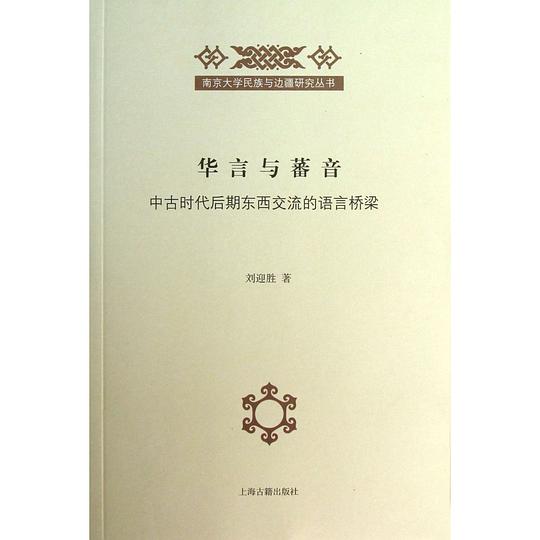
华言与蕃音 豆瓣
作者: 刘迎胜 出版社: 上海古籍出版社 2013 - 10
书稿包含20篇文章,是作者20多年来相关研究的成果的汇集。主要涉及唐代以后波斯语等语言在中国的教授与传承、古代中国对外沟通中的语言问题、回回的历史、伊斯兰“小经”问题及对几部古代回回著作如《米诺哈志》等的研究。
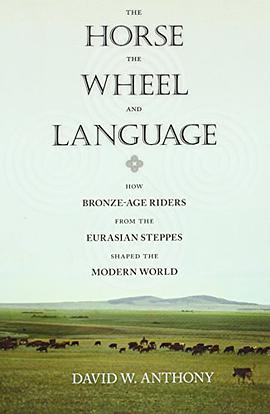
The Horse, the Wheel, and Language 豆瓣
作者: David W. Anthony 出版社: Princeton University Press 2010 - 8
Roughly half the world's population speaks languages derived from a shared linguistic source known as Proto-Indo-European. But who were the early speakers of this ancient mother tongue, and how did they manage to spread it around the globe? Until now their identity has remained a tantalizing mystery to linguists, archaeologists, and even Nazis seeking the roots of the Aryan race. "The Horse, the Wheel, and Language" lifts the veil that has long shrouded these original Indo-European speakers, and reveals how their domestication of horses and use of the wheel spread language and transformed civilization. Linking prehistoric archaeological remains with the development of language, David Anthony identifies the prehistoric peoples of central Eurasia's steppe grasslands as the original speakers of Proto-Indo-European, and shows how their innovative use of the ox wagon, horseback riding, and the warrior's chariot turned the Eurasian steppes into a thriving transcontinental corridor of communication, commerce, and cultural exchange. He explains how they spread their traditions and gave rise to important advances in copper mining, warfare, and patron-client political institutions, thereby ushering in an era of vibrant social change. Anthony also describes his fascinating discovery of how the wear from bits on ancient horse teeth reveals the origins of horseback riding. "The Horse, the Wheel, and Language" solves a puzzle that has vexed scholars for two centuries - the source of the Indo-European languages and English - and recovers a magnificent and influential civilization from the past.
Psycholinguistics : the key concepts 豆瓣
作者: John Field 出版社: Routledge 2004
"Psycholinguistics: The Key Concepts is a comprehensive and up-to-date guide to ideas and issues in this important field. Over 350 cross-referenced entries cover all the major areas, ranging from language processing to the nature of linguistic knowledge, from first language acquisition to language disability. They are written in an accessible, non-technical style so as to provide a clear introduction to the subject.".
"Featuring suggestions for further reading and a full index, this easy to use guide is an essential resource for all students of English language, linguistics and psychology."--BOOK JACKET.
Elements of Formal Semantics 豆瓣
作者: Yoad Winter 出版社: Edinburgh University Press 2016 - 7
This series supports the study of core topics that form substantial and identifiable parts of Linguistics degree courses as taught in the later years of undergraduate study. Each volume provides an in-depth introduction to a particular linguistic subdiscipline, while also engaging with recent research on the subject.
Oxford Handbook of Psycholinguistics 豆瓣
作者: Gaskell, Gareth 编 出版社: Oxford Univ Pr 2007 - 9
The ability to communicate through spoken and written language is one of the defining characteristics of the human race, yet it remains a deeply mysterious process. The young science of psycholinguistics attempts to uncover the mechanisms and representations underlying human language. This interdisciplinary field has seen massive developments over the past decade, with a broad expansion of the research base, and the incorporation of new experimental techniques such as brain imaging and computational modelling. The result is that real progress is being made in the understanding of the key components of language in the mind. The Oxford Handbook of Psycholinguistics brings together the views of 75 leading researchers in psycholinguistics to provide a comprehensive and authoritative review of the current state of the art in psycholinguistics. With almost 50 chapters written by experts in the field, the range and depth of coverage is unequalled. The contributors are eminent in a wide range of fields, including psychology, linguistics, human memory, cognitive neuroscience, bilingualism, genetics, development and neuropsychology. Their contributions are organised into six themed sections, covering word recognition, the mental lexicon, comprehension and discourse, language production, language development, and perspectives on psycholinguistics. The breadth of coverage, coupled with the accessibility of the short chapter format should make the handbook essential reading for both students and researchers in the fields of psychology, linguistics and neuroscience.
The Handbook of East Asian Psycholinguistics 豆瓣
作者: Li, Ping (EDT)/ Tan, Li Hai (EDT)/ Bates, Elizabeth (EDT)/ Tzeng, Ovid J. L. (EDT) 出版社: Cambridge University Press 2006 - 6
A large body of knowledge has accumulated on the cognitive processes and brain mechanisms underlying language. Much of this knowledge has come from studies of Indo-European languages, in particular English. Chinese, spoken by one-fifth of the world's population, differs significantly from most Indo-European languages in its grammar, its lexicon, and its written and spoken forms - features which have profound implications for the learning, representation and processing of language. This handbook, first published in 2006 as the first in a three-volume set on East Asian psycholinguistics, presents a discussion of the psycholinguistic study of Chinese. With contributions by over fifty leading scholars, it covers topics in first- and second-language acquisition, language processing and reading, language disorders in children and adults, and the relationships between language, brain, culture, and cognition. It will be invaluable to all scholars and students interested in the Chinese language, as well as cognitive psychologists, linguists, and neuroscientists.
Psycholinguistics 豆瓣
作者: John Field 出版社: Routledge 2003
Psycholinguistics:
*is a comprehensive introduction to psycholinguistic theory
*covers the core areas of psycholinguistics: language as a human attribute, language and the brain, vocabulary storage and use, language and memory, the four skills (writing, reading, listening, speaking), comprehension, language impairment and deprivation
*draws on a range of real texts, data and examples, including a radio four interview, an essay written by a deaf writer, and the transcript of a therapy session addressing stuttering
*provides classic readings by the key names in the discipline, including Aitchison, Deacon, Logie, Levelt and Bishop.
A History of Psycholinguistics 豆瓣
作者: Levelt, Willem J.M. 2012
How do we manage to speak and understand language? How do children acquire these skills and how does the brain support them? These psycholinguistic issues have been studied for more than two centuries. Though many Psycholinguists tend to consider their history as beginning with the Chomskyan "cognitive revolution" of the late 1950s/1960s, the history of empirical psycholinguistics actually goes back to the end of the 18th century. This is the first book to comprehensively treat this "pre-Chomskyan" history. It tells the fascinating history of the doctors, pedagogues, linguists and psychologists who created this discipline, looking at how they made their important discoveries about the language regions in the brain, about the high-speed accessing of words in speaking and listening, on the child's invention of syntax, on the disruption of language in aphasic patients and so much more. The book is both a history of ideas as well of the men and women whose intelligence, brilliant insights, fads, fallacies, cooperations, and rivalries created this discipline. Psycholinguistics has four historical roots, which, by the end of the 19th century, had merged. By then, the discipline, usually called the psychology of language, was established. The first root was comparative linguistics, which raised the issue of the psychological origins of language. The second root was the study of language in the brain, with Franz Gall as the pioneer and the Broca and Wernicke discoveries as major landmarks. The third root was the diary approach to child development, which emerged from Rousseau's Emile. The fourth root was the experimental laboratory approach to speech and language processing, which originated from Franciscus Donders' mental chronometry. Wilhelm Wundt unified these four approaches in his monumental Die Sprache of 1900. These four perspectives of psycholinguistics continued into the 20th century but in quite divergent frameworks. There was German consciousness and thought psychology, Swiss/French and Prague/Viennese structuralism, Russian and American behaviorism, and almost aggressive holism in aphasiology. As well as reviewing all these perspectives, the book looks at the deep disruption of the field during the Third Reich and its optimistic, multidisciplinary re-emergence during the 1950s with the mathematical theory of communication as a major impetus. A tour de force from one of the seminal figures in the field, this book will be essential reading for all linguists, psycholinguists, neuroscientists, and psychologists with an interest in language.
The Biolinguistic Enterprise 豆瓣
作者: Di Sciullo, Anne-Marie; Di Sciullo, Anna Maria; Boeckx, Cedric 出版社: Oxford University Press, USA 2011 - 5
This book, by leading scholars, represents some of the main work in progress in biolinguistics. It offers fresh perspectives on language evolution and variation, new developments in theoretical linguistics, and insights on the relations between variation in language and variation in biology. The authors address the Darwinian questions on the origin and evolution of language from a minimalist perspective, and provide elegant solutions to the evolutionary gap between human language and communication in all other organisms. They consider language variation in the context of current biological approaches to species diversity - the 'evo-devo revolution' - which bring to light deep homologies between organisms. In dispensing with the classical notion of syntactic parameters, the authors argue that language variation, like biodiversity, is the result of experience and thus not a part of the language faculty in the narrow sense. They also examine the nature of this core language faculty, the primary categories with which it is concerned, the operations it performs, the syntactic constraints it poses on semantic interpretation and the role of phases in bridging the gap between brain and syntax. Written in language accessible to a wide audience, The Biolinguistic Enterprise will appeal to scholars and students of linguistics, cognitive science, biology, and natural language processing.
Language Evolution and Syntactic Theory 豆瓣
作者: Anna R. Kinsella 出版社: Cambridge University Press 2009 - 7
Evolution has not typically been recognised by linguists as a constraining factor when developing linguistic theories. This book demonstrates that our theories of language must reflect the fact that language has evolved. It critiques a currently dominant framework in the field of linguistics - the Minimalist Program - by showing how it fails to take evolution into account. It approaches the question of the evolution of human language in a novel way by applying findings from the field of evolutionary biology to language. Key properties associated with typically evolving systems are identified in language, and the shortcomings of the Minimalist Program in its outright rejection of these features are exposed. The book will be of interest to individual researchers and advanced students in linguistics, psychology, biology, anthropology and cognitive science.
Language and Gesture 豆瓣
作者: McNeill, David 编 出版社: Cambridge Univ Pr 2000 - 8
This landmark study examines the role of gestures in relation to speech and thought. Leading scholars, including psychologists, linguists and anthropologists, offer state-of-the-art analyses to demonstrate that gestures are not merely an embellishment of speech but are integral parts of language itself. Language and Gesture offers a wide range of theoretical approaches, with emphasis not simply on behavioural descriptions but also on the underlying processes. The book has strong cross-linguistic and cross-cultural components, examining gestures by speakers of Mayan, Australian, East Asian as well as English and other European languages. The content is diverse including chapters on gestures during aphasia and severe stuttering, the first emergence of speech-gesture combinations of children, and a section on sign language. In a rapidly growing field of study this volume opens up the agenda for research into a new approach to understanding language, thought and society.
Gesture and Thought 豆瓣
作者: McNeill, David 出版社: Univ of Chicago Pr 2005 - 11
Gesturing is such an integral yet unconscious part of communication that we are mostly oblivious to it. But if you observe anyone in conversation, you are likely to see his or her fingers, hands, and arms in some form of spontaneous motion. Why? David McNeill, a pioneer in the ongoing study of the relationship between gesture and language, set about answering this question in "Gesture and Thought" with an unlikely accomplice - Tweety Bird. McNeill argues that gestures are active participants in both speaking and thinking. He posits that gestures are key ingredients in an "imagery-language dialectic" that fuels speech and thought; gestures are the "imagery" and also the components of "language," rather than mere consequences. The smallest unit of this dialectic is the "growth point," a snapshot of an utterance at its beginning psychological stage. Enter Tweety Bird. In "Gesture and Thought", the central growth point comes from a cartoon. In his quest to eat Tweety Bird, Sylvester the cat first scales the outside of a rain gutter to reach his prey. Unsuccessful, he makes a second attempt by climbing up the inside of the gutter. Tweety, however, drops a bowling ball down the gutter; Sylvester swallows the ball. Over the course of twenty-five years, McNeill showed this cartoon to numerous subjects who spoke a variety of languages. A fascinating pattern emerged. Those who remembered the exact sequence of the cartoon while retelling it all used the same gesture to describe Sylvester's position inside the gutter. Those who forgot, in the retelling, that Sylvester had first climbed the outside of the gutter did not use this gesture at all. Thus that gesture becomes part of the "growth point" - the building block of language and thought. An ambitious project in the ongoing study of the relationship of how we communicate and its connection to thought, "Gesture and Thought" is a work of such consequence that it will influence all subsequent linguistic and evolutionary theory on the subject.
Gesture and Thought 豆瓣
作者: McNeill, David 出版社: Univ of Chicago Pr 2007 - 9
David McNeill, a pioneer in the ongoing study of the relationship between gesture and language, here argues that gestures are active participants in both speaking and thinking. He posits that gestures are key ingredients in an "imagery-language dialectic" that fuels speech and thought. The smallest unit of this dialectic is the growth point, a snapshot of an utterance at its beginning psychological stage. In "Gesture and Thought", the central growth point comes from a Tweety Bird cartoon. Over the course of twenty-five years, the McNeill Lab showed this cartoon to numerous subjects who spoke a variety of languages, and a fascinating pattern emerged. The shape and timing of gestures depends not only on what speakers see but on what they take to be distinctive; this, in turn, depends on the context. Those who remembered the same context saw the same distinctions and used similar gestures; those who forgot the context understood something different and changed gestures or used none at all. Thus, the gesture becomes part of the growth point - the building block of language and thought. "Gesture and Thought" is an ambitious project in the ongoing study of how we communicate and how language is connected to thought.
Hand and Mind 豆瓣
作者: David McNeill 出版社: University Of Chicago Press 1996 - 1
What is the relation between gestures and speech? In terms of symbolic forms, of course, the spontaneous and unwitting gestures we make while talking differ sharply from spoken language itself. Whereas spoken language is linear, segmented, standardized, and arbitrary, gestures are global, synthetic, idiosyncratic, and imagistic. In Hand and Mind, David McNeill presents a bold theory of the essential unity of speech and the gestures that accompany it. This long-awaited, provocative study argues that the unity of gestures and language far exceeds the surface level of speech noted by previous researchers and in fact also includes the semantic and pragmatic levels of language. In effect, the whole concept of language must be altered to take into account the nonsegmented, instantaneous, and holistic images conveyed by gestures. McNeill and his colleagues carefully devised a standard methodology for examining the speech and gesture behavior of individuals engaged in narrative discourse. A research subject is shown a cartoon like the 1950 Canary Row--a classic Sylvester and Tweedy Bird caper that features Sylvester climbing up a downspout, swallowing a bowling ball and slamming into a brick wall. After watching the cartoon, the subject is videotaped recounting the story from memory to a listener who has not seen the cartoon. Painstaking analysis of the videotapes revealed that although the research subjects--children as well as adults, some neurologically impaired--represented a wide variety of linguistic groupings, the gestures of people speaking English and a half dozen other languages manifest the same principles. Relying on data from more than ten years of research, McNeill shows thatgestures do not simply form a part of what is said and meant but have an impact on thought itself. He persuasively argues that because gestures directly transfer mental images to visible forms, conveying ideas that language cannot always express, we must examine language and gesture