銀河是我的跑馬場捏! - 标记
How to Read Chinese Poetry 豆瓣
作者: Cai, Zong-qi 编 Columbia University Press 2007
In this "guided" anthology, experts lead students through the major genres and eras of Chinese poetry from antiquity to the modern time. The volume is divided into 6 chronological sections and features more than 140 examples of the best shi, sao, fu, ci, and qu poems. A comprehensive introduction and extensive thematic table of contents highlight the thematic, formal, and prosodic features of Chinese poetry, and each chapter is written by a scholar who specializes in a particular period or genre. Poems are presented in Chinese and English and are accompanied by a tone-marked romanized version, an explanation of Chinese linguistic and poetic conventions, and recommended reading strategies. Sound recordings of the poems are available online free of charge. These unique features facilitate an intense engagement with Chinese poetical texts and help the reader derive aesthetic pleasure and insight from these works as one could from the original. The companion volume How to Read Chinese Poetry Workbook presents 100 famous poems (56 are new selections) in Chinese, English, and romanization, accompanied by prose translation, textual notes, commentaries, and recordings. Contributors: Robert Ashmore (Univ. of California, Berkeley); Zong-qi Cai; Charles Egan (San Francisco State); Ronald Egan (Univ. of California, Santa Barbara); Grace Fong (McGill); David R. Knechtges (Univ. of Washington); Xinda Lian (Denison); Shuen-fu Lin (Univ. of Michigan); William H. Nienhauser Jr. (Univ. of Wisconsin); Maija Bell Samei; Jui-lung Su (National Univ. of Singapore); Wendy Swartz (Columbia); Xiaofei Tian (Harvard); Paula Varsano (Univ. of California, Berkeley); Fusheng Wu (Univ. of Utah)
2017年12月27日 想读
为权力祈祷 豆瓣
作者: 卜正民 译者: 张华 江苏人民出版社 2005 - 11
在16和17世纪的中国,佛教信徒和儒学士人广泛地活跃于地方寺院及其捐助活动中。随着士绅数量的增长超过了帝国官僚机构需求的增长,许多人被阻挡在传统的儒家仁宦之途之外;但是显而易见的慈善事业可以在国家掌控的领域之外昭示精英的公共地位。由于积极卷入佛寺住持的资金筹集工程,士绅的赞助行为深刻地影响了佛教的公共机构。
本书首先讨论了佛教与明代理学的关系,佛教胜地旅游业的增长,以及慈善捐助的机制和动机,继之又分别考察了地理位置和经济状况迥异的三个县。作者依据中的充分史料,透辟地分析了当时佛教捐助的类型和社会后果。
2017年12月27日 想读
The Pursuit of the Millennium 豆瓣
作者: Norman Cohn Pimlico 1993 - 6
The Middle Ages inherited from Antiquity a tradition of prophesy which foretold a new Paradise on earth. This unique book tells the story of Millenarian fanaticisms of the Middle Ages and points to their persistence today.
2017年12月27日 想读
长物 豆瓣
Superfluous Things: Material Culture and Social Status in Early Modern China
7.6 (10 个评分) 作者: [英] 柯律格 译者: 高昕丹 / 陈恒 生活·读书·新知三联书店 2015 - 5
晚明时期,品类繁多的“物”在中国文化中扮演了过去所不曾享有的重要角色,关于物的分类、使用、品评,以及对它们所感到的不安或褒贬,成为晚明士人关注的话题。
牛津大学教授柯律格的名著《长物》,以明代文震亨《长物志》一书为例,从物品视角切入艺术史,同时也跨越学科界限,参照社会文化理论,讨论明代的“多余之物”——绘画、书法、青铜器、瓷器、玉雕以及其他明代士绅精英所拥有的文玩用品,考察它们如何被鉴赏、使用,如何成为被消费的商品,以怎样的方式流通、被接受,以及它们在明代社会生活中的意涵,是一部有关晚明文化消费的经典著作。
2017年12月22日 想读
长物志 豆瓣
作者: (明) 文震亨 金城出版社 2010 - 8
《长物志(彩色图文版)》主要内容简介:夫标榜林壑,品题洒茗,收藏位置图史、杯铛之属,于世为闲事,于身为长物,而品人者,于此观韵焉,才与情焉,何也?挹古今清华美妙之气于耳、目之前,供我呼吸,罗天地琐杂碎细之物于几席之上,听我指挥,挟日用寒不可衣、饥不可食之器,尊腧拱璧,享轻千金,以寄我之慷慨不平,非有真韵、真才与真情以胜之,其调弗同也。
2017年12月22日 想读
古代中国的动物与灵异 豆瓣
The Animal and the Daemon in Early China
8.9 (8 个评分) 作者: [英]胡司德 译者: 蓝旭 江苏人民出版社 2016 - 2
本书对战国两汉文献做了细致解读,考察古代中国关于动物的文化观念,分析动物观与人类自我认识的联系,探讨动物世界在圣贤概念和社会政治权力概念中所扮演的角色。作者指出古代中国对人在诸多物种乃至天地间地位的认识深受动物观的影响,并就这种影响展开具体阐述。作者认为,古代中国的世界观并未执意为动物、人类和鬼神等其他生灵勾画清晰的类别界线或本体界线,而是把动物界安放在有机整体和诸多物种的相互关系中。整体中的生灵万类,既有自然的一面,又有文化的一面;彼此关系的特点,在于互相影响,互相依赖,浑然一体。
2017年12月22日 想读
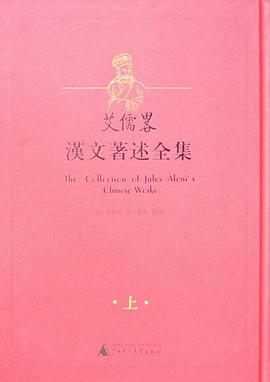
艾儒略汉文著述全集 豆瓣
作者: 【意大利】艾儒略 译者: 叶农 (整理) / 繁体 影印 2011 - 2
艾儒略,字思及(Julius Aleni, 1582~1649),明末来华的著名意大利籍耶稣会士。艾氏自1613年到达中国后,即致力于天主教在中国,尤其是在福建地区的传播,采取了许多行之有效的传教方法,使其传教事业达到顶峰,为自己赢得了“福建宗徒”的美称。艾氏在宗教活动中用汉语撰写的著作数量多达24种,可以说是前无古人、后无继者的巨大工程,这些著作包括宗教知识的宣传、教仪教规的讲解、近代西方地理知识与几何知识、哥伦布航海新发现、西方风土人情、西方宗教教育制度等,其中既有人文科学方面的新知旧闻,也有近代科学技术知识的介绍。艾氏的中文著作,向中国知识分子开启了一面了解西方文化的重要窗口。艾氏本人也因而被后来的研究者誉为“西来孔子”。本书汇集整理了艾氏的全部中文著作,整理者并为收录的每一著作都撰写了解题,介绍著作的产生时代、版本流变及主要内容等。本书不仅对研究艾氏本人及其著作有重要价值,同时对研究以艾氏为代表的早期基督教在华传教活动等,探究当时中国社会中下层民众的基督宗教信仰,考察当时的中西方文化交流等,都有重要的学术意义。
2017年12月12日 想读
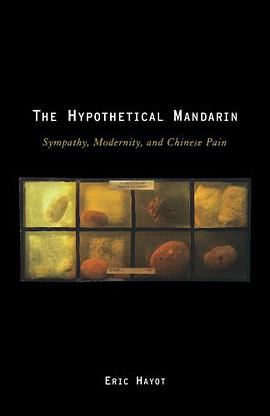
The Hypothetical Mandarin 豆瓣
作者: Eric Hayot Oxford University Press, U.S.A. 2009 - 4
Why has the West for so long and in so many different ways expressed the idea that the Chinese have a special relationship to cruelty and to physical pain? What can the history of that idea and its expressions teach us about the politics of the West's contemporary relation to China? And what does it tell us about the philosophy of modernity?
The Hypothetical Mandarin is, in some sense, a history of the Western imagination. It is also a history of the interactions between Enlightenment philosophy, of globalization, of human rights, and of the idea of the modern. Beginning with Bianchon and Rastignac's discussion of whether the former would, if he could, obtain a European fortune by killing a Chinese mandarin in Balzac's Le Pere Goriot (1835), the book traces a series of literary and historical examples in which Chinese life and European sympathy seem to hang in one another's balance. Hayots wide-ranging discussion draws on accounts of torture, on medical case studies, travelers tales, photographs, plasticized corpses, polemical broadsides, watercolors, and on oil paintings. His analyses show that the historical connection between sympathy and humanity, and indeed between sympathy and reality, has tended to refract with a remarkable frequency through the lens called "China," and why the story of the West's Chinese pain goes to the heart of the relation between language and the body and the social experience of the modern human being.
Written in an ebullient prose, The Hypothetical Mandarin demonstrates how the network that intertwines China, sympathy, and modernity continues to shape the economic and human experience.
2017年12月5日 想读
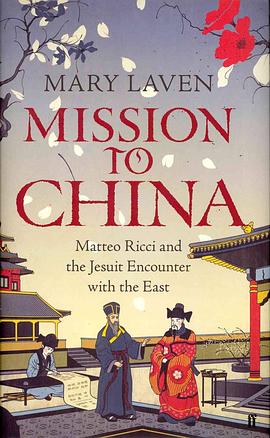
Mission to China 豆瓣
作者: Mary Laven Faber & Faber 2012 - 1
In the sixteenth century, the vast and sophisticated empire of China lay almost entirely unknown to Western travellers. As global trade expanded, this land of reputedly boundless wealth, pale-faced women, and indecipherable tongues began to feed the fantasies of European merchants and adventurers. The Catholic Church, meanwhile, saw in this great people millions of souls who would be damned unless the Christian message could be brought to them. In this book, Mary Laven tells the extraordinary story of the first Jesuit mission to China. Confronting enormous challenges, the Italian priest Matteo Ricci and a tiny handful of learned companions gained permission from the notoriously xenophobic Wanli emperor to settle in the fabled Forbidden City.Living among eunuchs and mandarins, wearing the clothes of Confucian scholars, Ricci and his associates strove to master the language and culture of their hosts. At the same time, they energetically preached the virtues of Western art and science. In Mission to China Mary Laven brings this remote world vividly to life.
2017年12月3日 想读
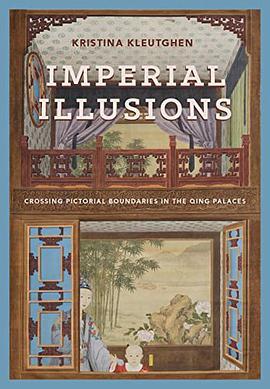
Imperial Illusions 豆瓣
作者: Kristina Kleutghen University of Washington Press 2014 - 11
In the Forbidden City and other palaces around Beijing, Emperor Qianlong (r. 1736-1795) surrounded himself with monumental paintings of architecture, gardens, people, and faraway places. The best artists of the imperial painting academy, including a number of European missionary painters, used Western perspectival illusionism to transform walls and ceilings with visually striking images that were also deeply meaningful to Qianlong. These unprecedented works not only offer new insights into late imperial China’s most influential emperor, but also reflect one way in which Chinese art integrated and domesticated foreign ideas.
In Imperial Illusions, Kristina Kleutghen examines all known surviving examples of the Qing court phenomenon of “scenic illusion paintings” (tongjinghua), which today remain inaccessible inside the Forbidden City. Produced at the height of early modern cultural exchange between China and Europe, these works have received little scholarly attention. Richly illustrated, Imperial Illusions offers the first comprehensive investigation of the aesthetic, cultural, perceptual, and political importance of these illusionistic paintings essential to Qianlong’s world.
2017年12月3日 想读
Chinese Religiosities 豆瓣
作者: Yang, Mayfair Mei-hui University of California Press 2008 - 11
The long twentieth century in China and Taiwan has seen both a dramatic process of state-driven secularization and modernization and a vigorous revival of contemporary religious life. "Chinese Religiosities" explores the often vexed relationship between the modern Chinese state and religious practice. The essays in this comprehensive, multidisciplinary collection cover a wide range of traditions, including Buddhism, Daoism, Islam, Confucianism, Protestantism, Falungong, popular religion, and redemptive societies. Contributors include: Jose Cabezon, Prasenjit Duara, Ryan Dunch, Dru C. Gladney, Vincent Goossaert, Ji Zhe, Ya-pei Kuo, Richard Madsen, Rebecca Nedostup, David Palmer, Benjamin Penny, and Mayfair Mei-hui Yang.
2017年12月3日 想读
State, Market, and Religions in Chinese Societies 豆瓣
作者: Yang, Fenggang / Tamney, Joseph B (eds) Brill Academic Pub 2005 - 6
This collection of original, new studies about Mainland China,Hong Kong,Taiwan and Singapore and other overseas Chinese communities focuses on religious changes, and especially the role of the state and market in affecting religious developments in these societies. Information was gathered by participant observation and interviews primarily, and the analysis of documents secondarily. The topics covered are: the growing interest in the study of religion, the methods used by Christians to be able to coexist with a communist government, revival techniques being used by Buddhist monks, the strategies of Daoist priests and sect leaders to attract followers, the significance of mass-circulating morality books, and the ongoing debate about the significance and nature of Confucianism. The book will interest social scientists, religious specialists, journalists, and others who want to understand the changing nature of Chinese societies, and those interested in religious change in modernizing societies.
2017年12月3日 想读
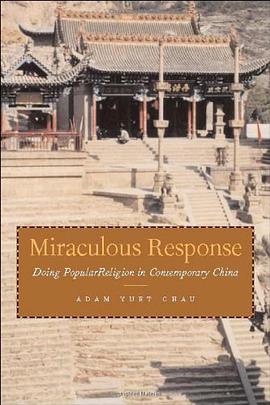
Miraculous Response 豆瓣
作者: Adam Yuet Chau Stanford University Press 2005 - 10
This book-length ethnography of the revival of a popular religious temple in contemporary rural China examines the organizational and cultural logics that inform the staging of popular religious activities. It also explores the politics of the religious revival, detailing the relationships of village-level local activists and local state agents wtih temple associations and temple bosses. Shedding light on shifting state-society relationships in the reform era, this book is of interest to scholars and students in Asian Studies, the social sciences, and religious and ritual studies.
2017年12月3日 想读
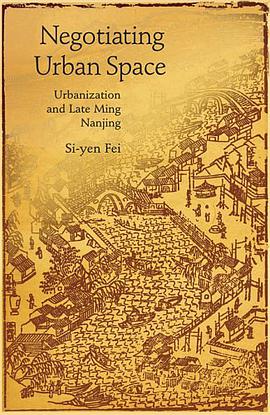
Negotiating Urban Space 豆瓣
作者: Si-yen Fei Harvard University Asia Center 2010 - 3
Urbanization was central to development in late imperial China. Yet its impact is heatedly debated, although scholars agree that it triggered neither Weberian urban autonomy nor Habermasian civil society. This book argues that this conceptual impasse derives from the fact that the seemingly continuous urban expansion was in fact punctuated by a wide variety of “dynastic urbanisms.” Historians should, the author contends, view urbanization not as an automatic by-product of commercial forces but as a process shaped by institutional frameworks and cultural trends in each dynasty.
This characteristic is particularly evident in the Ming. As the empire grew increasingly urbanized, the gap between the early Ming valorization of the rural and late Ming reality infringed upon the livelihood and identity of urban residents. This contradiction went almost unremarked in court forums and discussions among elites, leaving its resolution to local initiatives and negotiations. Using Nanjing—a metropolis along the Yangzi River and onetime capital of the Ming—as a central case, the author demonstrates that, prompted by this unique form of urban-rural contradiction, the actions and creations of urban residents transformed the city on multiple levels: as an urban community, as a metropolitan region, as an imagined space, and, finally, as a discursive subject.
2017年12月2日 想读
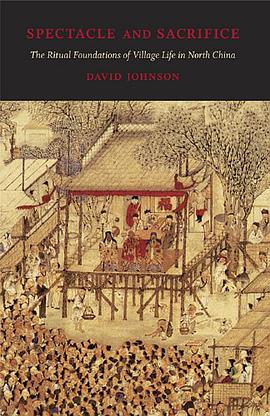
Spectacle and Sacrifice 豆瓣
作者: David Johnson Harvard University Asia Center 2010 - 3
This book is about the ritual world of a group of rural settlements in Shanxi province in pre-1949 North China. Temple festivals, with their giant processions, elaborate rituals, and operas, were the most important influence on the symbolic universe of ordinary villagers and demonstrate their remarkable capacity for religious and artistic creation. The great festivals described in this book were their supreme collective achievements and were carried out virtually without assistance from local officials or educated elites, clerical or lay.
Chinese culture was a performance culture, and ritual was the highest form of performance. Village ritual life everywhere in pre-revolutionary China was complex, conservative, and extraordinarily diverse. Festivals and their associated rituals and operas provided the emotional and intellectual materials out of which ordinary people constructed their ideas about the world of men and the realm of the gods. It is, David Johnson argues, impossible to form an adequate idea of traditional Chinese society without a thorough understanding of village ritual. Newly discovered liturgical manuscripts allow him to reconstruct North Chinese temple festivals in unprecedented detail and prove that they are sharply different from the Daoist- and Buddhist-based communal rituals of South China.
2017年12月2日 想读
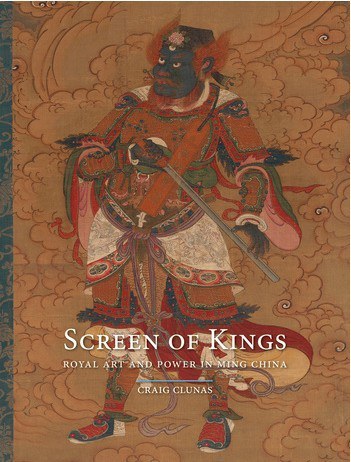
Screen of Kings 豆瓣
作者: Craig Clunas University of Hawai'i Press 2013 - 6
Screen of Kings is the first book in any language to examine the cultural role of the regional aristocracy or ‘kings’ – relatives of the emperors – in Ming dynasty China (1368–1644). Through an investigation of their patronage of architecture, calligraphy, painting and other art forms, and through examination of the contents of their splendid and recently excavated tombs, this innovative study puts the aristocracy back at the heart of accounts of China’s cultural and artistic histories, from which they have until very recently been excluded.
In this book, Craig Clunas sheds new light on many familiar artworks, as well as works that have never before been reproduced. Screen of Kings challenges much of the received wisdom about Ming China; new archaeological discoveries have furnished us with evidence of the lavish, spectacular lifestyles of the country’s provincial kings and demonstrate how central the imperial family was to the high culture of the Ming era.
Written by the leading specialist in the art and culture of the Ming period, this new work of scholarship illuminates a key aspect of China’s past, and will significantly alter our understanding of Ming dynastic power and relations. It will be enjoyed by anyone with a serious interest in the history and art of this great civilization.
2017年12月2日 想读
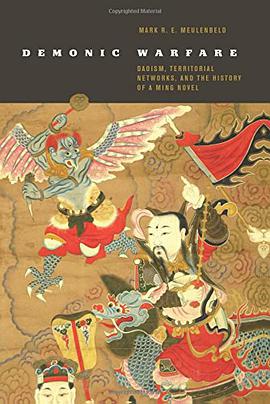
Demonic Warfare 豆瓣
作者: Mark R. E. Meulenbeld University of Hawaii Press 2015 - 1
Revealing the fundamental continuities that exist between vernacular fiction and exorcist, martial rituals in the vernacular language, Mark Meulenbeld argues that a specific type of Daoist exorcism helped shape vernacular novels in the late Ming dynasty (1368u1644). Focusing on the once famous novel Fengshen yanyi (oCanonization of the Godso), the author maps out the general ritual structure and divine protagonists that it borrows from much older systems of Daoist exorcism. By exploring how the novel reflects the specific concerns of communities associated with Fengshen yanyi and its ideology, Meulenbeld is able to reconstruct the cultural sphere in which Daoist exorcist rituals informed late imperial onovels.o He first looks at temple networks and their religious festivals. Organized by local communities forterritorial protection, these networks featured martial narratives about the powerful and heroic deeds of the gods. He then shows that it is by means of dramatic practiceslike ritual, theatre, and temple processions that divine acts were embodied and brought to life. Much attention is given to local militias who embodied odemon soldierso aspart of their defensive strategies. Various Ming emperors actively sought the support of these local religious networks and even continued to invite Daoist ritualists so asto efficiently marshal the forces of local gods with their local demon soldiers into the official, imperial reserves of military power. This unusual book establishes once and for all the importance of understanding the idealized realities of literary texts within a larger context of cultural practice and socio-political history. Of particular importance is the ongoing dialog with religious ideology that informs these diff erent discourses. MeulenbeldAEs book makes a convincing case for the need to debunk the retrospective reading of China through the modern, secular Western categories of oliterature,o osociety,o and opolitics.o He shows that this disregard of religious dynamics has distorted our understanding of China and that oreligiono cannot be conveniently isolated from scholarly analysis.
2017年12月2日 想读
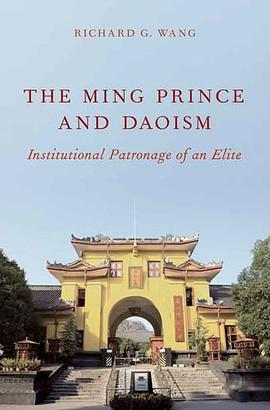
The Ming Prince and Daoism 豆瓣
作者: Richard G. Wang Oxford University Press 2012 - 8
Scholars of Daoism in the Ming dynasty (1368-1644) have paid particular attention to the interaction between the court and certain Daoist priests and to the political results of such interaction; the focus has been on either emperors or Daoist masters. Yet in the Ming era a special group of people patronized Daoism and Daoist establishments: these were the members of the imperial clan, who were enfeoffed as princes. In addition to personal belief and self-cultivation, a prince had other reasons to patronize Daoism. As the regional overlords, the Ming princes like other local elites saw financing and organizing temple affairs and rituals, patronizing Daoist priests, or collecting and producing Daoist books as a chance to maintain their influence and show off their power. The prosperity of Daoist institutions, which attracted many worshippers, also demonstrated the princes' political success. Locally the Ming princes played an important cultural role as well by promoting the development of local religions. This book is the first to explore the interaction between Ming princes as religious patrons and local Daoism. Barred by imperial law from any serious political or military engagement, the Ming princes were ex officio managers of state rituals at the local level, with Daoist priests as key performers, and for this reason they became very closely involved in Daoist clerical and liturgical life. By illuminating the role the Ming princes played in local religion, Richard Wang demonstrates in The Ming Prince and Daoism that the princedom served to mediate between official religious policy and the commoners' interests.
2017年12月2日 想读