语言学
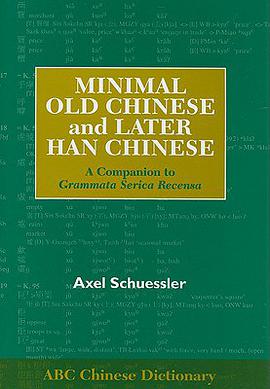
Minimal Old Chinese and Later Han Chinese 豆瓣
作者: Axel Schuessler 出版社: University of Hawaii Press 2008
Although long out of date, Bernard Karlgren's "Grammata Serica Recensa" (1957) remains the most convenient work for looking up Middle Chinese (ca. A.D. 600) and Old Chinese (before 200 B.C.) reconstructions of all graphs that occur in literature from the beginning of writing (ca. 1250 B.C.) down to the third century B.C. In the present volume, Axel Schuessler provides a more current reconstruction of Old Chinese, limiting it, as far as possible, to those post-Karlgrenian phonological features of Old Chinese that enjoy some consensus among today's investigators. At the same time, the updating of the material disregards more speculative theories and proposals. Schuessler refers to these minimal forms as "Minimal Old Chinese" (OCM). He bases OCM on Baxter's 1992 reconstructions but with some changes, mostly notational. In keeping with its minimal aspect, the OCM forms are kept as simple as possible and transcribed in an equally simple notation. Some issues in Old Chinese phonology still await clarification; hence interpolations and proposals of limited currency appear in this update.Karlgren's Middle Chinese reconstructions, as emended by Li Fang-kuei, are widely cited as points of reference for historical forms of Chinese as well as dialects.
This emended Middle Chinese is also supplied by Schuessler. Another important addition to Karlgren's work is an intermediate layer midway between the Old and Middle Chinese periods known as "Later Han Chinese" (ca. second century A.D.) The additional layer makes this volume a useful resource for those working on Han sources, especially poetry.This book is intended as a "companion" to the original "Grammata Serica Recensa" and therefore does not repeat other information provided there. Matters such as English glosses and references to the earliest occurrence of a graph can be looked up in "Grammata Serica Recensa" itself or in other relevant dictionaries.
姚鼐与乾嘉学派 豆瓣
作者: 王达敏 出版社: 学苑出版社 2007 - 11
《姚鼐与乾嘉学派》是在作者博士论文的基础改编的,全书主要围绕以下问题展开:姚鼐学术生涯第一次重大转折与戴震的关系、姚鼐与戴震的初晤及其拜师见拒时间考、姚鼐学术生涯的第二次重大转折、乾隆帝学术宗尚的潜移、桐城文统的构建等方面的内容。
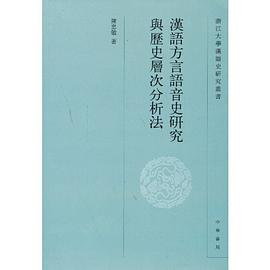
汉语方言语音史研究与历史层次分析法 豆瓣
作者: 陈忠敏 出版社: 中华书局 2013 - 6
本书稿分三大部分:第一部分介绍和评述西方历史语言学研究音变的历史和理论方法,其中对经典的历史比较法运作过程作了详细的阐述,籍此来指出比较法的得失。第二部分是本书的重心。作者根据汉语方言演变的特点提出一中心多层次的汉语方言演变观,并提出与此演变相配的历史层次分析法,最后分三个过程来全面阐述历史层次分析的方法。第三部分运用历史层次分析法来研究分析吴闽赣徽方言语音层次。
2019年6月22日 已读
寻找语音层次的切入点是语音变异,但不是所有的语音变异都反映语音层次。反映语音层次的语音变异具有音类变异系统性,所以必须从系统变异的角度来寻找语音层次。我们把语音层次的单位定为音类是有理由的。文白异读的对立是反映语音层次的,而文白异读的最小对立元是音类。经典的比较法所注重的是作为比较项目的语音是否有系统的对应,而不是简单的相同或相似。在汉藏语及东南亚语言的历史研究中语言接触的研究可能比语言谱系分类的研究更迫切和重要;在运用历史比较法的时候,有时无法像印欧语那样拿音义相配的词(字)直接比较,来重建它们的早期形式和解释它们以后的演变,因为在共时的语言(方言)中叠加着多重读音层次,简单的拉郎配比较是层次错乱的比较。非系统的例外音变很有可能是语言交融、语言假借的产物,正好为语言底层比较提供了用武之地。
M bought 历史 历史语言学 方言
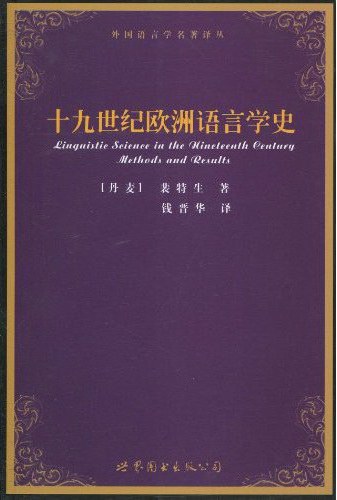
十九世纪欧洲语言学史 豆瓣
Linguistic Science in the Nineteenth Century: Methods and Results
作者: [丹麦] 裴特生 译者: 钱晋华 / 鲁国尧 (校订) 出版社: 世界图书出版公司 2010 - 4
《十九世纪欧洲语言学史》详尽地介绍了西方比较语言学的兴起和发展,对于近代欧洲语言科学的发展、方法和成果做了综合的叙述介绍了欧洲古典时代、中世纪以及16,17,18世纪的语言学的演进,叙述了印欧语系各个语支以及世界各个语系的研究情形,并从碑铭与考古的发现情况对文字史进行了探讨,最后还讨论了比较语言学的方法论及其演进过程。作者严谨的科学态度,受到学界的赞许,文笔流畅生动,被中国语言学家朱德熙先生誉为“最好的一本介绍历史比较方法的书”。
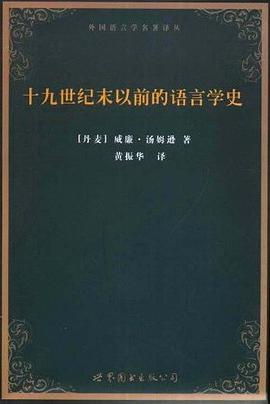
十九世纪末以前的语言学史 豆瓣
作者: (丹麦)威廉·汤姆逊 译者: 黄振华 出版社: 世界图书出版公司 2009
威廉·汤姆逊(Ludvig Peter Vilhelm Thomsen.1842—1927)的《十九世纪末以前的语言学史》堪称西方第一部语言学通史,它连贯而系统地评述了十九世纪末以前的欧洲学者研究语言学的发展阶段和历史,并且对欧洲早期的那些语言学家和他们的著作作了学术评述。书后附录了俄译者拉?绍尔的文章“从文艺复兴时期到十九世纪末的语言学说史梗概”,对中世纪以后各种语言学说的哲学基础和方法论作了充分的评介。该书是一部极具参考价值的语言学史著作。
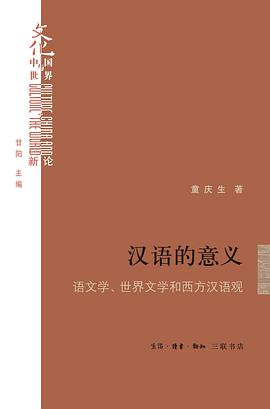
汉语的意义 豆瓣
作者: 童庆生 出版社: 生活·读书·新知三联书店 2019 - 1
在长期的历史进程中,对汉语的认识构成了西方现代知识的一部分。本书从世界文学的思想谱系出发,论述了语文学和世界文学的关系,并在此基础上,主要考察西方汉语观形成、发展、传播和扩散的过程及其在思想史上的意义,尤其重点关注它在西方思想史内部的承续,以及对现代中国语言、文学和思想的影响。通过将西方汉语观与中国语言文字改革运动联系在一起,作者发掘了现代语言思想和知识话语体系之间的联系,说明中国语言改革运动和新文化运动并不是孤立的、完全本土化的社会实践,而是具有世界意义的现象。汉语成为西方现代学术与现代中国文化之间接触的纽带和媒介,这就是“汉语的意义”。
2019年6月16日 已读
3.5 无论萨义德理论还是作者对奥尔巴赫的分析都未必是解决所述主题的好途径。感觉当个人读书笔记好一点吧,无论汉语观、比较语言学史还是国语运动都没深入,只是叙述旧的教科叙述,当然可以由于东西原来是分在不同领域的,组合起来也算个新意了。不过组合还比较生硬。另外很多语文学上的点其实和宗教史、哲学史什么的有很大关系,应该点到。其实这个题目要驾驭是困难的,特别像作者这种只做一个语种的,感觉走具体案例深挖的路子才容易成有效研究。而且西方汉语观的主题是适合与其他文明语言做比较研究的,这样找模式会透彻。
*三联@北京* 中知 文学 文学研究 新书记
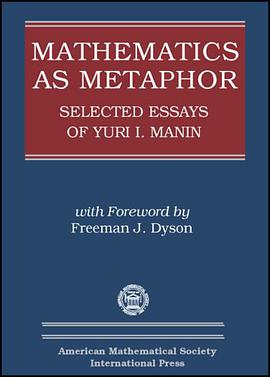
Mathematics as Metaphor 豆瓣 谷歌图书
作者: Yuri I. Manin 出版社: American Mathematical Society 2007 - 11
The book includes fifteen essays and an interview. The essays are grouped in three parts: Mathematics; Mathematics and Physics; and Language, Consciousness, and Book reviews. Most of the essays are about some aspects of epistemology and the history of sciences, mainly mathematics, physics, and the history of language. English translations of some of the essays, originally published in Russian, appear for the first time in this selection. One of them is the introduction to the book Computable and Uncomputable, where the idea of a quantum computer was first proposed in 1980. Another is an essay on the mythological trickster figure, where the evolutionary role of manipulative behavior is discussed in connection with the problem of the origin of human language. With the foreword by Freeman Dyson, this book will be of interest to anyone interested in the philosophy and history of mathematics, physics, and linguistics.
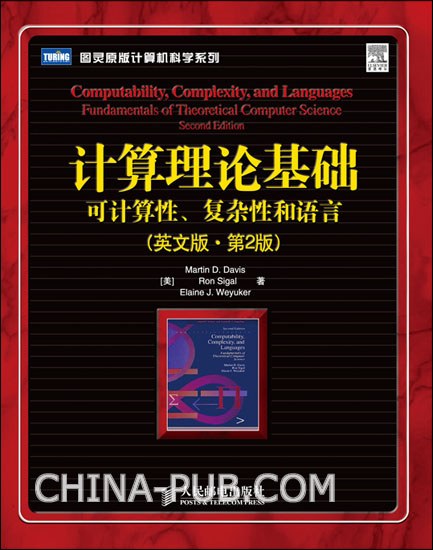
计算理论基础 豆瓣
作者: Martin Davis / Ron Sigal 出版社: 人民邮电出版社 2009
本书是理论计算机科学领域的名作,是计算机科学核心主题的导论性教材。全书分为可计算性、文法与自动机、逻辑学、复杂性及语义学5个部分,分别讲述了可计算性理论、形式语言、逻辑学与自动演绎、可计算复杂性(包括NP完全问题)和编程语言的语义等主题,并展示了它们之间如何相互关联。.
本书是计算机及相关专业高年级本科生和研究生的理想教学参考书,对于计算机领域的专业人士也是很好的技术参考书。
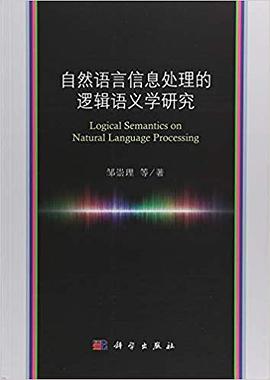
自然语言信息处理的逻辑语义学研究 豆瓣
作者: 邹崇理 出版社: 科学出版社 2018 - 9
自然语言的逻辑语义学(简称逻辑语义学)是依据现代逻辑的思想或采用现代逻辑的工具研究自然语言的句法生成尤其是语义组合规律的学科,是实现自然语言计算机信息处理的先期工作。《BR》  本书以汉语信息处理为导向,以现代汉语中的反身代词、照应省略结构、话题句、兼语句、连动句、复杂谓词并列结构等具有典型性的句法-语义现象为研究素材,展开了一系列逻辑语义学的研究,即针对汉语独有特征的范畴类型逻辑以及组合范畴语法的研究。这些研究一方面可以充实逻辑语义学研究的理论宝库,促进现代逻辑的发展;另一方面也能够为汉语的计算机信息处理提供理论指导。通过把逻辑语义学对自然语言,尤其是对汉语形式化研究的成果应用到汉语的信息处理领域,我国计算机自然语言处理的思路将得到拓宽,效率将得到提高。
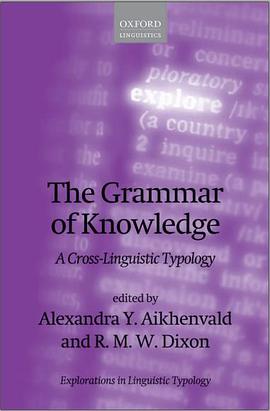
Th Grammar of Knowledge 豆瓣
作者: ALEXANDRAY. AIKHENVALD / R . M . W. DIXON 2014
The Grammar of Knowledge offers both a linguistic and anthropological perspective on the expression of information sources, as well as inferences, assumptions, probability and possibility, and gradations of doubt and beliefs in a range of languages. The book investigates twelve different languages, from families including Tibeto-Burman, Nakh-Dagestani, and Austronesian, all of which share the property of requiring the source of information to be specified in every sentence. In these languages, it may not be possible to say merely that 'the man went fishing'. Instead, the source of evidence for the statement must also be specified, usually through the use of evidential markers. For example, it may be necessary to indicate whether the speaker saw the man go fishing; has simply assumed that the man went fishing; or was told that he went fishing by a third party. Some languages, such as Hinuq and Tatar, distinguish between first-hand and non first-hand information sources; others, such as Ersu, mark three distinct types of information - directly required, inferred or assumed, and reported. Some require an even greater level of specification: Ashéninka Perené, from South America, has a specific marker to express suspicions or misgivings. Like others in the series, the book illustrates and examines these aspects of language in different cultural and linguistic settings. It will interest linguists of all persuasions as well as linguistically-minded anthropologists.